How to Grade Student Essays With AI (Without Losing Control or Quality)

Somewhere between the third essay of the night and the cold coffee on your desk, it becomes obvious. This pace doesn’t scale. Teachers spend hours grading essays, often after the school day ends, weekends slipping away line by line. Essay grading is easily one of the most time-consuming parts of teaching, not because it lacks value, but because it demands focus, care, and consistency every single time.

Lately, AI grading tools have entered the conversation, promising speed, consistency, and timely feedback for student writing. Tempting, yes. But also unsettling.

Questions surface quickly. Is it fair? Will bias creep in? What happens to academic integrity? And most importantly, where does human judgment fit?

In this article, you’ll see how to grade student essays with AI in a way that actually saves time without flattening quality. We’ll look at how it works, where it helps, where it falls short, and how to stay firmly in control of the grading experience.


What Does It Mean to Grade Student Essays With AI?

Grading student essays with AI doesn’t mean handing the keys over to a machine and walking away. That fear lingers, understandably. In practice, AI essay grading works very differently.

An AI essay grader uses advanced algorithms, natural language processing, and machine learning to analyze written work. It looks at structure, grammar, clarity, coherence, and how closely a piece of writing aligns with a grading rubric. Some tools also surface patterns across an entire class, helping you spot common strengths or gaps faster than a human eye ever could.

What it doesn’t do, at least not responsibly, is replace you. AI grading is not fully automated grading where feedback and final scores appear without oversight.

In 2026, best practice is clear: AI works best as a first-pass assistant. It handles the repeatable, time-heavy parts of essay grading, while you focus on judgment, nuance, originality, and intent.

When using AI to grade, teachers retain full control. You review suggestions. You adjust feedback. You assign the final grade. Human grading remains the authority. AI simply helps you get there faster, with more consistency, and without spending every evening buried in student essays.


How Do AI Essay Graders Actually Work Behind the Scenes?
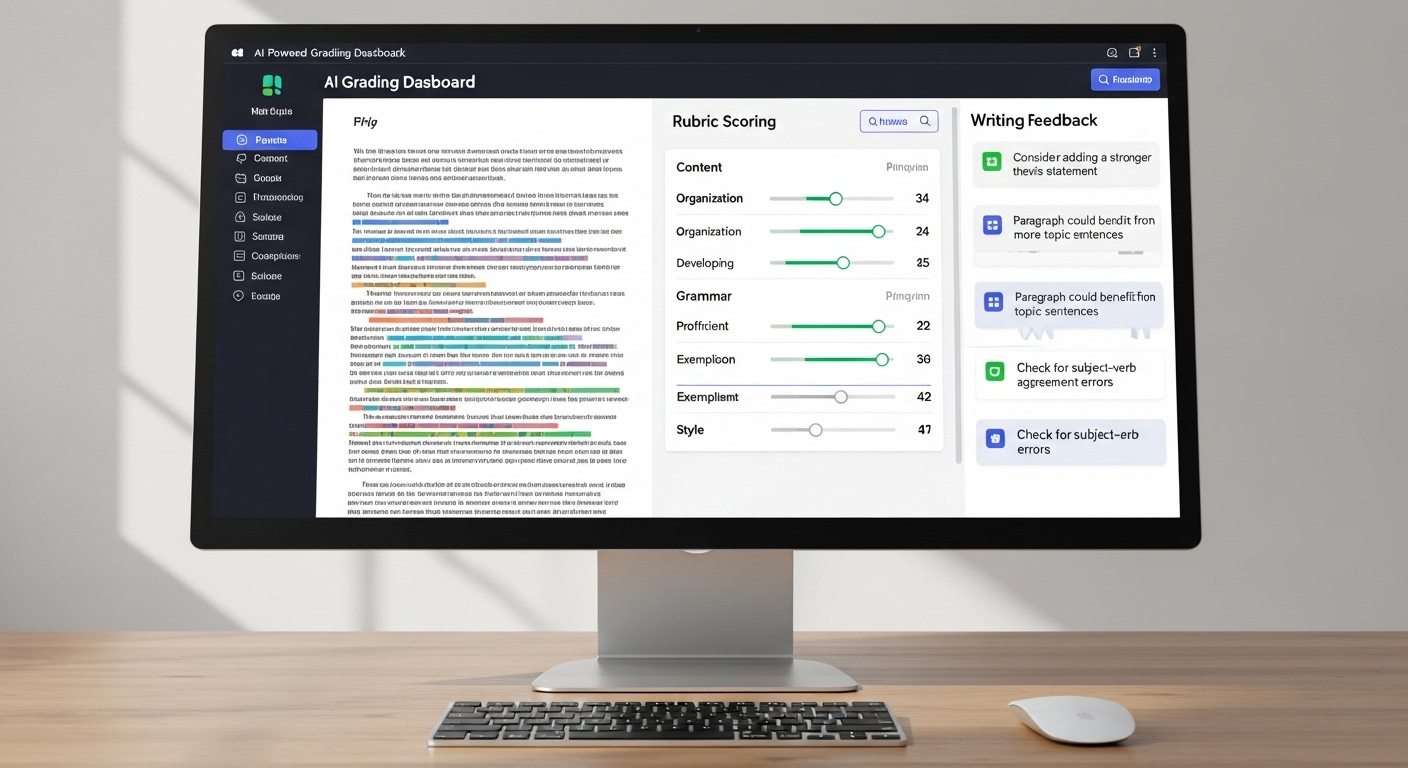
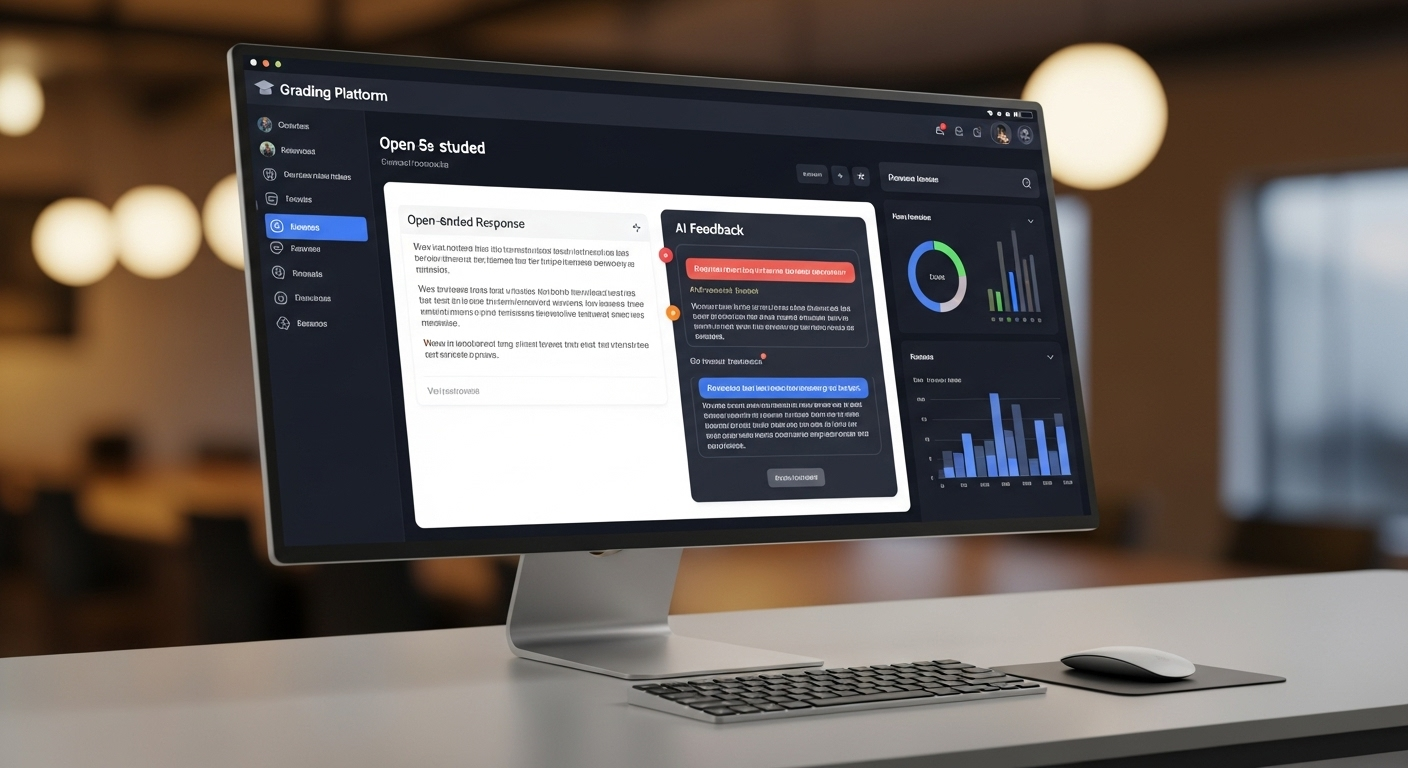
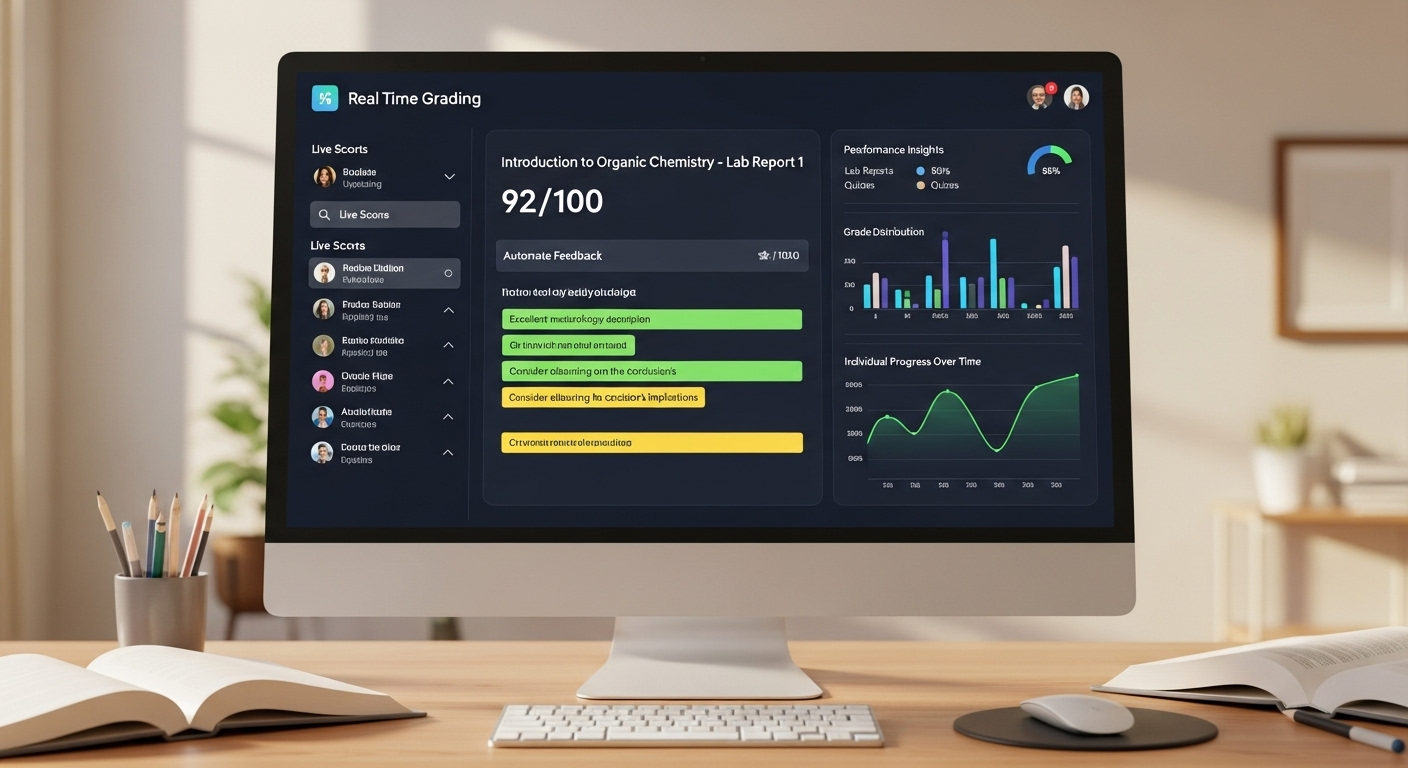
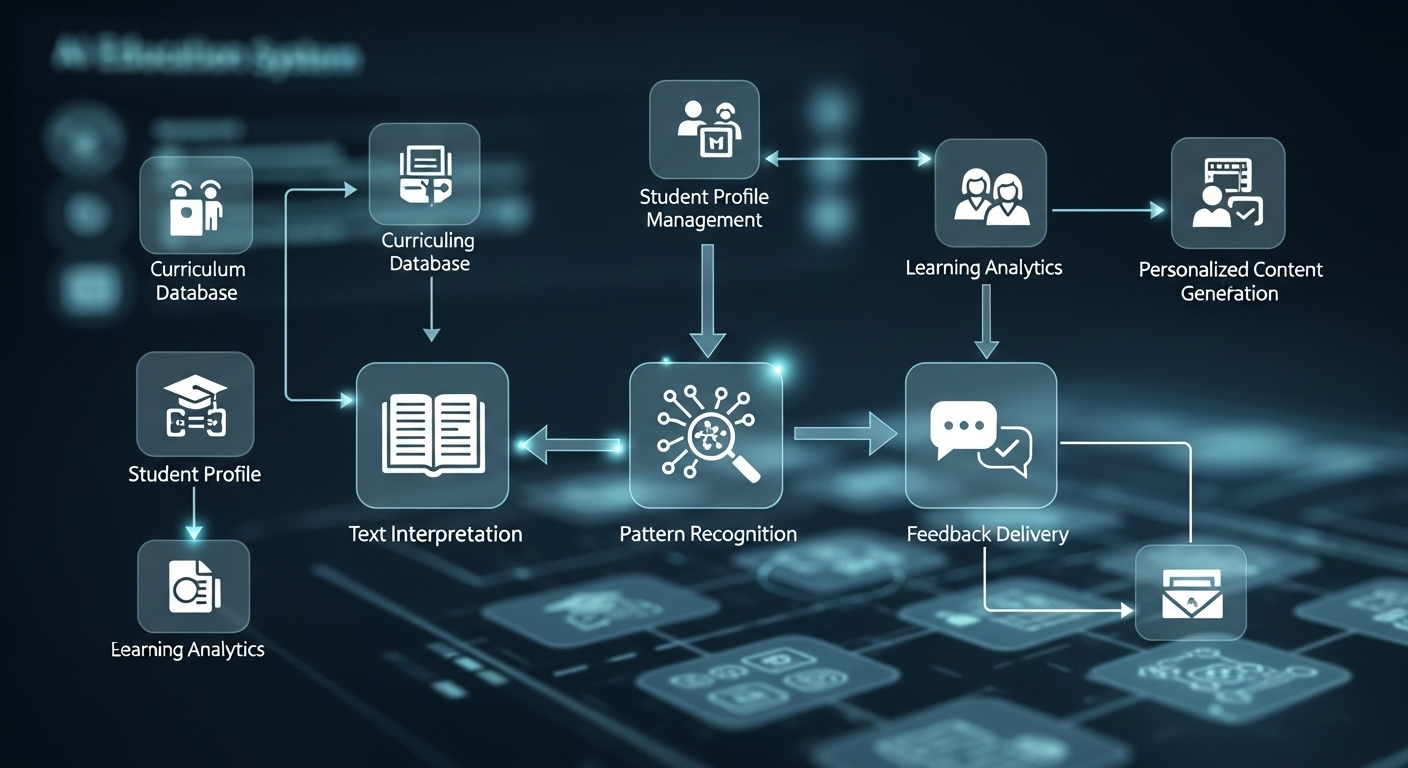
AI-powered grading dashboard showing rubric-based scoring and writing feedback.

At first glance, AI essay grading can feel a bit like a black box. You upload student submissions, and out comes feedback. But under the hood, the process is far more methodical and, frankly, less mysterious than it sounds.

AI models analyze student submissions using natural language processing, breaking written work into patterns that machines can evaluate consistently. Instead of “reading” like a human, the system examines sentence structure, cohesion, tone, and grammar at scale. Each essay is then evaluated against an uploaded grading rubric, so the criteria guiding feedback are yours, not the AI’s imagination.

What makes AI grading especially useful is its ability to compare patterns across an entire class. If multiple students struggle with thesis clarity or paragraph flow, the system notices.

Importantly, AI graders don’t make irreversible decisions. They flag potential issues, surface suggestions, and highlight inconsistencies, leaving final judgment firmly in human hands.

Behind the scenes, most tools rely on a few core components:

  • NLP to assess sentence structure, coherence, tone, and grammar
  • Machine learning to detect patterns and ensure consistent grading across submissions
  • AI detection tools to flag possible plagiarism or AI-generated content
  • LMS integrations with platforms like Google Classroom, Canvas, and Schoology

Think of it less as an autonomous grader and more as a highly organized assistant that never gets tired.


Why Teachers Are Using AI to Grade Essays in the First Place

The appeal isn’t novelty. It’s relief.

Teachers consistently report saving 8–11 hours per week when using AI grading tools, especially during heavy writing cycles. Essays that once took days to return can now receive feedback in minutes. That shift alone changes the rhythm of a course. Students revise while ideas are still fresh. Teachers stop drowning in grading papers.

Consistency is another quiet win. When you’re grading the tenth essay at midnight, fatigue creeps in. AI doesn’t get tired. It applies the same standards across multiple sections and grade levels, reducing unintentional drift and unconscious human bias.

Perhaps the most overlooked benefit is what AI gives back: time. Valuable time. Time for instruction. Time for mentoring. Time for actual feedback conversations instead of just written margins. Used well, AI becomes an incredibly helpful tool not because it replaces judgment, but because it protects it from burnout.


What Parts of Essay Grading AI Handles Well (and What It Doesn’t)

Education workflow showing AI handling mechanical grading tasks while teachers focus on deeper analysis.

AI essay grading works best when expectations are clear and criteria are defined. That’s where it shines. But it’s not universal, and pretending otherwise creates frustration fast.

AI handles objective elements with impressive consistency. Grammar, syntax, and sentence structure are evaluated quickly and reliably.

Organization, clarity, and alignment with rubric-based grading criteria are also well within its comfort zone. For these areas, AI can provide high-quality, constructive feedback without the variability that human fatigue introduces.

Where AI falls short is just as important.

Creativity, originality, emotional impact, and complex critical thinking still demand human judgment. These are areas where nuance matters, and no algorithm fully understands intent, risk-taking, or voice. That’s not a flaw. It’s a boundary.

In practice, the balance looks like this:

AI handles well

  • Grammar, syntax, and structure
  • Organization and clarity
  • Rubric-aligned criteria

Humans handle best

  • Creativity and originality
  • Emotional resonance
  • Deep, complex thinking

Knowing this division keeps grading fair, efficient, and grounded.


How to Use AI Essay Grading as a “First Pass” (Best-Practice Workflow)

The most effective grading workflows don’t ask AI to decide. They ask it to assist.

In a first-pass model, AI reviews essays before human evaluation. It flags issues, suggests feedback, and highlights patterns worth attention. From there, you step in. You review. You adjust. You add nuance. You finalize grades. Nothing goes out without your approval.

This hybrid grading process preserves trust on both sides. Students know their work is seen by a human. Instructors maintain full control while benefiting from speed and consistency. Periodic audits of AI feedback help prevent drift, bias, or overreliance, especially as assignments evolve.

Done right, AI grading becomes a reliable results multiplier, not a shortcut. You still double-check. You still decide. The difference is that you’re no longer starting from scratch every time. You’re starting from a well-organized first draft of feedback, and that changes everything.


Can AI Grade Essays Fairly and Consistently Across an Entire Class?
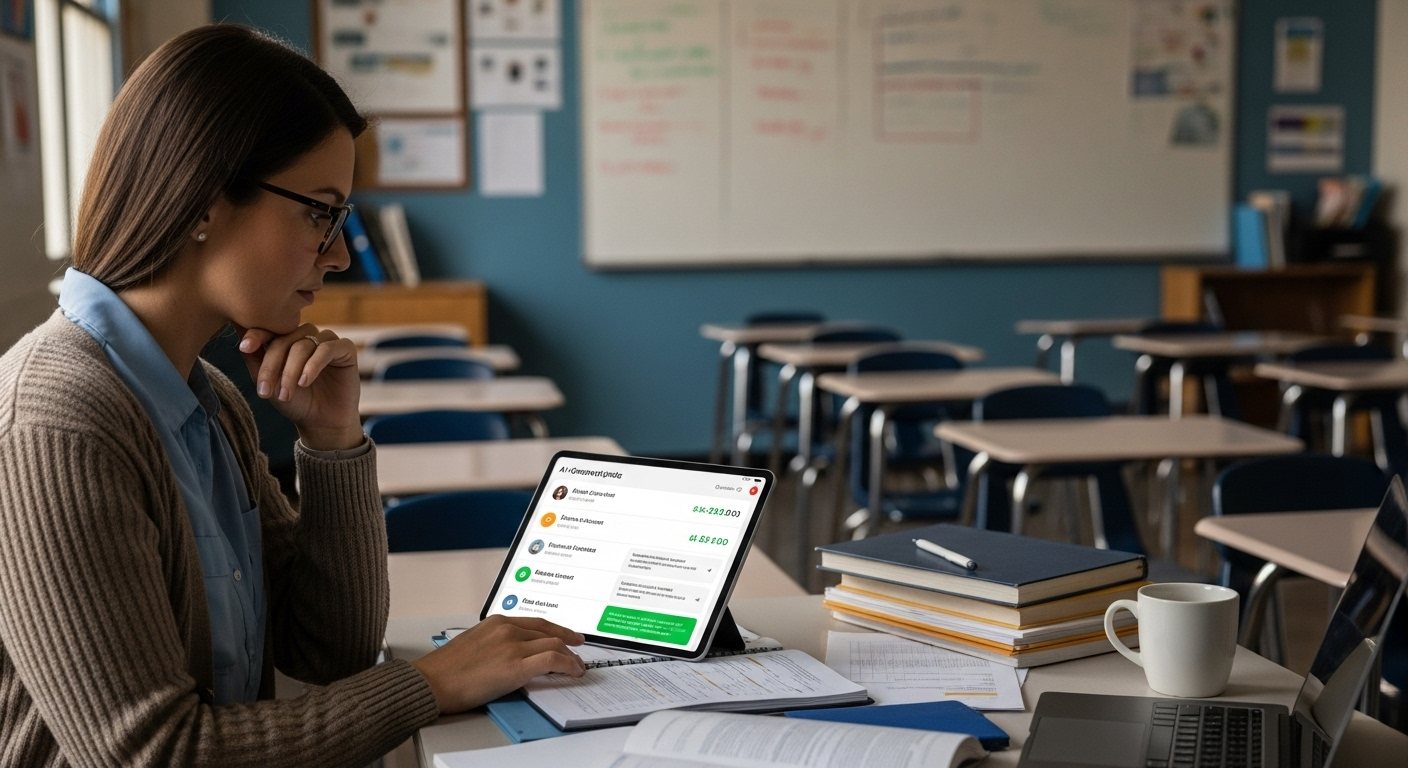
Teacher reviewing AI-generated grades to ensure fairness and contextual judgment.

Fairness is usually the first concern, and for good reason. When grading stretches late into the night, even the most careful teacher feels fatigue creeping in. AI helps here by applying the same grading rubric to every student, every time. No drifting standards. No end-of-stack penalty. That alone goes a long way toward ensuring consistent grading across an entire class.

Consistency, though, isn’t the same as neutrality. Bias can still appear, depending on training data and how the tool is configured. That’s why grading standards matter.

When AI evaluates essays against your criteria, not vague benchmarks, inequities are reduced rather than amplified. Patterns become visible, too. If one group of students struggles with the same skill, AI surfaces it without singling anyone out.

Still, AI doesn’t replace judgment. Human review is still required, especially for borderline cases or nuanced writing. The fairest systems combine automation with oversight. AI keeps standards steady across other students. Teachers keep the context, empathy, and discretion that no model can replicate.


What About Academic Integrity, AI Detection, and Plagiarism?

AI grading raises a fair question: if students can use AI to write, how do you protect academic integrity while using AI to grade?

Most AI grading tools include AI detection features that flag potential plagiarism or AI-generated content. These tools don’t accuse. They signal. That distinction matters. Detection should guide review, not trigger automatic penalties.

It’s also important to draw a clear line. Using AI to grade student work is not the same as students using AI to generate essays. One supports evaluation. The other can undermine learning when misused. Transparency helps here. When students know AI is part of the grading workflow, expectations are clearer and trust improves.

Ultimately, academic integrity is preserved through policy and practice, not automation alone. AI flags concerns. Teachers investigate context. Student work is evaluated fairly, with judgment applied where it belongs.


How AI Essay Grading Protects Student Data and Privacy

University IT team reviewing student data protection and access control in AI grading software.

Student data isn’t a side issue. It’s central.

Responsible AI grading platforms are built to comply with FERPA and GDPR, ensuring student privacy is protected by design, not patched on later. Essays are handled securely, often anonymized during processing so personal identifiers aren’t attached to written assignments.

Most systems limit data collection to what’s necessary for grading. No unnecessary profiles. No harvesting beyond the assignment itself. Access controls and encrypted storage help keep student data secure, whether essays come from Google Classroom or another LMS.

Privacy concerns are valid, especially with new technology. The key is choosing tools that treat data protection as a requirement, not a feature. When handled correctly, AI grading can be both efficient and respectful of student privacy.


How AI Essay Grading Improves Feedback Loops for Students

The biggest shift students notice isn’t automation. It’s speed.

Faster feedback improves writing outcomes because students revise while the work is still fresh. Instead of waiting a week, they receive specific, actionable feedback that points clearly to what worked and what didn’t. That tightens the feedback loop and encourages iteration.

AI grading supports a healthier writing cycle by making revision normal, not exceptional. Students write more because they’re not stuck waiting.

  • Instant feedback while learning is fresh, not days later
  • Clear “Glow & Grow” insights that balance strengths with next steps
  • Stronger revision cycles that reward improvement, not just final drafts

When feedback arrives on time and with clarity, students engage. Writing becomes a process again, not a one-shot performance.


How PowerGrader Helps Teachers Grade Essays With AI—Without Giving Up Control
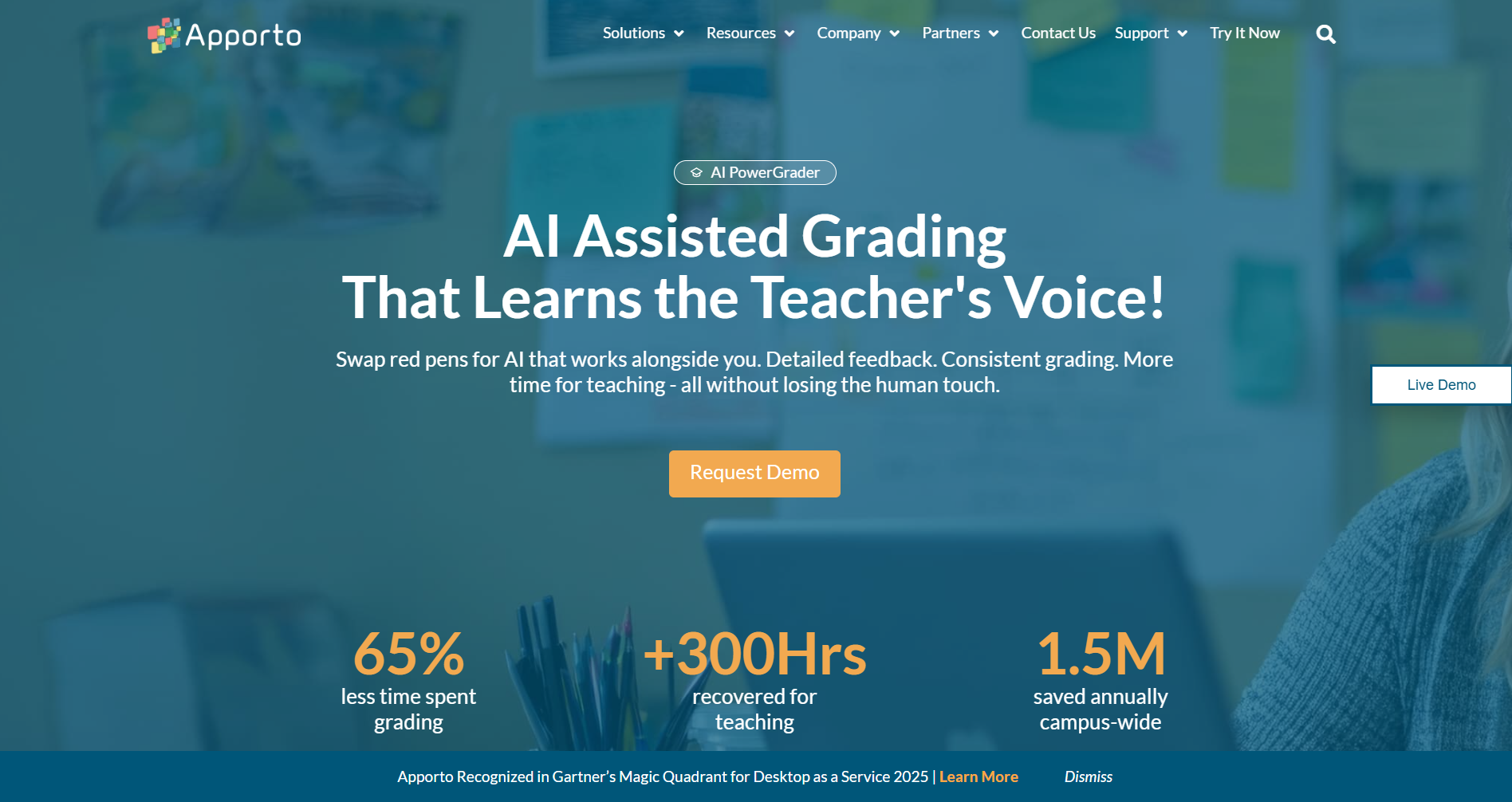
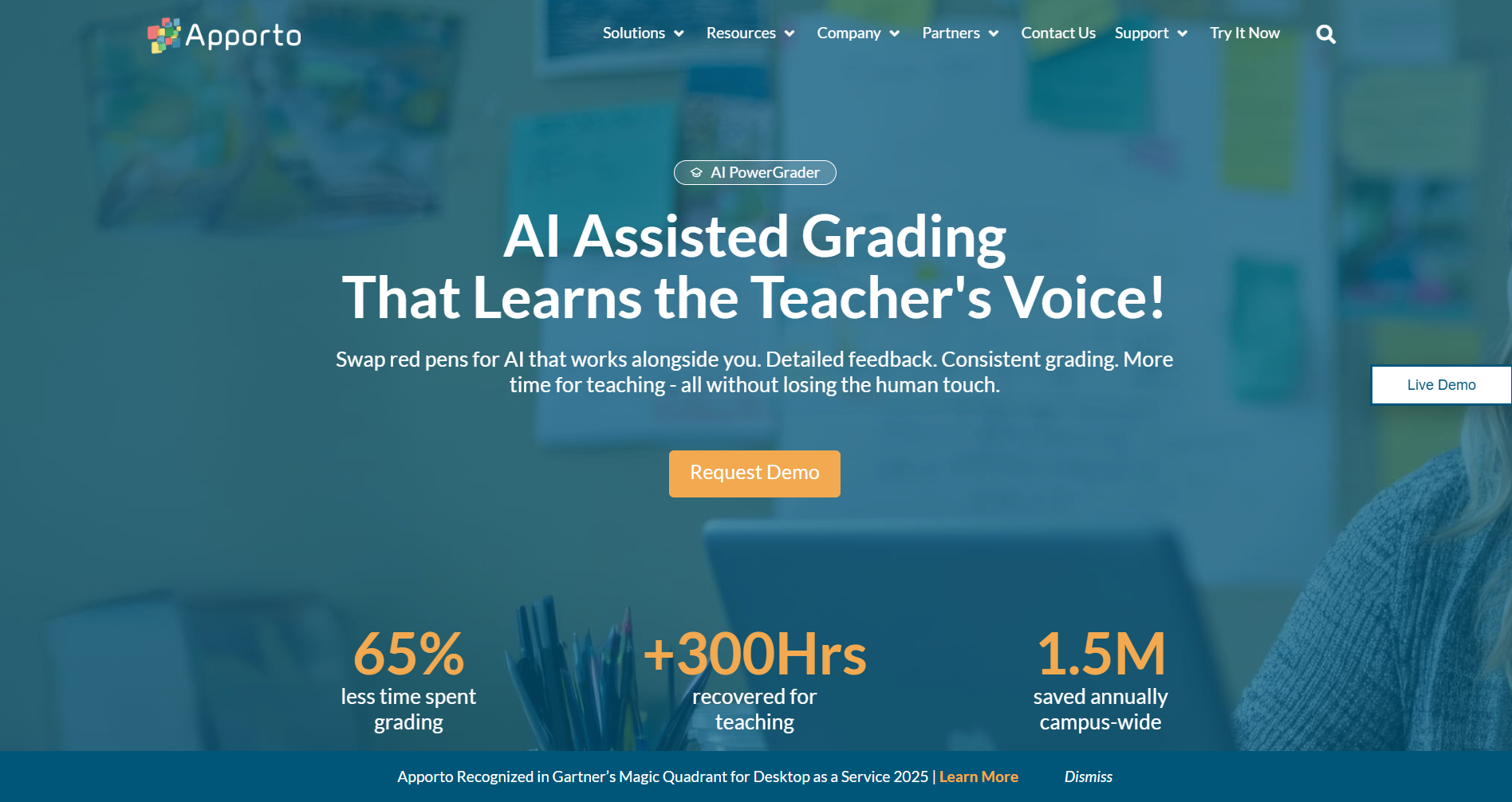
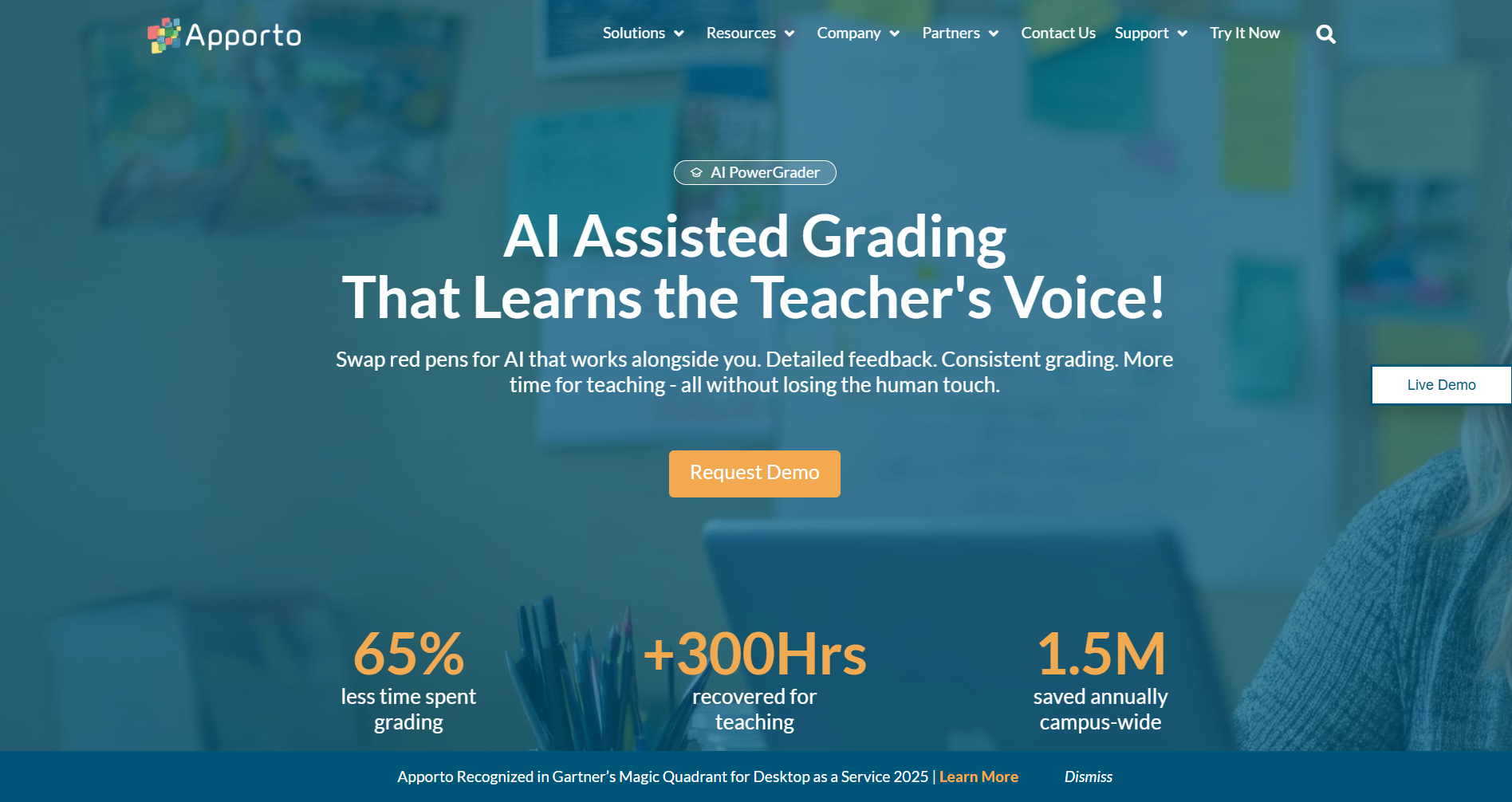
Apporto's page showcasing AI-assisted grading with demo call-to-action and teaching time savings metrics.

The difference between a helpful AI grading tool and a risky one comes down to control.

PowerGrader is built around instructor-controlled AI grading. You upload your own rubrics. You tweak criteria. You decide how feedback is delivered. AI supports your workflow rather than redefining it.

Pattern detection helps identify similar responses across an entire class, making it easier to spot trends without flattening individual voices. Because PowerGrader is LMS-ready, it fits into existing systems like Google Classroom and higher education platforms without disruption.

What makes it a game changer isn’t speed alone. It’s the human-in-the-loop design. AI drafts feedback. You refine it. Final judgment stays with you. The grading experience becomes more consistent, more humane, and far less exhausting, without compromising academic integrity or teaching intent.


Is AI Essay Grading a Good Fit for High School and College Classes?

AI essay grading adapts well across contexts, but how it’s used matters.

For high school teachers, AI helps manage large volumes of writing while maintaining consistency across grade levels. It’s especially effective for formative assessments, where timely feedback matters more than final scores.

In college classes, AI scales across sections and supports complex writing tasks without sacrificing standards. It works well for iterative drafts, scaffolded assignments, and feedback-heavy courses.

Across both settings, AI supports multiple levels of writing complexity. What changes is the role of the teacher. AI handles repetition. You handle reasoning, originality, and mentorship.


Conclusion

AI essay grading isn’t about replacing teachers. It’s about protecting them.

Used responsibly, AI becomes a support system that reduces burnout while increasing feedback quality. Human judgment remains the priority.

What changes is the pressure. When time constraints ease, feedback improves. Students write more. Teachers teach better.

The future isn’t fully automated. It’s hybrid. New technology handles the heavy lifting. Humans handle what matters most: meaning, growth, and learning.


Frequently Asked Questions (FAQs) 


1. Is AI essay grading accurate?

AI grading is highly consistent for structure and rubric-based criteria, but accuracy improves most when teachers review and adjust feedback before finalizing grades.

2. Can AI grading be biased?

Bias depends on training data and configuration. Human oversight and periodic review are essential to ensure fair grading outcomes.

3. Is student privacy protected?

Yes. Reputable tools comply with FERPA and GDPR, anonymize submissions, and use secure data handling practices.

4. Does AI replace teacher grading?

No. AI supports grading as a first pass. Teachers retain full control over feedback and final grades.

5. Can AI detect plagiarism or AI-written essays?

Many tools flag potential issues, but detection should guide review rather than automatically penalize students.

6. Is AI grading suitable for creative writing?

AI helps with structure and clarity, but creativity and originality still require human judgment.

7.How long does it take to set up AI grading?

Most tools integrate quickly with LMS platforms, and onboarding typically takes minutes, not weeks.


How to Give Academic Feedback That Actually Helps Students Learn

Feedback sits at the heart of teaching and learning. Everyone agrees on that. Yet giving academic feedback that truly helps students learn is harder than it sounds.

You spend hours writing comments, highlighting issues, offering suggestions, and still… nothing changes. The same misconceptions show up again. The same mistakes repeat. It can feel like you’re talking into the void.

Poor feedback allows misunderstandings to stick around longer than they should. When comments are vague, late, or disconnected from learning goals, students often skim them, glance at the grade, and move on.

In higher education especially, where class sizes are larger and time is tighter, feedback quality often drops under pressure. Efficiency starts to compete with usefulness.

This is where the real challenge lies. Giving feedback isn’t just about saying something helpful. It’s about saying the right thing, at the right time, in a way students can actually use. To do that, it helps to be clear about what academic feedback really is—and what it isn’t.


What Is Academic Feedback (And What It Is Not)?

At its core, academic feedback is information that helps students understand their progress toward specific learning goals. It answers a simple question: How am I doing, and what should I do next?

When feedback works, it narrows the gap between current performance and desired outcomes. It gives direction. It gives purpose.

What feedback is not, however, is just a grade. Letter grades on their own rarely support learning. A “B” or a “72” tells students where they landed, not why they landed there or how to improve. Without comments, grades become endpoints rather than guides. Students receive feedback, technically, but gain very little from it.

Effective feedback also avoids becoming personal. It focuses on the work, not the individual. Comments should point to observable elements in student work—structure, argument, clarity, evidence—rather than traits or assumptions about ability.

That distinction matters more than it seems. Feedback that targets the work keeps students engaged. Feedback that feels personal often shuts them down.

Once this line is clear, the next question naturally follows: if grades aren’t enough, what kind of feedback actually moves learning forward?


Why Effective Feedback Matters More Than Grades Alone

Student revising academic work using detailed formative feedback instead of relying only on a final grade

Grades feel official. Definitive. They land with a thud at the end of an assignment and seem to close the loop. But here’s the quiet truth that research keeps circling back to: grades alone don’t teach very much. They summarize performance, yes, but they rarely help students develop the skills needed for what comes next.

Formative feedback, on the other hand, lives inside the learning process. It gives students something to work with while revision is still possible and motivation is still alive. Instead of signaling an ending, it opens a door. Students can see how to improve, not just how they scored. That distinction matters more than most grading systems admit.

Summative feedback has its place. It evaluates final work and supports accountability. But when it stands alone, it often fails to guide future effort. Effective feedback does more than judge. It supports progress, builds confidence, and reinforces the idea that improvement is expected, not optional.

When students receive meaningful feedback that points to specific next steps, they’re more likely to stay engaged, revise thoughtfully, and take ownership of their learning. Grades may record outcomes. Feedback shapes them. And that’s the difference worth leaning into as we move forward.


The Difference Between Formative and Summative Feedback (And When to Use Each)

Not all feedback is meant to do the same job, and treating it as one-size-fits-all is where many courses stumble. Formative and summative feedback serve different purposes, at different moments, for different outcomes. Knowing when to use each is part of giving effective academic feedback.

Formative feedback is designed to support learning before an assignment is finished or graded. It’s about guidance, not judgment. Students use it to revise, rethink, and improve while the work is still in motion. This type of feedback is especially powerful for skill development and long-term learning goals.

Summative feedback, by contrast, evaluates final work. It often comes with a grade and answers the question of how well learning objectives were met at the end of a task, unit, or course. It’s useful for accountability and record-keeping, but less effective for growth on its own.

To make the distinction clearer:

  • Formative feedback → revision, practice, learning
  • Summative feedback → evaluation, grades, accountability

The most effective assessment strategies don’t choose one over the other. They sequence them. Formative feedback guides students forward, and summative feedback marks the milestone when the journey pauses.


When Should Feedback Be Immediate and When Should It Be Delayed?

Teacher reviewing a completed project and delivering reflective, delayed feedback.

Timing shapes how feedback is heard. Say the same thing at the wrong moment, and it barely registers. Say it at the right one, and it sticks.

Immediate feedback works best when students are learning new knowledge or skills. Early in the learning process, quick responses help correct misunderstandings before they harden into habits.

When feedback arrives while the task is still fresh, students can connect comments directly to what they were thinking and doing. Engagement stays high. Retention improves.

Delayed feedback has value too, especially when students are applying knowledge rather than acquiring it. Giving learners time to wrestle with ideas, reflect on their choices, or complete a full task can make feedback more meaningful when it finally arrives. In these cases, a short delay encourages deeper processing instead of surface-level correction.

The key is timely feedback, not rushed feedback. Timing should match the learning goal. If the goal is understanding, respond quickly. If the goal is transfer or synthesis, a bit of space can help. Either way, feedback that arrives too late—after the course has moved on—loses much of its power to support learning.


What Makes Feedback Actually Useful to Students?

Students don’t ignore feedback because they’re careless. They ignore it because too often it doesn’t tell them what to do next. Useful feedback closes that gap.

At its best, feedback is specific, actionable, and clearly aligned with learning outcomes. It points to concrete elements in student work and explains why they matter. Vague remarks like “needs more depth” or “unclear argument” rarely help on their own. Students need direction, not just diagnosis.

Clarity matters just as much as tone. When feedback spells out next steps, students are far more likely to act on it. Useful feedback answers three questions: What worked? What didn’t? What should I try next time?

Key features of feedback students can actually use include:

  • Actionable feedback that suggests specific changes or strategies
  • Targeted feedback linked directly to learning goals or criteria
  • Clear next steps students can apply to future work

When feedback does this well, it becomes part of the learning process rather than a postmortem. Students stop seeing comments as criticism and start seeing them as tools.


How to Focus Feedback Without Overwhelming Students

Teacher highlighting only two or three key feedback points on a student draft to guide revision.

More feedback does not automatically mean better feedback. In fact, too much feedback often has the opposite effect. When students are faced with long lists of comments, margin notes, and tracked changes, they struggle to decide what actually matters.

Research consistently shows that focusing on just two or three key areas for improvement leads to better uptake. This forces you, as the instructor, to prioritize. What will make the biggest difference in the student’s progress right now?

Start with higher-order concerns. Issues like argument clarity, organization, use of evidence, or conceptual understanding deserve attention before lower-order concerns such as grammar or formatting. Fixing commas won’t help if the main idea is still unclear.

In early drafts, minimal feedback can be especially effective. A few targeted comments that steer students in the right direction often produce stronger revisions than exhaustive correction.

Focused feedback does three things well: it respects cognitive load, signals importance, and makes improvement feel achievable. When students know exactly where to focus, they’re far more likely to move forward instead of shutting down.


Using Rubrics to Make Feedback Clear and Consistent

Rubrics do more than justify a grade. Used well, they anchor feedback to learning goals and remove much of the guesswork students struggle with when interpreting comments. Instead of decoding what an instructor meant, students can see exactly how their work aligns with clearly defined criteria.

Rubric-based feedback improves transparency because expectations are shared upfront. Students know what “good” looks like before they submit, not after. That matters, especially in larger classes where grading consistency can drift without a common reference point.

Rubrics also protect instructors from unintentional inconsistency. When every assignment is assessed against the same standards, feedback becomes fairer and easier to scale. Time spent upfront creating rubrics often saves hours later responding to confusion or grade disputes.

Well-designed rubrics support clearer feedback by offering:

  • Closely aligned criteria tied directly to learning goals
  • Shared expectations that reduce ambiguity for students
  • Easier feedback interpretation, since comments map to specific standards

The key is restraint. Rubrics shouldn’t be bloated checklists. Focus on the skills that matter most, and let the rubric guide feedback rather than replace it.


Written, Audio, and In-Person Feedback: What Works Best and When?

Instructor recording audio feedback for a student paper using a laptop and microphone.

There’s no single “best” format for feedback. What works depends on context, timing, and the kind of response students need in that moment.

Written comments remain the backbone of feedback in most courses. They scale well, are easy to reference later, and allow students to review suggestions at their own pace. Marginal notes on written work are especially useful for pointing to specific moments that need attention.

Audio or video feedback brings something different. Tone. Nuance. A sense of presence. Hearing an instructor explain a comment can soften criticism and clarify intent, often in less time than typing everything out.

In-person feedback, when possible, allows dialogue. Students can ask questions, explain decisions, and leave with shared understanding rather than assumptions.

Each mode serves a purpose:

  • Written comments and marginal notes for precision and record-keeping
  • Audio feedback to convey tone and complex explanations efficiently
  • In-person discussions during class time for clarification and connection

Varying feedback modes keeps students engaged and meets different learning needs without overwhelming instructors.


How Peer Feedback Strengthens Learning (and Reduces Instructor Load)

Peer feedback isn’t just a time-saver. When structured well, it’s a learning accelerator.

Giving feedback requires students to articulate standards, identify strengths, and recognize gaps. That process sharpens critical thinking in ways passive receipt never quite does. Students often internalize criteria more deeply when they have to apply them to someone else’s work.

Peer review also spreads responsibility for learning. Instead of feedback flowing in a single direction, it becomes collaborative. Students receive multiple perspectives, and instructors are freed from responding to every draft line by line.

That said, peer feedback only works when it’s guided. Clear prompts, rubrics, and examples are essential. Without structure, comments drift into vague praise or unhelpful criticism.

When done right, peer feedback:

  • Enhances critical thinking and evaluation skills
  • Helps students learn what quality work looks like
  • Reduces instructor overload in larger classes

It’s not a replacement for instructor feedback, but a po

werful complement that benefits everyone involved.


How to Encourage Students to Use the Feedback They Receive

Classroom scene where revision time is built into the learning process.

Feedback doesn’t fail because it’s wrong. It fails because students don’t know what to do with it.

To improve uptake, students need explicit opportunities to act on feedback. Reflection alone isn’t enough. Feedback should connect directly to future work so students can apply suggestions while the learning context still matters.

Asking students questions can also shift ownership. Prompts like “What will you revise first?” or “Which comment surprised you?” encourage self-evaluation instead of passive acceptance.

Strategies that improve feedback use include:

  • Building revision time into assignments
  • Requiring short reflection responses to feedback
  • Linking comments to upcoming tasks or projects

When students see feedback as part of an ongoing process, not a final verdict, they’re far more likely to engage with it meaningfully.


Common Feedback Mistakes (and How to Avoid Them)

Even well-intentioned feedback can miss the mark. Some of the most common mistakes are surprisingly easy to fix once you spot them.

Vagueness tops the list. Comments like “needs clarity” or “expand this” don’t explain how. Over-commenting is another trap. Too many notes dilute priority and overwhelm students. Tone matters too. Feedback that feels judgmental, even unintentionally, can shut down learning.

Watch out for these pitfalls:

  • Too many comments competing for attention
  • Unclear priorities that leave students guessing what matters most
  • Focusing on the student instead of the work, which feels personal rather than constructive

Clear, respectful, focused feedback is far more effective than exhaustive correction. Less, done well, really is more.


How to Give Academic Feedback at Scale Without Losing Quality

Teacher using rubric-based grading and comment banks to provide consistent feedback in large classes.

Scaling feedback isn’t about shortcuts. It’s about systems.

In larger classes, consistency becomes just as important as depth. Without shared criteria, templates, or structured workflows, feedback quality erodes under time pressure. That’s where intentional design matters.

Rubrics, comment banks, and targeted feedback strategies help instructors provide meaningful guidance without rewriting the same notes dozens of times. Tools can assist with organizing and surfacing patterns, but human judgment still drives what matters most.

High-quality feedback at scale depends on:

  • Clear learning goals
  • Consistent standards
  • Efficient workflows that save time without flattening nuance

When systems support the process, instructors can focus on teaching rather than triage.


How PowerGrader Helps Educators Give Better Academic Feedback

Giving strong feedback consistently is hard, especially when class sizes grow. PowerGrader is designed to support that challenge without replacing instructor judgment.

The platform allows educators to deliver instructor-controlled AI feedback that aligns directly with rubrics and learning goals. Instead of generic comments, feedback stays targeted and relevant to the assignment at hand.

PowerGrader also identifies patterns across student work, helping instructors see where misconceptions cluster or where criteria may need clarification. This makes feedback more strategic, not just reactive.

What sets it apart is the feedback-first, human-in-the-loop design. AI supports scale and consistency, but instructors remain in control of evaluation, tone, and priorities. The result is timely, meaningful feedback that students can actually use—without adding unsustainable workload for educators.


Conclusion:

Feedback isn’t an administrative chore. It’s one of the most powerful teaching tools available.

When feedback is timely, focused, and actionable, students grow. They revise more thoughtfully, reflect more honestly, and build skills that last beyond a single course. Quantity matters far less than clarity.

The most effective feedback systems treat comments as part of an ongoing conversation, not a one-time event. They support progress, not just performance.

As teaching continues to scale, the goal isn’t to give more feedback. It’s to give better feedback—supported by smart systems, guided by human judgment, and centered on learning.


Frequently Asked Questions (FAQs)


1. How soon should academic feedback be given?

Feedback is most effective when it’s timely. Immediate feedback works best for new skills, while short delays can help with application and reflection.

2. How much feedback is too much?

When feedback overwhelms students, uptake drops. Focusing on two or three key areas for improvement leads to better learning outcomes.

3. Is formative feedback better than grades?

Formative feedback supports learning more effectively than grades alone because it guides revision and improvement before evaluation.

4. What tone should academic feedback use?

A constructive, respectful tone focused on the work—not the student—encourages engagement and reduces defensiveness.

5. Does peer feedback really help students learn?

Yes. Peer feedback strengthens critical thinking and helps students internalize quality standards when it’s structured and guided.

6. Are rubrics necessary for good feedback?

Rubrics improve clarity and consistency by aligning feedback with learning goals, especially in larger classes.

7. How can instructors manage feedback in large classes?

Using rubrics, targeted comments, and tools that support consistent workflows helps instructors scale feedback without losing quality.

Best Automated Grading Software in 2026: What Actually Works

Grading has quietly become one of the most time-consuming parts of teaching. Not lesson planning. Not student support. Grading.

Hours disappear into stacks of assignments, late nights blur into weekends, and the feedback students need most often arrives when the moment has already passed. That strain is a major contributor to educator burnout, and it’s no longer sustainable.

Automated grading software has stepped into that gap. In 2026, these systems don’t just score multiple-choice quizzes. They handle essays, short answers, code assignments, and even bubble sheets.

More importantly, they are increasingly seen as part of the learning process itself, not just a shortcut for scoring. The real shift is this: grading is moving from an end point to a feedback loop.

Choosing the right tool now depends on what you teach, how many students you support, and how complex your grading actually is.


What Is Automated Grading Software and How Does It Work?

At a basic level, automated grading software evaluates student work without requiring line-by-line manual grading. Under the hood, though, the process is more nuanced.

These systems use artificial intelligence, machine learning, and natural language processing to read, interpret, and assess student submissions.

Most automated grading systems sit directly inside a learning management system or accept uploads from one. Students submit work.

The software processes that input, cleans it, and evaluates responses against predefined criteria such as rubrics, answer keys, or test cases for code assignments. The result is immediate feedback paired with detailed analytics that show patterns across a class, not just individual scores.

Different technologies handle different tasks:

  • Natural language processing (NLP) evaluates written responses and essays, looking at structure, clarity, and alignment with criteria
  • Machine learning (ML) groups similar answers and improves accuracy over time by learning from previous grading decisions
  • Optical character recognition (OCR) reads paper-based submissions and bubble sheets, turning them into digital data

Together, these systems make automatic grading faster, more consistent, and far more informative than traditional methods.


What Makes the Best Automated Grading Software (What to Look For)

Modern grading platform analyzing open-ended student responses with AI-powered feedback.

Not every automated grading tool is built for every educator. A solo tutor, a K–12 teacher, and a higher-education department all have very different needs. The best automated grading software adapts to that reality instead of forcing a one-size-fits-all workflow.

Flexibility matters most when assignments vary. A tool that handles only multiple-choice questions may save time, but it won’t help with written responses or open-ended work. Integration also matters.

If grading software doesn’t connect cleanly with your LMS, it creates friction instead of removing it. And while speed is important, feedback quality matters more. Fast grades without useful feedback don’t improve learning.

When evaluating grading tools, look closely at:

  • Rubric-based grading and dynamic rubrics that can be tweaked without rebuilding assignments
  • Detailed feedback reports and actionable feedback students can actually use
  • LMS integration, including Canvas, Blackboard, Moodle, and Google Classroom
  • Data security and student data protection, especially for higher education
  • Support for open-ended and short answers, not just objective questions

The best automated grading systems don’t just save time. They make grading more consistent, more transparent, and more useful for both educators and students.


Best Automated Grading Software (Reviewed & Ranked)

#1 PowerGrader — Best Overall Automated Grading Software for Higher Education

If you’re grading at scale and still care deeply about feedback quality, PowerGrader sits in a class of its own. What sets it apart isn’t automation for automation’s sake. It’s control. PowerGrader is built around instructor-controlled, AI-powered grading, meaning the system assists without quietly taking over decisions that should remain human.

Dynamic, tweakable rubrics make a real difference here. You’re not locked into rigid grading rules. Rubrics can evolve as assignments change, which matters in higher education where written responses, short answers, and open-ended assignments rarely follow a neat template.

PowerGrader supports all of those formats while still maintaining grading consistency across large cohorts. Personalized feedback at scale is where the platform really earns its reputation.

Pattern detection across similar responses allows you to address recurring misunderstandings efficiently, while still giving students feedback that feels specific rather than automated. Educators consistently report grading time reductions of 30–40%, without sacrificing rigor or academic integrity.

Just as important, PowerGrader is feedback-first and human-in-the-loop by design. Detailed analytics surface student progress and performance trends, grading remains consistent across large student groups, and student data is handled securely. It’s automated grading software that saves time without flattening judgment.


#2 Gradescope — Best for STEM and Large-Scale Structured Assignments

Gradescope has become a familiar name in higher education, particularly in STEM-heavy environments. Its strength lies in handling volume. When you’re grading hundreds of math problems, physics derivations, or structured responses, Gradescope’s machine learning approach shines.

The platform groups similar answers together, allowing instructors to grade one cluster at a time instead of repeating the same feedback endlessly. This makes it especially effective for bubble sheets, quantitative problem sets, and exams with clear right or wrong pathways. Integration with major LMS platforms also helps it fit smoothly into existing workflows.

Where Gradescope begins to show its limits is nuance. It’s far less effective for complex writing or assignments where interpretation, tone, or argument quality matters.

Rubric flexibility exists, but it’s more constrained than what you get with PowerGrader, especially when assignments don’t follow predictable structures.

For structured, high-volume grading in higher education, Gradescope is a strong tool. For richer feedback across varied assignment types, it’s not always enough on its own.


#3 Turnitin + AI Grading — Best for Essay-Based Assessment

Turnitin’s AI grading tools are most often associated with writing, and for good reason. Using natural language processing, the platform evaluates essay structure, organization, and writing quality, making it a common choice in humanities and social science courses.

Plagiarism detection remains one of Turnitin’s defining strengths. For institutions where originality and citation integrity are top priorities, that capability is hard to ignore.

The system supports long-form written responses and provides structure-based scoring that can help standardize evaluation across sections.

That said, the feedback can feel generic. While useful for identifying surface-level issues, it doesn’t always adapt well to different writing styles or instructional goals. Flexibility outside essay formats is limited, and the tool is far less effective for short answers, mixed assessments, or non-writing-heavy courses.

Turnitin works best when essays are the core assessment. Outside that lane, its automated grading capabilities narrow quickly.


#4 Codio — Best for Programming and Code Assignments

Codio is purpose-built for computer science education, and it shows. The platform auto-grades code submissions using test cases, providing immediate feedback on correctness, logic, and output. For programming-heavy courses, this kind of instant feedback can dramatically improve the learning loop.

Students benefit from seeing exactly where their code fails and why, while instructors save hours they would otherwise spend running and checking submissions manually. Codio fits particularly well in environments where correctness is objective and assignments are tightly scoped.

The tradeoff is specialization. Outside programming, Codio offers very little value. Its learning curve can also feel steep for instructors without a technical background. For departments teaching code, it’s powerful. For everyone else, it’s simply the wrong tool.


#5 Socrative and ZipGrade — Best for Quick Quizzes and Mobile Grading

Socrative and ZipGrade both aim at speed and simplicity, though in slightly different ways. Socrative focuses on real-time grading for quizzes and multiple-choice questions, making it useful for quick checks during class or low-stakes assessments. Feedback is immediate, and setup is minimal.

ZipGrade takes a more physical approach. Using a mobile app, instructors can scan paper-based answer sheets and grade them instantly.

This makes it popular with younger students and classrooms that still rely on printed materials. Both tools are budget-friendly and easy to adopt.

Their limitations are clear. Feedback depth is minimal, and neither tool handles open-ended responses well. They’re best used as supplements rather than complete grading solutions.

For quick quizzes and fast checks, they do the job. For deeper assessment and learning insights, you’ll outgrow them quickly.


Automated Grading Software Pros and Cons (What Most Tools Get Right and Wrong)

Teacher using automated grading software to save time while adding personal feedback to student work.

Automated grading software earns its popularity for good reasons. When it works well, it changes the grading experience in ways that are hard to ignore.

Educators routinely report saving 20 or more hours a week, time that used to disappear into repetitive scoring and manual checks. That reclaimed time matters. It’s often the difference between rushed comments and thoughtful guidance.

Instant feedback is another clear win. When students receive feedback while learning is still fresh, they’re far more likely to understand mistakes and adjust. Automated grading systems also ensure consistent rubric application.

Every student is evaluated against the same criteria, every time, reducing drift and fatigue-related errors. Over the long term, this consistency helps reduce grading burnout.

That said, there are tradeoffs. Most tools still struggle with subjectivity and creativity, especially in nuanced writing or complex projects. Algorithmic bias is a real risk if training data isn’t diverse or regularly audited. And over-reliance on automation can thin out the personal feedback students value most.

In short, automated grading excels at scale and consistency, but it works best when paired with human judgment.


Is Automated Grading Fair, Accurate, and Secure?

Fairness and accuracy are often the first questions educators ask, and for good reason. In many structured contexts, AI grading systems can actually outperform humans in consistency. They don’t get tired. They don’t rush. They apply the same criteria to every submission, which reduces variability across sections and graders.

Accuracy, however, depends heavily on training data. Well-trained systems produce reliable results. Poorly trained ones can reinforce bias or misinterpret responses. That’s why algorithmic bias isn’t a hypothetical concern. It’s a design issue that requires active monitoring.

Data security is equally important. Automated grading systems collect sensitive student data, including submissions, performance patterns, and sometimes identifiers. Strong encryption, clear data policies, and institutional controls are essential. Without them, trust erodes quickly.

The common thread is oversight. Automated grading works best when humans remain in the loop, reviewing outputs, adjusting rubrics, and intervening when nuance matters. Automation supports fairness. It doesn’t guarantee it on its own.


How to Choose the Right Automated Grading Software for Your Needs

Teacher selecting grading software that integrates smoothly with existing LMS platforms.

There’s no universal “best” grading tool. The right choice depends on who you are and what you’re grading. A solo tutor working with a handful of students doesn’t need the same system as a university department managing thousands of submissions.

Assignment variety matters. If you grade essays, short answers, and projects, flexibility is critical. If your work centers on multiple choice or structured responses, simpler tools may be enough.

Budget also plays a role. Some platforms offer free versions or standard plans, while others require custom pricing or premium plans.

Key factors to weigh include:

  • Class size, which affects scalability needs
  • Subject type, from writing-heavy courses to technical fields
  • Feedback depth needed, from quick checks to detailed guidance

Ease of use matters too. A steep learning curve can cancel out time savings. Integration with your existing tech stack often determines whether a tool feels helpful or frustrating.


Why PowerGrader Stands Out Among Automated Grading Systems

Apporto's PowerGrader page featuring AI-assisted grading with demo call-to-action and time-saving statistics.

PowerGrader stands out by refusing to treat grading as a purely mechanical task. Its design starts with a simple premise: automation should assist educators, not replace them.

Instructor-controlled grading keeps decision-making where it belongs. Dynamic rubrics allow you to adjust criteria as assignments evolve, without rebuilding workflows.

A feedback-first design ensures students receive meaningful guidance, not just scores. Pattern detection highlights trends across cohorts, helping educators intervene earlier and more effectively.

Perhaps most importantly, PowerGrader reduces grading workload without flattening judgment. Educators save time, but they don’t lose control. The system is explicitly built to support teaching, mentorship, and academic integrity rather than undermine them. Try PowerGrader today and see for yourself.


Conclusion

Speed alone isn’t the goal. Automated grading matters because of what it enables, not how fast it scores. When feedback improves, students learn more. When consistency improves, trust grows. When educators regain time, teaching gets better.

Human oversight remains critical. Automated grading works best as a bridge between teaching and learning, not a wall between them. The most effective tools respect that balance.

They make grading faster, yes, but also clearer, fairer, and more useful for student progress. That’s the standard worth holding.


Frequently Asked Questions (FAQs)


1. Is automated grading software accurate?

In structured assessments, automated grading can be highly accurate and often more consistent than human graders, provided the system is well-trained and regularly reviewed.

2. Can automated grading replace teachers?

No. Automated grading is designed to assist educators by handling repetitive tasks, not replace human judgment, mentorship, or instructional decision-making.

3. Does automated grading work for essays?

Yes, many tools use natural language processing to evaluate essays, but results vary. Human review is still important for nuance, creativity, and complex argumentation.

4. Is automated grading biased?

Bias can occur if training data is narrow or unbalanced. Regular audits, transparent rubrics, and human oversight are essential to reduce bias risks.

5. How much time can automated grading save?

Educators often report saving 30–40% of grading time, especially in large classes or courses with frequent assessments.

6. Is student data safe in automated grading systems?

Data security depends on the platform. Look for strong encryption, clear data policies, and institutional controls to protect student information.

7. What subjects benefit most from automated grading?

Automated grading works best in subjects with clear criteria, such as STEM, quizzes, and short answers, but can also support writing with proper oversight.

The Cloud Conundrum – Why Hybrid End User Computing (EUC) Deployments Make Sense

Over the last decade, the shift towards public clouds in IT has been undeniable, driven by the numerous benefits they offer. Scalability, flexibility, accessibility, and the outsourcing of IT expertise are just a few of the advantages that have led to the rapid growth of the cloud computing market.

Projections from CloudZero indicate that this market will reach $1 trillion by 2028, with cloud-based workloads representing 75% of applications within 20% of all companies.

However, beneath the surface of this cloud-driven revolution lies a concerning reality. Over 87% of enterprise cloud apps are unsanctioned, meaning that departments and teams of employees are purchasing new tools for productivity efforts that IT is not even aware of. The growth of “shadow IT” poses a significant risk to organizational security, compliance, and data integrity.

While this explosion in public cloud computing seems overwhelming, not all computing is destined to move outside organizations’ data centers. In fact, there remains plenty of technology that is best delivered internally, where IT can maintain control, security, and customization.

A central server plays a crucial role in this internal delivery, enhancing productivity and efficiency for end users regardless of their geographical location.

In this blog, we’ll explore why hybrid End User Computing (EUC) deployments still make sense for many organizations, and why not everything is meant to be in the public cloud.

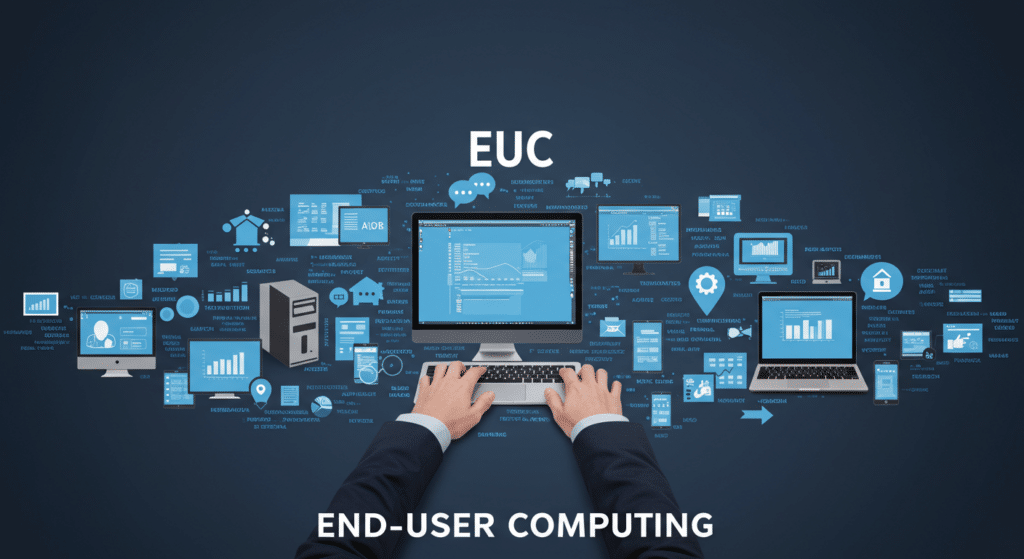
What is End-User Computing (EUC)?

End-User Computing (EUC) refers to the suite of technologies and solutions that enable employees to access and interact with business applications, data, and services.

This encompasses a wide range of devices, including virtual desktops, desktop and notebook computers, and mobile devices. EUC solutions are designed to provide a seamless and efficient user experience, regardless of the device or location.

At its core, EUC aims to empower users by delivering the necessary tools and resources to perform their tasks effectively. This includes desktop operating systems, business applications, web apps, and mobile-friendly versions of software. By centralizing these user-facing resources, organizations can streamline management, enhance security, and improve overall productivity.

In today’s fast-paced business environment, EUC is crucial for maintaining a competitive edge. It allows employees to work from anywhere, using any device, while ensuring that they have access to the same high-quality experience and resources.

This flexibility is particularly important as remote work and mobile computing become increasingly prevalent.


The Case for Hybrid EUC Deployments with Virtual Desktops

The End User Computing: State of the Union 2023 survey, found that 45% of EUC solutions operate in a hybrid environment – on-premises and public cloud. This approach, commonly referred to as “Cloud Smart”, where virtual desktops and applications run both on-premises and in public clouds, and is specific use case dependent.

End user computing services support this approach by enabling access to corporate applications across various platforms and supporting diverse endpoint devices.

  • Security and Compliance: For organizations in highly regulated industries, such as finance, healthcare, and government, hybrid EUC deployments offer a higher level of security and compliance. By keeping sensitive data and applications on-premises, organizations can better control access and ensure that sensitive information is protected.


  • Customization and Control: Hybrid EUC deployments offer a higher level of customization and control. Organizations can tailor their EUC environment to meet their specific needs, and make changes as needed without relying on a third-party provider. An end user computing solution provides centralized access to applications and data, enhancing flexibility and scalability for various business needs.


  • Performance and Reliability: Hybrid EUC deployments can offer better performance and reliability, particularly for organizations with high-bandwidth or low-latency requirements. By hosting applications and data on-premises, organizations ensure data sovereignty and availability of critical applications.


  • Cost Savings: While cloud-based EUC solutions can offer cost savings in some cases, hybrid deployments can be more cost-effective for organizations with a large number of users or high-performance requirements.


Deploying an EUC platform in-house is critical for these scenarios:

  • Highly Regulated Industries: Organizations in highly regulated industries, such as finance, healthcare, and government, may require in-house EUC deployments to ensure compliance with strict regulations.


  • High-Performance Requirements: Organizations with high-performance requirements, such as engineering, video production, or scientific research, may require in-house EUC deployments to ensure that critical applications are always available and performing at optimal levels.


  • Large-Scale Deployments: Organizations with a sizable number of full-time employees using similar applications or shift-workers sharing equipment may find that in-house EUC deployments are more cost-effective.


  • Customized Solutions: Organizations with unique requirements or custom applications may find that in-house EUC deployments offer the level of customization and control they need.


Apporto Hybrid End User Computing Solution

To address the challenges of traditional cloud deployments, hybrid Apporto EUC deployments have gained prominence in recent years. This approach combines the benefits of both on-premises infrastructure and public clouds, offering organizations greater flexibility and control over their IT environment.

Additionally, the solution supports a variety of endpoint devices, accommodating trends like BYOD and ensuring access across diverse hardware, software, and networks.

  • Scalability: One of the significant advantages of hybrid Apporto EUC deployments is the ability to scale resources dynamically. Organizations can easily scale up or down based on their needs, ensuring optimal performance without incurring unnecessary costs.

    This flexibility also allows businesses to experiment with new technologies and quickly adapt to evolving market conditions. An up-to-date operating system is crucial in this context, as it ensures compatibility and optimal performance across different environments.


  • Data Security and Compliance: Organizations can keep sensitive and critical data in their on-premises infrastructure while utilizing public clouds for other non-sensitive workloads. This segregation helps mitigate the risks associated with data breaches and ensures compliance with industry regulations.


  • Disaster Recovery: By diversifying their IT infrastructure across on-premises and cloud environments, organizations can enhance their resilience to potential outages or disasters.

    This setup enables them to maintain business continuity and minimize downtime in the face of unforeseen events, safeguarding their operations and reputation.


Preparing Your Business for Apporto End User Computing Services

To prepare for the future of hybrid Apporto EUC deployments, businesses should stay informed about the latest technological advancements and industry trends. Regularly assessing and updating their cloud strategies will ensure they remain competitive and achieve their business objectives.

Workspace suites play a crucial role in managing a mobile workforce and integrating new technologies, although they may still face challenges related to compatibility and user experience.

Additionally, fostering a culture of continuous learning and adaptability within the organization will enable employees to embrace new technologies and leverage them effectively for business growth. Investing in training programs and providing employees with the necessary resources to upskill will be essential in staying ahead of the curve.


Conclusion

In conclusion, the cloud conundrum can be solved with the adoption of hybrid Apporto EUC deployments. By combining the benefits of on-premises infrastructure and public clouds, organizations can achieve greater flexibility, scalability, and control over their technology environment.

As the future of cloud computing evolves, keeping up-to-date with trends and preparing for new developments will be crucial for businesses to thrive in the digital landscape.

Our team of experts can help you determine the best approach for your organization and ensure a seamless deployment. Contact us today to learn more.

Is Academic Grading Helpful in Performance?

Report cards still land with a thud. Sometimes literal, sometimes emotional. Grades remain one of the most visible signals of academic performance, the shorthand everyone seems to understand. Parents scan them.

Colleges sort by them. Students, whether they admit it or not, often internalize them. In that sense, grades matter. They influence academic trajectories, shape confidence, and open or close doors tied to opportunity.

And yet, there’s a growing pause in the room. A hesitation. By 2026, more educators are openly questioning whether academic grading alone deserves the weight it carries. Grades capture something real, no doubt, but only a slice. Learning is messier.

Personal growth doesn’t move in neat increments. Mastery develops unevenly. This tension sits at the heart of the question: is academic grading helpful in performance, or has education leaned too heavily on a tool that was never meant to carry the full story?

To answer that honestly, it helps to start small, inside the classroom itself.


What Do Grades Actually Measure in a Classroom Setting?

Strip grades down to their basics and they become less mysterious. A grade primarily reflects how you performed in a particular class, under specific conditions, during a defined period of time.

It captures classroom performance, study habits, and how effectively you navigate tests, quizzes, assignments, and homework. That’s not nothing. Those behaviors matter.

Grades can also signal organization and persistence. Showing up prepared. Submitting work consistently. Applying concepts across assignments.

A letter grade often bundles these habits together, whether intentionally or not. In that sense, a grading system does reward effort alongside outcomes.

But there are limits. Grades do not measure overall intelligence or raw ability. They rarely capture creativity, collaboration, or how well you apply knowledge outside the classroom.

A student who struggles with timed exams may understand concepts deeply yet earn an average grade. Another may memorize efficiently, test well, and still struggle to transfer skills elsewhere.

So while grades offer a useful snapshot, they are context-bound. They describe performance in that classroom, not the full range of skills, potential, or understanding a student carries beyond it.


Why Grades Still Matter for Colleges, Universities, and Scholarships

Student receiving a merit-based scholarship award based on academic performance and grades.

For all their imperfections, grades continue to carry serious weight once decisions leave the classroom. Grade point averages remain a cornerstone of college admissions and graduate school evaluations.

In an era of test-optional policies, GPA has only grown more influential, becoming one of the few standardized signals institutions can compare across applicants.

Merit-based financial aid often hinges on GPA thresholds. Scholarships, honors programs, and eligibility cutoffs rely on grade point averages to allocate limited resources. Many state colleges use GPA benchmarks to determine admission or continued enrollment. In these systems, grades function less as feedback and more as filters.

From an institutional perspective, this makes sense. Grades provide a consistent, familiar metric for academic success. They suggest readiness, endurance, and the ability to meet expectations over time. Even critics of grading acknowledge this practical role.

The result is a paradox. Grades are imperfect measures of learning, yet they remain powerful gatekeepers. Understanding that tension is essential before dismissing grading outright.


Do High Grades Predict Long-Term Success After School?

The relationship between grades and success is complicated, but not imaginary. Higher GPAs correlate with higher college completion rates. Students with strong academic records are more likely to graduate within six years, a metric universities track closely.

For early-career roles and competitive internships, employers often consider GPA as a screening tool, especially when other experience is limited.

At the same time, grades are blunt predictors. They do not reliably forecast leadership, adaptability, creativity, or long-term employability. A high GPA reflects mastery of academic knowledge and consistency within structured environments. It says far less about how someone navigates ambiguity, collaboration, or real-world problem solving.

In short, good grades predict academic success better than they predict life success. They signal that you can learn within systems, meet expectations, and perform under pressure.

Those are useful skills. Just not the whole skill set. And that distinction becomes important as conversations shift from performance to growth.


How Grades Can Motivate Students — When the System Works

College student studying with focus and motivation, guided by clear academic goals.

Under the right conditions, grades can act like a compass. They give you a clear performance target, something concrete to work toward rather than a vague sense of “doing okay.” When expectations are transparent, grades help you understand what success looks like in a particular class and how much effort is required to reach it.

Grades can also encourage responsibility. Deadlines matter more when outcomes are visible. Time management improves when assignments stack up and performance is tracked. Over time, many students learn to pace themselves, prepare earlier, and adjust how they study. That’s not accidental. It’s a response to structure.

Clear grading criteria plays a big role here. When you know how work is evaluated, engagement tends to rise. Feedback tied directly to grades often improves subsequent assignments because it shows what to repeat and what to fix, not in theory, but in practice.

When grading supports learning, it often helps with:

  • Tracking progress through grades, making improvement visible
  • Encouraging hard work and persistence, especially across longer courses
  • Creating accountability across courses, not just isolated tasks

In these cases, grades motivate students not through fear, but through clarity.


When Grades Undermine Learning, Motivation, and Well-Being

The same system that motivates can just as easily discourage. Fear-based grading shifts attention away from learning and toward avoidance. When the cost of a bad grade feels too high, risk-taking disappears. Students choose safer topics, easier courses, familiar strategies. Growth slows.

High-stakes grading increases anxiety and stress, especially when performance feels tied to identity. A single bad grade can overshadow weeks of effort. Over time, grade chasing replaces curiosity. Memorization takes priority over mastery because it feels safer. Faster. More predictable.

Persistent pressure has consequences. Emotional growth suffers when self-worth becomes entangled with numbers. Confidence erodes. Some students disengage entirely, deciding that trying harder only raises the stakes.

Common warning signs include:

  • Losing interest in learning, especially in challenging subjects
  • Avoiding difficult courses, even when interest exists
  • Tying self-worth to grades, rather than progress

In these moments, grades stop guiding learning and start distorting it.


Do Grades Measure Knowledge or Just Test Performance?

Classroom assessment scene highlighting pressure, time limits, and external performance factors.

Grades often lean heavily on tests, quizzes, and timed assessments. That emphasis rewards short-term recall and speed more than durable understanding. Doing well on an exam does not always mean you’ve mastered the underlying concepts, whether in math, writing, or more abstract subjects.

Averaging grades can further muddy the picture. Early struggles linger even after improvement, masking growth and misrepresenting current mastery. Standardized tests add another layer. They favor certain learners, often those comfortable with pressure, language nuance, or specific testing formats.

External factors complicate things further. Home environment, access to quiet study space, family responsibilities, even health can influence performance in ways effort alone can’t offset. Two students may understand the same material equally well and still earn different grades.

So while grades capture a version of knowledge, they often reflect how well you perform under specific conditions, not the full depth of what you understand or can apply.


How Grading Systems Can Reinforce Inequality Without Meaning To

Most grading systems aim to be fair. Yet outcomes tell a more complicated story. Traditional grading can unintentionally favor privileged students who have access to tutors, stable home environments, and additional resources. Those supports translate into better preparation, not necessarily greater ability.

Home environment matters. Reliable internet, quiet space, parental support, and time all influence performance. Students without these advantages may work just as hard, sometimes harder, and still fall behind. Grades, in those cases, reflect opportunity more than potential.

This doesn’t mean grades are malicious. It means they are blunt instruments. When applied uniformly to unequal conditions, they amplify existing gaps. Children from less supported backgrounds often carry those effects through school, reinforcing inequality across grade levels.

Recognizing this isn’t about abandoning standards. It’s about understanding that performance, as measured by grades, is shaped by context as much as capability.


Why Feedback Is a Better Indicator of Learning Than Grades Alone

Teacher providing narrative feedback that explains strengths and next steps beyond a letter grade.

Grades summarize. Feedback explains. That difference matters more than it sounds.

Narrative feedback offers nuance that a letter grade simply cannot. A “B” tells you where you landed. It does not tell you why or what to do next. Feedback fills that gap.

It shows patterns, highlights strengths, and points to specific areas where improvement will actually move the needle. That’s why students consistently perform better when feedback comes before grades. The learning is still active. The mind is still open.

Feedback supports mastery because it invites reflection. You are not just reacting to a score. You are revising, adjusting, and trying again. That iterative loop is where learning deepens. Grades without feedback, on the other hand, tend to shut the loop too early. The moment passes. The opportunity is lost.

What effective feedback provides is practical:

  • Actionable guidance you can apply immediately
  • Skill-specific improvement tied to learning objectives
  • Reflection and revision that turns mistakes into progress

In the learning process, feedback is the map. Grades are just the pin.


What Is Standards-Based Grading and Why Is It Gaining Momentum?

Standards-based grading, often called SBG, starts from a simple question: What do you actually know right now? Instead of averaging every attempt across a semester, SBG prioritizes mastery over time. The focus shifts from accumulation to understanding.

In practice, this means emphasizing the most recent evidence of learning. Early mistakes matter less once mastery is demonstrated. That alone addresses one of the biggest criticisms of traditional grading, where early struggles can permanently drag down performance even after improvement.

SBG also reduces grade inflation distortions. When grades represent mastery of clearly defined standards, they become more meaningful and more comparable. Educators gain clearer insight into what students have actually learned, not just how they performed under pressure.

By 2026, adoption is increasing across K–12 and higher education settings. The momentum comes from frustration with systems that reward compliance more than development. Standards-based grading reframes the grading system as part of the learning process, not just its final judgment.


Can Grades and Performance Coexist Without Damaging Learning?

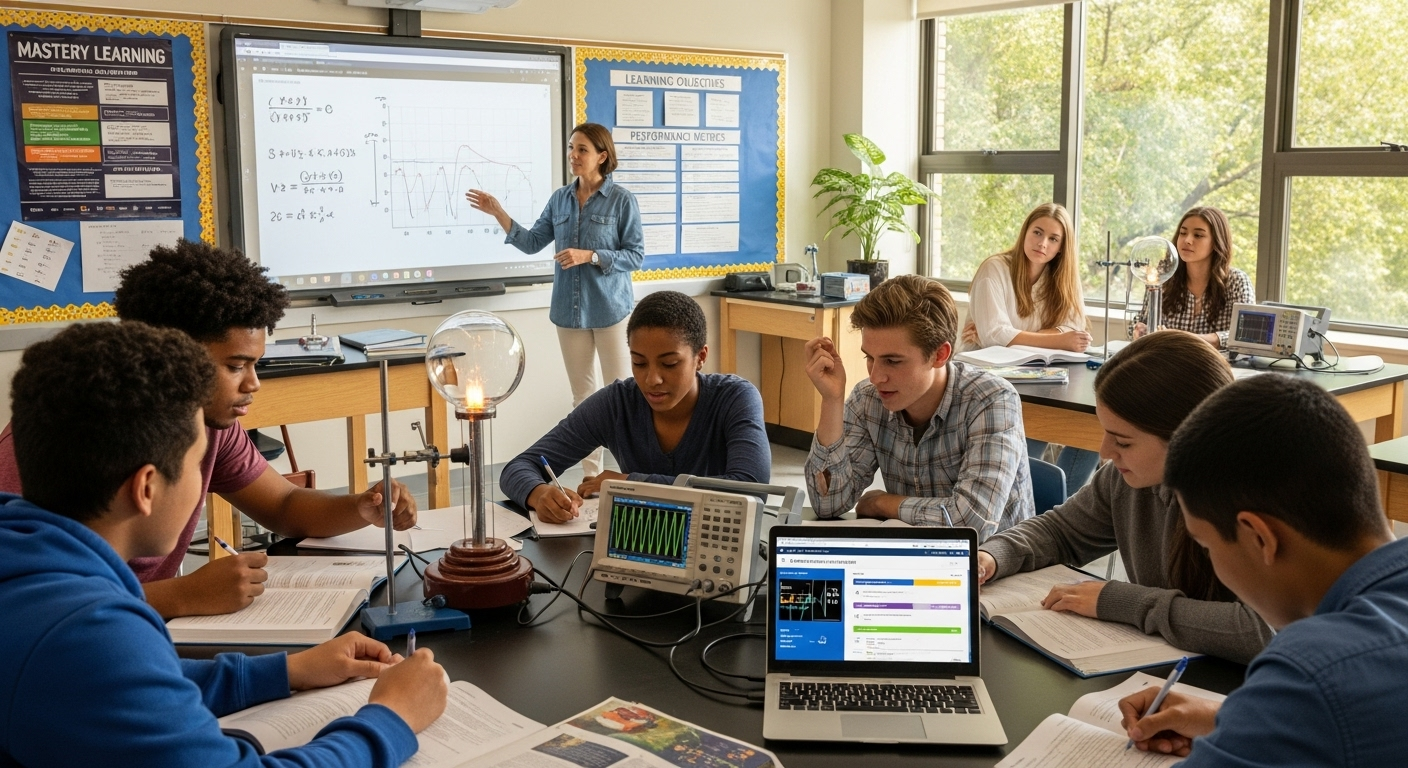
Classroom scene emphasizing learning, mastery, and performance alignment.

They can. But only if grades stop trying to do everything alone.

Grades should not be the sole measure of academic success. When they are, performance narrows. Students chase points instead of understanding. But when grades guide next steps instead of ending the conversation, performance improves. The grade becomes a signal, not a sentence.

Research and classroom practice point to the same conclusion. Feedback and grading together outperform grading alone. Feedback explains the grade. The grade anchors accountability. Together, they support both learning and responsibility.

Balanced systems recognize that performance includes effort, growth, and mastery. Students perform best when expectations are clear and support is continuous. Grades still play a role. They just no longer dominate it.

In that balance, students are better prepared. Not just to pass, but to actually achieve what the course expects of them.


How PowerGrader Helps Grades Reflect Learning, Not Just Scores

Making grades meaningful at scale is hard. PowerGrader is designed to address that challenge without removing educators from the center of the process.

PowerGrader supports instructor-controlled AI feedback, ensuring that grading criteria are defined by educators and applied consistently. This consistency matters. It reduces ambiguity for students and bias across cohorts. At the same time, pattern detection surfaces common gaps early, allowing instructors to respond before small issues become systemic.

By reducing grading workload, PowerGrader gives instructors time back. Time for mentoring. Time for instructional decisions. Time for feedback that actually improves learning.

The platform follows a feedback-first, human-in-the-loop grading model. AI assists. Educators decide. Grades become clearer, fairer, and more closely tied to mastery rather than mechanics.


Conclusion:

Grades provide structure. They offer a shared language. They help institutions make decisions at scale. But they are not complete.

Performance includes growth, mastery, effort, and context. When grades stand alone, they flatten that complexity. When paired with feedback, they gain meaning. Learning becomes visible. Improvement becomes possible.

The future of academic grading favors balance over extremes. Grades still matter, but they work best when they guide learning rather than define it. In that future, performance is not reduced to a number. It is understood as a process.


Frequently Asked Questions (FAQs)


1. Are grades a good measure of academic performance?

Grades measure classroom performance and test outcomes, but they do not fully capture understanding, growth, or real-world skills on their own.

2. Do grades motivate students to learn?

Grades can motivate when expectations are clear, but fear-based grading often reduces curiosity and discourages deeper learning.

3. Why do colleges care so much about GPA?

GPA provides a standardized way to compare academic performance, especially as standardized tests become less central in admissions.

4. Can students succeed without high grades?

Yes. High grades help with admissions and scholarships, but long-term success depends on skills, adaptability, and continued learning.

5. Is feedback more important than grades?

Feedback is more useful for improvement because it explains strengths and gaps. Grades without feedback rarely support learning.

6. What is standards-based grading?

Standards-based grading focuses on mastery of skills rather than averaging performance across time, emphasizing recent evidence of learning.

7. How can grading be improved?

Grading improves when combined with clear feedback, consistent criteria, and systems that prioritize learning over point accumulation.

What Is an AI Exam Helper? A Detailed Guide

Halfway through the semester, when deadlines stack up and revision notes start to blur together, a familiar question tends to surface. Is there a smarter way to prepare without cutting corners?

That question sits at the heart of the conversation around AI exam helpers. You hear the term everywhere, often bundled with anxiety, curiosity, and no small amount of confusion.

This article unpacks what an AI exam helper actually is, how it works, and where the lines are clearly drawn. You will see how these tools fit into exam preparation, where they help, and where they cross into territory that most schools explicitly prohibit.

Understanding that distinction matters. Used well, AI exam helpers support learning. Used poorly, they undermine it. Let’s start with the basics before moving into how these tools really function behind the scenes.


What is an AI Exam Helper, Really?

An AI exam helper is an AI-powered tool designed to support students during exam preparation, review, and, in some cases, assessment-related workflows. At its core, it assists with understanding, not substitution. That distinction is important. In 2026, AI exam helpers are formally defined as learning aids, not exam shortcuts.

These tools are often described as 24/7 digital tutors because they are available whenever you study. They help explain concepts, generate practice questions, summarize materials, and respond quickly when you are stuck.

You will find them used across subjects, from computer science and organic chemistry to broader general education courses where revision demands can feel relentless.

What an AI exam helper is not is equally important. It is distinct from hiring someone to take an exam on your behalf. That practice violates academic integrity outright. AI exam helpers are meant to support the learning process, not replace it.

Understanding that boundary sets the stage for everything that follows, especially when you start asking how these tools actually work.


How Do AI Exam Helpers Actually Work Behind the Scenes?

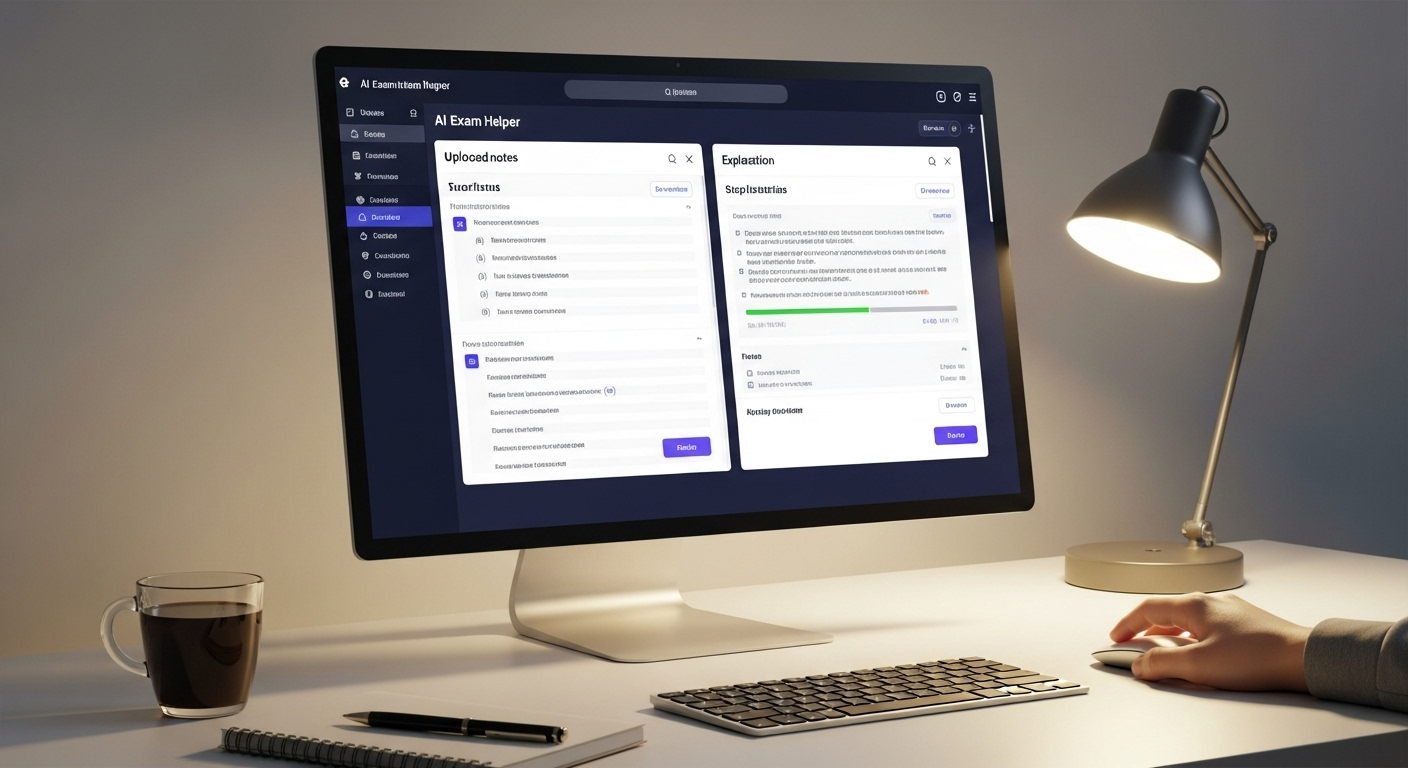
AI-powered exam helper analyzing uploaded notes and questions to generate step-by-step explanations

The mechanics are less mysterious than they sound. AI exam helpers rely on a combination of natural language processing and machine learning to function. Together, these technologies allow the tool to interpret content, respond meaningfully, and adapt over time.

Most AI exam helpers analyze uploaded materials such as PDFs, lecture slides, textbook photos, and past exams. Large language models interpret question types, intent, and difficulty rather than just matching keywords.

That is why explanations often feel contextual instead of canned. Systems generate summaries, step-by-step solutions, and clarifications designed to support understanding, not just completion.

Equally important, AI exam helpers track progress and performance over time. Patterns emerge. Weak areas become visible. Support adjusts.

Behind the scenes, this typically involves:

  • Natural language processing, used to understand exam questions and written answers
  • Machine learning, which adapts explanations to learning pace and topic difficulty
  • Data analytics, helping track readiness, gaps, and overall progress

Once you see how these systems operate, it becomes clearer what they can and cannot do during study time.


What Can an AI Exam Helper Help You Do While Studying?

Used responsibly, an AI exam helper acts like a structured study partner that never gets tired. It can generate practice exam questions tailored to your course material and create dynamic quizzes based on past exams or uploaded content. That repetition helps reinforce knowledge without turning study sessions into guesswork.

AI exam helpers also explain important points and break down complex concepts when textbooks or notes feel impenetrable. Instead of rereading the same paragraph, you can ask for clarification, examples, or alternative explanations. Many tools also summarize readings and help organize notes, which saves time during high-pressure weeks.

Support tends to be practical and concrete:

  • Practice short-answer questions similar to real exams
  • Review different topics within a single course
  • Get explanations instead of just answers
  • Track study progress and time spent

Because these tools adapt to your pace, you study at your own speed rather than rushing to keep up with an external schedule. That flexibility is helpful. But it also raises an obvious question about boundaries. What happens when studying turns into testing?


Can AI Exam Helpers Give You Answers During an Exam?

Classroom testing environment emphasizing fairness, honesty, and independent student work.

Technically, yes. AI can generate answers and explanations almost instantly. But context matters more than capability. Using an AI exam helper during a live or proctored exam is considered cheating in most educational institutions. There is no gray area here.

AI exam helper services that take exams on behalf of students violate academic integrity outright. In 2026, 53 percent of students believe AI-based plagiarism is more prevalent than in previous years, which has pushed schools to tighten policies and monitoring. The expectation is clear. AI-generated answers must reflect original student thinking to be valid for submission.

Preparation is allowed. Live assistance during an exam is not. That distinction protects fairness and learning outcomes. Understanding where that line sits is essential before relying on any AI-powered tool.

From here, it becomes important to explore how exam helpers differ from homework tools, and why that difference shapes how they should be used.


Are AI Exam Helpers the Same as Homework Helpers?

They look similar on the surface, which is where the confusion starts. AI exam helpers and homework helpers both rely on artificial intelligence, both respond quickly, and both can support students across multiple assignments. But their purpose and timing differ in important ways.

Homework helpers focus on assignments and practice. They assist during the learning process by helping you work through problems, understand concepts, and complete tasks that are meant to be formative. The goal is repetition and skill-building. Exam helpers, by contrast, focus on review, readiness, and exam strategies. They help you prepare, not submit.

Both tools can save time on tasks that would otherwise feel time consuming, such as organizing notes or reviewing different topics before a test. And both carry misuse risks if they replace thinking instead of supporting it. The distinction matters because policies often treat homework support differently from exam-related assistance.

Understanding that difference helps you use the right tool at the right moment, without crossing lines that institutions take seriously.


How Do AI Exam Helpers Personalize Learning for Each Student?

Student using AI exam helper that adjusts difficulty and learning pace in real time.

Personalization is where AI exam helpers tend to shine, when used as intended. These tools track study time, accuracy, and topic mastery as you work. Over time, patterns emerge. Strong areas become obvious. Weak spots stop hiding.

Based on performance, explanations adjust. If you struggle with one concept, the tool slows down and reframes it. If you move quickly, it shifts difficulty rather than repeating what you already know. Practice tests are generated dynamically, pulling from different question types to match where you are in the learning process.

Support also adapts to learning styles. Some students benefit from step-by-step breakdowns. Others prefer summaries or comparisons. AI exam helpers adjust accordingly.

Common personalization features include:

  • Personalized study plans built around course material
  • Adaptive question difficulty that responds to progress
  • Progress tracking dashboards showing readiness and gaps

This level of tailoring can deepen understanding, but it also raises expectations. Personalization only helps if it leads to active learning, not passive dependence.


Do AI Exam Helpers Actually Improve Exam Performance?

For many students, the short answer is yes, with conditions. Students often report improved confidence when using AI exam helpers because uncertainty drops. You know what you’ve covered. You know what still needs work.

These tools can also reduce exam-related stress by helping manage time and focus. Instead of cramming blindly, study sessions become structured. That structure matters. When AI is used for preparation rather than shortcuts, performance tends to improve because understanding improves.

However, there is a tradeoff. Over-reliance can reduce long-term retention. When answers appear too quickly, effort shrinks. Learning becomes shallow. That is why improvement depends on how the tool is used, not simply whether it is used.
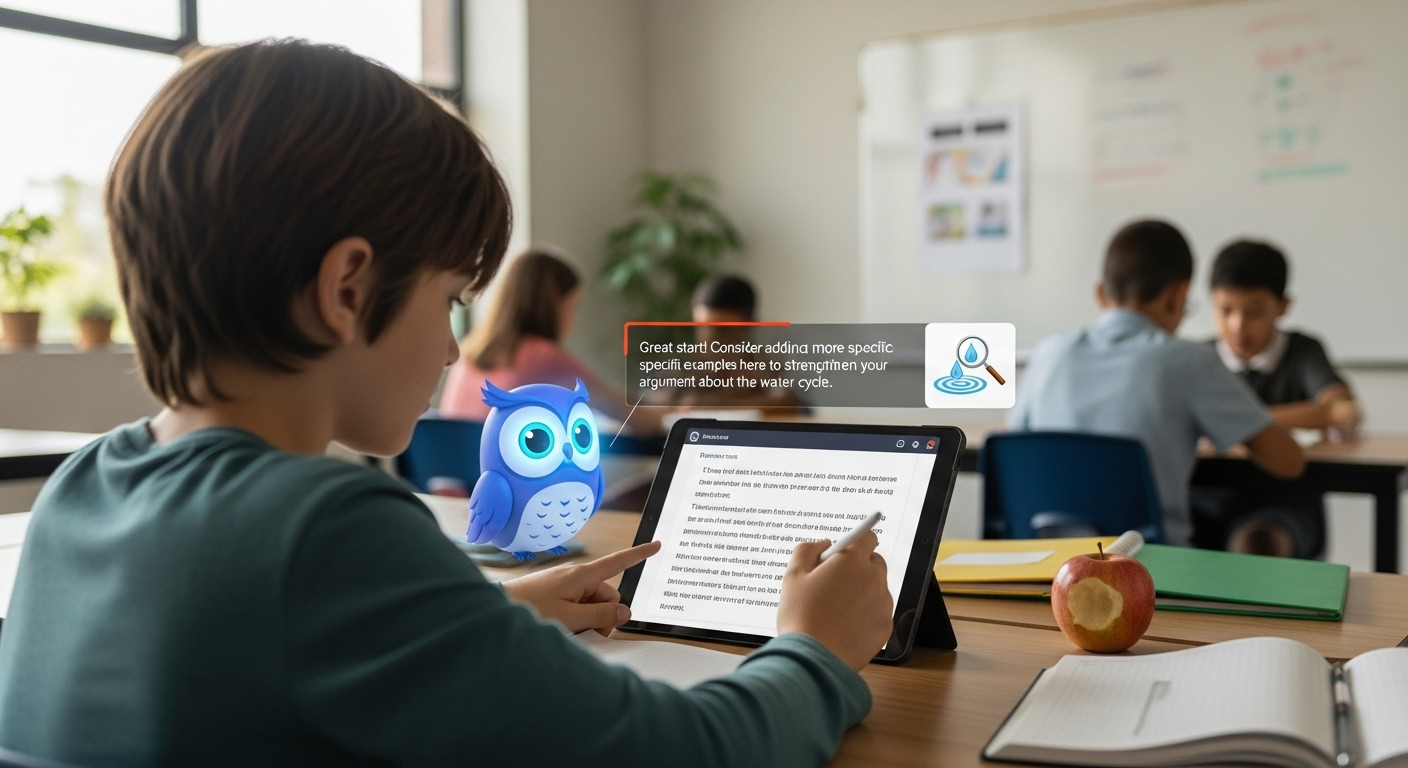
AI exam helpers support progress when they guide thinking. They undermine it when they replace thinking. The difference shows up most clearly over time, not just on one test.


What Are the Risks of Using an AI Exam Helper?

Student hesitating before using AI exam helper, reflecting concerns about academic integrity and learning.

No tool is neutral. AI exam helpers carry real risks that are easy to overlook when convenience takes center stage. Academic misconduct and plagiarism risks sit at the top of the list. Generating answers without understanding invites violations that institutions increasingly monitor.

There is also a cognitive cost. Over-reliance can lead to disengagement, where effort drops and critical thinking erodes. When struggle disappears entirely, learning often follows it out the door.
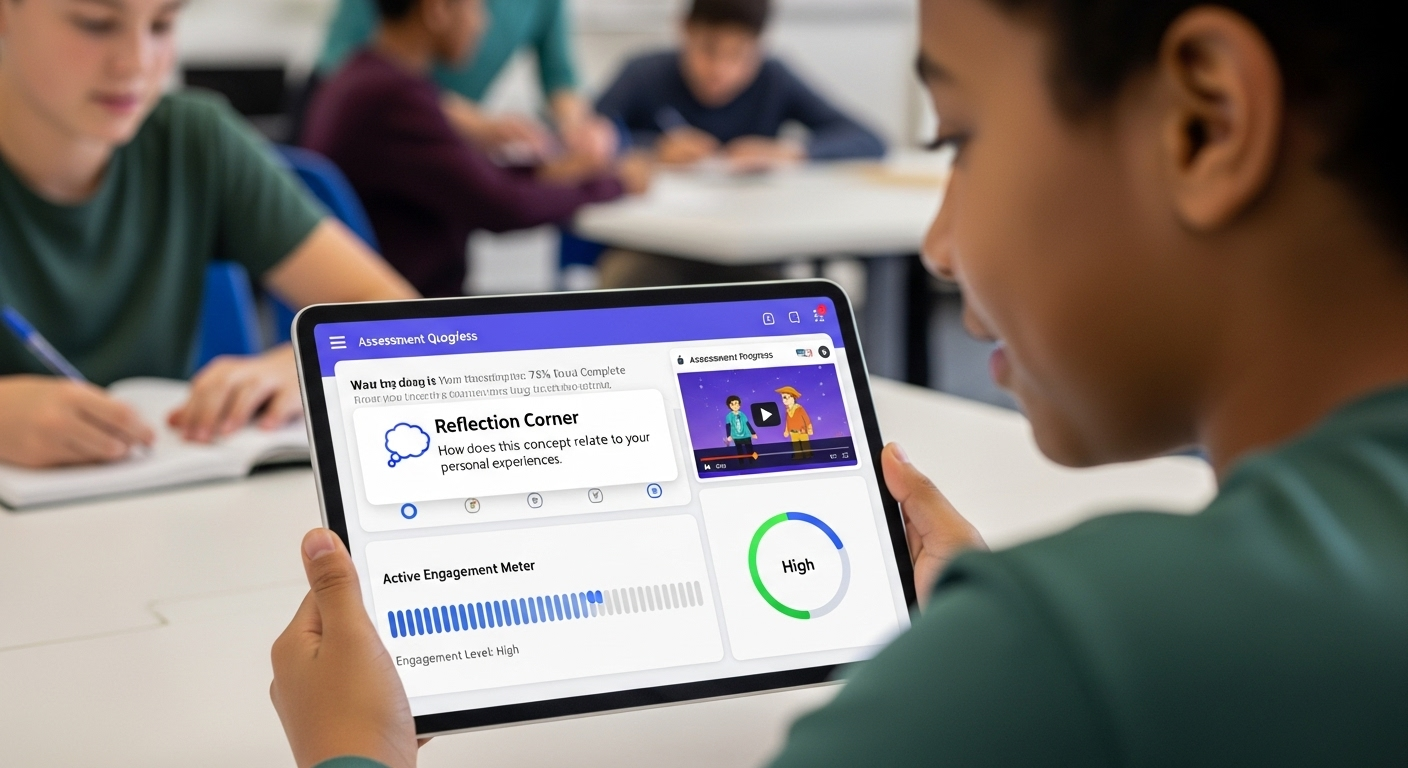
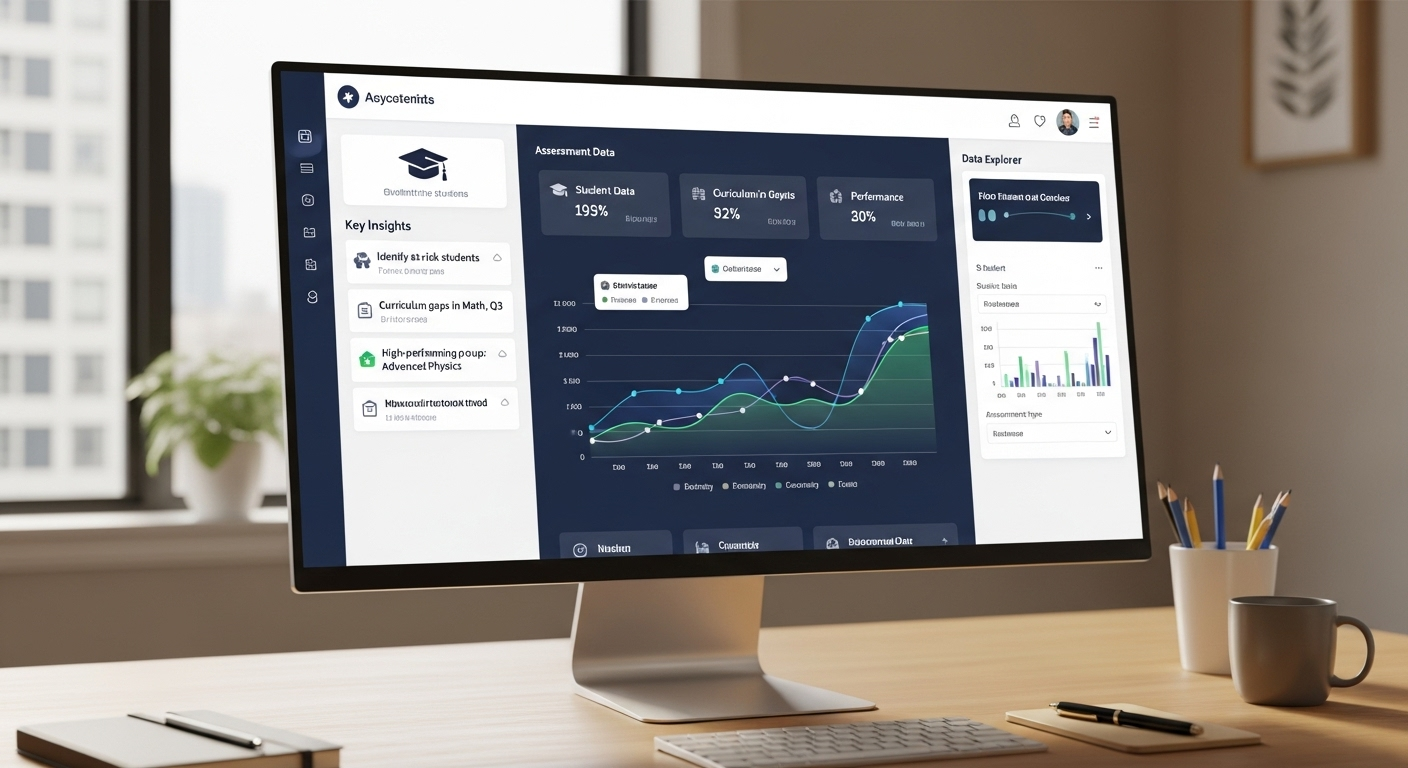
Other concerns are structural:

  • Integrity violations, especially during restricted assessments
  • Privacy risks, tied to data collection and storage
  • Loss of critical thinking, from habitual shortcutting
  • Ethical concerns, around fairness and access

Reduced student-teacher interaction is another risk. When AI becomes the default source of help, mentorship fades. These risks do not mean AI exam helpers should be avoided. They mean boundaries matter.


How Do Schools and Universities Use AI in Online Exams?

Institutions approach AI from the opposite angle. While students use AI exam helpers to prepare, schools use AI to secure and manage online exams. AI-powered proctoring tools monitor exams in real time, flagging unusual behavior and enforcing rules at scale.

Identity verification may include facial recognition or biometric analysis, particularly in proctored exam environments. AI analyzes patterns rather than isolated actions, which helps reduce false positives. Automated grading also plays a role, improving efficiency and accuracy for objective question types.

Beyond monitoring, AI streamlines exam creation and management. Question banks grow faster. Scheduling becomes simpler. Educators spend less time administering exams and more time teaching.

The same technology that supports learning can also enforce integrity. Context determines which side you see.


Is Using an AI Exam Helper Ethical or Allowed?

Student reviewing university AI usage policy alongside study tools.

The answer depends on policy, timing, and intent. Most institutions allow AI exam helpers for exam preparation. Reviewing content, practicing questions, and clarifying concepts typically fall within acceptable use.

Using AI during a live or proctored exam is usually prohibited. That line is rarely ambiguous. Ethical use emphasizes learning, not outsourcing thinking. Transparency matters. If you are unsure, institutional guidelines are the authority, not the tool’s marketing language.

Ethics here are practical, not abstract. AI should support understanding. Once it replaces it, the relationship breaks down. Knowing where your institution draws that boundary is part of responsible use.


How Can Educators Use AI Exam Helper Technology Responsibly?

From an educator’s perspective, AI exam helper technology offers leverage when applied thoughtfully. AI can automate grading and assist with exam creation, saving time that would otherwise be consumed by repetitive tasks.

That time matters. When administrative load shrinks, educators focus more on teaching, mentoring, and curriculum design. AI also supports exam integrity by helping detect irregular patterns and enforce consistent assessment criteria.

Responsible use requires structure. Clear policies, training, and transparency are essential. Educators must understand not only what AI can do, but what it should not do. When that balance is in place, AI supports assessment without undermining trust.


How Can PowerGrader Support Ethical, Scalable Exam Assessment?

Apporto's page highlighting AI-assisted grading with demo call-to-action and time-saving metrics.

Ethical assessment becomes harder as scale increases. PowerGrader is designed to address that challenge without removing educators from control. It provides instructor-controlled AI feedback, ensuring assessment criteria are defined by humans and applied consistently.

Pattern detection across cohorts helps surface common issues early, rather than after final grades. At the same time, PowerGrader reduces workload without lowering rigor, allowing educators to focus on instruction rather than repetitive grading.

Most importantly, the platform follows a human-in-the-loop governance model. Educators can review, adjust, or override AI outputs at any stage. This design keeps accountability where it belongs while still delivering efficiency at scale.

That balance makes ethical, institution-ready assessment practical, not theoretical. Try Apporto’s AI PowerGrader today!


Conclusion:

AI exam helpers are evolving away from shortcuts and toward structured learning tools. The trend is clear. Stronger emphasis on ethics, clearer boundaries, and better alignment with educational goals.

Human judgment remains essential. No system replaces mentorship, curiosity, or accountability. The future lies in balance. AI supports learning, educators guide it, and students remain responsible for their own progress.

When support and accountability coexist, AI exam helpers become what they were meant to be. Tools. Not substitutes.


Frequently Asked Questions (FAQs)


1. What is an AI exam helper?

An AI exam helper is an AI-powered tool that supports exam preparation by explaining concepts, generating practice questions, and helping students review material responsibly.

2. Can AI exam helpers be used during exams?

Using AI exam helpers during live or proctored exams is generally prohibited and considered a violation of academic integrity policies.

3. Are AI exam helpers considered cheating?

AI exam helpers are not cheating when used for preparation, but generating answers during restricted exams is widely classified as academic misconduct.

4. Do AI exam helpers replace studying?

No. They support studying by organizing materials and explaining concepts, but effective learning still requires effort, reflection, and practice.

5. Are AI exam helpers safe to use?

Safety depends on the tool. Risks include data privacy concerns, over-reliance, and misuse if institutional guidelines are ignored.

6. How do schools detect AI misuse during exams?

Schools use AI-powered proctoring, behavior analysis, and identity verification to monitor exams and flag irregular activity.

7. Can educators benefit from AI exam helper technology?

Yes. Educators use AI to automate grading, generate assessments, and support exam integrity while spending more time on teaching and student support.

What Is Academic Feedback? All You Need to Know

Academic feedback sounds formal, but the idea is straightforward. It is information given to students about their performance on an assignment, task, or activity. Not a verdict. Not a score in isolation. Information meant to be used.

The purpose is simple but powerful. Academic feedback guides future learning and behavior by showing where your current performance sits in relation to learning goals.

When it works, it reduces the gap between where you are and where you are trying to go. That is why effective academic feedback focuses on growth, not judgment. It addresses the work, not the person behind it.

This is also why feedback sits at the center of effective teaching and learning. Progress rarely happens by accident. Learning improves when experience turns into understanding, and understanding informs the next attempt. But definition alone doesn’t explain impact.

To see why feedback matters as much as it does, let’s look at what it actually changes for students over time.


Why Is Academic Feedback So Important for Students?

Learning improves fastest when communication is clear. Academic feedback strengthens the connection between teachers and students by turning evaluation into dialogue. Instead of guessing what went wrong, you are shown where you stand and what to work on next.

The effect is measurable. Research shows that effective feedback can advance learning by six to eight months within a single academic year.

That happens because feedback makes strengths visible and weaknesses actionable. You are no longer responding to a grade. You are responding to guidance.

Balanced feedback also plays a quieter role. It builds academic confidence. When progress feels understandable, motivation follows. Students are more willing to persist, revise, and improve when they know what is working and why.

This importance raises a practical question. If feedback matters this much, how it is given and what kind of feedback students receive becomes just as critical. That’s where understanding different types of academic feedback starts to matter.


How Does Academic Feedback Help You Learn and Improve Over Time?

Close-up of annotated student paper highlighting constructive feedback and skill development

Learning rarely improves in one jump. It moves in small corrections. Academic feedback is what makes those corrections possible. By showing how your current work compares to desired learning objectives, feedback bridges the gap between where you are now and where you are expected to be.

Timing plays a quiet but important role. Timely feedback strengthens neural connections linked to retention, which means you are more likely to remember what worked and why.

When feedback is specific, it reinforces effective behaviors instead of leaving you guessing. You know which skills to repeat, refine, or rethink.

Iteration matters just as much. When feedback arrives early enough to act on it, improvement becomes part of the process rather than a post-mortem. You revise. You adjust. You try again before final evaluation locks everything in.

Over time, this cycle supports steady development instead of last-minute fixes. To make that cycle work, though, it helps to understand that not all feedback serves the same purpose. Different situations call for different kinds of guidance.


What Are the Different Types of Academic Feedback You Might Receive?

Academic feedback comes in several forms, and each one plays a distinct role in learning. Some feedback is informal, offered during discussion or practice. Other feedback is formal, recorded and tied directly to assessment. Understanding the difference helps you respond to it more effectively.

Formal feedback usually falls into two broad categories. Formative feedback is given during learning to help improve knowledge and skills before evaluation. Summative feedback appears at the end of a course or assignment and reflects overall performance.

Beyond timing, feedback also varies in purpose:

  • Formative feedback – ongoing guidance that supports improvement while learning is still in progress
  • Summative feedback – evaluation provided at the end of a course or unit
  • Corrective feedback – highlights where goals were met and where improvement is needed
  • Epistemic feedback – prompts clarification, explanation, or deeper thinking
  • Suggestive feedback – offers specific ideas for how to improve future work

Each approach serves a different need. Some help you fix errors. Others push you to think more deeply. Recognizing which type you are receiving makes it easier to use it well. That raises another question, though. With so many approaches available, what actually makes feedback effective?


What Does Effective Academic Feedback Actually Look Like?

Student reviewing structured feedback highlighting strengths and areas for improvement.

Effective academic feedback does not try to do everything at once. It is specific, actionable, and clearly aligned with learning objectives. Instead of vague praise or criticism, it explains what was done well and what needs attention next.

Good feedback focuses on observable behaviors rather than personal traits. It addresses the work, not the person. Clarity matters here. Feedback that is too broad or overwhelming often gets ignored, even when it is well-intended. Focused guidance is easier to understand and apply.

Effective feedback usually shares a few common qualities:

  • Clear reference to learning objectives, so expectations are visible
  • Actionable suggestions, not just descriptions of problems
  • Balanced tone, acknowledging strengths alongside areas for improvement
  • Attention to the most important issues, rather than every minor detail

When feedback encourages rather than discourages, it invites engagement instead of defensiveness. Once you can recognize what effective feedback looks like, the next challenge becomes understanding how it is delivered and why timing and format matter just as much as content.


What Is the Difference Between Formative and Summative Feedback?

Formative and summative feedback often get mentioned together, but they serve very different purposes. Formative feedback is ongoing and improvement-focused. It shows up while learning is still happening, when there is time to practice, reflect, and adjust. Think of it as guidance mid-journey rather than a judgment at the finish line.

Summative feedback, on the other hand, evaluates overall performance. It usually appears at the end of a course, unit, or assignment and often includes grades. Its role is to summarize what has been achieved, not necessarily to shape what comes next.

Both matter. Formative feedback supports reflection and skill development by encouraging iteration before evaluation. Summative feedback provides closure and accountability.

Academic development relies on the balance between the two. Once you understand when feedback is given, the next question becomes how it should be delivered to actually be useful.


How Should Feedback Be Delivered to Be Most Helpful?

In-person feedback session between teacher and student discussing academic progress.

Delivery changes everything. The same message can motivate or confuse depending on how and when it arrives. Timely feedback is consistently more effective than delayed feedback because it connects directly to the work while understanding is still active.

Different formats serve different needs. Written feedback allows for detailed comments that can be revisited. In-person feedback supports dialogue and clarification. Automated feedback offers speed and consistency, especially for practice-based tasks. The key is matching delivery to context.

Common delivery methods include:

  • Written comments on assignments, supporting careful review
  • In-person discussions, allowing immediate questions
  • Automated or digital feedback tools, providing rapid responses
  • Peer review feedback, offering alternative perspectives

There is also a limit. Too much feedback at once can overwhelm rather than help. Focused delivery makes feedback easier to absorb. That focus becomes even more interesting when feedback comes not only from instructors, but from peers as well.


What Role Does Peer Review Play in Academic Feedback?

Peer review changes the direction of feedback. Instead of only receiving comments, students also give them. That shift matters. Peer review helps students identify strengths and weaknesses in others’ work, which often sharpens awareness of their own.

Giving feedback improves understanding of what quality work looks like. You begin to notice structure, clarity, and reasoning in ways that are easy to miss when only reading your own writing. This process naturally strengthens critical thinking because it requires evaluation, explanation, and justification.

When peer review is structured, it supports learning outcomes rather than drifting into vague opinions. Clear criteria and guided prompts help ensure responses are useful.

Peer feedback does not replace instructor feedback, but it adds another layer to the learning process. And once multiple voices are involved, learning becomes less about receiving judgment and more about participating in improvement.


How Can You Learn to Receive Academic Feedback Without Taking It Personally?

Reflective learning moment showing emotional awareness and academic self-improvement.

Feedback can sting. That reaction is human. But academic feedback is not a judgment of who you are. It is information about your work. Separating those two ideas takes practice, and it matters more than most people realize.

Receiving feedback effectively starts with active listening. That means slowing down long enough to understand what is actually being said, rather than reacting to how it feels in the moment. Asking questions helps here. Clarifying intent turns confusion into understanding and replaces assumptions with specifics.

Reflection does the deeper work. When you pause to consider how feedback connects to learning objectives, it becomes easier to apply. You start to see patterns instead of isolated comments. A growth mindset supports this shift. Instead of viewing feedback as proof of limitation, you treat it as guidance for development.

Once feedback stops feeling personal, it becomes usable. And usable feedback is what leads to real improvement. The next step is knowing what to do with it after you’ve read it.


What Should You Do After Receiving Feedback on an Assignment?

Feedback only helps if it is used. One of the most effective habits is creating a simple record of feedback. Keeping track of written comments over time makes patterns visible and prevents repeating the same mistakes.

Reviewing feedback before future assignments also matters. It reconnects guidance to practice, instead of letting comments fade once a grade is posted. Students need explicit opportunities to work with feedback, not just read it. Implementation is where improvement actually happens.

Practical steps include:

  • Identify key points, focusing on recurring themes
  • Ask clarifying questions, especially when comments feel vague
  • Apply suggestions during revisions, not just mentally note them
  • Track progress over time, comparing earlier and later work

Feedback becomes powerful when it informs action. That action, in turn, feeds back into teaching practices themselves.


How Does Academic Feedback Fit Into Effective Teaching Practices?

Classroom scene showing continuous feedback dialogue between teacher and students.

Feedback is not an add-on to teaching. It is a core component of effective teaching practices. When feedback aligns with learning objectives, it clarifies what matters most and keeps instruction focused on skill development rather than point accumulation.

A positive feedback culture supports learning by normalizing revision and improvement. Students are more willing to engage when feedback feels expected and constructive rather than punitive. Regular feedback also strengthens teacher-student relationships by reinforcing communication and trust.

Effective teaching strategies treat feedback as part of an ongoing conversation. Not a one-time comment. Not a final word. This dialogue-based approach encourages responsiveness on both sides. Teachers adjust instruction. Students adjust effort. Over time, feedback becomes a shared tool rather than a one-sided message.

That relationship between feedback and teaching looks different depending on context, which becomes clear when you look at how feedback functions in real institutions.


What Does Academic Feedback Look Like in Universities and Schools Today?

Academic feedback does not follow a single model. Practices vary by course, discipline, and institution. In universities, higher education research increasingly emphasizes iterative feedback, where students receive guidance multiple times before final evaluation.

Schools are also shifting. Many now focus more heavily on formative feedback to support learning during the process rather than only at the end. Digital tools play a growing role here, helping educators deliver feedback at scale without sacrificing clarity.

Despite these changes, one challenge remains consistent. Feedback quality depends on time, structure, and follow-through. Institutions that treat feedback as a system, rather than a task, tend to see stronger outcomes. Understanding that system also makes it easier to spot where feedback often goes wrong.


What Are Common Problems With Academic Feedback?

Even well-intentioned feedback can miss the mark. Some of the most common problems are structural rather than personal. Feedback may arrive too late to act on, or it may be so broad that it offers little direction.

Too much feedback can also reduce clarity. When every issue is addressed at once, students struggle to identify priorities.

General comments may sound helpful but lack guidance on what to change. Misaligned feedback, especially when it does not clearly connect to learning objectives, adds confusion instead of support.

Common issues include:

  • Too much feedback, creating overload
  • Unclear comments, leaving interpretation open
  • Late delivery, limiting usefulness
  • Lack of actionable advice, reducing follow-through

These problems point to the need for systems that support clarity, consistency, and timing. That is where tools designed specifically for feedback begin to matter.


How Can PowerGrader Support Clear, Timely Academic Feedback at Scale?

Apporto's Powergrader page promoting AI-assisted grading with demo call-to-action and key efficiency metrics.

Providing clear academic feedback becomes harder as class sizes grow. PowerGrader is designed to address that challenge without removing educators from the process. It offers instructor-controlled AI-generated feedback, meaning teachers define assessment criteria while AI applies them consistently.

Real-time written corrective feedback allows students to respond while learning is still active. Pattern detection across cohorts helps instructors identify common issues early, rather than after final grades.

At the same time, PowerGrader reduces workload without lowering rigor, freeing educators to focus on teaching rather than repetitive grading.

Crucially, the system follows a human-in-the-loop model. Educators can review, adjust, or override feedback at any point. PowerGrader does not replace judgment. It supports it. That balance makes scalable feedback practical without sacrificing trust or quality. Try it now!


Conclusion

Academic feedback works best when it is iterative, dialog-based, and grounded in clear learning goals. Students improve most when they are involved in the feedback process rather than treated as passive recipients. Alignment with learning objectives keeps feedback relevant, while consistency keeps it usable.

A strong feedback culture supports academic success by turning evaluation into guidance and grades into growth. Whether delivered by instructors, peers, or supported by tools, feedback remains one of the most powerful drivers of learning when it is timely, focused, and actionable.


Frequently Asked Questions (FAQs)


1. What is academic feedback?

Academic feedback is information given to students about their performance that helps guide future learning, improvement, and understanding of how their work aligns with learning objectives.

2. Why is academic feedback important?

Academic feedback improves learning outcomes by clarifying strengths and weaknesses, supporting motivation, and helping students close the gap between current performance and desired goals.

3. What makes feedback effective?

Effective feedback is timely, specific, actionable, aligned with learning objectives, and focused on observable behaviors rather than personal traits or general impressions.

4. What is the difference between formative and summative feedback?

Formative feedback supports improvement during learning, while summative feedback evaluates overall performance at the end of a course or assignment, often including grades.

5. How should students respond to feedback?

Students should review feedback carefully, ask clarifying questions, reflect on suggestions, and apply guidance to future work to support continuous improvement.

6. What are common problems with academic feedback?

Common issues include delayed delivery, vague comments, too much feedback at once, and feedback that is not clearly linked to learning objectives.

7. Can tools like PowerGrader improve academic feedback?

Yes. Tools like PowerGrader support timely, consistent, and scalable feedback while keeping instructors in control, helping maintain quality as class sizes grow.

How Can AI Improve Student Assessment and Feedback?

Assessment was never meant to slow learning down, yet that’s often what it does. Traditional grading delays feedback, sometimes by days, sometimes longer, and that gap quietly erodes student learning and retention. By the time feedback arrives, the moment has passed. The thinking has cooled. Whatever lesson was there now feels distant.

Feedback quality, meanwhile, remains one of the strongest predictors of student performance and achievement. The problem is not intent. It’s capacity.

Large classes and growing administrative tasks leave little room for timely, detailed feedback, even when educators know exactly what students need. Periodic testing adds another constraint. Snapshot assessments offer only partial insight into student growth, missing patterns that unfold over time.

Educational institutions are under pressure to scale assessment without sacrificing rigor. That tension explains why AI in education entered the conversation at all. AI tools emerged to address speed, scale, and consistency gaps in assessment workflows.

To see why that matters, it helps to look next at what actually changes when feedback stops arriving late and starts arriving on time.


What Changes When Feedback Shifts From Delayed to Immediate?

The shift feels subtle at first. Then it compounds. Immediate feedback improves learning outcomes because it keeps the learning process active.

When AI provides instant feedback, long waits associated with traditional grading disappear. Students see what worked, what didn’t, and why, while the task is still fresh.

Real-time feedback plays a crucial role here. It prevents misconceptions from taking root by correcting errors before they repeat. Instead of practicing mistakes, students adjust in the moment.

Over time, that changes how learning unfolds. Feedback becomes continuous rather than episodic, supporting steady student growth instead of stop-and-start progress.

There’s also a motivational effect that’s easy to overlook. Timely feedback supports student engagement because effort and response stay closely linked.

Research consistently shows that when feedback arrives quickly, student satisfaction and persistence improve. You stay with the task longer. You’re more willing to revise, reflect, and try again.

This change in timing sets the foundation for everything else AI enables in assessment. Once feedback moves into real time, the next question becomes how AI systems actually generate it, and what they are doing behind the scenes to make it possible.


How Do AI Assessment Systems Actually Analyze Student Work?

Real-time academic grading dashboard showing automated feedback and performance insights

It starts faster than you might expect. The moment student work is submitted, AI assessment systems begin analyzing it in real time. Not later. Not overnight. Right then, while the thinking is still warm.

Artificial intelligence relies on two core capabilities here. Natural Language Processing looks closely at written work, evaluating grammar, syntax, coherence, argument strength, and even how evidence is used. It is not just counting errors.

It is examining structure and meaning. Machine learning adds another layer by detecting learning patterns across large datasets. Over time, these models learn what strong work looks like, where students tend to struggle, and which feedback leads to improvement.

Consistency matters. AI applies assessment criteria uniformly, reducing human bias and fatigue that naturally build up during long grading sessions. Automated grading tools can assess assignments instantly and at scale, something traditional grading simply cannot match.

Behind the scenes, this typically includes:

  • NLP-driven written corrective feedback that supports revision and clarity
  • Machine learning analysis for trend detection and predictive insights
  • Real-time dashboards that surface actionable insights for educators

Once analysis becomes this immediate and structured, feedback quality begins to change in noticeable ways.


In What Ways Does AI Improve Feedback Quality Compared to Traditional Grading?

Feedback quality often suffers not from lack of care, but from lack of time. AI shifts that balance. AI-generated feedback is objective, consistent, and criteria-driven. Every student is measured against the same standards, every time. There is no late-night fatigue. No uneven attention.

Traditional grading, by contrast, is rich but variable. Teachers bring insight and context, yet workload and time pressure inevitably affect depth and consistency.

AI reduces fatigue-related grading errors by handling the mechanical aspects reliably. It also provides detailed, line-level feedback across entire classes, not just a few highlighted issues.

The result is feedback that feels more actionable. Students receive specific guidance rather than broad summaries. They know what to revise and where to focus next.

The contrast is clearest when viewed side by side:

  • Consistency vs human variability, where AI applies rules uniformly
  • Speed vs limited availability, where AI responds instantly
  • Scale vs manual constraints, where AI supports entire cohorts

With quality stabilized, personalization becomes the next frontier.


How Can AI Personalize Assessment and Feedback for Individual Students?

Student receiving individualized AI-driven feedback tailored to their unique learning needs

Personalization begins with attention to detail. AI assesses each student’s strengths and weaknesses by analyzing responses over time, not just in isolation. Patterns emerge. Gaps become visible. Progress becomes measurable.

Personalized learning paths adapt to learning styles and pace, allowing students to move forward when ready and slow down when needed. Adaptive testing adjusts difficulty in real time, responding to performance rather than locking everyone into the same sequence. Feedback is tailored to individual student needs, not averaged across a class.

This approach changes outcomes. Personalized feedback improves engagement, retention, and achievement because it feels relevant. Students are no longer correcting abstract mistakes. They are responding to guidance that reflects their actual work.

Supporting mechanisms often include:

  • Adaptive learning technologies that adjust content dynamically
  • Personalized student support driven by analytics
  • Targeted feedback aligned to individual learning patterns

Once personalization is in place, assessment itself begins to evolve.


Which Assessment Models Become Possible With AI That Were Hard Before?

AI expands what assessment can look like. Computerized Adaptive Testing adjusts questions dynamically, responding to student performance instead of forcing a fixed path. Dynamic mastery checks replace one-time exams, offering multiple chances to demonstrate understanding.

Continuous assessment models reduce test anxiety by spreading evaluation across learning activities. AI supports online assessments and virtual tutors that guide students through problem-solving rather than simply scoring outcomes. Real-time monitoring of student progress replaces periodic snapshots with ongoing insight.

Perhaps most striking is the evaluation of complex skills. AI now assesses clinical reasoning in medicine, coding logic in computer science, and other applied competencies that were once difficult to measure at scale. Assessment software becomes less about ranking and more about understanding how students think and apply knowledge.

As assessment models evolve, engagement shifts as well.


How Does AI Improve Student Engagement and Motivation During Assessment?

Interactive learning platform prompting reflection and active student engagement during assessment

Engagement grows when feedback feels immediate and relevant. Instant feedback increases student engagement by keeping effort and response closely connected. You act, you see the result, and you adjust. That loop encourages persistence.

Interactive assessments promote active learning rather than passive completion. AI prompts reflection and metacognition by asking students to reconsider choices or explore alternatives.

Progress tracking becomes clearer and more frequent, helping students see growth instead of guessing at it. AI-driven assessments also influence satisfaction. When students understand where they stand and what to do next, motivation tends to rise.

Common engagement signals include:

  • Feedback response patterns, showing how students revise and persist
  • Motivation and persistence, reflected in continued effort
  • Growth indicators, visible through repeated improvement

With engagement strengthened, the broader impact of AI on assessment workflows and educator roles comes into focus next.


How Can AI Help Educators Identify At-Risk Students Earlier?

Trouble rarely announces itself all at once. It shows up quietly. A missed assignment here. A pattern of small errors there. AI helps surface those signals before they harden into outcomes.

Using data analytics, AI systems analyze engagement, attendance, error frequency, and completion rates across time. Predictive analytics can identify at-risk students weeks in advance, long before a failing grade appears.

This is not guesswork. It’s pattern recognition applied at scale. Dashboards bring these insights together, highlighting common misconceptions and emerging struggles across a class or cohort.

That visibility changes how educators respond. Instead of reacting late, they can intervene early. Support becomes targeted rather than generic. Instructional strategies shift proactively, not defensively.

Common indicators AI tracks include:

  • Engagement drops, such as reduced interaction or delayed submissions
  • Repeated errors, pointing to unresolved misconceptions
  • Completion trends, signaling loss of momentum

Early intervention improves student achievement because it preserves opportunity. Once educators can see risk clearly, they can act while there is still time to help.


What Administrative Burdens Does AI Remove From Assessment Workflows?

Academic analytics platform organizing assessment data into actionable teaching insights

Assessment has always carried hidden labor. AI makes much of it visible, then quietly removes it. One of the clearest impacts is workload. AI-powered tools can reduce grading workloads by approximately 70%, a change that reshapes how educators spend their time.

Administrative tasks such as grading, data collection, and basic analysis are automated. That does not eliminate oversight, but it removes repetition. Teachers regain time for instruction, mentoring, and direct student interaction. The parts of teaching that require presence rather than processing.

AI also supports curriculum development and lesson planning by organizing assessment data into usable patterns. Instead of sorting spreadsheets, educators focus on teaching strategies informed by real evidence. The workday shifts. Less time managing tasks. More time guiding learning.

Efficiency here is not about speed for its own sake. It is about freeing educators to do the work that only humans can do well.


How Does AI Support Accessibility and Inclusion in Student Assessment?

Access shapes outcomes. AI helps widen that access in practical ways. AI graders now support over 80 languages, allowing students to engage with assessments in their preferred language.

Speech recognition tools support multilingual learners and those developing language skills, reducing barriers that have little to do with understanding the subject itself.

Accessibility extends further. AI enhances assessment for students with disabilities by adapting formats, pacing, and delivery. Material that was once inaccessible becomes usable. That matters more than it sounds.

Key contributions include:

  • Speech recognition, supporting language learning and alternative input
  • Multilingual assessment, expanding equal access
  • Adaptive formats, improving usability for diverse needs

Inclusive learning environments improve equity and outcomes because assessment reflects ability rather than circumstance. AI does not create inclusion on its own, but it can remove obstacles that have long been treated as unavoidable.


What Ethical Risks Must Be Managed When Using AI for Assessment and Feedback?

Teacher reviewing AI assessment results with emphasis on fairness, transparency, and student trust

Power brings responsibility. AI assessment systems depend on data, and data demands care. Data privacy and security require encryption, clear policies, and limits on use. Without them, trust erodes quickly.

Algorithmic bias presents another risk. If training data is narrow or skewed, AI can distort educational outcomes rather than improve them. Transparent AI policies help address this by making system behavior visible. Regular bias audits reduce inequality risks, but only when they are treated as ongoing work, not a checkbox.

There is also a human concern. Overreliance on AI may reduce interaction if systems replace conversation instead of supporting it. Academic misconduct risks, including misuse and plagiarism, require monitoring as well.

Ethical use is not about slowing innovation. It is about setting guardrails so progress does not outrun judgment.


How Can Institutions Implement AI Assessment Tools Responsibly?

Responsible implementation begins before the tool is turned on. Structured training programs are essential so educators understand not just how to use AI, but how to question it. Clear governance and timelines support adoption by defining roles, oversight, and accountability from the start.

Cost matters too. High implementation costs must be evaluated honestly, especially for institutions with limited resources. Professional development builds AI literacy, helping educators interpret results rather than accept them blindly.

Practical foundations include:

  • Defined governance models, clarifying responsibility
  • Training and support, ensuring confident use
  • Ongoing evaluation, adjusting systems as needs change

When institutions implement AI assessment tools responsibly, learning outcomes improve because technology aligns with pedagogy. The goal is not automation. It is alignment.


How Can PowerGrader Enable Scalable, High-Quality Assessment and Feedback?

Apporto's website showcasing AI-assisted grading with demo call-to-action and productivity metrics.

Scale is where assessment usually breaks. Good intentions collapse under volume. PowerGrader is designed to prevent that collapse by keeping feedback fast, consistent, and human-led.

PowerGrader provides instructor-controlled AI-generated feedback, not automated judgment. Educators define assessment criteria. AI applies them consistently. That separation matters.

It reduces workload without loosening standards. Real-time written corrective feedback appears during the revision process, allowing students to respond while learning is still active.

Pattern detection across cohorts adds another layer of value. Instead of discovering gaps after exams, instructors see trends as they form. Common misconceptions surface early. Instruction adapts sooner. And because PowerGrader follows a human-in-the-loop governance model, educators can review, adjust, or override AI feedback at any point.

The result is not faster grading alone. It is maintained rigor at scale, where feedback quality holds steady even as class sizes grow. That balance is what makes AI usable in real educational settings.


What Does the Future of AI-Driven Assessment and Feedback Look Like?

The direction is already visible. AI continues to improve speed, accuracy, and personalization, tightening the feedback loop that drives learning forward. Assessment moves away from isolated events and toward continuous, adaptive models that reflect how students actually learn.

What does not change is the role of educators. Teachers remain central decision-makers, setting standards, interpreting context, and guiding growth. Responsible AI strengthens education systems when it supports judgment instead of replacing it.

Making education more responsive does not require abandoning human insight. It requires better tools, clearer boundaries, and thoughtful use. When implemented responsibly, AI-driven assessment improves student learning outcomes not by doing more teaching, but by making teaching more effective.


Frequently Asked Questions (FAQs)


1. How can AI improve student assessment and feedback?

AI improves assessment by providing immediate, consistent, and personalized feedback, helping students understand strengths and weaknesses while allowing educators to act on insights faster.

2. Is AI-based assessment more accurate than traditional grading?

AI enhances accuracy by applying assessment criteria consistently and reducing human fatigue, though final evaluation and contextual judgment remain essential human responsibilities.

3. Can AI-generated feedback replace teachers?

No. AI supports assessment workflows and feedback delivery, but educators retain authority over evaluation, instructional decisions, and meaningful student interaction.

4. How does AI help students learn more effectively?

AI provides real-time feedback, adaptive assessments, and personalized learning paths that help students correct mistakes early and stay engaged throughout the learning process.

5. What are the main risks of using AI in assessment?

Risks include data privacy concerns, algorithmic bias, overreliance on automation, and reduced human interaction if systems are poorly governed.

6. How does AI support large or diverse classrooms?

AI scales feedback across large classes, supports multilingual learners, and improves accessibility, helping deliver more equitable assessment experiences.

7. What makes PowerGrader different from generic AI grading tools?

PowerGrader keeps instructors in control, applies criteria consistently, detects learning patterns across cohorts, and reduces workload while preserving academic rigor.

How Does AI-Driven Feedback Differ From Traditional Teacher Feedback?

Somewhere between submission and response, learning often thins out. Not disappears, just… fades a little. That gap is why feedback quality has become such a central concern in education. Across disciplines, research keeps pointing to the same conclusion: feedback is one of the strongest predictors of learning outcomes, especially when it arrives while thinking is still active.

This matters even more in writing-intensive subjects and second language learning, where written corrective feedback shapes how skills develop over time. Educational research has repeatedly shown that delayed feedback reduces learning gains and slows the transfer of skills from practice to performance.

At the same time, classrooms have grown. Higher education workloads have expanded. The depth and frequency of teacher feedback, however well-intentioned, have become harder to sustain.

AI feedback systems emerged in response to these pressures, promising speed, scale, and consistency. Recent systematic reviews now compare AI-generated feedback with teacher feedback outcomes, not as a novelty, but as a serious educational question.

To understand what is actually changing, it helps to start with what traditional teacher feedback really looks like in practice.


What Defines Traditional Teacher Feedback in Practice?

Traditional teacher feedback is deeply human. It is shaped by context, intent, and a sense of who the learner is beyond the page. When teachers respond to student work, they do more than correct errors. They interpret meaning.

They weigh argumentation, logical reasoning, coherence, and purpose. In writing tasks, especially, feedback often addresses global issues first, not just surface-level mistakes.

There is also an emotional layer that rarely shows up in rubrics. Teacher feedback carries affective support. Encouragement. Sometimes caution. Sometimes challenge.

Over time, it builds relationships that influence motivation and learner engagement. This is particularly important in EFL and foreign language contexts, where feedback supports language acquisition alongside confidence and persistence.

Research consistently shows that students perceive teacher feedback as more credible and trustworthy than automated responses. That trust matters for feedback uptake. At the same time, traditional teacher feedback is constrained by reality.

Quality depends heavily on teacher expertise, available time, and class size. Large classes and heavy workloads slow delivery and reduce consistency, even for skilled educators.

That tension sets the stage for comparison. If teacher feedback is rich but limited by scale, the natural next question becomes how AI-driven feedback systems differ, not just in speed, but in structure and purpose.


How Do AI-Driven Feedback Systems Work at a Technical Level?

AI education system architecture diagram showing text interpretation, pattern recognition, and feedback delivery

Once AI-driven feedback enters the classroom, the mechanics matter. Not in a flashy way. Quietly, methodically. Behind the scenes, these systems rely on artificial intelligence built from two main pillars: Natural Language Processing and Machine Learning.

AI assessment systems analyze student work in real time. The moment text is submitted, algorithms begin reading, comparing, and evaluating. Natural language processing allows the system to interpret written responses beyond surface keywords.

It identifies grammar issues, syntax problems, gaps in cohesion, and clarity breakdowns that affect writing quality. In other words, it reads how something is written, not just what is written.

Machine learning adds another layer. Models trained on large datasets detect learning patterns across student work, both individual and collective.

Over time, these systems learn which errors repeat, which revisions succeed, and how feedback influences progress. Assessment criteria are applied consistently, reducing the variability and fatigue that can creep into human grading.

By 2026, many AI-driven feedback systems are increasingly aligned with pedagogical frameworks and instructional flow. Feedback is no longer detached commentary. It arrives during the revision process, shaped by instructional intent, not just error detection.

At a technical level, this usually involves:

  • Natural language processing for text interpretation and revision guidance
  • Pattern recognition across student work and cohorts
  • Real-time feedback delivery embedded directly into learning activities

This technical foundation explains the speed and consistency of AI feedback. But it also raises a deeper question about difference. How does this compare, in practice, to what teachers provide?


In What Ways Does AI-Generated Feedback Differ From Teacher Feedback?

The contrast between AI-generated feedback and teacher feedback is not subtle. It is structural. AI feedback is instant, objective, and scalable. It responds the same way every time, applying assessment criteria without fatigue or variation. For large classes or time-limited settings, that consistency is often the main appeal.

Teacher feedback works differently. It carries depth, nuance, and contextual interpretation. Teachers read intention. They consider voice, argument quality, and meaning.

Where AI excels at identifying local issues like grammar and mechanics, teachers are stronger at addressing global issues such as structure, logical reasoning, and coherence across an entire piece of work.

This difference shows up clearly in how feedback is experienced:

  • Speed vs interpretive depth, where AI responds immediately and teachers respond thoughtfully
  • Consistency vs contextual judgment, where AI applies rules uniformly and teachers adapt to nuance
  • Scalability vs relational trust, where AI scales easily and teachers build credibility over time

Feedback uptake often depends on this perception. Students may act quickly on AI feedback but reflect more deeply on teacher feedback. Training also matters. Without guidance, learners may accept AI suggestions passively. With instruction, AI feedback can become a tool rather than a crutch.

These differences set the stage for a critical question. Do they actually lead to different learning gains?


What Does Educational Research Say About Learning Gains From AI vs Teacher Feedback?

Academic study dashboard showing performance improvements across AI-supported and teacher-supported groups

Educational research offers a more balanced picture than the debate often suggests. Across multiple studies, both AI-generated feedback and teacher feedback lead to statistically significant learning gains. In writing-focused research, improvements appear on both sides, though in different ways.

Studies show that AI feedback can match teacher feedback when it comes to coherence and cohesion, especially in structured writing tasks. In EFL argumentative writing, AI-generated feedback has been shown to support meaning-level revisions, not just surface corrections. Control group designs often report similar score improvements between AI-supported groups and teacher-supported groups.

Lower-proficiency learners, in particular, tend to benefit from corrective feedback regardless of its source. Immediate guidance helps prevent errors from repeating, while structured feedback supports skill development over time.

Research also suggests that AI feedback is especially effective in large classes and time-constrained environments, where traditional teacher feedback becomes difficult to deliver consistently.

What emerges from systematic reviews is not a winner, but a pattern. AI feedback performs well where speed, scale, and consistency matter.

Teacher feedback remains essential where interpretation, motivation, and higher-order thinking are central. Understanding this distinction is less about choosing sides and more about deciding how each form of feedback is used, and for what purpose.


How Does AI-Driven Feedback Affect Learner Engagement and Feedback Uptake?

Engagement often rises when feedback shows up quickly. Not dramatically, not magically, but enough to matter. Immediate feedback shortens the distance between effort and response, which keeps learners involved and more willing to persist through difficulty. You see what worked. You see what didn’t. And you keep going.

AI-driven feedback supports this momentum. At the same time, it introduces a subtle risk. Students sometimes interact with AI feedback passively, accepting suggestions without questioning them. The speed can invite compliance rather than reflection.

Teacher feedback tends to slow that process down. It arrives later, yes, but it often encourages deeper consideration of meaning, intent, and revision choices.

Whether feedback leads to improvement depends on feedback uptake. That uptake is shaped by training and metacognitive awareness. Learners who understand how to use feedback tend to benefit more, regardless of the source. Hybrid feedback models help here, combining immediacy with guided reflection.

Common behavioral patterns show up in three places:

  • Revision depth, or how substantially student work changes after feedback
  • Reflection quality, especially in how learners explain their revisions
  • Feedback acceptance patterns, including when suggestions are followed, questioned, or ignored

Together, these patterns reveal that engagement improves fastest when speed and thinking are balanced.


Why Do Hybrid Feedback Models Matter More Than Either Approach Alone?

Blended feedback system combining automated assessment with human insight in a modern classroom

Neither AI-driven feedback nor traditional teacher feedback solves the whole problem on its own. Hybrid feedback models exist because education rarely benefits from extremes. When AI efficiency is paired with human insight, the gaps begin to close.

AI handles mechanical and repetitive feedback tasks well. Grammar checks. Structural signals. Consistent application of criteria. These are areas where speed and scale help, especially in large classes. Teachers, freed from those demands, can focus on mentoring, critical thinking, and motivation. The work that depends on judgment rather than detection.

Educational research increasingly supports this balance. Hybrid feedback models are associated with improved learning outcomes and higher feedback quality because they distribute effort more intelligently. In higher education and EFL contexts, where workload and complexity intersect, this approach is especially effective.

What matters is not which system speaks louder, but which speaks when. Hybrid models allow feedback to arrive quickly, then deepen later. Efficiency first. Insight next. That sequence tends to align better with how learning actually unfolds.


What Ethical and Practical Risks Separate AI Feedback From Human Feedback?

The benefits of AI feedback do not cancel out its risks. Student data privacy sits at the center of most concerns. AI systems require access to student work and learning patterns, which means encryption, clear governance, and transparent policies are not optional.

Algorithmic bias presents another challenge. When datasets are narrow or incomplete, AI feedback can unintentionally reinforce inequality.

Regular bias audits and diverse training data help reduce this risk, but they require ongoing attention. Trust depends on visibility. Systems that cannot explain how feedback is generated invite skepticism.

Human override options remain essential. Educators must be able to intervene, adjust, or reject AI-generated feedback when context demands it. Overreliance on automation can also reduce human interaction, which plays a crucial role in motivation and social learning.

Finally, AI literacy matters. Both students and educators need to understand how AI feedback works, where it helps, and where it falls short.

Without that understanding, even well-designed systems can be misused. Responsible adoption is not about limiting technology. It is about setting boundaries that keep learning human.


How Does AI-Driven Feedback Change the Role of Educators?

Teacher mentoring students one-on-one while AI handles grading and assessment in the background

The shift does not feel dramatic at first. It shows up quietly, in calendars that open up and margins that look less crowded. AI-driven feedback changes the role of educators mainly by changing how time is spent.

When AI systems reduce grading workloads by approximately 70%, the impact is immediate and practical. Less time goes into repetitive human grading. More time becomes available for work that cannot be automated.

That change reshapes teaching priorities:

  • More time for mentorship, where conversations focus on progress, goals, and confidence rather than surface errors
  • Greater emphasis on higher-order feedback, such as argument quality, critical thinking, and reasoning
  • Access to valuable insights, as AI surfaces learning patterns that are difficult to see assignment by assignment
  • Retention of authority, since educators still define evaluation standards and make final judgments

Teaching gradually shifts from correction to coaching. AI handles detection and consistency. Educators handle meaning, context, and motivation. The role does not shrink. It sharpens.


How Can PowerGrader Support a Human-Centered Feedback Model at Scale?

Scale is where feedback systems often break down. PowerGrader is designed to hold that line. It supports instructor-controlled AI-generated feedback rather than automated decision-making.

PowerGrader delivers real-time written corrective feedback during the revision process, allowing students to respond while learning is still active. Assessment criteria are set by educators and applied consistently by AI, reducing variability without diluting rigor. Pattern detection across cohorts helps instructors see where learning stalls or clusters of confusion form.

What matters most is governance. PowerGrader follows a human-in-the-loop model. Educators can review, adjust, or override AI feedback at any point. Workloads decrease, but standards remain intact.

Feedback becomes faster, not looser. At scale, this balance allows institutions to expand access to high-quality feedback without sacrificing trust, accountability, or instructional intent.


What Should Institutions Consider Before Replacing or Augmenting Teacher Feedback With AI?

Modern campus strategy meeting discussing ethical AI adoption in teaching and learning

Replacement is rarely the right goal. Augmentation is. AI is most effective when it supplements teacher feedback rather than competes with it. Pedagogical context matters more than automation. Tools must align with how learning is taught, assessed, and supported.

Trust, training, and transparency determine whether AI improves or complicates outcomes. Educators and students need clarity about how feedback is generated and when human judgment takes priority.

Responsible implementation improves learning outcomes by strengthening feedback loops, not fragmenting them. Education evolves when technology supports focus and progress, but human judgment remains the foundation for performance and evaluation.


Frequently Asked Questions (FAQs)


1.How does AI-driven feedback differ from traditional teacher feedback?

AI-driven feedback is immediate, consistent, and scalable, while traditional teacher feedback provides deeper contextual understanding, interpretive judgment, and emotional support shaped by human experience.

2. Is AI-generated feedback as effective as teacher feedback?

Research shows both can lead to statistically significant learning gains, with AI matching teacher feedback in certain writing outcomes, especially structure, coherence, and revision efficiency.

3. Why do students often trust teacher feedback more than AI feedback?

Teacher feedback carries human intent, relational context, and credibility built through interaction, which influences how seriously students reflect on and apply the guidance.

4. Can AI-driven feedback replace teachers in large classes?

No. AI can support feedback delivery at scale, but teachers remain essential for evaluation, mentorship, motivation, and higher-order instructional decisions.

5. What risks come with relying too heavily on AI feedback?

Overreliance can reduce human interaction, introduce bias if data is limited, and weaken critical engagement if students accept feedback without reflection.

6. Why are hybrid feedback models widely recommended?

Hybrid models combine AI efficiency with human insight, improving feedback quality, learner engagement, and learning outcomes across diverse educational settings.

7. How does PowerGrader fit into a hybrid feedback approach?

PowerGrader provides instructor-controlled AI feedback, reducing workload while preserving human oversight, consistent standards, and academic rigor.

How Does AI-Driven Feedback Improve Student Performance?


Student performance does not improve in isolation. It improves through response. When feedback arrives late, learning loses momentum. The brain has already moved on, and whatever insight might have helped now feels abstract or disconnected. Retention weakens. Transfer of learning suffers.

Timing changes everything. Immediate feedback helps you see strengths and weaknesses while your thinking is still active. You can adjust in real time, not reconstruct what you meant days later.

That immediacy increases engagement and persistence because effort and response stay closely linked. Traditional feedback cycles, by contrast, interrupt continuous improvement and turn learning into a series of starts and stops.

AI changes this by enabling real-time feedback during the learning process itself, not after grading. To understand why this change matters so much, it helps to look next at how AI-driven feedback actually differs from traditional feedback systems in practice.


What Makes AI-Driven Feedback Different From Traditional Feedback Systems?

The difference is not just speed. It is placement. AI-driven feedback systems operate during learning activities, not after they are finished. As you write, solve, speak, or respond, automated feedback tools react instantly. There is no long wait. No gap where confusion can settle in.

This immediacy changes the shape of feedback. Instead of episodic comments delivered at the end, feedback becomes continuous. Small corrections happen early. Guidance arrives when it can still be used. Over time, that creates a steadier learning rhythm.

AI also changes the depth of feedback. Rather than brief summary comments, AI-generated feedback can be more detailed and actionable, pointing to specific issues and next steps.

Traditional grading often compresses feedback because of time limits. AI removes much of that pressure. The result is feedback that is not only faster, but more usable, more precise, and more closely aligned with how learning actually unfolds.


What Happens Inside AI Systems When Students Receive Feedback in Real Time?

Student receiving immediate corrective feedback from an AI learning platform during an online lesson

When students receive real-time feedback, multiple AI systems work together in the background. AI assessment systems analyze student work in real time, not after grading is complete. The moment a response is submitted, artificial intelligence begins evaluating it against defined assessment criteria.

Machine learning models compare student responses with historical patterns and known examples of correct and incorrect answers. This allows AI algorithms to detect errors, partial understanding, and gaps in learning.

At the same time, natural language processing interprets written responses for clarity, structure, and meaning, which improves feedback quality in writing-heavy subjects. In language learning, speech recognition adds another layer, supporting pronunciation and spoken feedback.

This early error detection prevents misconceptions from becoming habits. Because feedback is immediate, students can correct mistakes while the learning process is still active. That real-time analysis enables rapid learning cycles and continuous improvement, rather than delayed correction after understanding has already drifted.


How Does AI-Driven Feedback Personalize Learning for Individual Students?

AI-driven feedback personalizes learning by adapting to the individual student, not the average learner. AI systems track learning pace, prior knowledge, and patterns in student responses to tailor feedback in real time.

Adaptive learning technologies adjust content difficulty as students progress. When understanding is strong, feedback becomes more concise. When students struggle, AI provides more detailed explanations or targeted feedback focused on specific gaps. This approach supports different learning styles and allows students to move at their own speed.

Personalized feedback improves student engagement, motivation, and retention because it feels relevant to the learner’s current needs. AI-driven analytics replace generic comments with personalized support, helping students follow personalized learning paths that reinforce deeper and more durable learning over time. As personalization improves, its effect becomes visible in measurable student performance outcomes.


Which Aspects of Student Performance Improve Most With AI-Driven Feedback?

Education analytics dashboard showing measurable gains in engagement, scores, and learning outcomes from AI feedback

AI-driven feedback improves student performance in several consistent and measurable ways:

  • Faster correction of mistakes due to immediate feedback delivered during learning activities
  • Improved academic self-efficacy, supported by continuous, low-pressure guidance
  • Higher student engagement, driven by timely and interactive feedback delivery
  • Stronger goal achievement, enabled by detailed and actionable feedback
  • Growth mindset development, encouraged through reflection prompts and iterative learning
  • Exam score increases, reported at up to 10% with AI-driven feedback systems
  • Passing rate improvements, rising by as much as 15%
  • Greater motivation and persistence, as students track progress in real time

These improvements reinforce one another. Immediate feedback strengthens engagement. Engagement supports persistence. Over time, this cycle leads to better learning outcomes and sustained student progress rather than short-term gains.


How Does AI-Driven Feedback Support Critical Thinking Instead of Shortcuts?

A common concern is that AI might replace thinking with automation. Well-designed AI-driven feedback systems do the opposite. Instead of providing final answers, AI feedback prompts reflection and reasoning.

Intelligent tutoring systems guide students with hints and structured reasoning steps. This encourages critical thinking rather than shortcut behavior.

Generative AI helps explain complex concepts by breaking them into more accessible parts, while still requiring students to engage with the material. Feedback often asks students to explain choices or revisit assumptions, which strengthens metacognitive skills.

In addition, AI-driven discussions can surface ethical considerations and broader implications of technology use in education. This approach supports deeper learning by focusing on how students think, not just what they produce.


How Can AI Tools Identify Learning Gaps and Performance Trends at Scale?

Modern learning analytics platform translating raw performance data into actionable teaching insights

Beyond individual feedback, AI tools analyze student performance across entire classrooms. By examining student responses at scale, AI systems identify trends that are difficult to detect manually.

This pattern detection reveals:

  • Common misconceptions shared by many students
  • Skill gaps that persist across assignments or lessons
  • Early warning signs for at-risk students

AI dashboards translate this analysis into real-time, actionable insights. Educators can see where learning breaks down and adjust lesson plans, teaching strategies, or educational materials accordingly.

Early identification enables proactive intervention rather than reactive correction. These data-driven insights help create more effective and responsive learning environments.


How Does AI-Driven Feedback Improve Teaching Efficiency Without Reducing Quality?

AI-driven feedback improves efficiency by reducing the administrative burden on educators. AI-powered tools can reduce grading workloads by 30 to 70 percent by automating routine grading and data analysis tasks.

This reduction in administrative tasks frees up teachers’ time for direct student interaction, mentorship, and instructional planning. Feedback accuracy also improves because AI applies assessment criteria consistently, reducing fatigue-related variation in human grading.

When educators are not under constant time pressure, feedback quality improves. Comments become clearer, more detailed, and more actionable.

Rather than replacing teachers, AI supports teaching practices by allowing educators to focus on the parts of education that require human judgment and human connection.


How Does AI Support Diverse Learners Across Different Learning Environments?

Students from diverse backgrounds using AI-powered learning tools with multilingual and accessibility support

AI-driven feedback plays a quiet but important role in creating a more inclusive learning environment. Across different educational environments, students do not arrive with the same language skills, abilities, or learning preferences. AI helps absorb some of that variation.

In practice, this support shows up in several concrete ways:

  • Multilingual learning support through translation tools and language assistance that help students engage with educational materials more independently
  • Accessibility features that assist learners with disabilities, including text-to-speech, speech recognition, and adaptive interfaces
  • Adaptive content delivery that adjusts explanations and pacing to match different learning styles

Because AI systems scale easily, personalized learning can extend across K-12, higher education, and adult learning without losing consistency. Feedback delivery remains timely and uniform, even in large classes. That consistency matters. When all students receive comparable guidance regardless of class size, equity improves, and learning experiences feel more balanced and fair.


What Ethical and Practical Risks Come With AI-Driven Feedback Systems?

School leadership discussing responsible AI policies, student data protection, and system transparency

The benefits of AI-driven feedback come with real responsibilities. Student privacy is a significant concern, especially when AI systems collect and analyze large volumes of learning data. How that data is stored, used, and protected matters.

Bias is another risk. AI algorithms trained on narrow datasets can unintentionally reinforce unfair outcomes. Transparent AI policies help build trust by making system behavior visible and understandable. Regular bias audits, combined with diverse training data, reduce the risk of systemic bias taking hold.

Human override options must always remain available. Educators need the ability to review, adjust, or reject AI-generated feedback when context demands it. Training is equally important.

Without proper educator training, even well-designed systems can be misused. Over-reliance on AI may also reduce human interaction if left unchecked, which is why responsible use requires balance, oversight, and clear boundaries.


How Can Schools Implement AI-Driven Feedback Responsibly and Successfully?

Responsible implementation starts with intention. Schools that implement AI-driven feedback successfully treat it as part of a system, not a standalone tool. Governance and ongoing monitoring set expectations for how AI is used and reviewed over time.

Several practical considerations shape successful implementation:

  • Reliable internet access, which is essential for real-time feedback systems to function consistently
  • Cost evaluation, since high implementation and integration costs must be weighed against long-term value
  • Ongoing maintenance and review, ensuring systems stay accurate, ethical, and aligned with instructional goals
  • Clear role definition, so educators understand where AI assists and where human judgment leads

When these elements are in place, AI-driven feedback becomes a support structure rather than a disruption. Schools retain control, educators stay empowered, and students benefit from feedback that is both timely and responsibly delivered.


How Can Apporto’s AI Solutions Improve Student Performance Through Feedback at Scale?

Apporto's website hero banner promoting AI-assisted grading with demo call-to-action and impact statistics

Real-time feedback only matters if it works consistently, even as classes grow and workloads expand. This is where Apporto’s approach becomes practical rather than theoretical. PowerGrader is built around instructor-controlled AI feedback, not automation for its own sake.

PowerGrader delivers real-time, in-context guidance while preserving academic rigor. Feedback appears quickly, but grading criteria remain firmly in human hands. Instructors define standards. AI applies them consistently. That balance reduces workload without diluting expectations.

At scale, PowerGrader also detects patterns across cohorts. Common gaps surface early. Trends become visible without manual analysis. This allows educators to intervene sooner, adjust instruction, and maintain quality across large student populations.

The human-in-the-loop design ensures oversight never disappears. AI handles repetition and speed. Educators retain judgment, context, and accountability. That combination is what makes performance gains sustainable, not temporary. Make accurate feedbacks easy now!


What Does the Future of AI-Driven Feedback Mean for Student Performance?

The trajectory is clear, even if the details continue to evolve. AI-driven feedback is becoming faster, more accurate, and more personalized with each iteration. Students receive guidance when it matters most, not after the moment has passed.

As feedback becomes more responsive, student engagement continues to rise. Learning outcomes improve because correction, reflection, and progress happen closer together.

Importantly, the strongest results appear where AI is integrated responsibly. Systems that preserve human judgment, protect privacy, and support educators tend to strengthen learning environments rather than disrupt them.


Frequently Asked Questions (FAQs)


1. How does AI-driven feedback improve student performance?

AI-driven feedback provides immediate, actionable insights during learning activities, helping students correct mistakes early, stay engaged, and make continuous progress toward learning goals.

2. Is AI-driven feedback more effective than traditional grading?

Yes. AI eliminates long delays, delivers detailed feedback in real time, and supports faster learning cycles, which leads to stronger retention and improved educational outcomes.

3. Can AI-driven feedback be personalized for individual students?

AI tailors feedback based on learning pace, prior knowledge, and response patterns, allowing students to receive targeted support instead of generic comments.

4. Does AI-driven feedback reduce teacher workload?

AI-powered tools can reduce grading workloads by 30–70%, freeing educators from administrative tasks and allowing more time for instruction and student mentorship.

5. Is AI-driven feedback safe and ethical for education?

Responsible systems include transparent policies, bias audits, privacy protections, and human override options to ensure feedback remains fair, secure, and accountable.

6. Can AI-driven feedback work in large or diverse classrooms?

Yes. AI scales personalized feedback across large classes while supporting diverse learners, delivering consistent guidance regardless of class size or educational setting.

7. Does AI-driven feedback replace teachers?

No. AI supports instructional decision-making and efficiency, but educators retain authority over evaluation, teaching strategies, and human interaction.