

How to Give Feedback on Academic Writing?
Effective feedback on academic writing focuses on argument quality, organization, evidence, and clarity before grammar or formatting. Specific, actionable comments help students revise more effectively and improve future writing. Tools like Apporto AI PowerGrader support rubric-aligned feedback workflows while keeping educators in control of final evaluation and guidance.
Feedback on academic writing is not just a formality; it is one of the main ways students learn to think, argue, and write more clearly. When you respond to a paper, you shape how a student understands the assignment, the subject, and even their own abilities as a writer.
The most useful feedback does more than circle errors. It helps students see whether their ideas make sense, whether the argument holds together, and whether the evidence actually supports the claims.
New tools, including AI, can help you manage the workload and spot patterns, but your judgment, values, and experience still do the real teaching. Let’s explore more about how you can provide accurate feedback on academic writing.
What Does Good Feedback on Academic Writing Actually Look Like?
Good feedback on academic writing is concrete, respectful, and usable. Unhelpful feedback sounds vague:
- ‘Be clearer’
- ‘This is confusing’
- ‘Awkward’
Helpful, effective feedback does three things:
- Names the issue
- Points to a specific place in the text
- Offers a suggestion or next step
For example: ‘In paragraph 3, the main point is hard to follow. Try stating your claim in the first sentence, then add one piece of evidence.’ Good feedback balances positive feedback with constructive criticism, so students see both what to change and what to keep doing.
Why Should You Focus On Higher Order Concerns Before Grammar And Formatting?

Not all problems in a paper are equal. Higher order concerns shape the meaning:
- Thesis and main points
- Argument and logic
- Paragraph structure and transitions
- Use of sufficient evidence
- Overall organization
Lower order concerns affect clarity but not the core idea:
- Grammar and sentence structure
- Spelling and punctuation
- Formatting and style details
If you focus first on higher order concerns, you help students write more coherent, persuasive papers and usually a better grade follows. Once the argument and organization work, then attention to grammar and sentence structure actually makes sense to the writer.
How Can You Build Trust While Responding To A Student’s Personal Writing?
Feedback only works if students trust the person giving it. Academic writing is still personal; it represents a student’s thinking, effort, and often their doubts. Tone matters. A sharp comment on a weakness can close the door, while a firm but respectful note invites revision.
Trust grows when you follow a zero trust approach as explained in Zero Trust security principles:
- Use positive feedback to name clear strengths
- Offer criticism that targets the work, not the writer
- Keep your language professional, not sarcastic
A simple Sandwich Method can help: start with one genuine strength, address 1–3 key weaknesses, then end with encouragement and a concrete next step.
What Types Of Feedback On Academic Writing Should You Use (And When)?

You have several feedback tools available—formative and summative, directive and interactive, corrective and evaluative. Each serves a different purpose, and using the right type at the right moment makes your comments far more effective.
How Do Formative And Summative Feedback Support Student Learning Differently?
Formative feedback happens during the writing project. You use it to guide revision, shape the writing process, and support student learning while the assignment is still in motion. These comments often sound like: ‘For the next draft, try adding more evidence in section two.’
Summative feedback comes at the end of the assignment. Here, you give a holistic evaluation of the written work, tie your comments to the rubric, and explain how the piece met or missed key criteria.
Both matter. Formative feedback improves the current paper. Summative feedback helps students understand their performance and prepare for future assignments in the course.
When Should You Use Directive, Corrective, Or Interactive Comments?
Different comment styles fit different purposes.
Corrective comments show students exactly how to fix recurring issues.
Example: ‘Use past tense here: “was” instead of “is.”’
Directive comments give clear instructions, especially useful for lower order concerns like grammar and sentence structure.
Example: ‘Combine these two short sentences into one to reduce repetition.’
Interactive comments are inquiry-based. You ask questions to support higher order concerns such as argument development and organization.
Example: ‘What is the main claim of this paragraph? Can you state it in one sentence?’
Using all three types strategically helps students see both what to change and how to change it.
How Can Evaluative Comments Be Used Without Discouraging Students?
Evaluative comments offer judgment: they connect performance to grades, criteria, or standards. On their own, they can feel harsh or final. To keep them useful, you link them to clear rubric categories and combine them with descriptive and formative feedback.
For example: ‘According to the rubric, the argument is “developing” because the thesis is present but not specific.’ This keeps your tone professional and transparent. Students see not just the grade, but the reason behind it and the path to improvement.
How Can You Organize Your Feedback So Students Know What To Work On First?
Most students shut down when a paper comes back covered in comments. To avoid that, you organize your feedback so the main points stand out clearly.
Start with a short big picture summary: what the paper is doing overall. Then highlight three priority areas, not ten. After that, add brief notes on smaller issues.
You can also label comments by category to make patterns visible:
- Thesis and focus
- Organization and paragraph structure
- Evidence and analysis
- Style and clarity
- Grammar and mechanics
This structure shows students exactly where to start.
How Do You Make Feedback Specific, Actionable, And Easy To Understand?

Vague comments like awkward, unclear, or good do little to guide revision. Students need feedback that is specific and actionable.
When possible, point to exact locations in the text using paragraph numbers, line numbers, or marginal comments. Then explain the issue and suggest a concrete next step or example.
For instance:
- Paragraph 2, first sentence could state your main point more directly.
- In paragraph 4, add one more piece of evidence to support this claim.
Each comment should help the writer see what went wrong and what to try instead.
How Should You Use Praise So Students Can Repeat What Works?
Praise is not just about being nice. It teaches students what to do again. To be useful, praise names specific strengths instead of simply saying nice work.
You might highlight:
- A clear, focused thesis in the introduction
- Logical paragraph structure that guides the reader
- Strong evidence that directly supports the argument
- Effective transitions that make the essay flow
When you tie praise to concrete features, you build student confidence and self-awareness. Over time, this helps them become better writers, not just better editors.
How Can Questions Turn Feedback Into A Dialogue Rather Than A One-Way Critique?
Inquiry-based feedback treats the paper as a conversation between writer and reader. Instead of only giving directives, you ask open-ended questions that push the writer to think more deeply.
Questions like:
- What is the main idea you want the reader to take from this paragraph?
- How does this piece of evidence support your argument?
- Could you explain this concept in simpler terms?
These questions prompt critical thinking about argument, evidence, and organization. Feedback becomes a dialogic process, and students start to take ownership of their ideas and revisions.
What Roles Do Marginal Comments And End Notes Play In Academic Feedback?
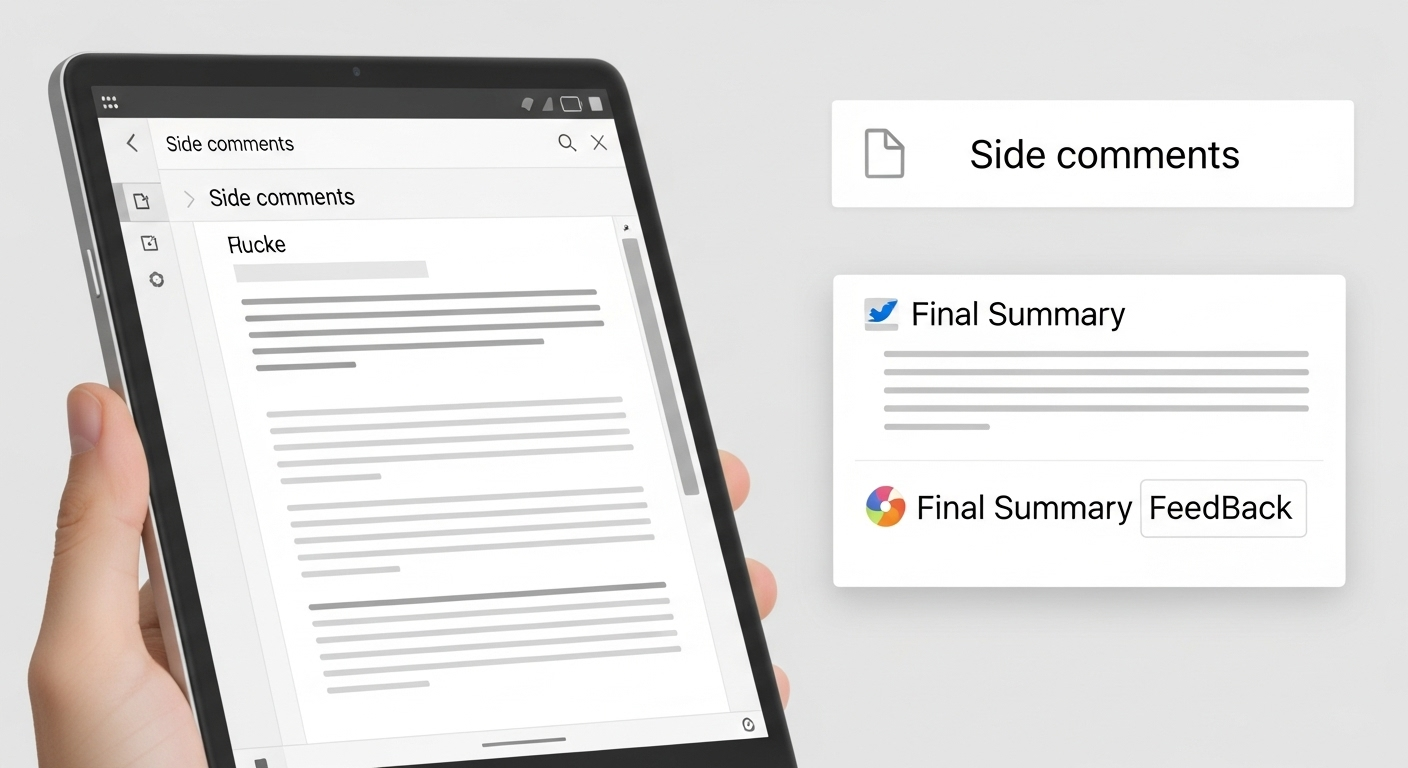
Marginal comments are the short notes you place directly in the text. They deal with local issues and specific examples: a confusing sentence, a strong transition, a missing citation. They show students exactly where something happens in the paper.
End notes are different. They offer a global, big picture response to the assignment as a whole. A simple structure is:
- What works well in this paper
- What needs the most work
- What to try next time
Together, marginal comments and end comments create clear, layered written feedback on student work.
How Can You Combine Written, Audio, And In-Person Feedback For Maximum Impact?
Each feedback mode has its strengths. Written feedback is precise and easy to revisit; students can return to your notes while revising. Audio feedback, especially when you record audio feedback, carries tone, warmth, and nuance that text sometimes loses. Short conferences or writing center visits let you unpack complex conceptual issues in real time.
By mixing modes—written notes, quick audio responses, and occasional meetings—you reach different learning preferences and help most students feel seen, supported, and guided in their writing.
How Do You Make Peer Review And Feedback Groups Work In Your Course?
Peer review, when structured well, helps students improve both their writing and their ability to give feedback. It turns your course into a community of writers working on real student work, not just isolated assignments.
To make a feedback group effective, you provide:
- A clear rubric tied to the subject area
- Guiding questions that focus attention
- Simple norms: be specific, be respectful, be honest
Ask students to start with higher order concerns (thesis, organization, evidence) before moving to grammar and style. Over time, peer review trains students to be better writers and more careful readers.
How Should Writers Ask For And Use Feedback On Their Own Writing?

Writers get more from feedback when they treat it as part of the writing process, not just the final step. Students should seek comments at several stages: early ideas, rough draft, and near-final draft.
You can encourage them to request specific kinds of feedback, such as:
- Is the thesis clear and focused?
- Does the argument progress logically?
- Do paragraphs have clear topic sentences?
- Is there enough evidence in key sections?
After receiving graded work, waiting 24 hours before responding helps gain perspective. Over time, noticing patterns in comments helps writers revise not just one paper, but their future work and their own writing habits.
How Can You Responsibly Use AI Tools To Support Feedback Without Replacing Human Judgment?
AI tools can support your feedback process if you treat them as assistants, not decision makers. They are useful for initial checks on grammar, clarity, and basic alignment with the rubric or assignment instructions.
When repetitive grading tasks start taking up more of your time, best automated grading software can help handle some of that workload while you remain responsible for deeper evaluation.
You still handle the higher order concerns:
- Logic and depth of argument
- Quality and relevance of evidence
- Structure, flow, and tone
By letting AI handle repetitive, lower order issues, you free time for deeper, conceptual feedback that really improves effective papers. The key is simple: leverage AI tools, but keep your own judgment at the center of the process.
How Can Apporto’s AI PowerGrader Help You Give Better Feedback On Academic Writing?

AI PowerGrader is designed to support your feedback, not replace it. You still decide what matters in student writing, but the tool helps you keep pace with growing workloads.
With AI PowerGrader, you can:
- Generate consistent, rubric-aligned comments on student work
- Highlight patterns in grammar, sentence structure, and organization across a whole class
- Reduce time spent on repetitive corrections so you can focus on higher order concerns like argument and evidence
You always stay in control: you review, edit, and approve feedback before students see anything. Used this way, AI PowerGrader helps you offer more timely, specific, and fair feedback while easing grading fatigue. You can explore more about AI PowerGrader here.
Conclusion:
When you give feedback rooted in trust, focused on higher order concerns, and expressed in specific, actionable comments, you turn grading into guidance. Balanced praise and critique, framed as a dialogue, helps students become more self-aware and more confident writers, not just error-fixers.
You do not need to overhaul everything at once. Adjust one or two feedback habits, and consider using tools like AI PowerGrader to make your practice more sustainable while keeping your judgment at the center.
Frequently Asked Questions (FAQs)
1. How can you give feedback on academic writing without overwhelming students?
Focus on a few main issues instead of marking everything. Start with a big picture summary, highlight two or three priorities, and keep other comments short and clearly labeled by category.
2. How do you balance comments on grammar with feedback on ideas and structure?
Address ideas and structure first: thesis, organization, and evidence. Once those higher order concerns are clear, choose a few recurring grammar or sentence patterns to mark and explain, instead of correcting every small error.
3. What is the most effective way to comment on long essays or research papers?
Use a structured approach: global end note, section-level comments, and selective marginal notes. Point to representative examples of issues and explain patterns, so students know how to revise the whole paper, not just one paragraph.
4. How can feedback help students understand the rubric and get a better grade?
Tie your comments directly to rubric language and learning outcomes. Show which level they met and what the next level looks like, so students see a clear path to improvement on future assignments.
5. How can AI tools like Apporto’s AI PowerGrader support your academic feedback process?
You can use AI PowerGrader to generate rubric-aligned draft comments, surface patterns across student work, and handle repetitive corrections, while you refine, approve, and focus on deeper conceptual feedback and mentoring.
