

What Is Academic Feedback?
Academic feedback helps students improve by showing how their work aligns with learning objectives and where adjustments are needed. Effective feedback is timely, specific, and actionable, supporting continuous learning and motivation. Tools like Apporto PowerGrader help educators deliver consistent, scalable feedback while maintaining instructor oversight.
Academic feedback sounds formal, but the idea is straightforward. It is information given to students about their performance on an assignment, task, or activity. Not a verdict. Not a score in isolation. Information meant to be used.
The purpose is simple but powerful. Academic feedback guides future learning and behavior by showing where your current performance sits in relation to learning goals.
When it works, it reduces the gap between where you are and where you are trying to go. That is why effective academic feedback focuses on growth, not judgment. It addresses the work, not the person behind it.
This is also why feedback sits at the center of effective teaching and learning. Progress rarely happens by accident. Learning improves when experience turns into understanding, and understanding informs the next attempt. But definition alone doesn’t explain impact.
To see why feedback matters as much as it does, let’s look at what it actually changes for students over time.
Why Is Academic Feedback So Important for Students?
Learning improves fastest when communication is clear. Academic feedback strengthens the connection between teachers and students by turning evaluation into dialogue. Instead of guessing what went wrong, you are shown where you stand and what to work on next.
The effect is measurable. Research shows that effective feedback can advance learning by six to eight months within a single academic year.
That happens because feedback makes strengths visible and weaknesses actionable. You are no longer responding to a grade. You are responding to guidance.
Balanced feedback also plays a quieter role. It builds academic confidence. When progress feels understandable, motivation follows. Students are more willing to persist, revise, and improve when they know what is working and why.
This importance raises a practical question. If feedback matters this much, how it is given and what kind of feedback students receive becomes just as critical. That’s where understanding different types of academic feedback starts to matter.
How Does Academic Feedback Help You Learn and Improve Over Time?

Learning rarely improves in one jump. It moves in small corrections. Academic feedback is what makes those corrections possible. By showing how your current work compares to desired learning objectives, feedback bridges the gap between where you are now and where you are expected to be.
Timing plays a quiet but important role. Timely feedback strengthens neural connections linked to retention, which means you are more likely to remember what worked and why.
When feedback is specific, it reinforces effective behaviors instead of leaving you guessing. You know which skills to repeat, refine, or rethink.
Iteration matters just as much. When feedback arrives early enough to act on it, improvement becomes part of the process rather than a post-mortem. You revise. You adjust. You try again before final evaluation locks everything in.
Over time, this cycle supports steady development instead of last-minute fixes. To make that cycle work, though, it helps to understand that not all feedback serves the same purpose. Different situations call for different kinds of guidance.
What Are the Different Types of Academic Feedback You Might Receive?
Academic feedback comes in several forms, and each one plays a distinct role in learning. Some feedback is informal, offered during discussion or practice. Other feedback is formal, recorded and tied directly to assessment. Understanding the difference helps you respond to it more effectively.
Formal feedback usually falls into two broad categories. Formative feedback is given during learning to help improve knowledge and skills before evaluation. Summative feedback appears at the end of a course or assignment and reflects overall performance.
Beyond timing, feedback also varies in purpose:
- Formative feedback – ongoing guidance that supports improvement while learning is still in progress
- Summative feedback – evaluation provided at the end of a course or unit
- Corrective feedback – highlights where goals were met and where improvement is needed
- Epistemic feedback – prompts clarification, explanation, or deeper thinking
- Suggestive feedback – offers specific ideas for how to improve future work
Each approach serves a different need. Some help you fix errors. Others push you to think more deeply. Recognizing which type you are receiving makes it easier to use it well. That raises another question, though. With so many approaches available, what actually makes feedback effective?
What Does Effective Academic Feedback Actually Look Like?

Effective academic feedback does not try to do everything at once. It is specific, actionable, and clearly aligned with learning objectives. Instead of vague praise or criticism, it explains what was done well and what needs attention next.
Good feedback focuses on observable behaviors rather than personal traits. It addresses the work, not the person. Clarity matters here. Feedback that is too broad or overwhelming often gets ignored, even when it is well-intended. Focused guidance is easier to understand and apply.
Effective feedback usually shares a few common qualities:
- Clear reference to learning objectives, so expectations are visible
- Actionable suggestions, not just descriptions of problems
- Balanced tone, acknowledging strengths alongside areas for improvement
- Attention to the most important issues, rather than every minor detail
When feedback encourages rather than discourages, it invites engagement instead of defensiveness. Once you can recognize what effective feedback looks like, the next challenge becomes understanding how it is delivered and why timing and format matter just as much as content.
What Is the Difference Between Formative and Summative Feedback?
Formative and summative feedback often get mentioned together, but they serve very different purposes. Formative feedback is ongoing and improvement-focused. It shows up while learning is still happening, when there is time to practice, reflect, and adjust. Think of it as guidance mid-journey rather than a judgment at the finish line.
Summative feedback, on the other hand, evaluates overall performance. It usually appears at the end of a course, unit, or assignment and often includes grades. Its role is to summarize what has been achieved, not necessarily to shape what comes next.
Both matter. Formative feedback supports reflection and skill development by encouraging iteration before evaluation. Summative feedback provides closure and accountability.
Academic development relies on the balance between the two. Once you understand when feedback is given, the next question becomes how it should be delivered to actually be useful.
How Should Feedback Be Delivered to Be Most Helpful?

Delivery changes everything. The same message can motivate or confuse depending on how and when it arrives. Timely feedback is consistently more effective than delayed feedback because it connects directly to the work while understanding is still active.
Different formats serve different needs. Written feedback allows for detailed comments that can be revisited. In-person feedback supports dialogue and clarification. Automated feedback offers speed and consistency, especially for practice-based tasks. The key is matching delivery to context.
Common delivery methods include:
- Written comments on assignments, supporting careful review
- In-person discussions, allowing immediate questions
- Automated or digital feedback tools, providing rapid responses
- Peer review feedback, offering alternative perspectives
There is also a limit. Too much feedback at once can overwhelm rather than help. Focused delivery makes feedback easier to absorb. That focus becomes even more interesting when feedback comes not only from instructors, but from peers as well.
What Role Does Peer Review Play in Academic Feedback?
Peer review changes the direction of feedback. Instead of only receiving comments, students also give them. That shift matters. Peer review helps students identify strengths and weaknesses in others’ work, which often sharpens awareness of their own.
Giving feedback improves understanding of what quality work looks like. You begin to notice structure, clarity, and reasoning in ways that are easy to miss when only reading your own writing. This process naturally strengthens critical thinking because it requires evaluation, explanation, and justification.
When peer review is structured, it supports learning outcomes rather than drifting into vague opinions. Clear criteria and guided prompts help ensure responses are useful.
Peer feedback does not replace instructor feedback, but it adds another layer to the learning process. And once multiple voices are involved, learning becomes less about receiving judgment and more about participating in improvement.
How Can You Learn to Receive Academic Feedback Without Taking It Personally?

Feedback can sting. That reaction is human. But academic feedback is not a judgment of who you are. It is information about your work. Separating those two ideas takes practice, and it matters more than most people realize.
Receiving feedback effectively starts with active listening. That means slowing down long enough to understand what is actually being said, rather than reacting to how it feels in the moment. Asking questions helps here. Clarifying intent turns confusion into understanding and replaces assumptions with specifics.
Reflection does the deeper work. When you pause to consider how feedback connects to learning objectives, it becomes easier to apply. You start to see patterns instead of isolated comments. A growth mindset supports this shift. Instead of viewing feedback as proof of limitation, you treat it as guidance for development.
Once feedback stops feeling personal, it becomes usable. And usable feedback is what leads to real improvement. The next step is knowing what to do with it after you’ve read it.
What Should You Do After Receiving Feedback on an Assignment?
Feedback only helps if it is used. One of the most effective habits is creating a simple record of feedback. Keeping track of written comments over time makes patterns visible and prevents repeating the same mistakes.
Reviewing feedback before future assignments also matters. It reconnects guidance to practice, instead of letting comments fade once a grade is posted. Students need explicit opportunities to work with feedback, not just read it. Implementation is where improvement actually happens.
Practical steps include:
- Identify key points, focusing on recurring themes
- Ask clarifying questions, especially when comments feel vague
- Apply suggestions during revisions, not just mentally note them
- Track progress over time, comparing earlier and later work
Feedback becomes powerful when it informs action. That action, in turn, feeds back into teaching practices themselves.
How Does Academic Feedback Fit Into Effective Teaching Practices?

Feedback is not an add-on to teaching. It is a core component of effective teaching practices. When feedback aligns with learning objectives, it clarifies what matters most and keeps instruction focused on skill development rather than point accumulation.
A positive feedback culture supports learning by normalizing revision and improvement. Students are more willing to engage when feedback feels expected and constructive rather than punitive. Regular feedback also strengthens teacher-student relationships by reinforcing communication and trust.
Effective teaching strategies treat feedback as part of an ongoing conversation. Not a one-time comment. Not a final word. This dialogue-based approach encourages responsiveness on both sides. Teachers adjust instruction. Students adjust effort. Over time, feedback becomes a shared tool rather than a one-sided message.
That relationship between feedback and teaching looks different depending on context, which becomes clear when you look at how feedback functions in real institutions.
What Does Academic Feedback Look Like in Universities and Schools Today?
Academic feedback does not follow a single model. Practices vary by course, discipline, and institution. In universities, higher education research increasingly emphasizes iterative feedback, where students receive guidance multiple times before final evaluation.
Schools are also shifting. Many now focus more heavily on formative feedback to support learning during the process rather than only at the end. Digital tools play a growing role here, helping educators deliver feedback at scale without sacrificing clarity.
Despite these changes, one challenge remains consistent. Feedback quality depends on time, structure, and follow-through. Institutions that treat feedback as a system, rather than a task, tend to see stronger outcomes. Understanding that system also makes it easier to spot where feedback often goes wrong.
What Are Common Problems With Academic Feedback?
Even well-intentioned feedback can miss the mark. Some of the most common problems are structural rather than personal. Feedback may arrive too late to act on, or it may be so broad that it offers little direction.
Too much feedback can also reduce clarity. When every issue is addressed at once, students struggle to identify priorities.
General comments may sound helpful but lack guidance on what to change. Misaligned feedback, especially when it does not clearly connect to learning objectives, adds confusion instead of support.
Common issues include:
- Too much feedback, creating overload
- Unclear comments, leaving interpretation open
- Late delivery, limiting usefulness
- Lack of actionable advice, reducing follow-through
These problems point to the need for systems that support clarity, consistency, and timing. That is where tools designed specifically for feedback begin to matter.
How Can PowerGrader Support Clear, Timely Academic Feedback at Scale?
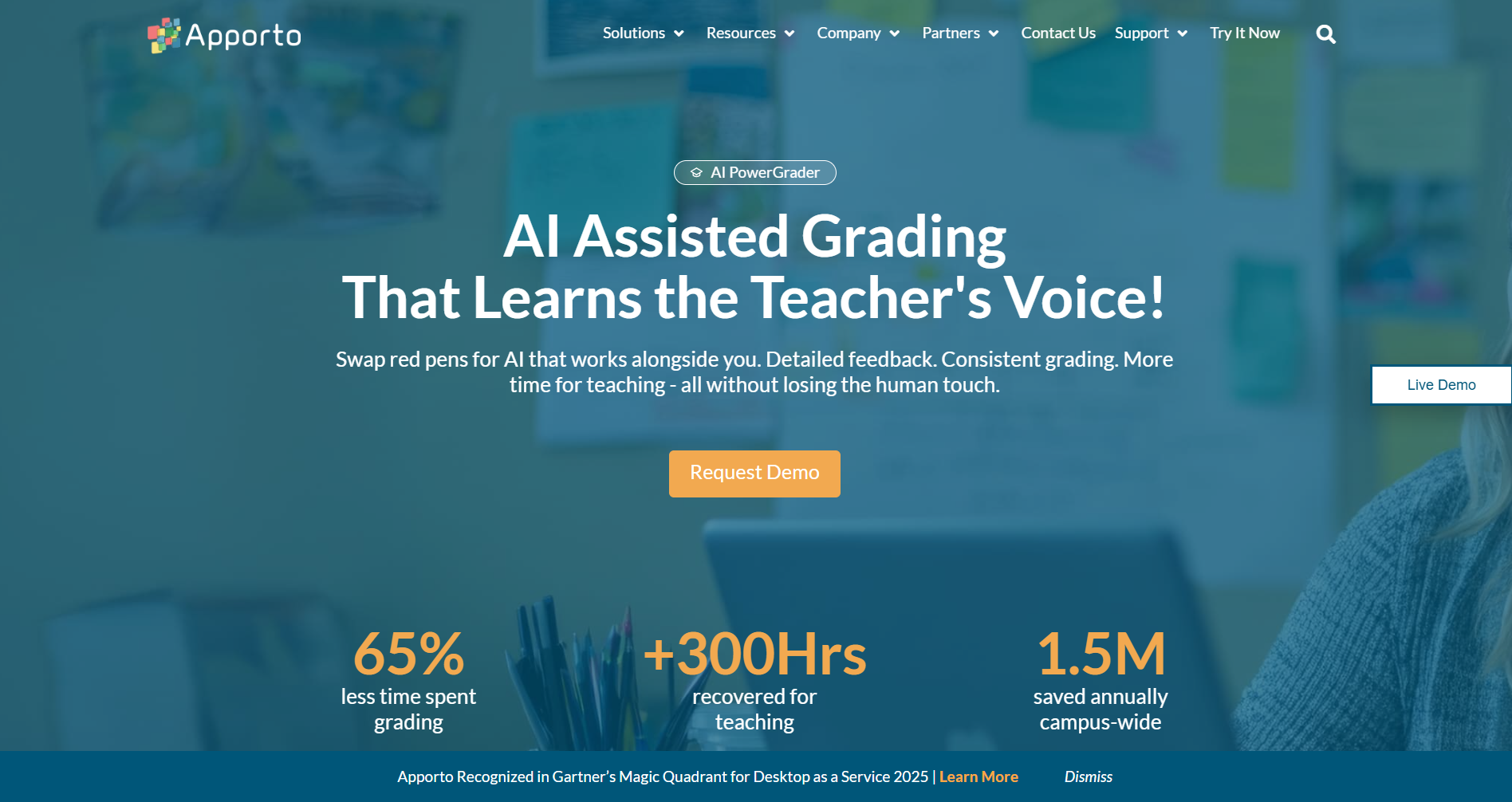
Providing clear academic feedback becomes harder as class sizes grow. PowerGrader is designed to address that challenge without removing educators from the process. It offers instructor-controlled AI-generated feedback, meaning teachers define assessment criteria while AI applies them consistently.
Real-time written corrective feedback allows students to respond while learning is still active. Pattern detection across cohorts helps instructors identify common issues early, rather than after final grades.
At the same time, PowerGrader reduces workload without lowering rigor, freeing educators to focus on teaching rather than repetitive grading.
Crucially, the system follows a human-in-the-loop model. Educators can review, adjust, or override feedback at any point. PowerGrader does not replace judgment. It supports it. That balance makes scalable feedback practical without sacrificing trust or quality. Try it now!
Conclusion
Academic feedback works best when it is iterative, dialog-based, and grounded in clear learning goals. Students improve most when they are involved in the feedback process rather than treated as passive recipients. Alignment with learning objectives keeps feedback relevant, while consistency keeps it usable.
A strong feedback culture supports academic success by turning evaluation into guidance and grades into growth. Whether delivered by instructors, peers, or supported by tools, feedback remains one of the most powerful drivers of learning when it is timely, focused, and actionable.
Frequently Asked Questions (FAQs)
1. What is academic feedback?
Academic feedback is information provided to students about their performance to help improve learning and future work. It identifies strengths, highlights areas for improvement, and guides progress toward learning objectives. Effective academic feedback is clear, timely, and actionable, helping students build skills, confidence, and understanding over time.
2. Why is academic feedback important?
Academic feedback improves learning outcomes by clarifying strengths and weaknesses, supporting motivation, and helping students close the gap between current performance and desired goals.
3. What makes feedback effective?
Effective feedback is timely, specific, actionable, aligned with learning objectives, and focused on observable behaviors rather than personal traits or general impressions.
4. What is the difference between formative and summative feedback?
Formative feedback supports improvement during learning, while summative feedback evaluates overall performance at the end of a course or assignment, often including grades.
5. How should students respond to feedback?
Students should review feedback carefully, ask clarifying questions, reflect on suggestions, and apply guidance to future work to support continuous improvement.
6. What are common problems with academic feedback?
Common issues include delayed delivery, vague comments, too much feedback at once, and feedback that is not clearly linked to learning objectives.
7. Can tools like PowerGrader improve academic feedback?
Yes. Tools like PowerGrader support timely, consistent, and scalable feedback while keeping instructors in control, helping maintain quality as class sizes grow.
