

Why Is Consistent Grading Important for Fair Student Evaluation?
Consistent grading improves fairness by applying the same learning objectives, rubrics, and evaluation standards across all students. Clear criteria reduce bias, strengthen transparency, and help students focus on mastery instead of guesswork. Tools like Apporto TrustEd support grading integrity through authorship verification and transparent evaluation workflows.
Grades carry more weight than many instructors realize. They influence student motivation, shape student achievement, and often affect long-term academic and professional opportunities.
When grading criteria are clear and applied consistently, students understand how their performance connects to learning goals. When the grading process feels unpredictable, trust begins to erode.
Equitable grading is not simply about being kind or flexible. It is about being fair, consistent, and free from bias. Research shows that inconsistent grading can disproportionately harm marginalized students, especially when subjective judgment replaces defined criteria. Even small variations in expectations can change how student learning is evaluated.
Another complication is structural. Grading policies often vary across departments, and sometimes even between instructors teaching the same course.
Two students answering the same question in different sections may receive different results under different grading systems. That inconsistency affects confidence and engagement.
When grading criteria are stable and transparent, students focus on mastery rather than guesswork. A consistent approach signals that performance is measured against standards, not personal preference. That clarity strengthens both fairness and motivation.
Where Inconsistency Creeps Into the Grading Process?
Inconsistency rarely announces itself. It enters quietly, through habits, structural gaps, and small decisions made under pressure. A grading policy may look clear on paper, yet the application of that policy can vary widely across campus.
One instructor interprets criteria one way, another interprets them differently. Even within the same course, different students may experience different standards.
When multiple graders or teaching assistants evaluate student work, variation becomes more likely. Without shared calibration, one grader may score generously while another scores more strictly. Both believe they are fair. Both apply what feels reasonable. Yet the outcomes differ.
Implicit bias can also influence evaluation, even when instructors are committed to fairness. Research shows that unconscious attitudes can affect how student performance is interpreted. Grading order adds another layer.
Early submissions sometimes receive more patience. Later ones may face tighter scrutiny, especially when fatigue sets in. Strictness can fluctuate across a single grading session.
Some common breakdown points include:
- No shared rubric guiding all instructors toward the same criteria
- No grade-norming sessions to align expectations
- Too many grading categories that invite subjective interpretation
- Subjective measures such as effort embedded into academic scores
- Adjustments to criteria mid-process without clear communication
Consistency requires more than good intentions. It requires structure, alignment, and discipline in applying the same criteria to all students.
How Clear Learning Objectives Anchor Fair Grading?
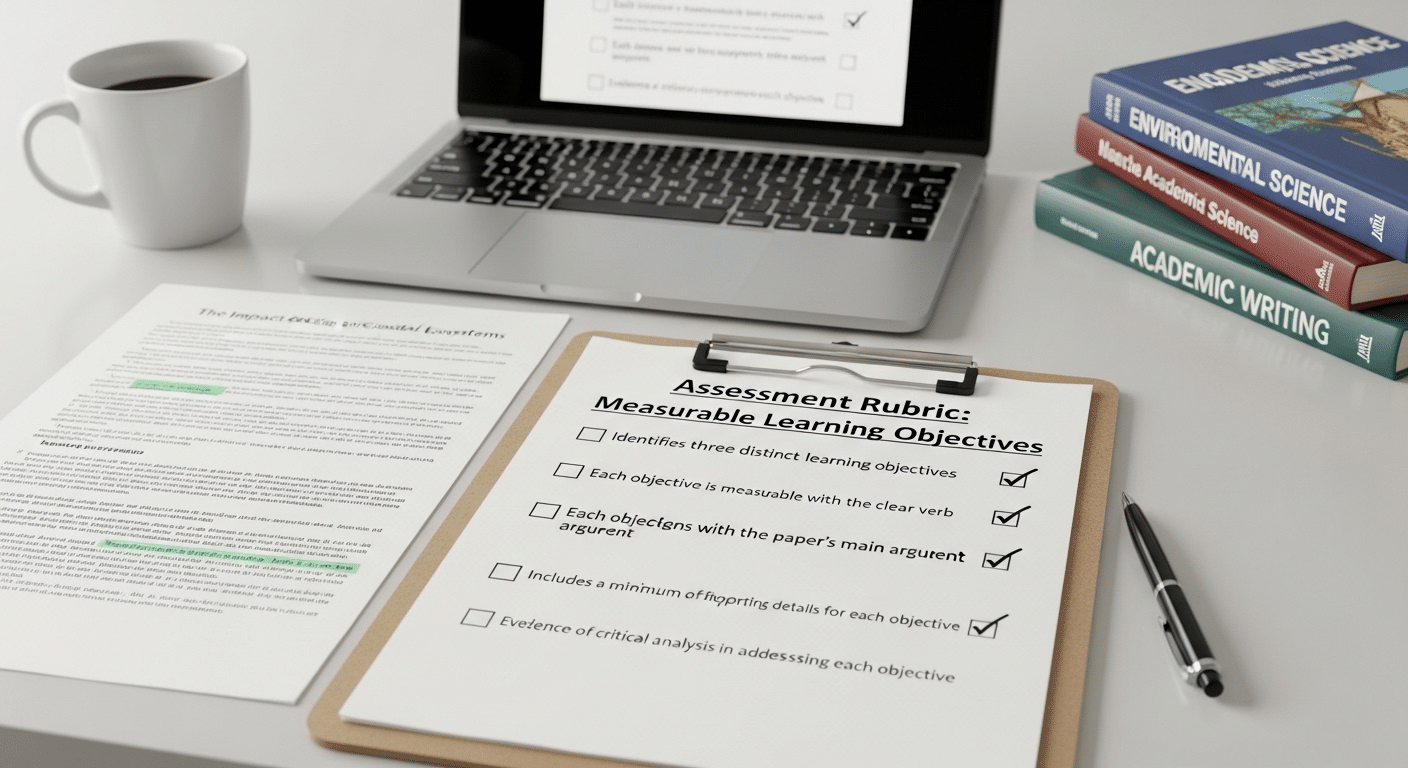
Fair grading begins with clarity. When learning objectives are vague, evaluation becomes interpretive. When clear expectations define what students must know or demonstrate, grading becomes anchored to purpose rather than preference.
Clear criteria outline performance levels in observable terms. Instead of rewarding general impressions, you assess specific skills tied directly to learning goals. This reduces ambiguity. Students understand what mastery looks like. Instructors evaluate student work against defined standards rather than instinct.
Standards based grading strengthens this alignment. By breaking large subjects into specific learning objectives, the grading process focuses on student mastery instead of accumulated points. You measure whether students understand key concepts, not whether they complied with formatting rules or classroom behaviors.
Separating academic performance from behavior improves objectivity. Effort and participation matter, but they should not distort evaluation of knowledge.
When grading connects directly to learning goals, compliance fades into the background. The focus becomes growth and understanding. Students recognize that their progress depends on demonstrating mastery, not decoding hidden expectations. That transparency reinforces fairness and supports deeper learning across the course.
Why Rubrics Are the Backbone of Consistency?
A well-designed rubric does more than organize points. It anchors judgment. When grading depends on memory or intuition, inconsistency grows. A rubric introduces structure into the assessment process. It clarifies criteria, defines performance levels, and reduces the room for personal interpretation.
Research shows that rubrics reduce bias by standardizing what counts as quality. When instructors use fewer grading categories with clearly defined descriptions, consistency improves. Too many point scales invite subtle subjectivity. Fewer, well-articulated categories promote alignment across graders.
Language also matters. Student-friendly language reduces confusion and narrows the gap between what instructors expect and what students understand. Providing the rubric before the assignment begins strengthens clarity. Students see the target in advance. They can aim at defined expectations rather than guessing what will matter later.
Consistency is reinforced when rubric criteria remain stable throughout grading. Changing standards mid-process weakens fairness and undermines trust. Locked criteria protect integrity.
The difference between weak and strong rubric design is often structural:
| Weak Rubric Design | Strong Rubric Design |
|---|---|
| Vague criteria | Clear performance levels tied to learning objectives |
| Too many point scales | Fewer defined categories that improve reliability |
| Focus on effort or compliance | Focus on mastery and demonstration of skills |
| No concrete examples | Sample benchmarks that illustrate expectations |
| Adjusted mid-grading | Locked criteria applied consistently to all students |
When rubric design is deliberate, consistent grading practices become achievable rather than aspirational.
What Research Says About Bias in Grading?

Research shows that even well-intentioned teachers can demonstrate unconscious bias during the grading process. This is not usually deliberate. It happens quietly, through assumptions shaped by prior experiences, expectations, or familiarity with certain communication styles.
In a classroom committed to fairness, that reality can feel uncomfortable. Yet acknowledging it is necessary for equitable grading.
Studies also suggest that traditional grading systems often advantage students who are already familiar with academic norms. Privileged students may benefit from prior exposure to formal writing conventions or implicit classroom expectations.
Meanwhile, historically underserved students can be judged more harshly for deviations that reflect difference rather than deficiency. When grading criteria are loosely defined, those disparities widen.
Anonymized grading is one evidence-based strategy for reducing bias. Removing student names from assignments can limit the influence of identity-based assumptions. Research further indicates that grading order can affect results.
Early submissions sometimes receive more leniency, while later work may be evaluated more strictly as fatigue increases.
Fair grading requires more than good intentions. It requires structural safeguards that recognize human limitations within the assessment process.
Practical Systems That Improve Consistency Immediately
Consistency does not require a complete redesign of your course. It begins with deliberate adjustments to grading practice. Small structural changes can produce measurable improvements in reliability and fairness.
Pre-grading calibration is one of the most effective starting points. Before scoring the full stack of submissions, review a sample set to align expectations with your rubric. This step reduces drift in standards as grading progresses.
Grade-norming sessions serve a similar purpose when multiple members of a teaching team are involved. By scoring the same sample assignments together, instructors and teaching assistants develop a shared understanding of performance levels.
Horizontal grading also strengthens consistency. Instead of grading one student’s entire assignment at a time, you grade the same question across all students. This keeps your criteria stable and limits comparison between different types of responses.
Using fewer grading categories further improves reliability. Clear, defined criteria reduce ambiguity and make efficient grading more achievable.
Implementation tools include:
- Anonymous grading to reduce identity-based bias
- Grade-norming sessions for alignment among multiple graders
- Horizontal grading by question to stabilize scoring
- Comment banks that standardize feedback across students
- Locking rubric criteria to prevent mid-process changes
- Separating behavior from mastery to ensure academic focus
Consistency is not accidental. It emerges from systems designed for continuous improvement and structured evaluation.
How Feedback Strengthens Both Fairness and Learning?
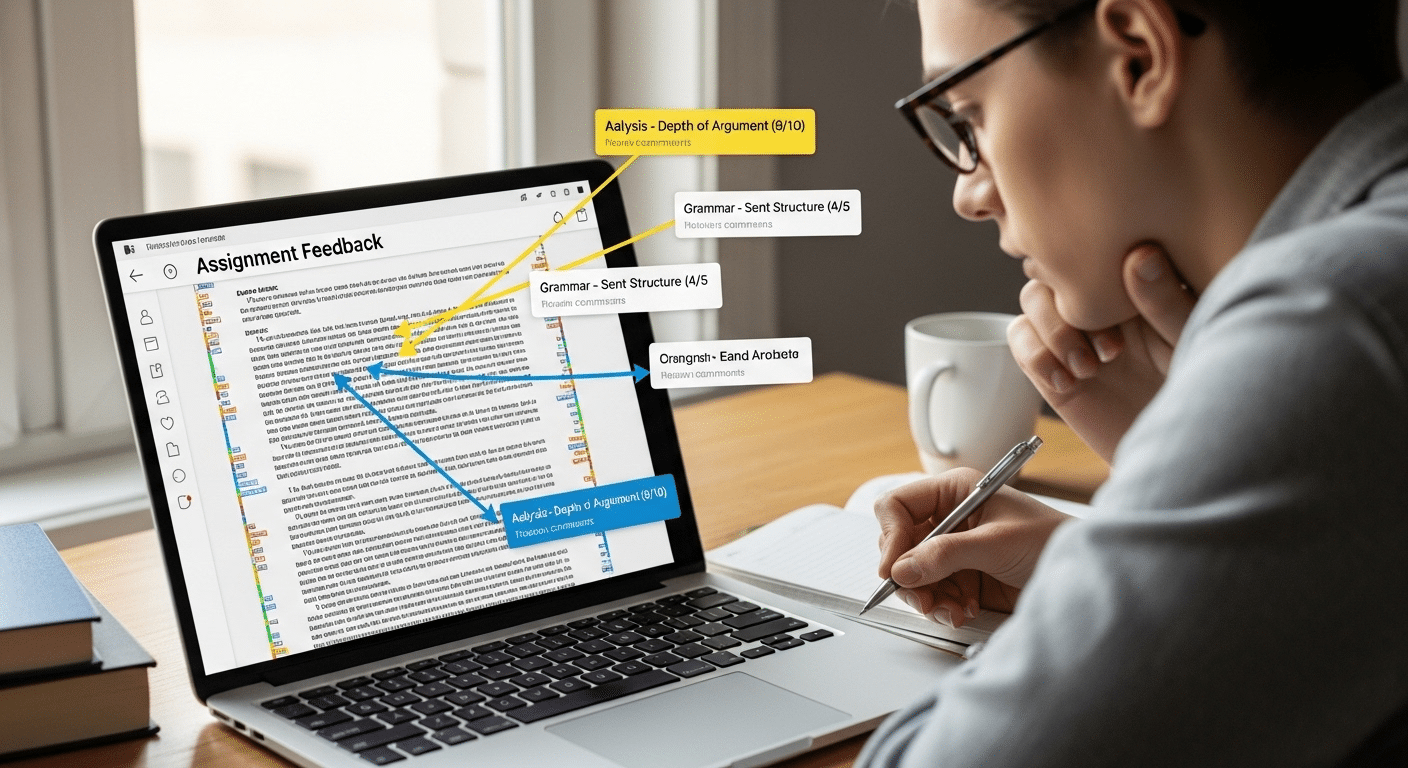
Consistency in grading is not only about scoring. It is also about how you provide feedback. When feedback is timely, students can act on it while the assignment is still fresh. Delayed responses weaken momentum. Timely comments strengthen learning and encourage improvement.
Specific feedback matters even more. General remarks such as “good job” or “needs work” do little to guide revision. Criteria-based comments connect directly to the rubric and clarify how performance aligns with defined expectations.
This approach reduces ambiguity. Students understand why they received a particular evaluation and how to improve.
Revision opportunities reinforce fairness. When multiple attempts are allowed, grading emphasizes progress rather than punishment. Students who struggle initially gain space to grow. Motivation improves because effort leads to visible development. Multiple attempts shift the focus from one outcome to continuous learning.
Effective feedback should:
- Identify gaps in understanding
- Connect directly to grading criteria
- Encourage revision rather than final judgment
- Be timely enough to support improvement
- Inspire reflection on learning progress
When feedback is structured and consistent, it supports both fairness and deeper student learning.
When Standards-Based Grading Enhances Equity?
Standards based grading centers evaluation on mastery of clearly defined learning objectives. Instead of accumulating points toward a course grade, students demonstrate whether they understand specific concepts or skills.
This clarity strengthens equity because performance is measured against transparent criteria rather than comparison with peers.
Formative assessments play a central role in this approach. Students receive feedback during the learning process, not only at the end. That structure helps support learning and encourages a growth mindset.
When emphasis shifts toward mastery, intrinsic motivation often increases. Students begin to focus on understanding rather than chasing percentages.
Research links standards based grading to higher student achievement when implemented thoughtfully. However, success requires careful planning. Clear communication, aligned assessments, and consistent criteria must be in place. Without structure, the system loses coherence.
When mastery becomes the goal, equity improves because every student is measured against the same learning standards.
Technology’s Role in Enforcing Consistent Criteria
Technology can reinforce consistency when it is used to structure the grading system rather than complicate it. Digital scoring tools help standardize procedures across sections, instructors, and teaching assistants.
When criteria are embedded directly into a reporting system, expectations remain visible throughout the grading process. That visibility reduces drift and supports fair application of standards.
Comment banks also strengthen consistency. Instead of rewriting feedback from memory, you select rubric-aligned comments that connect directly to defined performance levels. The reuse of comments improves efficient grading while ensuring students receive comparable guidance. Over time, this structure reduces variation caused by fatigue or time pressure. Automation does not remove judgment. It stabilizes it.
Technology can:
- Standardize scoring through embedded rubric criteria
- Reuse rubric-based feedback to ensure alignment
- Prevent mid-process edits to grading categories
- Improve grading efficiency while protecting consistency
When digital tools reinforce structure, consistency becomes repeatable rather than dependent on individual stamina.
How TrustEd Supports Fair and Consistent Evaluation?

Consistency depends on trust. If there is uncertainty about authorship, even the most carefully designed grading criteria can lose credibility. TrustEd supports transparent academic integrity without turning evaluation into surveillance. Its purpose is not punitive. It is protective.
When you can verify that student work is authentic, grading criteria can be applied with confidence. Evaluation becomes clearer, more stable, and more equitable. Suspicion does not cloud judgment. Instead, the focus returns to mastery, performance levels, and learning objectives. Protecting authenticity protects fairness across all students.
With TrustEd, educators can:
- Verify authorship before grading begins
- Ensure the same criteria apply to authentic student work
- Reduce bias linked to uncertainty about AI misuse
- Protect grading integrity within the assessment process
Fair evaluation requires more than a rubric. It requires confidence that the work being assessed truly reflects student understanding.
Conclusion
Consistency communicates something deeper than order. It signals respect. When grading criteria are applied fairly and transparently, students recognize that their work is evaluated against clear standards rather than shifting expectations. That clarity builds trust within the classroom. Trust strengthens engagement. Students invest more when they believe the process is credible.
Fair grading also influences motivation. When expectations are transparent, effort feels purposeful. Students can see how performance connects to defined learning goals. Growth becomes measurable. Improvement becomes attainable. Over time, consistent evaluation reinforces a belief that progress depends on mastery, not favoritism or chance.
Integrity completes that structure. Without authenticity and fairness, even well-designed grading systems lose credibility. When consistency is protected at every stage, learning retains its meaning.
Frequently Asked Questions (FAQs)
1. What is equitable grading?
Equitable grading is a grading practice that is fair, consistent, and free from bias. It measures student mastery of learning objectives rather than compliance, behavior, or external advantages. The goal is to ensure that grades accurately reflect academic performance.
2. How do rubrics improve consistency?
Rubrics clarify criteria and define performance levels before grading begins. When instructors apply the same rubric across all student work, subjectivity decreases. Clear categories and benchmarks reduce variation and improve alignment across graders.
3. How can multiple graders stay aligned?
Multiple graders stay aligned through calibration sessions and shared rubrics. Grade-norming meetings allow teaching teams to score sample assignments together. Horizontal grading and agreed scoring tools further improve consistency across sections.
4. Does anonymous grading reduce bias?
Anonymous grading reduces the impact of unconscious bias by removing identifying information. Research shows that anonymized assessment can improve fairness, especially in large classes or when multiple instructors are involved.
5. What is standards-based grading?
Standards-based grading measures student performance against specific learning objectives instead of accumulated points or classroom behavior. This approach focuses on mastery, formative feedback, and continuous improvement, helping students understand exactly which skills they have achieved and where additional learning or revision is needed.
6. How does TrustEd support grading fairness?
TrustEd verifies authorship and supports transparent academic integrity. By confirming that student work is authentic before evaluation, instructors can apply consistent grading criteria with confidence and protect fairness across all students.
