

How Does AI-Driven Feedback Improve Student Performance?
AI-driven feedback improves student performance by giving students immediate guidance while learning is still active. Instead of waiting days for corrections, students can identify mistakes, strengthen understanding, and adjust in real time. Tools like Apporto PowerGrader help educators deliver scalable, personalized feedback while maintaining human oversight and academic consistency.
Student performance does not improve in isolation. It improves through response. When feedback arrives late, learning loses momentum. The brain has already moved on, and whatever insight might have helped now feels abstract or disconnected. Retention weakens. Transfer of learning suffers.
Timing changes everything. Immediate feedback helps you see strengths and weaknesses while your thinking is still active. You can adjust in real time, not reconstruct what you meant days later.
That immediacy increases engagement and persistence because effort and response stay closely linked. Traditional feedback cycles, by contrast, interrupt continuous improvement and turn learning into a series of starts and stops.
AI changes this by enabling real-time feedback during the learning process itself, not after grading. To understand why this change matters so much, it helps to look next at how AI-driven feedback actually differs from traditional feedback systems in practice.
What Makes AI-Driven Feedback Different From Traditional Feedback Systems?
The difference is not just speed. It is placement. AI-driven feedback systems operate during learning activities, not after they are finished. As you write, solve, speak, or respond, automated feedback tools react instantly. There is no long wait. No gap where confusion can settle in.
This immediacy changes the shape of feedback. Instead of episodic comments delivered at the end, feedback becomes continuous. Small corrections happen early. Guidance arrives when it can still be used. Over time, that creates a steadier learning rhythm.
AI also changes the depth of feedback. Rather than brief summary comments, AI-generated feedback can be more detailed and actionable, pointing to specific issues and next steps.
Traditional grading often compresses feedback because of time limits. AI removes much of that pressure. The result is feedback that is not only faster, but more usable, more precise, and more closely aligned with how learning actually unfolds.
What Happens Inside AI Systems When Students Receive Feedback in Real Time?

When students receive real-time feedback, multiple AI systems work together in the background. AI assessment systems analyze student work in real time, not after grading is complete. The moment a response is submitted, artificial intelligence begins evaluating it against defined assessment criteria.
Machine learning models compare student responses with historical patterns and known examples of correct and incorrect answers. This allows AI algorithms to detect errors, partial understanding, and gaps in learning.
At the same time, natural language processing interprets written responses for clarity, structure, and meaning, which improves feedback quality in writing-heavy subjects. In language learning, speech recognition adds another layer, supporting pronunciation and spoken feedback.
This early error detection prevents misconceptions from becoming habits. Because feedback is immediate, students can correct mistakes while the learning process is still active. That real-time analysis enables rapid learning cycles and continuous improvement, rather than delayed correction after understanding has already drifted.
How Does AI-Driven Feedback Personalize Learning for Individual Students?
AI-driven feedback personalizes learning by adapting to the individual student, not the average learner. AI systems track learning pace, prior knowledge, and patterns in student responses to tailor feedback in real time.
Adaptive learning technologies adjust content difficulty as students progress. When understanding is strong, feedback becomes more concise. When students struggle, AI provides more detailed explanations or targeted feedback focused on specific gaps. This approach supports different learning styles and allows students to move at their own speed.
Personalized feedback improves student engagement, motivation, and retention because it feels relevant to the learner’s current needs. AI-driven analytics replace generic comments with personalized support, helping students follow personalized learning paths that reinforce deeper and more durable learning over time. As personalization improves, its effect becomes visible in measurable student performance outcomes.
Which Aspects of Student Performance Improve Most With AI-Driven Feedback?
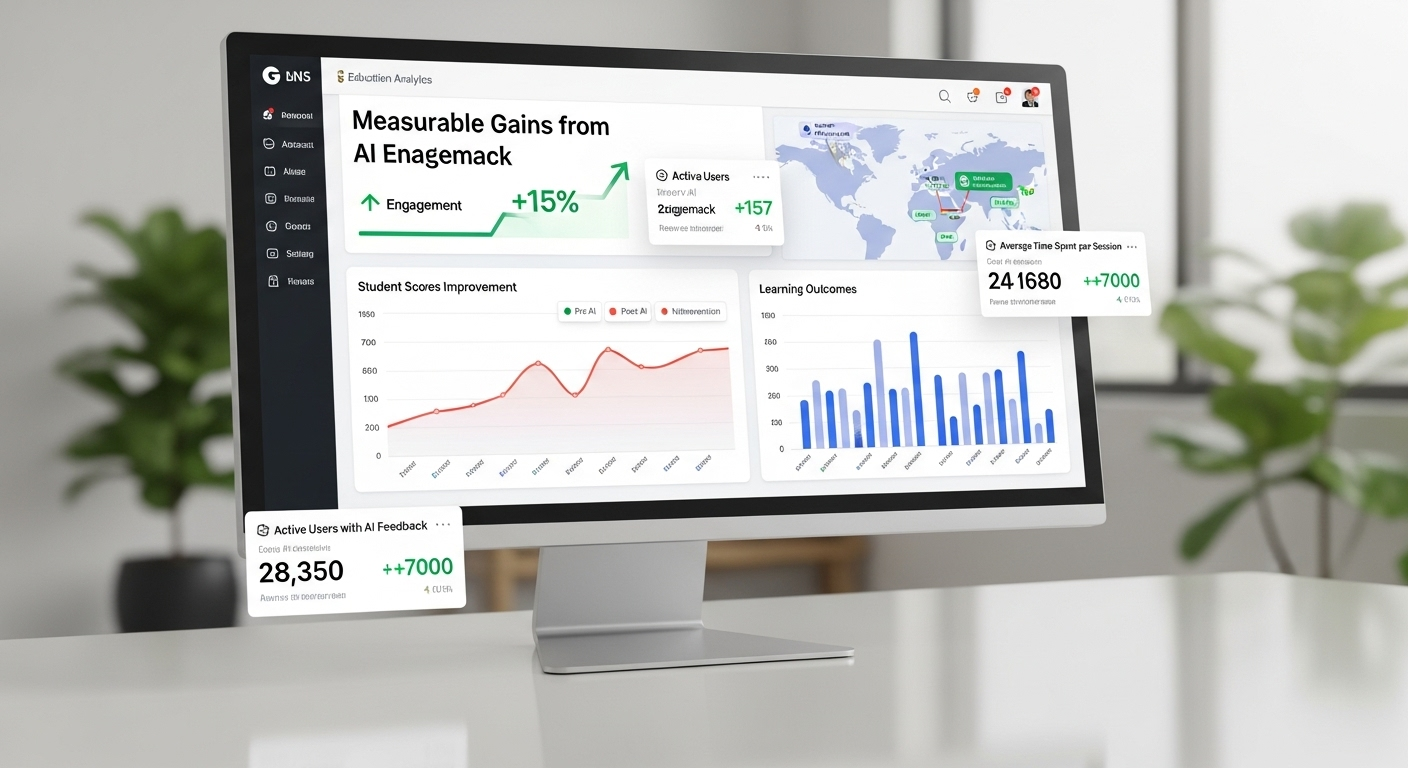
AI-driven feedback improves student performance in several consistent and measurable ways:
- Faster correction of mistakes due to immediate feedback delivered during learning activities
- Improved academic self-efficacy, supported by continuous, low-pressure guidance
- Higher student engagement, driven by timely and interactive feedback delivery
- Stronger goal achievement, enabled by detailed and actionable feedback
- Growth mindset development, encouraged through reflection prompts and iterative learning
- Exam score increases, reported at up to 10% with AI-driven feedback systems
- Passing rate improvements, rising by as much as 15%
- Greater motivation and persistence, as students track progress in real time
These improvements reinforce one another. Immediate feedback strengthens engagement. Engagement supports persistence. Over time, this cycle leads to better learning outcomes and sustained student progress rather than short-term gains.
How Does AI-Driven Feedback Support Critical Thinking Instead of Shortcuts?
A common concern is that AI might replace thinking with automation. Well-designed AI-driven feedback systems do the opposite. Instead of providing final answers, AI feedback prompts reflection and reasoning.
Intelligent tutoring systems guide students with hints and structured reasoning steps. This encourages critical thinking rather than shortcut behavior.
Generative AI helps explain complex concepts by breaking them into more accessible parts, while still requiring students to engage with the material. Feedback often asks students to explain choices or revisit assumptions, which strengthens metacognitive skills.
In addition, AI-driven discussions can surface ethical considerations and broader implications of technology use in education. This approach supports deeper learning by focusing on how students think, not just what they produce.
How Can AI Tools Identify Learning Gaps and Performance Trends at Scale?
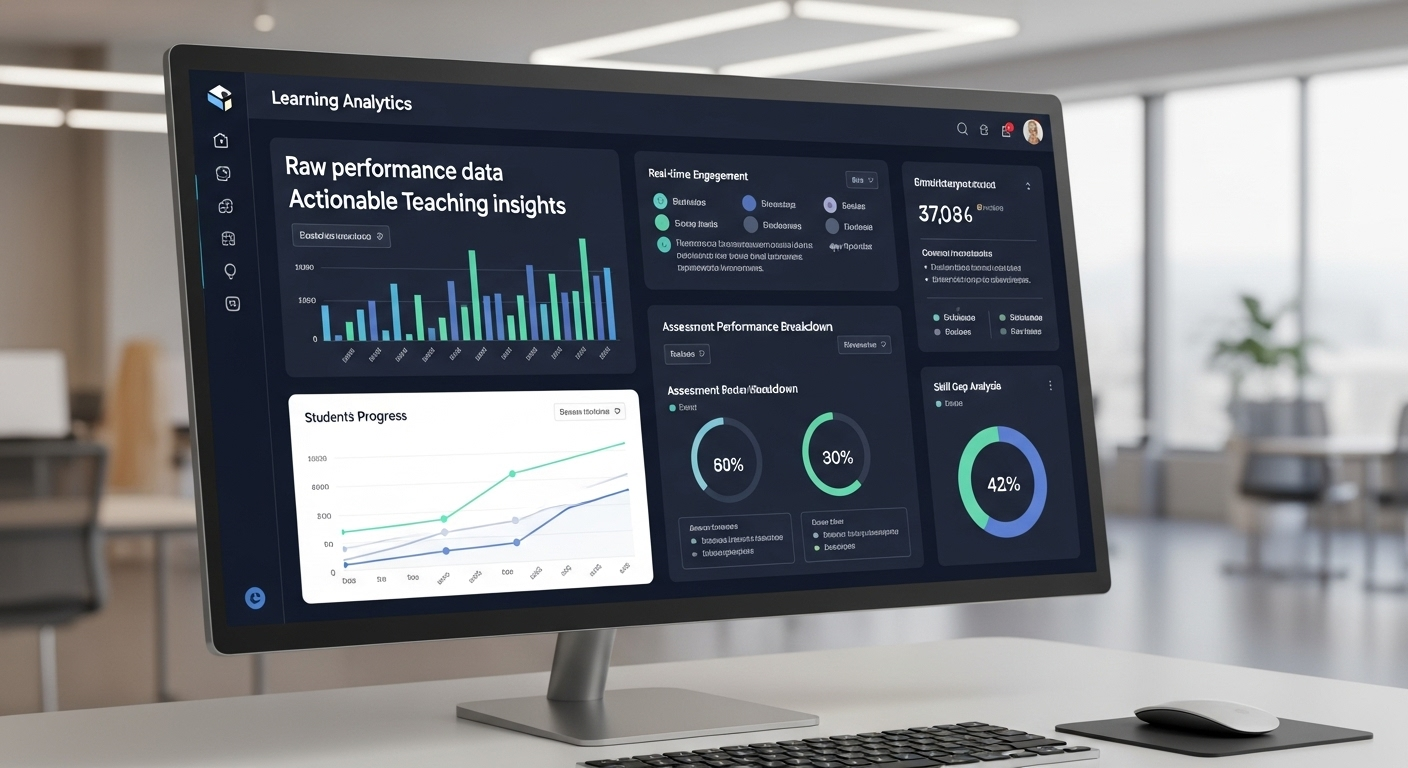
Beyond individual feedback, AI tools analyze student performance across entire classrooms. By examining student responses at scale, AI systems identify trends that are difficult to detect manually.
This pattern detection reveals:
- Common misconceptions shared by many students
- Skill gaps that persist across assignments or lessons
- Early warning signs for at-risk students
AI dashboards translate this analysis into real-time, actionable insights. Educators can see where learning breaks down and adjust lesson plans, teaching strategies, or educational materials accordingly.
Early identification enables proactive intervention rather than reactive correction. These data-driven insights help create more effective and responsive learning environments.
How Does AI-Driven Feedback Improve Teaching Efficiency Without Reducing Quality?
AI-driven feedback improves efficiency by reducing the administrative burden on educators. AI-powered tools can reduce grading workloads by 30 to 70 percent by automating routine grading and data analysis tasks.
This reduction in administrative tasks frees up teachers’ time for direct student interaction, mentorship, and instructional planning. Feedback accuracy also improves because AI applies assessment criteria consistently, reducing fatigue-related variation in human grading.
When educators are not under constant time pressure, feedback quality improves. Comments become clearer, more detailed, and more actionable.
Rather than replacing teachers, AI supports teaching practices by allowing educators to focus on the parts of education that require human judgment and human connection.
How Does AI Support Diverse Learners Across Different Learning Environments?

AI-driven feedback plays a quiet but important role in creating a more inclusive learning environment. Across different educational environments, students do not arrive with the same language skills, abilities, or learning preferences. AI helps absorb some of that variation.
In practice, this support shows up in several concrete ways:
- Multilingual learning support through translation tools and language assistance that help students engage with educational materials more independently
- Accessibility features that assist learners with disabilities, including text-to-speech, speech recognition, and adaptive interfaces
- Adaptive content delivery that adjusts explanations and pacing to match different learning styles
Because AI systems scale easily, personalized learning can extend across K-12, higher education, and adult learning without losing consistency. Feedback delivery remains timely and uniform, even in large classes. That consistency matters. When all students receive comparable guidance regardless of class size, equity improves, and learning experiences feel more balanced and fair.
What Ethical and Practical Risks Come With AI-Driven Feedback Systems?

The benefits of AI-driven feedback come with real responsibilities. Student privacy is a significant concern, especially when AI systems collect and analyze large volumes of learning data. How that data is stored, used, and protected matters.
Bias is another risk. AI algorithms trained on narrow datasets can unintentionally reinforce unfair outcomes. Transparent AI policies help build trust by making system behavior visible and understandable. Regular bias audits, combined with diverse training data, reduce the risk of systemic bias taking hold.
Human override options must always remain available. Educators need the ability to review, adjust, or reject AI-generated feedback when context demands it. Training is equally important.
Without proper educator training, even well-designed systems can be misused. Over-reliance on AI may also reduce human interaction if left unchecked, which is why responsible use requires balance, oversight, and clear boundaries.
How Can Schools Implement AI-Driven Feedback Responsibly and Successfully?
Responsible implementation starts with intention. Schools that implement AI-driven feedback successfully treat it as part of a system, not a standalone tool. Governance and ongoing monitoring set expectations for how AI is used and reviewed over time.
Several practical considerations shape successful implementation:
- Reliable internet access, which is essential for real-time feedback systems to function consistently
- Cost evaluation, since high implementation and integration costs must be weighed against long-term value
- Ongoing maintenance and review, ensuring systems stay accurate, ethical, and aligned with instructional goals
- Clear role definition, so educators understand where AI assists and where human judgment leads
When these elements are in place, AI-driven feedback becomes a support structure rather than a disruption. Schools retain control, educators stay empowered, and students benefit from feedback that is both timely and responsibly delivered.
How Can Apporto’s AI Solutions Improve Student Performance Through Feedback at Scale?
Real-time feedback only matters if it works consistently, even as classes grow and workloads expand. This is where Apporto’s approach becomes practical rather than theoretical. PowerGrader is built around instructor-controlled AI feedback, not automation for its own sake.
PowerGrader delivers real-time, in-context guidance while preserving academic rigor. Feedback appears quickly, but grading criteria remain firmly in human hands. Instructors define standards. AI applies them consistently. That balance reduces workload without diluting expectations.
At scale, PowerGrader also detects patterns across cohorts. Common gaps surface early. Trends become visible without manual analysis. This allows educators to intervene sooner, adjust instruction, and maintain quality across large student populations.
The human-in-the-loop design ensures oversight never disappears. AI handles repetition and speed. Educators retain judgment, context, and accountability. That combination is what makes performance gains sustainable, not temporary. Make accurate feedbacks easy now!
What Does the Future of AI-Driven Feedback Mean for Student Performance?
The trajectory is clear, even if the details continue to evolve. AI-driven feedback is becoming faster, more accurate, and more personalized with each iteration. Students receive guidance when it matters most, not after the moment has passed.
As feedback becomes more responsive, student engagement continues to rise. Learning outcomes improve because correction, reflection, and progress happen closer together.
Importantly, the strongest results appear where AI is integrated responsibly. Systems that preserve human judgment, protect privacy, and support educators tend to strengthen learning environments rather than disrupt them.
Frequently Asked Questions (FAQs)
1. How does AI-driven feedback improve student performance?
AI-driven feedback provides immediate, actionable insights during learning activities, helping students correct mistakes early, stay engaged, and make continuous progress toward learning goals.
2. Is AI-driven feedback more effective than traditional grading?
Yes. AI eliminates long delays, delivers detailed feedback in real time, and supports faster learning cycles, which leads to stronger retention and improved educational outcomes.
3. Can AI-driven feedback be personalized for individual students?
AI tailors feedback based on learning pace, prior knowledge, and response patterns, allowing students to receive targeted support instead of generic comments.
4. How to use feedback to improve performance?
Use feedback to improve performance by identifying mistakes early, applying actionable suggestions, tracking progress consistently, and adjusting learning strategies based on continuous guidance and reflection.
5. Does AI-driven feedback reduce teacher workload?
AI-powered tools can reduce grading workloads by 30–70%, freeing educators from administrative tasks and allowing more time for instruction and student mentorship.
6. Is AI-driven feedback safe and ethical for education?
Responsible systems include transparent policies, bias audits, privacy protections, and human override options to ensure feedback remains fair, secure, and accountable.
7. Can AI-driven feedback work in large or diverse classrooms?
Yes. AI scales personalized feedback across large classes while supporting diverse learners, delivering consistent guidance regardless of class size or educational setting.
8. Does AI-driven feedback replace teachers?
No. AI supports instructional decision-making and efficiency, but educators retain authority over evaluation, teaching strategies, and human interaction.
