
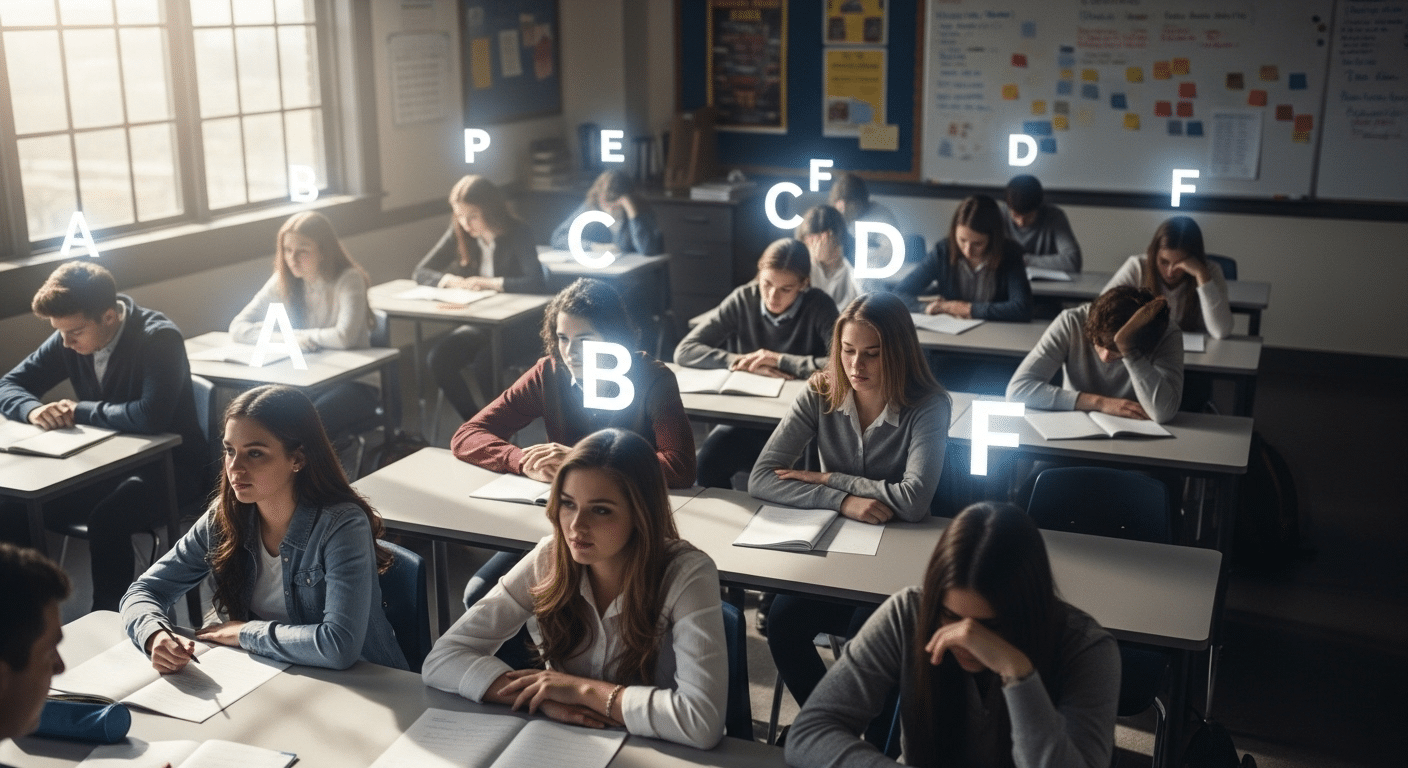
Does Grading Affect Student Creativity?
Grading can affect student creativity when high-stakes evaluation prioritizes performance over exploration. Students may avoid intellectual risk and focus on safer answers to protect grades. However, feedback-driven assessment, revision opportunities, and tools like Apporto TrustEd can support creativity, academic integrity, and more authentic student evaluation.
Grading sits at the core of modern education, so embedded that it often feels inevitable. From the earliest years of school, students are ranked, compared, and categorized. Over time, ranking becomes normalized. You come to expect it. Letter grades turn into a quick summary of student performance, a simple symbol that claims to capture effort, knowledge, and potential in a single mark.
The final grade carries particular weight. It functions as a proxy for understanding and progress. Colleges examine it. Parents monitor it. Professors rely on it to evaluate achievement across a course. Institutions use it to determine advancement, honors, and access to future opportunities. In this way, grading becomes more than feedback. It becomes currency.
Students are acutely aware of this. Research shows that grading practices influence motivation and emotional well being. Many students tie their sense of competence, and sometimes their self worth, to their grades. A high mark can validate identity. A low one can quietly undermine confidence.
The traditional grading system developed during an era that prized efficiency and standardization. It persists largely unchanged, shaping the status quo in classrooms today. When evaluation becomes this central to student learning, it does not merely measure behavior. It begins to direct it.
Do Grades Motivate Students or Diminish Intrinsic Motivation?
Grades are often defended as motivators. You are told they push students to work harder, stay focused, and strive for excellence. In some cases, they do increase visible effort. Deadlines are met. Assignments are completed. Performance improves in measurable ways.
But motivation is not a single force. There is intrinsic motivation, the internal drive to understand, explore, and create. Then there is external pressure, the desire to earn approval or avoid penalty.
When grades dominate a classroom, external incentives tend to crowd out autonomous motivation. Students begin to orient their effort toward the final grade rather than the learning process itself.
Research suggests that grades can diminish interest in what is being learned. Instead of engaging in deep thinking, students often concentrate on what will appear on the test or what will earn the highest score. Curiosity narrows. Exploration feels risky.
When a low mark arrives, some students interpret it as a verdict on ability rather than feedback on progress. After repeated setbacks, they may conclude that trying harder is useless.
High stakes grading also brings anxiety. When a single assessment determines a large portion of the final grade, stress levels increase. Cognitive resources that could support creative thinking are redirected toward fear of failure. Engagement becomes defensive rather than expansive.
When grades dominate:
- Students work harder, but for approval
- Students prioritize good grades over creative work
- Students avoid intellectual risk
- Students choose the easiest possible task
Under these conditions, learning becomes performance. The focus shifts from understanding to optimization. You begin to ask, what do I need to do to secure the grade, rather than what can I discover here. That subtle reorientation can have lasting effects on creativity and long term motivation.
Why Do Students Avoid Intellectual Risk Under Traditional Grading Systems?
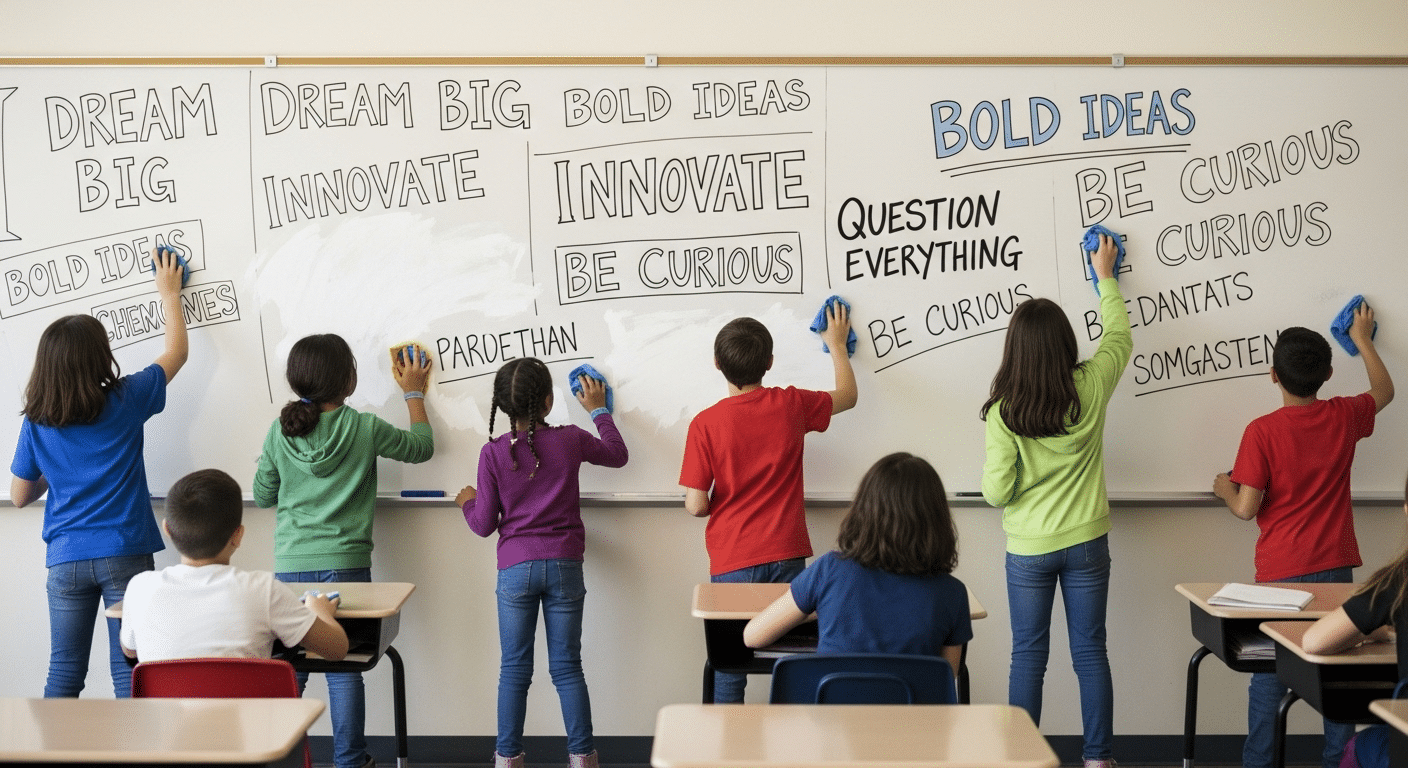
Under traditional grading systems, pressure changes how you approach student work. When a single assignment can heavily influence your final grade, experimentation begins to feel dangerous. Intellectual risk carries consequences.
A bold idea might not land. A new angle might be misunderstood. The cost of being wrong can seem higher than the reward of being original.
Over time, this pressure discourages creative thinking. You begin to calculate outcomes instead of exploring possibilities. Safe answers feel smarter. Familiar structures feel safer. You choose the response most likely to protect your grade rather than the one that stretches your understanding.
Creativity requires something different. It requires the ability to reorganize ideas in new ways, to connect knowledge that may not obviously belong together.
That process involves uncertainty. It involves partial failure. Under heavy grading pressure, that uncertainty becomes uncomfortable.
The performance mindset quietly replaces curiosity. Instead of asking, “What can I discover?” you may start asking, “What will earn the highest score?” That subtle change shapes behavior. Creative thinking narrows. Student work becomes predictable. Risk gives way to compliance.
In systems where grades dominate evaluation, caution often feels rational. Yet caution and creativity rarely grow at the same pace.
What Happens to Creative Thinking in a Performance-Driven Classroom?
In a performance-driven classroom environment, the focus often moves from learning to evaluation. Performance assessments are designed to measure student performance, but they can quietly reshape how students approach creative work.
When every assignment contributes to a final grade, practice becomes strategic rather than exploratory. Students begin to calculate outcomes. They ask what will earn approval, not what might lead to discovery.
Traditional grading systems create stress, and over time that stress affects thinking skills. Students frequently tie their self-worth to grades, especially when ranking becomes visible through scores, curves, or comparisons. Anxiety narrows attention.
Imagination and emotional expressiveness tend to decline under pressure. Research has linked standardized testing culture to reduced creative engagement, particularly when high-stakes performance determines progress.
In this type of classroom environment, performance assessments can send a subtle message. Your value is measurable. Your worth is comparative. Creative thinking, which requires uncertainty and experimentation, struggles in that atmosphere.
In performance-driven classes, students tend to:
- Seek approval over originality
- Mimic teacher expectations instead of developing their own voice
- Avoid ambiguous problems that carry risk
- Compete with peers rather than collaborate
Over time, this pattern shapes habits. Creative work becomes cautious. Thinking skills become procedural. The classroom begins to reward precision and compliance more than imagination.
Can Creativity Be Evaluated Without Being Crushed?

Grading does not automatically destroy creativity. The problem is not evaluation itself, but how evaluation is structured. Creativity can be defined in clear terms. It involves originality and high quality. An idea must be new, but it must also be meaningful and well developed. That combination can be assessed.
Teachers can evaluate creativity when they use clear criteria. You can look for depth of understanding, reorganization of ideas, thoughtful risk, and refinement over time. The best automated grading software can also support structured parts of this process, while teachers retain responsibility for evaluating creativity and other subjective aspects of student work. Feedback plays a central role here.
When student work receives specific guidance on originality and quality, creative development strengthens. Feedback tells you what to build on, what to rethink, and how to deepen your thinking skills.
Project-based assessments offer another path. They mirror professional environments where process matters as much as outcome. In many careers, drafts, revisions, and iteration are expected. When the process is valued in class, students grow. Creativity becomes something practiced, not feared.
The difference often lies in emphasis.
| Traditional Grading Focus | Creativity-Focused Assessment |
|---|---|
| Emphasis on final grade | Emphasis on process and revision |
| Single high-stakes assignment | Multiple low-stakes assessments |
| Performance over learning | Growth and understanding |
| Fixed answer expectation | Idea generation and reorganization |
| Ranking students | Encouraging individual progress |
Creativity does not collapse under evaluation. It weakens under narrow evaluation. When assessment supports revision and understanding, creative thinking can thrive.
What Are Educators Doing Differently to Support Student Creativity?
Across education, many teachers are reconsidering how grading influences creativity. Some are experimenting with what is often called the ungrading movement. Instead of centering every assignment around a final mark, they focus on progress, reflection, and growth over time. The goal is not to eliminate standards, but to reduce the pressure that can silence creative thinking.
Feedback-focused assessment is becoming more common. Rather than assigning a grade first and offering comments later, teachers provide detailed guidance that helps students improve before evaluation becomes final. This approach reframes assignments as part of a learning process. You are encouraged to revise, rethink, and refine your ideas.
Quiz retakes are another example. Research shows that students with lower initial performance often benefit the most from additional opportunities to demonstrate understanding. When retakes are allowed, motivation improves.
Multiple attempts increase engagement because learning is no longer tied to a single moment of performance. Many low-stakes assessments further reduce pressure. When no single task determines success, experimentation feels safer.
Autonomy also plays a role. When students are given more control over how they demonstrate learning, intrinsic motivation tends to rise. You invest more deeply when you feel ownership over the work.
Alternative approaches include:
- Revision after feedback, allowing you to strengthen ideas before final evaluation
- Student-defined problem-solving, where you shape the question as well as the answer
- Project-based evaluation that mirrors real-world practice in school and beyond
- Reflective self-assessment, encouraging you to reflect on strengths and areas for growth
- Portfolio-based grading, where progress across multiple assignments matters more than a single grade
These models do not remove accountability. They expand it. Creativity develops when education creates space for revision, reflection, and meaningful progress.
How Does Generative AI Complicate Creativity and Grading?
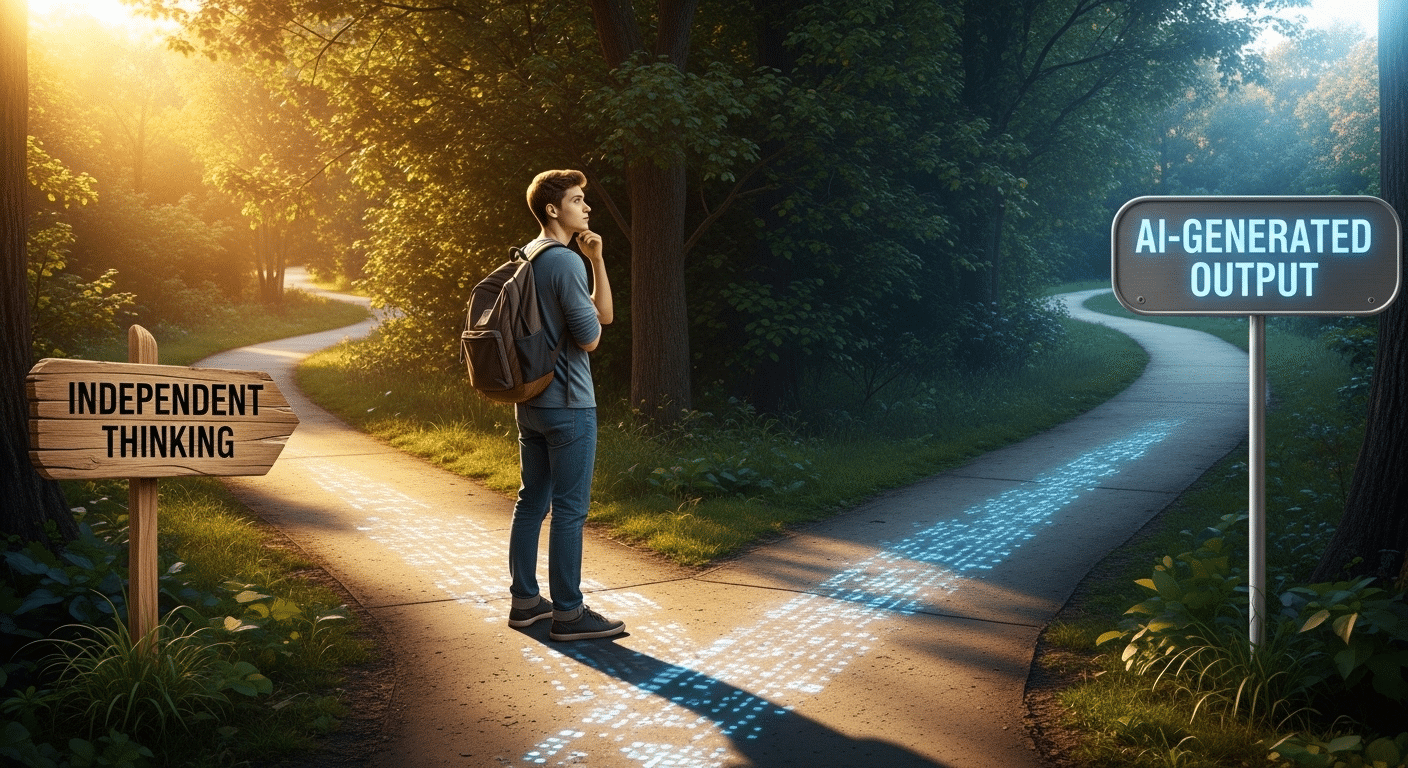
Generative AI has introduced a new layer of complexity into writing and creative work. Today, tools can generate essays, reorganize ideas, and produce polished responses within seconds. The output can appear thoughtful, structured, even insightful. On the surface, it resembles student work. That resemblance is where the difficulty begins.
For professors, assessing authentic knowledge becomes harder. When AI can create fluent writing on almost any topic, evaluating originality requires more than reading for quality. You must ask who did the thinking. If the intellectual effort was outsourced, the grade no longer reflects understanding. It reflects access to tools.
Creative work becomes especially difficult to verify. Creativity is not just the final product. It is the process of forming ideas, connecting knowledge, and refining thought over time. When authorship is unclear, that process disappears from view. You can see the result, but not the reasoning behind it.
There is also a deeper concern. If students rely heavily on AI to generate ideas, the habit of wrestling with ambiguity may weaken. Creativity loses part of its meaning when the struggle to create is removed.
In a world where AI can produce convincing answers, assessment must look beyond surface performance. Otherwise, grading risks rewarding output rather than understanding.
Why Protecting Authentic Student Work Matters More Than Ever?
Grading has always carried pressure. Students already navigate expectations, comparisons, and the quiet fear of falling short. When AI shortcuts enter that equation, something more subtle begins to erode.
If creative work can be generated instantly, the incentive to wrestle with ideas weakens. Intrinsic motivation declines when effort feels optional.
Yet authentic struggle is not a flaw in the learning process. It is the process. When you grapple with a difficult idea, revise weak arguments, or rethink a structure that does not quite work, creative thinking skills strengthen.
That effort builds cognitive flexibility. It builds resilience. It prepares you for future careers where ambiguity is constant and answers are rarely prewritten.
Effort and revision are also tied to long-term success. Adults who solve complex problems rely on habits formed through repeated practice. They refine, test, adjust, and persist. Those habits develop through authentic work, not automated completion.
Without trust, grading loses meaning. A grade is meant to signal understanding, skill, and growth. If authorship is uncertain, that signal weakens. Evaluation becomes less about knowledge and more about guesswork.
Protecting authentic student work is not about control. It is about preserving the connection between effort, learning, and genuine achievement.
How Can TrustEd Preserve Creativity While Maintaining Academic Standards?
If grading already carries pressure, and generative AI adds uncertainty, the question becomes unavoidable. How do you protect creativity without turning the classroom into a space of suspicion? The answer is not surveillance. It is not punishment. It is clarity.
Technology can support academic standards when it is designed to reinforce trust rather than erode it. Tools that focus on authorship verification and responsible AI misuse detection do not exist to police curiosity. They exist to protect authentic effort.
When educators can confidently assess who produced the work, grading regains meaning. Creative thinking becomes visible again.
TrustEd approaches this challenge from that perspective. Its purpose is not to monitor students for minor missteps. Its purpose is to provide transparency. When AI misuse detection is handled responsibly, evaluation becomes fairer.
Professors can distinguish between assisted drafting and fully generated submissions. That distinction matters. It supports honest students who invest real effort in their writing and creative work.
By reinforcing academic integrity, TrustEd also reinforces intellectual risk-taking. When expectations are clear, and authorship is verifiable, students are freer to experiment. Creativity depends on trust. Without it, both grades and growth lose credibility.
With TrustEd, educators can:
- Verify originality of student work
- Detect AI-generated submissions responsibly
- Protect authentic creativity
- Maintain rigorous academic standards
- Encourage honest intellectual exploration
If preserving creativity and maintaining standards both matter in your institution, explore how TrustEd can support that balance with confidence and clarity.
Conclusion
Grading influences behavior. That reality is difficult to avoid. When evaluation centers on a final grade and high stakes determine progress, students respond accordingly. They protect their scores. They avoid uncertainty. Intellectual risk begins to look reckless rather than necessary. Under sustained pressure, creative thinking narrows.
Yet grading itself is not the enemy. How you grade matters more than the mere presence of evaluation. When feedback becomes central, growth becomes visible. When revision is encouraged, learning feels active rather than final. Students begin to see assignments as opportunities to deepen understanding instead of moments of judgment. Creativity requires psychological safety. It requires room to experiment, revise, and occasionally be wrong without permanent penalty.
At the same time, integrity cannot be ignored. In an era where AI can generate writing instantly, fairness depends on clarity. Educators must be able to assess authentic effort and real knowledge. Without trust, grades lose meaning, and creative achievement becomes difficult to verify.
So the question may not be whether grading affects student creativity. The deeper question is what your grading system rewards. Does it reward compliance or curiosity? Performance or progress? Safety or exploration?
If preserving creativity while maintaining academic standards matters to you, consider how tools like TrustEd can help ensure authenticity, fairness, and confidence in every evaluation.
Frequently Asked Questions (FAQs)
1. Does grading reduce student creativity?
Grading can reduce student creativity when it emphasizes high-stakes performance over learning. When students focus primarily on earning a grade, they often choose safer ideas and avoid experimentation. Pressure tied to final outcomes can narrow creative thinking and discourage intellectual risk.
2. How do grades affect intrinsic motivation?
Grades often shift attention from curiosity to performance. When students tie their self-worth to a grade, intrinsic motivation declines. Instead of learning for understanding, they may work only for approval, which can weaken long-term engagement and creativity.
3. Why do students avoid intellectual risk?
Students avoid intellectual risk when a single assignment heavily influences their final grade. The fear of being wrong can feel costly. In performance-driven systems, safe answers appear more reliable than bold or original ideas.
4. Can creativity be graded fairly?
Creativity can be graded fairly when clear criteria focus on originality and quality. Feedback-centered assessment supports growth by evaluating both process and outcome. Fair evaluation requires transparency and consistent standards rather than subjective impressions.
5. Do alternative grading systems improve student learning?
Alternative grading systems, such as revision-based models and low-stakes assessments, often increase engagement. Multiple opportunities to demonstrate understanding reduce anxiety and support progress. Students tend to show stronger motivation when learning is emphasized over ranking.
6. How does AI affect grading and creativity?
AI can generate writing and creative work quickly, which makes authentic knowledge harder to assess. When authorship is unclear, creativity becomes difficult to verify. Grading must now account for both originality and responsible use of technology.
7. How can schools protect authentic student work?
Schools can protect authentic student work by combining clear academic integrity policies with responsible verification tools. When authorship is transparent and expectations are clear, evaluation remains fair and creativity is protected.
