

How Can AI Help Teachers With Grading and Feedback?
AI-assisted grading helps teachers reduce repetitive grading tasks, deliver faster feedback, and maintain consistent evaluation standards across large classes. AI tools can identify learning patterns, draft rubric-aligned feedback, and support personalized guidance, while educators retain final grading authority. Platforms like Apporto PowerGrader combine automation with human oversight for responsible assessment.
Grading rarely looks hard from the outside. Yet, once you’re inside the grading process, it quickly becomes one of the most mentally draining parts of teaching. Manual grading takes time. A lot of it.
Reading dozens or hundreds of student responses, applying the same standards again and again, staying sharp until the very last paper. It adds up.
Large class sizes make things harder. Written feedback becomes shorter, more generic, sometimes rushed, even when teachers want to go deeper.
And because humans are human, inconsistencies creep in. Fatigue, context, unconscious bias. Two similar answers can receive slightly different evaluations without anyone intending it.
At the same time, students expect timely feedback. Delays weaken engagement and slow learning. Teachers feel that pressure daily.
Faster grades help, sure, but what’s really missing is feedback quality. That tension—between time, fairness, and meaningful feedback—is exactly where AI-assisted grading enters the conversation.
What Does AI Actually Do in the Grading and Feedback Process?
AI doesn’t step into the classroom to replace teachers. It works quietly in the background, handling parts of the grading workflow that slow everything down.
Modern AI assessment systems can analyze student work in real time, whether that work is a written response, a coding assignment, a diagram, or a structured short answer. For written assignments, teachers can grade student essays with AI while retaining control over the final evaluation.
Using artificial intelligence and large language models, these systems compare student responses against rubrics and patterns learned from previous work. If you’re comparing the best automated grading software, look for tools that can apply these capabilities while still giving educators control over the grading process.
The goal isn’t to assign a final grade automatically, but to generate draft feedback that follows the same standards every time. That consistency matters.
In practice, AI-assisted grading typically supports teachers by:
- Producing first-pass grades and feedback drafts
- Recognizing patterns across large sets of student responses
- Delivering instant feedback that helps prevent misconceptions
Human oversight remains essential. Teachers review, adjust, and contextualize what AI produces.
When used this way, automated grading systems don’t replace judgment. They protect it, by reducing noise, saving time, and letting teachers focus on the feedback that truly shapes student performance.
How Can AI Reduce the Time Teachers Spend on Grading?
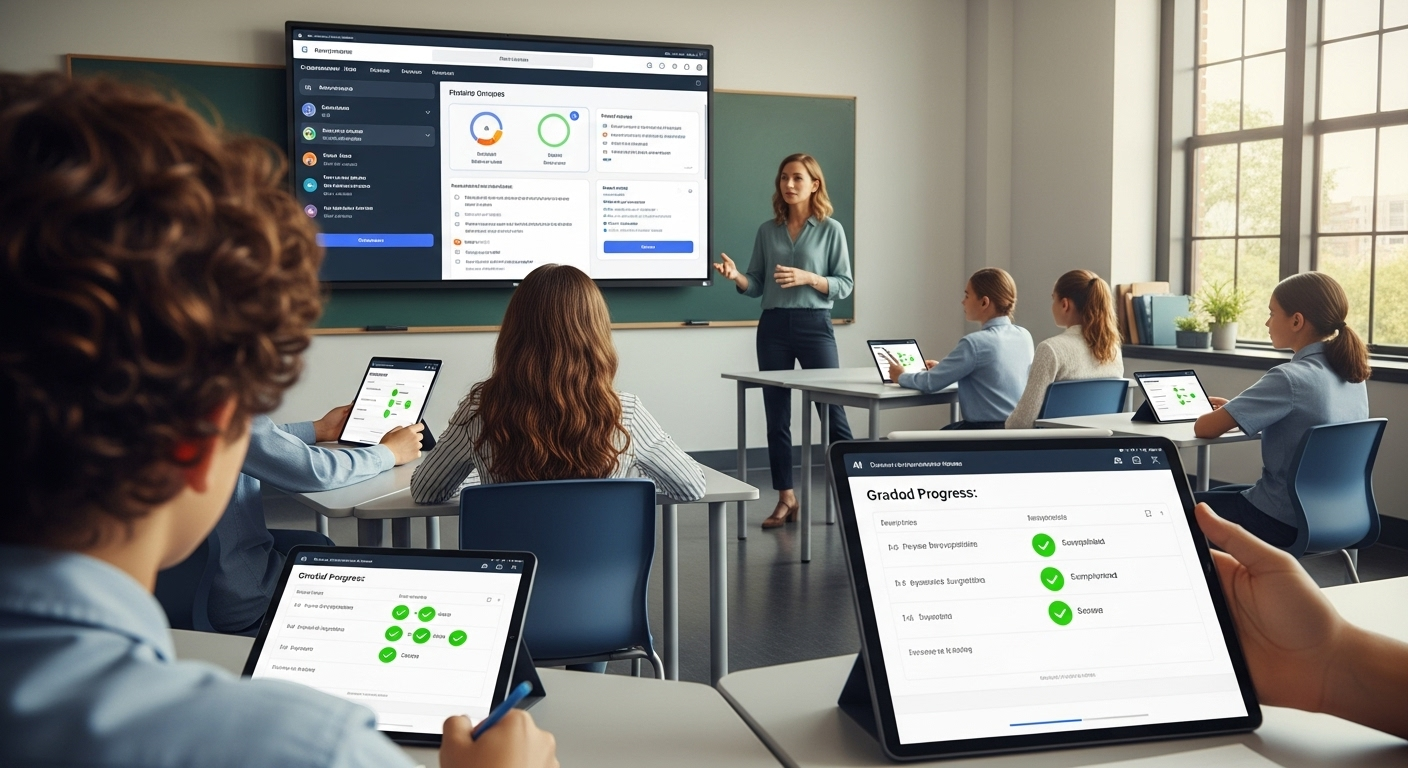
Grading time disappears faster than most people realize. One assignment becomes ten, then fifty, then an entire weekend quietly evaporates. This is where AI-assisted grading makes a very practical difference.
By automating the most repetitive parts of the grading process, AI can reduce grading workloads by roughly 70%, especially in large cohorts where patterns repeat more often than not.
Instead of reviewing every response from scratch, automated grading systems can group similar student answers together. This is one practical application of AI marking, allowing teachers to review one cluster, apply judgment once, and move on.
Even complex assignments become more manageable because the system handles first-pass evaluation while teachers focus on nuance.
That reclaimed time matters. It goes back into instruction, mentoring, and actually engaging with students rather than racing the clock.
Where time savings come from:
- Grouping similar responses across large classes
- Automating repetitive scoring tasks
- Faster turnaround on feedback without cutting corners
How Does AI Improve the Quality of Feedback Students Receive?
Speed alone doesn’t improve learning. Feedback quality does. AI helps here by delivering structured, consistent feedback that doesn’t fade halfway through a grading session. Every student receives comments aligned to the same rubric, written in a clear, steady tone, without fatigue creeping in.
AI-generated feedback highlights what worked and what didn’t. Just as important, it suggests actionable next steps, not vague remarks.
That clarity helps students understand why an answer fell short, even when they were close. When feedback arrives quickly, while the assignment is still fresh, the learning process stays active.
Used well, AI helps teachers provide feedback that is both faster and more meaningful.
How feedback improves with AI:
- Glow and Grow–style feedback that balances strengths and improvement
- Rubric-aligned explanations tied to learning goals
- Immediate feedback that reinforces understanding and corrects misconceptions
Can AI Personalize Feedback for Individual Students?
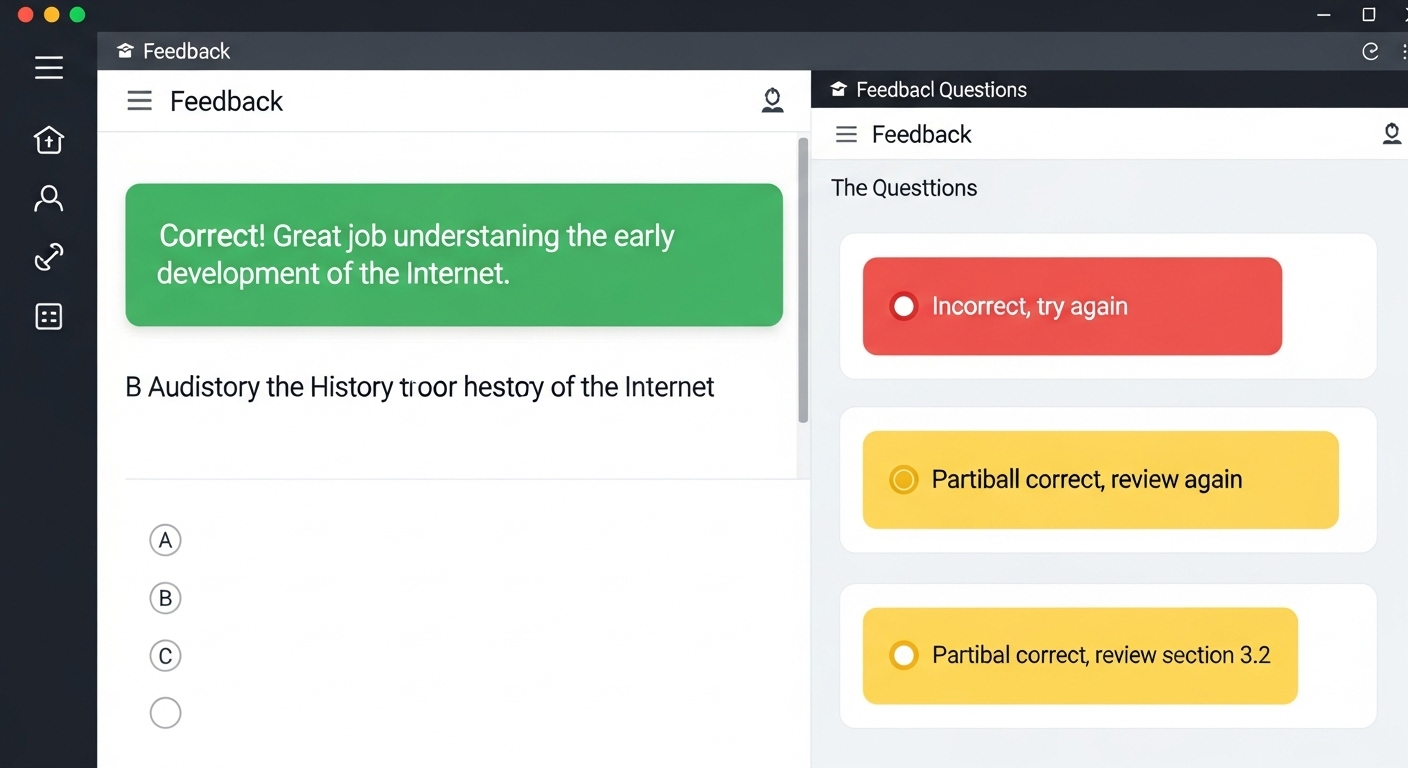
Yes, and this is where AI moves beyond efficiency into real instructional value. By analyzing individual student responses, AI can adjust feedback based on patterns in understanding, recurring mistakes, and partial knowledge. Two students can submit different answers to the same question and receive feedback tailored to their specific gaps.
Even when a student reaches the wrong conclusion, AI can recognize correct reasoning along the way and respond accordingly. That kind of individualized guidance supports critical thinking rather than shutting it down.
Personalized feedback keeps the learning process moving forward. It shifts grading from judgment to guidance, which is exactly where it belongs.
How Do AI Tools Help Teachers Identify Patterns and Trends in Student Performance?
When grading stays manual, patterns hide in plain sight. AI changes that by analyzing large volumes of student work at once. Instead of guessing where students are struggling, teachers can see it clearly, often in real time.
AI tools surface common misconceptions, repeated errors, and gaps in understanding across an entire class. Those insights support targeted interventions before small issues grow into larger learning barriers.
Over time, data analysis also reveals which concepts consistently challenge students and which teaching strategies are working.
This isn’t about replacing professional judgment. It’s about giving teachers better information, faster.
What pattern detection reveals:
- Class-wide performance trends
- Frequently missed concepts and skills
- Early indicators of learning challenges that need intervention
What Types of Assignments Can AI Grade Well — and Where Does It Struggle?
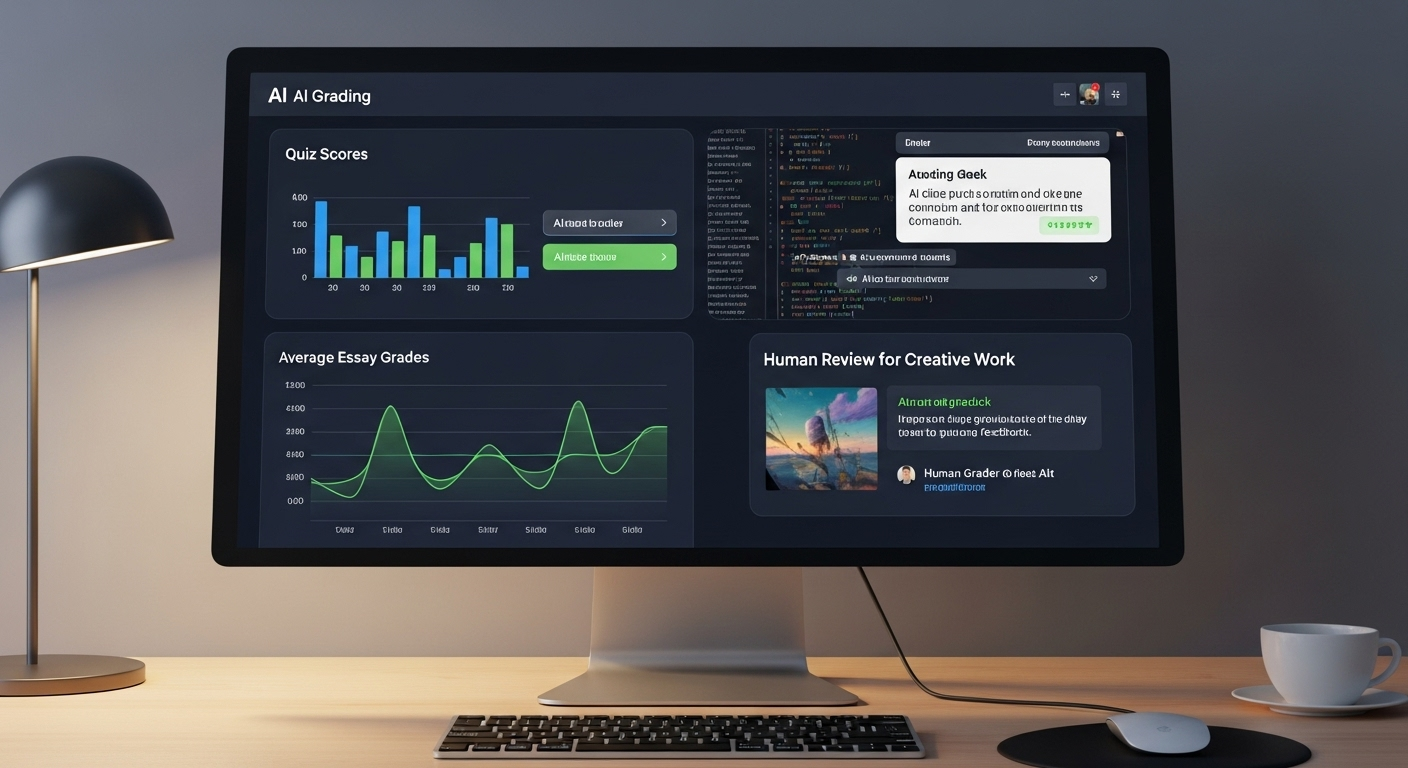
AI grading works best when the structure is clear and the expectations are visible. When assignments follow defined criteria, accuracy improves and feedback becomes more reliable. Using consistent grading criteria across assignments also gives AI systems clearer standards to evaluate against. This is why AI performs especially well with tasks where answers can be evaluated against shared standards rather than interpretation alone.
Problems arise when nuance takes center stage. Creativity, originality, or layered arguments often stretch beyond what AI can confidently judge. In those cases, human judgment remains essential to avoid oversimplifying strong but unconventional thinking.
AI tends to grade accurately when working with:
- Multiple-choice and short-answer questions
- Structured essays guided by clear rubrics
- Code and programming tasks with testable logic
- Pattern-based responses where consistency matters
Where AI can struggle:
- Creative writing with unconventional structure
- Complex arguments that rely on tone or originality
- Responses where being “almost right” matters as much as correctness
What Are the Ethical Concerns Around AI-Assisted Grading?
Ethical concerns sit at the heart of AI-assisted grading, not at the edges. One of the biggest risks is inherited bias. If an AI system is trained on uneven or historically biased data, those patterns can quietly influence outcomes. That’s why responsible use matters more than technical sophistication.
Transparency is equally important. Students have a right to understand how their work is evaluated, especially when automated systems are involved. Hidden processes erode trust. Clear explanations build it.
Regular audits, human review, and documented grading standards help keep systems fair. Without those safeguards, even well-intentioned AI tools can drift away from equity.
Ethical grading isn’t just about speed or accuracy. It’s about accountability, clarity, and maintaining confidence in the learning process.
Why Human Oversight Still Matters When Using AI for Grading

AI can read fast. It can compare patterns endlessly. What it can’t do is understand context the way a human does. Complex reasoning, cultural nuance, creative risk-taking—these often need a human eye to be evaluated fairly.
Human graders bring empathy and judgment into the process. They recognize when a student’s thinking is strong even if the execution falls short. Understanding AI-driven feedback vs traditional feedback helps clarify where automated feedback can support teachers and where human judgment remains essential. Final grading decisions should always remain human-led, especially in high-impact assessments.
When used well, AI works like a digital teaching assistant. It prepares the ground. Humans decide what ultimately stands. That balance protects both accuracy and integrity, which is why human oversight isn’t optional. It’s foundational.
How Can Teachers Integrate AI Into Grading Without Losing Control?
AI should feel like support, not surrender. The most effective approach is to treat AI as a co-pilot that handles the first pass, while teachers retain full authority over outcomes. If you’re learning how to use AI for grading, start with clear standards and intentional workflows. Control stays intact when standards are clear and workflows are intentional.
Teachers review AI-generated feedback, adjust tone, and add context where needed. This keeps grading aligned with classroom values and learning goals.
Practical ways to stay in control:
- Be transparent with students about how AI is used
- Use AI for first-pass grading, then apply human review
- Align AI feedback with existing grading practices and rubrics
How AI PowerGrader Helps Teachers Grade Faster Without Sacrificing Quality
AI PowerGrader is built around a simple idea: grading should support learning, not drain it. Instead of replacing human expertise, it keeps educators firmly in control while reducing unnecessary workload. Instructors define the rubric. The system applies it consistently.
AI PowerGrader assists with AI-assisted grading by drafting feedback aligned to standards, detecting patterns across student submissions, and reducing grading time without lowering rigor. Teachers review, refine, and finalize. That human-in-the-loop design keeps fairness and trust intact.
By handling repetitive evaluation tasks, AI PowerGrader frees educators to focus on mentoring, curriculum development, and meaningful feedback conversations.
It’s not about faster grades alone. It’s about better grading practices that scale responsibly, even in large or fast-moving courses. Try AI PowerGrader today!
Conclusion
AI doesn’t make grading impersonal. Used thoughtfully, it does the opposite. It brings consistency where fatigue once crept in and speed where delays slowed learning. Most importantly, it gives teachers back time to focus on students, not spreadsheets.
Human judgment remains central. Ethical, transparent use defines whether AI enhances education or complicates it. The real value isn’t automation for its own sake. It’s better learning conversations, clearer feedback, and fairer evaluation.
If you’re exploring how to balance efficiency with integrity, it’s worth seeing how AI PowerGrader supports responsible grading and richer feedback workflows without taking control away from educators.
Frequently Asked Questions (FAQs)
1. Is AI grading accurate enough for classrooms?
AI grading can be highly accurate for structured assignments, short answers, coding tasks, and rubric-based assessments when combined with clear evaluation criteria. Most institutions use AI-assisted grading with human oversight to ensure fairness, context awareness, and accurate interpretation of student work.
3. Can AI provide personalized feedback to students?
Yes, AI can personalize feedback by analyzing individual responses, identifying recurring mistakes, and adapting comments to each student’s understanding level. This helps students receive more targeted guidance while allowing teachers to deliver consistent feedback across large classes more efficiently.
4. How does AI reduce bias in grading?
AI applies the same standards consistently, reducing fatigue-related variation. However, bias audits and human oversight remain essential to address any inherited or systemic bias in training data.
5. Are students informed when AI is used for grading?
Responsible use requires transparency. Students should be informed when AI assists in grading, how it’s used, and how human review ensures fairness and accountability.
6. What types of assignments can AI grade effectively?
AI can effectively grade multiple-choice questions, short answers, structured essays, coding assignments, and pattern-based assessments where expectations are clearly defined. Creative writing, subjective analysis, and complex reasoning tasks still benefit from human review because context and originality are harder for AI systems to interpret.
