

What Is an AI Tutor?
An AI tutor is an artificial intelligence system that provides personalized learning support through explanations, feedback, and adaptive practice. AI tutors analyze student performance, adjust instruction based on learning pace, and offer instant guidance across subjects. Structured platforms like Apporto CoTutor help schools integrate AI tutoring into curriculum-based learning.
Not long ago, tutoring meant sitting across from someone with a notebook and a pencil. Now you open a laptop, type a question, and within seconds a system responds. That shift has sparked a simple but important question, what is an AI tutor, and why does it seem to be everywhere at once?
Artificial intelligence has moved steadily into education over the past decade, but recent advances in large language models and generative AI have accelerated that movement.
These systems can produce natural responses, explain concepts, and guide students through problems in ways that feel conversational. The result is an AI tutor that can operate at scale, offering personalized guidance across subjects and grade levels.
This emerging technology is reshaping the learning process. It promises faster feedback, more adaptive instruction, and broader access to support. At the same time, it raises questions about accuracy, overreliance, and the role of human teachers.
In this blog post, we are going to discuss what is an AI tutor, how it works, where it helps, where it falls short, and how it fits into the future of education.
What Exactly Is an AI Tutor?
An AI tutor is software designed to guide your learning using artificial intelligence. It is not a person behind a screen. It is a system. You type a question, upload an assignment, or respond to a prompt, and the program analyzes your input, then generates feedback meant to move you forward. That is the core idea.
Underneath that clean interface, several layers are working together. Many platforms rely on intelligent tutoring systems, often shortened to ITS. These systems track your performance, notice patterns in your mistakes, and adjust difficulty based on your learning pace.
Add large language models into the mix, and you get something more conversational. Generative AI allows the system to produce natural explanations, hints, and follow-up questions that resemble a real dialogue.
Still, it remains software. It does not possess emotional intelligence. It calculates, predicts, and responds based on data analysis.
To keep the terms clear:
- AI Tutor: AI powered system delivering personalized lessons and feedback.
- Intelligent Tutoring Systems: Software that adapts to student performance and learning pace.
- Generative AI: A Large language models that create helpful responses and explanations in real time.
How Do AI Tutors Actually Work Behind the Scenes?
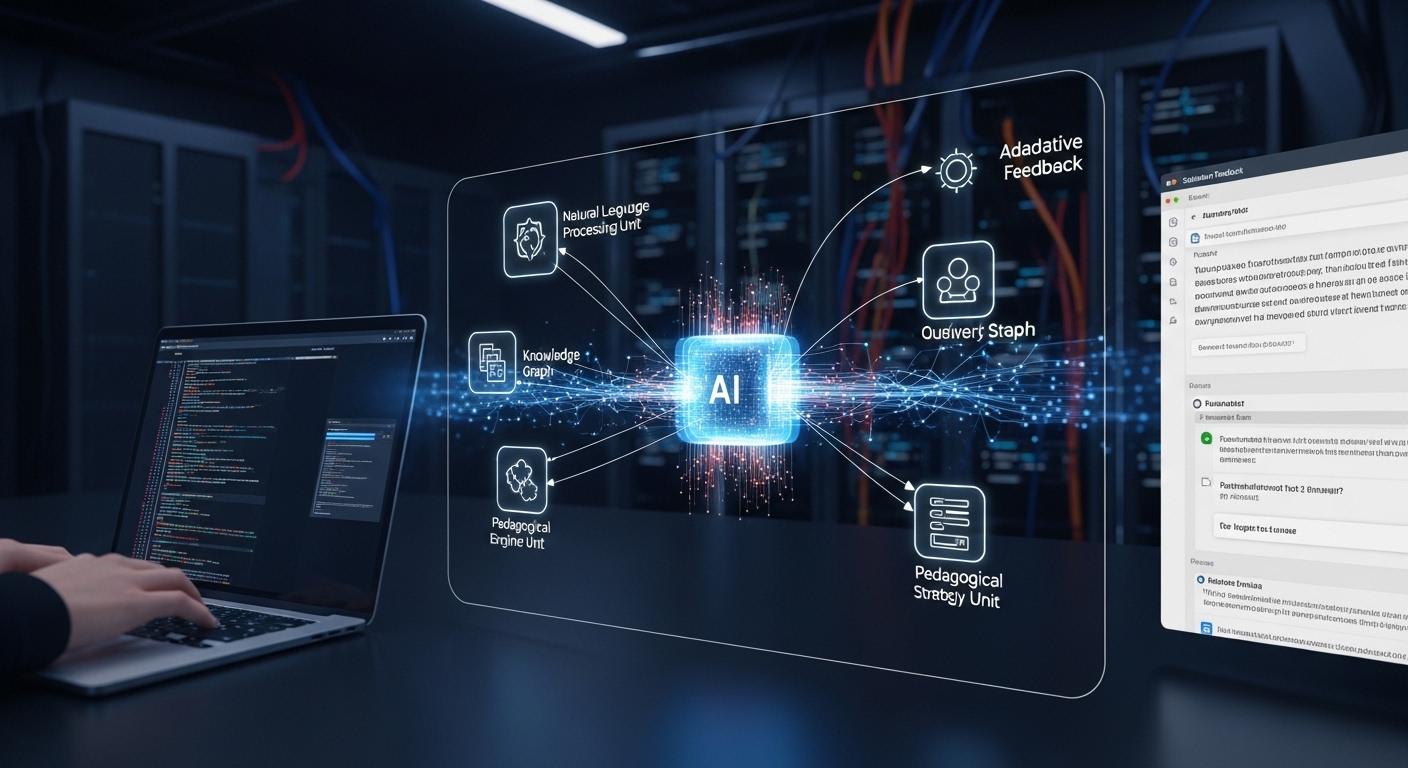
From the outside, an AI tutor feels simple. You ask. It answers. But behind that exchange sits a layered structure built to monitor, predict, and respond to your learning process in real time.
Most intelligent tutoring systems operate through four core components. Each plays a distinct role, and together they create adaptive learning rather than static responses.
First comes the Student Model. This component analyzes student performance, tracking what you answer correctly, where you hesitate, and how your understanding evolves over time. It observes patterns. If you consistently struggle with fractions or grammar rules, the system notices. It adjusts.
Next is the Domain Model. Think of this as the mapped curriculum. It contains the structured knowledge base, concepts, skills, and course materials relevant to the subject. Without it, the AI would lack direction.
The Tutoring Model determines how feedback is delivered. Instead of immediately revealing answers, well-designed systems provide hints, probing questions, or partial explanations. This supports adaptive learning by encouraging you to think rather than simply copy.
Finally, the User Interface is where interaction happens. Chat windows, voice prompts, visuals, interactive lessons. This layer simulates natural dialogue, creating a back-and-forth dynamic that feels closer to conversation than instruction.
Here is how those pieces connect:
| Component | Purpose | Why It Matters |
|---|---|---|
| Student Model | Tracks student knowledge and performance | Enables adaptive learning |
| Domain Model | Maps curriculum concepts and skills | Ensures accurate content |
| Tutoring Model | Determines feedback and hints | Guides learning process |
| User Interface | Chat, voice, visuals | Enables engagement |
How Are AI Tutors Different From Human Tutors?
You might assume that an AI tutor and a human tutor serve the same purpose. On the surface, both answer questions and guide practice. The difference sits deeper.
AI tutors excel at speed. You receive instant feedback, immediate corrections, and explanations at any hour. There is no scheduling. No waiting. The system analyzes your response and generates guidance within seconds. For structured subjects like math or grammar, that responsiveness can feel efficient, even liberating.
Human tutors operate differently. They respond not just to the answer you give, but to how you give it. Emotional intelligence matters here. A human tutor can sense frustration, adjust pace, and encourage you when confidence dips. That relational layer supports soft skills development alongside academic growth.
AI lacks emotional awareness. It cannot truly interpret body language, motivation, or subtle shifts in mood. It also does not build mentorship in the same way educators do over time.
That said, AI remains scalable and cost-effective. It can support thousands of students simultaneously, providing teacher support by handling repetitive instruction while educators focus on deeper teaching.
What Are the Key Benefits of Using an AI Tutor?
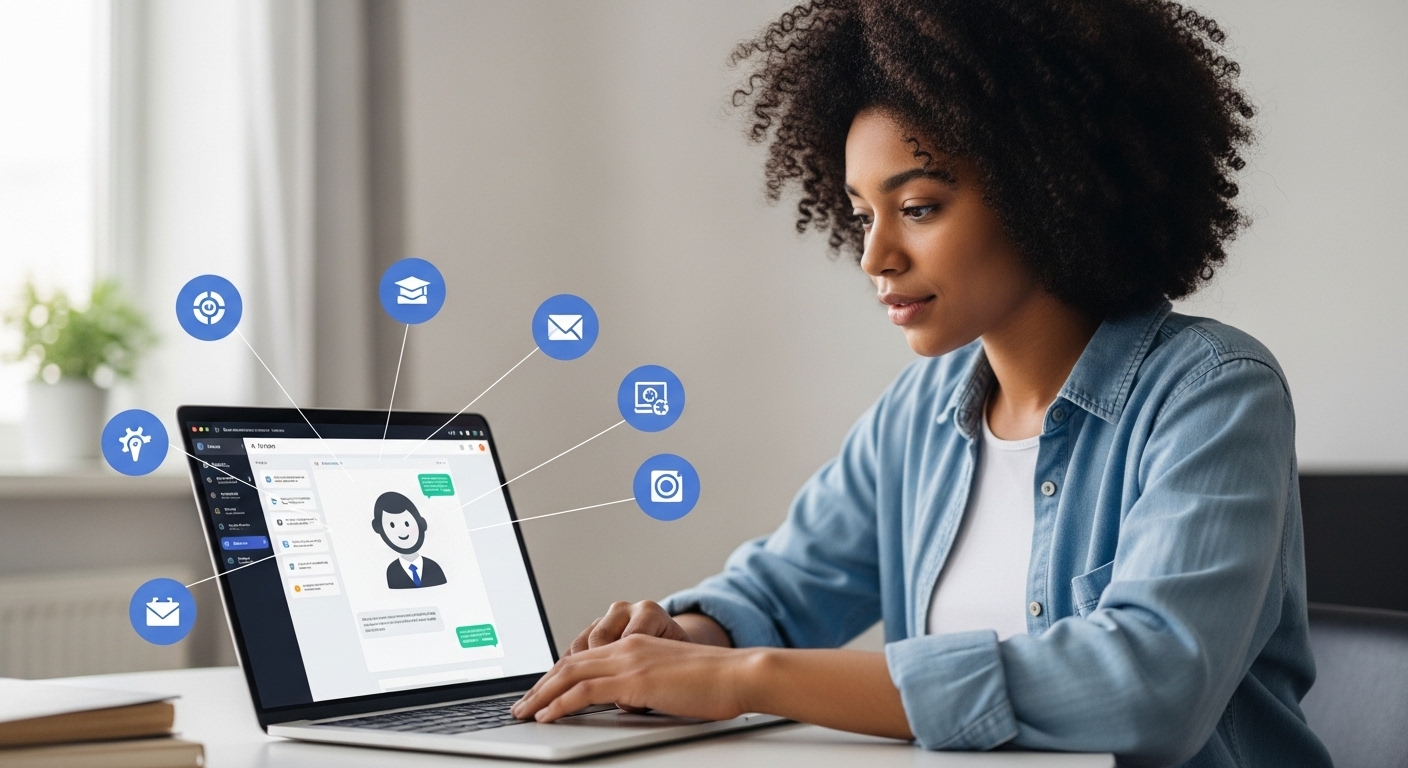
The appeal of an AI tutor becomes clearer once you look at what it actually delivers. At its best, it offers personalized guidance at scale, something that was once reserved for one-on-one instruction.
Intelligent tutoring systems analyze your responses, track your learning pace, and adjust content based on your grade level and demonstrated understanding. That kind of personalization used to be rare. Now it is automated.
Immediate feedback is another advantage. Instead of waiting days for graded assignments, you see corrections in seconds. This rapid response shortens the learning loop. You make a mistake, you see it, you adjust. Research shows that timely feedback strengthens retention and improves learning outcomes, especially in structured subjects like math and grammar where repetition builds mastery.
Access also changes the equation. AI tutors operate 24 hours a day. Late-night study sessions, early-morning review, weekend practice, all possible without scheduling constraints. For students in underserved communities or remote areas, that accessibility can bridge gaps in support.
Multilingual capabilities extend reach even further. Many AI powered systems can provide explanations in multiple languages, helping English language learners engage more confidently with course material.
Cost matters too. Compared to private human tutors, AI platforms are often far more affordable while still producing measurable learning gains in foundational subjects.
Benefits of using AI Tutor are:
- Personalized Learning
- Immediate Feedback
- 24/7 Access
- Cost-Effective Support
Can AI Tutors Improve Student Performance and Learning Outcomes?
The question is not theoretical anymore. Research shows that intelligent tutoring systems can, in certain structured contexts, match the effectiveness of human tutoring. That claim once sounded ambitious.
Today it is supported by controlled studies, particularly in mathematics and science education where concepts build sequentially and problem solving follows defined rules.
AI tutors improve student performance by increasing practice opportunities. You are not limited by classroom time. You can work through additional math problems, receive immediate feedback, and correct misconceptions before they solidify. That repetition matters. Small corrections, applied consistently, compound into measurable learning gains.
Engagement also plays a role. Interactive dialogue, adaptive difficulty, and responsive feedback keep you involved in the learning process. When the system adjusts tasks based on your current ability, the material stays challenging but not overwhelming. That balance supports sustained focus.
Data-driven feedback strengthens the loop further. Intelligent tutoring systems analyze patterns in your responses and identify gaps in understanding. Instead of generic corrections, you receive targeted explanations that help students refine weak areas.
AI tutors are not magic. They are tools. Yet in structured subjects like math and science, they can meaningfully improve learning outcomes when used thoughtfully.
Where Do AI Tutors Struggle or Fall Short?
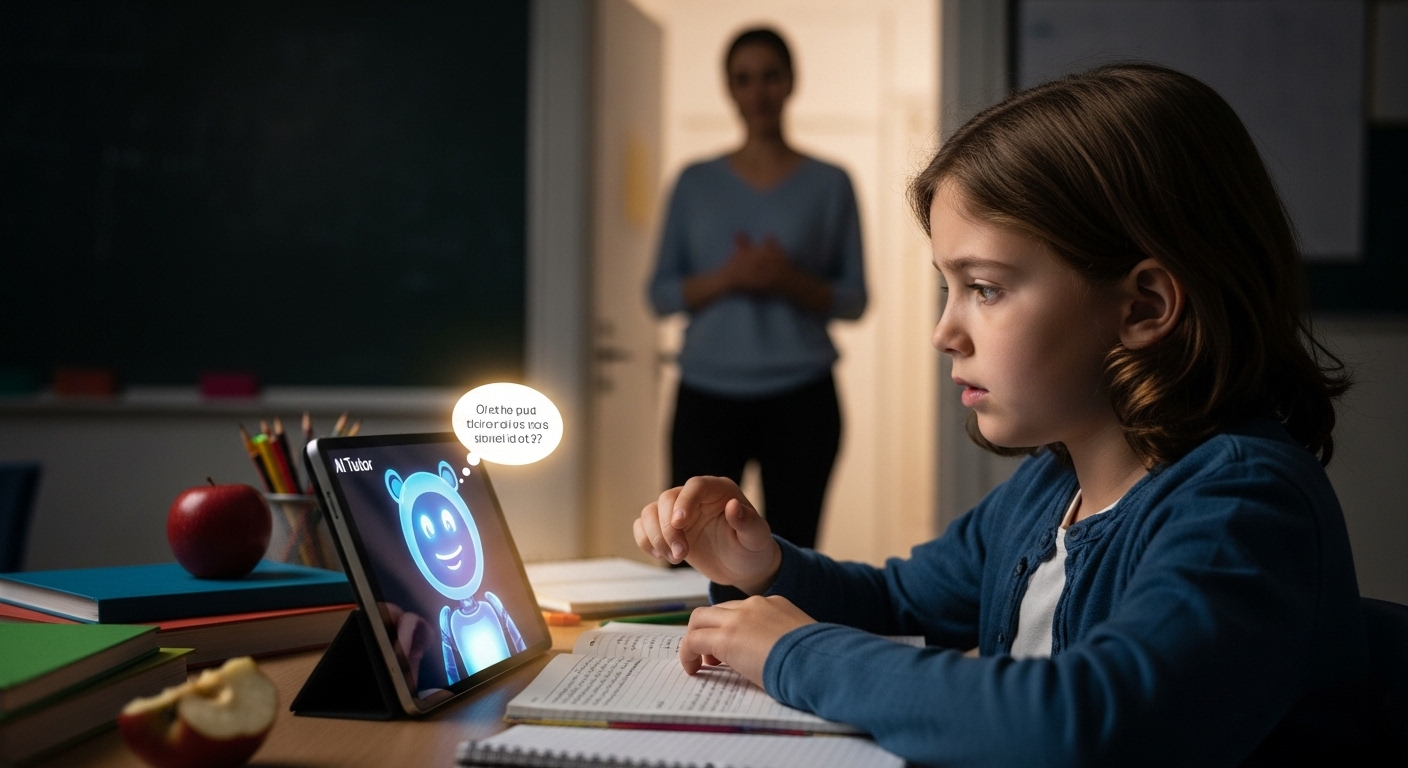
AI tutors are not flawless. Their limitations become clearer the longer you use them. Emotional intelligence is the first gap. Artificial intelligence can simulate conversation, but it cannot truly sense frustration, anxiety, or boredom. A human teacher might notice when you disengage or hesitate. An AI system responds only to the text you enter.
Over reliance presents another concern. When instant answers become routine, your own problem solving muscles may weaken. Critical thinking develops through effort, confusion, revision, and persistence. If you skip that process too often, you risk trading short-term convenience for long-term gaps in understanding.
Accuracy is not guaranteed either. Generative AI systems can produce incorrect answers or incomplete explanations. They may also reflect societal bias embedded in training data, which can subtly shape responses in ways you might not notice at first.
Then there is privacy. AI tutoring systems collect performance data to personalize feedback. Schools must ensure compliance with regulations like FERPA, which protects student information. Responsible implementation matters.
These tools support learning, but they require oversight.
- Emotional Limitations: Cannot read student emotions or provide encouragement.
- Over Reliance Risk: May reduce independent problem solving skills.
- Bias & Accuracy Issues: Can reflect societal bias or produce incorrect answers.
- Privacy Concerns: Must comply with regulations like FERPA.
How Can Teachers and Schools Use AI Tutors Responsibly?
AI tutors work best when educators remain in control. Teachers can create customized AI tutors by setting specific prompts that guide how the system responds to students. Those prompts matter. They can instruct the AI to provide hints instead of direct answers, to ask probing questions, or to encourage reflection before revealing solutions. Design determines outcome.
In classroom settings, AI should function as teacher support, not teacher replacement. It can automate routine grading, track student progress, and analyze patterns in performance data. That frees educators to focus on mentorship, discussion, and higher-order thinking tasks that require human judgment.
When integrated thoughtfully into the curriculum, AI tutors can double practice opportunities without doubling workload. Students receive extra support at their own pace, while teachers maintain oversight and adjust instruction based on real-time data insights.
Responsible implementation depends on structure. Clear guidelines. Defined boundaries. Ongoing evaluation.
What Does the Future of AI Tutoring Look Like?
The future of AI tutoring will likely unfold gradually, not all at once. You are already seeing early adoption in K-12 classrooms, but universities are expanding their use as well. Large lecture courses, online programs, and hybrid models provide fertile ground for AI tools that can offer personalized guidance at scale.
Higher education institutions are beginning to integrate AI tutors directly into course materials, rather than treating them as optional add-ons.
Adaptive learning will become more refined. As large language models improve, AI powered systems will better analyze learning pace, adjust difficulty, and provide more context-aware feedback. The interaction may feel smoother, more natural, perhaps closer to a thoughtful assistant than a search engine.
Collaboration between AI trainers and human teachers will define much of this progress. Educators will design prompts, set learning objectives, and guide how artificial intelligence interacts with students. The AI handles routine explanation and practice. Teachers handle nuance.
As emerging technologies mature, the learning journey will become more personalized. Still, the human role remains central. AI tools may evolve quickly, but education remains a deeply human endeavor.
Why Structured AI Tutors Like CoTutor Matter?
Not all AI tutors are built the same. Some prioritize speed. Others prioritize structure. That distinction matters more than it first appears.
Generic AI tools often deliver quick responses to isolated questions. You ask, it answers. Efficient, yes. But learning is not a collection of disconnected answers. It is a progression. A structured journey. That is where systems like CoTutor enter the conversation.
CoTutor is designed with institutional integration in mind. It aligns with curriculum goals, course materials, and classroom expectations rather than operating as a standalone chatbot. The emphasis is on pedagogically sound design, meaning the AI powered system is guided by educational principles, not just data patterns. Structured prompts and guardrails encourage concept mastery before completion. You are nudged toward understanding, not just output.
Advanced features allow educators to shape how the AI interacts with students, creating personalized guidance within defined academic boundaries. That combination of structure and flexibility strengthens the overall learning journey.
| Feature | Generic AI Tutor | CoTutor |
|---|---|---|
| Instant Help | Yes | Yes |
| Institutional Integration | Limited | Designed for schools |
| Learning Safeguards | Basic | Structured prompts |
| Focus | Quick responses | Mastery & guided learning |
Final Thoughts
You can think of an AI tutor as a tool. Useful, sometimes impressive, occasionally imperfect. AI is not a replacement for human teachers, and it was never meant to be. Artificial intelligence can explain, prompt, and analyze. It cannot mentor in the human sense.
The strongest results appear in hybrid models. AI handles repetition, structured practice, and immediate feedback. Human teachers focus on discussion, critical thinking, creativity, and emotional support. That balance feels practical. Sustainable, even.
Responsible AI use matters. Verify answers. Reflect before copying. Treat the system as a guide rather than a shortcut. Your learning process depends on effort, not automation.
If you are considering an AI tutor, start with clarity. Ask how it supports your goals, how it aligns with your curriculum, and how it fits into your broader educational journey. Technology evolves. Thoughtful learning should evolve with it.
Frequently Asked Questions (FAQs)
1. What is an AI tutor in simple terms?
AI changes learning by providing personalized instruction, instant feedback, and adaptive support tailored to individual student needs. AI-powered systems can analyze learning patterns, automate routine tasks, and expand access to educational resources, helping students learn more efficiently across different subjects and skill levels.
2. How does AI change learning?
AI changes learning by providing personalized instruction, instant feedback, and adaptive support tailored to individual student needs. AI-powered systems can analyze learning patterns, automate routine tasks, and expand access to educational resources, helping students learn more efficiently across different subjects and skill levels.
3. Are AI tutors better than human tutors?
AI tutors are not inherently better than human tutors. They offer instant feedback, flexible access, and cost efficiency. Human tutors provide emotional intelligence, mentorship, and adaptive encouragement. In structured subjects like math, AI can be highly effective. For deeper discussion and personal growth, human support remains essential.
4. Can AI tutors replace teachers?
AI tutors are designed to support teachers, not replace them. They can automate routine tasks, provide extra practice, and offer immediate feedback. Teachers still play an essential role in guiding critical thinking, fostering classroom discussion, and developing social and emotional skills that AI cannot replicate.
5. How do AI tutors personalize learning?
AI tutors personalize learning by analyzing your performance data, tracking your learning pace, and adjusting difficulty accordingly. Intelligent tutoring systems use student models to identify gaps in understanding. The system then delivers tailored explanations, practice exercises, and feedback designed to match your current level.
6. How good are AI tutors?
AI tutors can be highly effective for structured learning, especially in subjects like math, science, and language practice. They provide instant feedback, adaptive instruction, and personalized support, though human teachers remain essential for mentorship, emotional guidance, critical thinking, and deeper classroom discussion.
7. Are AI tutors safe for schools to use?
AI tutors can be safe when implemented responsibly and in compliance with regulations like FERPA. Schools must ensure data privacy, monitor accuracy, and set clear guidelines for use. With proper oversight and structured integration into the curriculum, AI tutoring systems can support learning without compromising student safety.
8. Which AI tutor is best?
The best AI tutor depends on learning goals, subject focus, and educational needs. Some platforms specialize in homework support, while structured systems like Apporto CoTutor are designed for schools and universities, combining personalized AI guidance with curriculum alignment, learning safeguards, and educator oversight.
