

How Can AI Help Students in Their Studies?
AI helps students by personalizing learning, providing immediate feedback, and adapting lessons to individual progress. Tools such as AI tutors, adaptive learning platforms, and solutions like Apporto CoTutor support engagement, critical thinking, and accessible learning experiences while helping educators guide students more effectively and responsibly.
Artificial intelligence is no longer a futuristic concept discussed only in research labs. It is already part of classrooms, online platforms, and higher education systems across the world. As AI integration becomes more common in K-12 schools and universities, one question keeps surfacing: how can AI help students in their studies in a way that truly improves the learning process?
The answer is not as simple as faster homework help or automated grading. AI in education is reshaping how students receive feedback, engage with complex concepts, and move through the educational process at their own pace.
At the same time, educators continue to emphasize that artificial intelligence should function as a support system, not a replacement for human interaction.
In this Blog, you will explore how AI can personalize learning, provide immediate feedback, strengthen student engagement, expand equitable access, and raise important ethical considerations within the modern learning experience.
How Do AI Tools Personalize the Learning Experience for Individual Students?
You do not learn the same way as the person sitting next to you. That seems obvious, yet traditional classrooms often move at one fixed speed, one syllabus, one rhythm. AI tools attempt to change that.
At the core of personalized learning are adaptive AI systems powered by machine learning algorithms. In simple terms, these systems analyze patterns in your answers, your mistakes, your response time, even the types of questions you hesitate on. Over time, they build a profile of your strengths and blind spots. Not a perfect portrait, but a working map.
As your student performance patterns evolve, the system adjusts your learning pace dynamically. If you master a math problem quickly, it increases complexity. If you struggle with abstract concepts, it slows down and offers additional explanations.
Platforms like Khan Academy use AI powered platforms to recommend lessons tailored to your progress. Generative AI tools can help structure essays, summarize research, and break down complex concepts into manageable parts. It feels responsive. Because it is.
AI can help students by:
- Creating adaptive lesson plans aligned with your current understanding
- Providing personalized feedback instead of generic comments
- Adjusting difficulty based on student progress
- Generating practice quizzes and flashcards for review
- Supporting independent learning across diverse learning needs
The result is a learning experience that bends slightly toward you, instead of requiring you to bend entirely toward it.
Can AI Improve Student Engagement and Encourage Critical Thinking?
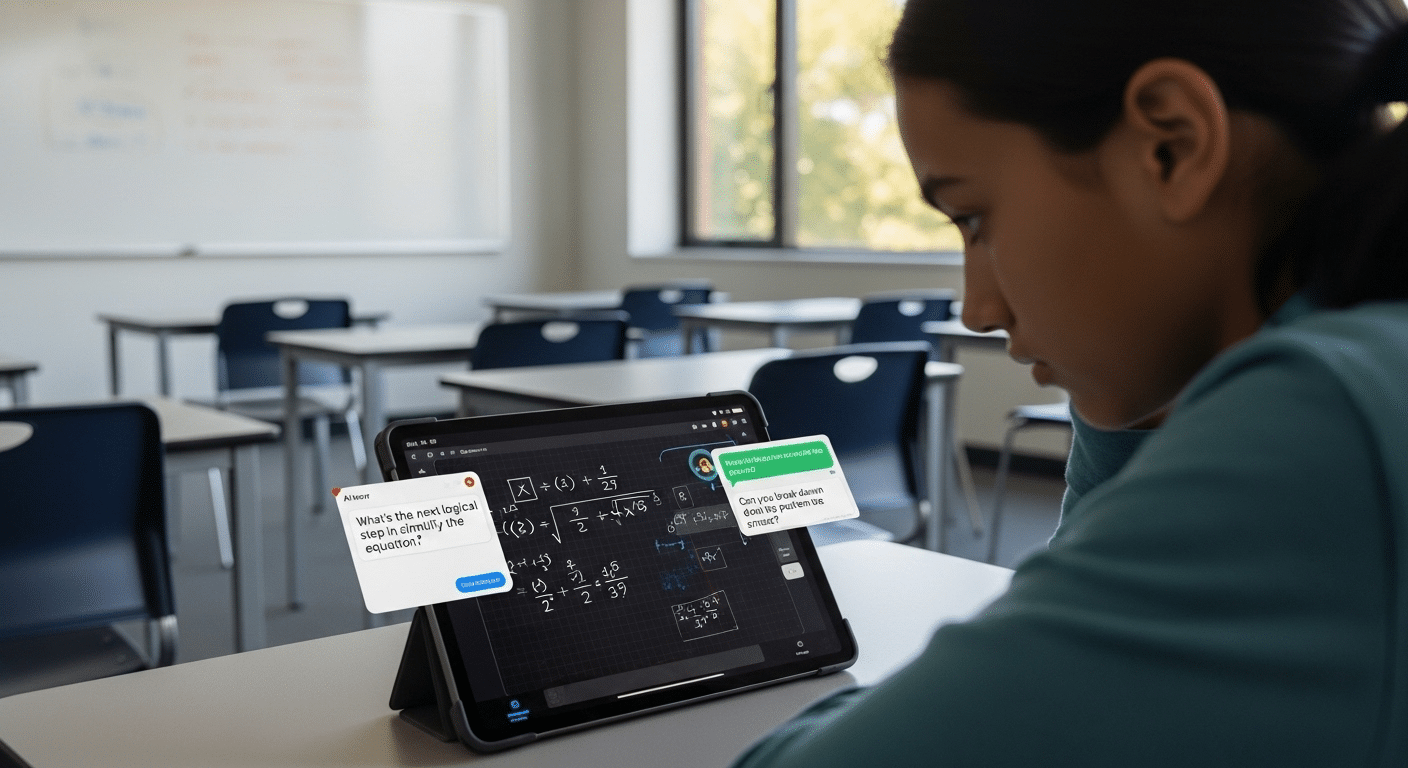
Engagement is fragile. You feel it when a topic clicks, and you notice it when your attention drifts. AI can strengthen student engagement, but only if it is designed to pull you deeper into the learning process rather than hand you finished answers.
When content adapts to your level, curiosity tends to stay alive. Tailored prompts, interactive quizzes, and guided explanations can make complex ideas feel approachable instead of overwhelming. Some AI systems, like Khanmigo, rely on a Socratic method.
Instead of solving the problem for you, they ask questions that push your reasoning forward. That structure encourages independent learning. You still have to think. You still have to wrestle with the math problem or argument.
AI also supports collaboration through online platforms. In group projects, it can help organize research, clarify roles, or suggest discussion points. Used thoughtfully, it becomes a teaching assistant rather than a shortcut.
Still, there is a line. Educators consistently emphasize that AI should remain a complementary aid. Overreliance can dull problem solving skills. If you let the system complete every draft or calculate every answer, critical thinking weakens. Ethical implications matter too. Academic integrity concerns, plagiarism, and passive learning are real risks.
How Does AI Provide Immediate and Targeted Feedback That Improves Student Performance?
Feedback works best when it arrives while the idea is still fresh in your mind. Wait too long and the moment passes. AI systems shorten that gap dramatically. Instead of waiting days for grading assignments, you can receive immediate feedback within seconds of submitting an answer.
That speed matters. When you solve a math problem incorrectly and see where the reasoning broke down right away, the correction sticks. AI powered tools analyze patterns in your responses and deliver targeted feedback based on your specific mistakes, not generic comments applied to the entire class.
AI writing assistants like Grammarly examine grammar, clarity, and structure in real time. Intelligent tutoring systems go further, identifying misunderstandings and guiding you step by step toward a stronger explanation. The result is a learning loop that tightens, rather than stretches out over weeks.
Below is a simple breakdown:
| AI Capability | Impact on Students |
|---|---|
| Immediate feedback | Faster correction of errors |
| AI writing assistant | Improved clarity and structure |
| Adaptive quizzes | Targeted feedback |
| Intelligent tutoring | Personalized approach |
When feedback becomes timely and specific, student performance often improves because you are adjusting in motion, not after the fact.
How Can AI Support Diverse Learning Needs and Create an Inclusive Learning Environment?

Not every student encounters the same barriers. Some struggle with reading speed. Others navigate language differences, visual impairments, or learning differences that make traditional instruction harder to access. AI technologies can help reduce those obstacles when used thoughtfully.
Accessibility tools are one of the most practical applications of AI in education. Text to speech systems such as Speechify and Microsoft Immersive Reader allow you to listen to written material instead of straining through dense paragraphs. For students with visual impairments or processing difficulties, that option changes the learning experience entirely. It opens the door rather than narrowing it.
Speech recognition tools convert spoken words into text, helping students who find typing difficult or who think more clearly out loud. Translation features assist learners who are navigating coursework in a second language, promoting equitable access regardless of socioeconomic status or linguistic background.
AI also supports adaptive content formats. Lessons can adjust presentation style based on how you engage with material. Diagrams instead of text. Audio instead of slides. Slower pacing when necessary.
Some accessibility AI tools provide:
- Text to speech for visual impairments
- Speech recognition for writing assistance
- Translation for language barriers
- Personalized learning experiences for diverse learning needs
How Does AI Help Educators Support Students More Effectively?
AI does not only serve students. It also strengthens the way educators support them. Much of teaching involves time-consuming administrative tasks that quietly consume hours, grading assignments, organizing materials, updating student records. When those processes become automated, attention can return to what actually matters, your growth.
AI systems assist with managing student records and tracking student progress in real time. Through structured data collection, patterns begin to surface. Predictive analytics can analyze data across assessments and participation metrics to identify students who may be at risk of falling behind. Instead of reacting late, educators can intervene earlier. That timing changes outcomes.
AI can also function as a digital teaching assistant. It helps generate draft lesson plans, suggest practice materials, and summarize classroom insights.
These tools do not replace professional judgment. They support it. Teaching practices become more informed because they are grounded in patterns rather than guesswork.
AI helps educators by:
- Automating grading assignments
- Managing student records efficiently
- Analyzing student performance patterns
- Supporting lesson plan creation
- Freeing time for human interaction
What Are the Ethical Considerations and Risks of AI in Education?

Every technology that promises potential benefits also carries ethical considerations. AI in education is no exception. If you rely on these systems daily, questions about data privacy naturally follow. What information is being collected, how long is it stored, and who has access to it? Student records, performance patterns, even writing samples become part of a larger data ecosystem.
Bias in AI algorithms is another concern. These systems learn from historical data. If that data reflects uneven educational access or language bias, the outputs may unintentionally disadvantage non-native English speakers or students from underrepresented backgrounds. Small distortions, repeated often enough, can affect educational outcomes.
There is also the risk of misuse. AI can generate essays, solve math problems, and summarize complex documents. That convenience creates temptation. Cheating and plagiarism concerns remain real, particularly in higher education settings where academic integrity defines credibility.
Cost is less discussed but equally important. Advanced adaptive systems can require significant financial investment, limiting access for institutions with fewer resources.
Ethical considerations includes:
- Data privacy and personal information protection
- Algorithm bias affecting non-native English speakers
- Reduced teacher-to-student interactions
- Risk of disengagement from the learning process
- High implementation costs
How Can AI Prepare Students for Future Careers and a Technology-Driven World?
The tools shaping your education today are not separate from the tools shaping your future careers. As industries increasingly rely on data, automation, and AI powered tools, familiarity becomes an advantage. When you learn to use artificial intelligence responsibly during your studies, you are also preparing students for environments where these systems are standard practice.
Exposure matters. Collaborative online platforms mirror modern workplaces where teams coordinate across locations and time zones. AI can help simulate real-world problem solving, from analyzing data trends to drafting proposals efficiently. You are not just completing assignments. You are building adaptability.
Training programs in many fields now incorporate AI technologies, creating new possibilities for skill development. When students enter the workforce with experience navigating these tools thoughtfully, they are better equipped to evaluate outputs critically rather than accept them blindly.
Preparation is not about automation replacing effort. It is about learning how to work alongside emerging systems intelligently and responsibly.
How Can Institutions Integrate AI Responsibly While Preserving Human Interaction?
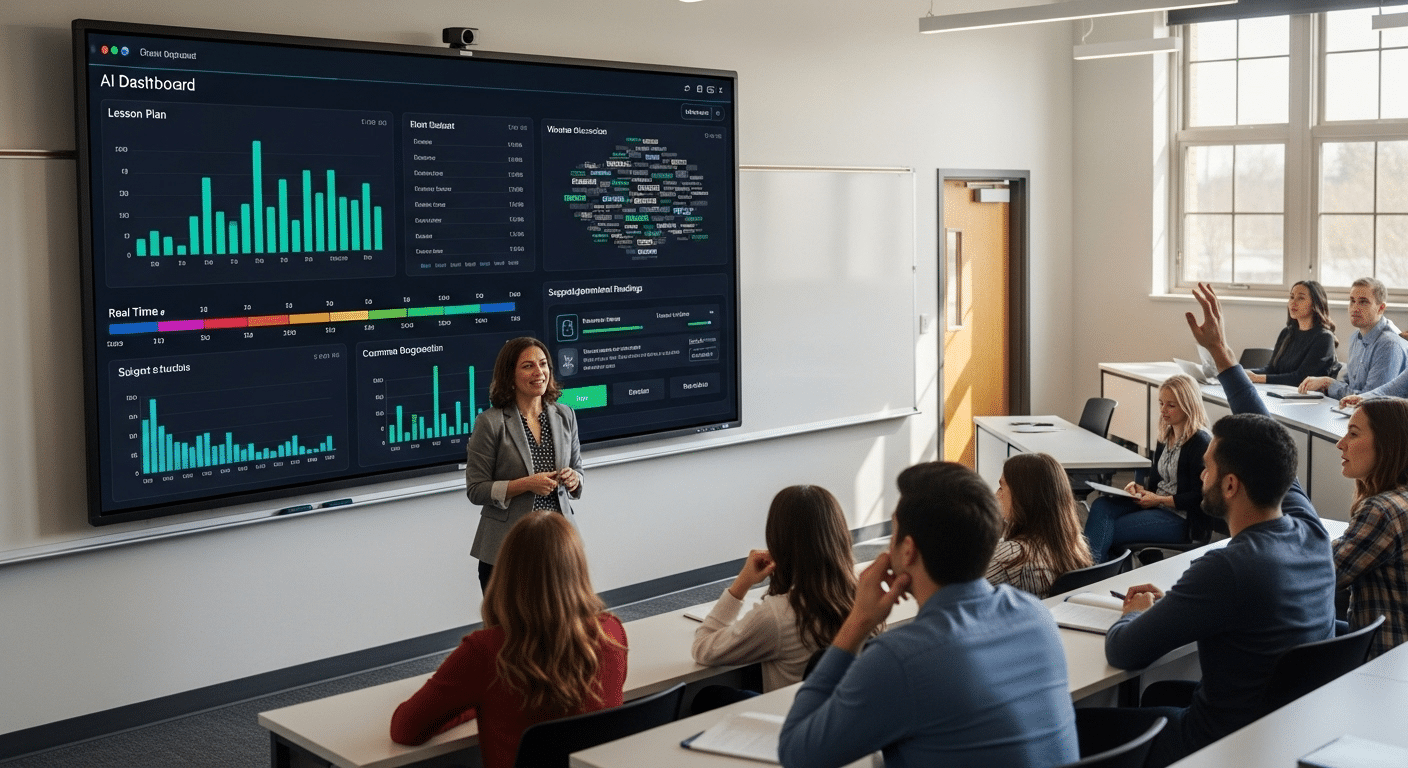
Bringing AI into classrooms is not simply a technical decision, it is a cultural one. When institutions begin integrating AI into teaching practices, the goal should remain clear, support students, not sideline educators. AI integration works best when it enhances the educational process rather than redefining it entirely.
Teacher-student relationships remain central to learning. Human interaction builds trust, accountability, and motivation in ways no algorithm can replicate. AI can analyze patterns, generate materials, and offer practice opportunities, but it cannot replace mentorship or emotional insight. That distinction matters.
Responsible AI integration in higher education requires guardrails. Clear policies on academic integrity. Transparent data use. Thoughtful training for faculty. When structured properly, AI becomes an academic tool that strengthens instruction instead of weakening it.
From there, attention naturally turns toward more structured, secure AI tutoring systems designed specifically to complement institutional goals rather than operate as informal, open-ended tools.
How Is CoTutor Supporting Personalized, Secure AI Tutoring in Higher Education?
As institutions look for structured ways to integrate AI tutoring, design becomes critical. Tools built casually for general use often lack the safeguards and consistency required in higher education. CoTutor approaches the problem differently. It is an platform that is developed with institutional needs in mind rather than layered on afterward.
Because it operates through a browser-based secure infrastructure, students receive secure access without complicated installations or risky data transfers. That matters when student records and academic work must remain protected. More importantly, CoTutor delivers a personalized approach at scale. AI systems provide immediate and targeted feedback while maintaining consistency across interactions.
The goal is not automation for its own sake. It is student success supported by reliable systems that complement faculty expertise. Professors remain central. The platform strengthens their reach rather than replacing it.
Conclusion
So, how can AI help students in their studies without replacing the very thing that makes learning meaningful? The answer lies in balance. AI enhances student performance by delivering immediate feedback, adaptive practice, and personalized learning experiences that once required one-on-one tutoring. Student engagement often improves when content responds to your pace and progress rather than forcing uniform timing.
Yet scale should not erase connection. Personalized learning at scale is now technically possible, but ethical integration remains essential. Data privacy, academic integrity, and algorithmic fairness cannot be afterthoughts. They must shape implementation from the beginning.
Human interaction still anchors the educational experience. Mentorship, encouragement, and intellectual challenge come from people, not systems. AI can support students, clarify complex ideas, and extend faculty capacity, but it should never replace critical thinking or conversation.
As you evaluate AI tools, look beyond convenience. Choose solutions that strengthen learning rather than shortcut it.
Frequently Asked Questions (FAQs)
1. Can AI replace teachers in the learning process?
No. AI can assist with tutoring, grading assignments, and providing immediate feedback, but it cannot replace human interaction, mentorship, or emotional support. Educators remain central to guiding critical thinking and shaping the broader educational process.
2. Does AI improve student performance?
Research and classroom reports suggest AI can improve student performance when used responsibly. Personalized feedback, adaptive practice, and intelligent tutoring systems help students correct mistakes quickly and strengthen understanding over time.
3. Is AI safe for students in higher education?
AI can be safe when institutions implement secure access controls, clear data privacy policies, and responsible oversight. However, ethical considerations such as bias in AI algorithms and proper data protection must always be addressed.
4. How does AI personalize learning?
AI analyzes student performance patterns using machine learning algorithms to adjust content, pacing, and difficulty. This personalized approach supports diverse learning styles and allows students to move through material at a pace aligned with their progress.
5. Can AI support students with disabilities?
Yes. AI technologies such as text-to-speech, speech recognition, and translation tools create more inclusive learning environments. These tools provide equitable access for students with visual, auditory, or language-related challenges.
6. What are the long-term benefits of AI in education?
AI prepares students for future careers by building familiarity with advanced technologies. It also enables scalable personalized learning, improved feedback systems, and data-informed teaching practices that support student success.
