

How to Get an AI Tutor?
Getting an AI tutor starts with choosing a platform that matches your learning goals, subject area, and preferred level of guidance. AI tutors provide personalized lessons, instant feedback, and adaptive learning support. Structured platforms like Apporto CoTutor add faculty oversight, secure access, and guided learning for schools and universities.
If you have been wondering how to get an AI tutor, you are not alone. Interest has surged across schools, universities, and professional programs. Artificial intelligence is no longer a fringe experiment in education. It has become a practical tool that students and lifelong learners use every day.
AI tutoring platforms now operate at scale. Universities integrate them into courses. Schools deploy them across districts. Professionals use them to build new skills outside traditional classrooms. The appeal is simple. You gain access anytime. You learn at your own pace. You receive instant feedback instead of waiting hours or days.
Some systems can even generate full courses in seconds, tailored to your goals. That efficiency is powerful, but it also requires thoughtful setup. In this blog, you will explore how to choose the right platform, configure it properly, personalize your learning journey, and use safeguards responsibly.
What Is the First Step to Getting an AI Tutor?
Before you download an app or create an account, pause. The first step in learning how to get an ai tutor is not technical. It is strategic. You need clarity.
Start by defining your goal. Are you trying to master algebra, prepare for a history test, complete a coding project, or build new skills for professional growth? AI tutors can generate personalized learning paths in seconds, but they rely on your input. Vague goals produce vague results.
Next, identify your subject range. Math and science often benefit from structured problem solving. Humanities and social studies require deeper discussion and context. Coding demands practice and iteration. The tool adapts, but only if you define the terrain.
You should also clarify your level. A K-12 student preparing for exams needs different support than a university learner or a professional in workforce training.
Finally, decide if you want quick homework help or a full structured course. Many AI systems can create complete learning programs instantly, but some free plans limit access.
Essential steps to follow before getting an AI tutor are:
- Define Your Subject: Math, science, coding, history, social studies, or professional skills.
- Set Your Leve: K-12, university, lifelong learning, workforce training.
- Clarify Your Objective: Homework help, test prep, mastering concepts, building new skills.
Where Can You Find an AI Tutor Platform?

Once you know your goal, the next question becomes practical. Where do you actually get an AI tutor?
You generally have two paths. The first includes general AI chat platforms. These tools allow you to sign up, create an account, and begin asking homework questions almost immediately. Some offer a free plan with limited usage. They are flexible, but often less structured.
The second path involves education-specific AI tutors built for schools, districts, and universities. These platforms are designed with curriculum alignment, secure access, and faculty oversight in mind. They often require institutional login or paid access, but the structure is stronger.
For example, Khanmigo requires paid access and follows a teach-not-tell approach. Class Companion supports over 25,000 schools across America and automates grading for teachers. Tutor AI focuses on individual learners and can create personalized courses instantly, often through a free plus paid tier model. AI Tutor platforms have been used by more than 23 universities.
Structured solutions like CoTutor are built specifically for institutional integration, offering guided learning and safeguards rather than just quick answers.
| Platform | Best For | Access Model | Notable Feature |
|---|---|---|---|
| CoTutor | Schools & Universities | Institutional | Structured guidance & safeguards |
| Khanmigo | K-12 & College | Institutional | Teach-not-tell approach |
| Class Companion | Schools & Teachers | Paid | Automates grading |
| Tutor AI | Individual Learners | Free + Paid | Instant course creation |
How Do You Set Up an AI Tutor for Maximum Personalization?
If you want real personalization, configuration matters more than you might expect. Start by creating an account and using a secure login, especially if your school or university provides institutional access. Once inside, avoid hopping between multiple chat threads.
Maintain one consistent conversation so the AI can connect past questions with new ones. Continuity strengthens your learning path.Next, upload context. Add your syllabus, lecture notes, or homework questions. The more specific your materials, the more accurate the feedback.
Many AI systems analyze uploaded data to tailor explanations and adjust difficulty levels based on performance. Over time, they track progress with detailed analytics, highlighting strengths and gaps.
Then configure the tone. Instruct the AI to guide you with hints rather than deliver final answers. Use Socratic prompting. Ask it to pose questions back to you. Request quizzes, flashcards, and practice material. Many systems can generate these instantly and adapt difficulty as your performance improves.
Steps to Setup AI Tutor for maximum personalization:
- Create an Account: Sign up securely and verify your profile.
- Upload Course Materials: Add syllabus, homework questions, lecture notes.
- Set Guardrails: Instruct AI to guide with hints, not final answers.
- Track Progress: Use analytics to measure improvement over time.
How Do AI Tutors Personalize Your Learning Journey?
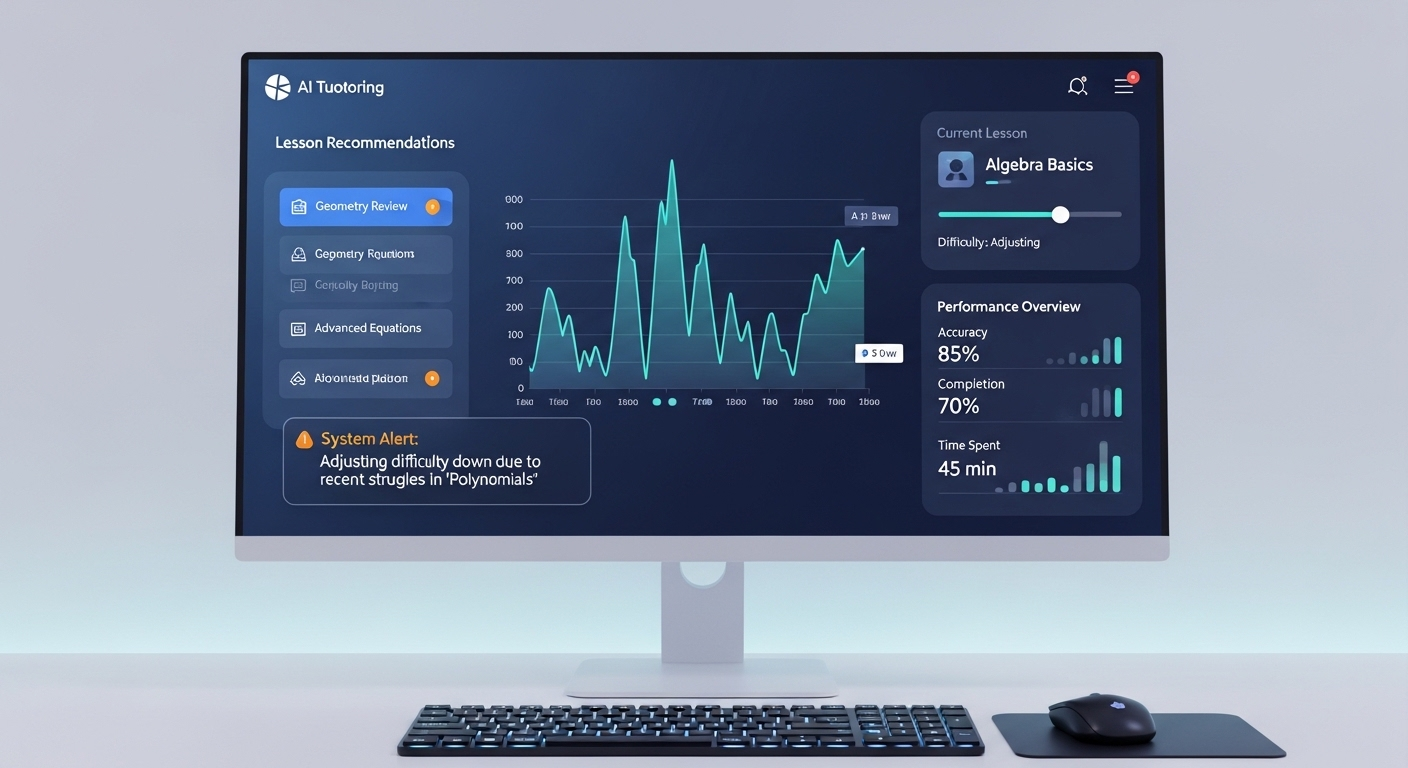
Adaptive learning systems sit at the core of most modern AI tutors, constantly analyzing your responses, pace, and patterns. Every answer becomes data. Every hesitation becomes a signal. The system continuously assesses performance and adjusts task difficulty in real time, so you are neither overwhelmed nor bored.
This creates what feels like differentiated coaching. If you struggle with math concepts, the AI can slow down, offer step-by-step feedback, and provide additional practice. If you master a topic quickly, it increases complexity. The learning pace adapts to you, not the other way around.
Many platforms also support multilingual explanations, which expands access for learners across different regions. Unlimited retakes on quizzes encourage engagement rather than punishment. You refine, retry, and improve.
Students often report increased confidence when they receive instant feedback. Mistakes are corrected immediately, not days later. That immediacy strengthens understanding and produces measurable learning gains. Over time, progress becomes visible, and you achieve mastery through structured, personalized guidance rather than guesswork.
Are Free AI Tutors Enough, or Should You Consider Paid Options?
Free AI tutors can be useful, especially when you are exploring how to get an AI tutor without immediate cost. Many platforms offer a free plan with basic access, limited chat sessions, and simple homework help. For light use, that may be enough.
But free access usually comes with usage caps. You may face daily limits, slower responses during peak demand, or restricted analytics. Progress tracking is often minimal. If you want deeper insights into performance trends or consistent feedback over time, the free tier can feel thin.
Paid plans expand that range. Higher usage limits, unlimited retakes, and more advanced analytics allow you to study without interruption. Some platforms follow tiered pricing models that unlock additional features gradually. Khanmigo, for example, requires payment to access its full functionality.
Institutional solutions often include secure infrastructure, faculty integration, and structured safeguards. The cost reflects stability and oversight. If your learning goals are serious or long term, paid access may offer a more reliable and scalable solution.
What Risks Should You Be Aware of When Getting an AI Tutor?

AI tutors can accelerate learning, but they are not flawless. One obvious concern is accuracy. These systems generate answers based on patterns in data, not lived understanding. Occasionally, they produce incorrect explanations that sound convincing. If you submit those answers without verification, mistakes can compound.
There is also the risk of over reliance. When instant solutions are always available, critical thinking can weaken. You may begin to copy rather than understand. That habit erodes long-term skill development.
Bias is another factor. AI systems reflect the data they were trained on, which means subtle cultural or informational bias can appear in responses. Awareness matters.
Finally, privacy and data compliance require attention. If you are using AI within a school or university, the platform must meet secure standards and follow regulations such as FERPA. Student data should never be treated casually.
Why Structured AI Tutors Like CoTutor Offer More Control and Safeguards?
Not all AI tutors are designed with institutions in mind. Some operate as open chat tools, useful but loosely governed. Structured systems likeCoTutor take a different approach. They are built specifically for schools, districts, and universities where accountability matters.
Faculty oversight plays a central role. Educators can configure prompts, align lessons with curriculum standards, and establish guardrails that prevent answer dumping. Instead of handing you final solutions, the platform delivers structured guidance that supports understanding first. That distinction protects academic integrity.
Secure institutional integration is another advantage. Access is controlled, student data is protected, and compliance standards are maintained. For universities and districts, that security is nonnegotiable.
Most importantly, CoTutor supports a structured learning journey. You move through concepts intentionally, with educator-configured checkpoints that maintain engagement without compromising integrity. The result feels balanced. You gain the efficiency of AI, but within a framework that respects the role of faculty and the long-term goals of education.
Final Thoughts
Getting started is simpler than it first appears. Define your goal, choose the right platform, configure it carefully, and stay consistent in how you use it. An AI tutor can expand access, generate practice, and deliver fast feedback, but responsibility still sits with you.
Verify important answers. Cross-check facts. Use the tool to understand concepts rather than shortcut assignments. The strongest results come from a hybrid model, where AI supports repetition and structure while teachers guide deeper thinking.
If you want a more structured, institution-ready solution, CoTutor offers a secure and guided starting point.
Frequently Asked Questions (FAQs)
1. How do you get an AI tutor for free?
You can start with general AI chat tools that offer a free plan. These platforms usually require a simple account sign up and provide limited daily usage. Free access often includes basic homework help and short conversations, but may restrict advanced analytics, unlimited questions, or deeper personalization features.
3. What is the best AI tutor platform for students?
The best platform depends on your needs. Generic chat tools offer flexibility, while structured solutions used by schools and universities provide stronger safeguards and curriculum alignment. Institutional platforms such as Apporto CoTutor integrate with faculty oversight, making them more suitable for formal education environments.
4. Can AI tutors create full courses?
Yes. Many AI tutors can generate structured courses instantly based on your goals, grade level, and prompts. You can request lessons, quizzes, practice exercises, and even project outlines. The quality improves when you provide detailed context and clearly defined learning objectives.
5. Do AI tutors track your learning progress?
Most modern AI tutors track progress using adaptive learning systems. They analyze performance data, adjust difficulty in real time, and provide feedback insights. Over time, analytics reveal strengths, weak areas, and patterns in understanding, helping you refine your learning path.
6. Is it safe to use AI tutors in schools and universities?
AI tutors can be safe when platforms follow secure data practices and comply with regulations such as FERPA. Schools and universities should choose systems with controlled access, faculty oversight, and privacy safeguards. Structured platforms like CoTutor are designed with institutional security standards in mind.
