
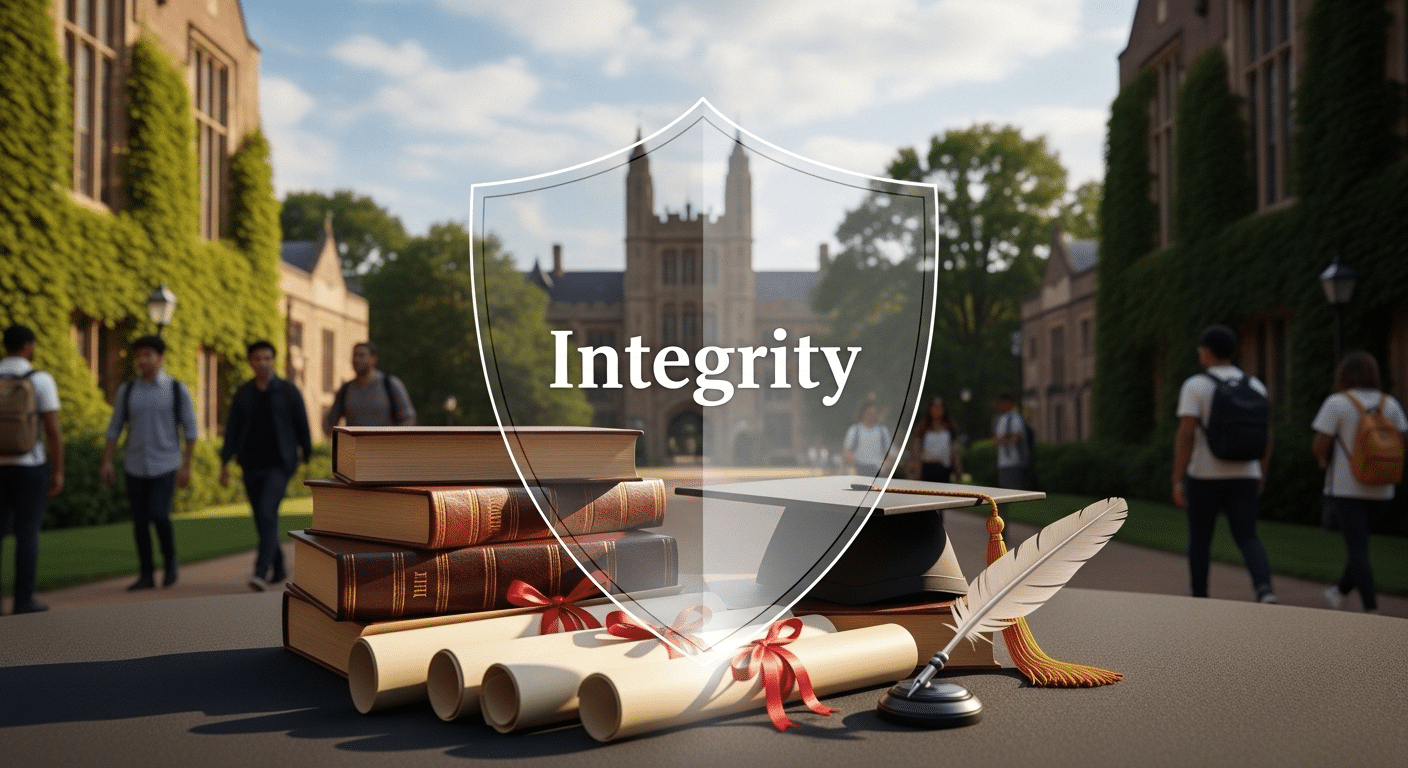
Why Is Academic Integrity Important?
Academic integrity is important because it ensures that grades, degrees, and qualifications reflect genuine knowledge and effort. It protects fairness, builds trust between students and institutions, and preserves the credibility of education. Solutions like Apporto’s TrustEd support consistent, transparent evaluation practices.
Why is academic integrity important? The answer goes far beyond avoiding penalties or following a code of conduct. Academic integrity is the cornerstone of educational credibility. It determines whether grades, degrees, and qualifications carry real meaning.
When integrity is present, the educational process functions as intended. Students complete their own academic work. Faculty can assess true understanding.
Institutions can stand behind the quality of their graduates. When integrity weakens, trust weakens with it.
Academic integrity shapes student behavior from the first assignment to the final exam. It influences how students approach responsibility, effort, and ethical decision making.
It is important not only for academic success, but for moral development. Honest work builds character. Dishonest practices distort it.
An institution’s reputation depends on credibility. If academic dishonesty becomes common, the value of degrees declines. Future employers begin to question whether awarded degrees reflect genuine knowledge and ability. Public trust erodes quietly but steadily.
Academic integrity protects more than rules. It protects values. It protects fairness. It protects the legitimacy of education itself. Without integrity, the entire educational process loses credibility, and the institution loses the authority to certify achievement with confidence.
What Does Academic Integrity Actually Mean?
Academic integrity refers to the ethical principles that guide academic work. It defines how you conduct yourself in education, how you handle ideas, and how you demonstrate learning.
At its core, academic integrity emphasizes honesty, fairness, responsibility, and respect for intellectual effort, which are among the core principles of academic integrity
Practicing academic honesty means completing your own work and presenting it truthfully. It requires proper attribution when you use another person’s ideas, research, or words. Proper attribution is not a technical formality.
It is recognition that knowledge builds on prior contributions. Failing to credit sources is plagiarism, one of the most common forms of academic misconduct.
Academic integrity also involves avoiding fabrication of data, falsification of information, and contract cheating, where someone else completes academic work on your behalf.
These dishonest practices distort the educational process and undermine good academic practice. When you submit work that is not your own, you misrepresent your ability and understanding.
Most institutions formalize these expectations through student honor codes and academic policies. These documents define academic misconduct clearly and outline consequences. They also communicate shared values within the university community.
Respecting ideas and intellectual property protects fairness and credibility. Academic integrity values are not only about avoiding penalties.
It is about ensuring that learning is authentic, that assessments reflect true effort, and that the academic community operates on trust rather than suspicion.
How Does Academic Dishonesty Undermine Student Learning?

Academic dishonesty does more than violate rules. It interferes directly with student learning. When cheating occurs, you lose the opportunity to master the subject matter.
Assignments and assessments are designed as learning opportunities. They are not obstacles to bypass. They are tools for development.
If you submit work that is not your own, the teacher cannot assess your true understanding. Grades may appear strong, but they no longer reflect actual ability.
Without accurate feedback, you cannot identify weaknesses or improve critical skills. The educational process depends on honest effort to function properly.
Academic dishonesty diminishes the value of education itself. You may receive a passing grade, yet remain underprepared. Complex topics require sustained effort.
Critical thinking develops through practice, revision, and engagement with course content. When that process is avoided, growth slows.
Cheating also undermines long term development. The habits formed during school often carry into professional life. If you rely on shortcuts instead of building ability, you enter future challenges without the necessary foundation. Employers expect competence, not inflated performance.
The consequences are not always immediate. They accumulate over time. Each instance of academic misconduct removes a layer of learning. Each dishonest choice reduces your ability to reason independently.
Student learning depends on struggle, reflection, and improvement. When you engage honestly with academic work, you strengthen skills, judgment, and confidence. When dishonesty replaces effort, the opportunity for real development quietly disappears.
Why Is Academic Integrity Essential for Fairness and Equity?

Academic integrity is essential because it protects fairness within the educational process. When everyone completes their own academic work under the same expectations, you create a level playing field. Assessments measure ability, effort, and understanding rather than manipulation.
Cheating creates an unfair advantage. A student who copies answers, fabricates research, or submits contract work may receive higher grades without demonstrating real competence. That advantage comes at a cost.
Other students who invested time and honest effort are placed at a disadvantage. Their work is measured against inflated results.
Fair assessments depend on honesty. Exams, essays, and projects are designed to evaluate learning. If integrity is compromised, the accuracy of those evaluations collapses. Grades begin to reflect who found shortcuts rather than who mastered the material.
Without integrity, grades lose meaning. A transcript should communicate achievement. If dishonest practices are common, academic results become unreliable indicators of ability. Over time, confidence in the institution’s standards weakens.
Fairness is not abstract. It affects real students, real outcomes, and real opportunities. Academic integrity ensures that performance is earned rather than engineered.
It protects those who choose to act honestly. In doing so, it reinforces equity within the classroom and preserves the legitimacy of assessments for everyone involved.
How Does Academic Integrity Protect Institutional Reputation?
An institution’s reputation rests largely on the quality of its graduates. When students complete their academic work honestly and demonstrate real competence, the value of awarded degrees remains strong. Academic integrity protects that credibility.
If high levels of academic dishonesty occur, the academic reputation of the university begins to weaken. Employers pay attention to patterns.
If they believe cheating is common at a particular institution, they may question whether its graduates truly earned their qualifications. Over time, future employers may devalue degrees from that university, even if many students acted honestly.
Degrees are not only personal achievements. They are signals of verified knowledge and ability. If misconduct becomes widespread, those signals lose clarity.
Public trust erodes quietly but steadily. An institution that fails to uphold integrity risks damaging its professional reputation in the wider community.
Integrity reinforces credibility at every level. Faculty trust students to submit authentic work. Employers trust that awarded degrees represent actual skill. The public trusts that research and academic programs meet established standards.
Once reputation declines, rebuilding it is difficult. Academic credibility depends on consistent enforcement of standards and a visible commitment to honesty.
By protecting academic integrity, an institution protects the long term value of its degrees, its graduates, and its standing in professional environments. Reputation, once weakened, cannot be easily restored.
Why Does Academic Integrity Matter for Future Careers?

Academic integrity does not end at graduation. The habits you build during education shape your professional life. Future employers look for more than technical ability. They seek ethical candidates who demonstrate responsibility, reliability, and sound judgment.
When you complete academic work honestly, you strengthen the values that carry into the workplace. Integrity builds trust. Colleagues value integrity because it signals accountability.
Teams depend on members who follow through on commitments and present accurate information. Ethical decision making becomes part of daily professional conduct.
Academic dishonesty can harm employability in subtle but lasting ways. If you rely on dishonest practices to succeed in school, you may enter the workforce without the skills expected of you. Cheating undermines preparation for real career challenges. Employers expect competence developed through effort, not shortcuts.
Professional environments also operate on credibility. Your reputation influences opportunities, promotions, and leadership roles. If integrity is compromised early, rebuilding trust later can be difficult.
Academic integrity is important because it lays the foundation for long term success. It teaches responsibility, fairness, and respect for standards. These qualities extend beyond grades and degrees.
They define how you contribute to organizations and how others perceive your character. In this way, integrity becomes not just an academic requirement, but a professional asset.
What Causes Academic Dishonesty?
Academic dishonesty rarely occurs in isolation. When students cheat, the decision is often shaped by multiple pressures and influences. Understanding these causes is essential for addressing academic dishonesty effectively.
Pressure to succeed is one of the most common factors. High expectations, competitive environments, and the desire for strong grades can distort judgment. Fear of failure can intensify that pressure. When performance becomes tied to identity or future opportunity, some students justify dishonest practices as temporary solutions.
Peer influence also plays a role in student behavior. If you believe that other students are cheating and benefiting from it, the behavior can begin to feel normalized. A cheating culture can develop when misconduct appears widespread or tolerated.
Cultural differences may contribute as well. Students from different educational backgrounds may not fully understand institutional definitions of plagiarism or proper attribution. Lack of clarity about what constitutes academic misconduct increases risk.
The rapid growth of internet access and digital tools has made information easier to copy and distribute. Contract cheating services openly advertise academic work for purchase. These services reduce effort while increasing temptation.
In some cases, academic dishonesty reflects erosion of moral reasoning. If integrity is treated as procedural rather than principled, ethical decision making weakens.
Contributing Factors
- Academic and social pressure
- Belief that peers are cheating
- Weak honor codes
- Lack of policy clarity
- Low perceived risk of consequences
- Easy access to online information
- Contract cheating services
When institutions understand these factors, they can respond with education, clarity, and consistent standards rather than assumption.
How Can Institutions Address Academic Dishonesty Effectively?

Addressing academic dishonesty requires more than punishment. It requires structure, clarity, and culture. Institutions must begin with clear expectations.
Students need to understand what constitutes academic misconduct and what good academic practice looks like in real assignments.
Consistent enforcement is equally important. If rules exist but are applied unevenly, student behavior will not change. Transparent standards reinforce fairness and credibility. When consequences are predictable and proportionate, they influence conduct.
The staff-student relationship also plays a significant role. Teachers and faculty who communicate openly about integrity create environments where students feel accountable.
Respectful interaction between university staff and students reduces adversarial attitudes and strengthens trust.
Academic integrity training should be part of the educational process, not an afterthought. Educating students about proper attribution, plagiarism, and ethical conduct builds awareness.
Teaching good academic practice directly can reduce unintentional misconduct and clarify expectations.
Practical Institutional Measures
- Formal academic integrity policy
- Student honor codes
- Integrity education programs
- Transparent consequences for misconduct
- Monitoring procedures for assessments
- Multiple test versions
- Randomized exams
- Lockdown browsers
- Plagiarism detection tools
- Online proctoring systems
These measures, when applied thoughtfully, help reinforce a culture of honesty. Effective prevention combines education, policy, and consistent oversight, including the use of online proctoring software when secure online assessments require additional monitoring. Institutions that address academic dishonesty proactively protect both their students and their credibility.
Why Integrity Is a Fundamental Value, Not Just a Policy?
Integrity is often presented as a rule, a requirement written into policy documents and student handbooks. Yet it runs deeper than compliance. Integrity is a fundamental value that shapes moral development and ethical character.
When you approach academic work with honesty, you practice responsibility in a tangible way. You choose to represent your knowledge accurately.
You choose to respect the effort behind ideas that are not your own. This respect for knowledge strengthens intellectual maturity. It signals that learning is not a transaction for grades, but a process of growth.
Honest effort builds pride. When you complete difficult work without dishonest shortcuts, you develop confidence grounded in real ability. That experience shapes identity. Over time, integrity becomes part of how you define yourself, not just how you behave in a classroom.
Moral reasoning develops through repeated decisions. Each assignment becomes a moment of choice. Do you pursue understanding, or do you pursue appearance? Do you accept responsibility, or avoid it? These choices reinforce fundamental values.
Integrity also strengthens community trust. An academic community depends on mutual respect among students, faculty, and staff. When honesty is the norm, collaboration becomes meaningful and evaluation becomes credible.
Policy can define consequences. Integrity defines character. When integrity guides conduct, the educational environment becomes not only structured, but principled.
How Can Apporto Help Institutions Protect Academic Integrity?
Clear policies and consistent enforcement form the foundation of academic integrity. However, modern education also requires thoughtful oversight tools that reflect today’s challenges.
As digital submissions increase and AI content becomes more common, institutions need systems that protect fairness without undermining trust.
TrustEd is designed to support responsible oversight in academic environments. Instead of issuing automatic judgments, it provides structured insights that help faculty evaluate student submissions in context.
This approach ensures that academic misconduct concerns are reviewed carefully rather than decided by algorithm alone.
TrustEd uses context-aware AI content detection to identify patterns while allowing educators to apply professional judgment. By reducing false positives, it protects legitimate student work and prevents unnecessary harm to students’ academic records. Fairness remains central.
The platform aligns with institutional academic integrity policies and existing procedures. It strengthens credibility by connecting policy enforcement with modern integrity oversight. Faculty retain authority. Students retain due process. The institution retains confidence in its evaluation process.
Protecting academic integrity requires more than rules. It requires balanced systems that respect both accountability and fairness. TrustEd helps institutions uphold standards while reinforcing transparency, consistency, and long term credibility.
Conclusion
Academic integrity defines the true value of your education. It protects learning by ensuring that your knowledge reflects real effort and understanding. It protects fairness by creating equal conditions for all students. It protects degrees by preserving their credibility in the eyes of future employers. Without integrity, grades lose meaning. Reputation weakens. Trust erodes quietly across the institution and beyond it. With integrity, education remains credible and respected.
Integrity also prepares you for ethical professional life. The habits you develop in school shape how you approach responsibility, decision making, and accountability in the workplace. Employers recognize and value that consistency. If you want education to retain its meaning, integrity must remain central. Review your policies. Reinforce expectations clearly. Invest in a culture where honesty, responsibility, and respect are visible standards. The value of your education depends on it.
Frequently Asked Questions (FAQs)
1. Why is academic integrity important in college?
Academic integrity is important because it protects the value of your academic work, ensures fairness in assessments, and preserves the credibility of degrees awarded by the institution.
2. What are examples of academic misconduct?
Examples include plagiarism, fabrication of data, contract cheating, unauthorized collaboration, and submitting work that is not your own. These behaviors violate principles of academic honesty.
3. How does cheating affect future employers?
Future employers may question your reliability and competence if dishonesty is discovered. Cheating also weakens your preparation, leaving you underdeveloped for real professional challenges.
4. What are the consequences of academic dishonesty?
Consequences can include grade penalties, loss of registration privileges, suspension, or dismissal. Academic misconduct may also damage your long term professional credibility.
5. How can institutions prevent academic misconduct?
Institutions can establish clear policies, provide academic integrity training, enforce consistent consequences, strengthen staff-student relationships, and use monitoring tools to protect assessments.
6. Why do students engage in cheating?
Students may cheat due to academic pressure, fear of failure, peer influence, lack of clarity about policies, or easy access to digital information and contract cheating services.
7. How does academic integrity impact reputation?
Academic integrity strengthens institutional credibility. Without it, degrees may lose value, public trust declines, and the academic reputation of the university suffers.
