
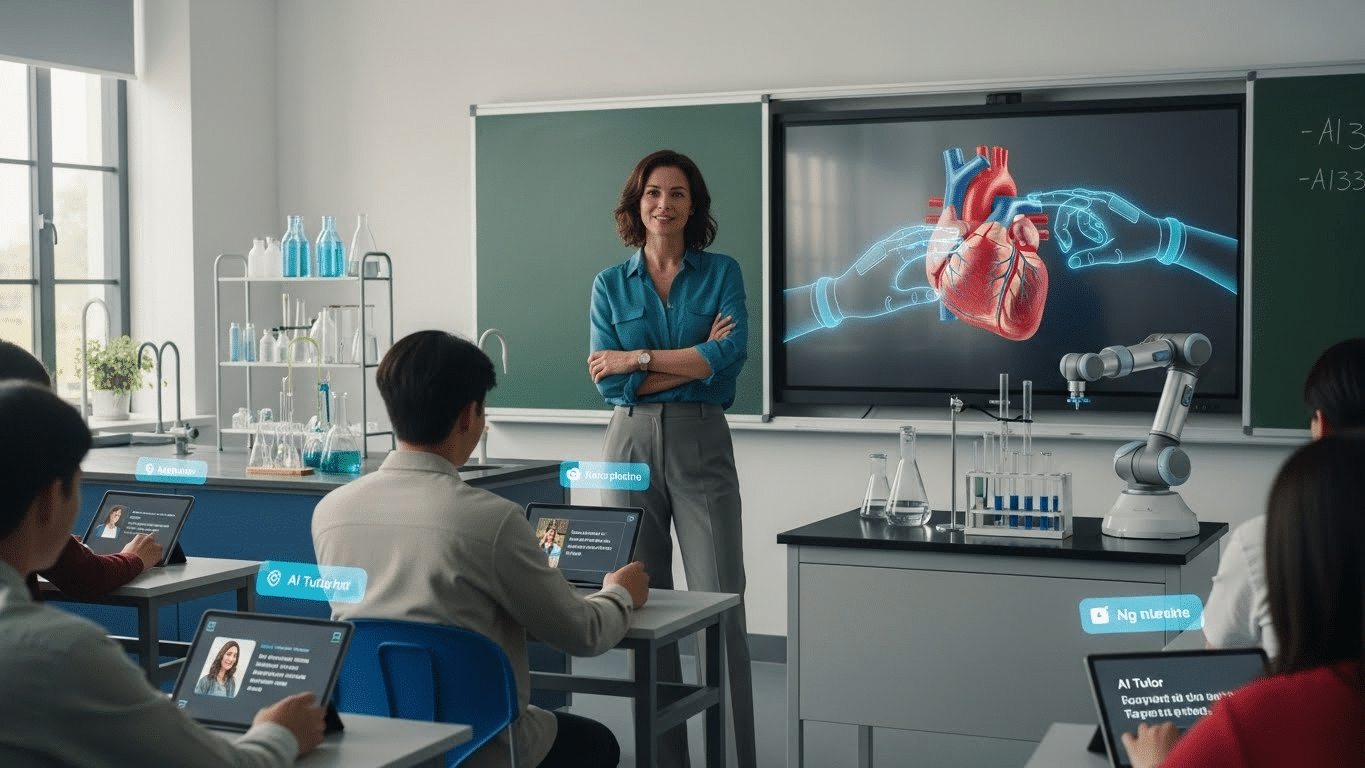
Will Teaching Be Replaced By AI?
Teaching is unlikely to be replaced by AI because education depends on human judgment, relationships, and mentorship that technology cannot replicate. AI can automate tasks like grading and planning, while tools such as Apporto PowerGrader are designed to support teachers, not replace them.
Thinking about AI in education shouldn’t feel like an existential threat to your job. It is changing how you plan, assess, and support students, but that does not automatically mean it will replace you.
When you see AI tools writing drafts, generating quizzes, or analyzing data, it is natural to wonder where that leaves human teachers. Are you still at the center of learning, or just supervising the system?
This guide looks at what AI can realistically do, where it falls short, and how your role is likely to evolve.
Will Teaching Be Replaced By AI, Or Is That The Wrong Question?
Across education, AI tools are quietly slipping into your daily work. They help draft lesson plans, generate quiz questions, summarize student data, and suggest next steps.
With every new tool, the same worry pops up again: will teaching be replaced by AI, and will this new technology eventually make human teachers unnecessary?
That fear is understandable, but it misses how education actually works. Teaching is not just delivering content. It is a complex human profession built on judgment, relationships, and context.
Artificial intelligence can personalize learning, automate routine tasks, and surface helpful data insights. What it cannot do is fully replace human teachers.
Platforms like Apporto’s AI-powered tools are emerging with a different assumption: AI should support how you teach, not stand in for you. In the future of education, the role changes. The teacher remains.
What Do People Mean When They Ask If AI Will Replace Teachers?
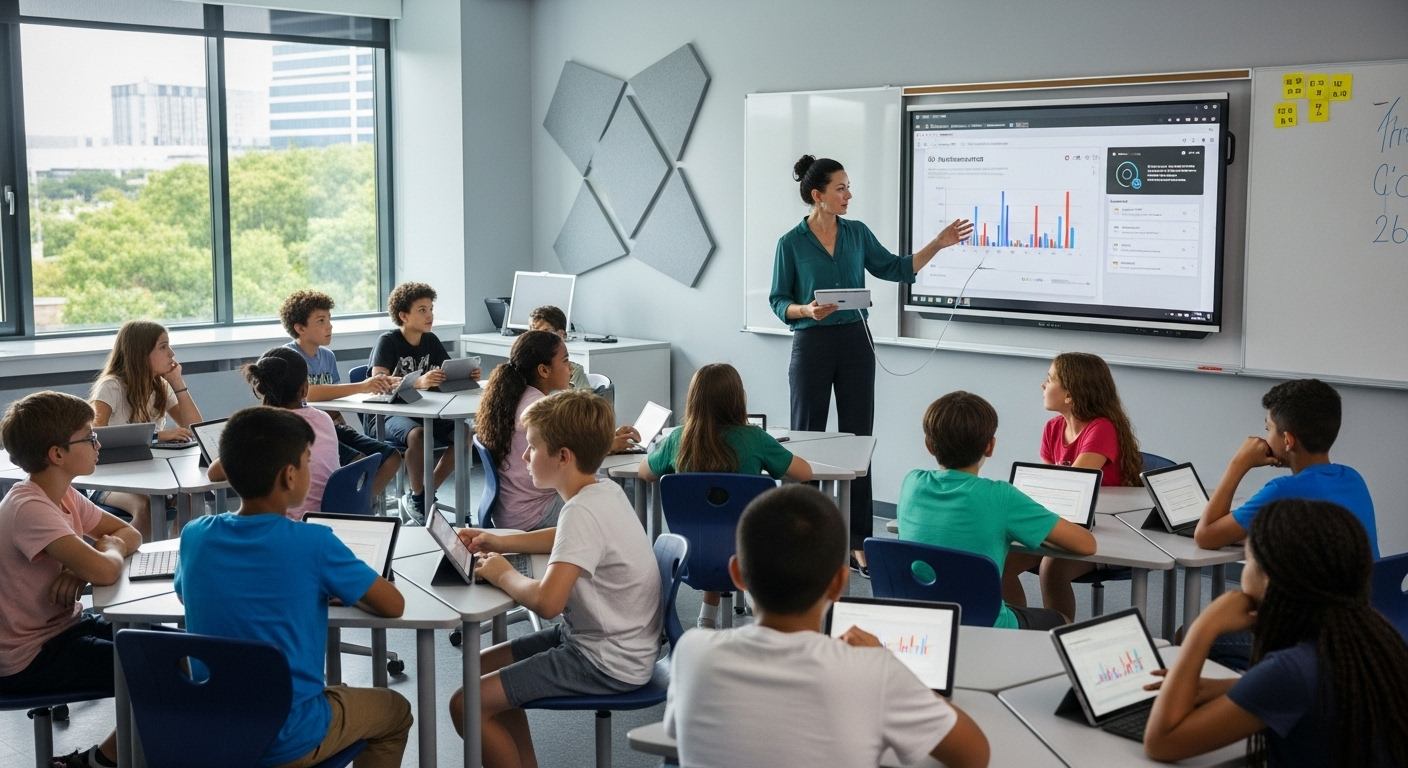
When people say “AI will replace teachers” or worry that “generative AI will replace teachers,” they are usually reacting to a bigger pattern. AI is already automating parts of various professions, from customer service to logistics, and it is natural to wonder if schools and classroom teaching are next.
Underneath that fear are a few specific concerns:
- Automation Of Routine Work: If AI can grade, track progress, and write feedback, will schools still need as many teachers?
- Pressure To Eliminate Jobs: Tight budgets and rising own costs make it tempting to see AI as a way to reduce staffing.
- Teacher Shortages: In some regions, AI is framed as a partial answer to not having enough qualified educators.
The key distinction is this: AI can replace tasks, not teachers. Many experts expect a shift in role, not disappearance. Tools like Apporto PowerGrader, for example, aim to handle repetitive assessment work so human teachers stay focused on the parts of teaching only they can do.
How Has Technology Previously Challenged The Role Of Teachers?
Every time new technology enters education, a familiar story appears. Radio was supposed to broadcast the perfect lesson to every home. Television promised to bring expert instruction into every classroom.
Later, computer-assisted instruction and early online learning platforms were promoted as ways to “scale” teaching without needing as many people in the room.
In each case, the fear was the same: this new technology would replace teachers. The truth turned out differently.
These tools changed how classroom teaching looked, but they did not remove the need for human connection, judgment, and guidance. Teacher roles evolved, along with the skills needed to design and lead learning.
AI in education is the latest step in that long line, not a break from it. Just as past innovations reshaped instruction, platforms like Apporto’s AI-enabled environment are now helping educational institutions rethink how teachers use time and data, without erasing the teacher.
What Can AI Already Do Well In Education Today?
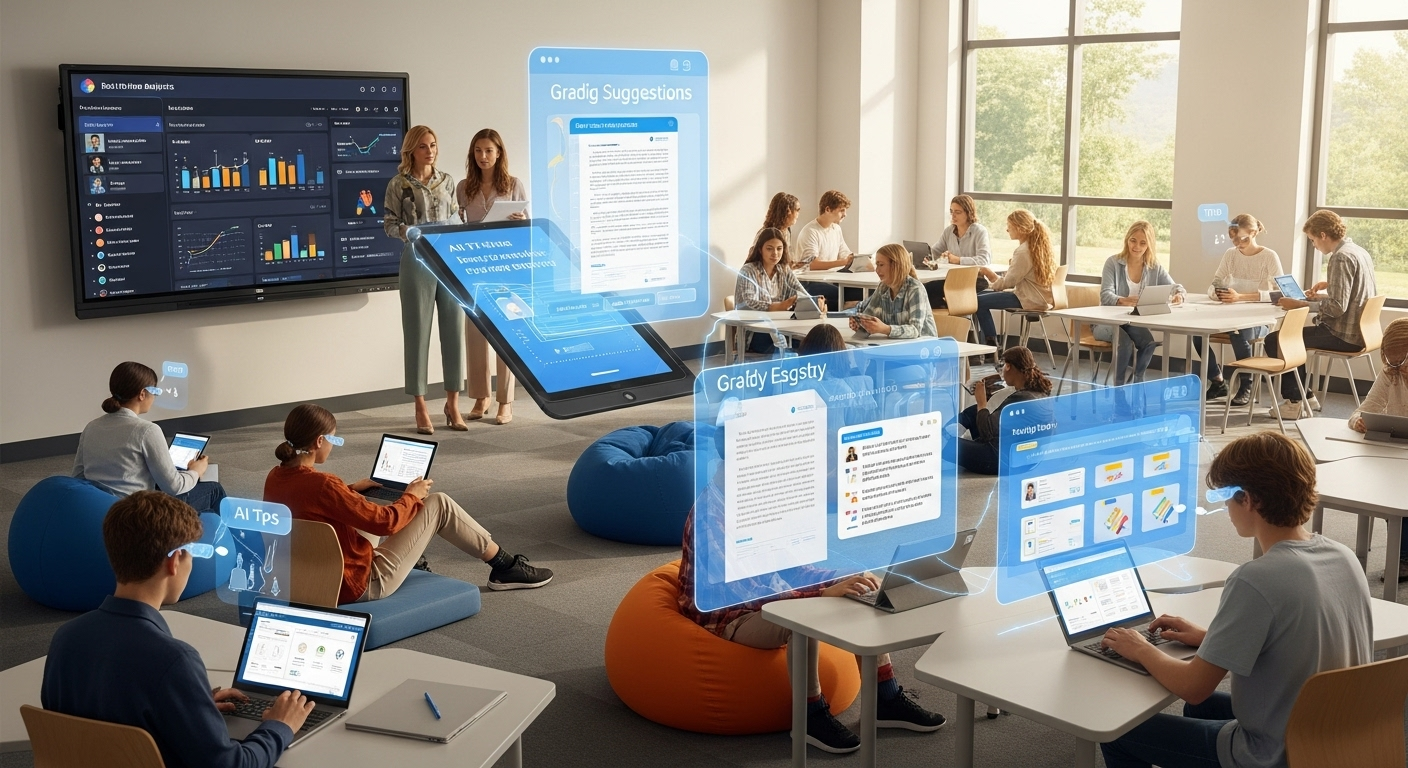
AI is not a magic teacher, but it is a powerful tool. At its best, it takes on the work that clogs your day, so you can focus on actual teaching and learning.
Today, AI tools can:
- Automate Routine Tasks: Grading quizzes, drafting rubrics, and summarizing written feedback so you spend less time on repetitive tasks.
- Draft Lesson Plans: Creating outline lesson plans aligned with standards that you can review, adapt, and refine.
- Turn Assessment Into Insights: Summarizing assessment data into clear, actionable patterns instead of raw numbers.
- Suggest Differentiated Activities: Recommending varied tasks for students at different skill levels to support more personalized learning.
Apporto PowerGrader is a good example of this shift. It uses AI-assisted autograding to reduce repetitive marking, generate consistent feedback, and surface patterns in student performance.
In practice, it feels less like a replacement and more like a personal assistant that helps you prepare students more effectively, while you stay in charge of the learning.
Which Parts Of Teaching Are Hardest For AI To Replace?
AI can process data, but it cannot replace the human connection at the heart of teaching. Students still look to human teachers for empathy, encouragement, and the sense that someone genuinely cares whether they succeed.
You shape classroom culture, handle conflict, and read the mood in the room in ways no system can match. You also guide critical thinking, creativity, ethics, and real-world judgment, helping students make sense of a complex world, not just pass a test.
Even with tools like Apporto PowerGrader or Apporto’s virtual environments in the background, students rely on human educators for meaning-making and personal growth. AI can support that work. It cannot substitute the human interaction that makes learning feel worthwhile.
How Is The Day-To-Day Work Of Teachers Changing Because Of AI?
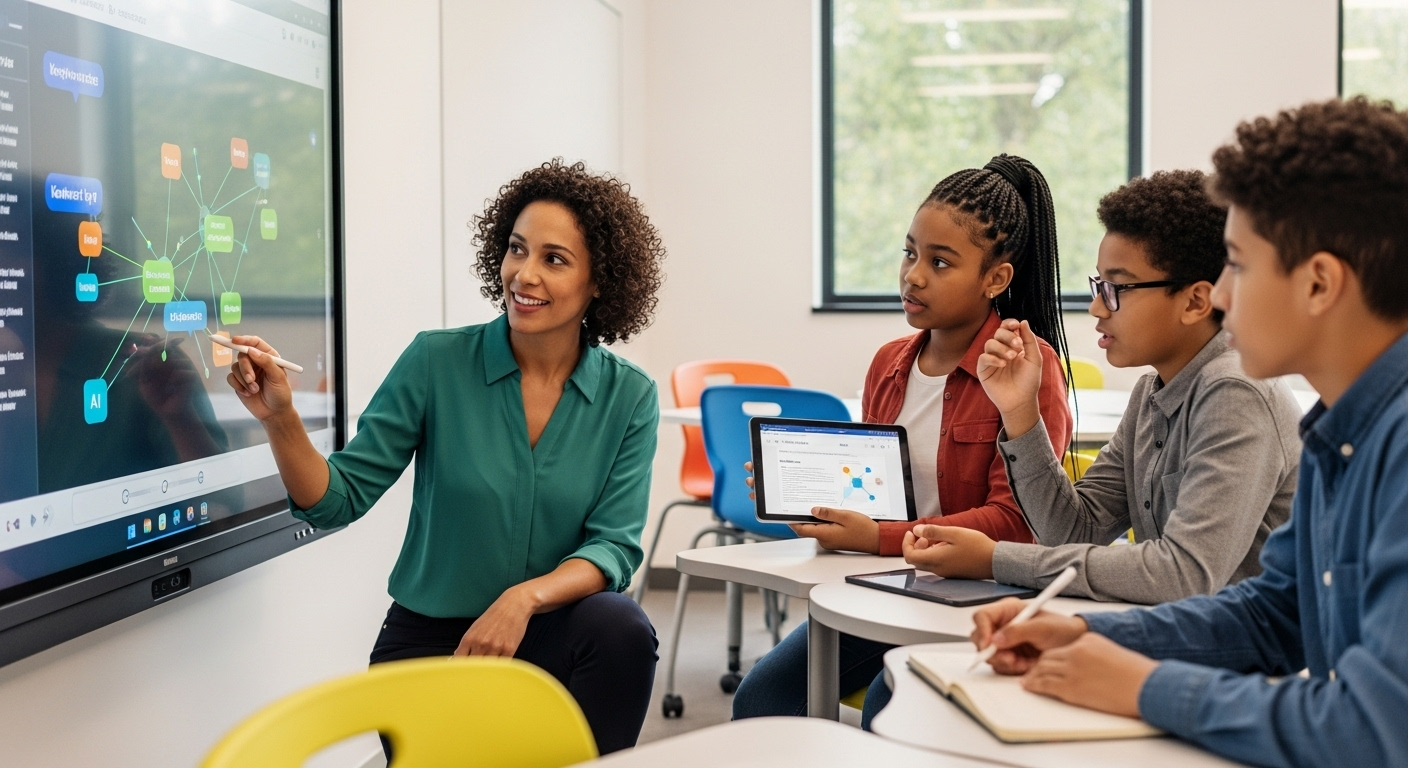
In many classrooms, your role is already shifting from “main source of content” to coach and guide. AI in education speeds that change up. When systems take care of the repetitive work, you can focus more on helping students think, question, and connect ideas.
AI tools increasingly handle tasks like:
- Automating Low-Value Work: Sorting quizzes, drafting basic feedback, and tracking completion so teachers spend less time on manual administration.
- Supporting Richer Instruction: Generating starter lesson plans or examples you can adapt for your own classroom teaching.
- Surfacing Patterns In Learning: Turning raw assessment data into clearer views of who needs help, and where.
Apporto PowerGrader fits squarely into this shift. By reducing grading load and combining it with analytics across courses, it frees time for more 1:1 conferences, deeper projects, and responsive instruction. AI improves efficiency, but human oversight still decides what to do with every insight.
What Are The Risks Of Letting AI Take Over Too Much Of Teaching?
As helpful as AI can be, there are real risks if it takes up too much space in the classroom. Over-reliance on technology can lead students to lean on tools instead of building their own skills, especially when it comes to writing, reasoning, and learning to solve complex problems.
Common concerns include:
- Over-Reliance On Automation: Students and teachers trusting suggestions without questioning them, weakening critical judgment over time.
- Data Privacy And Bias: Sensitive information flowing through opaque AI systems, with potential bias in how suggestions or scores are generated.
- Shallow Learning: Students offloading thinking to AI, then struggling when they face tasks without technology.
Well-designed platforms, including Apporto’s AI solutions, are built with these issues in mind. They keep teachers in the loop, with clear boundaries and human control, so AI remains a support for learning—not the main driver of it.
How Should Schools And Universities Prepare Teachers For AI-Powered Classrooms?

You cannot just drop AI into a course and hope it works. If educational institutions want AI to actually improve learning, teachers need time, training, and support to adapt.
That starts with AI training and ongoing professional development. Teachers need space to explore what AI can and cannot do, try tools in low-risk settings, and understand how AI fits into their subject area. AI literacy should be part of teacher education and higher education programs, not a side note.
Clear guidelines and ethical frameworks also matter. Schools need policies on how AI can be used for instruction, assessment, and student support, with a focus on human-centered design and transparency.
Platforms like Apporto can act as partners in this shift. By combining AI-powered tools such as PowerGrader and TrustEd with strong human oversight, Apporto gives educators usable analytics and automation, while keeping decisions firmly in teacher hands.
History shows that when new technology arrives without proper preparation, it is underused. With AI, schools have a chance to do it differently.
Will AI Eliminate Teaching Jobs, Or Shift Them Into New Roles?
The question is not just “will teaching be replaced by AI,” but which parts of the job will change, and what new roles will emerge. AI may reduce time spent on certain repetitive tasks, but it also increases the need for human educators who can guide how those tools are used.
Teacher shortages in many regions and aging populations make it unlikely that AI will simply replace teachers and eliminate jobs. Instead, you are more likely to see job descriptions evolve. Teachers may spend less time on manual grading and more time acting as:
- Curriculum Designers: Crafting experiences that weave AI tools into meaningful learning.
- Learning Coaches: Helping students use AI wisely and build durable skills.
- Data-Informed Mentors: Using insights from platforms like Apporto to target support where it matters most.
AI is expected to change, not erase, the teaching profession. Historically, teachers have adapted to radio, film, computers, and online learning. AI is another chapter in that same story.
So, Will Teaching Ever Be Completely Replaced By AI?
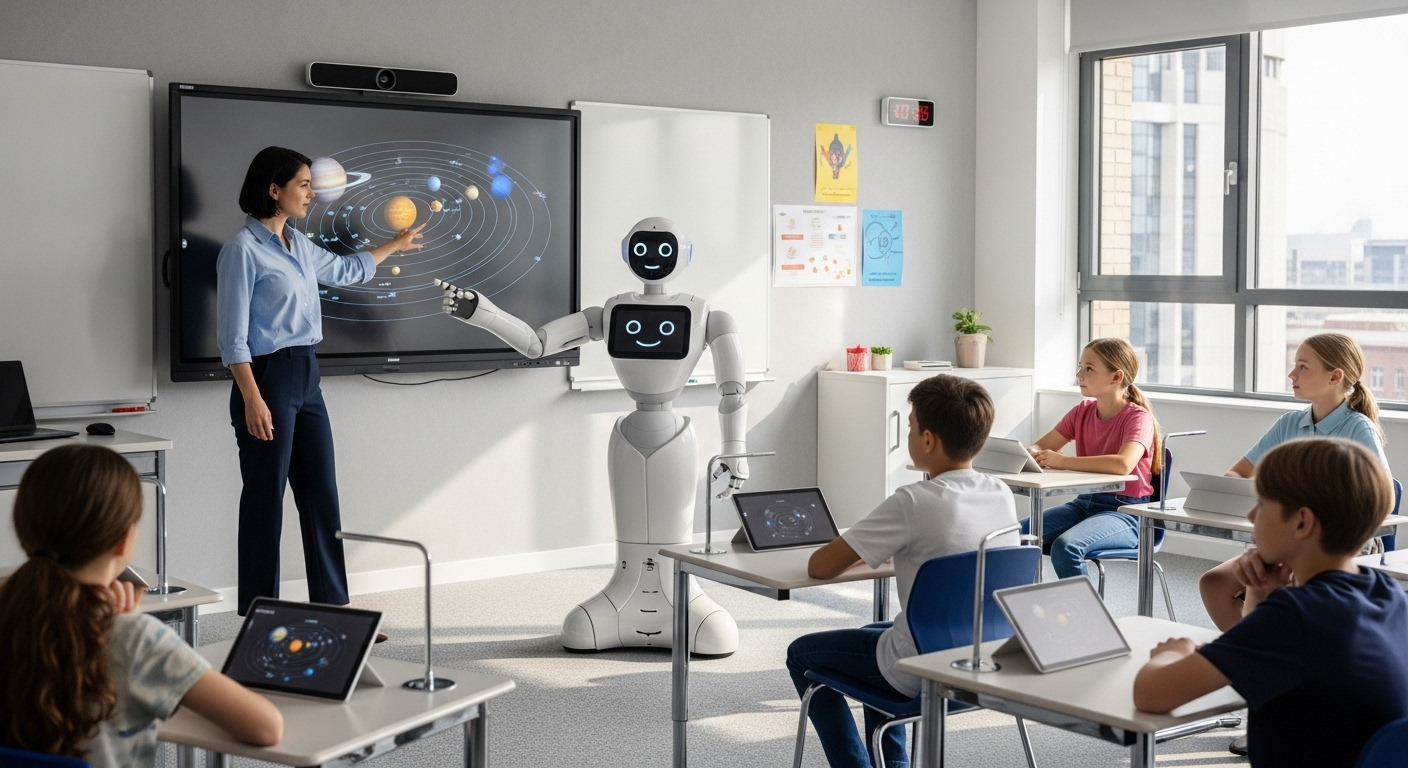
In practical terms, no. Teaching is unlikely to be completely replaced by AI in any foreseeable future. Artificial intelligence can generate text, analyze patterns, and automate tasks, but it still cannot take over the complex human, social, and ethical dimensions of education.
Classrooms depend on human teachers to interpret context, handle nuance, and build relationships that help students grow. The future looks less like AI versus human teachers and more like AI plus human teachers working together.
Used thoughtfully, AI can amplify what human teachers do best. Tools like Apporto’s AI-powered solutions are built around that idea: reduce busywork, surface insights, and leave the real teaching—the human teaching—in your hands.
How Apporto’s AI Helps Teachers Do Their Best Work
If there is one takeaway from all of this, it is simple: AI should support human educators, not compete with them. The goal is not to hand teaching to machines, but to free you from the work that keeps you away from students.
Apporto PowerGrader acts as an AI assistant for the assessment side of your job. It helps you grade faster, deliver richer, more consistent feedback, and spot patterns in student performance that are hard to see in a stack of papers.
Layered with that, Apporto TrustEd can provide integrity and analytics signals, helping you keep learning honest while reducing the amount of manual review you need to do.
Together, these tools help you reclaim time for what only human teachers can offer: critical thinking, creativity, and real human connection with students.
If your school or university is exploring AI in education, this is a good place to start.
Frequently Asked Questions (FAQs)
1. Will teachers exist in the future?
Yes, teachers are expected to remain essential in the future, even as AI becomes more common in education. Technology may automate routine tasks, but human educators provide mentorship, judgment, and social guidance that remain central to meaningful learning and student development.
2. What jobs cannot be replaced by AI?
Jobs centered on human judgment, empathy, creativity, and complex interpersonal relationships are hardest for AI to replace. Teaching, counseling, healthcare, and leadership roles often rely on ethical reasoning, emotional intelligence, and contextual decision-making that artificial intelligence cannot fully replicate.
3. Which teaching tasks can AI realistically replace today?
AI tools can help with routine tasks like grading quizzes, drafting lesson plans, organizing materials, and summarizing assessment data. They support planning and feedback, but human teachers still design learning experiences and make final decisions.
4. How can AI tools like Apporto PowerGrader help teachers without replacing them?
Apporto PowerGrader speeds up grading and surfaces patterns in student work, so you spend less time on repetitive marking and more time coaching, conferencing, and preparing students for complex problems beyond the classroom.
5. Should students worry that AI will eliminate teaching jobs?
Students are more likely to see teaching jobs evolve than disappear. AI may change how teachers spend time, but schools still need human teachers to guide learning, model judgment, and connect education to the real world.
6. What skills should teachers develop to thrive alongside AI in education?
You benefit most by building skills in critical thinking, data literacy, AI literacy, and instructional design. When you understand AI tools, you can use them wisely while keeping human teachers at the center of learning.
