How Does AI Affect Academic Integrity?


Artificial intelligence has expanded what you can produce in a matter of seconds. Essays, summaries, code, even polished arguments can now be generated with a prompt. That capability is impressive. It is also unsettling. In the age of AI, the boundaries of academic work are no longer as clear as they once seemed.

Academic integrity has traditionally rested on the expectation that the work you submit reflects your own thinking and understanding. Now, AI generated content can closely resemble human writing, which complicates that expectation. When technology can draft ideas faster than you can outline them, questions naturally follow.

So how does AI affect academic integrity? It challenges long-standing assumptions about authorship, effort, and originality. To answer that fully, you first need to clarify what academic integrity actually means today, and who defines its standards.


What Has AI Changed About Academic Work?

Generative AI has altered the writing process in ways that are difficult to ignore. You can now generate essays, solve coding problems, or summarize research articles in seconds.

What once required hours of drafting and revision can appear almost fully formed with a single prompt. That efficiency changes how academic work is produced and, more importantly, how it is evaluated.

AI generated text can blur the line between your own reasoning and automated output. When students submit work that is partly or fully AI generated, questions arise about authorship and originality. The issue is not only plagiarism in its traditional sense.

AI can fabricate research data, invent citations, or create entirely fictitious datasets that look credible at first glance. That undermines scholarly trust.

Over time, over-reliance on such tools can weaken critical thinking and the development of original thought. Authenticity becomes harder to verify, and the integrity of student work becomes more fragile.

AI now enables:

  • Full assignment generation
  • Paraphrasing at scale
  • Automated code completion
  • Fabricated references or datasets
  • Realistic but false research output

These capabilities expand possibility, but they also complicate integrity in ways universities are still learning to address.


Where Does Ethical Use End and Academic Misconduct Begin?
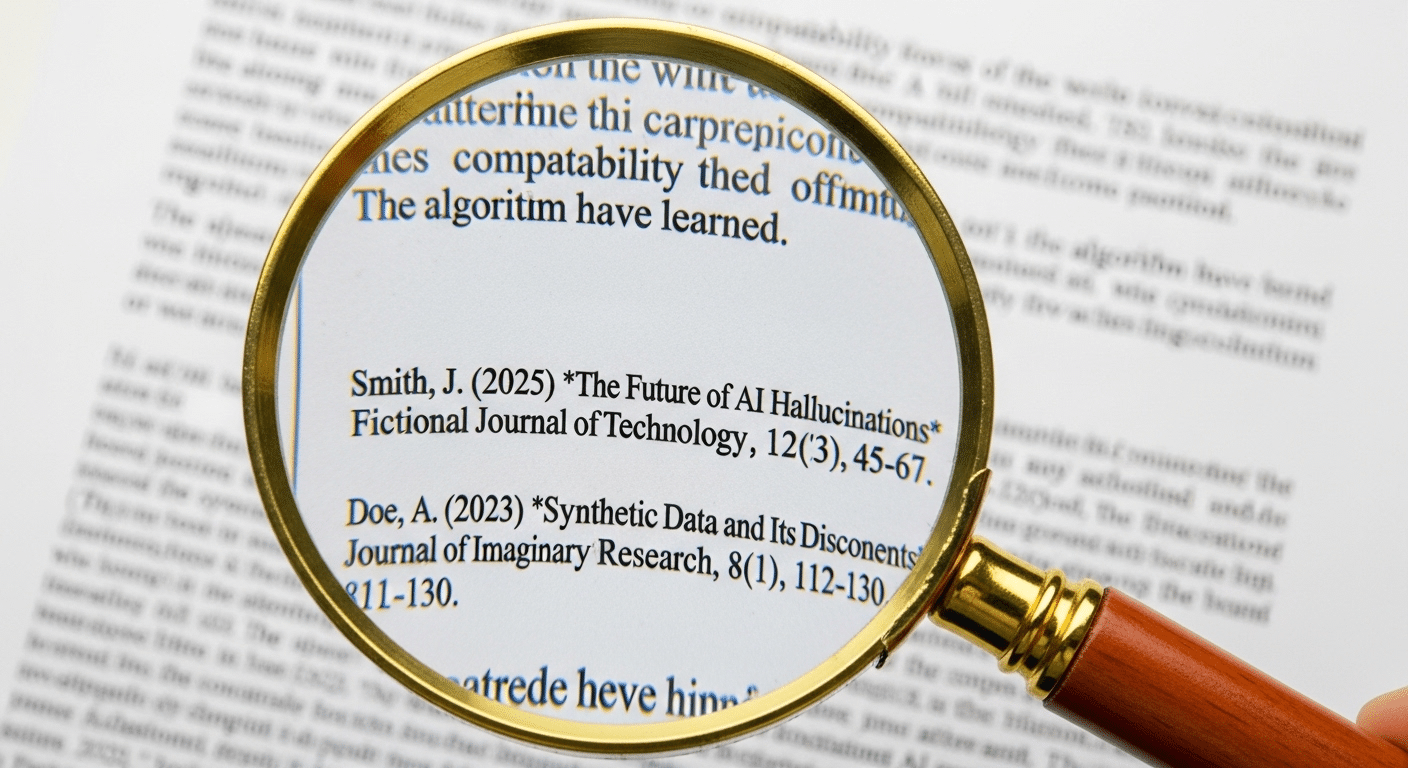
Magnifying glass over AI-generated text revealing small errors and fabricated citations.

The tension around AI use rarely centers on the tool itself. It centers on intent and disclosure. Ethical use of AI can support learning.

Unethical use crosses into academic misconduct when AI generated work replaces your own thinking and is presented as entirely your own.

There is a meaningful distinction between using AI for brainstorming ideas and submitting AI output as if you authored it independently. When you rely on generative tools to clarify concepts, outline arguments, or refine sentence structure, you are still responsible for shaping the intellectual direction.

However, failing to disclose substantial AI assistance, especially when it produces significant portions of an assignment, becomes misrepresentation.

Proper citation and proper attribution remain core expectations. If AI contributes meaningfully to your academic work, transparency matters.

Responsible AI use requires human vetting of all output. AI systems can generate convincing text, but they can also introduce errors, bias, or fabricated claims.

Many students struggle with these nuances. The boundary is not always obvious. Yet the principle is consistent: academic integrity requires that the work you submit genuinely reflects your understanding, judgment, and effort.


Why Detection Alone Is Not Enough?

It may seem reasonable to respond to AI related academic dishonesty with stronger detection tools. In practice, that approach quickly reveals its limits.

Current detection tools struggle to reliably identify AI generated text. Generative models evolve rapidly, often faster than the systems designed to detect them. What works today may fail tomorrow.

False positives are a serious concern. When authentic student work is flagged incorrectly, trust erodes. Students feel accused rather than supported.

Faculty feel uncertain about the reliability of the tools they are expected to use. Traditional plagiarism detection methods, which compare text against existing sources, are becoming less effective in the face of AI generated content that is technically original but not genuinely authored.

Relying only on policing students creates a narrow model of AI academic integrity, one focused more on suspicion than learning.

Limitations of AI detection tools:

  • Significant margins of error
  • False positives that can wrongly accuse students
  • Rapid model evolution that outpaces detection updates
  • Inability to distinguish brainstorming from true authorship
  • Metadata ambiguity that complicates evidence

Detection has a role. But on its own, it cannot define or safeguard academic integrity in a meaningful way


How AI Is Forcing Universities to Rethink Academic Integrity Policies?

University policy committee meeting reviewing academic integrity guidelines with AI-related updates on screen.

Universities are not standing still. Most institutions are actively updating their academic integrity policies to address generative AI. What once focused primarily on plagiarism and exam cheating must now account for AI generated work, automated writing assistance, and new forms of academic misconduct.

In several jurisdictions, formal AI policies are expected to become mandatory by 2026, signaling that this is not a temporary adjustment but a structural one.

Academic integrity policies are being redefined to clarify what constitutes acceptable AI use. At the same time, rigid rules alone are not enough.

Faculty need flexible course policies that reflect the goals of their specific classes. A writing seminar may treat AI differently than a coding course or a statistics lab.

Clear communication becomes central. Instructors must explain expectations in the syllabus, in assignment instructions, and during class discussion.

When you understand not only the rule but the reasoning behind it, confusion decreases. Teaching students what responsible AI use looks like is now part of maintaining academic integrity.


How Teaching and Assessment Must Evolve?

If AI can generate a polished answer in seconds, then traditional assignments alone cannot measure what you truly understand. Teaching must adapt.

Authentic assessments, those that ask for applied reasoning, analysis, or personal reflection, make it harder to substitute automated output for genuine thought.

Process-based evaluations are gaining traction for this reason. Instead of grading only the final submission, instructors look at how ideas develop over time.

Multiple assessment methods also reduce over-reliance on a single format. When you engage in discussion, short responses, projects, and collaborative work, your learning goals become clearer and less vulnerable to misuse.

Teaching AI literacy is equally important. You need to understand when AI use supports learning and when it replaces critical thinking. Encouraging students to reflect on how they used AI tools can deepen awareness and responsibility.

Effective strategies include:

  • Requiring drafts and revision stages
  • Incorporating oral defenses or brief reflections
  • Adding in-class writing components
  • Including personal reflection sections in assignments
  • Explaining permitted AI use explicitly in course policies

These approaches aim to enhance learning without replacing thinking.


Risks Beyond Plagiarism Fabrication, Bias, and Research Integrity
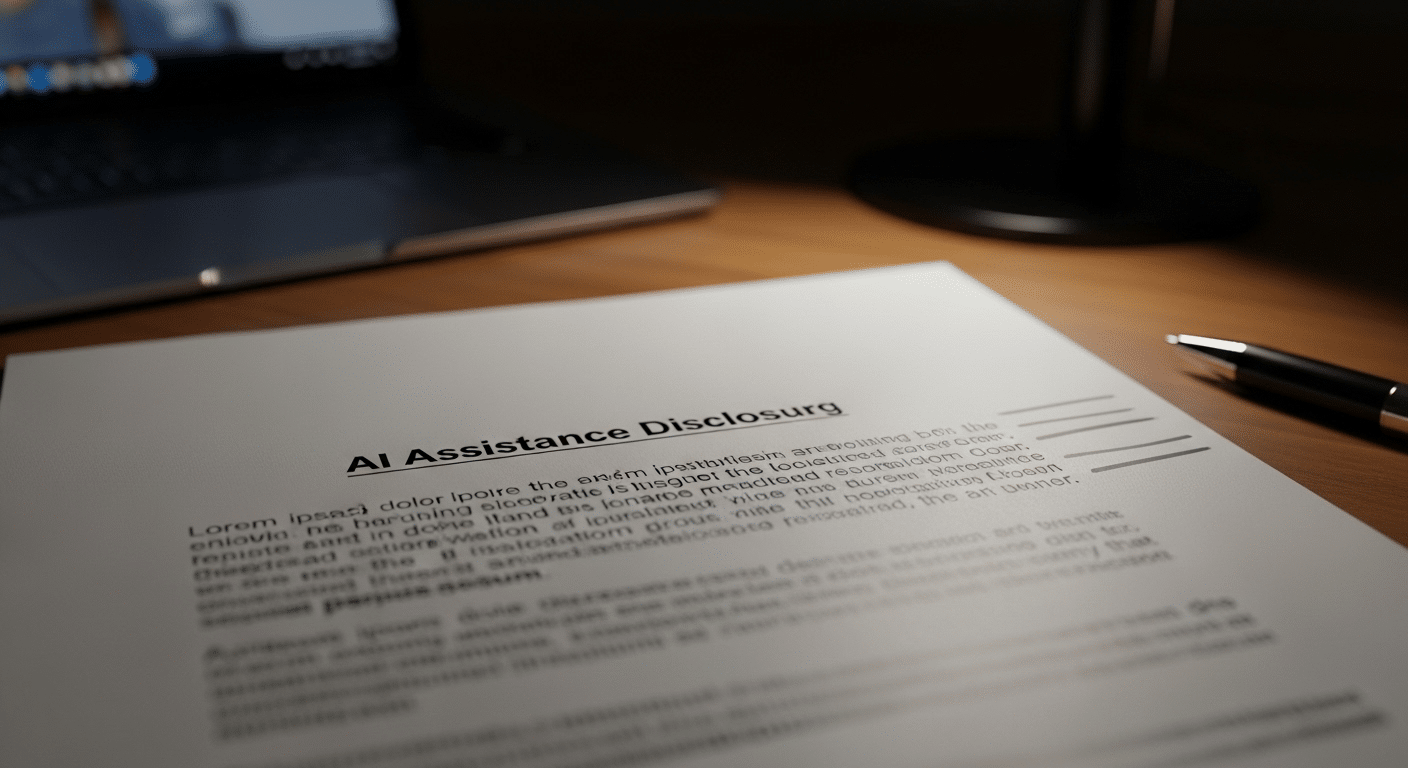
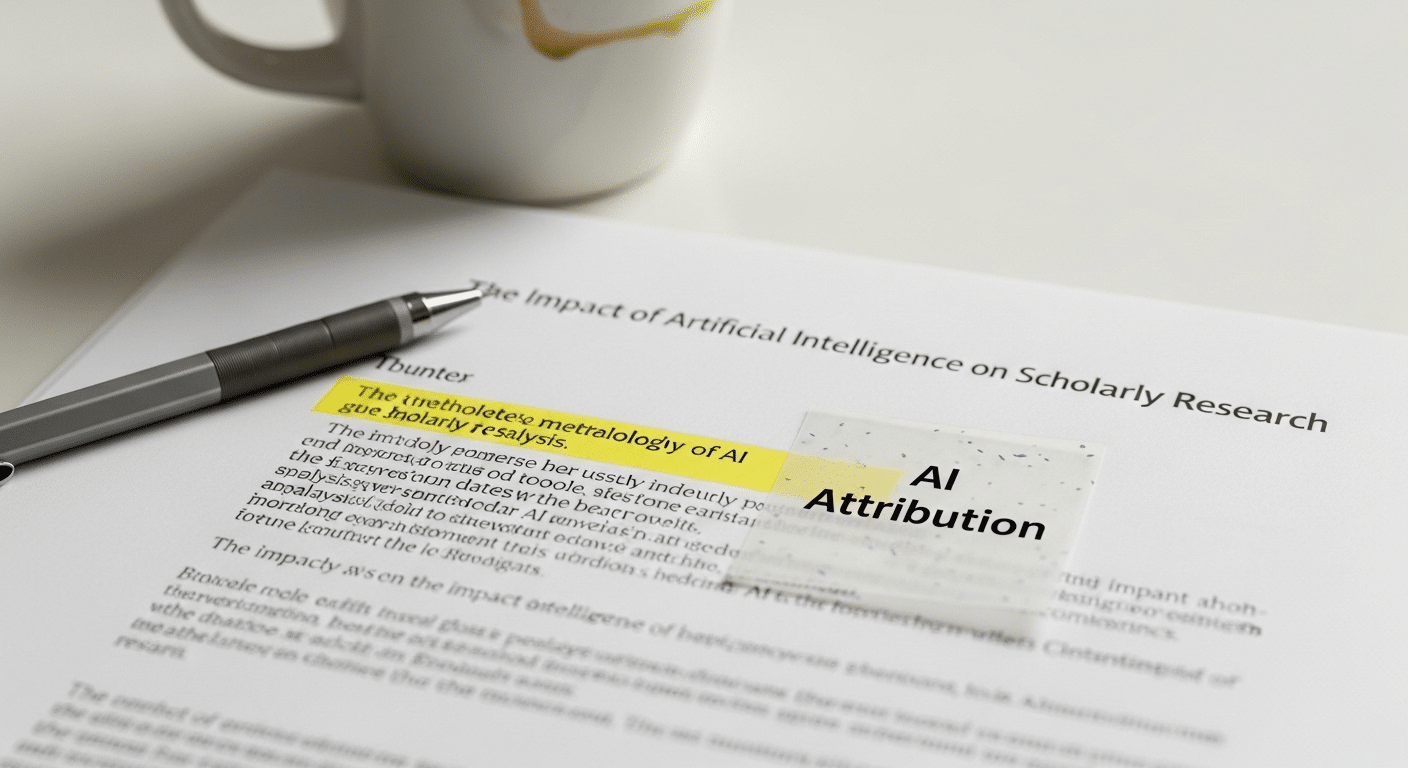
Academic journal article draft with section titled 'AI Assistance Disclosure' clearly visible.

Plagiarism is only one part of the concern. AI can generate fabricated research data that appears statistically sound yet has no real-world basis.

When fictitious datasets enter academic work, scientific integrity is weakened at its core. Research depends on verifiable evidence. AI generated output can imitate evidence without providing it.

Algorithmic bias presents another ethical consideration. AI systems are trained on large datasets that may contain embedded social or cultural bias.

If those patterns go unchecked, they can influence conclusions in subtle but significant ways. In education and research alike, fairness matters.

There is also the issue of transparency. Many generative tools do not clearly reveal how they arrive at a conclusion. That lack of visibility complicates scholarly justification.

Researchers are expected to disclose AI assistance when it meaningfully contributes to their work. However, AI cannot be cited as an author or held accountable for errors. Responsibility remains human. Maintaining research integrity in this context requires careful oversight and honest disclosure.


Can AI Also Strengthen Academic Integrity?

The story is not entirely about risk. AI tools can also enhance learning when used with intention. Institutions are already using AI analytics to identify students who may be at risk of falling behind. Early signals allow instructors to intervene before frustration turns into academic dishonesty.

AI tutors offer authorized learning support, guiding students through complex material without completing the work for them.

When integrated thoughtfully, these systems can support revision, clarify misunderstandings, and reinforce feedback. That kind of structured assistance strengthens the learning environment rather than undermines it.

Responsible AI use also improves transparency. When expectations are clear and students understand what is permitted, anxiety decreases. A supportive environment reduces the pressures that often lead to cheating.

Positive uses of AI include:

  • Personalized tutoring tailored to specific learning gaps
  • Writing feedback that helps refine clarity and structure
  • Early warning systems that flag academic risk factors
  • Academic support scaffolding that builds skills progressively

A balanced approach recognizes that AI can either weaken or promote academic integrity. The outcome depends on how it is taught and governed.


From Policing to Partnership A Balanced Approach

Professor and student reviewing AI-assisted assignment together in supportive classroom environment.

If the only response to AI is surveillance, you create a classroom defined by suspicion. Detection has a role, but it cannot stand alone. Maintaining academic integrity now requires a combination of education and accountability. A balanced approach treats AI not simply as a threat, but as a reality that must be managed with clarity.

Clear communication of expectations is foundational. When course policies explain what responsible AI use looks like, ambiguity decreases.

Teaching students why certain boundaries exist strengthens understanding far more than vague warnings ever could. Faculty focus shifts from catching misconduct to guiding learning.

Encouraging responsible AI use allows academic honesty to develop through awareness rather than fear. When you understand both the risks and the appropriate uses, integrity becomes part of the learning process itself. Partnership, not policing, is what sustains trust in this new era of education.


How Technology Can Support Responsible AI Use?

Technology should support judgment, not replace it. In the context of AI academic integrity, intelligent review matters far more than automatic punishment.

Detection tools alone cannot capture nuance, especially when student work may include limited, disclosed AI assistance. What institutions need is context.

Pattern analysis across research papers and assignments can surface unusual similarities or sudden shifts in writing style. However, those signals should lead to instructor oversight, not immediate accusations.

A context-based authorship review allows faculty to examine drafts, revision history, and documented AI use before drawing conclusions.

This is where a human-in-the-loop model becomes essential. Solutions like TrustEd support educators by providing deeper insight into academic misconduct risks while keeping final decisions in human hands.

Responsible AI requires systems that protect integrity without criminalizing students who are still learning how to use these tools appropriately.


Conclusion

Artificial intelligence has changed how academic work is created, evaluated, and understood. It has introduced new risks, from plagiarism to fabricated research data, but it has not erased the core idea of academic integrity. Responsibility still rests with you, with faculty, and with institutions.

Clear expectations matter more than ever. When policies explain what ethical AI use looks like, and when instructors communicate those standards consistently, confusion decreases. Integrity becomes a shared responsibility rather than a guessing game.

Universities must adapt thoughtfully. Detection alone will not solve the problem, and prohibition is rarely sustainable. A balanced approach that combines education, oversight, and intelligent technology can protect academic honesty while supporting learning.

If you are evaluating how to strengthen AI academic integrity in your institution, now is the time to explore tools that provide insight without sacrificing fairness.


Frequently Asked Questions (FAQs)


1. Does AI increase plagiarism?

AI has made plagiarism easier in some cases. Students can generate essays, paraphrase content, or fabricate references quickly. However, AI does not automatically cause academic dishonesty. The risk depends on how the tool is used and whether expectations are clearly communicated.

2. Is using generative AI always cheating?

No. Generative AI is not inherently unethical. Using it for brainstorming ideas, clarifying concepts, or revising sentence structure can be appropriate when allowed. Submitting AI generated work as entirely your own without disclosure, however, is considered academic misconduct.

3. Can AI detection tools be trusted?

Detection tools can provide signals, but they are not fully reliable. Many struggle to accurately identify AI generated text and may produce false positives. Human review and contextual evaluation remain essential for fair academic integrity decisions.

4. How should faculty handle AI use?

Faculty should define expectations clearly in course policies and assignment instructions. Discussing acceptable AI use in class reduces confusion. A mix of assessment methods and process-based evaluation can help maintain academic integrity while supporting learning goals.

5. What policies should universities create?

Universities should develop flexible academic integrity policies that address AI use explicitly. Policies must distinguish between ethical assistance and misrepresentation. Clear guidance, consistent communication, and educational strategies are more effective than punishment alone.

6. Can AI support academic honesty?

Yes. AI tools can enhance learning when used responsibly. Personalized tutoring, early risk detection, and structured feedback can reduce the pressures that lead to cheating. A balanced approach promotes academic honesty rather than undermines it.

7. How can students use AI responsibly?

Students should follow course policies, disclose meaningful AI assistance, and ensure their submissions reflect their own understanding. Using AI to support critical thinking, rather than replace it, is key to maintaining academic integrity.

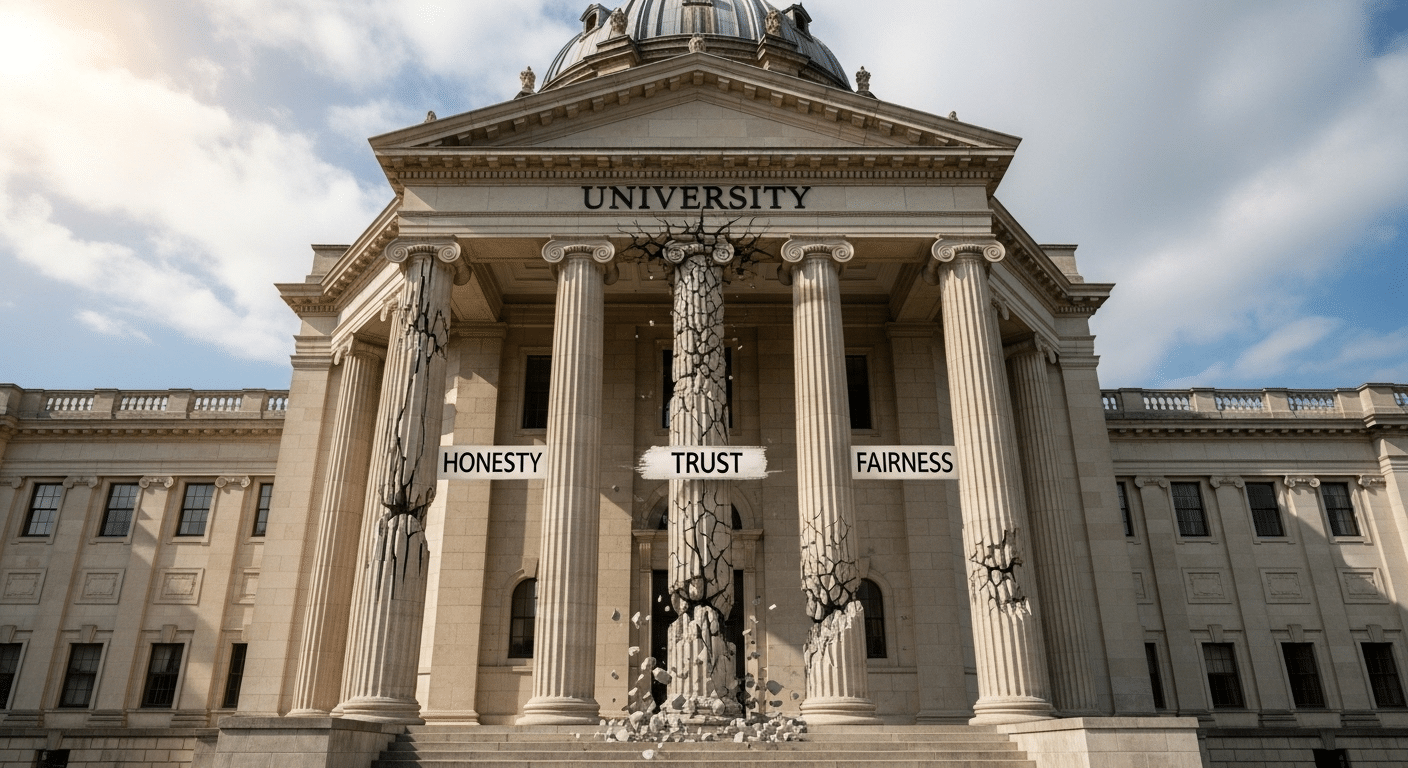
How Does Plagiarism Affect Academic Integrity?


At first glance, plagiarism can seem minor. A few copied words. A borrowed paragraph. An idea reused without citation. It may look like a shortcut taken under pressure. Yet the real impact is not small at all. It reaches into the structure of academic integrity itself.

Academic integrity is the foundation of higher education. It allows the academic community to trust that student work reflects genuine effort, that research papers represent honest inquiry, and that degrees signify earned knowledge. Without that shared trust, education loses coherence. You cannot measure learning accurately if the work submitted does not belong to the person submitting it.

Plagiarism disrupts this foundation. It is not merely a technical mistake or a formatting error. It is a form of academic dishonesty that misrepresents authorship and undermines fairness. When someone presents someone else’s work as their own, the relationship between students, faculty, and institutions weakens.


What Is Plagiarism And Why Is It Taken So Seriously?

Plagiarism is defined as presenting work or ideas from another source as your own without full acknowledgement. That definition applies to text, data, images, computer code, and even structure or argument.

In academic writing, you are expected to distinguish clearly between your own words and the words or ideas of others. Proper credit and citation are not optional details. They are central to intellectual honesty.

Plagiarism is often described as a form of fraud. When you submit a research paper or assignment, you are implicitly stating that the work reflects your own thinking. If that claim is false, the submission becomes a misrepresentation.

In that sense, plagiarism functions as academic theft. It takes intellectual property and claims ownership without permission or acknowledgement.

There is also an important distinction between intentional plagiarism and unintentional plagiarism. Intentional plagiarism involves a deliberate attempt to deceive, such as copying entire passages or purchasing someone else’s work.

Unintentional plagiarism can occur when citation rules are misunderstood, when quotation marks are omitted, or when sources are not properly documented. Both violate academic integrity, though the intent may affect how academic misconduct is addressed.

In recent years, artificial intelligence has added complexity. Students must acknowledge AI assistance when it contributes meaningfully to their work. Failing to disclose AI generated content is treated similarly to failing to cite a human source.

Common forms of plagiarism include:

  • Verbatim copying without quotation marks
  • Paraphrasing someone else’s work without proper credit
  • Submitting someone else’s work as your own
  • Collusion, or unauthorized collaboration
  • Auto-plagiarism, submitting previously graded work again
  • Contract cheating through third parties
  • AI-generated work without disclosure

Plagiarism is taken seriously because it strikes at the core principles that sustain education itself.


How Plagiarism Violates Academic Integrity at Its Core?

University building supported by pillars labeled Trust, Honesty, and Fairness with one pillar visibly cracked

Academic integrity rests on a simple premise. The work you submit reflects your own words, your own ideas, and your own effort. That expectation creates trust between students and faculty, and it allows the academic community to function with confidence. Without that trust, evaluation becomes unreliable and learning becomes uncertain.

Plagiarism violates academic integrity because it breaks this foundation of academic honesty. When you take credit for others ideas or present someone else’s work as your own work, you misrepresent what you know and what you can do.

The issue is not only about citation rules. It is about truthfulness. A research paper or assignment is meant to demonstrate understanding. If the ideas or wording are not yours, the demonstration becomes false.

This misrepresentation carries consequences beyond the individual assignment. Plagiarism creates an unfair advantage over other students who complete their work independently. Grades are meant to reflect effort, skill, and critical thinking. When plagiarism occurs, that system becomes distorted.

To violate academic integrity is to undermine the educational purpose itself. Education is not merely about producing correct answers. It is about developing judgment, analysis, and intellectual independence.

When you substitute copied material for genuine thought, academic honesty erodes. The relationship between effort and achievement weakens. Over time, the standards that sustain higher education begin to fray, and the value of academic work becomes less certain.


What are the Immediate Academic Consequences of Plagiarism?

Plagiarism is not treated as a minor oversight in higher education. It is classified as an academic integrity violation, and the consequences can be immediate and severe.

Many professors are required to report suspected academic misconduct, even if the incident appears small. Once reported, the situation often moves beyond the classroom and into formal review.

In many universities, the first penalty is straightforward. You may receive a zero on the assignment. In more serious cases, that zero extends to the entire course, resulting in a failing grade. That failure can delay graduation, affect financial aid, and damage your standing within the institution.

The impact does not stop there. Repeated offenses, or particularly serious cases of intentional plagiarism, can lead to suspension or expulsion. A notation of academic dishonesty may be placed on your student’s record or transcript.

That mark can follow you beyond your current institution. Graduate schools, law schools, and medical programs routinely review transcripts for integrity violations. A single notation can jeopardize future admissions.

Possible penalties include:

  • Failing the assignment
  • Failing the entire course
  • Academic probation
  • Suspension from the university
  • Expulsion from the institution
  • Permanent transcript notation

These are not symbolic punishments. They are serious consequences that can reshape your academic trajectory.

Plagiarism is considered a breach of trust, and institutions respond accordingly. Even one incident can carry far-reaching consequences that extend well beyond the classroom.


The Long-Term Professional and Ethical Consequences

Professional in modern office reviewing job application with academic disciplinary notation visible on transcript.

Plagiarism does not end with a grade penalty. It can follow you long after graduation. In many contexts, plagiarism is viewed as a form of fraud. When academic dishonesty appears on your record, it can raise concerns about credibility and ethical judgment.

Employers, licensing boards, and graduate programs often examine academic history closely. A single violation can cast doubt on your professional reputations.

The far reaching consequences extend beyond documentation. If you develop a habit of taking shortcuts in academic work, that pattern may continue into your career. Unethical behavior learned in education can resurface in professional settings, where the stakes are even higher.

In research fields, misrepresentation can lead to retractions, loss of funding, or public disgrace. In business or law, it can damage client trust and lead to legal repercussions.

Academic dishonesty does not exist in isolation. It shapes character and signals reliability. Years after graduation, questions about integrity can resurface unexpectedly.

Your career depends not only on knowledge and skills, but on trust. Once damaged, that trust is difficult to rebuild.


How Plagiarism Harms the Academic Community?

Plagiarism does not harm only the individual who commits it. It affects the entire academic community. Education depends on trust.

Faculty trust that the student work submitted reflects independent effort. Students trust that evaluation is fair. Universities trust that research and academic writing meet accepted standards. When plagiarism occurs, that trust begins to erode.

The relationship between faculty and students is particularly vulnerable. If instructors begin to suspect that assignments or research papers are not original work, the tone of education shifts. Conversations become guarded.

Feedback becomes cautious. Suspicion replaces openness. That change affects everyone, including students who complete their work honestly.

Plagiarism also devalues degrees. A university credential signals that you have met rigorous academic expectations. If academic dishonesty becomes widespread, the perceived value of that degree declines. Other colleges, employers, and graduate programs may question whether academic materials reflect genuine learning or borrowed content.

Research is equally affected. Original research builds on verified contributions. When plagiarized material enters academic writing, it disrupts that chain of knowledge. Misattributed ideas halt academic progress by obscuring intellectual origins and weakening scholarly accountability.

Over time, repeated academic misconduct can lead to a broader loss of confidence in an institution. The academic community relies on integrity to sustain credibility.

When plagiarism undermines that foundation, the consequences extend far beyond a single assignment or a single student.


Plagiarism and the Loss of Critical Thinking

Student staring at blank page with faint overlay of copied text fading behind it, symbolizing bypassed thinking.

Plagiarism is often discussed in terms of rules and consequences. Less attention is given to what it quietly removes from the learning process. When you copy instead of create, you bypass intellectual development. The assignment may be completed, but the growth that should accompany it does not occur.

A research paper is not merely a finished document. It is an academic exercise designed to strengthen your ability to question, analyze, and synthesize information.

When you substitute borrowed material for independent work, that exercise is short circuited. You may receive temporary relief from effort, but the deeper skills remain underdeveloped.

Academic development depends on struggle. Wrestling with ideas forces you to clarify your own thinking. Writing in your own words strengthens understanding.

If you rely on someone else’s work, the opportunity to build reasoning skills diminishes. Over time, this pattern can weaken your ability to form arguments from your own mind.

The damage is subtle but cumulative. Skills that should expand instead remain stagnant.

Skills weakened by plagiarism include:

  • Critical thinking
  • Research synthesis
  • Academic writing
  • Analytical reasoning
  • Intellectual independence

Higher education is structured to cultivate these abilities. Plagiarism interrupts that cultivation. It replaces growth with imitation, and in doing so, it undermines the very purpose of learning.


Technology, AI, and the New Forms of Plagiarism

Technology has not created plagiarism, but it has changed its scale and speed. Artificial intelligence now allows students to generate essays, summaries, and even research outlines within seconds.

AI generated text can appear polished and coherent, which makes academic dishonesty harder to detect at a glance. The challenge is no longer limited to copying from another student’s paper. It now includes automated production of work that may never have existed before.

Contract cheating has also expanded. Online services advertise custom papers, problem sets, and even computer code for a fee.

Access to vast digital archives makes it easier to retrieve and reuse academic materials. During the pandemic, as online learning increased, reports of cheating rose as well. The environment made unsupervised submission more common, and institutions struggled to respond quickly.

Plagiarism detection software remains important, yet it struggles to keep pace with generative models. AI generated content is often original in wording but not in authorship. That complicates enforcement.

You are now expected not only to cite human sources properly, but also to acknowledge meaningful AI assistance. Ethical use requires transparency. Unethical use hides automated contribution and presents it as independent work.

New risks include:

  • AI-generated essays submitted without disclosure
  • Fabricated citations or invented research data
  • Contract cheating services completing assignments
  • Sharing computer code without proper attribution
  • Auto-plagiarism through reuse of archived digital submissions

Technology amplifies both opportunity and risk. The responsibility to maintain academic integrity remains human.


Intentional vs Unintentional Plagiarism

Student deliberately pasting large copied paragraph into document with warning icon overlay.

Not all plagiarism arises from the same motive. Intentional plagiarism involves a deliberate decision to deceive. You may copy large sections of a research paper, submit someone else’s work, or conceal the use of artificial intelligence in order to gain an unfair advantage. In these cases, the intent is clear. The goal is to misrepresent authorship.

Unintentional plagiarism is different, though the impact can still violate academic integrity. It often results from inaccurate citation, confusion about what qualifies as common knowledge, or careless note-taking.

You might paraphrase too closely to the original source. You might forget to include quotation marks around borrowed words. These errors are common, especially in early academic development.

Intent does matter when institutions determine consequences, yet both forms require correction. Avoiding plagiarism depends on learning how to cite sources properly from the beginning of your studies.

Clear documentation, consistent referencing, and careful distinction between your own words and those of others are essential habits. If you are unsure about citation rules, seeking guidance from instructors or writing centers can prevent future problems.

Understanding the difference between intentional and unintentional plagiarism helps clarify responsibility. Academic integrity demands awareness, not just good intentions.


Why Preventing Plagiarism Is an Educational Responsibility?

Plagiarism is not only a disciplinary issue. It is an educational one. If students violate academic integrity because they do not fully understand citation rules, fair use, or copyright expectations, the response cannot be punishment alone. Education must address the root causes.

Teaching academic integrity should begin early in a course and continue throughout the semester. Clear honor codes establish expectations, but those expectations must be explained in practical terms.

Many students enter higher education with uneven preparation in academic writing. Without structured guidance, confusion can lead to mistakes that escalate into academic misconduct.

Faculty play a central role in prevention. When instructors provide feedback on drafts, they reinforce standards before violations occur. Writing centers also support students by clarifying how to cite sources properly and how to distinguish original work from borrowed material.

Transparent policy communication helps students understand what qualifies as acceptable student conduct and what crosses the line.

Effective prevention strategies include:

  • Early instruction in citation practices
  • Constructive feedback on drafts before final submission
  • Clear explanation of the honor code and its purpose
  • Transparent academic conduct policies that define expectations
  • AI literacy education that explains responsible technology use

Avoiding plagiarism is not simply about rule enforcement. It is about equipping students with the skills and understanding necessary to uphold academic integrity throughout their education.


How Intelligent Review Strengthens Academic Integrity?

Plagiarism detection software has become a standard tool in higher education, yet software alone cannot determine intent. A similarity score does not reveal whether a student misunderstood citation rules, relied too heavily on a source, or deliberately engaged in academic misconduct.

When institutions rely only on automated flags, they risk reducing complex academic integrity violations to numerical thresholds.

Maintaining academic integrity requires responsible oversight. Context matters. A context-based analysis examines the pattern of student work over time, the structure of assignments, and documented revisions.

Inconsistencies across drafts often reveal more than isolated phrases highlighted by detection systems. Pattern recognition can surface meaningful concerns, but those concerns must be interpreted by faculty who understand the course, the student, and the learning goals.

Human judgment remains central. Transparency in AI authorship and clear documentation of sources protect students from wrongful accusations while preserving academic standards. Technology should support review, not replace it.

Institutions seeking to balance fairness and accountability increasingly rely on solutions such as TrustEd, which provide deeper insight into potential academic misconduct. Protecting both student trust and institutional credibility depends on this careful balance.


Conclusion

Plagiarism may begin with a few borrowed words, but its impact is far larger. It reaches into the core of academic integrity and challenges the trust that sustains education. When you submit academic work, you affirm that the ideas, analysis, and expression reflect your own effort.

That affirmation allows faculty to evaluate fairly, allows other students to compete honestly, and allows universities to award degrees with credibility.

Education depends on that trust. Without academic honesty, grades lose meaning and research loses authority. Plagiarism is not a minor shortcut. It is a breach that weakens intellectual growth, damages reputations, and undermines the academic community as a whole.

Institutions cannot rely solely on punishment to respond. A proactive approach, grounded in education, clear policy, and intelligent review, is essential to maintain academic integrity. Technology can support this effort when it is used thoughtfully and paired with human judgment.

If your institution is examining how to strengthen oversight while protecting student trust, exploring solutions designed for responsible review is a practical next step.


Frequently Asked Questions (FAQs)


1. Is plagiarism always intentional?

No. Plagiarism can be intentional or unintentional. Intentional plagiarism involves deliberately presenting someone else’s work as your own. Unintentional plagiarism often results from inaccurate citation, confusion about common knowledge, or poor note-taking. Even without intent, it can still violate academic integrity.

2. What happens if you plagiarize?

Consequences vary by institution, but they are often serious. You may receive a zero on the assignment or fail the course. More severe cases can lead to suspension or expulsion. Plagiarism is treated as academic misconduct because it misrepresents your academic work.

3. Can plagiarism appear on transcripts?

Yes. Some universities place a notation of academic dishonesty on a student’s record or transcript. This can affect graduate school applications and professional opportunities. Even a single academic integrity violation may have long-term consequences.

4. Does AI increase plagiarism?

Artificial intelligence can make plagiarism easier by generating essays, summaries, or computer code quickly. However, AI itself is not the violation. Failing to disclose AI generated content or presenting it as your own work is what constitutes plagiarism.

5. Why is plagiarism considered fraud?

Plagiarism is considered fraud because it involves taking credit for others ideas or words without proper acknowledgement. You are representing work as original when it is not. That misrepresentation undermines academic honesty and trust.

6. How can students avoid plagiarism?

Students can avoid plagiarism by citing sources properly, using quotation marks for direct quotes, and clearly distinguishing their own words from borrowed material. Seeking feedback from faculty or writing centers also reduces risk.

7. How can universities detect plagiarism fairly?

Universities use plagiarism detection software to identify similarities in student work, but fair detection requires human review. Context-based analysis and consistent academic conduct policies help ensure that academic integrity is upheld without wrongful accusations.

What Are the Core Principles of Academic Integrity?


When you ask what are the core principles of academic integrity, you are not asking about a checklist. You are asking about the infrastructure that holds higher education together.

Academic integrity is not a decorative policy sitting in a university handbook. It governs how knowledge is created, evaluated, and shared across the academic community.

Every assignment, research paper, and collaborative project depends on shared expectations. If those expectations collapse, fairness collapses with them. Grades lose meaning. Evidence becomes suspect. The value of a degree from any institution weakens. Integrity is what allows academic programs and scholarly pursuits to function with credibility.

These principles are not abstract ideals reserved for administrators. They guide your daily conduct in class, in writing, and in research. They shape how you treat source material, how you interact with other students, and how you respond under pressure.

To understand academic integrity fully, you need to examine the six fundamental values that define it and give structure to ethical decision making in higher education.


The Six Fundamental Values From Ideals to Practice

The six fundamental values of academic integrity provide more than moral encouragement. They serve as a practical framework for conduct in higher education.

Guidance from the International Center for Academic Integrity identifies these values as the foundation of ethical academic behavior. They are not symbolic. They shape how decisions are made in classrooms, research projects, and institutional processes.

Values alone, however, are not enough. Principles must translate into behavior. The phrase values flow principles captures this idea well. Ideals guide judgment, but they only gain meaning when applied in real circumstances.

When you decide how to use source material, how to collaborate with other students, or whether to report academic misconduct, you are acting within this framework.

Students are expected to uphold these fundamental values throughout their studies. Faculty, administrators, and the broader academic community rely on that commitment to sustain fairness and trust. The six fundamental values are:

  • Honesty
  • Trust
  • Fairness
  • Respect
  • Responsibility
  • Courage

Together, these principles form an integrated system. Remove one, and the structure weakens. Uphold them consistently, and academic integrity becomes not just a policy requirement, but a lived practice within the institution.


Honesty: Truth in Work, Evidence, and Representation

Student reviewing a research paper with highlighted citations and clear quotation marks, emphasizing accurate attribution.

Honesty is the starting point of academic integrity. It requires that the evidence you present is accurate, that your writing reflects your own work, and that your assignments represent genuine effort.

When you submit a paper or project, you are affirming that the information is reliable and that the conclusions are supported by evidence rather than invention.

Plagiarism directly violates honesty. It occurs when you present source material as if it originated from you, without proper attribution. Even a few copied words without citation can misrepresent authorship. Fabrication is another serious breach.

Making up research data, altering results, or inventing references undermines the credibility of academic work. Recycling previously assessed work without permission from your instructor also violates this principle, because it misrepresents effort.

Honesty also applies to the use of artificial intelligence. If AI tools contribute meaningfully to your writing or analysis, disclosure may be required under course policies. Transparency protects integrity.

At its core, honesty means that your academic work must be authentic, verifiable, and clearly distinguished from borrowed material. Without that standard, trust collapses quickly.


Trust: The Foundation of the Academic Community

Trust binds the academic community together. When you submit an assignment, a faculty member trusts that the work represents your genuine effort.

When grades are assigned, you trust that evaluation is based on merit rather than favoritism or deception. This mutual confidence allows a university to function without constant suspicion.

Fair grading depends on trust. If academic dishonesty becomes widespread, grades lose credibility. Over time, the reputation of the institution suffers. Employers and graduate programs may question whether a degree truly reflects competence.

In that sense, trust influences your future. The value of your qualification is connected to the integrity of the university as a whole.

Trust also extends to institutional processes. When suspected academic misconduct arises, clear procedures protect fairness.

Reports of violations must typically be brought within one month of the date the reporting individual becomes aware of the alleged incident. This timeline encourages timely review and prevents unresolved concerns from lingering indefinitely.

If charges are pending, students may not be permitted to change their registration or grading basis in the affected course. These safeguards reinforce accountability.

Trust is not blind. It is supported by transparent processes that protect both students and faculty while upholding academic integrity.


Fairness: Protecting the Even Playing Field

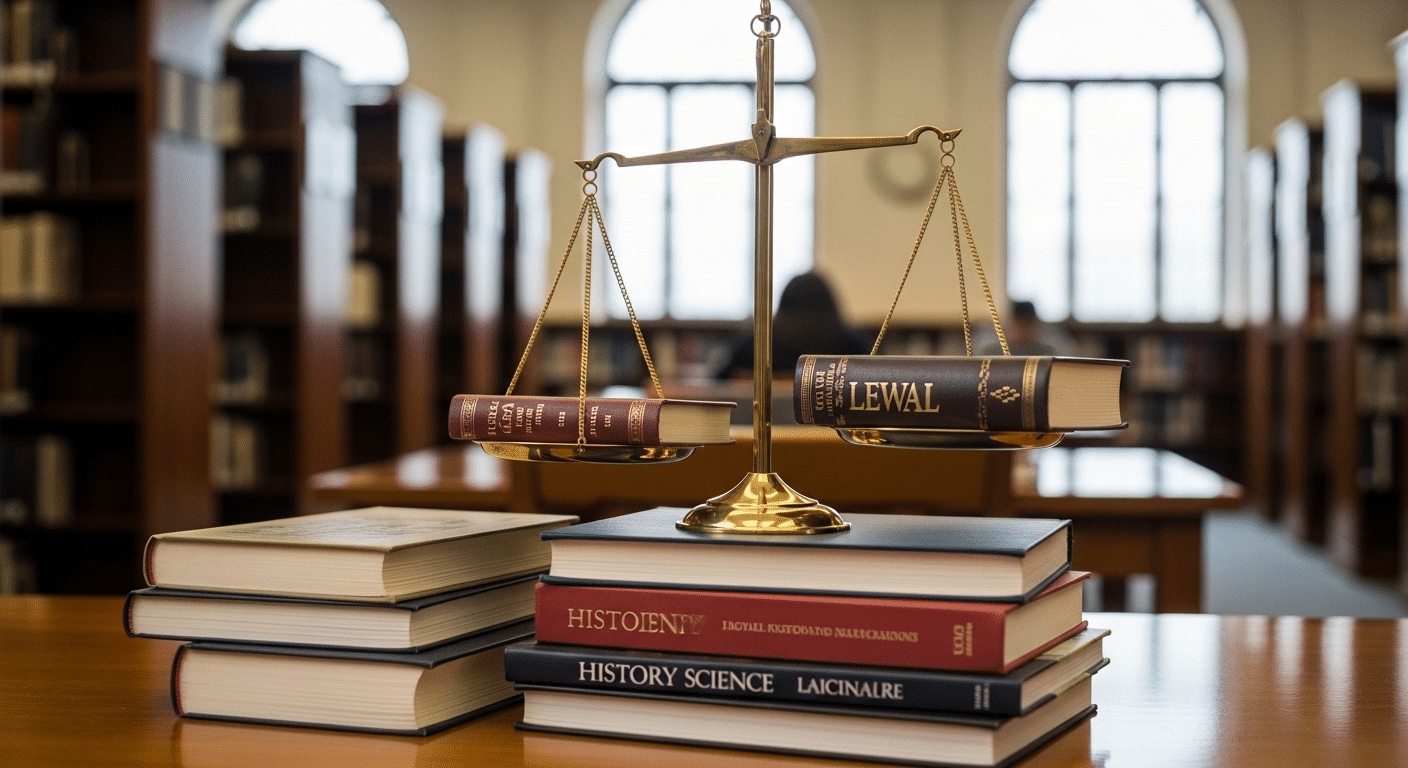
Balanced scales of justice resting on stacked textbooks in a university setting, symbolizing fairness in grading.

Fairness ensures that every student is evaluated under equal standards. Academic integrity promotes equity by preventing dishonest behavior from distorting grades and recognition.

When you complete your own work honestly, you compete on merit. When someone engages in academic misconduct, they gain an unfair advantage that undermines the entire class.

Universities impose sanctions to preserve fairness. Penalties are determined by the school in which you are enrolled and are applied based on the specific circumstances of the case.

In serious situations, students may be suspended or expelled. These consequences are not arbitrary. They protect the integrity of academic programs and the value of grades awarded.

An appeals process also exists. If you believe a decision was made in error, you have the right to request a review according to institutional procedures. Fairness requires both accountability and due process.

Forms of unfair advantage include:

  • Plagiarism
  • Fabrication of data or evidence
  • Collusion with other students on independent work
  • Contract cheating services completing assignments
  • Recycling previously assessed work without permission

Students who use illegal cheating services also face the risk of blackmail. Fairness depends on consistent standards, applied carefully and proportionately.


Respect: Intellectual Property and Community Standards

Respect within the academic community begins with acknowledging that ideas have origins. When you use someone else’s words, arguments, or data, you are drawing from intellectual property that deserves recognition.

Giving proper credit is not a technical formality. It signals that you understand your place within a larger conversation of ideas.

Respect also extends to other students. When classmates invest time and effort into their projects, they expect evaluation to reflect genuine work.

Academic misconduct disregards that expectation. It treats collective standards as optional rather than binding. Respect requires that your conduct does not diminish the effort of others.

Institutional standards are another expression of respect. Universities establish policies to protect fairness, reliability, and the integrity of academic programs. Observing those standards demonstrates that you value the community to which you belong.

Awareness of fair use and copyright principles further reinforces responsible conduct. Not all material can be reused freely.

Understanding these boundaries ensures that your academic work honors both legal obligations and ethical norms. Respect transforms integrity from a rule into a shared commitment.


Responsibility: Accountability for Your Learning and Actions

Student sitting at desk reviewing university academic integrity policy on laptop with focused expression.

Responsibility means taking ownership of your learning, your decisions, and your conduct. Academic integrity is not enforced solely from above. It depends on your willingness to act in accordance with community standards.

If you are struggling with an assignment, responsibility requires that you speak to your instructor or visit the appropriate academic office rather than turning to dishonest shortcuts.

Contract cheating services may promise convenience, but they carry serious risk. Students who use illegal services can face blackmail, financial exploitation, and disciplinary action. Responsibility involves recognizing those dangers and choosing a lawful, ethical path instead.

You are also expected to read institutional policies carefully and remain aware of procedures related to academic misconduct. If you witness or suspect serious violations, you may be expected to report academic misconduct through proper channels. Accountability strengthens fairness.

When charges are pending, you may be restricted from changing your registration or grading basis in the affected course. Sanctions range according to circumstances, from warnings to suspension or expulsion. Responsibility requires understanding these realities and acting with foresight rather than impulse.


Courage: Ethical Action Under Academic Pressure

Courage is often overlooked in discussions of academic integrity, yet it is essential. You are expected to uphold ethical conduct even when pressure intensifies.

Deadlines approach. Grades matter. Competition increases. In those moments, resisting the temptation to cheat requires deliberate effort.

Courage also means admitting mistakes. If you realize that you have cited a source incorrectly or misunderstood a rule, addressing the issue directly reflects integrity. Avoidance may feel easier in the short term, but honesty protects your long-term progress.

Upholding principles when grades are at risk is not simply about compliance. It shapes your character. The habits you form in a university class carry into your future professional life.

Employers value reliability and ethical judgment. Courage under academic pressure prepares you for situations where integrity may again be tested.

Discussing concerns openly with instructors or advisors is another expression of courage. Transparency strengthens trust and reinforces a culture where integrity is practiced rather than merely declared.


Academic Integrity and Professional Formation

Graduate walking across university stage with diploma, long shadow shaped like a pathway into a professional skyline.

Academic integrity does more than regulate assignments. It forms habits. When you commit to honest work, you build patterns of ethical decision making that extend beyond a single course or institution.

Your future depends on those habits. Graduate programs review not only grades but conduct. Employers evaluate more than technical skills.

They look for reliability. A record marked by misconduct can carry consequences long after graduation, sometimes limiting access to advanced study or professional opportunities.

Integrity protects the value of your degree. The reputation of your institution rests on the belief that graduates earned their credentials through genuine effort. When that trust weakens, the worth of every credential suffers.

In professional life, trust functions as currency. Clients, colleagues, and organizations rely on accurate information and responsible conduct. By practicing integrity now, you prepare for environments where ethical judgment is expected, not optional. The habits you build in higher education follow you into every future role.


Systems That Support Integrity

Principles do not enforce themselves. To maintain academic integrity, universities must translate values into systems that operate consistently and fairly. That includes clear reporting channels, documented review procedures, and transparent communication about how academic misconduct is evaluated.

Reports should be reviewed in context, not reduced to automated flags. A balanced oversight model protects standards while also protecting students from unfair conclusions. Intelligent systems can assist by identifying patterns across student work, but final judgments require human review and institutional accountability.

Technology should support integrity, not replace it. When review processes are transparent and consistent, trust strengthens across the university community.

Solutions such as TrustEd help institutions analyze potential academic misconduct while keeping faculty oversight central. That combination of structured review and human judgment allows universities to uphold standards without undermining fairness or student confidence.


Conclusion

The core principles of academic integrity, honesty, trust, fairness, respect, responsibility, and courage, are not abstract ideals. They shape daily behavior. They guide how you write papers, conduct research, collaborate with others, and respond when pressure rises.

Integrity is not declared once. It is practiced repeatedly. Each assignment, each decision, each moment of uncertainty becomes an opportunity to reinforce those values.

When students and institutions take these principles seriously, the entire academic community benefits. Degrees retain meaning. Knowledge remains credible. Trust holds.

You can begin by reflecting on how these values appear in your own work and how clearly your institution supports them. Strengthening systems, clarifying expectations, and investing in thoughtful oversight ensure that integrity is not assumed but actively maintained.


Frequently Asked Questions (FAQs)


1. What are the six fundamental values of academic integrity?

The six fundamental values are honesty, trust, fairness, respect, responsibility, and courage. These values guide behavior in academic programs and shape how students, faculty, and institutions uphold ethical standards in daily academic work.

2. What counts as academic misconduct?

Academic misconduct includes plagiarism, fabrication of data, collusion, recycling previously assessed work without permission, contract cheating, and misrepresentation of AI use. These actions violate academic integrity because they misrepresent effort, authorship, or evidence.

3. Can academic integrity violations appear on a permanent record?

Yes. Proven violations may result in transcript notations or internal records within the university. Such entries can affect graduate study applications, professional licensing, and future career opportunities.

4. How long do reports of misconduct have to be filed?

In many institutions, reports must be brought within one month of the reporting individual becoming aware of the alleged incident. Timely reporting supports fair review and due process.

5. What should students do if accused of academic misconduct?

Students should read institutional policies carefully, respond promptly, and seek guidance from the appropriate academic office. Understanding procedures, timelines, and appeal options helps ensure fair treatment during review.

What Happens If You Violate Academic Integrity?


When you violate academic integrity, the response is rarely informal. Universities treat an academic integrity violation as a procedural matter, not a private disagreement between a student and an instructor.

Once a concern is reported, formal steps usually begin. Documentation is collected. Evidence is reviewed. You are notified. The process moves forward under the university’s academic integrity policy.

It is important to distinguish between an allegation and a finding of responsibility. An alleged violation means a concern has been raised. It does not mean you have been found responsible. Only after review, and often after you have had the opportunity to respond, does the institution determine the outcome.

The consequences can be layered. Academic penalties may affect your grade in a course. Administrative sanctions can impact your record. Professional consequences may follow later, especially if a violation appears on your transcript.

To understand what happens next, you need a precise definition of what qualifies as academic misconduct in the first place.


What Counts as an Academic Integrity Violation?

An academic integrity violation is defined under a university’s code as behavior that compromises honesty, fairness, or authenticity in academic work. Academic misconduct can take many forms, and the academic integrity policy usually outlines them in detail.

An alleged violation simply means a concern has been raised and evidence is under review. A proven violation means the institution has determined that the conduct breached established standards.

Plagiarism is one of the most common forms of academic dishonesty. It includes more than copying entire papers. Faulty citation, sloppy quotation marks, or summarizing a source without proper attribution can qualify.

Insufficient citation of historical facts or statistics may also be problematic if those details are not common knowledge. A frequent paragraph-level mistake is placing a single citation at the end of a long section, which may imply that all earlier sentences are original when they are not.

Misuse of artificial intelligence tools can also fall under misconduct, especially when AI assistance is not disclosed as required. Universities often distinguish between minor errors and serious breaches. Intent, scope, and context matter.

Common violations include:

  • Plagiarism, including faulty citation
  • Fabrication of research data
  • Cheating on exams
  • Collusion
  • Recycling previously assessed work
  • Contract cheating
  • Misrepresentation of AI use
  • Unauthorized assistance

Each category represents a breach of academic integrity that institutions treat seriously.


What Happens Immediately After an Allegation?

University administrator filing an academic misconduct incident report at a desk with official documents and laptop.

When an allegation of academic misconduct is raised, the situation moves into a structured process. It does not remain an informal conversation.

Typically, the instructor documents the concern by filing an incident form that outlines the reported violation and the supporting evidence. That report is forwarded to the appropriate office, often the Dean of Students Office or a designated academic integrity office.

You then receive a formal notification. This letter explains the allegation, references the relevant procedures, and outlines your right to respond. At this stage, the allegation has not yet resulted in a finding. It signals that a review is underway.

You are usually given an opportunity to meet with the instructor or an administrator to present your explanation. Faculty provide documentation of the assignment, source material, or exam conditions.

Evidence is reviewed carefully. In many institutions, pending charges may limit your ability to withdraw from the course or change your grading basis until the matter is resolved.

Typical procedural steps:

  • Report filed by faculty member
  • Notification sent to student
  • Evidence shared
  • Student response meeting
  • Determination of responsibility
  • Sanction imposed

The outcome depends on what the evidence shows and how responsibility is determined under institutional policy.


Academic Penalties: Grades, Failure, and Removal

If you are found responsible for an academic integrity violation, academic penalties are often the first consequence. These penalties directly affect your performance in the course.

In many cases, the instructor may assign a zero on the assignment in question. That single grade penalty can significantly lower your final grade, especially if the assignment carries substantial weight.

More serious violations can result in a failing grade for the entire course. A failing course grade does not only affect that semester.

It can lower your GPA, delay progress toward graduation, and affect eligibility for certain programs. The severity of the sanction often depends on several factors, including whether it is a first offense, the scope of the misconduct, your intent, and any prior record.

A first offense may lead to a grade reduction and a required educational seminar on academic integrity. Repeat offenses are treated more seriously. Disciplinary probation, suspension for a semester, or even expulsion from the university may follow.

Possible sanctions include:

  • Failing the assignment
  • Failing the course
  • Grade reduction affecting the final grade
  • Educational seminar or workshop
  • Academic probation
  • Suspension
  • Expulsion

The outcome reflects both the nature of the violation and the institution’s commitment to maintaining integrity standards.


Transcript Notations and Permanent Records

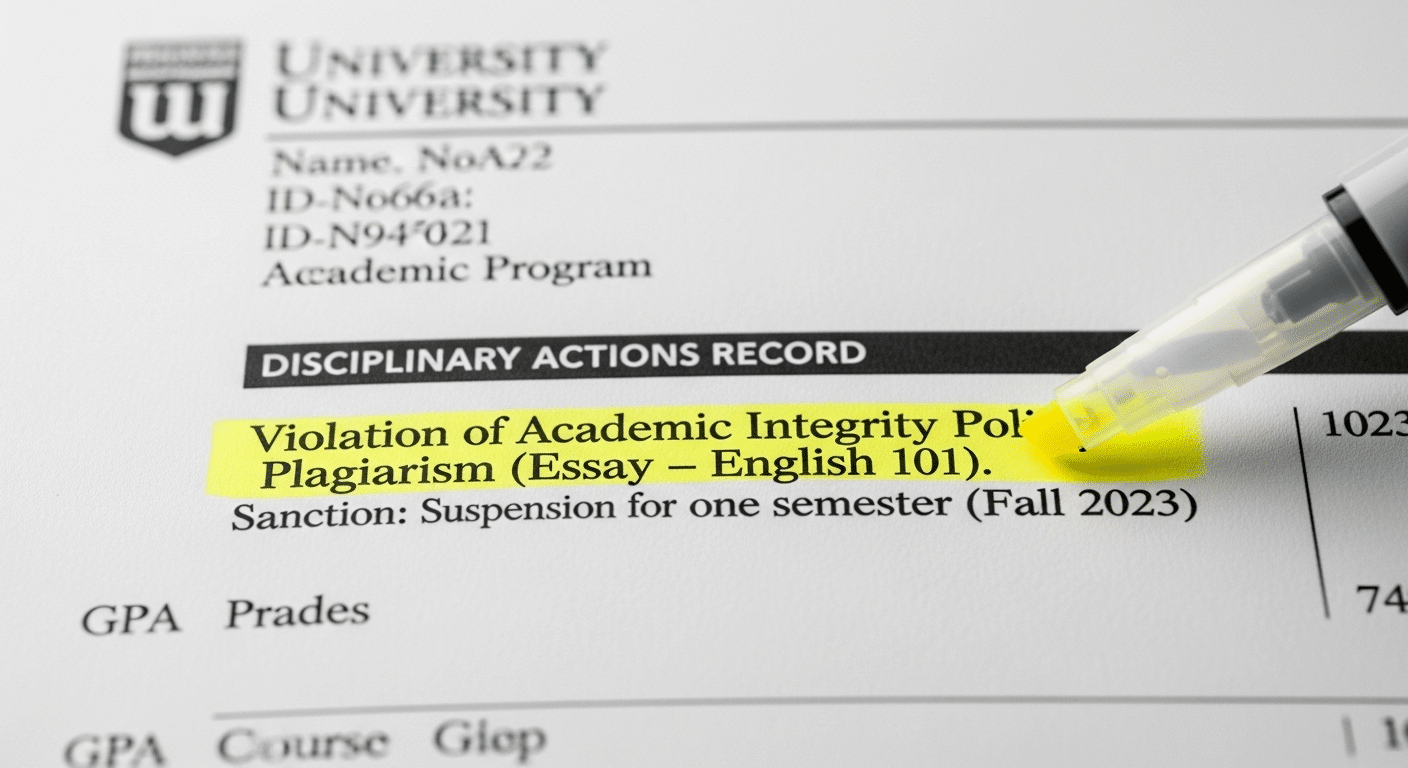
Close-up of a university transcript with a highlighted disciplinary notation, formal academic document style

Beyond immediate grade penalties, an academic integrity violation can affect your academic record in more durable ways. Universities often distinguish between an internal file and a transcript notation.

An internal record documents the incident within the institution. A transcript notation appears on your student’s transcript and may be visible to external parties.

For a first offense, some institutions keep the record on file without placing a permanent notation on the transcript. Repeat violations, or serious cases involving fabrication or contract cheating, are more likely to result in a transcript notation. Once recorded, it can follow you beyond graduation.

Graduate and professional programs, including grad school and law school, frequently review transcripts and request disclosure of disciplinary history. A violation may raise questions about judgment and responsibility.

Financial aid eligibility can also be affected, especially if sanctions include suspension or dismissal. Scholarships and research positions may be revoked.

In extreme cases involving fraud, institutions have the authority to revoke a degree even years after it has been awarded. If plagiarism involves protected intellectual property, legal action such as fines or lawsuits may also occur. A permanent record carries consequences that extend well beyond a single semester.


The Appeal Process: Rights and Responsibilities

If you are found responsible for an academic integrity violation, you generally have the right to enter an appeal process. An appeal is not automatic. You must follow established procedures and meet specific deadlines.

Most institutions require you to submit a completed appeal form within a defined timeframe. If you miss that deadline, you may lose the opportunity for an appeal hearing.

The process often begins with a written letter to the dean explaining why you believe the decision or sanction should be reconsidered. In some cases, you may request a pre-appeal meeting with an Academic Integrity Officer to clarify expectations and logistics.

An appeal hearing may then be scheduled before a committee, sometimes involving the department chair or designated representatives.

You are expected to present evidence, which may include drafts, research notes, and original source material. After review, you will receive a written outcome letter. The committee may uphold the original sanction, modify it, or in rare cases overturn it.

Appeal pathway:

  • Request pre-hearing meeting
  • Submit written appeal
  • Present evidence
  • Attend hearing
  • Receive written decision

The appeal process protects fairness, but it requires careful preparation and timely action.


Long-Term Professional Consequences

"Corporate hiring manager reviewing a candidate file with a visible academic disciplinary notation during a background check.

An academic integrity violation does not always end at graduation. Employers increasingly conduct background checks or request disclosure of disciplinary records. A notation on your record can raise concerns about judgment and reliability.

Even if a violation does not appear publicly, faculty members may hesitate to write strong letters of recommendation if trust has been damaged. That hesitation can quietly affect your access to research opportunities or competitive positions.

Graduate and professional programs often screen applicants carefully. A history of academic misconduct may require explanation, and in some cases it may weaken your candidacy.

Certain career paths, particularly those involving licensing or certification, expect evidence of responsibility and ethical conduct. Questions about integrity can complicate that path.

There is also the matter of habit. If dishonesty becomes normalized during your studies, it can carry into your professional life. Over time, that pattern erodes credibility.

In extreme cases involving fraud, institutions have revoked degrees years after graduation when misconduct was discovered. The consequences can resurface long after you believe the issue has passed. Your future depends not only on knowledge, but on trust.


Financial and Legal Risks

An academic integrity violation can also carry financial consequences. If you receive scholarships, grants, or funded research positions, those awards may be withdrawn after a finding of misconduct.

Some institutions suspend or terminate financial aid eligibility when students are placed on probation, suspended, or dismissed. That disruption can delay completion of your degree and increase personal financial strain.

For students preparing for competitive paths such as law school, financial setbacks combined with disciplinary records can complicate both admission and funding opportunities. Many programs require disclosure of academic misconduct, and that disclosure may influence scholarship decisions.

Legal risks, while less common, are real. Plagiarism involving protected intellectual property can lead to fines or civil lawsuits. Copyright holders may pursue action if their material is reproduced without authorization. In extreme cases, academic fraud may trigger broader legal scrutiny.

Commercial cheating services introduce another layer of risk. Students who purchase assignments from illegal providers have reported threats of blackmail, especially when payments or personal data are involved. Financial penalties are not limited to institutional sanctions. Misconduct can create external vulnerabilities that extend beyond the university.


Institutional Impact: When Violations Scale

Accreditation review committee examining university compliance documents in a formal boardroom setting.

When academic dishonesty becomes widespread, the damage extends beyond individual students. A university depends on public confidence in its standards.

If integrity is routinely violated, accreditation bodies may question whether the institution is maintaining appropriate academic oversight. That scrutiny can threaten the standing of the entire school.

Degrees also lose value when trust declines. Employers and graduate programs rely on the assumption that coursework reflects genuine achievement.

If that assumption weakens, every graduate carries the burden. The reputation of the institution becomes uncertain, even for those who upheld the rules.

Trust within the campus community also suffers. A faculty member who suspects widespread misconduct may approach grading and mentoring with caution rather than confidence. Collaboration becomes strained. Other colleges evaluating transfer credits or advanced standing may hesitate.

Academic integrity is not only a personal responsibility. It safeguards the credibility of the entire university and the long-term reputation of its graduates.


Why Severity Depends on Context

Not all academic integrity violations are treated the same. The severity of the outcome depends on context. Institutions typically distinguish between a first offense and repeated misconduct.

A first offense may result in a reduced grade or educational seminar, while a second or third offense can lead to suspension or dismissal.

Intent also matters. There is a difference between sloppy citation and deliberate deception. Forgetting quotation marks or misunderstanding citation rules may still constitute a violation, but it is evaluated differently from knowingly submitting copied material as your own.

Committees review the extent of the copied content, the significance of the assignment, and whether the conduct appears intentional.

Responsibility is determined through evidence. Draft history, similarity reports, exam conditions, and communication records may all be considered. The difference between negligence and calculated dishonesty influences sanctions. Institutions aim to apply standards consistently, yet they also examine circumstances carefully.

Severity reflects both action and context. The process is designed to determine not only whether a violation occurred, but how serious it was and what response is proportionate.


How to Protect Yourself

Student carefully adding citations to a research paper with style guide open beside a laptop

Protecting yourself begins with disciplined habits. You should cite sources properly in every assignment, even when you believe a fact seems obvious. If you gather information during research, acknowledge it.

Failing to do so can blur the line between your own analysis and borrowed material. When paraphrasing, sandwich citations clearly so readers understand where the source begins and where your interpretation ends. Use quotation marks accurately for exact language. Small technical errors can create serious questions.

Keep drafts, notes, and copies of research material. Those documents can help demonstrate that your work developed over time. Consult your syllabus carefully to understand your instructor’s expectations regarding collaboration, AI use, and citation standards.

If something feels unclear, ask the instructor directly rather than guessing. Do not withdraw from a course prematurely if an allegation arises. Communication and documentation matter.

Avoid commercial services that promise completed answers or essays. They carry risks beyond academic penalties. Transparency about AI use is also essential if it contributes to your writing.

Protective practices:

  • Document research carefully
  • Save drafts at each stage
  • Verify citation format
  • Ask before using AI tools
  • Keep communication records
  • Offer proof of originality when needed

These habits reduce uncertainty and strengthen your position if questions arise.


Intelligent Review and Responsible Oversight

Responding to an academic integrity violation requires more than automated detection tools. Similarity software can flag patterns, but it cannot determine intent, context, or responsibility. A balanced system depends on careful review, not reflexive accusation.

Universities must evaluate academic misconduct with structured procedures that consider evidence, drafts, communication history, and assignment expectations.

Context-based review protects standards while also protecting students. Pattern analysis across student work can reveal inconsistencies more accurately than isolated flags. At the same time, human oversight remains essential. Faculty and review committees must interpret findings thoughtfully, weighing severity and circumstance before imposing sanctions.

Institutions that rely solely on detection risk undermining trust. Those that integrate intelligent systems with transparent procedures reinforce both fairness and accountability.

Solutions such as TrustEd support universities in analyzing potential academic integrity violations while keeping human judgment central.

This approach strengthens institutional credibility and ensures that student work is evaluated with rigor, clarity, and proportional response. A responsible oversight model preserves both academic standards and student confidence.


Conclusion

An academic integrity violation is not a minor administrative event. It can alter your course grade, affect your transcript, interrupt your progress toward graduation, and follow you into graduate study or employment.

What happens if you violate academic integrity depends on context, evidence, and prior record, but the consequences are rarely trivial.

Integrity shapes your academic and professional trajectory. The habits you form in a single semester can influence recommendation letters, research opportunities, financial aid eligibility, and long-term credibility.

Universities treat violations seriously because trust is foundational to education. Without it, grades lose meaning and credentials lose value.

Proactive awareness is your strongest protection. Understand your institution’s academic integrity policy. Read assignment instructions carefully. C

ite sources properly. Ask questions when expectations are unclear. Preserve drafts and documentation. These steps may seem simple, yet they protect your record and your future.

Institutions also carry responsibility. Clear procedures, fair review, and intelligent oversight strengthen both accountability and student trust. When integrity is upheld consistently, the entire academic community benefits.


Frequently Asked Questions (FAQs)


1. What happens if it is your first offense?

A first offense often results in a grade penalty, such as a zero on the assignment or a reduction in your final grade. Some institutions require an educational seminar on academic integrity. In many cases, the record is kept internally, though repeat violations can lead to more severe sanctions.

2. Can an academic integrity violation appear on your transcript?

Yes, depending on the severity of the violation and institutional policy. Some cases result in a transcript notation, while others remain in an internal file. Repeat or serious misconduct is more likely to appear on your student’s transcript.

4. Can you lose financial aid?

You can. Suspension, dismissal, or removal from an academic program may affect financial aid eligibility. Scholarships and funded research positions can also be revoked following a finding of responsibility.

5. Can a university revoke a degree?

In extreme cases involving fraud or serious academic misconduct, institutions have the authority to revoke a degree, even years after graduation. This typically occurs when misconduct is discovered after the credential has been awarded.

6. How does the appeal hearing work?

You must submit a written request within the designated deadline. A committee reviews the evidence during an appeal hearing, and you may present documentation such as drafts or source material. A written decision is issued after review.

7. What if you were wrongly accused?

You have the right to respond and present evidence. Document meetings, preserve drafts, and follow formal procedures carefully. Timely communication strengthens your position during review.

8. Do employers see academic misconduct?

Some employers conduct background checks or request disclosure of disciplinary history. Even without a transcript notation, damaged relationships with professors may affect recommendation letters and professional opportunities.

Is Academic Integrity the Same in Every Country?


Academic integrity is often treated as a universal principle. Honesty, fairness, responsibility, these values appear constant across institutions and borders. Yet once you examine how they are applied within the higher education sector, the picture becomes more complex. Cultural differences influence how students and educators interpret academic work, ownership of ideas, and collaboration.

Globalization has intensified this complexity. International students now study far from their home country, carrying prior educational norms into new systems. Online learning connects classrooms across continents, bringing together diverse expectations within a single educational community. What feels self-evident in one setting may require careful explanation in another.

The core question, then, is not whether academic integrity matters everywhere, but whether it means the same thing everywhere. To answer that, you first need to examine how academic integrity is formally defined, and who has shaped those definitions.


What Is Academic Integrity And Who Defines It?

Academic integrity is commonly defined as a commitment to fundamental values, honesty, trust, fairness, respect, responsibility, and courage in academic work.

These principles guide how you conduct research, write research papers, collaborate with other students, and represent your ideas. At its core, academic integrity reflects the standards an educational community expects from its members.

It is important to distinguish academic integrity from academic misconduct. Academic integrity is interconnected with related concepts such as plagiarism, responsibility, and academic misconduct, which are essential for a comprehensive understanding of integrity in academic settings. Integrity describes the values you are meant to uphold. Academic misconduct, by contrast, outlines the behaviors that violate those values.

Most educational institutions formalize this distinction through an academic integrity policy, which specifies definitions, procedures, and consequences.

Many institutions draw guidance from the International Center for Academic Integrity, an organization that promotes shared standards across postsecondary institutions. Yet in practice, policies often devote far more detail to penalties for academic dishonesty than to strategies for teaching integrity in the learning process.

Common categories of academic dishonesty include:

  • Academic plagiarism
  • Self plagiarism or duplicate submission
  • Contract cheating
  • Scientific misconduct
  • Academic cheating during formal examinations


Do Academic Integrity Standards Differ Across Countries?

Side-by-side comparison of detailed policy handbook versus shorter institutional guideline booklet.

Yes, academic integrity standards differ significantly from one country to another. The underlying values may appear similar, yet enforcement, interpretation, and consequences vary in meaningful ways. Legal frameworks often shape how academic misconduct is defined and addressed within higher education.

In North America and much of Western Europe, policies tend to be detailed and legalistic. Institutions frequently outline precise definitions of plagiarism, intellectual property violations, and research integrity breaches.

Penalties are specified in advance, sometimes with formal hearings and documented procedures. Within the European Union, quality assurance mechanisms further reinforce standardized expectations across universities.

In other regions, including parts of the Middle East and Latin America, academic integrity may be defined more narrowly, sometimes focusing primarily on cheating during formal examinations. Written work and citation practices may receive less formal regulation, depending on institutional priorities.

The severity of consequences also differs. Some systems impose suspension or expulsion, while others rely on corrective measures or faculty discretion.

These variations demonstrate that academic integrity is shaped not only by values, but by national legal and educational traditions.


How Cultural Values Shape Perceptions of Academic Misconduct?

Academic misconduct does not exist in a vacuum. It is interpreted through student cultural backgrounds and long-standing educational traditions. Cultural differences influence how you understand authorship, collaboration, and respect for authority.

In high power distance societies, students are often taught not to question professors. Knowledge flows from authority downward.

In many Western institutions, by contrast, critical inquiry is encouraged. You are expected to challenge arguments, propose alternate perspectives, and develop independent conclusions.

Educational models also differ. Some systems emphasize rote memorization and faithful reproduction of authoritative texts. Others prioritize originality and analytical thinking. These differences shape how proper attribution is understood.

In collectivist cultures:

  • Helping peers with assignments may be seen as a moral obligation
  • Knowledge is often viewed as shared and communal
  • Reproducing the words of respected authorities signals respect, not misconduct

In Western institutions:

  • Original ideas and independent analysis are prioritized
  • Critical disagreement with professors is encouraged
  • Proper attribution of sources is mandatory in academic work


Why International Students Often Experience Fear and Confusion?

International student sitting in university library looking at academic integrity handbook with mixed expression of confidence and concern.

For many international students, academic integrity policies initially appear clear. Surveys conducted in Canadian postsecondary institutions show that students often report feeling confident after reading formal guidelines.

At the same time, nearly one third describe feelings of fear, anxiety, or confusion. Confidence and uncertainty can coexist, especially when the consequences of academic misconduct are severe.

These emotional responses are not trivial. Negative feelings can interfere with the learning process, reducing comprehension and limiting the ability to apply rules correctly.

International students frequently face overlapping pressures, psychological adjustment to a new country, social integration into a different student body, and academic expectations that may differ sharply from those in their home country.

Several risk factors compound the challenge. Working in a second language can make source integration more difficult. Time management practices learned elsewhere may not align with local norms. Some students have never been formally taught citation practices in the same way.

Despite reporting similar attitudes toward cheating as domestic peers, international students are often overrepresented in academic misconduct cases, a pattern that reflects structural misunderstanding more than intent.


Has the Digital Age Made Academic Integrity More Complex?

The digital age has made academic integrity more complicated in practical terms. The rapid expansion of online education during the COVID-19 pandemic moved millions of students into online classes almost overnight.

Assessment methods changed quickly, sometimes without adequate preparation. In that environment, opportunities for academic dishonesty increased.

Online learning environments make it easier to exchange information, collaborate informally, or access unauthorized materials. In response to these challenges, many schools have adopted new academic integrity systems or updated their policies to better address misconduct in online settings.

Global connectivity also means that cheating behavior can cross borders, with services operating internationally and targeting students in multiple countries. What once required physical proximity can now happen instantly.

Technological advancements have also fueled the growth of contract cheating and new forms of plagiarism. Students can access services that promise custom essays, completed assignments, or exam assistance with minimal effort.

Examples include:

  • Online contract cheating platforms offering to complete academic work for a fee
  • AI assisted plagiarism tools that generate or rephrase content
  • File sharing in online classes that blurs the line between collaboration and misconduct

These developments complicate how institutions define and maintain academic integrity in contemporary education.


How Do Enforcement and Consequences Differ Globally?

Academic integrity expectations do not only vary in definition, they also differ in enforcement. Educational institutions design policies within their own legal and cultural frameworks.

Some systems rely on detailed regulations and formal hearings. Others grant broader discretion to faculty. Quality assurance mechanisms, national oversight, and historical norms all shape how academic misconduct cases are handled.

Below is a simplified comparison of how different regions approach enforcement.

Region Primary Focus Policy Structure Typical Consequences Cultural Framing
US / Canada Broad misconduct definition Legalistic policies Suspension, expulsion Individual authorship
Western Europe Detailed integrity standards Regulatory frameworks Formal penalties Intellectual property focus
East Asia Exam integrity emphasis Less formalized plagiarism focus Context-dependent Respect for authority
Middle East Exam-centered Varies by institution Institutional discretion Honor-based
Latin America Mixed definitions Emerging policy formalization Often restorative Contextual norms


These differences demonstrate that enforcement reflects local traditions as much as shared academic values.


Is Academic Integrity a Universal Human Right Or a Western Concept?

Balanced scale labeled 'Universal Principles' and 'Cultural Traditions' in a university setting.

At first glance, academic integrity appears universal. Honesty in scholarship seems inseparable from the idea of education itself.

Yet when you examine how integrity is defined and enforced, questions arise. Is it a human right tied to fairness and truth, or is it largely shaped by a US concept of intellectual ownership? Academic integrity also plays a crucial role in advancing social justice, as it supports the development of inclusive and equitable societies by promoting fairness, equality, and respect for human rights within educational and legal cultures.

Research integrity in global scholarship requires shared expectations. International journal standards demand transparency in authorship, proper citation, and accountability. Without common rules, collaboration across borders would collapse into mistrust.

At the same time, enforcement mechanisms are often culturally constructed. Legal traditions, moral education systems, and institutional histories influence how misconduct is interpreted.

This tension becomes visible when students or researchers move between systems. What counts as common knowledge in one setting may require citation in another.

A shared baseline is necessary for global scholarship, yet that baseline must acknowledge alternate perspectives rather than dismiss them outright.


What Should Universities Do in a Globalized Higher Education Sector?

If academic integrity is shaped by context, then it cannot be assumed. Universities must teach academic integrity explicitly rather than relying on unspoken norms. Approaching alternate perspectives with empathy and cultural understanding is essential for fostering an inclusive and respectful learning environment.

In a globalized higher education environment, students arrive with different educational histories, and student behavior reflects those differences. When a student arrives in a new academic system, they may face challenges in understanding and adapting to local definitions of academic integrity. Dismissing student cultural backgrounds does not strengthen integrity, it weakens trust within the educational community.

Policies must be transparent and accessible. Students should understand not only what counts as misconduct, but why those standards exist. For educators alike, promoting global perspectives on academic integrity is a shared responsibility that encourages inclusivity and empathy across diverse teaching contexts.

An educational approach often proves more effective than a purely punitive one. Restorative models, which focus on learning and correction rather than immediate punishment, can help maintain academic integrity while preserving student confidence.

Effective strategies include:

  • Early academic integrity workshops during orientation
  • Clear citation guidance integrated into coursework
  • Multilingual support for students working in a second language
  • Additional support for students who are not native speakers of English, as language proficiency can impact understanding of academic conventions
  • Transparent misconduct processes with defined expectations
  • Restorative educational responses for first time violations

These measures reinforce shared values without ignoring cultural complexity.


How Technology Can Support Academic Integrity Without Criminalizing Students?

Professor reviewing AI similarity dashboard thoughtfully rather than reacting, emphasizing human oversight.

Technology can either deepen mistrust or strengthen educational integrity. The difference lies in how it is used. AI tools should provide insight into patterns of academic work, not deliver automatic punishment.

When systems detect similarities across research papers or flag unusual authorship signals, the goal should be clarity, not accusation.

Instructor controlled oversight remains essential. Context based authorship analysis allows educators to review potential concerns within the broader learning process.

A thoughtful approach recognizes that academic misconduct is sometimes the result of misunderstanding rather than intent, particularly for international students navigating unfamiliar standards.

Solutions like TrustEd are designed with this balance in mind. By offering data informed review rather than rigid automation, TrustEd helps institutions maintain academic integrity while supporting both educators and students in building shared understanding rather than fear. Technology can also be used to measure students’ knowledge of academic integrity, where higher scores indicate greater understanding and familiarity with the subject.


Conclusion

Academic integrity exists across borders, yet it is not interpreted in identical ways. The core values of honesty, responsibility, and fairness appear in nearly every higher education system. What differs is how those values are defined, enforced, and taught. Cultural influence does not negate integrity. It shapes how students learn to understand it.

When institutions assume that standards are universally understood, confusion increases. When expectations are explained clearly and taught intentionally, academic misconduct decreases. Clarity, not fear, strengthens the learning process.

If your institution serves a diverse student body, thoughtful policy design and supportive technology can help maintain academic integrity without alienating those still learning its nuances.


Frequently Asked Questions (FAQs)


1. Is academic integrity defined the same in every country?

No. While most educational institutions endorse values like honesty and responsibility, academic integrity standards vary significantly. Definitions, enforcement practices, and penalties are shaped by cultural, legal, and institutional traditions in different countries.

2. Why do international students struggle with plagiarism rules?

Many international students come from systems where citation practices differ or where reproducing authoritative sources signals respect. Differences in language proficiency, prior instruction, and academic integrity expectations can create confusion, not intentional misconduct.

3. Is plagiarism recognized worldwide?

The idea of copying without acknowledgment exists globally, but the formalized understanding of academic plagiarism varies. In some regions, citation rules are less emphasized, especially outside research intensive higher education settings.

4. Has online learning increased academic dishonesty?

Yes. The rapid expansion of online classes has made cheating behavior easier in some contexts. File sharing, contract cheating services, and remote assessments have contributed to more reported academic dishonesty cases.

5. Are Western policies stricter than others?

North American and Western European institutions often have detailed, legalistic academic integrity policies with clearly defined penalties. Other regions may focus more narrowly on exam misconduct or rely on institutional discretion.

6. How can universities support diverse student backgrounds?

Universities can teach academic integrity explicitly, provide multilingual resources, offer citation training, and adopt restorative approaches. Acknowledging student cultural backgrounds improves understanding and reduces preventable misconduct.

7. What role does AI play in maintaining academic integrity?

AI can help detect patterns across research papers, support instructor review, and clarify authorship concerns. When used thoughtfully, it strengthens educational integrity without replacing human judgment.

How Can Students Avoid Violating the Academic Integrity Policy?


Academic integrity is not just a rule printed in a student handbook. It is the foundation of your education. Every assignment you complete, every exam you take, and every research paper you submit contributes to your credibility. When your work reflects honesty and effort, it builds trust. That trust follows you far beyond the classroom.

Violating the academic integrity policy carries serious consequences. A single violation can lead to a failing grade. In more severe cases, it can result in suspension or even expulsion.

Universities make it clear: ignorance of academic integrity policies is not an acceptable excuse. You are expected to understand the standards that govern your academic work.

At the same time, many academic integrity violations are unintentional. Misunderstood guidelines, improper citation, or unclear collaboration rules can lead to problems you never meant to cause. Yet even unintentional violations can damage your record and devalue the educational experience for the entire academic community.

To avoid these outcomes, you need clarity, structure, and informed habits. The sections ahead will break down exactly how to protect your academic integrity with confidence.


What Does Academic Integrity Really Mean in College and University Settings?

Academic integrity means that the work you submit is honest, original, and completed according to the standards set by your instructor and institution. It is a commitment to producing your own work, giving proper credit to the ideas of others, and following the rules that apply to each course.

An academic integrity policy outlines these expectations in clear terms. It explains what is permitted, what is not, and what happens if those boundaries are crossed.

Academic integrity violations include plagiarism, collusion, cheating during exams, and fabricating data or sources. Plagiarism involves using someone else’s words or ideas without proper citation. Collusion refers to unauthorized collaboration with other students.

Cheating includes using prohibited materials or assistance during academic exercises. Fabrication means inventing information or research results.

These policies are not designed to trap you. They exist to clarify expectations and prevent unintentional violations. You are expected to complete all coursework in compliance with your instructor’s standards. When expectations are clear, your path forward becomes clearer too.


What Are the Most Common Forms of Academic Integrity Violations?

Student highlighting a copied paragraph in red on a research paper to illustrate plagiarism detection.

Many academic integrity violations begin with misunderstanding rather than intent. You may assume that changing a few words makes a source original, or that discussing answers with other students is harmless. In reality, small decisions can carry serious consequences. Clear knowledge of common violations helps you protect your academic work and avoid unintentional mistakes that can affect your record.

  • Plagiarism: Using another person’s words or ideas without proper citation. This is the most common academic integrity violation. Copying text without quotation marks, failing to credit a source, or presenting borrowed ideas as your own all fall into this category.
  • Unintentional plagiarism: Improper paraphrasing or incomplete citations. Simply rearranging sentences or swapping a few words does not make content original. You must rewrite ideas fully in your own words and structure.
  • Collusion: Receiving or giving unauthorized assistance from other students. Collaboration rules vary by course, so you must clarify expectations with your instructor before working together.
  • Cheating during exams: Using unauthorized notes, devices, or outside assistance during a test or quiz.
  • Improper use of AI tools: Using generative AI, such as ChatGPT, without explicit permission. If your instructor has not allowed AI assistance, using it may be considered academic dishonesty.

Recognizing these forms of misconduct is the first defense against violating the academic integrity policy.


Why Do Students Accidentally Violate Academic Integrity Policies?

Unintentional violations are more common than many students realize. Most cases of academic misconduct do not begin with a plan to cheat.

They begin with pressure, confusion, or poor preparation. When deadlines pile up and time runs short, stress can cloud judgment. Under pressure, you may rush through research, forget to cite a source, or rely too heavily on outside assistance just to finish on time.

Lack of clarity also plays a role. Assignment guidelines are not always read carefully. Collaboration rules may be assumed rather than confirmed. If expectations are unclear and you do not ask for clarification, small misunderstandings can turn into formal violations.

Still, institutions are clear on one point. Ignorance of academic integrity policies is not accepted as an excuse. You are responsible for understanding the standards that apply to your course and your academic work.

Preventing accidental violations begins with slowing down, reading carefully, and asking questions before submission rather than after consequences appear.


How Can Effective Time Management Help You Avoid Academic Misconduct?

Organized weekly planner with study blocks scheduled two hours outside class for every hour in class.

Time management is one of the most practical ways to maintain academic integrity. When you manage your time well, you reduce stress and protect the quality of your work. Most colleges recommend that you spend at least two hours studying outside of class for every hour of in-class instruction.

That standard exists for a reason. Academic work takes planning, research, drafting, and revision. When those steps are rushed, mistakes happen.

Starting assignments early lowers the risk of last-minute panic. Panic leads to shortcuts, and shortcuts can turn into academic misconduct. When you feel pressed by deadlines, the temptation to copy, collaborate without permission, or use unauthorized tools becomes stronger. Effective scheduling gives you space to think clearly and complete your own work.

To build a structure that protects your integrity, focus on these practices:

  1. Start assignments early: Begin as soon as instructions are given. Early starts allow you to clarify expectations before confusion grows.
  2. Break assignments into benchmarks: Divide large projects into smaller tasks with mini-deadlines to prevent procrastination.
  3. Schedule research, writing, and revision time: Each stage requires focused attention. Do not treat them as a single step.
  4. Protect time before deadlines: Leave room for review, citation checks, and final edits to avoid rushed submission errors.


How Can You Avoid Plagiarism and Unintentional Plagiarism?

Plagiarism confuses many students because it is not always obvious. You may believe that changing a few phrases makes a source original. It does not. Proper citation is crucial whenever you use someone else’s ideas, data, or language.

Even if you summarize instead of quote, you must still give credit. Paraphrasing requires more than minor edits. You must rewrite the idea entirely in your own words and structure while preserving its meaning. If the original wording is still visible, it is not a true paraphrase.

Many institutions provide plagiarism detection tools for students. These tools allow you to review your paper before submission and identify areas that may need clearer citation. They are safeguards, not punishments. Used correctly, they help you strengthen your work and avoid unintentional violations.

To protect your academic integrity, follow these habits:

  • Cite every non-original idea
  • Rewrite fully in your own words
  • Track sources during research
  • Use institutional plagiarism detection tools
  • Review assignment guidelines before submission


What Role Do AI Tools and Generative AI Play in Academic Integrity?

University student reading course syllabus on laptop with section titled AI Use Policy highlighted

AI tools are now part of academic life, but their use is not automatically permitted. Many institutions state clearly that using generative AI tools, such as ChatGPT, for assignments is not allowed unless your instructor explicitly approves it.

If permission is not given, submitting AI-generated content as your own work may be considered academic dishonesty.

AI misuse can take several forms. You might rely on it to write portions of a paper, generate answers for exams, or complete coursework that is expected to reflect your independent thinking. Even if the output seems helpful, using it without authorization violates the academic integrity policy.

Expectations vary by course, which means you must clarify them. If you are unsure whether AI tools are permitted, ask your instructor before using them. Clear communication prevents avoidable violations.

Protecting your digital files also supports integrity. Secure your documents, safeguard login credentials, and avoid sharing access to coursework. Responsible use of technology strengthens your academic work and protects your reputation.


When Should You Talk to Your Instructor or Faculty Member?

You should speak with your instructor as soon as something feels unclear. Waiting until after a deadline passes rarely improves the outcome. Academic integrity depends on clear expectations, and your faculty member is the primary source of that clarity. If an assignment guideline seems vague, ask for clarification before you begin.

Collaboration rules are especially important to confirm. Some courses allow discussion of concepts but prohibit sharing answers or drafts. Others require strictly independent work. Clarifying these rules prevents unintentional violations that can occur when assumptions replace communication.

Seeking help early also reduces panic-driven decisions. When pressure builds close to deadlines, students are more likely to make poor choices.

Early conversations with your professor, academic advisor, or teaching assistant can restore direction.

You can also use writing centers and campus support resources. These services help you strengthen research, citation, and revision skills without crossing integrity boundaries. Asking questions shows responsibility, not weakness.


How Does Academic Integrity Protect the Entire Academic Community?

University classroom where students confidently submit assignments, symbolizing fairness and earned achievement

Academic integrity does more than protect your individual record. It protects the value of the education you share with others. When students submit original work and follow clear standards, grades reflect genuine effort and understanding. That fairness matters. It ensures that evaluation is based on merit rather than shortcuts.

Violations weaken that system. When plagiarism, cheating, or unauthorized assistance occur, the credibility of the course is diminished.

Honest students are placed at a disadvantage. Over time, repeated violations can erode trust within the academic community and reduce the meaning of academic achievement.

For this reason, institutions encourage students to report observed misconduct. Reporting is not about punishment for its own sake. It is about preserving fairness and maintaining respect for shared standards.

Integrity creates an environment where ideas are earned, learning is authentic, and success reflects real work. When you uphold academic integrity, you contribute to a system that benefits everyone involved.


How Can Technology Help You Avoid Violating Academic Integrity Policies?

Technology can support academic integrity when it is used as a safeguard rather than as surveillance. Many institutions provide plagiarism detection tools that allow you to review your work before submission.

These tools help identify unintentional plagiarism, missing citations, or sections that may require clearer attribution. Used responsibly, they strengthen your paper rather than undermine it.

Universities also rely on integrity monitoring tools to uphold academic standards. These systems are designed to promote fairness and consistency.

At the same time, human review remains essential. Faculty members interpret context, intent, and evidence before making decisions. Technology supports the process, but it does not replace academic judgment.

Responsible integrity tools often include:

  • Instructor-controlled AI verification: Faculty decide when and how AI analysis is used.
  • Authorship transparency: Clear indicators help confirm that submitted work reflects your own effort.
  • Human-in-the-loop evaluation: Final decisions remain in the hands of educators.
  • Policy-aligned AI use: Tools operate according to institutional academic integrity policies.

Solutions like TrustEd helps institutions verify authorship while keeping instructors in control. When technology aligns with policy and human oversight, it strengthens integrity instead of replacing it.


Final Thoughts

Academic integrity is not a single decision made at the end of a semester. It is a pattern of daily choices. Each citation you include, each guideline you review, and each clarification you request builds a record of trust. That record matters. It shapes how faculty evaluate you and how future employers view your education.

Protecting your academic future requires attention and intention. Manage your time carefully. Read assignment guidelines closely. Ask questions when you are unsure. Use available resources before pressure builds. These actions may seem small, but together they prevent serious consequences.

Integrity supports more than grades. It strengthens your credibility and prepares you for professional life, where honesty and accountability remain essential. Take responsibility now. Review your academic integrity policy, confirm expectations with your instructor, and submit work that reflects your own effort. Your future depends on it.


Frequently Asked Questions (FAQs)


1. What counts as an academic integrity violation?

Academic integrity violations include plagiarism, collusion, cheating during exams, fabricating data, and unauthorized use of AI tools. Any work that does not follow your instructor’s standards may qualify as misconduct.

2. Is unintentional plagiarism still considered a violation?

Yes. Even if you did not intend to copy, improper paraphrasing or missing citations can still be treated as a violation. Intent may be considered, but responsibility remains yours.

3. Can you use AI tools like ChatGPT for assignments?

Only if your instructor explicitly permits it. Using generative AI without approval may be considered academic dishonesty under your institution’s academic integrity policy.

4. What happens if you violate academic integrity policies?

Consequences can include failing grades, disciplinary records, suspension, or expulsion. Penalties vary by institution, but ignorance of the policy is not accepted as an excuse.

5. How can you check your paper before submitting it?

Use plagiarism detection tools provided by your institution, review citation guidelines carefully, and confirm that all non-original ideas are properly credited.

6. Should you report academic misconduct if you see it?

Most institutions encourage students to report observed violations. Reporting helps maintain fairness and protects the integrity of the academic community.

How to Maintain Academic Integrity in Modern Higher Education


Academic integrity begins with clarity. You define academic integrity as the ethical use of information, thoughts, and ideas to build original contribution. That definition carries weight in higher education because knowledge advances through trust. When you submit academic work, you enter a shared system built on standards that protect credibility.

Academic integrity includes six fundamental values, honesty, trust, fairness, respect, responsibility, and courage. Each value guides how you conduct research, complete assignments, and participate in scholarly dialogue.

Academic dishonesty occurs when one or more of those six fundamental values are violated, through plagiarism, fabrication, unauthorized collaboration, or misuse of tools.

Meeting academic integrity expectations protects your credibility, your university’s credibility, and the credibility of academic research. Fairness in academia ensures assessments are completed without unfair advantages.

In online learning environments, and with generative AI tools like ChatGPT, new integrity concerns require clear expectations and personal responsibility. Maintaining academic integrity remains central to preserving trust within higher education.


What Does It Truly Mean to Maintain Academic Integrity?

Maintaining academic integrity requires personal responsibility for the choices you make and the consequences that follow. You are accountable for the academic work you submit, and that work must be unique and genuinely your own.

Academic integrity includes proper attribution of theories, ideas, and words that influenced your thinking. When you use external sources, you enter an academic conversation that depends on transparency.

Collaboration must also align with instructor guidelines, since unclear or unauthorized collaboration can quickly become academic misconduct.

To maintain academic integrity in practice, you should:

  • Submit your own work, completed without unauthorized assistance.
  • Credit all external sources using the proper citation formats required in your course.
  • Use in-text citations and quotation marks appropriately to distinguish borrowed language.
  • Protect intellectual property, including class materials and peer submissions.
  • Acknowledge group work clearly and follow stated collaboration rules.
  • Avoid fabrication or falsification of data in research or assignments.
  • Evaluate credible sources carefully before including them in your academic writing.

Proper citation helps you avoid plagiarism, and using reliable sources strengthens both your argument and your credibility.


Why Do Students Commit Academic Misconduct?

Confused student reviewing unclear assignment instructions on a screen filled with question marks.

Academic misconduct rarely begins with intent to deceive. Research shows students commit misconduct due to anxiety, inability to meet deadlines, or unclear expectations.

When writing assignments accumulate and a final paper approaches, pressure intensifies. Poor time management often turns delay into urgency, and urgency can lead to panic-cheating.

Students cheat when overwhelmed or anxious, especially when they believe they cannot recover in time. Students’ perceptions of cheating also influence behavior.

If misconduct appears common or low risk, temptation increases. Understanding those perceptions helps instructors design assessments that reduce confusion and discourage academic dishonesty before it occurs.

Common contributing factors include:

  • Anxiety about performance and fear of falling short.
  • Procrastination that creates deadline pressure.
  • Confusion about artificial intelligence tools and tutoring services.
  • Lack of clarity in assignment instructions or grading criteria.
  • Misunderstanding collaboration rules for group work.
  • Heightened pressure during online exams.
  • Increased stress in remote learning environments.

When instructions are ambiguous, you must seek clarification rather than assume. Clear communication, thoughtful assessment design, and realistic planning all reduce the conditions that allow academic misconduct to emerge.


How Clear Communication Prevents Academic Dishonesty

Clear communication of academic integrity expectations is essential to prevent misconduct before it occurs. When you clarify expectations at the beginning of a course and reinforce them consistently, you reduce confusion and lower the risk of unintentional academic dishonesty.

Students are more likely to meet academic integrity expectations when they understand not only the rules, but also the reasons behind them.

Discussing expectations openly cultivates shared responsibility. Instead of relying solely on policy language, instructors should explain the values that support academic integrity, honesty, fairness, respect, and responsibility.

Clear communication is especially vital in online courses, where misunderstandings can grow quickly and informal clarification may be limited.

Students must also understand how plagiarism detection tools will be used, why they are used, and what they measure. Transparency builds fairness.

When expectations are explicit and procedures are explained, you create an environment where addressing academic dishonesty becomes preventive rather than reactive.


What Strong Research Practices Look Like in Practice

Student organizing research notes with clearly labeled sections for personal ideas and cited sources.

Academic writing depends on credible research, and credible research depends on discipline. When you engage in the research process, you must distinguish your own developing ideas from the words and arguments of others.

That distinction is not optional. It protects the integrity of your work and the integrity of the scholarly conversation you are joining. Proper citation protects both you and the academic record, because it documents where ideas originated and how your contribution builds upon them.

Academic integrity requires selecting credible authors and credible evidence, not convenient sources that merely support a claim.

Strong research practices include:

  • Keep scrupulous research notes that clearly separate personal thoughts from source material.
  • Distinguish personal ideas from external sources before drafting your paper.
  • Use quotation marks for direct language taken from a source.
  • Paraphrase genuinely, rewriting ideas in your own voice rather than altering a few words.
  • Include in-text citations properly, following the required citation format.
  • Select credible authors supported by credible evidence.
  • Avoid plagiarism by citing sources clearly and consistently.

Proper citation avoids plagiarism, and evaluating sources critically ensures your academic writing rests on reliable foundations.


Why Time Management Is a Core Integrity Strategy?

  • Use a Master Calendar to track assignment deadlines, exams, and long term projects, so you can see academic responsibilities clearly and plan ahead.
  • Break large research projects and final papers into manageable tasks, including outlining, drafting, revising, and citing sources properly.
  • Recognize that procrastination often leads to panic-cheating, especially when deadlines feel impossible to meet.
  • Plan accordingly for busy weeks, and communicate with instructors during emergencies instead of waiting until pressure escalates.
  • Seek help from writing centers or instructors when you struggle with academic writing, rather than resorting to shortcuts that risk academic misconduct.
  • Take advantage of frequent low stakes assessments, which allow you to learn gradually without the pressure of a single high stakes exam.
  • Understand that less pressure reduces student cheating, because integrity is easier to maintain when anxiety and time constraints are managed responsibly.

Time management is not separate from academic integrity. It is one of its most practical safeguards.


How Assessment Design Can Deter Cheating?

Professor reviewing multiple versions of an online exam on a laptop, each labeled Version A, B, and C.

Instructors can minimize academic dishonesty by designing authentic assessments that prioritize understanding over memorization. When assessments reflect real intellectual work, students are more likely to engage honestly.

Designing assessments that maximize learning reduces anxiety, and reduced anxiety lowers the temptation to cheat. When you encourage focus on the learning process rather than grades alone, you reinforce the purpose of education itself.

Fairness also plays a central role. Assessments must be structured so they are completed without unfair advantage, preserving trust among students and protecting academic integrity.
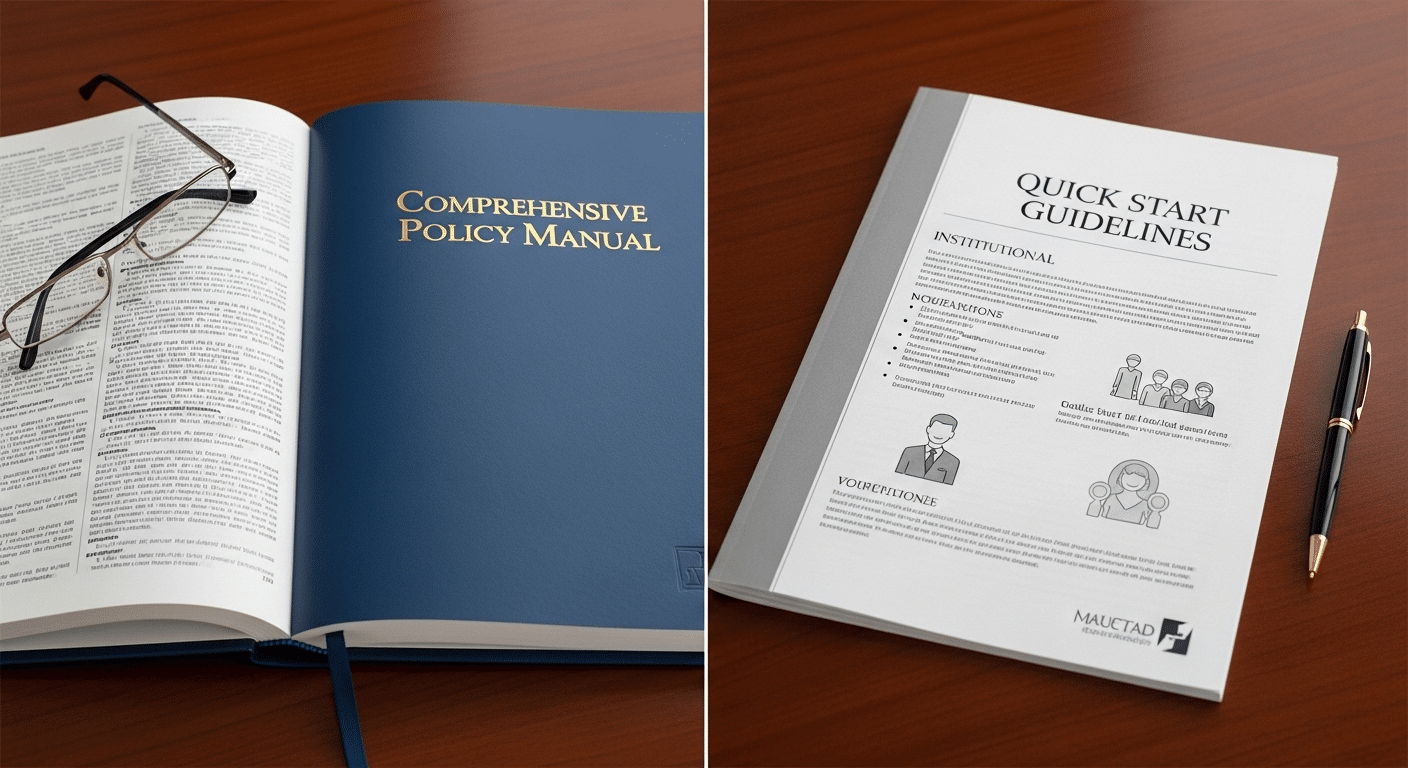
Effective assessment strategies include:

  • Creating different versions of online exams to reduce answer sharing.
  • Designing authentic, real-world assessments that require analysis and application.
  • Using open-book exams that test interpretation and reasoning rather than recall.
  • Establishing clear collaboration policies for group work.
  • Incorporating frequent low stakes assessments to reduce pressure.
  • Using creative ways to evaluate learning, including reflection or applied projects.
  • Encouraging process over outcome, so effort and growth are recognized.

Thoughtful assessment design strengthens both fairness and integrity.


Where Digital Tools Support and Limit Academic Integrity?

Plagiarism detection tools work best when students understand why they are used and how results are interpreted. When you provide a clear explanation of tools, you prevent misuse and reduce fear or confusion.

Digital tools can support academic integrity, but they are not complete solutions. They assist with monitoring and verification, yet they cannot replace judgment, context, or conversation.

Online environments create new integrity risks, and generative AI tools complicate authorship in ways that require thoughtful oversight rather than blind automation.

Effective use of digital tools includes:

  • Turnitin compares submissions against large databases of internet content and prior papers to identify potential overlap.
  • Apporto serves as one component of a broader remote proctoring and integrity strategy.
  • AI detection tools have limitations and may not reliably determine authorship.
  • Transparent tool usage builds trust and reinforces fairness.
  • Intellectual property protection remains essential in digital environments.
  • Online learning presents unique challenges that require clear academic integrity expectations.

Technology can assist you in maintaining academic integrity, but responsibility ultimately remains human.


How Artificial Intelligence Complicates Academic Integrity?

Close-up of academic paper draft with AI assistance highlighted and a transparency note labeled AI attribution.

Artificial intelligence has introduced new complexity into academic integrity. Generative AI tools like ChatGPT raise concerns in online learning because they can produce text that appears polished and original, even when the intellectual work was not fully yours. This creates uncertainty about authorship, effort, and accountability.
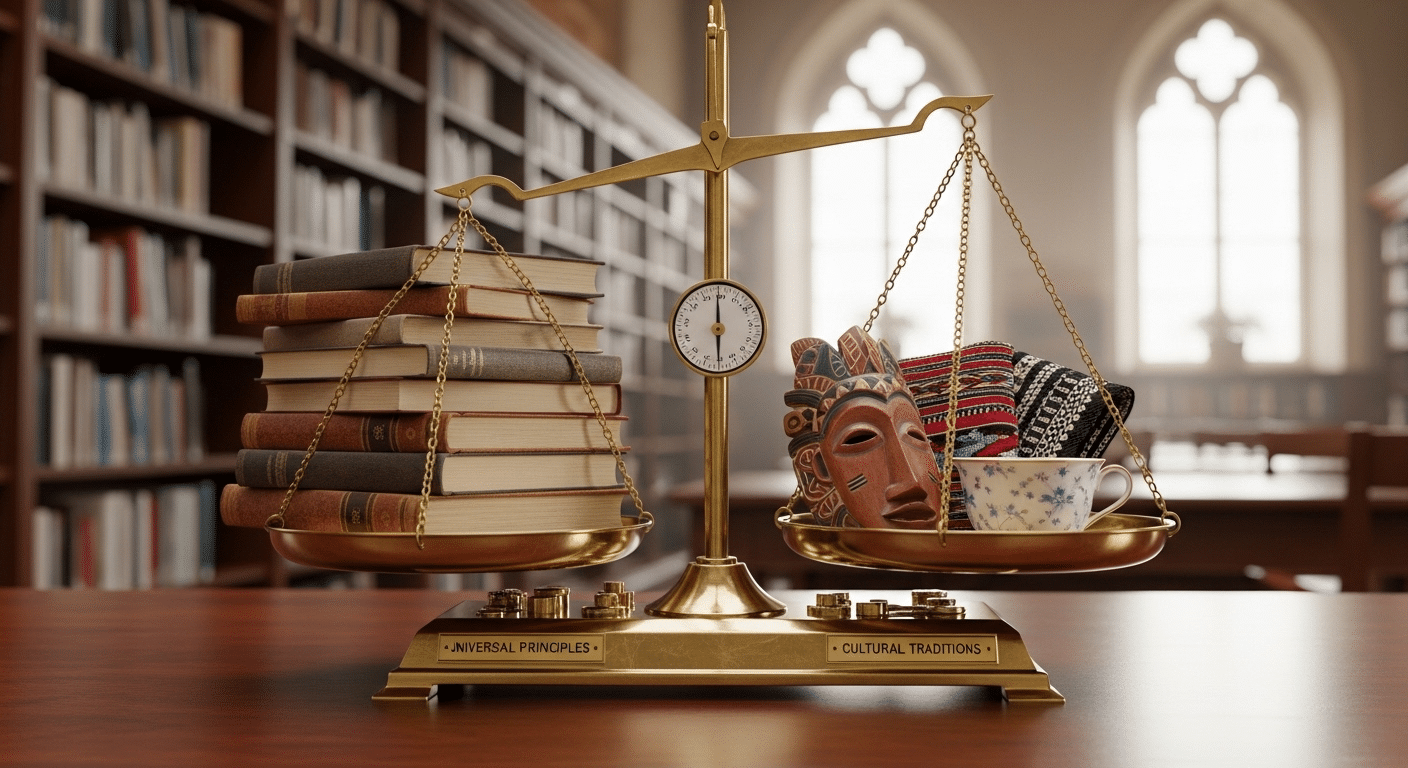
AI use must align with institutional Academic Integrity Policies. When policies are unclear, confusion increases, and confusion can lead to misconduct.

Ethical AI use requires transparency and attribution. If you rely on AI to generate ideas, draft content, or structure arguments, that assistance must be acknowledged according to your university’s guidelines. Students must produce unique personal work, and using AI without acknowledgment can constitute academic misconduct.

Institutions also carry responsibility. Academic integrity expectations must be updated clearly to address artificial intelligence directly.

Without explicit guidance, assumptions multiply. Maintaining academic integrity in the presence of AI requires clarity, honesty, and a renewed commitment to responsibility in higher education.


How a Supportive Learning Environment Promotes Integrity?

Creating a supportive learning environment reduces academic dishonesty because it addresses the pressures that often lead to misconduct. When expectations are clear and consistently reinforced, students feel more comfortable asking for help before small problems grow into larger ones.

Supportive environments reduce misconduct by replacing fear with guidance. Integrity becomes part of the educational process rather than a response to punishment. When students understand that seeking help is recommended over shortcuts, academic integrity becomes practical, not abstract.

You can promote integrity by:

  • Inviting communication early about assignments, deadlines, and collaboration rules.
  • Normalizing questions and acknowledging that confusion is part of learning.
  • Offering campus resources, such as writing centers and tutoring services, proactively.
  • Encouraging students to seek help from instructors instead of resorting to shortcuts.
  • Emphasizing responsibility and fairness as shared commitments.
  • Reinforcing shared values that extend beyond policy language.
  • Focusing on student learning and growth rather than punishment alone.

A supportive environment strengthens accountability by making integrity attainable, not intimidating.


What a Modern Academic Integrity System Must Include


Element Why It Matters
Clear Expectations Clear communication of academic integrity expectations prevents accidental misconduct and confusion.

When students understand rules, collaboration guidelines, and citation standards, unintentional academic dishonesty decreases.

Transparent AI Policies Explicit guidance about artificial intelligence clarifies acceptable AI use and reduces ambiguity about authorship.

Transparency ensures AI aligns with Academic Integrity Policies rather than undermining them.

Research Skill Instruction Teaching proper citation, credible source evaluation, and effective paraphrasing prevents plagiarism and strengthens academic writing. Instruction reduces reliance on shortcuts.
Time Management Support Structured planning tools and guidance reduce anxiety-driven cheating. When deadlines feel manageable, panic-driven decisions decline.
Detection Tools Plagiarism detection tools and proctoring solutions deter misconduct when their purpose and limitations are clearly explained. Transparency builds fairness.
Human Oversight Faculty judgment preserves fairness, context, and academic responsibility beyond automated systems.
Shared Values Culture Reinforcing honesty, trust, fairness, respect, responsibility, and courage sustains integrity across the institution.


How Apporto TrustEd Helps Institutions Maintain Academic Integrity

Addressing academic dishonesty requires more than reactive enforcement. It requires pattern detection. Institutions must be able to identify repeated behaviors, unusual submission trends, and inconsistencies that suggest misconduct.

In higher education, scale complicates this task. Large courses, online exams, and distributed programs require integrity oversight that is both consistent and adaptable.

TrustEd supports this effort by combining AI-driven analysis with instructor control. The system is designed to assist, not replace, academic judgment. Transparency remains central. Faculty retain authority over interpretation, review, and decision-making.

With TrustEd, institutions can:

  • Detect patterns across cohorts that may indicate academic misconduct.
  • Maintain transparency in how integrity monitoring tools are used.
  • Preserve human oversight in every integrity decision.
  • Scale academic integrity oversight without sacrificing fairness.

AI-driven solutions must preserve human judgment to remain credible. TrustEd operates with that principle in mind, helping institutions uphold academic integrity expectations responsibly.


Conclusion

Maintaining academic integrity is not a single decision. It is a continuous commitment to responsibility in every assignment, exam, and research effort. Integrity protects your credibility as a student, the credibility of your institution, and the credibility of scholarship itself. When one of those weakens, trust erodes across the entire academic community.

Education depends on honesty and fairness. Assessments must be completed without unfair advantage, research must be cited appropriately, and intellectual work must be represented truthfully. Academic integrity includes responsibility for your choices and the consequences that follow. That responsibility does not disappear when pressure increases or when new technologies emerge.

When you maintain academic integrity, you strengthen long-term learning outcomes. You build habits of critical thinking, careful research, and ethical decision-making that extend far beyond a single course. Integrity, practiced consistently, becomes part of how you learn and how you lead.


Frequently Asked Questions (FAQs)


1. How do you define academic integrity?

Academic integrity is the ethical use of information, thoughts, and ideas to create original contributions. It includes honesty, proper attribution, and adherence to institutional standards in all academic work.

2. What are the six fundamental values of academic integrity?

The six fundamental values are honesty, trust, fairness, respect, responsibility, and courage. Violating one or more of these values constitutes academic dishonesty and undermines institutional credibility.

3. Why do students commit academic misconduct?

Research shows students often engage in misconduct due to anxiety, deadline pressure, poor time management, or unclear expectations. Misunderstanding collaboration rules or AI policies also contributes to violations.

4. How does proper citation prevent plagiarism?

Proper citation gives credit to original authors, distinguishes your ideas from external sources, and protects intellectual property. Accurate in-text citations and quotation marks reduce the risk of academic misconduct.

5. Do plagiarism detection tools guarantee academic integrity?

Detection tools compare submissions against databases to identify overlap, but they are supportive measures. Transparency and human oversight remain essential for fair academic integrity enforcement.

6. How should artificial intelligence be used ethically in coursework?

AI use must align with institutional Academic Integrity Policies. Ethical use requires transparency, acknowledgment when applicable, and submission of unique personal work that reflects your understanding.

7. Why is maintaining academic integrity important in higher education?

Maintaining academic integrity protects student credibility, institutional reputation, and the integrity of scholarly research. It reinforces fairness and supports long-term learning outcomes.

Why Is Academic Integrity Important?


Why is academic integrity important? The answer goes far beyond avoiding penalties or following a code of conduct. Academic integrity is the cornerstone of educational credibility. It determines whether grades, degrees, and qualifications carry real meaning.

When integrity is present, the educational process functions as intended. Students complete their own academic work. Faculty can assess true understanding.

Institutions can stand behind the quality of their graduates. When integrity weakens, trust weakens with it.

Academic integrity shapes student behavior from the first assignment to the final exam. It influences how students approach responsibility, effort, and ethical decision making.

It is important not only for academic success, but for moral development. Honest work builds character. Dishonest practices distort it.

An institution’s reputation depends on credibility. If academic dishonesty becomes common, the value of degrees declines. Future employers begin to question whether awarded degrees reflect genuine knowledge and ability. Public trust erodes quietly but steadily.

Academic integrity protects more than rules. It protects values. It protects fairness. It protects the legitimacy of education itself. Without integrity, the entire educational process loses credibility, and the institution loses the authority to certify achievement with confidence.


What Does Academic Integrity Actually Mean?

Academic integrity refers to the ethical principles that guide academic work. It defines how you conduct yourself in education, how you handle ideas, and how you demonstrate learning.

At its core, academic integrity emphasizes honesty, fairness, responsibility, and respect for intellectual effort.

Practicing academic honesty means completing your own work and presenting it truthfully. It requires proper attribution when you use another person’s ideas, research, or words. Proper attribution is not a technical formality.

It is recognition that knowledge builds on prior contributions. Failing to credit sources is plagiarism, one of the most common forms of academic misconduct.

Academic integrity also involves avoiding fabrication of data, falsification of information, and contract cheating, where someone else completes academic work on your behalf.

These dishonest practices distort the educational process and undermine good academic practice. When you submit work that is not your own, you misrepresent your ability and understanding.

Most institutions formalize these expectations through student honor codes and academic policies. These documents define academic misconduct clearly and outline consequences. They also communicate shared values within the university community.

Respecting ideas and intellectual property protects fairness and credibility. Academic integrity is not only about avoiding penalties.

It is about ensuring that learning is authentic, that assessments reflect true effort, and that the academic community operates on trust rather than suspicion.


How Does Academic Dishonesty Undermine Student Learning?

Student sitting at a desk with two contrasting paths in front of them—one labeled ‘Effort and Growth’ and the other ‘Shortcuts’—inside a classroom setting.

Academic dishonesty does more than violate rules. It interferes directly with student learning. When cheating occurs, you lose the opportunity to master the subject matter.

Assignments and assessments are designed as learning opportunities. They are not obstacles to bypass. They are tools for development.

If you submit work that is not your own, the teacher cannot assess your true understanding. Grades may appear strong, but they no longer reflect actual ability.

Without accurate feedback, you cannot identify weaknesses or improve critical skills. The educational process depends on honest effort to function properly.

Academic dishonesty diminishes the value of education itself. You may receive a passing grade, yet remain underprepared. Complex topics require sustained effort.

Critical thinking develops through practice, revision, and engagement with course content. When that process is avoided, growth slows.

Cheating also undermines long term development. The habits formed during school often carry into professional life. If you rely on shortcuts instead of building ability, you enter future challenges without the necessary foundation. Employers expect competence, not inflated performance.

The consequences are not always immediate. They accumulate over time. Each instance of academic misconduct removes a layer of learning. Each dishonest choice reduces your ability to reason independently.

Student learning depends on struggle, reflection, and improvement. When you engage honestly with academic work, you strengthen skills, judgment, and confidence. When dishonesty replaces effort, the opportunity for real development quietly disappears.


Why Is Academic Integrity Essential for Fairness and Equity?

Classroom scene with students taking an exam under equal conditions, symbolizing fairness and academic integrity.

Academic integrity is essential because it protects fairness within the educational process. When everyone completes their own academic work under the same expectations, you create a level playing field. Assessments measure ability, effort, and understanding rather than manipulation.

Cheating creates an unfair advantage. A student who copies answers, fabricates research, or submits contract work may receive higher grades without demonstrating real competence. That advantage comes at a cost.

Other students who invested time and honest effort are placed at a disadvantage. Their work is measured against inflated results.

Fair assessments depend on honesty. Exams, essays, and projects are designed to evaluate learning. If integrity is compromised, the accuracy of those evaluations collapses. Grades begin to reflect who found shortcuts rather than who mastered the material.

Without integrity, grades lose meaning. A transcript should communicate achievement. If dishonest practices are common, academic results become unreliable indicators of ability. Over time, confidence in the institution’s standards weakens.

Fairness is not abstract. It affects real students, real outcomes, and real opportunities. Academic integrity ensures that performance is earned rather than engineered.

It protects those who choose to act honestly. In doing so, it reinforces equity within the classroom and preserves the legitimacy of assessments for everyone involved.


How Does Academic Integrity Protect Institutional Reputation?

An institution’s reputation rests largely on the quality of its graduates. When students complete their academic work honestly and demonstrate real competence, the value of awarded degrees remains strong. Academic integrity protects that credibility.

If high levels of academic dishonesty occur, the academic reputation of the university begins to weaken. Employers pay attention to patterns.

If they believe cheating is common at a particular institution, they may question whether its graduates truly earned their qualifications. Over time, future employers may devalue degrees from that university, even if many students acted honestly.

Degrees are not only personal achievements. They are signals of verified knowledge and ability. If misconduct becomes widespread, those signals lose clarity.

Public trust erodes quietly but steadily. An institution that fails to uphold integrity risks damaging its professional reputation in the wider community.

Integrity reinforces credibility at every level. Faculty trust students to submit authentic work. Employers trust that awarded degrees represent actual skill. The public trusts that research and academic programs meet established standards.

Once reputation declines, rebuilding it is difficult. Academic credibility depends on consistent enforcement of standards and a visible commitment to honesty.

By protecting academic integrity, an institution protects the long term value of its degrees, its graduates, and its standing in professional environments. Reputation, once weakened, cannot be easily restored.


Why Does Academic Integrity Matter for Future Careers?

Recent graduate in professional attire shaking hands with an employer in a modern office setting, symbolizing trust and integrity.

Academic integrity does not end at graduation. The habits you build during education shape your professional life. Future employers look for more than technical ability. They seek ethical candidates who demonstrate responsibility, reliability, and sound judgment.

When you complete academic work honestly, you strengthen the values that carry into the workplace. Integrity builds trust. Colleagues value integrity because it signals accountability.

Teams depend on members who follow through on commitments and present accurate information. Ethical decision making becomes part of daily professional conduct.

Academic dishonesty can harm employability in subtle but lasting ways. If you rely on dishonest practices to succeed in school, you may enter the workforce without the skills expected of you. Cheating undermines preparation for real career challenges. Employers expect competence developed through effort, not shortcuts.

Professional environments also operate on credibility. Your reputation influences opportunities, promotions, and leadership roles. If integrity is compromised early, rebuilding trust later can be difficult.

Academic integrity is important because it lays the foundation for long term success. It teaches responsibility, fairness, and respect for standards. These qualities extend beyond grades and degrees.

They define how you contribute to organizations and how others perceive your character. In this way, integrity becomes not just an academic requirement, but a professional asset.


What Causes Academic Dishonesty?

Academic dishonesty rarely occurs in isolation. When students cheat, the decision is often shaped by multiple pressures and influences. Understanding these causes is essential for addressing academic dishonesty effectively.

Pressure to succeed is one of the most common factors. High expectations, competitive environments, and the desire for strong grades can distort judgment. Fear of failure can intensify that pressure. When performance becomes tied to identity or future opportunity, some students justify dishonest practices as temporary solutions.

Peer influence also plays a role in student behavior. If you believe that other students are cheating and benefiting from it, the behavior can begin to feel normalized. A cheating culture can develop when misconduct appears widespread or tolerated.

Cultural differences may contribute as well. Students from different educational backgrounds may not fully understand institutional definitions of plagiarism or proper attribution. Lack of clarity about what constitutes academic misconduct increases risk.

The rapid growth of internet access and digital tools has made information easier to copy and distribute. Contract cheating services openly advertise academic work for purchase. These services reduce effort while increasing temptation.

In some cases, academic dishonesty reflects erosion of moral reasoning. If integrity is treated as procedural rather than principled, ethical decision making weakens.

Contributing Factors

  • Academic and social pressure
  • Belief that peers are cheating
  • Weak honor codes
  • Lack of policy clarity
  • Low perceived risk of consequences
  • Easy access to online information
  • Contract cheating services

When institutions understand these factors, they can respond with education, clarity, and consistent standards rather than assumption.


How Can Institutions Address Academic Dishonesty Effectively?

University leadership meeting discussing academic integrity policies with a formal document displayed on a large screen.

Addressing academic dishonesty requires more than punishment. It requires structure, clarity, and culture. Institutions must begin with clear expectations.

Students need to understand what constitutes academic misconduct and what good academic practice looks like in real assignments.

Consistent enforcement is equally important. If rules exist but are applied unevenly, student behavior will not change. Transparent standards reinforce fairness and credibility. When consequences are predictable and proportionate, they influence conduct.

The staff-student relationship also plays a significant role. Teachers and faculty who communicate openly about integrity create environments where students feel accountable.

Respectful interaction between university staff and students reduces adversarial attitudes and strengthens trust.

Academic integrity training should be part of the educational process, not an afterthought. Educating students about proper attribution, plagiarism, and ethical conduct builds awareness.

Teaching good academic practice directly can reduce unintentional misconduct and clarify expectations.

Practical Institutional Measures

  • Formal academic integrity policy
  • Student honor codes
  • Integrity education programs
  • Transparent consequences for misconduct
  • Monitoring procedures for assessments
  • Multiple test versions
  • Randomized exams
  • Lockdown browsers
  • Plagiarism detection tools
  • Online proctoring systems

These measures, when applied thoughtfully, help reinforce a culture of honesty. Effective prevention combines education, policy, and consistent oversight. Institutions that address academic dishonesty proactively protect both their students and their credibility.


Why Integrity Is a Fundamental Value, Not Just a Policy?

Integrity is often presented as a rule, a requirement written into policy documents and student handbooks. Yet it runs deeper than compliance. Integrity is a fundamental value that shapes moral development and ethical character.

When you approach academic work with honesty, you practice responsibility in a tangible way. You choose to represent your knowledge accurately.

You choose to respect the effort behind ideas that are not your own. This respect for knowledge strengthens intellectual maturity. It signals that learning is not a transaction for grades, but a process of growth.

Honest effort builds pride. When you complete difficult work without dishonest shortcuts, you develop confidence grounded in real ability. That experience shapes identity. Over time, integrity becomes part of how you define yourself, not just how you behave in a classroom.

Moral reasoning develops through repeated decisions. Each assignment becomes a moment of choice. Do you pursue understanding, or do you pursue appearance? Do you accept responsibility, or avoid it? These choices reinforce fundamental values.

Integrity also strengthens community trust. An academic community depends on mutual respect among students, faculty, and staff. When honesty is the norm, collaboration becomes meaningful and evaluation becomes credible.

Policy can define consequences. Integrity defines character. When integrity guides conduct, the educational environment becomes not only structured, but principled.


How Can Apporto Help Institutions Protect Academic Integrity?

 Apporto's TrustEd page featuring a professional working on a laptop with the headline “Safeguarding Academic Integrity in the Age of AI'.

Clear policies and consistent enforcement form the foundation of academic integrity. However, modern education also requires thoughtful oversight tools that reflect today’s challenges.

As digital submissions increase and AI content becomes more common, institutions need systems that protect fairness without undermining trust.

TrustEd is designed to support responsible oversight in academic environments. Instead of issuing automatic judgments, it provides structured insights that help faculty evaluate student submissions in context.

This approach ensures that academic misconduct concerns are reviewed carefully rather than decided by algorithm alone.

TrustEd uses context-aware AI content detection to identify patterns while allowing educators to apply professional judgment. By reducing false positives, it protects legitimate student work and prevents unnecessary harm to students’ academic records. Fairness remains central.

The platform aligns with institutional academic integrity policies and existing procedures. It strengthens credibility by connecting policy enforcement with modern integrity oversight. Faculty retain authority. Students retain due process. The institution retains confidence in its evaluation process.

Protecting academic integrity requires more than rules. It requires balanced systems that respect both accountability and fairness. TrustEd helps institutions uphold standards while reinforcing transparency, consistency, and long term credibility.


Conclusion

Academic integrity defines the true value of your education. It protects learning by ensuring that your knowledge reflects real effort and understanding. It protects fairness by creating equal conditions for all students. It protects degrees by preserving their credibility in the eyes of future employers. Without integrity, grades lose meaning. Reputation weakens. Trust erodes quietly across the institution and beyond it. With integrity, education remains credible and respected.

Integrity also prepares you for ethical professional life. The habits you develop in school shape how you approach responsibility, decision making, and accountability in the workplace. Employers recognize and value that consistency. If you want education to retain its meaning, integrity must remain central. Review your policies. Reinforce expectations clearly. Invest in a culture where honesty, responsibility, and respect are visible standards. The value of your education depends on it.


Frequently Asked Questions (FAQs)


1. Why is academic integrity important in college?

Academic integrity is important because it protects the value of your academic work, ensures fairness in assessments, and preserves the credibility of degrees awarded by the institution.

2. What are examples of academic misconduct?

Examples include plagiarism, fabrication of data, contract cheating, unauthorized collaboration, and submitting work that is not your own. These behaviors violate principles of academic honesty.

3. How does cheating affect future employers?

Future employers may question your reliability and competence if dishonesty is discovered. Cheating also weakens your preparation, leaving you underdeveloped for real professional challenges.

4. What are the consequences of academic dishonesty?

Consequences can include grade penalties, loss of registration privileges, suspension, or dismissal. Academic misconduct may also damage your long term professional credibility.

5. How can institutions prevent academic misconduct?

Institutions can establish clear policies, provide academic integrity training, enforce consistent consequences, strengthen staff-student relationships, and use monitoring tools to protect assessments.

Why do students engage in cheating?

Students may cheat due to academic pressure, fear of failure, peer influence, lack of clarity about policies, or easy access to digital information and contract cheating services.

How does academic integrity impact reputation?

Academic integrity strengthens institutional credibility. Without it, degrees may lose value, public trust declines, and the academic reputation of the university suffers.

How to Teach Students to Use AI Responsibly


Students use AI tools to brainstorm ideas, organize notes, generate summaries, and receive instant feedback. In many classrooms, AI is no longer optional. It is present in writing assignments, research projects, and even problem solving exercises.

Because AI is increasingly integrated into education, you cannot assume students will know how to use it responsibly. AI literacy has become a key skill.

Just as digital literacy once focused on search engines and online safety, today it must include an understanding of how artificial intelligence works.

Students need to understand how AI learns from data patterns, how it generates responses, and why it can sometimes produce biased or incorrect information. Without that foundation, AI use becomes passive. Students may accept outputs without question.

AI can support human thinking. It can simplify complex topics, offer personalized learning support, and help students manage their workload. But it does not replace reasoning, judgment, or original thought.

If you want to teach students how to use AI responsibly, you must treat responsible AI education as intentional instruction, not an afterthought. AI literacy belongs at the center of modern learning.


What Does Responsible AI Use Actually Mean in the Classroom?

Responsible AI use in the classroom begins with clarity. Students need to understand that artificial intelligence is a tool, not a substitute for their own thinking. To use AI responsibly means to use it in ways that are honest, safe, and fair.

Ethical use requires transparency. If AI helps generate ideas, organize writing, or summarize content, that assistance should be acknowledged.

Academic integrity remains the foundation of all schoolwork. When AI generated work is submitted without disclosure, it creates risk. It blurs authorship and can lead to academic dishonesty.

There is also a clear difference between AI assistance and AI replacement. Assistance might include brainstorming, refining grammar, or creating practice questions.

Replacement occurs when AI does the core intellectual work. Responsible AI use means students remain the primary author and decision maker.

Institutions vary in their AI policies. Some allow limited AI support. Others restrict certain generative AI tools for assignments. That is why you should define acceptable AI use in the syllabus. State which tools are allowed, for what purposes, and when disclosure is required.

When students are taught to use AI ethically and with transparency, AI becomes a support for learning rather than a shortcut around it. Responsible AI use strengthens academic integrity instead of weakening it.


Why AI Literacy Must Come Before AI Integration?

Classroom scene with a teacher explaining how AI works on a digital board showing data patterns and probability models behind generative AI.

Students need foundational AI literacy before they can use AI tools responsibly. Without that understanding, AI becomes a shortcut instead of a learning tool. You cannot expect students to use generative AI tools wisely if they do not understand how AI works.

Artificial intelligence does not think the way humans do. AI learns from data patterns. It analyzes vast amounts of text and predicts likely word sequences.

It does not reason through ideas or understand truth. This distinction matters. When students believe AI “knows” the answer, they stop questioning it.

AI can also produce hallucinations. In this context, a hallucination is false information presented confidently. AI can fabricate facts, misattribute quotes, or provide outdated information.

It can reflect biased data from its training sources. If biased or incomplete data is used to train a model, that bias can appear in its outputs.

AI lacks intuition. It does not have judgment, context awareness, or lived experience. It generates responses based on statistical probability, not comprehension.

That is why AI literacy must become a core part of digital literacy. Students need critical thinking skills before they integrate AI into their assignments.

Key Concepts Students Should Understand

  • AI learns from patterns in data, not independent reasoning.
  • AI can be confidently wrong.
  • AI output can reflect bias and stereotypes.
  • AI does not understand truth or context.
  • AI responses must be verified with reliable sources.

When students understand these principles, they become active users instead of passive consumers.


How Can You Build Critical Thinking Into AI Use?

AI literacy without critical thinking creates dependency. If students accept AI answers without analysis, they risk outsourcing judgment. Generative AI tools can generate ideas quickly, but speed does not guarantee accuracy.

Students should question AI answers at all times. AI can produce biased, incorrect, or incomplete outputs. It can rely on outdated information. It may sound authoritative even when the response lacks depth. When students assume that polished language equals correctness, critical thinking weakens.

To teach students how to use AI responsibly, you must treat AI as a starting point, not a final source. AI can function as a learning tool, but only when paired with evaluation. Students must double check information using reliable sources such as academic journals, textbooks, and reputable databases. The goal is not to eliminate AI use. The goal is to strengthen judgment.

Practical Strategies

  • Require students to verify AI generated content with reliable sources before submission.
  • Ask students to critique AI responses and identify weaknesses or missing perspectives.
  • Compare AI output with academic databases and search engines to check accuracy.
  • Require short reflections explaining how AI was used and where it fell short.
  • Encourage classroom discussions about ethical considerations and bias in AI systems.

When students evaluate AI tools instead of relying on them blindly, they develop stronger critical thinking skills. AI can help generate ideas, but it should never replace independent reasoning.


How Should You Restructure Coursework to Encourage Responsible AI Use?

Educator redesigning coursework on a digital tablet while a structured AI usage framework is displayed on a classroom screen.

If you want students to use AI responsibly, you must redesign assignments with intention. When coursework focuses only on the final product, AI becomes tempting as a shortcut.

When you emphasize the learning process, AI becomes a support tool instead of a replacement.

Shift attention toward drafts, outlines, and revisions. Ask students to show how their ideas develop over time. This approach strengthens writing skills and reinforces ownership of work.

AI can help with brainstorming and organizing thoughts, but students should remain the primary thinkers.

Generative AI tools can also create practice questions or summarize complex topics. They can automate repetitive tasks such as formatting or note sorting.

These uses support student learning without replacing reasoning. When you integrate AI thoughtfully, it becomes part of structured classroom strategies rather than an uncontrolled influence.

Tiered AI Assignment Model

  • Level 1: No AI allowed. Students complete assignments independently to build foundational skills.
  • Level 2: AI for brainstorming only. Students may generate ideas but must write independently.
  • Level 3: AI for structured assistance with documentation. Students can use AI to outline or organize, with full disclosure.
  • Level 4: AI-integrated project work with full transparency and reflection.

Additional Requirements

  • Require documentation of AI prompts used.
  • Ask for short reflection statements about how AI supported the work.
  • Require proper citation of AI assistance in assignments.

When you design assignments with clarity, students learn not just how to use AI, but how to use it responsibly.


How Can Teachers Model Responsible AI Behavior?

Students learn as much from observation as from instruction. If you want to teach AI responsibly, your own behavior in the classroom sets the standard. Teachers should model responsible AI use openly and consistently.

When you use AI tools for lesson planning, brainstorming, or organizing content, explain how and why you are using them. Demonstrate ethical AI use in class.

Show students how to verify outputs, cross-check facts, and refine AI generated suggestions instead of accepting them without question. This transparency builds trust.

It is equally important to show how to cite AI assistance properly. If AI contributes to an example assignment or draft, demonstrate how that support should be acknowledged. Modeling citation practices reinforces academic integrity and normalizes disclosure.

You can also use current events to spark ethical discussions about artificial intelligence. News stories about biased data, misinformation, or automated decision systems create natural opportunities to explore ethical considerations. These conversations help guide students beyond technical skills and toward thoughtful use.

When teachers approach AI with curiosity and caution, students are more likely to do the same. Responsible AI education begins with example.


What Ethical Risks Should Students Understand About AI?

Classroom discussion about AI ethics with a digital board showing bias, privacy, and misinformation as key concerns.

Responsible AI education must address ethical risks directly. Artificial intelligence can be a powerful tool, but it carries limitations that affect fairness, privacy, and truth. If students do not understand these risks, responsible use becomes unlikely.

AI systems learn from large collections of data. If that data contains bias, stereotypes, or historical inequalities, the outputs can reflect those same patterns.

AI can produce biased, racist, or sexist responses. These issues are not rare exceptions. They are documented limitations of machine learning systems.

AI can also fabricate information. It may generate statistics, quotes, or references that sound convincing but are inaccurate or completely false.

These fabricated responses are sometimes called hallucinations. When students accept them without verification, misinformation spreads.

Privacy is another concern. AI companies may store user data. Students must protect personal information and avoid sharing sensitive details. Responsible use requires awareness of how data is collected and reused.

AI is only as good as the data it receives. It does not understand context or moral implications. That responsibility remains human.

Ethical Considerations to Teach

  • Bias in training data can influence AI outputs.
  • Hallucinated facts may appear credible but be incorrect.
  • Data privacy risks require careful information sharing.
  • Over-reliance on AI can weaken real learning and critical thinking.
  • Screen time balance and human connection remain essential in everyday life.

Teaching these ethical issues prepares students to approach artificial intelligence with awareness, not blind trust.


How Can AI Support Real Learning Instead of Replacing It?

Artificial intelligence becomes valuable in education when it strengthens student learning instead of substituting it. The distinction matters.

AI can provide instant feedback on drafts, quizzes, and practice exercises. That speed helps students correct mistakes early and refine their thinking before final submission.

AI can also help students stay organized. It can summarize notes, outline assignments, and suggest study plans. When used intentionally, it supports time management and reduces confusion.

=This structure allows students to focus on understanding complex topics rather than managing logistics.

Personalized support is another potential benefit. AI systems can adapt explanations to different levels of difficulty. Students who need additional examples can request them. Those who grasp a concept quickly can explore deeper material.

Combined with teacher guidance, this flexibility encourages independent learners to take ownership of their progress.

AI can help manage the overall learning process. It can generate practice questions, clarify terminology, and assist with repetitive tasks such as formatting or restructuring outlines. In that sense, it is a helpful tool that can save time.

However, AI should function as a complement to human instruction, not a replacement. It can support problem solving, but it cannot replicate judgment, creativity, or meaningful discussion.

When you frame AI as an assistant rather than an authority, you preserve the core purpose of education: developing capable, thoughtful individuals.


How Should Schools Establish Clear AI Policies?

School leadership meeting in a modern classroom discussing AI policy guidelines displayed on a digital screen.

Banning AI may feel decisive, but clarity is more effective than prohibition. Artificial intelligence is already a core part of modern learning. Instead of attempting to remove it from the classroom, schools should define how to use AI responsibly within clear boundaries.

Start by engaging students in rule creation. When students participate in discussions about responsible use, they better understand the reasoning behind policies. This shared responsibility strengthens academic integrity.

Define acceptable AI use in the syllabus. Specify which tools are allowed, for what purposes, and under what conditions. If AI can be used for brainstorming or outlining but not for final submissions, state that clearly. Require AI documentation so students disclose how and where AI contributed to their assignments.

Transparency expectations should be explicit. When students understand that disclosure is expected, misuse becomes less likely. Clear communication reduces confusion and builds trust.

Policy Components

  • Allowed AI tools: Identify approved generative AI tools and their permitted uses.
  • Prohibited uses: Clarify when AI generated work is not acceptable.
  • Citation requirements: Require students to credit AI assistance clearly.
  • Review process: Outline how AI use will be evaluated in assignments.
  • Consequences for misuse: Define fair and consistent responses to violations.

When policies are structured and visible, responsible use becomes part of classroom culture rather than an afterthought.


How Can Apporto Help Schools Teach and Govern Responsible AI Use?

Clear policies are essential, but policy alone is not enough. Schools also need systems that reinforce responsible AI oversight in a consistent and fair way.

TrustEd is designed specifically for academic institutions that want to protect academic integrity while integrating AI tools thoughtfully.

Instead of delivering automatic judgments, it provides structured insights that help educators review student submissions with context.

Its context-aware detection model analyzes patterns in writing while allowing instructors to apply professional judgment. AI content detection becomes part of a guided review process, not a final verdict. This approach helps reduce false positives and protects legitimate student work.

TrustEd aligns with institutional AI policies by supporting documentation, transparency, and review workflows. It does not replace educator decision making.

It strengthens it. When AI oversight systems are transparent and balanced, students understand expectations more clearly.

If your institution is developing policies around responsible AI use, you should also consider how those policies are implemented in practice.

TrustEd provides the structure to connect classroom expectations with consistent evaluation, helping you promote fairness and accountability as AI tools become more common in education.


Conclusion

Artificial intelligence is not a temporary trend in education. It is becoming part of how students research, write, and solve problems. That reality calls for thoughtful instruction, not reaction.

AI literacy must be integrated across subjects, not confined to a single lesson or workshop. When students understand how AI works and where it fails, they become more capable users. Critical thinking remains central. AI can generate ideas, organize information, and provide instant feedback, but it cannot replace human judgment.

Students must learn to question outputs, verify claims, and reflect on how they use AI tools. That habit of inquiry protects academic integrity and strengthens real learning. Transparency builds trust. Clear policies, documented AI use, and open discussion reduce confusion and prevent misuse. When expectations are visible, responsible behavior becomes more likely.

AI is a powerful tool, not a replacement for reasoning or creativity. If you teach students to use AI responsibly, you prepare them for future careers and civic life where artificial intelligence will play a growing role. Review your syllabus, refine your classroom strategies, and make responsible AI education a deliberate part of your teaching practice.


Frequently Asked Questions (FAQs)


1. How can you teach students to use AI responsibly in everyday classroom assignments?

You should define acceptable AI use clearly, require documentation of AI assistance, and build reflection into assignments. Responsible AI education combines transparency, verification, and structured guidance.

2. Why is AI literacy important for students today?

AI literacy helps students understand how artificial intelligence works, where it can fail, and how to evaluate AI generated content critically. It is now a core part of digital literacy.

3. Is using AI for schoolwork always considered academic dishonesty?

Not necessarily. Policies vary across institutions. Academic integrity depends on how AI is used, whether it replaces original work, and whether AI assistance is properly disclosed.

4. How can teachers encourage responsible AI use without banning AI tools?

You can establish clear classroom policies, model ethical AI use, and require students to verify outputs. Structured guidelines are more effective than blanket bans.

5. What risks should students understand before using generative AI tools?

Students should understand that AI can reflect biased data, fabricate information, and store user input. They must verify outputs and protect personal information.

6. Can AI actually improve student learning?

Yes, when used thoughtfully. AI can provide instant feedback, help students stay organized, and support independent learning. It should complement instruction, not replace critical thinking.

7. How can schools maintain academic integrity while integrating AI tools?

Schools should combine clear policies, transparency requirements, and responsible oversight systems. AI use must be documented, reviewed, and aligned with institutional expectations to protect fairness.

How Does Academic Integrity Violation Affect You?


Academic integrity is not just a rule printed in a handbook. It is the quiet agreement that holds education together. When you enroll in a college or university, you enter a system built on trust. Professors trust that the academic work you submit reflects your own knowledge.

Other students trust that grades are earned fairly. Institutions trust that the degrees they award represent genuine learning. So how does academic integrity violation affect you? More deeply than you might expect.

An academic integrity violation, whether it involves plagiarism, cheating on an exam, or submitting someone else’s work, does more than lower a grade. It interrupts the foundation of your education. It raises questions about your integrity.

The consequences are not confined to a single assignment or one difficult course. They ripple outward. First come the immediate outcomes, the failing grade, the formal warning, the meeting with a professor. Then come the longer-term effects, the record that follows you, the doubts that linger, the opportunities that quietly close.

To understand the full weight of academic dishonesty, you need to look at both timelines, what happens right away, and what unfolds over time.


What Happens Immediately After an Academic Integrity Violation?

The first impact of an academic integrity violation is usually swift and procedural. A professor reviews the assignment, compares sources, evaluates the evidence, and makes a report under the school’s academic integrity policy. If you are found responsible, the penalties begin almost immediately.

In many cases, the outcome starts with a failing grade on the assignment. That single zero can pull down your performance in the class. In more serious cases, you may fail the entire course. What felt like one moment of poor judgment suddenly becomes a semester-long setback.

Universities categorize violations by severity, minor, moderate, or major. A minor case might involve improper citation. A major violation could involve submitting someone else’s work or using unauthorized materials during an exam.

The higher the severity level, the stronger the university penalties. Academic probation is common. Suspension or expulsion is possible. Some students underestimate that risk. They should not.

There are practical consequences as well. Failing a course means paying to retake it. Scholarships can be affected. Graduation may be delayed. What seemed like a shortcut often becomes a longer road.

These are the immediate outcomes. But the story does not end with one semester. Once a violation is recorded, the consequences may extend far beyond the classroom and into your permanent academic record.


How Does an Academic Integrity Violation Affect Your Academic Record?

Close-up of a university transcript with a red disciplinary notation stamp, blurred campus in background.

The immediate penalties may fade with time, but the record often does not. Under most academic integrity policy guidelines, a violation is documented in your university file. In some cases, that notation remains for years. In others, it becomes a permanent part of your academic record.

When you apply to graduate school, many institutions ask directly about prior misconduct. Some require disclosure. Others conduct background checks or request full transcripts that may reflect disciplinary findings.

A single academic integrity violation can complicate that process. Admissions committees weigh character as seriously as grades. A history of dishonesty raises questions about your research ethics and commitment to original academic work.

Professional licensing boards operate similarly. In fields such as medicine, law, engineering, or accounting, applicants may be required to report past violations. Failure to disclose can create even deeper problems. Transparency is expected.

There are financial consequences as well. Scholarships may be revoked. Funding tied to merit or conduct can disappear quickly. Even employment opportunities after you graduate may involve screening that reveals prior misconduct.

In rare but documented cases, universities have revoked a degree if academic fraud or falsified research was discovered years later. The long term consequences can outlive your time on campus.

And beyond records and paperwork lies another cost, one that affects your skills, knowledge, and readiness for what comes next.


How Does Academic Dishonesty Affect Your Learning and Skill Development?

At first glance, cheating can feel efficient. You submit the assignment. You secure the grade. But the learning process does not work that way. When you bypass the effort required to produce original work, you also bypass the growth that comes with it.

Education is cumulative. Each research paper builds on earlier writing skills. Each exam tests knowledge that supports future coursework. When you rely on someone else’s work or copy without proper citation, you may complete the task, but you do not strengthen your understanding. The gap stays hidden for a while. Then it surfaces.

Weak writing and shallow research habits become visible in higher-level classes. Student performance declines because foundational knowledge is missing. Concepts that should feel familiar feel foreign. Instructors notice.

In fields such as medicine, law, and engineering, the stakes are even higher. Intellectual property rules, ethical conduct, and technical accuracy are not abstract ideas. They shape real-world decisions.

If you advance without mastering essential skills, the risk extends beyond your grade. It can affect workplace performance. In certain professions, it can even raise public safety concerns.

Cheating may produce a short-term result. It does not produce competence.

And when competence feels uncertain, the psychological effects of that decision begin to surface in ways that are harder to measure but impossible to ignore.


What Psychological Effects Can Follow an Academic Integrity Violation?

Student sitting alone in a dimly lit dorm room, head in hands, laptop screen glowing with an academic integrity notice.

The academic penalties are visible. The psychological effects are quieter, but often heavier.

Once an academic integrity violation is reported, the adjudication process begins. Meetings are scheduled. Statements are reviewed. Policies are cited. During this period, stress tends to rise quickly. You may wait days or weeks for a decision. That uncertainty alone can trigger anxiety about the outcome, about your grade, about your standing at the university.

If you are found responsible, the emotional weight often deepens. Many students feel guilty. Some struggle with low self-esteem. An internal conflict can take shape.

You know the conduct violated an ethical standard, and that awareness lingers. It is difficult to ignore the tension between who you believed you were and the choice you made.

This internal strain does not disappear once the formal consequences are issued. Doubt can follow you into the next class. Confidence in your own ability may weaken. You may question your academic competence even when you are capable.

Yet this stage also presents something else. Reflection becomes necessary. Taking responsibility, examining the reasons behind the decision, and confronting the ethical implications can lead to growth. Without that reflection, the emotional strain may persist longer than the official sanction itself.

The psychological impact, in other words, extends beyond paperwork. It reaches your sense of identity.


How Does Academic Dishonesty Affect Your Reputation?

Reputation forms slowly. It can change quickly. When an academic integrity violation becomes known, even within a small circle, trust begins to shift. Faculty members rely on honesty to evaluate student performance.

Once that trust is broken, professors may look at your academic work more cautiously. The relationship changes. It becomes more formal, sometimes distant.

Teachers and mentors often write recommendation letters. They advocate for students they believe demonstrate hard work and ethical conduct.

If doubt exists about your integrity, those endorsements may become hesitant, or unavailable altogether. That loss can affect scholarships, internships, and graduate applications.

The impact does not stop with faculty. Other students in the same class may feel frustrated if they believe someone gained an unfair advantage. Word travels. Even informal perceptions matter.

A reputation for cutting corners can follow you through group projects and collaborative assignments. Peers may question whether you will contribute fairly.

Over time, these perceptions shape how you are viewed as a person. Reputation is not only about grades. It reflects character.

And once credibility is questioned in an academic setting, it becomes easier for similar doubts to surface later, especially when you step into professional environments where integrity carries even greater weight.


How Can Academic Integrity Violations Impact Your Future Career?

Job interview scene with hiring manager reviewing a candidate file marked prior academic misconduct.

An academic integrity violation rarely stays confined to a campus file. It can follow you into your future careers in ways that are not always obvious at first.

Many employers conduct background checks, especially for roles involving finance, healthcare, research, or sensitive information. While not every record appears in every search, documented misconduct can surface during screening or reference checks.

Graduate school applications often require disclosure of past disciplinary action. Admissions committees evaluate more than grades.

They assess character, reliability, and readiness for advanced research. A history of cheating can raise concerns about professional ethics and academic honesty, especially in programs built on trust and independent work.

Licensing boards in medicine, law, engineering, and accounting may require formal disclosure of academic misconduct. These professions operate under strict ethical expectations. Integrity is not optional. It is foundational. Even if licensure is granted, the review process may become longer and more complex.

Employers also look for signs of reliability and consistent work ethic. A violation can introduce doubt. That doubt may influence hiring decisions quietly, without explanation.

Common career consequences include:

  • Reduced employment opportunities due to concerns about trustworthiness
  • Rejection from graduate, law, or medical school
  • Mandatory disclosure of misconduct during professional licensure
  • Difficulty advancing in competitive industries where reputation matters
  • Damaged professional credibility that limits leadership potential

Career growth depends on confidence in your integrity. Once that confidence is shaken, rebuilding it can take time.

 

What Legal and Ethical Implications Can Arise?

Academic dishonesty is often treated as a campus issue. In some cases, it extends further.

Plagiarism involves presenting someone else’s work as your own. When that work is protected by copyright, the act can cross into copyright infringement. Intellectual property laws exist to protect authors, researchers, and creators. Using material without proper quotation marks, failing to cite sources, or submitting research that is not original may raise legal implications beyond university discipline.

While most student cases remain within institutional review, the principle is clear. Ownership matters. Attribution matters. Ethical conduct in education mirrors expectations in professional settings. In journalism, law, medicine, and scientific research, misrepresentation of data or ideas can lead to lawsuits, revoked licenses, and public consequences.

There is also a broader concern. When plagiarism becomes common, when copying is normalized, standards erode. A culture that tolerates dishonesty in the classroom risks carrying that behavior into workplaces and public institutions. Over time, societal trust weakens. People begin to question credentials, research findings, and professional authority.

Academic integrity is not a small rule. It reflects the values that shape institutions and, ultimately, communities.


How Does Academic Dishonesty Affect the Academic Community?

University classroom with one student secretly looking at unauthorized notes while others focus on their exams, subtle tension in the room.

Academic dishonesty rarely affects only one person. It changes the climate of the entire class.

When one student gains an unfair advantage by copying answers, using unauthorized materials, or submitting work that is not original, other students who work honestly feel the imbalance.

Assessment is meant to measure effort and understanding fairly. Once that fairness is questioned, the integrity policy begins to feel abstract instead of protective.

In the same class, tension can grow. Peers may wonder who followed the rules and who did not. That suspicion creates a negative learning environment. Collaboration becomes harder. Trust between classmates weakens.

The impact reaches educational institutions as well. Degrees carry value because they represent earned knowledge and demonstrated competence. If academic dishonesty becomes common or tolerated, the value of degrees declines. Employers and graduate programs may begin to question what credentials truly represent.

Over time, repeated violations can erode trust in the institution itself. Educational legitimacy depends on consistent standards. When integrity falters, confidence falters with it.

A single violation may seem small. In a community built on shared expectations, it rarely stays small for long.


What Happens If You Are Accused of Academic Dishonesty?

An accusation alone can feel overwhelming. Before any decision is made, you may receive notice that a professor believes your research paper, term paper, or exam violates the academic integrity policy. At this stage, clarity matters more than panic.

First, understand the exact nature of the accusation. Were you found responsible for plagiarism, improper citation, or unauthorized collaboration?

The details determine how you respond. Ask to review the evidence your professor relied on, including comparison samples or software reports. Understanding what triggered the concern helps you assess your position.

Keep copies of everything. Early drafts, outlines, notes, and properly cited sources can support your explanation. Documentation is not optional. It is essential.

You should also be aware that ignorance is not an excuse. Not knowing citation rules or misunderstanding policy does not eliminate responsibility. Most institutions state this clearly in their academic integrity policy.

If you believe the finding is incorrect or the sanction disproportionate, you have the right to appeal. Typically, the process moves from the director of composition to the department chair and, if necessary, to the dean. The structure is formal. Deadlines matter.

If you face an accusation, consider these steps:

  1. Request to see all evidence related to the allegation.
  2. Gather drafts, notes, and original sources that demonstrate your process.
  3. Document every meeting with your professor or faculty representatives.
  4. Seek guidance from advisers, teachers, or mentors who understand the policy.
  5. Follow the formal appeal structure carefully and within stated timelines.

Handling the situation calmly and methodically does not guarantee a reversal. It does demonstrate responsibility.

 

How Can You Recover and Grow After an Academic Integrity Violation?

Student sitting at a desk rewriting an assignment with focused determination, sunlight coming through the window symbolizing a fresh start.

Recovery begins with something simple, and difficult. Acknowledge wrongdoing. If you violated academic integrity, taking responsibility is the first step toward rebuilding trust. Defensiveness may feel easier in the moment, but growth requires honesty, first with yourself.

Reflection matters. Ask what led to the decision. Pressure? Fear of failure? Poor time management? A gap in understanding? When you reflect on the underlying causes, patterns become clearer. Without that awareness, the risk of repeating the same mistake remains.

From there, you can develop goals grounded in ethical values. Decide how you want to approach academic work in the future. Commit to producing original work. Learn proper citation practices. Strengthen your study habits. Small, consistent changes rebuild integrity over time.

Seeking mentorship can also help. Advisers, teachers, or trusted faculty members can offer perspective. They may not erase the violation, but they can guide you toward stronger habits and renewed confidence.

Self-care is not secondary. The stress of consequences can linger. Managing that stress through healthy routines, reflection, and honest conversations supports long-term resilience.
Most important, let go of the idea that one mistake defines your entire future. Growth is a continuous process. Integrity is not proven in one perfect semester. It is demonstrated repeatedly, through choices you make from this point forward.


How Can Institutions Use Technology to Protect Integrity and Fairness?

Educational institutions cannot rely on policy alone to address academic dishonesty. Rules matter, but enforcement must be consistent and fair. Increasingly, schools use AI systems and integrity monitoring tools to support instructors in evaluating academic work.

These tools analyze patterns, flag anomalies, and compare submissions across large datasets. Used correctly, they help uphold fairness.

Technology, however, should never replace human judgment. An academic integrity policy still requires careful review by faculty. Context matters. Intent matters.

A balanced approach protects honest students while giving instructors the support they need to identify potential misconduct. Transparent governance is essential. Students should understand how monitoring works and how decisions are made.

When oversight is thoughtful and proportionate, technology strengthens trust rather than eroding it.

Effective integrity protection often includes:

  • Instructor-controlled verification processes
  • Transparent authorship review that explains flagged concerns
  • Human-in-the-loop decisions before any sanction is applied
  • AI systems aligned clearly with institutional policy

Solutions like TrustEd functions as a faculty support tool, helping instructors detect irregularities while maintaining oversight. It reinforces fairness without automating judgment. In doing so, it protects the integrity of academic work and the credibility of the institution itself.


Final Thought

Academic integrity protects more than a transcript. It protects credibility. When you work honestly, you signal that your grades reflect real knowledge. That signal builds trust between students, faculty, and the institutions that grant degrees.

Integrity also protects fairness. In any class, evaluation only works when everyone follows the same rules. If standards are uneven, the value of achievement declines. Over time, the value of education itself weakens. Degrees mean something because they represent earned understanding.

Most important, integrity protects your future. The habits you build in college do not disappear after graduation. Ethical conduct shapes how you approach research, collaboration, leadership, and responsibility. It shapes how others see you, and how you see yourself.

Education is not only about completing coursework. It is about developing skills, judgment, and character. Knowledge gained through honest effort carries weight. Knowledge gained through shortcuts does not hold up under pressure.

The consequences of academic dishonesty can be serious. Yet the opportunity to choose differently remains constant. Awareness is not punishment. It is preparation.

Protecting academic integrity ultimately means protecting the person you are becoming, and the trust others place in that future version of you.


Frequently Asked Questions (FAQs)


1. Can a single plagiarism incident affect your future?

Yes. Even one plagiarism violation can carry long term consequences. It may appear in your academic record, affect graduate school applications, or influence employment opportunities if disclosed or discovered during background checks.

2. Does academic probation stay on your record?

Academic probation resulting from an integrity violation is often documented under your academic integrity policy. The duration and visibility vary by institution, but it can affect transcripts, scholarships, and future academic standing.

3. Can plagiarism lead to legal trouble?

In most student cases, penalties remain within the university. However, plagiarism can involve copyright infringement if you present protected intellectual property as your own, which carries potential legal implications.

4. Will graduate schools see an academic integrity violation?

Many graduate school applications require disclosure of past misconduct. Admissions committees may review violations as part of their character assessment process, especially for research-focused programs.

5. Can you appeal an academic integrity decision?

Yes. Most institutions provide a formal appeal process. This typically involves escalating concerns from a professor to a department chair or dean, following established procedures and deadlines.

6. Do employers care about academic misconduct?

Some do. Certain employment opportunities, especially in regulated professions, may involve background checks or direct questions about past violations, particularly if ethical conduct is central to the role.