

Does Academic Integrity Mean the Same Thing Across Cultures?
Academic integrity is based on shared values like honesty, fairness, and responsibility, but cultural and educational differences influence how misconduct, authorship, and collaboration are interpreted globally. International institutions increasingly use clear policies, education, and tools like TrustEd to support consistent academic integrity standards across diverse learning environments.
Academic integrity is often treated as a universal principle. Honesty, fairness, responsibility, these values appear constant across institutions and borders. Yet once you examine how they are applied within the higher education sector, the picture becomes more complex. Cultural differences influence how students and educators interpret academic work, ownership of ideas, and collaboration.
Globalization has intensified this complexity. International students now study far from their home country, carrying prior educational norms into new systems. Online learning connects classrooms across continents, bringing together diverse expectations within a single educational community. What feels self-evident in one setting may require careful explanation in another.
The core question, then, is not whether academic integrity matters everywhere, but whether it means the same thing everywhere. To answer that, you first need to examine how academic integrity is formally defined, and who has shaped those definitions.
What Is Academic Integrity And Who Defines It?
Academic integrity is commonly defined as a commitment to fundamental values, honesty, trust, fairness, respect, responsibility, and courage in academic work.
These principles guide how you conduct research, write research papers, collaborate with other students, and represent your ideas. At its core, academic integrity reflects the standards an educational community expects from its members.
It is important to distinguish academic integrity from academic misconduct. Academic integrity is interconnected with related concepts such as plagiarism, responsibility, and academic misconduct, which are essential for a comprehensive understanding of integrity in academic settings. Integrity describes the values you are meant to uphold. Academic misconduct, by contrast, outlines the behaviors that violate those values.
Most educational institutions formalize this distinction through an academic integrity policy, which specifies definitions, procedures, and consequences.
Many institutions draw guidance from the International Center for Academic Integrity, an organization that promotes shared standards across postsecondary institutions. Yet in practice, policies often devote far more detail to penalties for academic dishonesty than to strategies for teaching integrity in the learning process.
Common categories of academic dishonesty include:
- Academic plagiarism
- Self plagiarism or duplicate submission
- Contract cheating
- Scientific misconduct
- Academic cheating during formal examinations
Do Academic Integrity Standards Differ Across Countries?
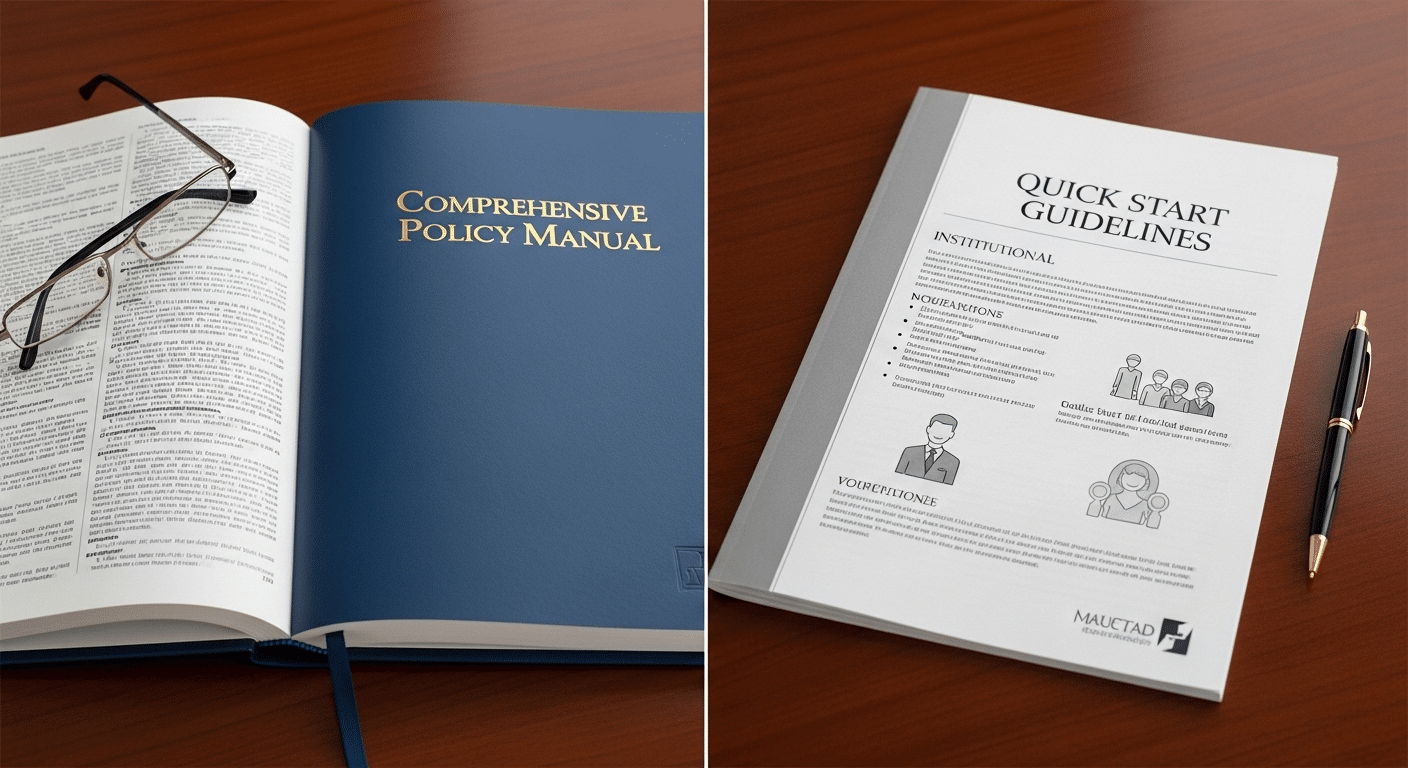
Yes, academic integrity standards differ significantly from one country to another. The underlying values may appear similar, yet enforcement, interpretation, and consequences vary in meaningful ways. Legal frameworks often shape how academic misconduct is defined and addressed within higher education.
In North America and much of Western Europe, policies tend to be detailed and legalistic. Institutions frequently outline precise definitions of plagiarism, intellectual property violations, and research integrity breaches.
Penalties are specified in advance, sometimes with formal hearings and documented procedures. Within the European Union, quality assurance mechanisms further reinforce standardized expectations across universities.
In other regions, including parts of the Middle East and Latin America, academic integrity may be defined more narrowly, sometimes focusing primarily on cheating during formal examinations. Written work and citation practices may receive less formal regulation, depending on institutional priorities.
The severity of consequences also differs. Some systems impose suspension or expulsion, while others rely on corrective measures or faculty discretion.
These variations demonstrate that academic integrity is shaped not only by values, but by national legal and educational traditions.
How Cultural Values Shape Perceptions of Academic Misconduct?
Academic misconduct does not exist in a vacuum. It is interpreted through student cultural backgrounds and long-standing educational traditions. Cultural differences influence how you understand authorship, collaboration, and respect for authority.
In high power distance societies, students are often taught not to question professors. Knowledge flows from authority downward.
In many Western institutions, by contrast, critical inquiry is encouraged. You are expected to challenge arguments, propose alternate perspectives, and develop independent conclusions.
Educational models also differ. Some systems emphasize rote memorization and faithful reproduction of authoritative texts. Others prioritize originality and analytical thinking. These differences shape how proper attribution is understood.
In collectivist cultures:
- Helping peers with assignments may be seen as a moral obligation
- Knowledge is often viewed as shared and communal
- Reproducing the words of respected authorities signals respect, not misconduct
In Western institutions:
- Original ideas and independent analysis are prioritized
- Critical disagreement with professors is encouraged
- Proper attribution of sources is mandatory in academic work
Why International Students Often Experience Fear and Confusion?

For many international students, academic integrity policies initially appear clear. Surveys conducted in Canadian postsecondary institutions show that students often report feeling confident after reading formal guidelines.
At the same time, nearly one third describe feelings of fear, anxiety, or confusion. Confidence and uncertainty can coexist, especially when the consequences of academic misconduct are severe.
These emotional responses are not trivial. Negative feelings can interfere with the learning process, reducing comprehension and limiting the ability to apply rules correctly.
International students frequently face overlapping pressures, psychological adjustment to a new country, social integration into a different student body, and academic expectations that may differ sharply from those in their home country.
Several risk factors compound the challenge. Working in a second language can make source integration more difficult. Time management practices learned elsewhere may not align with local norms. Some students have never been formally taught citation practices in the same way.
Despite reporting similar attitudes toward cheating as domestic peers, international students are often overrepresented in academic misconduct cases, a pattern that reflects structural misunderstanding more than intent.
Has the Digital Age Made Academic Integrity More Complex?
The digital age has made academic integrity more complicated in practical terms. The rapid expansion of online education during the COVID-19 pandemic moved millions of students into online classes almost overnight.
Assessment methods changed quickly, sometimes without adequate preparation. In that environment, opportunities for academic dishonesty increased.
Online learning environments make it easier to exchange information, collaborate informally, or access unauthorized materials. In response to these challenges, many schools have adopted new academic integrity systems or updated their policies to better address misconduct in online settings. Institutions conducting remote assessments can also explore the online proctoring software to evaluate tools for supporting secure online exams.
Global connectivity also means that cheating behavior can cross borders, with services operating internationally and targeting students in multiple countries. What once required physical proximity can now happen instantly.
Technological advancements have also fueled the growth of contract cheating and new forms of plagiarism. Students can access services that promise custom essays, completed assignments, or exam assistance with minimal effort.
Examples include:
- Online contract cheating platforms offering to complete academic work for a fee
- AI assisted plagiarism tools that generate or rephrase content
- File sharing in online classes that blurs the line between collaboration and misconduct
These developments complicate how institutions define and maintain academic integrity in contemporary education.
How Do Enforcement and Consequences Differ Globally?
Academic integrity expectations do not only vary in definition, they also differ in enforcement. Educational institutions design policies within their own legal and cultural frameworks.
Some systems rely on detailed regulations and formal hearings. Others grant broader discretion to faculty. Quality assurance mechanisms, national oversight, and historical norms all shape how academic misconduct cases are handled.
Below is a simplified comparison of how different regions approach enforcement.
| Region | Primary Focus | Policy Structure | Typical Consequences | Cultural Framing |
|---|---|---|---|---|
| US / Canada | Broad misconduct definition | Legalistic policies | Suspension, expulsion | Individual authorship |
| Western Europe | Detailed integrity standards | Regulatory frameworks | Formal penalties | Intellectual property focus |
| East Asia | Exam integrity emphasis | Less formalized plagiarism focus | Context-dependent | Respect for authority |
| Middle East | Exam-centered | Varies by institution | Institutional discretion | Honor-based |
| Latin America | Mixed definitions | Emerging policy formalization | Often restorative | Contextual norms |
These differences demonstrate that enforcement reflects local traditions as much as shared academic values.
Is Academic Integrity a Universal Human Right Or a Western Concept?

At first glance, academic integrity appears universal. Honesty in scholarship seems inseparable from the idea of education itself.
Yet when you examine how integrity is defined and enforced, questions arise. Is it a human right tied to fairness and truth, or is it largely shaped by a US concept of intellectual ownership? Academic integrity also plays a crucial role in advancing social justice, as it supports the development of inclusive and equitable societies by promoting fairness, equality, and respect for human rights within educational and legal cultures.
Research integrity in global scholarship requires shared expectations. International journal standards demand transparency in authorship, proper citation, and accountability. Without common rules, collaboration across borders would collapse into mistrust.
At the same time, enforcement mechanisms are often culturally constructed. Legal traditions, moral education systems, and institutional histories influence how misconduct is interpreted.
This tension becomes visible when students or researchers move between systems. What counts as common knowledge in one setting may require citation in another.
A shared baseline is necessary for global scholarship, yet that baseline must acknowledge alternate perspectives rather than dismiss them outright.
What Should Universities Do in a Globalized Higher Education Sector?
If academic integrity is shaped by context, then it cannot be assumed. Universities must teach academic integrity explicitly rather than relying on unspoken norms. Approaching alternate perspectives with empathy and cultural understanding is essential for fostering an inclusive and respectful learning environment.
In a globalized higher education environment, students arrive with different educational histories, and student behavior reflects those differences. When a student arrives in a new academic system, they may face challenges in understanding and adapting to local definitions of academic integrity. Dismissing student cultural backgrounds does not strengthen integrity, it weakens trust within the educational community.
Policies must be transparent and accessible. Students should understand not only what counts as misconduct, but why those standards exist. For educators alike, promoting global perspectives on academic integrity is a shared responsibility that encourages inclusivity and empathy across diverse teaching contexts.
An educational approach often proves more effective than a purely punitive one. Restorative models, which focus on learning and correction rather than immediate punishment, can help maintain academic integrity while preserving student confidence.
Effective strategies include:
- Early academic integrity workshops during orientation
- Clear citation guidance integrated into coursework
- Multilingual support for students working in a second language
- Additional support for students who are not native speakers of English, as language proficiency can impact understanding of academic conventions
- Transparent misconduct processes with defined expectations
- Restorative educational responses for first time violations
These measures reinforce shared values without ignoring cultural complexity.
How Technology Can Support Academic Integrity Without Criminalizing Students?

Technology can either deepen mistrust or strengthen educational integrity. The difference lies in how it is used. AI tools should provide insight into patterns of academic work, not deliver automatic punishment.
When systems detect similarities across research papers or flag unusual authorship signals, the goal should be clarity, not accusation.
Instructor controlled oversight remains essential. Context based authorship analysis allows educators to review potential concerns within the broader learning process.
A thoughtful approach recognizes that academic misconduct is sometimes the result of misunderstanding rather than intent, particularly for international students navigating unfamiliar standards.
Solutions like TrustEd are designed with this balance in mind. By offering data informed review rather than rigid automation, TrustEd helps institutions maintain academic integrity while supporting both educators and students in building shared understanding rather than fear. Technology can also be used to measure students’ knowledge of academic integrity, where higher scores indicate greater understanding and familiarity with the subject.
Conclusion
Academic integrity exists across borders, yet it is not interpreted in identical ways. The core values of honesty, responsibility, and fairness appear in nearly every higher education system. What differs is how those values are defined, enforced, and taught. Cultural influence does not negate integrity. It shapes how students learn to understand it.
When institutions assume that standards are universally understood, confusion increases. When expectations are explained clearly and taught intentionally, academic misconduct decreases. Clarity, not fear, strengthens the learning process.
If your institution serves a diverse student body, thoughtful policy design and supportive technology can help maintain academic integrity without alienating those still learning its nuances.
Frequently Asked Questions (FAQs)
1. Is academic integrity defined the same in every country?
No. While most educational institutions endorse values like honesty and responsibility, academic integrity standards vary significantly. Definitions, enforcement practices, and penalties are shaped by cultural, legal, and institutional traditions in different countries.
2. Why do international students struggle with plagiarism rules?
Many international students come from systems where citation practices differ or where reproducing authoritative sources signals respect. Differences in language proficiency, prior instruction, and academic integrity expectations can create confusion, not intentional misconduct.
3. Is plagiarism recognized worldwide?
The idea of copying without acknowledgment exists globally, but the formalized understanding of academic plagiarism varies. In some regions, citation rules are less emphasized, especially outside research intensive higher education settings.
4. Has online learning increased academic dishonesty?
Yes. The rapid expansion of online classes has made cheating behavior easier in some contexts. File sharing, contract cheating services, and remote assessments have contributed to more reported academic dishonesty cases.
5. Are Western policies stricter than others?
North American and Western European institutions often have detailed, legalistic academic integrity policies with clearly defined penalties. Other regions may focus more narrowly on exam misconduct or rely on institutional discretion.
6. How can universities support diverse student backgrounds?
Universities can teach academic integrity explicitly, provide multilingual resources, offer citation training, and adopt restorative approaches. Acknowledging student cultural backgrounds improves understanding and reduces preventable misconduct.
7. What role does AI play in maintaining academic integrity?
AI can help detect patterns across research papers, support instructor review, and clarify authorship concerns. When used thoughtfully, it strengthens educational integrity without replacing human judgment.
