
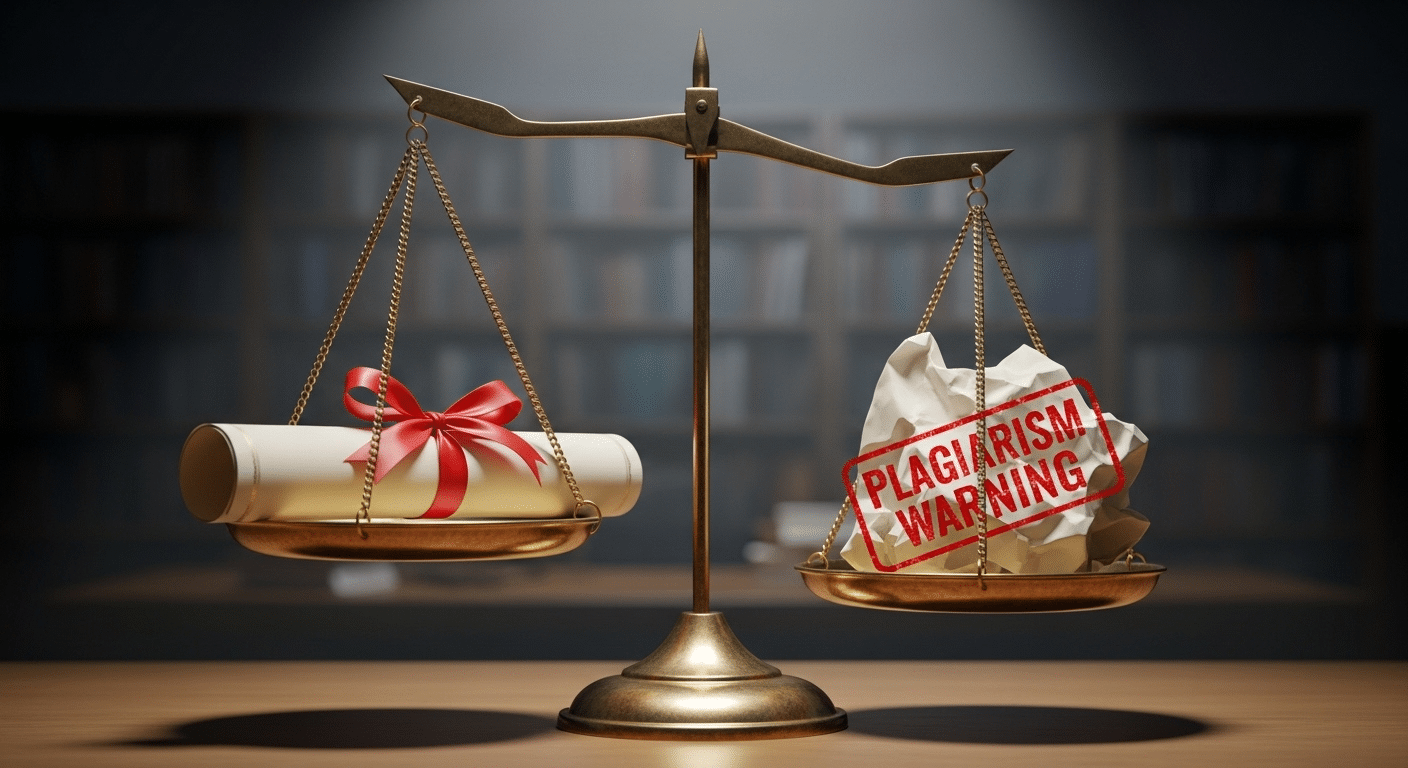
How Does Academic Integrity Violation Affect You?
An academic integrity violation can affect your grades, academic record, reputation, and future opportunities, including scholarships, graduate admissions, and careers. Beyond immediate penalties, dishonesty can hinder skill development, weaken trust, and create long-term academic and professional consequences.
Academic integrity is not just a rule printed in a handbook. It is the quiet agreement that holds education together. When you enroll in a college or university, you enter a system built on trust. Professors trust that the academic work you submit reflects your own knowledge.
Other students trust that grades are earned fairly. Institutions trust that the degrees they award represent genuine learning. So how does academic integrity violation affect you? More deeply than you might expect.
An academic integrity violation, whether it involves plagiarism, cheating on an exam, or submitting someone else’s work, does more than lower a grade. It interrupts the foundation of your education. It raises questions about your integrity.
The consequences are not confined to a single assignment or one difficult course. They ripple outward. First come the immediate outcomes, the failing grade, the formal warning, the meeting with a professor. Then come the longer-term effects, the record that follows you, the doubts that linger, the opportunities that quietly close.
To understand the full weight of academic dishonesty, you need to look at both timelines, what happens right away, and what unfolds over time.
What Happens Immediately After an Academic Integrity Violation?
The first impact of an academic integrity violation is usually swift and procedural. A professor reviews the assignment, compares sources, evaluates the evidence, and makes a report under the school’s academic integrity policy. If you are found responsible, the penalties begin almost immediately.
In many cases, the outcome starts with a failing grade on the assignment. That single zero can pull down your performance in the class. In more serious cases, you may fail the entire course. What felt like one moment of poor judgment suddenly becomes a semester-long setback.
Universities categorize violations by severity, minor, moderate, or major. A minor case might involve improper citation. A major violation could involve submitting someone else’s work or using unauthorized materials during an exam.
The higher the severity level, the stronger the university penalties. Academic probation is common. Suspension or expulsion is possible. Some students underestimate that risk. They should not.
There are practical consequences as well. Failing a course means paying to retake it. Scholarships can be affected. Graduation may be delayed. What seemed like a shortcut often becomes a longer road.
These are the immediate outcomes. But the story does not end with one semester. Once a violation is recorded, the consequences may extend far beyond the classroom and into your permanent academic record.
How Does an Academic Integrity Violation Affect Your Academic Record?
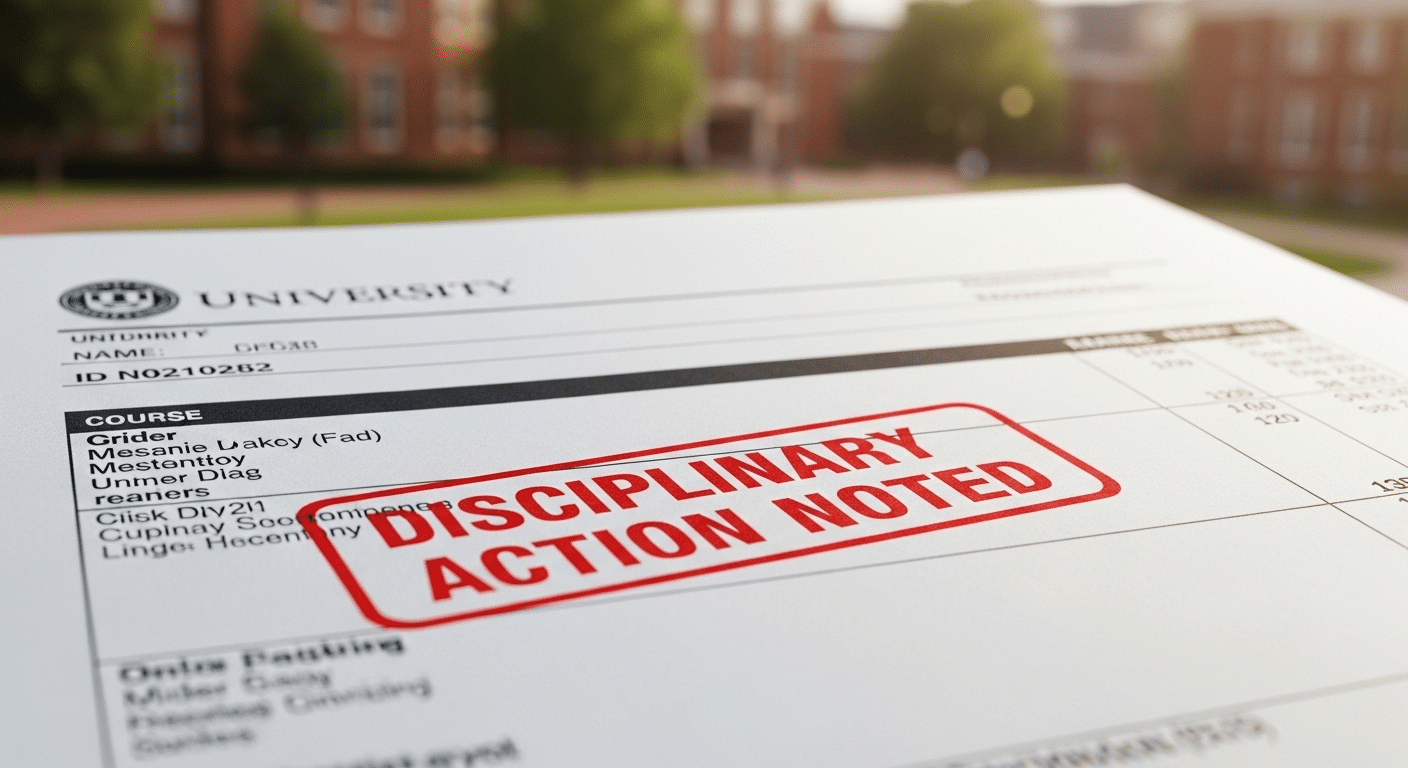
The immediate penalties may fade with time, but the record often does not. Under most academic integrity policy guidelines, a violation is documented in your university file. In some cases, that notation remains for years. In others, it becomes a permanent part of your academic record.
When you apply to graduate school, many institutions ask directly about prior misconduct. Some require disclosure. Others conduct background checks or request full transcripts that may reflect disciplinary findings.
A single academic integrity violation can complicate that process. Admissions committees weigh character as seriously as grades. A history of dishonesty raises questions about your research ethics and commitment to original academic work.
Professional licensing boards operate similarly. In fields such as medicine, law, engineering, or accounting, applicants may be required to report past violations. Failure to disclose can create even deeper problems. Transparency is expected.
There are financial consequences as well. Scholarships may be revoked. Funding tied to merit or conduct can disappear quickly. Even employment opportunities after you graduate may involve screening that reveals prior misconduct.
In rare but documented cases, universities have revoked a degree if academic fraud or falsified research was discovered years later. The long term consequences can outlive your time on campus.
And beyond records and paperwork lies another cost, one that affects your skills, knowledge, and readiness for what comes next.
How Does Academic Dishonesty Affect Your Learning and Skill Development?
At first glance, cheating can feel efficient. You submit the assignment. You secure the grade. But the learning process does not work that way. When you bypass the effort required to produce original work, you also bypass the growth that comes with it.
Education is cumulative. Each research paper builds on earlier writing skills. Each exam tests knowledge that supports future coursework. When you rely on someone else’s work or copy without proper citation, you may complete the task, but you do not strengthen your understanding. The gap stays hidden for a while. Then it surfaces.
Weak writing and shallow research habits become visible in higher-level classes. Student performance declines because foundational knowledge is missing. Concepts that should feel familiar feel foreign. Instructors notice.
In fields such as medicine, law, and engineering, the stakes are even higher. Intellectual property rules, ethical conduct, and technical accuracy are not abstract ideas. They shape real-world decisions.
If you advance without mastering essential skills, the risk extends beyond your grade. It can affect workplace performance. In certain professions, it can even raise public safety concerns.
Cheating may produce a short-term result. It does not produce competence.
And when competence feels uncertain, the psychological effects of that decision begin to surface in ways that are harder to measure but impossible to ignore.
What Psychological Effects Can Follow an Academic Integrity Violation?
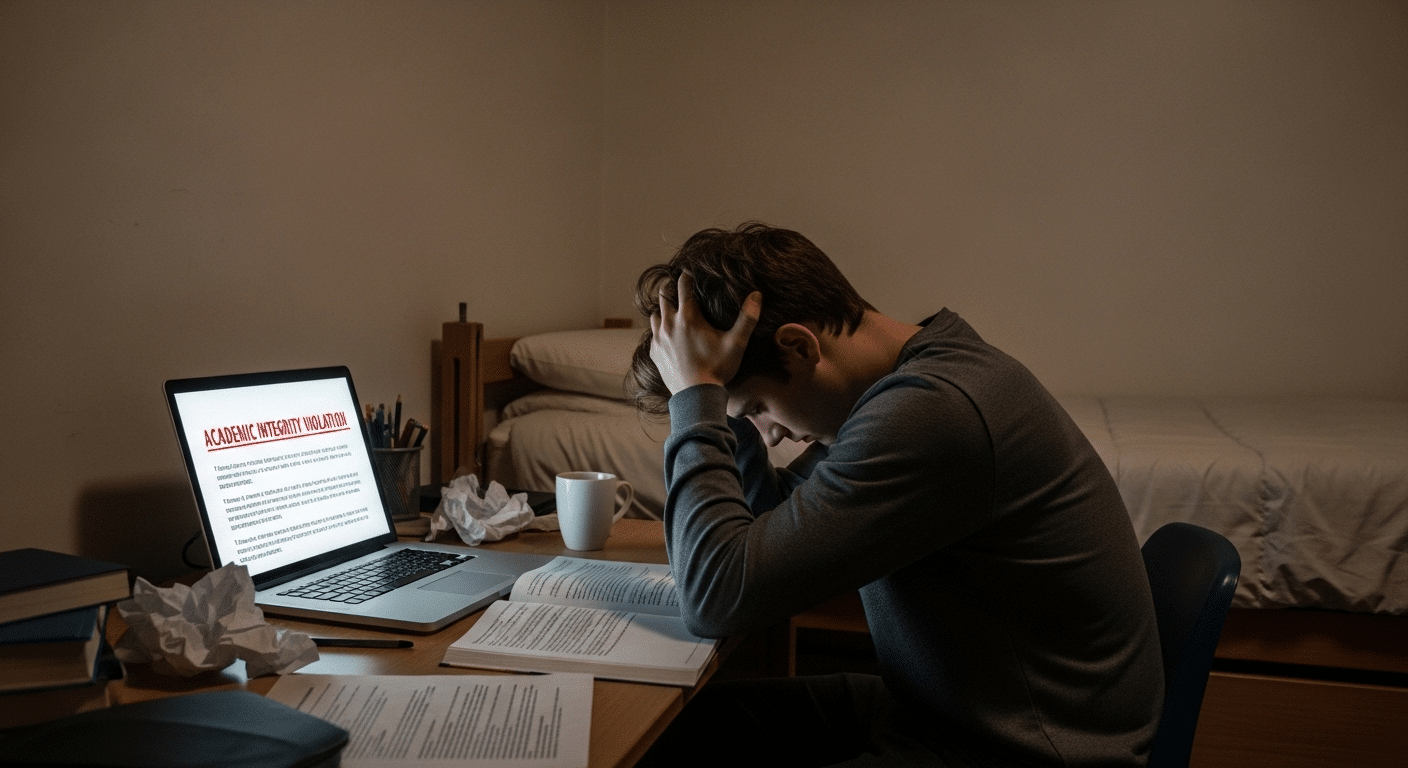
The academic penalties are visible. The psychological effects are quieter, but often heavier.
Once an academic integrity violation is reported, the adjudication process begins. Meetings are scheduled. Statements are reviewed. Policies are cited. During this period, stress tends to rise quickly. You may wait days or weeks for a decision. That uncertainty alone can trigger anxiety about the outcome, about your grade, about your standing at the university.
If you are found responsible, the emotional weight often deepens. Many students feel guilty. Some struggle with low self-esteem. An internal conflict can take shape.
You know the conduct violated an ethical standard, and that awareness lingers. It is difficult to ignore the tension between who you believed you were and the choice you made.
This internal strain does not disappear once the formal consequences are issued. Doubt can follow you into the next class. Confidence in your own ability may weaken. You may question your academic competence even when you are capable.
Yet this stage also presents something else. Reflection becomes necessary. Taking responsibility, examining the reasons behind the decision, and confronting the ethical implications can lead to growth. Without that reflection, the emotional strain may persist longer than the official sanction itself.
The psychological impact, in other words, extends beyond paperwork. It reaches your sense of identity.
How Does Academic Dishonesty Affect Your Reputation?
Reputation forms slowly. It can change quickly. When an academic integrity violation becomes known, even within a small circle, trust begins to shift. Faculty members rely on honesty to evaluate student performance.
Once that trust is broken, professors may look at your academic work more cautiously. The relationship changes. It becomes more formal, sometimes distant.
Teachers and mentors often write recommendation letters. They advocate for students they believe demonstrate hard work and ethical conduct.
If doubt exists about your integrity, those endorsements may become hesitant, or unavailable altogether. That loss can affect scholarships, internships, and graduate applications.
The impact does not stop with faculty. Other students in the same class may feel frustrated if they believe someone gained an unfair advantage. Word travels. Even informal perceptions matter.
A reputation for cutting corners can follow you through group projects and collaborative assignments. Peers may question whether you will contribute fairly.
Over time, these perceptions shape how you are viewed as a person. Reputation is not only about grades. It reflects character.
And once credibility is questioned in an academic setting, it becomes easier for similar doubts to surface later, especially when you step into professional environments where integrity carries even greater weight.
How Can Academic Integrity Violations Impact Your Future Career?

An academic integrity violation rarely stays confined to a campus file. It can follow you into your future careers in ways that are not always obvious at first.
Many employers conduct background checks, especially for roles involving finance, healthcare, research, or sensitive information. While not every record appears in every search, documented misconduct can surface during screening or reference checks.
Graduate school applications often require disclosure of past disciplinary action. Admissions committees evaluate more than grades.
They assess character, reliability, and readiness for advanced research. A history of cheating can raise concerns about professional ethics and academic honesty, especially in programs built on trust and independent work.
Licensing boards in medicine, law, engineering, and accounting may require formal disclosure of academic misconduct. These professions operate under strict ethical expectations. Integrity is not optional. It is foundational. Even if licensure is granted, the review process may become longer and more complex.
Employers also look for signs of reliability and consistent work ethic. A violation can introduce doubt. That doubt may influence hiring decisions quietly, without explanation.
Common career consequences include:
- Reduced employment opportunities due to concerns about trustworthiness
- Rejection from graduate, law, or medical school
- Mandatory disclosure of misconduct during professional licensure
- Difficulty advancing in competitive industries where reputation matters
- Damaged professional credibility that limits leadership potential
Career growth depends on confidence in your integrity. Once that confidence is shaken, rebuilding it can take time.
What Legal and Ethical Implications Can Arise?
Academic dishonesty is often treated as a campus issue. In some cases, it extends further.
Plagiarism involves presenting someone else’s work as your own. When that work is protected by copyright, the act can cross into copyright infringement. Intellectual property laws exist to protect authors, researchers, and creators. Using material without proper quotation marks, failing to cite sources, or submitting research that is not original may raise legal implications beyond university discipline.
While most student cases remain within institutional review, the principle is clear. Ownership matters. Attribution matters. Ethical conduct in education mirrors expectations in professional settings. In journalism, law, medicine, and scientific research, misrepresentation of data or ideas can lead to lawsuits, revoked licenses, and public consequences.
There is also a broader concern. When plagiarism becomes common, when copying is normalized, standards erode. A culture that tolerates dishonesty in the classroom risks carrying that behavior into workplaces and public institutions. Over time, societal trust weakens. People begin to question credentials, research findings, and professional authority.
Academic integrity is not a small rule. It reflects the values that shape institutions and, ultimately, communities.
How Does Academic Dishonesty Affect the Academic Community?

Academic dishonesty rarely affects only one person. It changes the climate of the entire class.
When one student gains an unfair advantage by copying answers, using unauthorized materials, or submitting work that is not original, other students who work honestly feel the imbalance.
Assessment is meant to measure effort and understanding fairly. Once that fairness is questioned, the integrity policy begins to feel abstract instead of protective.
In the same class, tension can grow. Peers may wonder who followed the rules and who did not. That suspicion creates a negative learning environment. Collaboration becomes harder. Trust between classmates weakens.
The impact reaches educational institutions as well. Degrees carry value because they represent earned knowledge and demonstrated competence. If academic dishonesty becomes common or tolerated, the value of degrees declines. Employers and graduate programs may begin to question what credentials truly represent.
Over time, repeated violations can erode trust in the institution itself. Educational legitimacy depends on consistent standards. When integrity falters, confidence falters with it.
A single violation may seem small. In a community built on shared expectations, it rarely stays small for long.
What Happens If You Are Accused of Academic Dishonesty?
An accusation alone can feel overwhelming. Before any decision is made, you may receive notice that a professor believes your research paper, term paper, or exam violates the academic integrity policy. At this stage, clarity matters more than panic.
First, understand the exact nature of the accusation. Were you found responsible for plagiarism, improper citation, or unauthorized collaboration?
The details determine how you respond. Ask to review the evidence your professor relied on, including comparison samples or software reports. Understanding what triggered the concern helps you assess your position.
Keep copies of everything. Early drafts, outlines, notes, and properly cited sources can support your explanation. Documentation is not optional. It is essential.
You should also be aware that ignorance is not an excuse. Not knowing citation rules or misunderstanding policy does not eliminate responsibility. Most institutions state this clearly in their academic integrity policy.
If you believe the finding is incorrect or the sanction disproportionate, you have the right to appeal. Typically, the process moves from the director of composition to the department chair and, if necessary, to the dean. The structure is formal. Deadlines matter.
If you face an accusation, consider these steps:
- Request to see all evidence related to the allegation.
- Gather drafts, notes, and original sources that demonstrate your process.
- Document every meeting with your professor or faculty representatives.
- Seek guidance from advisers, teachers, or mentors who understand the policy.
- Follow the formal appeal structure carefully and within stated timelines.
Handling the situation calmly and methodically does not guarantee a reversal. It does demonstrate responsibility.
How Can You Recover and Grow After an Academic Integrity Violation?

Recovery begins with something simple, and difficult. Acknowledge wrongdoing. If you violated academic integrity, taking responsibility is the first step toward rebuilding trust. Defensiveness may feel easier in the moment, but growth requires honesty, first with yourself.
Reflection matters. Ask what led to the decision. Pressure? Fear of failure? Poor time management? A gap in understanding? When you reflect on the underlying causes, patterns become clearer. Without that awareness, the risk of repeating the same mistake remains.
From there, you can develop goals grounded in ethical values. Decide how you want to approach academic work in the future. Commit to producing original work. Learn proper citation practices. Strengthen your study habits. Small, consistent changes rebuild integrity over time.
Seeking mentorship can also help. Advisers, teachers, or trusted faculty members can offer perspective. They may not erase the violation, but they can guide you toward stronger habits and renewed confidence.
Self-care is not secondary. The stress of consequences can linger. Managing that stress through healthy routines, reflection, and honest conversations supports long-term resilience.
Most important, let go of the idea that one mistake defines your entire future. Growth is a continuous process. Integrity is not proven in one perfect semester. It is demonstrated repeatedly, through choices you make from this point forward.
How Can Institutions Use Technology to Protect Integrity and Fairness?
Educational institutions cannot rely on policy alone to address academic dishonesty. Rules matter, but enforcement must be consistent and fair. Increasingly, schools use AI systems and integrity monitoring tools to support instructors in evaluating academic work.
These tools analyze patterns, flag anomalies, and compare submissions across large datasets. Used correctly, they help uphold fairness.
Technology, however, should never replace human judgment. An academic integrity policy still requires careful review by faculty. Context matters. Intent matters.
A balanced approach protects honest students while giving instructors the support they need to identify potential misconduct. Transparent governance is essential. Students should understand how monitoring works and how decisions are made.
When oversight is thoughtful and proportionate, technology strengthens trust rather than eroding it.
Effective integrity protection often includes:
- Instructor-controlled verification processes
- Transparent authorship review that explains flagged concerns
- Human-in-the-loop decisions before any sanction is applied
- AI systems aligned clearly with institutional policy
Solutions like TrustEd functions as a faculty support tool, helping instructors detect irregularities while maintaining oversight. It reinforces fairness without automating judgment. In doing so, it protects the integrity of academic work and the credibility of the institution itself.
Final Thought
Academic integrity protects more than a transcript. It protects credibility. When you work honestly, you signal that your grades reflect real knowledge. That signal builds trust between students, faculty, and the institutions that grant degrees.
Integrity also protects fairness. In any class, evaluation only works when everyone follows the same rules. If standards are uneven, the value of achievement declines. Over time, the value of education itself weakens. Degrees mean something because they represent earned understanding.
Most important, integrity protects your future. The habits you build in college do not disappear after graduation. Ethical conduct shapes how you approach research, collaboration, leadership, and responsibility. It shapes how others see you, and how you see yourself.
Education is not only about completing coursework. It is about developing skills, judgment, and character. Knowledge gained through honest effort carries weight. Knowledge gained through shortcuts does not hold up under pressure.
The consequences of academic dishonesty can be serious. Yet the opportunity to choose differently remains constant. Awareness is not punishment. It is preparation.
Protecting academic integrity ultimately means protecting the person you are becoming, and the trust others place in that future version of you.
Frequently Asked Questions (FAQs)
1. What happens if you get a violation of academic integrity?
An academic integrity violation can lead to penalties such as a failing grade, academic probation, suspension, or expulsion, depending on severity. It may also affect your academic record, scholarships, and future educational or professional opportunities.
2. Can academic misconduct affect your career?
Yes, academic misconduct can affect your career by raising concerns about ethics, credibility, and trustworthiness. It may impact graduate admissions, professional licensing, employment opportunities, and long-term career growth, especially in regulated or competitive fields.
3. Can a single plagiarism incident affect your future?
Yes. Even one plagiarism violation can carry long term consequences. It may appear in your academic record, affect graduate school applications, or influence employment opportunities if disclosed or discovered during background checks.
4. Does academic probation stay on your record?
Academic probation resulting from an integrity violation is often documented under your academic integrity policy. The duration and visibility vary by institution, but it can affect transcripts, scholarships, and future academic standing.
5. Can plagiarism lead to legal trouble?
In most student cases, penalties remain within the university. However, plagiarism can involve copyright infringement if you present protected intellectual property as your own, which carries potential legal implications.
6. Will graduate schools see an academic integrity violation?
Many graduate school applications require disclosure of past misconduct. Admissions committees may review violations as part of their character assessment process, especially for research-focused programs.
7. Can you appeal an academic integrity decision?
Yes. Most institutions provide a formal appeal process. This typically involves escalating concerns from a professor to a department chair or dean, following established procedures and deadlines.
8. Do employers care about academic misconduct?
Some do. Certain employment opportunities, especially in regulated professions, may involve background checks or direct questions about past violations, particularly if ethical conduct is central to the role.
9. What happens if I get caught for academic misconduct?
If you are caught for academic misconduct, your institution may investigate the case and impose penalties ranging from assignment failure to suspension. You may also face disciplinary records, appeals processes, and longer-term consequences for academic standing and reputation.
