What is a Virtual Computer Lab?

Virtual Computer Lab View

Computer labs are commonly found at universities, colleges, technical schools, and corporate training facilities. For the past several decades, they have facilitated hands-on learning of computer-related skills for students around the world. However, in more recent years, especially during the global pandemic, many institutions have looked for ways to provide remote access to these systems, hence, coining the term “virtual computer lab.”

Conventional Computer Lab Design

In the past, computer labs have typically been a collection of free-standing desktops loaded with the operating systems, software, and applications needed for the courses. Later, these desktops were networked to enable sharing resources, equipment, and files. In some cases, virtual desktop infrastructure (VDI) may have been implemented, connecting the classroom devices to an internal data center that could centrally manage problems, security, and updates. In all these situations, the computer lab equipment and related systems and data were physically confined to the specific institution.

Enter Desktop-as-a-Service Options

In recent years, many desktop-as-a-service (DaaS) providers have entered the market, offering virtual desktop services to their customers based on a subscription fee. These vendors usually handle the day-to-day management of the virtual computer lab, including centrally optimizing the operating systems, software, applications, data, and security from cloud-based data centers.

While many DaaS providers can handle implementing and managing the basics of a virtual computer lab, the details of deploying the finished solution often require internal IT resources for the management of application licenses, customization of coursework, integration with a learning management system, and other organization-specific requirements. This frequently results in significant time and investment that the school or training center may not have anticipated.

Virtual Computer Lab ROI Calculator

Apporto’s virtual computer labs maximize learning and optimize efficiencies at 50-70% less than the cost of traditional VDI solutions. See for yourself why the Navy and top universities like UCLA and Emory have already discovered by using our Virtual Computer Lab ROI Calculator.
ROI, Return on investment, Business and financial concept.

Turnkey Solution for Virtual Computer Labs

Apporto has taken the DaaS solution one step further by creating a turnkey option specifically for higher education organizations interested in virtualizing their brick-and-mortar computer labs. With state-of-the-art techniques such as advanced compression, geo-optimization, and autoscaling, Apporto ensures that instructors and students can interact easily with the browser-based solution through any internet-connected device.

Students can access all the resources and applications from their school or training center from a single portal, On the operating system of their choice. Applying its years of experience in the higher ed space, Apporto brings expertise and reliability along with a turnkey solution to universities, colleges, technical institutes, and corporate learning centers.

Benefits of a Virtual Computer Lab

Whether you decide to build an internally based VDI computer lab, partner with a conventional DaaS solution provider, or work with Apporto’s turnkey solution, virtual computer labs afford many benefits to the teaching organization. For instance, all three simplify the management of operating systems, software, applications, and data. A centralized system allows universities or other teaching organizations to easily manage things like updates, security, and troubleshooting. There’s no need to worry about individual devices; all critical components are centrally managed.

Working with a DaaS solution provider adds the benefit of predictable subscription pricing, which is typically much lower upfront than investing in an in-house solution. Universities and learning centers can often customize the features, user seats, and hours required, allowing them to pay for only the time and services they need. In addition, relying on an outside vendor means that colleges and companies can free up internal IT resources to focus on other more important initiatives. This can be particularly important in the current labor environment where finding and retaining IT talent is a significant challenge.

Selecting a turnkey solution such as Apporto results in an additional layer of benefits to the school or teaching center. Our system is device-agnostic, meaning that the power and capability of the student’s computer is irrelevant to the access and performance of the system. Our browser-based system equips students with reliable access to everything they need to learn new material and practice their skills in a realistic environment, leveling the technology playing field for all students.

In addition, Apporto’s solution integrates seamlessly with most major learning management systems, allowing faculty to easily move between lesson plans, live classroom environments, virtual office hours, and assignment submission and grading with a single login. Instructors can also view all their students’ screens at one time, watching as they work through an exercise as well as communicate in real-time with students who are raising their hands by chat, email, or voice. If further assistance is needed, instructors can share screens or even take control of a student’s desktop to help. This active learning environment is available anytime, anywhere.

A Vital Tool in Tomorrow’s Marketplace

As technology developments continue to multiply across every industry and throughout the world, more and more IT savvy professionals will be needed to create, manage, integrate, and apply these advanced tools to particular industries and companies. Demand for expertise in related fields such as cybersecurity continues to grow as well.

These and other similar factors will continue putting pressure on universities, colleges, technical schools, freestanding training centers, and corporate training and development departments to find new and creative ways to teach these complex topics.

Those learning institutions that can offer a virtual computer lab within a flexible learn-at-your-own-pace environment will not only maximize their student capacity but also provide a valuable service to companies, industries, and the overall economy.

A trusted partner for higher education institutions and enterprises since 2014, Apporto works with customers to understand their unique needs in order to reduce demands on IT departments, maximize productivity, and boost security architectures. Contact us today to learn how our turnkey DaaS solutions empower educators and inspire student learning.

Try It Now

Meet Apporto, A Modern, Blazing Fast and Secure Cloud Desktop

VDI vs. DaaS

VDI vs. DaaS

If you’re beginning to explore the world of virtual desktops, you may run across the terms virtual desktop infrastructure (VDI) and Desktop-as-a-Service (DaaS) in your research. If you’re wondering what the similarities and differences are between these two terms, you’ve come to the right place. This brief primer will help define both these solutions, the pros and cons of each, and what types of companies may benefit from one versus the other.

What is VDI?

Typically, the term VDI refers to an internally based computer system that houses operating systems, software, applications, and other technologies in a central data center. All employees, contractors, customers, and other stakeholders access the company’s IT infrastructure through internal WAN, connecting on virtual desktops, laptops, tablets, smartphones, or other devices.

This type of solution allows centralized management, maintenance, and troubleshooting for the business’s IT staff instead of needing to work on every end device. This saves IT resources, which are in short supply, and helps companies run their computing systems much more efficiently.

In today’s remote work environment, VDI can be a reliable and secure solution that allows disparate employees to share resources, communicate, and access critical company data from any location. However, building one can take a significant amount of resources as the infrastructure for such a data center can be complex and expensive.

What is DaaS?

DaaS works very similar to VDI, but it typically refers to an external service provider that offers the virtual desktop solution to multiple customers in the cloud. Like VDI, all operating systems, software, applications, storage, and data are centrally stored. However, instead of residing in an on-premise data center, the system sits in cloud-based data centers, usually in geographically diverse locations.

The DaaS partner, in turn, handles all the management and maintenance of the virtual desktop system for its clients. The vendor is responsible for staying on top of the latest developments and ensuring that governance and security remain reliable and of a high quality.

That said, specific use cases may require that IT staff make additional modifications or integrations in order to ensure that the DaaS system can meet all of the needs of a particular company or organization.

Try It Now

Meet Apporto, A Modern, Blazing Fast and Secure Cloud Desktop

The Pros and Cons of Each

Functionally, VDI and DaaS operate very much alike. One big difference between the two, though, is who is responsible for the management, implementation, and day-to-day maintenance tasks, as well as how resources are allocated.

The main advantage of VDI is maintaining internal control of the data center and the virtual desktop solution. Your organization determines the priorities and chooses when and how updates and patches are handled without waiting for a third-party vendor to deliver. However, the cost of setting up an internal data center, managing software licenses, and keeping up with technological advances can be significant. In addition, an internal IT team will be required to handle the ongoing maintenance and network latency and performance can be an issue.

Using DaaS service providers can allow companies to tap into a wealth of experience and expertise at a low-entry price. In addition, features can be customized to deliver the services that your company specifically needs. Many disadvantages result if an incompatible or inexperienced DaaS partner is selected, and companies may feel a loss of control of a virtual desktop solution if it is managed by a third party.

In addition, if an organization has a complex application for the DaaS solution, additional modifications may be required in order to ensure that the system is fully operational. This can compound the costs of integration, customization, and ongoing maintenance.

Another important distinction between VDI and DaaS is the scalability and cost implications. With VDI, scalability is limited. The infrastructure is built around meeting peak demand. The cost of that infrastructure does not decrease if demand does. In contrast, with DaaS your infrastructure cost reflects demand, you only pay for what you use. This provides huge cost savings for organizations that experience vast fluctuations. In higher ed environments in particular, where usage dramatically changes throughout the year, DaaS provides the flexibility and cost savings colleges and universities need.


An Easier Solution

Building on the strengths of both VDI and DaaS, Apporto has crafted technology that takes the complexity out of implementation, making them turnkey for client IT teams. For example, hyperstreaming capabilities are built into the solution to allow for premium audio and video transfer. Organizations such as colleges that must operate on Windows, Mac and Linux no longer have to worry about managing all these operating systems as those customizations are built into the Apporto solution. Desktop variations also come pre-packaged, lightening the load for your IT staff.

How to Decide What’s Best for You

As in making all technology-related decisions, companies must review their goals and priorities, weigh the pros and cons of available solutions, and select the option that appears to be the best fit.

Larger companies with an established data center and IT department may find that implementing a VDI is a relatively simple next step to manage remote workers. Small start-ups looking to dabble in virtual desktops may appreciate the low cost of entry from DaaS providers. Organizations seeking specific use cases that match Apporto’s expertise and offerings may prefer an easier, turnkey solution to reduce costs and IT resources required for maintenance.

Whichever category your organization falls into, virtual desktop solutions are here to stay and likely to become even more commonplace in the future. Learning about the different options now will help you be prepared to make the best decision for your organization when the time is right.

Apporto has been providing DaaS solutions to satisfied customers since 2014. Our team is made up of dedicated experts that have years of experience helping businesses just like yours take full advantage of DaaS technology. Contact us today to see our platform in action.

What is a Cyber Range?

Cyber Range Security Training

Cybersecurity may be one of the highest priorities for a wide range of businesses today. One look at the business news, and it’s easy to see why. Cybercrime is on the rise, with bad agents becoming more and more sophisticated in how they threaten networks and businesses.

It’s no wonder that the number of cybersecurity training programs are on the rise as well, scrambling to provide enough trained talent to combat this growing problem. Colleges, universities, trade schools, stand-alone education centers, and internal training departments of major corporations have developed courses, materials, and simulated lab environments to help students learn to prevent, identify, and mitigate cyber threats.

A cyber range is a high-fidelity clone of a real-life network system under a simulated cyber attack. By replicating things like servers, applications, networking, open-source tools, and security stack tools, a cyber range is designed to help professionals learn and practice these critical skills.


What’s the difference between a cyber lab and a cyber range?

The idea of a “cybersecurity lab” may be more common, and many people may use the term “cyber range” synonymously. However, there are important differences between the two.

Virtual cybersecurity labs are typically used early in the education and training process and are designed to teach very specific skills in a controlled environment. For example, a student might learn a particular component of cybersecurity in theory, and then practice by executing recently taught actions in a controlled cyber lab. The simulated situation guides the students down a scripted path to reach a predetermined “correct” result.

Virtual cybersecurity lab training is excellent at teaching standalone subject areas as well as training students on the basics of keeping a network safe at a preventive level. These tools can be updated to reflect current subject areas and encourage a great deal of repetition to perfect basic skills.

A cyber range, on the other hand, is more frequently found as part of IT training in a particular company. It works in the actual environment, complete with real cyber threats, and allows IT professionals to practice at a more holistic level. Virtual machines can be set up with software-defined networks and realistic network routing. Cyber ranges are created with several repeatable tasks so that the system can be reset for additional practice in the same environment.

Virtual Computer Lab ROI Calculator

Apporto’s virtual computer labs maximize learning and optimize efficiencies at 50-70% less than the cost of traditional VDI solutions. See for yourself why the Navy and top universities like UCLA and Emory have already discovered by using our Virtual Computer Lab ROI Calculator.
ROI, Return on investment, Business and financial concept.


What does a cyber range teach?

Besides providing a real-life environment, a cyber range is designed to instill a wide range of necessary skills in this ever-evolving industry:

  • Greater Understanding. Cybersecurity professionals must not only know what actions should be taken in specific situations but also the reasoning behind those actions. By using a cyber range, professionals learn to understand which threats exist, their attack vectors, and how to stop the threat from spreading through a specific system.
  • Working in an Imperfect Environment. The vast majority of IT systems in any industry will have multiple patches and updates to operating systems, software, applications, and integrations. Cyber ranges allow students to practice identifying, testing, and mitigating threats in these not-so-perfect environments.
  • Updated Networks. Since cyber ranges are typically cloud-based, they can be automatically updated with any real-life patches and improvements in real-time.
  • Scalability. Depending on training needs, a cyber range can be easily scaled to provide a custom practice environment. Once one level of competence has been achieved, the cyber threat landscape can be expanded to introduce more complex scenarios.

Cyber ranges can be used to test security stacks and system configurations as well as provide actual attack situations to educate and evaluate specific employees or teams. They can help check whether a company’s security policies are being utilized and enforced and also prove compliance with government or industry regulations. By synchronizing the response by people, processes, and technology, cyber ranges can help optimize how a cyber threat is handled and ensure prompt action in the case of a live event. In some areas, cyber ranges can help companies developing new security products test and mature their offerings.

What are the benefits of cyber ranges?

Cyber ranges are excellent tools for today’s business in just about any industry with an online presence. They offer a wide range of benefits including:

  • Cyber Readiness. In today’s world, it’s no longer a question of “if” but “when” a cyber attack will occur. Cyber ranges help improve an organization’s readiness for when that day arrives.
  • Prove Compliance. Evolving along with cybercrime is the ever-increasing level of regulations both at the government and industry level. A cyber range helps companies provide evidence of ongoing compliance.
  • Testing Security Stack. It’s likely that a wide range of security protocols and tools already exist within a modern business. Cyber ranges help professionals stress and test those tools and processes to ensure they are working as expected.
  • Practice Attack Response. By simulating an actual attack, organizations can see how every level of the company responds in a cyber range environment. This provides a basis for improvement and process changes before a real attack happens.
  • Screen Potential Employees. A cyber range can be used as a testing ground as a part of the interview process for hiring IT professionals. Evaluate a potential employee’s ability to respond to a simulated attack on a clone of your company’s actual system.
  • Refine Training Program. Along the same lines as evaluating new hires, a cyber range can help a company identify both strengths and weaknesses of an internal team. This information can then be used to develop future training programs to shore up weaker areas.

A trusted partner for higher education institutions and enterprises since 2014, Apporto works with customers to understand their unique needs in order to reduce demands on IT departments, maximize productivity, and boost security architectures. Contact us today to learn how our turnkey DaaS solutions empower educators and inspire student learning.

Try It Now

Meet Apporto, A Modern, Blazing Fast and Secure Cloud Desktop

What is DaaS?

In a nutshell, Desktop-as-a-Service (DaaS) refers to a third-party company that serves businesses by providing a virtual desktop solution in the cloud. DaaS solution providers store and manage operating systems, software, applications, and data in cloud-based data centers around the world, allowing client companies to free up both on-premises equipment and IT resources to focus on other mission-critical priorities.

Clients pay a subscription fee, usually based on the number of users or hours accessed, allowing employees, contractors, and other stakeholders to access the data and tools securely from an end-point device. Fees may vary depending on the number of premium services and the amount of access desired by the client companies.

How It All Started

Although computer technology made great strides in the 1960s, computers were still hampered by the ability to complete only a single task at a time, requiring time-consuming batch processing. A few years later, IBM introduced the first mainframe that allowed multiple tasks and multiple users, laying the foundation for virtual environments. Just before the turn of the millennium, the technology that allowed running an operating system from a central location was born. Over the next two decades, virtual desktop infrastructure and DaaS solution providers have grown in popularity, providing thousands of global businesses with a centralized, efficient, and more secure computing option.

Recent Developments

The majority of the developments in DaaS have occurred after the passing of the Sarbanes-Oxley Act in 2004, which established strict management responsibilities regarding data security issues fueled by significant breaches at the time. Centralizing operating systems, software, applications, and data made sensitive tools and information less likely to be compromised and provided redundancy to minimize the chances of total data loss.

Today, a large number of DaaS providers offer services to thousands of client companies, jockeying for market positions by improving the user interface, offering more competitive pricing, and adding in-demand features such as disaster recovery, bring-your-own-device capabilities, and advanced backup or storage options.

Try It Now

Meet Apporto, A Modern, Blazing Fast and Secure Cloud Desktop

Benefits of Daas

Small- or medium-sized businesses that have limited IT infrastructure and resources may find DaaS a fast, simple, and affordable way to access virtual desktop expertise. Subscription-based pricing is predictable, and scaling the number of users to what the organization currently needs can be advantageous. This is especially true for companies that have peak or seasonal employee needs; adding or removing users from a DaaS system is relatively easy and fast.

Since providing virtual desktops is their core business, DaaS solution providers are invested in staying on top of current development trends, minimizing latency, and fine-tuning performance and connection issues. Client companies benefit from these advances without having to invest in and manage them internally.

Most DaaS service providers will also offer a tiered benefits package, allowing customers to select and pay for only the features that are most important to them. This may include backup, storage, security, and service or support packages.

In addition, systems can frequently be customized to deliver even more specific use-case benefits. However, this often requires internal IT resources to create and manage these customizations.

Beyond Infrastructure

For client companies that require use-case-specific customizations, engaging a DaaS solution provider may only meet some of their needs. Organizations interested in virtual desktop solutions for an academic or professional computer lab, help desk, zero trust space, or remote work environment now have a better, easier, turnkey solution.

Based on cutting-edge DaaS technology, Apporto has fine-tuned its solution to take the complexity out of implementation for these specific use cases. For instance, hyperstreaming capabilities are built into Apporto’s solution, allowing premium audio and video transfer. Organizations such as colleges that must operate on Windows, Mac, and Linux systems simultaneously no longer have to worry about managing all these operating systems as those customizations are built into the Apporto solution. Things like desktop variations and managed support come pre-packaged, reducing the amount of work required by your IT staff.

A trusted partner for higher education institutions and enterprises since 2014, Apporto works with customers to understand their unique needs in order to reduce demands on IT departments, maximize productivity, and boost security architectures. Contact us today to learn how our turnkey DaaS solutions fuel performance and protection at an unbeatable price.

What is a Virtual Cybersecurity Lab?

Virtual Cyber Security Lab

As cybercrime becomes more advanced and widespread, organizations must constantly defend themselves against threats. As a result, cybersecurity training is in high demand to protect platforms against potential breaches.

Today, many colleges, universities, trade schools, independent training organizations, and corporations themselves, are investing in cybersecurity training. Cybersecurity labs are an important component of any such training program, designed to give students the skills they need to combat the most sophisticated cyber criminals.

Though the need for training is unquestioned, many institutions find it difficult to determine how best to implement this hands-on portion of the training. Traditional cybersecurity labs, which are made up of individual desktops in one physical space, pose many challenges. Teacher and student schedules must be aligned, work must be done when desktops are available, they’re expensive to implement from scratch, and they consume a considerable amount of time and resources to keep them up and running as well as up to date.

A more practical and cost-effective alternative to a physical cybersecurity lab is a virtual one. It provides a way for university, college, or trade school students as well as IT professionals looking to hone their skills, access to high-quality training from any location.


What are virtual cybersecurity labs?

Virtual cybersecurity labs are based in the cloud with all operating systems, servers, software, applications, and simulation data centrally maintained. Students access these labs by logging in from any device with an internet connection. End-users do not need to house or maintain any of the programs or software on their own machines; instead, they simply login to the virtual environment via their browser.

With a scenario-based approach, cloud-based virtual cybersecurity labs provide the best training environment for teaching network security. College, university, or trade school students encounter and work through real-life scenarios in cyber labs that reinforce the theories and other content learned in the classroom. IT professionals have the opportunity to continue their education by practicing these skills within their own companies, helping to advance their careers to the next level.


Virtual Computer Lab ROI Calculator

Apporto’s virtual computer labs maximize learning and optimize efficiencies at 50-70% less than the cost of traditional VDI solutions. See for yourself why the Navy and top universities like UCLA and Emory have already discovered by using our Virtual Computer Lab ROI Calculator.
ROI, Return on investment, Business and financial concept.

What are the benefits of cybersecurity labs?

Virtual cybersecurity labs have grown in popularity, especially during the social distancing requirements of the COVID-19 global pandemic. Furthermore, the tremendous demand for trained cybersecurity professionals has put pressure on educators to up their training offerings. Virtual cybersecurity labs can deliver superior cybersecurity education at a lower cost.

With their increasing popularity, cyber labs provide numerous benefits, whether they are in a college or corporate setting, including:

Improved Safety

Virtual cybersecurity labs provide an increased level of safety for students. They can practice ethical hacking on a simulated network without posing any risk to an actual environment. Students also gain experience with warding cyber criminals off without the danger and repercussions of actual hackers.

Updated Technology

With technology advancing at an incredible rate, universities that still utilize traditional cyber labs may struggle to keep up. Instructors are often forced to either settle for older technology or repeatedly update programs and hardware and cover the expenses that come with them.

A virtual cybersecurity lab allows students to take advantage of upgraded technology without the cost of hardware. Virtual labs are incredibly versatile – with few or no additional costs, they can expand to accommodate additional students or employees. As a result, they’re a great choice for organizations in need of a scalable solution.

System Access Anywhere

Virtual cybersecurity labs are accessed through a web browser on any computer or device. Students no longer need to crowd into a computer lab room full of PCs on certain days and times. Instead, students can study whenever and wherever they work best, whether that’s a dorm room, empty classroom, or common area. Students don’t need high-end hardware to access the system. Since the cyber lab is run primarily through a browser, all that is necessary is a connection to the Internet.

IT professionals can benefit as well, working on their cyber lab scenarios from home, in the office, or while traveling on other business.

Customized Content

Whether a college or university needs a range of cybersecurity courses or a corporation requires different courses for new and experienced IT professionals, virtual cybersecurity labs can be tailored to meet any educational need. In fact, many providers offer ready-to-go courses for users to immediately dive into, or will work with customers to custom build materials.

Rapid or Real-Time Feedback

Unlike physical labs, instructors in virtual cybersecurity labs can provide feedback in a much shorter time frame. Like their students, they’re able to securely access coursework from any device, giving them much more freedom as to when and where they can review assignments or answer questions.

Finally, teachers can provide feedback beyond simple assessment grades – virtual cybersecurity labs provide opportunities for more extensive feedback on many different types of assignments. Instructors can offer help at various points, as well as track analytics like user participation.

Within a corporate setting, IT managers can evaluate how their teams are performing, where strengths and weaknesses lie, and where to add additional training.

Hands-On Experiences

Since many labs use simulations of real programs, they put students in a real-life environment, giving them necessary exposure to simulated dangers. Students can understand what cybersecurity looks and feels like without the safety concerns of actual cyber insecurities.


Conclusion

Keeping up with cybersecurity advancements is essential for organizations. Virtual cybersecurity labs are the most affordable and practical option to provide the education students are looking for within higher education, and corporations can utilize cyber labs within their professional development and training programs.

A trusted partner for higher education institutions and enterprises since 2014, Apporto works with customers to understand their unique needs in order to reduce demands on IT departments, maximize productivity, and boost security architectures. Contact us today to learn more about our virtual cybersecurity labs and how we empower students through access to immersive learning experiences that prepare them for today’s and tomorrow’s cybersecurity challenges.

Try It Now

Meet Apporto, A Modern, Blazing Fast and Secure Cloud Desktop

What is Zero Trust?

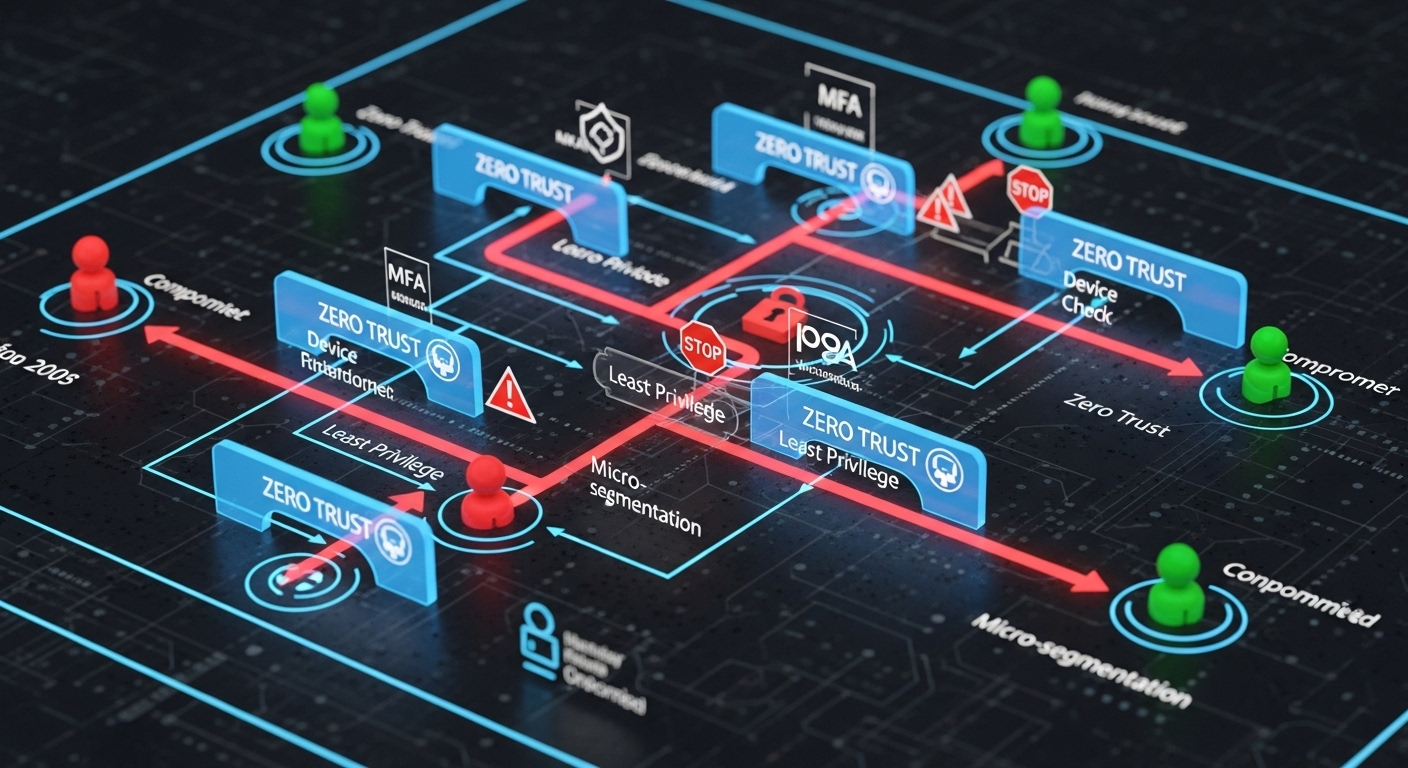
Zero Trust

Zero Trust is a relatively new security framework that ensures everyone both inside and outside of an organization is authorized before any interaction with network applications or data occurs. Coined by John Kindervag, Forrester Research analyst, Zero Trust reminds businesses to “trust no one and always verify.”


The Journey to Zero Trust

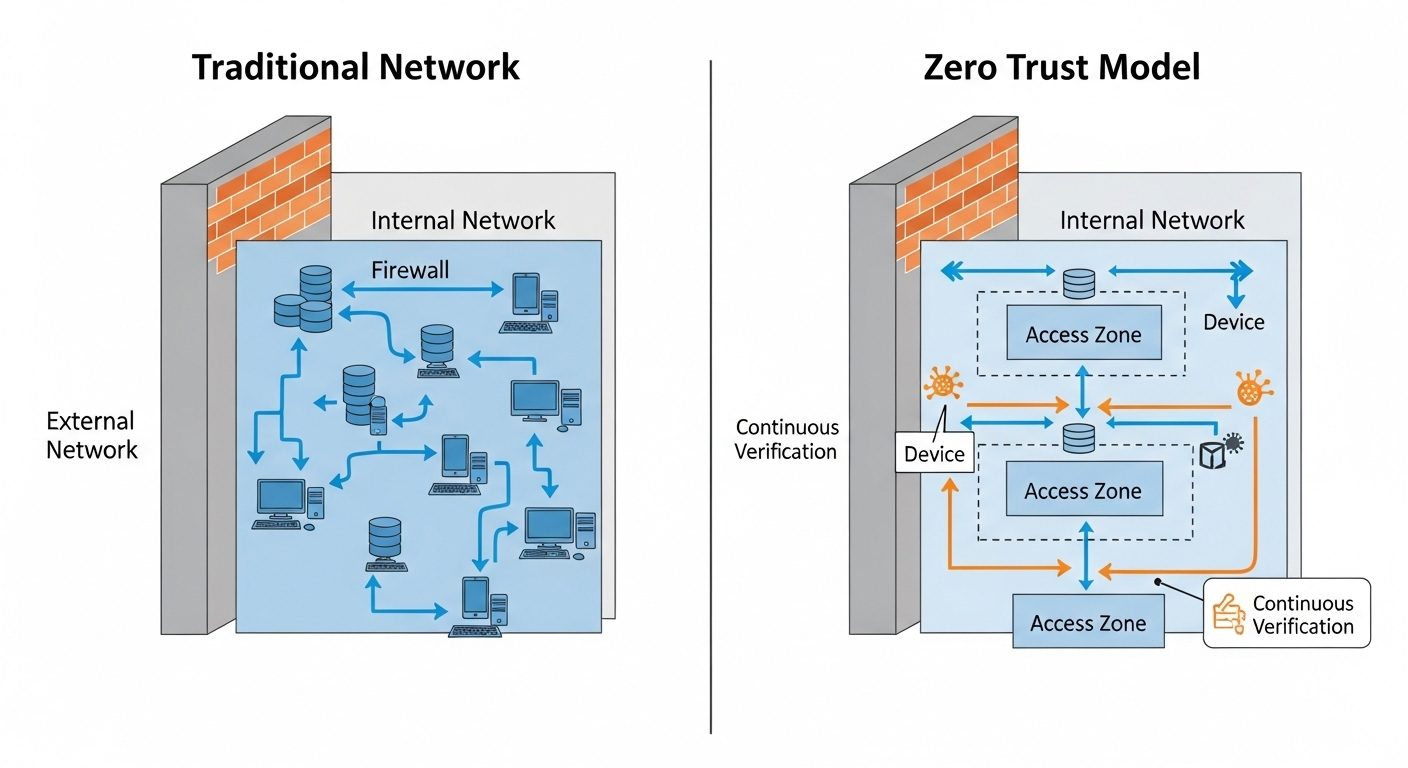
At the turn of the millennium, cybersecurity was all about securing software, data, and applications within a corporate firewall. The assumption was that everything that happened inside an organization was safe, and as long as threats remained outside the firewall, all was well.

As more companies began moving toward remote employees, cloud infrastructure, and a hybrid workforce, those physical boundaries vanished, leaving company networks more vulnerable to cybercriminals. At the same time, bad actors have refined their skills, creating sophisticated schemes to take advantage of common and not-so-common security vulnerabilities.

Cybersecurity as an industry has exploded. As a result, vendors have introduced new solutions and there is a high demand for trained experts in the field. Zero Trust has become the new mantra for many and industry associations have stepped up to define standards and expected protocols.


NIST 800-207 Standards

NIST (National Institute of Standards and Technology) 800-207 is a series of cybersecurity measures and guidelines highlighting the core components of Zero Trust principles. The NIST 800-207 standards are generally accepted as a comprehensive, vendor-neutral framework for any organization. It adapts principles from other industry associations and ensures compatibility and protection for a cloud-based, hybrid workforce. Because the federal government has mandated adherence to NIST 800-207, these standards have been heavily scrutinized by a wide range of government agencies as well as commercial businesses.

NIST 800-207 guidelines require:

  1. Continuous verification. Organizations must always verify access all the time and for all resources.
  2. Blast radius limitations. If a breach does occur, organizations should minimize its impact.
  3. Context collection and response. Systems should automatically incorporate behavioral data and collect context from the tech stack including identity, endpoint, and workload information, before responding.


Zero Trust Virtual Desktop White Paper

In this white paper, you will learn how Apporto helps companies achieve highly secure remote workplaces

Implementing Zero Trust

In order for organizations to successfully implement the Zero Trust concept, they must address two key components: infrastructure technology and employee mindset. Both are equally important in helping businesses secure today’s cloud-based, work-from-anywhere environments.

Technology Requirements

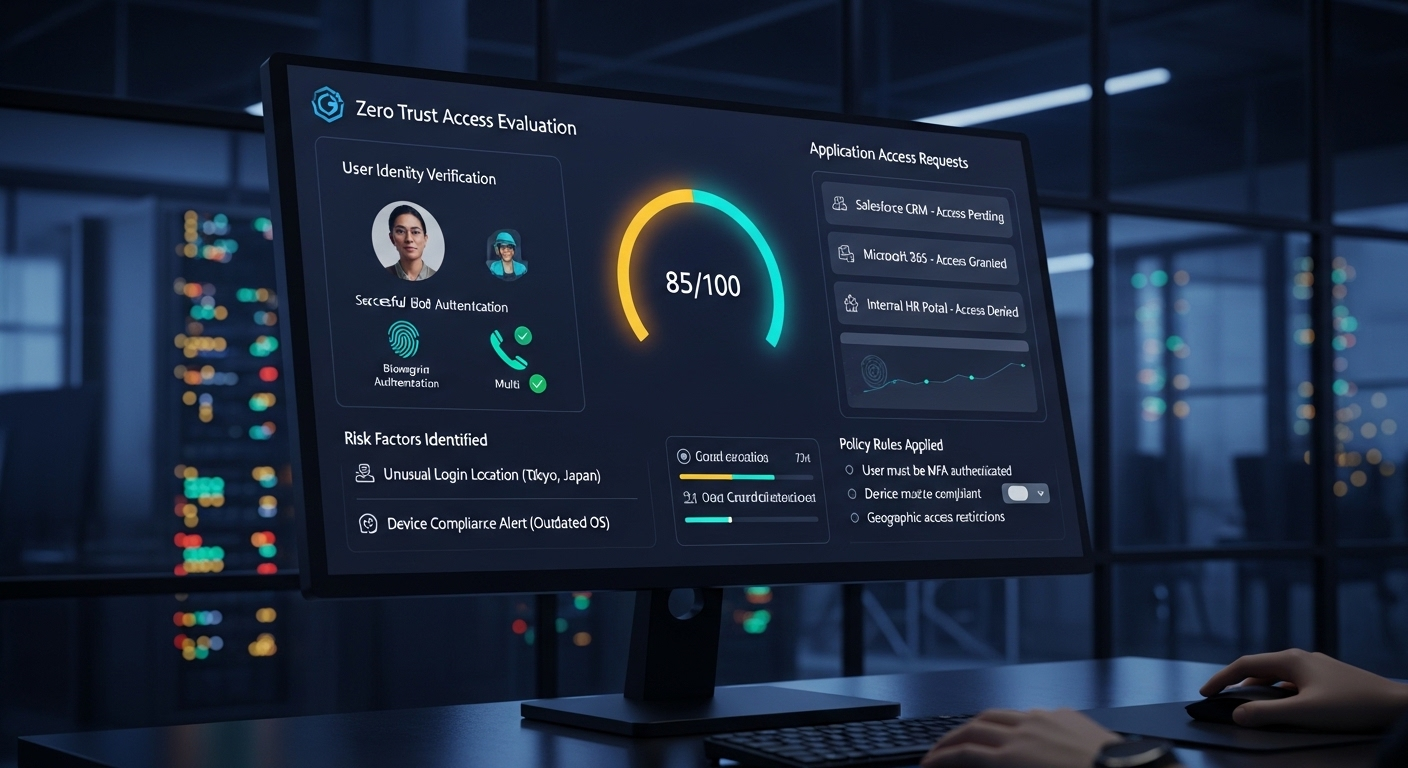
Advanced technologies are needed to build a Zero Trust framework and typically include multi-factor authentication (MFA) and identity protection for each and every employee, contractor, or user of a system. Next-generation endpoint security must check every request for access to and interaction with software, data, or applications, ensuring that privileges are required at that moment.

Robust cloud workload technology must verify the identity of a user and be able to determine appropriate access. Data must be encrypted for secure communications through email or other tools, and all endpoint devices must be free of threats before connecting to any applications or operating systems. This entire system then needs to be maintained and updated on a continuous basis as users, privileges, and threats are always changing.

With four-fifths of all cyberattacks related to credential vulnerabilities or network misuse, companies must have sophisticated protection in these areas. Comprehensive analytics should include artificial intelligence and machine learning technologies that can process trillions of bits of data to identify vulnerabilities and network threats.

People Requirements

The human element of Zero Trust is often overlooked, yet it is just as important, or perhaps even more critical, to a successful implementation of the Zero Trust methodology.

Every single employee, contractor, or other user who interacts with your system must understand and adhere to Zero Trust policies. By shifting the mindset of the individuals working on a system, a company can build another critical layer of protection–adding far-reaching human intelligence and diligence to the security infrastructure.

Ongoing training for employees and other users can educate them on common threats to avoid, such as phishing attempts through email messages, and also arm them with skills to identify and report suspicious activity. Cybercriminals often rely on uninformed individuals to provide access to a system through links and downloads; in fact, more than 80 percent of breaches begin with a human error.

Instilling a Zero Trust mindset by explaining these vulnerabilities and ongoing training about the practices and protocols that will protect not only the individual devices but also the organization as a whole can go a long way to tightening cybersecurity. Adding cyber hygiene metrics to individual performance reviews can also highlight its importance.

Benefits of Zero Trust

Even taking basic steps can improve a company’s security posture; the important thing is to begin the journey. Once Zero Trust architecture has been fully implemented, you can expect the following benefits for your organization:

Stronger Security Posture: Since Zero Trust is incredibly detail-focused, it forces organizations to tighten their security infrastructure and boost visibility into what is going on in real-time. Through organizing and categorizing IT assets, companies gain a better understanding of their environments and access activity, and can better protect assets more completely.

Faster Threat Identification and Isolation: Once additional technology, tools, and training have been implemented, organizations will be more easily able to identify suspicious activity and isolate those threats quickly. Employees trained in understanding vulnerabilities and threats may help decrease the chances that a bad actor can move within a network easily or undetected. Users will also be less likely to be the weak link that allows cybercriminals to use their ignorance to initiate ransomware or other breaches.

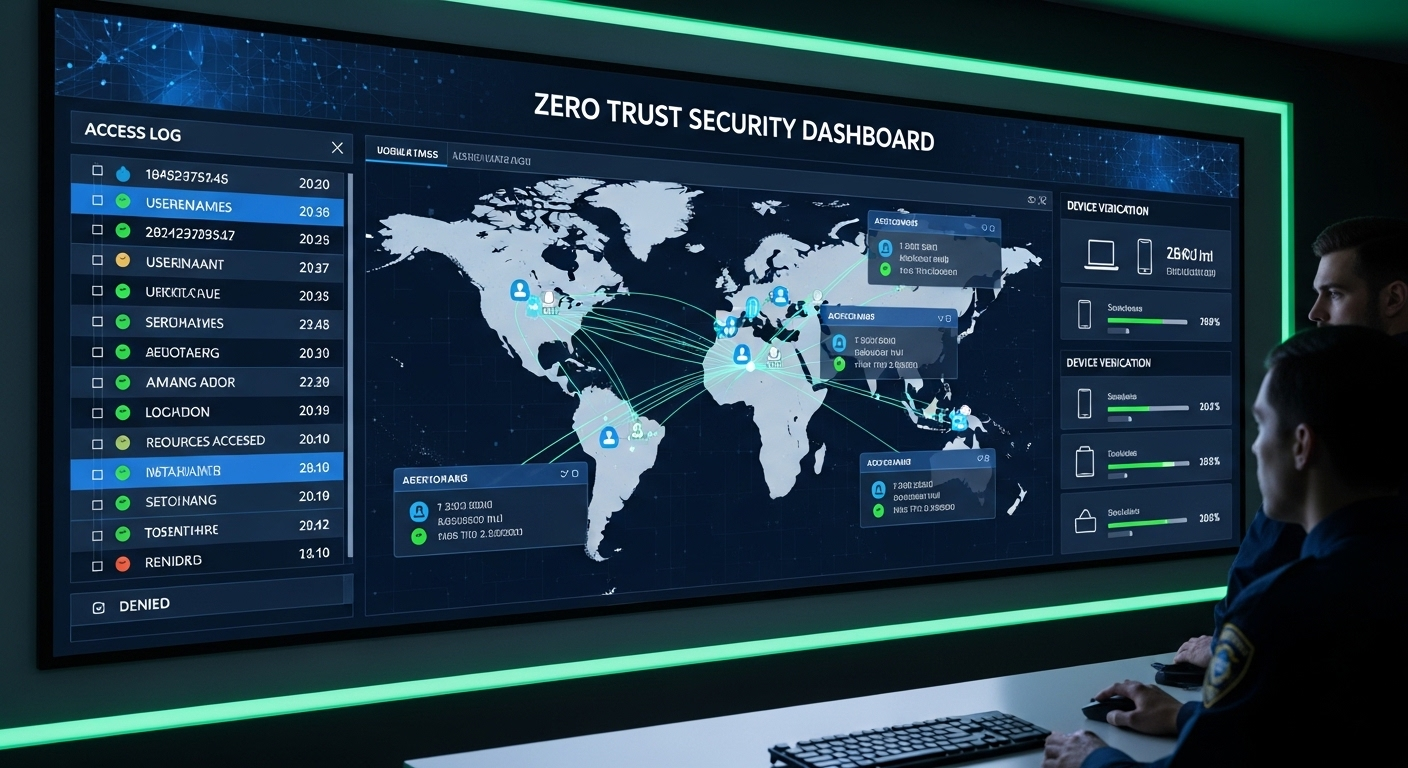
Zero Trust Virtual Desktops by Apporto

Built specifically to meet the modern security challenges of today’s remote work environment, Apporto’s next-generation virtual desktops are designed with Zero Trust as a core architectural principle.

Since Apporto is always delivered in the browser, the security posture of the endpoint device is not a concern. All communications between the end-user and the servers use HTML events and messages and data always resides in the cloud where it is least vulnerable. Users can perform all their critical tasks, including sound video and conferencing, in the virtual environment; ensuring that all traffic goes through the corporate security stack.

The potential for attack by bad actors is further reduced by Apporto’s implementation of a central Zero Trust tenet: Least Privilege Access. Users are automatically provided access to only the apps, data and network resources they need based on group affiliation. This prevents unauthorized access and lateral movement.

Ready to take your security posture to the next level with Apporto’s Zero Trust virtual desktops? Contact us today to see our solution in action.

Try It Now

Meet Apporto, A Modern, Blazing Fast and Secure Cloud Desktop

Are Turbulent Times Ahead for VMware Customers?

Change Ahead Sign

“With VMware, the big question is whether Broadcom will continue with the same trend of squeezing clients for licensing dollars at a time of rising global inflation?”

In one of the largest tech deals in history, semiconductor giant Broadcom recently inked a deal to acquire cloud software company VMware. The surprise acquisition has left industry analysts and VMware customers concerned over the negative impact that this could have on costs, innovation, and support.

Based on Broadcom’s track record with other acquisitions, namely CA and Symantec, in which both companies emerged with lower profiles, slower innovation, and higher prices, Analysts and industry watchers are concerned that VMware could suffer the same fate.

According to Forrester analysts, “Following these purchases, CA and Symantec customers saw massive price hikes, worsening support, and stalled development. Symantec redirected its focus to its biggest resellers and customers. The company largely abandoned its customer base of 100,000 to prioritize its top 2,000. With VMware, the big question is whether Broadcom can leverage a massive enterprise software portfolio and customer base to build a competent modern solution that extends from mainframe to edge. Or does it continue with the same trend of squeezing clients for licensing dollars at a time of rising global inflation?” [1]

Patrick Moorhead of Moor Insights and Strategy shares Forrester’s analyst’s concerns over VMware customers’ potential future challenges. “Broadcom has a reputation for acquiring a company, increasing prices, lowering research investment and OPEX spending to 1% of revenue, [and] causing consternation amongst its customers. Switching costs are high and the time to switch is long, essentially locking in customers.” [2]

Bola Rotibi, research director for CCS Insight’s Software Development practice, adds that acquiring VMware won’t immediately turn Broadcom into a software company. “This has significant integration risk and Broadcom must prove that it can integrate a silicon, software, and services story.” [3]

In response to the news of the acquisition, insiders have also shared alarming insights. Brian Madden, a former VMware technologist who voluntarily left the IT industry in early 2022, warns readers in a recent opinion piece that VMware as we know it will no longer exist. “Broadcom will shred VMware. Many of the products will remain, but the company we know today is toast. The VMware leadership is aware of this. While publicly they toe the party line, you can see it in little ways, like how the announcement on vmware.com is posted. The announcement itself isn’t on VMware paper, and rather than the typical branded corporate rah rah, it’s just an unbranded PDF. It screams “We’re sorry. This is not our fault![4]

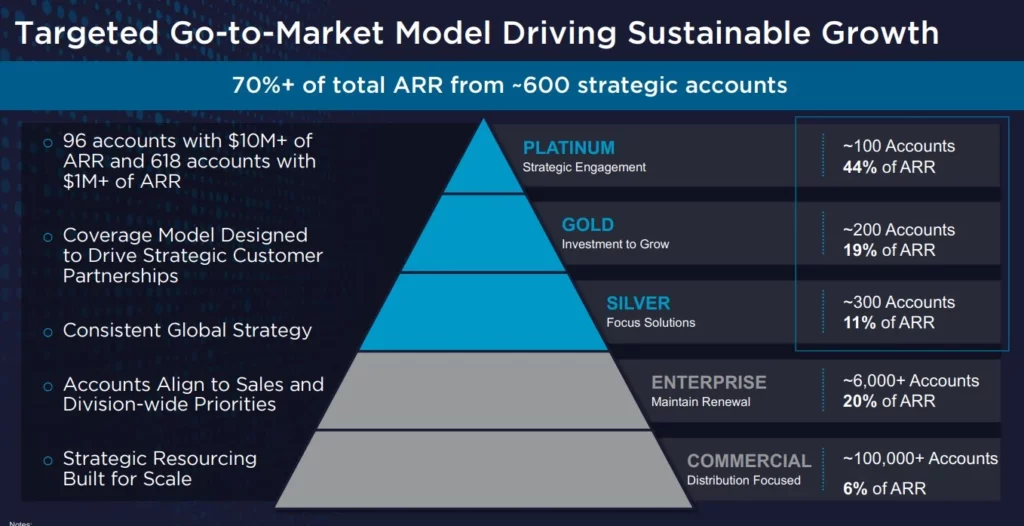
Furthermore, Broadcom partners have alleged that the company uses price hikes to discourage customers it does not want[5]. Although at first glance this may seem to be a diatribe from a handful of disenchanted partners, Broadcom’s go-to-market strategy clearly shows that it plans to ignore most VMware customers and focus solely on 600 strategic accounts. The money saved from cutting development, sales, and marketing to lower-earning accounts will be invested in researching ways to better serve the top 600.

“Broadcom’s stated strategy is very simple: focus on 600 customers who will struggle to change suppliers, reap vastly lower sales and marketing costs by focusing on that small pool, and trim R&D by not thinking about the needs of other customers – who can be let go, if necessary, without much harm to the bottom line.”

– Simon Sharwood, APAC Editor, The Register

In a November 2021 Investor Day, Broadcom President, Tom Krause, presented the below graphic and said, “We are totally focused on the priorities of these 600 strategic accounts.” [6] Krause told investors that Broadcom will target these 600 customers – the top three tiers of the pyramid – because they are “Often in highly regulated industries, therefore risk-averse, and unlikely to change suppliers.” [7]

Targeted GTM Model

Krause went on to say that these top-tier targets have “A lot of heterogeneity and complexity” in their IT departments. Which to Krause indicates that IT budgets are high and increasing quickly. Such organizations do use public clouds, he said, but can’t go all-in on cloud and therefore operate hybrid clouds. Krause predicted they will do so “For a long time to come.” [8]

To further keep customers ensnared in the VMware web, Broadcom plans to stop selling perpetual licenses and sell more, and longer, subscriptions. Doing so creates what he called “quality revenue” that’s better than the revenue from maintenance deals. [9]

Chairman of the VMware board, Michael Dell, has tried to allay fears by positioning the acquisition as a vehicle for better customer service. Like Krause, though, he has specific customers in mind. In a recent statement regarding the acquisition, Dell said, “Together with Broadcom, VMware will be even better positioned to deliver valuable, innovative solutions to even more of the world’s largest enterprises.[10]

Notice how the focus is on the world’s largest enterprises? Customers that generate the most annual recurring revenue. What does this mean for VMware’s thousands of small business and higher ed customers? Are they no longer worthy of receiving innovations in the services they rely on for daily operations or the attention they need when an issue arises?

How Apporto Can Help

Since its founding in 2014, Apporto has been driven to deliver next-generation technology that can be enjoyed anywhere by everyone. Employee-owned Apporto puts customers, not shareholders, first. At Apporto, our tight-knit team of collaborators treats every customer as a strategic partner. This customer-first approach is one of the reasons why we have a 98% customer retention rate.

We pride ourselves on bringing equity and inclusion to all by enabling users to virtually access desktops and applications anywhere, at any time, on any device. Enjoyed by 200+ customers and 1.9 million users, we have been a trusted solution provider for higher education institutions and enterprises for almost a decade.

Explore our interactive demo today to see how you too can optimize efficiencies and maximize savings, all at 50-70% less than the cost of traditional VDI solutions. If you like what you see, (and we know you will), you can take advantage of a limited-time offer for a complimentary migration from VMware to Apporto’s powerful solutions and dependable service. Don’t leave your digital foundation in limbo, contact us today.

Migration Cost: $0.00

Considering a move from VMware? Now is the best time to partner with Apporto. For a limited time only, we’re waiving migration costs.


References

[1] Woo, T., Chhabra, N., Hewitt, A., Sustar, L., Ellis, B., Casanova, C., Betz, C., McKeon-White, W., Mellen, A., Harrington, P., Higgins, S., Nelson, L., O/Donnell, G., and Martorelli, B. (2022, May 26). VMware Customers: Get Ready For Broadcom Disruption. Forrester. https://www.forrester.com/blogs/vmware-customers-get-ready-for-broadcom-disruption/

[2] and [3] Goovaerts, D. (2022, May 26). Broadcom’s $61B deal to acquire VMware raises questions for customers. Fierce Telecom. https://www.fiercetelecom.com/cloud/broadcoms-61b-deal-acquire-vmware-raises-questions-customers

[4] Madden, B. (2022, May 26). Brian Madden’s brutal and unfiltered thoughts on the Broadcom / VMware deal. LinkedIn. https://www.linkedin.com/pulse/brian-maddens-brutal-unfiltered-thoughts-broadcom-vmware-brian-madden/

[5] Sharwood, S. (2022, May 31). VMware customers have watched Broadcom’s acquisitions and don’t like what they see. The Register. https://www.theregister.com/2022/05/31/vmware_broadcom_acquisition_customer_reaction/

[6]-[9] Sharwood, S. (2022, May 30). Broadcom’s stated strategy ignores most VMware customers. The Register. https://www.theregister.com/2022/05/30/broadcom_strategy_vmware_customer_impact/

[10] Bernard, A. (2022, May 27). Broadcom, VMware deal good for investors but customers may suffer. TechRepublic. https://www.techrepublic.com/article/broadcom-vmware-deal-good-for-investors-but-customers-may-suffer/

Virtual Computer Labs Are Here to Stay: Why This is Good News for Students

Student Using Virtual Computer Lab

During the COVID-19 pandemic, higher education institutions underwent significant technical transformation driven by the need to quickly support remote learning. To assist their students with the sudden pivot to remote learning, many colleges and universities transitioned from physical to cloud-based computer labs.

With the world now starting to emerge from COVID-19 and students and faculty returning to campus, the role of virtual computer labs and their impact on student success is top of mind for many institutions. In this blog, we will examine the prominent role virtual computer labs play in the continued evolution of higher education and the positive impact the popular platform has had on students.

What are Virtual Computer Labs?

With virtual computer labs, “VCL”, instead of a student visiting a physical computer lab, a student can use any device connected to the internet to access a virtual version of that lab and leverage its respective software and resources. The VCL is accessed via a web browser interface and is platform-independent. All operating systems, servers, software, and applications are centrally maintained in the cloud, so end-users do not need to house or maintain any of the programs or software on their own machines; instead, they simply log in to the cloud-based system to access everything they would use when visiting the brick-and-mortar campus computer lab.

Computer Labs: Then and Now

Since the 1990’s, computer labs have been critical hubs for connecting students to new technologies. Technologies that a regular student may not be able to afford. Campus computer labs provided free and easy access to computers, scanners, printers, and the internet, for completing homework and projects.

As computers evolved and became more affordable over the years, the need for students to visit on-campus computer labs has decreased. The rise of mobile devices and their comparable computing power have further diminished the role of on-prem computer labs in students’ lives. As a result, the computer lab has given way to institutions embracing a BYOD (bring your own device) model.

Student device ownership in higher ed is fast approaching 100% which has had far-reaching implications for classroom practices and institutional policies. A 2020 EDUCAUSE Student Technology Report found that the average number of devices connecting to campus Wi-Fi in a given day is two per student, with an overwhelming majority of students reporting connecting two or more devices daily[1]. Three-quarters of students who connect to campus Wi-Fi do so with both a smartphone and a laptop, the digital devices of choice for higher education students[2]. Colleges and universities have adapted to this era of personal computer ownership and unparalleled connectivity by increasing the number of online courses available and expanding online degree programs.

As faculty and students across the country were instructed to stay home in response to the COVID-19 pandemic, cloud-based learning platforms became a critical component of ensuring higher ed institutions could continue to deliver quality education to their communities. As a result, 84% of America’s undergraduates experienced some or all of their classes moving to online-only instruction due to the pandemic[3].

Colleges and universities had to innovate to educate. One way in which they did this was by providing students with an accessible and productive learning experience through cloud-based computer labs that closely mirrored the physical computer labs they could no longer visit.

This digital transformation has improved institutional operations on a massive scale, benefiting staff and students alike; both of which have expressed interest in continuing some form of virtual learning in the future. In a 2021 EDUCAUSE QuickPoll of university administrators, IT departments, and other staff, nearly 70 percent of respondents say they would like a remote option post-pandemic.  This strongly echoes student sentiment regarding their future learning preferences. In a 2021 Digital Learning Pulse survey, 73 percent of students polled “somewhat” or “strongly” agreed that they would like to take some fully online courses in the future. A slightly smaller number of students, 68 percent, indicated they would be interested in taking courses offering a combination of in-person and online instruction[4].

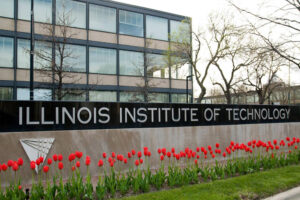
Virtual Computer Labs: 2-year Impact Assessment Conducted by IIT

The Office of Technology Services at The Illinois Institute of Technology has completed a two-year assessment of its transformation from physical infrastructure to Apporto’s virtual computer lab.​ Read their findings here.

Illinois Institute of Technology

What are the Benefits of Virtual Computer Labs for Students?

Virtual computer labs are instrumental in helping students learn, work with software programs, complete assignments, and interact with classmates and instructors. Let’s take a closer look at some of the benefits students enjoy from this tech-forward teaching tool.

Flexibility and Productivity

Virtual computer labs allow students to quickly and easily access the educational resources they need on their terms. Students can engage in an active learning environment anytime, anywhere because they are no longer bound to a certain location or schedule. Gone are the days when a student would have to wake up on a Saturday morning and spend an hour driving to campus and finding a parking spot, only to have limited time to work on a clunky PC in a loud and crowded computer lab. Now, the computer lab is literally in students’ hands, eliminating the need to commute and enabling them to spend more time working on assignments when and where they work best, whether that’s a dorm room, coffee shop, or common area.

Equity and Inclusion

Virtual computer labs give students the same access to their institution’s latest technology and software as if they were in the physical computer lab. Students don’t need high-end hardware to access the most popular lab software and do not have to load it onto their personal devices. Since the virtual computer lab is run primarily through a browser, all that is necessary is a connection to the Internet.

According to a recently published assessment by the Illinois Institute of Technology, this assists in student success by equalizing the student software experience. Meaning someone with a $100 Acer Chromebook will have the same software experience as a $2,800 M1 MacBook Pro[5].

Collaborative Learning

Like their students, instructors are able to securely access the virtual computer lab from any device, giving them much more freedom as to when and where they can review assignments or answer questions. Students benefit from their teacher’s easy access to institutional infrastructure by receiving feedback and instruction in real-time or outside of traditional classroom hours. Virtual computer labs also provide opportunities for more extensive feedback on many different types of assignments. Instructors can offer help at various points, as well as track analytics like user participation.

Furthermore, because students can quickly and easily access all of the digital resources required to be successful in a class on their device of choice, they do not have to worry about their technical readiness and can simply focus on learning.

Conclusion

Higher education is undergoing a significant digital transformation that shows no signs of slowing down. To sustain academic excellence and keep schools financially viable, institutions must quickly adjust to students’ new expectations and use all available digital resources to improve the student journey.

Innovative education delivery like virtual computer labs enhance the learning process and help modernize instruction in today’s highly digitalized world. Take the next step to improving your students’ experience by contacting Apporto today.

Additional Resources You May Enjoy:

Case Study: Next Generation Computer Lab

Apporto Virtual Computer Lab ROI Calculator

Citations:

[1] and [2] Gierdowski, D., Christopher Brooks, D., and Galanek, J. (2020, October 21). EDUCAUSE 2020 Student Technology Report: Supporting the Whole Student. https://www.educause.edu/ecar/research-publications/student-technology-report-supporting-the-whole-student/2020/technology-use-and-environmental-preferences

[3] National Center for Education Statistics. (2021, June 16). 84% of All Undergraduates Experienced Some or All Their Classes Moved to Online-Only Instruction Due to the Pandemic. https://nces.ed.gov/whatsnew/press_releases/06_16_2021.asp#:~:text=In%20the%20largest%20study%20to,only%20instruction%20during%20spring%202020.

[4] McKenzie, L. (2021, April 27). Students Want Online Learning Options Post-Pandemic. https://www.insidehighered.com/news/2021/04/27/survey-reveals-positive-outlook-online-instruction-post-pandemic

 [5] Beidas, S. and McHugh, L. (2022, March 27) The COVID-19 Pandemic and Retooling Application Delivery: The Transformation from Physical to Cloud-Based Infrastructure. SIGUCCS ’22 Virtual Event, New York, NY, USA. https://doi.org/10.1145/3501292.3511580

About Apporto

Since 2014, Apporto has been delivering robust, turnkey virtual solutions that enable users to access desktops and applications anywhere, at any time, on any device. A trusted partner for higher education institutions and enterprises across the globe, Apporto works with customers to understand their unique needs in order to reduce demands on IT departments, maximize productivity, and boost security architectures. Contact us today to learn more or to request a demo.

How to Choose the Right DaaS Provider

IT decision maker evaluating multiple cloud desktop providers on large comparison screens with performance, security, and pricing metrics visible

Choosing a Desktop as a Service provider used to feel like a narrow IT task. That assumption no longer holds. As remote teams grow and virtual desktops become a standard way to deliver work environments, the decision carries weight far beyond infrastructure.

Organizations now rely on DaaS providers to deliver secure access, consistent performance, and a user experience that does not slow people down. At the same time, cost pressure is real. Subscription models, usage based pricing, and hidden infrastructure expenses can quietly affect budgets over time. 

Security expectations have also risen. Protecting sensitive data, meeting compliance requirements, and maintaining visibility across user sessions are no longer optional.

This is why knowing how to choose the right DaaS provider matters. The provider you select influences productivity, risk exposure, and long term flexibility. Some platforms fit short term needs but strain as teams grow. Others support sustainable outcomes but require careful evaluation upfront.

This guide breaks down what to look for, what to question, and how to decide with clarity rather than guesswork.


What Is a DaaS Provider, and What Do They Actually Deliver?

A DaaS provider delivers complete desktop environments without requiring you to own or manage physical machines. Instead of installing operating systems and applications on individual computers, the provider delivers virtual desktops and virtual apps from cloud infrastructure. You log in, your workspace appears, and the heavy lifting happens elsewhere.

This is where confusion often starts. Desktop as a Service is not the same as traditional VDI running in a server room, and it is not the same as SaaS tools accessed through a browser.

 A service DaaS provider manages the backend infrastructure, including servers, storage, updates, and availability. Your team focuses on using the desktop, not maintaining it.

These providers also make access flexible. Users connect to the same desktop from laptops, tablets, or shared machines, as long as there is an internet connection. The desktop follows the user, not the device. That consistency matters as teams spread across locations and devices.

At its core, a DaaS provider delivers:

  • A virtual desktop environment hosted in the cloud
  • Centralized management for updates, images, and policies
  • Secure remote access to desktops and applications

Understanding this foundation makes it easier to compare providers later. Once you see what is actually delivered, you can start asking better questions about security, performance, and fit


Why the “Right” DaaS Provider Depends on Your Business Needs

Business leaders mapping company needs to DaaS provider features on a strategic planning dashboard

There is no single DaaS provider that works best for every organization. The right provider depends on how your business operates, who your users are, and what outcomes matter most over time. Treating the decision as a generic technology purchase usually leads to frustration later.

User needs vary widely. A call center agent, a developer, and a healthcare administrator all interact with desktops in different ways. Some roles demand high performance and low latency. Others prioritize secure access to sensitive data or compatibility with specialized software. A provider that works well for one group may create friction for another.

Industry context also shapes the decision. Compliance requirements, cost controls, and security expectations differ across sectors. What feels cost effective in one environment can become expensive or restrictive in another. The right provider balances performance, compliance, and pricing in a way that supports how your teams actually work.

Provider fit shows up quickly in productivity and user experience. When desktops load slowly, sessions drop, or tools feel constrained, people notice. Aligning provider capabilities with real business needs helps avoid these issues and creates better long term business outcomes rather than short term convenience.


Types of DaaS Providers You’ll Encounter

Before comparing features or pricing, it helps to understand the main categories of DaaS providers on the market. These providers take different approaches to delivering virtual desktops, and those differences affect control, complexity, and long term flexibility.

Some organizations start with hyperscalers. These platforms are built directly on large cloud providers and integrate tightly with broader cloud services. They offer strong scalability and appeal to teams already invested in a specific cloud ecosystem. Setup and management often require more internal expertise, especially as environments grow.

Citrix based platforms sit on top of cloud infrastructure but add a mature layer for desktop virtualization and virtual apps. They are known for performance optimization and granular control, though they can introduce licensing complexity and higher management overhead.

VMware based platforms follow a similar model. They appeal to organizations with existing VMware experience and offer consistency across on premises and cloud environments. Operational complexity can increase if teams are not already familiar with the tooling.

Fully managed third party providers aim to simplify everything. They handle infrastructure, updates, security, and scaling, allowing IT teams to focus on higher value work.

Common examples you will encounter include:

  • Azure Virtual Desktop
  • Amazon WorkSpaces
  • Google Cloud based DaaS offerings
  • Citrix DaaS and Horizon Cloud


Knowing which category aligns with your capabilities makes deeper evaluation far more practical.


Features to Evaluate in Any DaaS Provider

 

IT administrator reviewing a cloud desktop control panel with session management, app compatibility, and OS options displayed

When evaluating DaaS providers, having a clear baseline checklist keeps comparisons grounded. Features look similar on paper, but small differences in how they are delivered can affect daily operations in a big way.

  • Virtual desktop and virtual app delivery
    A strong provider supports both full desktops and individual virtual apps. This flexibility allows teams to choose what users actually need instead of forcing a one size approach.
  • Windows and Linux desktop support
    Operating system support matters more than it seems. Some environments rely heavily on Windows desktops, while others need Linux desktops for engineering or specialized workloads.
  • Image management and custom images
    The ability to create, update, and reuse custom images saves time and reduces configuration drift. Poor image management quickly turns into operational overhead.
  • Centralized management tools
    Centralized management simplifies updates, policy changes, and troubleshooting. Without it, IT teams end up juggling multiple consoles and manual processes.
  • User session controls
    Granular session controls help manage resource usage, idle sessions, and access behavior. These controls directly affect performance and cost efficiency.
  • Application compatibility
    Virtual desktops must support existing software without workarounds. Compatibility issues often surface late and disrupt user workflows if not tested early. 

This checklist creates a practical foundation. Once these key features are clear, deeper evaluation around security, pricing, and scalability becomes far easier and more reliable.


Security and Compliance: What You Cannot Afford to Overlook

Security and compliance cannot sit at the end of a DaaS evaluation checklist. They belong near the top, because the way a provider protects data and enforces controls directly affects risk, trust, and long term viability. Once virtual desktops are in place, reversing a weak security decision becomes expensive and disruptive.

Centralized data storage is one of the biggest advantages of desktop as a service. Sensitive data stays in controlled cloud environments rather than scattered across local devices. When laptops are lost or employees change roles, data exposure drops sharply. That alone changes the security posture for many organizations.

Compliance requirements add another layer. Industries handling patient records, payment data, or regulated information must meet strict standards. A provider’s certifications, controls, and audit practices matter as much as performance benchmarks. Security cannot rely on promises alone. It needs evidence.

Ongoing monitoring also plays a critical role. Threats evolve, configurations drift, and usage patterns change. Providers that invest in regular audits and visibility tools help organizations detect issues early instead of reacting after damage occurs.

Key security capabilities to verify include:

  • Multi factor authentication to strengthen user access
  • Encryption in transit and at rest to protect data flows and storage
  • Compliance controls for HIPAA, PCI DSS, and similar regulations
  • Regular security audits that validate controls over time 

When security and compliance are treated as core decision drivers, the result is a more resilient DaaS deployment that protects sensitive data without slowing users down.


Performance and User Experience: What Actually Affects End Users

Performance monitoring interface tracking login times, peak usage loads, and session stability

Performance decisions made on the backend surface very quickly for end users. When a virtual desktop feels slow, disconnects often, or struggles to load applications, productivity drops and frustration rises. This is where many DaaS evaluations succeed or fail.

Latency is one of the first factors users notice. Internet connection quality, geographic proximity to data centers, and how traffic is routed all influence response time. Even small delays add up when users spend hours inside a desktop session. Low latency is not a luxury, it is a baseline expectation.

Resource allocation matters just as much. Providers differ in how they assign CPU, memory, and storage to each user session. Poor allocation leads to contention, where one user’s workload affects another’s experience. Strong platforms monitor usage patterns and adjust resources to maintain optimal performance throughout the day.

Performance tuning also affects consistency. Some providers optimize for peak loads, while others struggle during busy periods. These differences show up in application responsiveness, login times, and session stability.

The impact on productivity is direct. Smooth performance allows people to focus on work rather than workarounds. When desktops respond quickly and behave predictably, users trust the environment. That trust translates into better adoption, fewer support tickets, and a user experience that supports real work instead of getting in the way.


Integration With Your Existing Infrastructure

Integration often decides how smooth a DaaS rollout feels after the first login. A provider may look strong on paper, but if it does not fit cleanly with your existing infrastructure, friction appears quickly. Users notice it, and IT teams feel it even sooner.

Identity systems sit at the center of this discussion. Most organizations already rely on Active Directory or similar identity services to manage access. A DaaS provider should integrate directly with these systems so users authenticate once and move between tools without confusion. When identity flows cleanly, access stays secure and administration stays manageable.

The same applies to the Microsoft ecosystem. Many teams depend on Microsoft 365, Windows desktops, and related services. Tight alignment here reduces duplication, avoids conflicting policies, and keeps workflows familiar. When desktops, files, and collaboration tools work together, adoption happens faster.

Existing tools and workflows also matter. Monitoring platforms, security controls, and management processes should continue working without heavy redesign. Integration gaps create manual work and increase the chance of errors.

When evaluating providers, confirm support for:

  • Seamless integration with current systems and identity platforms
  • Hybrid cloud deployments that connect cloud desktops with on premises resources
  • Compatibility with existing infrastructure, tools, and workflows 

Strong integration shortens deployment timelines, lowers operational risk, and helps virtual desktops feel like a natural extension of what teams already use.


Pricing Models and Total Cost of Ownership
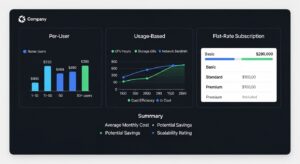
Business dashboard comparing DaaS pricing models with per-user, usage-based, and flat-rate subscription breakdowns

Pricing is where many DaaS decisions quietly go wrong. What looks affordable at first can become expensive once usage grows, features expand, or contracts renew. Understanding pricing models and total cost of ownership early helps avoid those surprises.

Most DaaS platforms operate under an operating expense model rather than a capital expense one. Instead of large upfront hardware purchases, costs are spread over time through subscriptions. This can improve cash flow, but it also requires closer attention to usage patterns. Idle desktops, oversized resource allocations, or unused licenses still cost money month after month.

Subscription types vary. Some providers charge per user, others charge based on compute usage, storage, or session hours. Long term cost efficiency depends on how closely pricing aligns with how your teams actually work. A model that fits a small pilot may not scale well across hundreds or thousands of users.

Hidden costs deserve careful scrutiny. Licensing for operating systems, virtual apps, or third party software can add up quickly. Network egress fees, premium support tiers, and advanced security features may not be included by default.

Key pricing elements to evaluate include:

  • Pay as you go pricing tied to actual usage
  • Flat rate pricing for predictable workloads
  • Hidden fees and licensing costs buried in contracts
  • Infrastructure and maintenance savings from offloading hardware 

Looking beyond monthly rates and focusing on total cost over time leads to better decisions and fewer budget surprises.


Scalability, Flexibility, and Growth Readiness 

Scalability becomes important the moment conditions change, and they always do. Teams grow, projects end, seasonal demand rises, and priorities shift. A DaaS provider should handle these changes without forcing major reconfiguration or long approval cycles.

Scaling users up or down needs to be simple. Adding new users quickly supports hiring and onboarding, while removing users just as easily prevents paying for unused resources. Providers that lock organizations into rigid commitments make growth harder than it needs to be.

Flexible work models add another layer. Remote teams, contractors, and temporary workers often require access for limited periods. A scalable platform supports these scenarios without creating security gaps or operational overhead. Desktops should appear when needed and disappear when the work ends.

Resource elasticity also matters. Workloads fluctuate throughout the day and across the year. Platforms that adjust compute and storage dynamically avoid overprovisioning while still delivering reliable performance. This balance supports growth without inflating costs.

Evaluating scalability means looking past current headcount. The right provider supports growth, contraction, and experimentation. When desktops scale smoothly alongside the business, technology becomes an enabler rather than a constraint, and teams stay focused on outcomes instead of infrastructure limits.


Vendor Lock-In and Multi Cloud Support Considerations

Vendor lock in rarely causes problems on day one. It shows up later, when costs rise, service levels change, or business priorities move in a new direction. At that point, switching providers can feel far more difficult than expected.

Provider dependency becomes a risk when desktops, images, identity systems, and data are tightly bound to a single platform. Custom configurations that cannot be exported, proprietary tools, or restrictive contracts limit flexibility. Over time, this can reduce negotiating power and slow down change.

Multi cloud support helps reduce that risk. Providers that operate across multiple cloud environments give organizations more options. This flexibility matters for performance optimization, regulatory requirements, and long term cost control. It also makes future transitions less disruptive if priorities evolve.

Data portability plays a critical role here. Virtual desktops generate profiles, settings, and user data that must remain accessible. If exporting that data is difficult or poorly documented, lock in becomes very real.

When evaluating providers, look closely at:

  • Exit strategies that allow you to move workloads cleanly
  • Support for multi cloud environments rather than a single dependency
  • Data portability for desktops, images, and user profiles 

Avoiding vendor lock in is not about planning to leave immediately. It is about preserving options so the platform continues to serve the organization as needs change.


Service Level Agreements and Support Expectations 

Service level agreements define how reliable a DaaS provider actually is once the platform is in daily use. Marketing claims fade quickly when desktops go down or performance drops, so written commitments matter. SLAs set expectations for uptime, response times, and accountability when things go wrong.

Uptime guarantees are the first place to look. Providers often promise high availability, but the details matter. How uptime is measured, what counts as downtime, and what remedies exist if targets are missed all affect real reliability. A strong SLA is clear, specific, and enforceable.

Support responsiveness is just as important. When users cannot access their desktops, delays ripple across teams. Fast response times, clear escalation paths, and knowledgeable support staff reduce disruption. This becomes even more critical for organizations running time sensitive operations or supporting global teams.

Incident handling deserves close attention. Problems will happen. What matters is how quickly they are detected, communicated, and resolved. Providers that invest in monitoring and transparent incident reporting build trust over time.

Key areas to verify include:

  • SLAs and uptime commitments with defined remedies
  • Support availability across hours and regions
  • Troubleshooting processes and escalation paths 

Clear service levels turn a provider relationship into a dependable partnership rather than a source of uncertainty.


How to Evaluate and Compare DaaS Providers Step by Step

Comparing DaaS providers works best when the process is structured. Skipping steps or relying on demos alone often leads to decisions that look good initially but fail under real workloads. A step by step approach keeps evaluation grounded in reality.

  • Define user personas and workloads
    Start by mapping who will use the desktops and how. Identify roles, applications, performance needs, and usage patterns. This prevents overbuying or underestimating requirements.
  • Identify compliance and security requirements
    Document industry regulations, data protection standards, and internal policies. These requirements narrow the field quickly and prevent late stage surprises.
  • Test performance with pilot users
    Run a pilot with real users and real work. Measure login times, application responsiveness, and session stability. Feedback from this phase is often more valuable than specifications.
  • Review pricing and contracts
    Examine subscription models, licensing terms, and usage limits. Look beyond monthly rates and calculate total cost under realistic scenarios.
  • Validate support and SLAs
    Review service level agreements, escalation processes, and support coverage. Confirm how issues are handled when performance or availability drops. 

Following these steps turns provider selection into a deliberate decision rather than a guess. The result is a clearer path to choosing the right provider with fewer tradeoffs hidden beneath the surface.


Why the Right DaaS Provider Should Feel Like a Partner 

Choosing a DaaS provider is not a one time transaction. It becomes an ongoing relationship that affects daily operations, long term plans, and how smoothly teams work over time. This is why the right provider should feel less like a vendor and more like a true partner.

Strategic alignment matters here. A provider that understands your strategic goals is better positioned to recommend configurations, pricing models, and performance options that support growth rather than short term convenience. When priorities change, a partner adapts with you instead of forcing rigid constraints.

Ongoing optimization is another signal. The best providers do not disappear after deployment. They help analyze usage patterns, suggest improvements, and adjust resources as needs evolve. This continuous involvement helps maintain performance and cost efficiency without constant internal effort.

Shared success metrics bring accountability into the relationship. When uptime, user experience, and security outcomes are measured together, incentives align naturally. Both sides focus on long term value rather than short term fixes.

A provider that acts as a partner contributes stability, insight, and flexibility. That relationship often becomes the difference between a platform that merely functions and one that consistently supports business success.


Conclusion

Choosing the right DaaS provider is a decision that reaches far beyond infrastructure. It shapes how securely data is handled, how predictable costs remain over time, and how users experience their daily work. When desktops perform well and access feels seamless, teams stay productive. When they do not, friction spreads quickly.

Careful planning reduces that risk. Evaluating providers against real business needs, security requirements, and growth plans helps avoid compromises that surface later. A thoughtful approach also makes it easier to balance flexibility with control, and innovation with stability.

The right DaaS provider supports long term success rather than creating future obstacles. It scales as teams grow, adapts as priorities change, and maintains a consistent user experience without adding unnecessary complexity.

Before making a final decision, take time to assess readiness, requirements, and expectations across the organization. Explore modern, secure DaaS platforms with a clear understanding of what matters most to your teams. Confidence comes from clarity, and clarity leads to a provider that truly fits.


Frequently Asked Questions (FAQs)


1. How do you compare DaaS providers fairly?

Start with the same requirements for every provider. Define user roles, workloads, security needs, and performance expectations before reviewing features or pricing. Without a common baseline, comparisons turn into opinions instead of evidence. Run pilots using real users and real applications. Measure login times, session stability, and support responsiveness. Real usage reveals differences that spec sheets never show.

2. What costs should you look at beyond the monthly price?

Monthly pricing rarely tells the full story. Look closely at licensing fees, storage charges, network usage costs, and premium support tiers. These items often appear later and affect total cost. Also consider operational savings. Reduced hardware purchases, lower maintenance effort, and fewer support tickets can offset subscription costs over time.

3. How important are security certifications when choosing a provider?

Security certifications matter because they show how controls are implemented and audited. Standards like HIPAA or PCI DSS indicate structured processes rather than informal promises. Ask how often audits occur and what monitoring tools are in place. Certifications should be paired with ongoing visibility and clear incident response practices.

4. How long does it usually take to migrate to a DaaS platform?

Timelines vary based on complexity. Small pilots can launch in days, while full deployments often take weeks. Factors include application compatibility, identity integration, and user training. A phased rollout reduces risk. Starting with a limited group helps surface issues early and improves adoption before wider deployment.

5. Can DaaS work with existing devices and hardware?

In most cases, yes. Cloud desktops are device agnostic and can run on laptops, desktops, thin clients, and personal devices. This extends the lifespan of existing hardware. Testing is still important. Performance depends on device capabilities and internet connectivity, so validation prevents surprises later.

6. How do you avoid vendor lock in with DaaS providers?

Look for providers that support data portability and standard image formats. Understand exit terms in contracts and confirm how desktops and user data can be exported. Multi cloud support also reduces dependency. Providers that operate across environments give organizations more options as needs evolve.

7. What performance tests should you run before deciding?

Test login speed, application load times, and session stability during peak usage. Simulate real workloads rather than ideal conditions. User feedback matters as much as metrics. If desktops feel responsive and predictable, adoption improves and support demands stay manageable.