
What Is a Virtual Cybersecurity Lab?
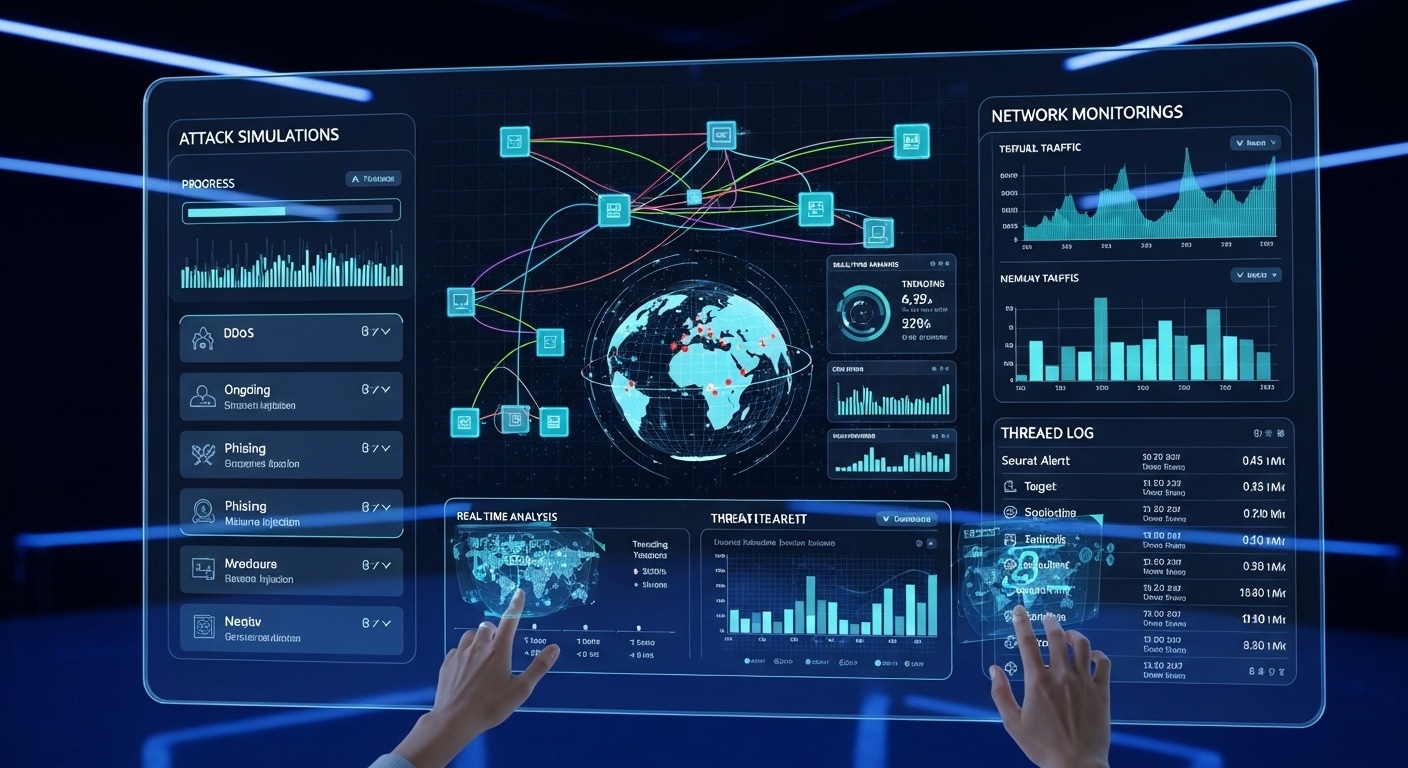
A virtual cybersecurity lab is a cloud-based environment where users practice cybersecurity skills using simulated systems, networks, and attack scenarios. These labs provide hands-on training for penetration testing, malware analysis, and incident response without risking real infrastructure. Platforms like Apporto simplify secure lab access through browser-based delivery.
Cybersecurity is no longer a field where theory alone can prepare you for real challenges. Modern cyber threats evolve quickly, and organizations increasingly need professionals who can apply knowledge in practical situations.
A virtual cybersecurity lab helps bridge that gap by providing a safe, cloud-based environment for developing real-world cybersecurity skills through hands on training and realistic attack simulations.
As demand for skilled cybersecurity professionals continues to grow, virtual labs have become a core part of modern cybersecurity training. They allow you to practice ethical hacking, malware analysis, incident response, and other critical skills without risking live systems.
In this guide, you’ll learn how virtual labs work, why they matter, and how they are shaping the future of cyber security education.
What Is a Virtual Cybersecurity Lab?
Cybersecurity is one of those fields where reading about a concept and actually doing it are two very different things. You can understand how a phishing attack works, for example, but recognizing one in a live environment requires practice. That’s where a virtual cybersecurity lab enters the picture.
These environments give you a place to learn, experiment, make mistakes, and try again, all without putting real systems or business operations at risk. Before exploring how these labs work, it’s worth starting with a simple definition.
What Is the Simplest Definition of a Virtual Cybersecurity Lab?
A virtual cybersecurity lab is a cloud-based training environment where you can practice cybersecurity skills using simulated systems, networks, and attack scenarios. These labs provide hands-on access to tools, operating systems, and exercises that replicate real-world cybersecurity challenges without exposing live infrastructure to risk.
At its core, a virtual cybersecurity lab functions like a digital practice field. Instead of working on production systems, you interact with realistic replicas built inside a secure virtual environment. Within that space, you can investigate cyber threats, perform security assessments, analyze suspicious files, and experiment with defensive techniques.
Most modern virtual cybersecurity labs run entirely in the cloud, allowing access through a web browser from almost anywhere with an internet connection. That accessibility has made them increasingly popular among universities, training providers, employers, and independent learners.
Perhaps the biggest advantage is realism. Unlike static tutorials, modern cybersecurity labs are designed to mimic the systems, tools, and challenges used by cybersecurity professionals every day. The result is a learning experience that feels far closer to actual security work than traditional classroom instruction.
How Do Virtual Cybersecurity Labs Create Safe Learning Environments?
The phrase “learn by doing” sounds simple enough. In cybersecurity, though, doing the wrong thing on a live network can have serious consequences. A misplaced command, a poorly configured firewall rule, or a malware sample opened on the wrong machine can quickly become a costly mistake.
That’s why virtual labs are built around isolation.
Every exercise takes place inside a controlled environment that is separated from production systems and business infrastructure. You can launch attacks, investigate infections, test vulnerabilities, and analyze suspicious activity without affecting real users or data.
This risk-free sandboxing approach provides several important benefits:
- Safe malware analysis without exposing production systems
- Secure penetration testing practice
- Freedom to experiment without operational consequences
- Repeated practice opportunities for complex scenarios
- Realistic attack simulations in a safe environment
The value of that freedom is hard to overstate. Learners often develop stronger technical skills when they can test ideas, break things, and troubleshoot problems without worrying about damaging critical systems.
For organizations, these environments also create a secure environment for employee development. Security teams can practice incident response procedures, investigate simulated breaches, and strengthen defensive capabilities without disrupting day-to-day operations.
How Is a Virtual Cybersecurity Lab Different From Traditional Cybersecurity Training?
Traditional cybersecurity education has historically focused on theory. Virtual labs add practical experience to that foundation.
| Traditional Training | Virtual Cybersecurity Lab |
|---|---|
| Theory-focused lessons | Hands-on practice and experimentation |
| Physical classroom infrastructure | Cloud-hosted virtual labs |
| Fixed schedules and locations | 24/7 remote accessibility |
| Static exercises | Real-world simulations |
| Limited tool exposure | Access to professional security tools |
| Observation-based learning | Interactive skill development |
The difference often comes down to participation. Reading about vulnerability scanning is useful. Performing vulnerability scans against simulated systems teaches you how tools behave, how findings appear, and how security teams interpret results.
Likewise, studying malware analysis concepts provides context. Investigating malware inside a lab environment develops practical understanding.
As cyber threats become more sophisticated, organizations increasingly value professionals who can demonstrate both knowledge and execution. Virtual cybersecurity labs help bridge that gap by transforming theory into hands-on capability, setting the stage for the technical workflows and training exercises you’ll explore next.
How Does a Virtual Cybersecurity Lab Actually Work?
Once you understand what a virtual cybersecurity lab is, the next question becomes obvious: what actually happens behind the scenes?
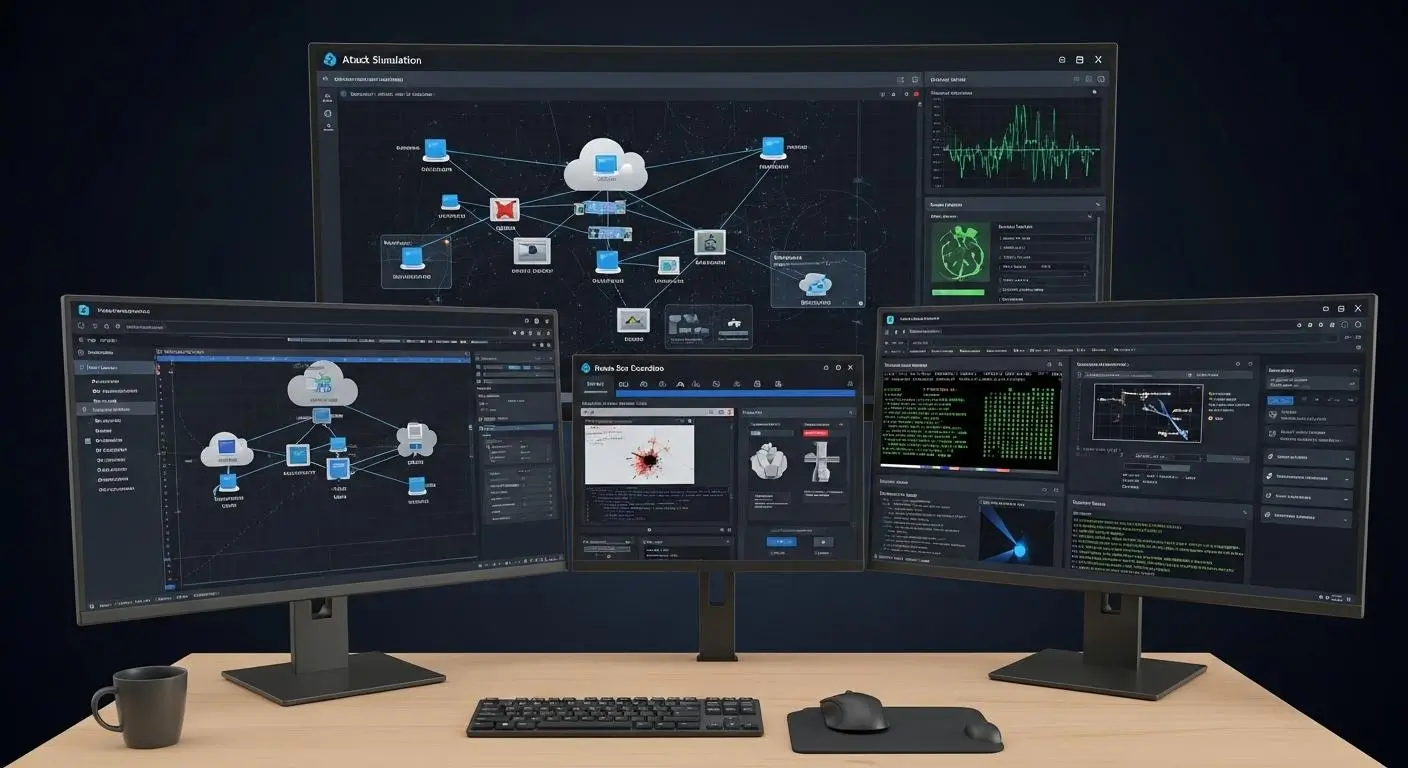
At first glance, the experience feels surprisingly simple. You log in, open a lab environment, and begin working through exercises. Behind that simplicity, however, sits a carefully designed system that combines cloud infrastructure, virtual machines, security tools, and simulated attack environments. Together, these components create realistic training experiences without exposing real networks to risk.
What Happens When You Access a Virtual Cybersecurity Lab?
Most modern labs are designed to remove technical barriers so you can focus on learning rather than setup. The typical workflow looks something like this:
Step 1: Login to the Platform
You sign into the cybersecurity training platform using your assigned credentials. Many environments support secure authentication and role-based access controls.
Step 2: Launch the Lab Environment
After authentication, you select a lab exercise or training module. The platform automatically provisions the resources needed for that activity.
Step 3: Open Virtual Machines
The system launches one or more virtual machines that simulate target systems, attacker systems, or complete network environments.
Step 4: Access Security Tools
You gain access to the tools required for the exercise. Depending on the lesson, this could include packet analyzers, forensic tools, penetration testing utilities, or vulnerability assessment platforms.
Step 5: Complete Hands-On Exercises
You work through guided scenarios, investigate security incidents, analyze suspicious activity, or perform defensive and offensive security tasks.
Step 6: Receive Feedback
Many platforms provide automated scoring, performance reviews, hints, or assessment results to help reinforce learning outcomes.
Step 7: Save Progress and Continue Learning
Progress is often tracked automatically, allowing you to revisit completed exercises and continue building skills over time.
The best browser based labs make this process accessible from nearly anywhere. With a reliable internet connection, learners can gain remote access to training environments without installing complex software. This simplicity is one reason cloud-based platforms continue to expand the reach of cybersecurity education and make it easier to access labs from different locations.
What Role Do Virtual Machines Play in Cybersecurity Labs?
At the heart of almost every virtual cybersecurity lab sits a collection of virtual machines.
A virtual machine, often called a VM, is essentially a software-based computer running inside another computer. Each VM operates independently, with its own files, applications, network settings, and operating system. This allows cybersecurity labs to recreate realistic environments without requiring large amounts of physical hardware.
One VM might represent an attacker. Another might act as a vulnerable web server. A third could function as a workstation used by an employee. Together, they create a realistic environment where learners can practice investigating incidents, defending systems, and conducting security assessments.
A technology known as a hypervisor makes this possible. The hypervisor creates and manages isolated virtual systems, ensuring activities inside one machine do not affect another.
| Virtual Machine Role | Purpose in Training |
|---|---|
| Attacker System | Simulates offensive security activity |
| Target Server | Hosts vulnerabilities and services |
| User Workstation | Mimics employee environments |
| Security Monitoring System | Collects logs and alerts |
| Malware Sandbox | Supports safe malware testing |
One major advantage is flexibility. Multiple operating systems can run simultaneously within the same environment. Students may practice Windows administration in one exercise and explore Linux basics in the next. That variety closely reflects what cybersecurity professionals encounter in real organizations.
What Components Make Up a Modern Cybersecurity Lab?
Modern virtual labs combine several technologies to create immersive and practical learning experiences.
- Virtual Machines: Simulate computers, servers, workstations, and network devices used throughout training exercises.
- Security Tools: Provide access to professional-grade applications used for monitoring, analysis, investigation, and defense.
- Advanced Security Tools: Support more specialized activities such as penetration testing, digital forensics, and threat hunting.
- Attack Simulations: Recreate phishing attacks, malware infections, network intrusions, and other realistic threat scenarios.
- Vulnerability Scanners: Allow learners to identify weaknesses, assess risks, and understand how attackers discover exploitable systems.
- Assessment Systems: Track performance, validate completed tasks, and provide feedback that helps measure skill development.
- Learning Paths: Organize training into structured journeys that gradually increase in difficulty and complexity.
- Monitoring and Logging Systems: Capture activity across lab environments to support investigation and analysis exercises.
Together, these components create an environment that mirrors many of the tools and workflows used by professional security teams.
Why Is Browser-Based Access Changing Cybersecurity Training?
A few years ago, cybersecurity training often required complex installations, dedicated hardware, and lengthy setup processes. Today, browser based labs are changing that model.
By delivering training through the cloud, learners can access environments directly from web browsers using many types of personal devices. The result is faster onboarding, broader accessibility, and fewer technical barriers. Training becomes available wherever there is connectivity, making practical cybersecurity education more scalable and far easier to distribute across classrooms, organizations, and remote teams.
Why Are Virtual Cybersecurity Labs Essential for Modern Cybersecurity Training?

Cybersecurity has always been a practical discipline. You can memorize attack frameworks, understand networking concepts, and pass certification exams, yet still struggle when faced with an actual security incident. That’s one reason virtual labs have become such an important part of modern training. They transform concepts into actions and allow learners to develop the kind of confidence that only comes from doing the work.
As cyber threats become more sophisticated and organizations face increasing pressure to defend systems and data, the demand for professionals with proven abilities continues to grow. Virtual cybersecurity labs help close that gap by providing environments where learners can practice, experiment, and improve without risking real infrastructure.
Why Isn’t Theory Alone Enough in Cybersecurity?
Theory provides the foundation, but cybersecurity is rarely mastered through reading alone. Understanding how malware spreads is valuable. Identifying a malicious file during an investigation is something entirely different.
Many cybersecurity roles require decision-making under pressure. Security analysts must evaluate alerts, investigate suspicious activity, and respond to incidents in real time. Those responsibilities demand more than knowledge. They require practical experience.
Think about learning to drive. Reading the handbook explains the rules of the road, but it doesn’t prepare you for traffic, unexpected hazards, or split-second decisions. Cybersecurity works in a similar way.
Developing strong cybersecurity skills requires repetition, experimentation, and problem-solving. You need opportunities to analyze logs, investigate attacks, test security controls, and understand how systems behave under different conditions.
That’s where virtual labs become valuable. They provide safe environments for hands on experience, allowing learners to apply concepts instead of simply memorizing them. Over time, those repeated exercises help transform theoretical understanding into practical capability, something employers increasingly expect from cybersecurity candidates.
How Do Virtual Labs Help Build Real-World Cybersecurity Skills?
The strongest cybersecurity professionals aren’t just familiar with concepts. They know how to apply them. Virtual labs help build real world skills by recreating many of the tasks security teams perform every day.
- Penetration Testing: Learners practice identifying weaknesses, testing defenses, and understanding how attackers exploit vulnerable systems. These exercises introduce the fundamentals of ethical hacking while reinforcing defensive thinking.
- Malware Analysis: Safe lab environments allow users to investigate malicious files, observe behavior patterns, and understand how modern threats operate without exposing production systems to risk.
- Incident Response: Simulated security events help learners practice containment, investigation, recovery, and communication procedures used during cyber incidents.
- Threat Hunting: Users learn how to proactively search for indicators of compromise, suspicious behavior, and hidden threats that may not trigger automated alerts.
- Vulnerability Assessments: Labs teach participants how to identify security weaknesses, prioritize remediation efforts, and understand the potential impact of vulnerabilities.
- Security Tool Familiarity: Learners gain experience with many of the same platforms and workflows used by cybersecurity professionals in enterprise environments.
The result is training that feels much closer to actual security work than traditional classroom exercises.
How Do Labs Simulate Real-World Threats Safely?
One of the greatest strengths of virtual cybersecurity labs is realism. Modern training environments are designed to replicate real world threats without exposing organizations to actual danger.
Instead of reading about a phishing campaign or ransomware outbreak, learners can investigate simulated versions inside isolated environments. These exercises recreate network intrusions, malware infections, credential attacks, and other common cyber threats in a controlled setting.
The key advantage is containment. Attack scenarios occur inside protected environments where mistakes carry no operational consequences. Learners can test defensive strategies, analyze suspicious activity, and even launch simulated cyber attacks as part of offensive security exercises.
Many platforms also include sophisticated attack simulations based on current threat intelligence. This helps training remain relevant as adversaries continue developing new techniques and tactics.
By combining realism with isolation, virtual labs create an environment where experimentation becomes an asset rather than a risk.
What Makes Virtual Labs More Accessible Than Traditional Training?
Traditional cybersecurity training often requires dedicated facilities, expensive equipment, and fixed schedules. Virtual labs remove many of those barriers.
| Traditional Training | Virtual Cybersecurity Labs |
|---|---|
| Classroom-dependent | Accessible from virtually anywhere |
| Fixed schedules | Available 24/7 |
| Hardware-intensive | Cloud-hosted environments |
| Limited scalability | Easily expanded for more learners |
| Higher operational costs | More cost effective training |
| Location restrictions | Supports remote access |
This accessibility matters. Learners can practice when it fits their schedules, organizations can train distributed teams more efficiently, and educational institutions can provide practical learning opportunities without building large physical lab environments.
As cybersecurity continues evolving, that combination of flexibility, realism, and hands-on learning is becoming increasingly difficult to ignore.
What Skills Can You Learn in a Virtual Cybersecurity Lab?

One of the biggest advantages of virtual cybersecurity labs is breadth. A single environment can expose you to offensive security, defensive operations, threat detection, malware investigation, and security monitoring, often within the same learning path.
That matters because modern cybersecurity roles rarely operate in isolation. Security analysts investigate alerts, incident responders contain threats, and penetration testers identify weaknesses before attackers find them. Virtual labs bring these disciplines together and allow learners to build practical capabilities through repetition and experimentation.
Over time, those experiences create something that textbooks alone cannot provide: confidence under pressure.
How Can You Practice Ethical Hacking and Penetration Testing?
For many learners, ethical hacking is the skill that first sparks interest in cybersecurity. There’s something fascinating about understanding how attackers think, not to cause harm, but to strengthen defenses before vulnerabilities can be exploited.
Virtual labs provide a safe environment where you can explore these concepts without putting real systems at risk. Instead of reading about attack techniques, you can actively test them against simulated environments designed for learning.
Common activities include:
- Identifying exposed services and network weaknesses
- Performing vulnerability scanning against target systems
- Analyzing security misconfigurations
- Exploring authentication weaknesses
- Testing web application security controls
- Practicing reconnaissance and information gathering
Many labs gradually increase difficulty, allowing learners to build foundational skills before moving into more advanced exercises. You might begin by identifying simple vulnerabilities and later progress to multi-stage attack scenarios that require deeper investigation.
The goal isn’t simply learning how to attack systems. Effective penetration testing teaches you how systems fail, why weaknesses exist, and how organizations can better protect themselves. That perspective is valuable across nearly every cybersecurity discipline.
How Do Virtual Labs Teach Malware Analysis and Threat Investigation?
Few cybersecurity skills are as important, or as difficult to practice safely, as malware analysis.
Real malicious software can disrupt systems, encrypt files, steal credentials, or create pathways for further compromise. Obviously, experimenting with these threats on production infrastructure would be a terrible idea. Virtual labs solve that problem by isolating suspicious files inside controlled environments.
Within these sandboxes, learners can observe how malware behaves, identify indicators of compromise, and study how infections spread across systems. More importantly, they learn how investigators approach threat analysis in real-world situations.
Many exercises involve:
- Examining suspicious files
- Investigating malicious activity
- Reviewing logs and system events
- Tracking attacker behavior
- Understanding infection chains
- Safely testing malware inside isolated environments
These investigations help transform abstract threat concepts into practical skills that security teams use every day.
Why Is Incident Response One of the Most Valuable Lab Skills?
Cybersecurity isn’t only about preventing attacks. At some point, most organizations will face security events that require investigation and action. That’s where incident response becomes critical.
Virtual labs allow learners to practice responding to simulated breaches, malware infections, account compromises, and other cyber incidents without creating real business disruption. Participants learn how to gather evidence, assess impact, contain threats, and support recovery efforts.
The experience also highlights an important reality: cybersecurity is often a team sport. Effective response depends on communication, documentation, and coordination across the broader security team.
Those skills can be surprisingly difficult to teach through lectures alone. Labs make them tangible.
Which Security Tools Do Students Commonly Use in Virtual Labs?
Modern cybersecurity labs expose learners to many of the same security tools used by professionals in operational environments. While platforms vary, several technologies appear frequently across training programs.
| Tool | Primary Purpose | Typical Learning Outcome |
|---|---|---|
| Burp Suite | Web application security testing | Learn web vulnerability discovery and application assessment techniques |
| Wireshark | Network traffic analysis | Understand packet inspection, communications analysis, and threat investigation |
| Nmap | Network discovery and vulnerability identification | Practice host enumeration, service discovery, and reconnaissance activities |
| SIEM Tools | Security monitoring and event analysis | Develop skills in log analysis, alert investigation, and threat detection |
| Linux Environments | Operating system administration and security testing | Build familiarity with command-line operations, scripting, and security workflows |
Exposure to these advanced tools helps bridge the gap between training and professional practice. More importantly, learners gain experience using technology in context, solving realistic problems rather than simply memorizing commands.
As virtual labs continue evolving, the emphasis remains the same: creating opportunities to learn by doing, because cybersecurity expertise is ultimately built through practice.
What Are the Biggest Benefits of Virtual Cybersecurity Labs?

The value of a virtual cybersecurity lab extends far beyond convenience. Organizations adopt these platforms because they solve several long-standing challenges at the same time. Training becomes more affordable, learning becomes more practical, and access becomes significantly easier to manage.
Perhaps most importantly, virtual labs allow learners to develop real skills in environments that closely resemble modern cybersecurity operations. Instead of relying solely on theory, participants can explore tools, investigate threats, and practice decision-making in situations that feel remarkably authentic.
As cybersecurity continues evolving, these advantages are becoming increasingly difficult for organizations and educational institutions to ignore.
How Do Virtual Labs Reduce Training Costs?
Traditional cybersecurity training often comes with a surprisingly long list of expenses. Physical servers, networking equipment, dedicated lab space, maintenance contracts, travel costs, and hardware upgrades can quickly turn a training initiative into a major investment.
Virtual labs take a different approach.
Because environments are hosted in the cloud, organizations avoid purchasing large amounts of physical infrastructure. There is no need to buy expensive routers, switches, or dedicated training servers simply to support hands-on exercises.
Several factors contribute to making virtual labs more cost effective:
- Reduced hardware purchases
- Lower maintenance expenses
- Elimination of travel-related costs
- Simplified software deployment
- Easier scaling for larger groups
- Shared cloud infrastructure
The result is a training model that allows institutions and organizations to provide practical cybersecurity education without the financial burden often associated with building and maintaining traditional training facilities.
Why Are Virtual Labs Safer Than Practicing on Live Networks?
Cybersecurity training naturally involves risk. Learners are encouraged to explore vulnerabilities, analyze malware, perform penetration testing exercises, and investigate suspicious activity. Conducting those activities on production systems would be reckless.
Virtual labs solve this problem through isolation.
Exercises take place inside contained environments that are separated from operational infrastructure. If a learner accidentally crashes a server, misconfigures a firewall, or launches a simulated attack incorrectly, the consequences remain inside the lab.
That separation creates significant advantages:
- No disruption to production systems
- No impact on customer-facing services
- Safe malware analysis environments
- Secure penetration testing practice
- Freedom to experiment without fear
- Protection of critical business operations
Ironically, mistakes often become the most valuable learning experiences. Virtual labs encourage exploration because failure carries educational value rather than operational consequences. Learners can test ideas, troubleshoot issues, and repeat exercises until concepts become second nature.
How Do Virtual Labs Improve Accessibility and Flexibility?
One of the biggest barriers to traditional cybersecurity training has always been access.
Physical labs require specific locations, scheduled sessions, and dedicated equipment. Virtual labs remove many of those restrictions by making training available through cloud-based environments that can be accessed from almost anywhere.
For learners, that flexibility can be transformative.
Training becomes available on demand rather than only during scheduled classroom hours. Progress can continue from home, campus, or the office. Many environments support laptops, desktops, tablets, and other personal devices, making participation much easier.
Additional accessibility benefits include:
- 24/7 availability
- Remote learning support
- Browser-based access
- Self-paced progression
- Easier global collaboration
- Consistent learning environments
This flexibility is one reason virtual labs have become increasingly popular among universities, workforce development programs, and organizations supporting distributed teams.
Virtual Labs vs Physical Cybersecurity Labs: Which Offers More Value?
Both models have strengths, but virtual environments often provide greater flexibility and scalability for modern cybersecurity training.
| Category | Virtual Cybersecurity Labs | Physical Cybersecurity Labs |
|---|---|---|
| Accessibility | Available from virtually anywhere | Restricted to specific locations |
| Cost | More cost effective due to cloud infrastructure | Higher hardware and maintenance expenses |
| Scalability | Easily expanded for new users | Limited by available equipment |
| Hardware Requirements | Minimal local hardware needs | Significant infrastructure investment |
| Learning Flexibility | Self-paced and on-demand | Often tied to scheduled sessions |
| Maintenance | Centralized updates and management | Ongoing hardware maintenance required |
| Device Support | Works across many personal devices | Usually tied to dedicated equipment |
| Risk Management | Isolated environments protect production systems | Greater operational risk if mismanaged |
For many institutions and organizations, the decision comes down to efficiency. Virtual labs deliver practical training, broad accessibility, and realistic simulations while reducing operational complexity. That’s a compelling combination, particularly as cybersecurity education increasingly moves toward cloud-hosted and remote-first learning models.
What Advanced Cybersecurity Training Environments Exist Beyond Standard Labs?

As cybersecurity skills mature, training often moves beyond individual exercises and isolated environments. Organizations need ways to test decision-making, teamwork, communication, and technical execution under pressure. That’s where more advanced training environments come into play.
While traditional virtual labs focus on developing foundational skills, advanced platforms recreate large-scale incidents, coordinated attacks, and complex security challenges that mirror what modern organizations face every day. These environments help learners move from technical proficiency to operational readiness.
What Is a Cyber Range and How Is It Different From a Virtual Lab?
A cyber range is a highly realistic training environment designed to simulate entire organizations, networks, and attack scenarios at scale. While standard virtual labs often focus on specific tasks or individual skills, cyber ranges recreate complex environments where multiple systems, users, and threats interact simultaneously.
Think of a virtual lab as a flight simulator for learning individual controls. A cyber range is closer to a full-scale training exercise where multiple teams operate within a realistic environment.
Key characteristics of a cyber range include:
- Large-scale network simulations
- Enterprise infrastructure emulation
- Coordinated attack simulations
- Multi-user participation
- Incident response exercises
- Defensive and offensive security scenarios
Many advanced cyber ranges are designed to replicate real-world attacks, including sophisticated campaigns associated with organized criminal groups and nation-state actors. Participants must investigate threats, coordinate responses, and make decisions under realistic conditions.
| Virtual Cybersecurity Lab | Cyber Range |
|---|---|
| Focuses on individual skills | Focuses on operational readiness |
| Smaller environments | Enterprise-scale simulations |
| Guided exercises | Dynamic attack scenarios |
| Individual learning | Team-based participation |
| Technical skill development | Strategic and tactical decision-making |
Both environments serve important roles, but cyber ranges are typically used when organizations want to evaluate readiness at a broader level.
How Do Red Team Exercises Improve Cybersecurity Readiness?
A red team exercise simulates a real attacker attempting to compromise systems, evade defenses, and achieve specific objectives. Unlike standard training exercises, red team activities often unfold over longer periods and involve realistic tactics used during actual cyber attacks.
The goal isn’t simply to find vulnerabilities. It’s to understand how well people, processes, and technologies work together during an attack.
Common outcomes include:
- Identifying defensive weaknesses
- Testing incident response procedures
- Evaluating detection capabilities
- Improving communication across security teams
- Measuring overall organizational resilience
For cybersecurity professionals, these exercises provide valuable exposure to realistic adversarial behavior that is difficult to replicate through theory alone.
Why Are Phishing and Zero-Day Simulations Important?
Many security incidents begin with human behavior rather than technical failures. That’s why simulated phishing campaigns have become a common part of cybersecurity training.
These exercises help learners recognize suspicious emails, fraudulent links, and social engineering tactics before they become successful attacks. Repeated exposure often improves awareness and reduces risks associated with phishing attempts.
Advanced environments also simulate zero day exploits, which are attacks targeting vulnerabilities before official fixes become available. These scenarios teach participants how to detect unusual behavior, investigate emerging threats, and respond when traditional defenses may not be enough.
Together, phishing and zero-day simulations help prepare security teams for both common and highly sophisticated threats, creating a more realistic understanding of today’s evolving threat environment.
What Should You Look for in a Virtual Cybersecurity Lab Platform?

Not all cybersecurity labs are created equal. Some platforms provide little more than basic virtual machines and isolated exercises. Others deliver realistic environments that closely resemble the tools, workflows, and challenges cybersecurity professionals encounter every day. The difference matters.
A well-designed lab platform doesn’t simply teach concepts. It helps learners develop practical skills, measure progress, and build confidence through repetition and increasingly complex challenges. Before selecting a platform, it’s important to understand which capabilities contribute most to meaningful learning outcomes.
Which Features Separate Great Labs From Basic Labs?
The strongest virtual cybersecurity lab platforms combine accessibility, realism, and measurable skill development. They create environments where learners can move beyond theory and engage directly with practical cybersecurity challenges.
Features to prioritize include:
- Real-World Simulations: High-quality labs recreate realistic attack scenarios, network environments, and security incidents that reflect current industry threats rather than artificial classroom exercises.
- Professional Security Tools: Learners should have access to the same platforms and utilities commonly used by security analysts, incident responders, penetration testers, and threat hunters.
- Browser Access: Browser-based environments reduce setup complexity and allow faster onboarding. Users can access labs from multiple devices without extensive local installations.
- Structured Training Paths: Effective platforms organize content into progressive learning journeys. These structured training paths help learners build foundational knowledge before moving into advanced topics.
- Real Time Feedback: Immediate feedback helps reinforce learning and correct mistakes before they become habits. Strong platforms provide automated scoring, guidance, and performance tracking.
- Assessments and Validation: Quizzes, practical exercises, and skill-based evaluations help measure progress and identify areas that need additional attention.
- Immersive Labs: The best immersive labs create realistic environments where users can practice decision-making, problem-solving, and threat investigation under conditions that feel authentic.
Together, these capabilities transform a cybersecurity lab from a simple training tool into a complete learning ecosystem.
How Can You Evaluate a Cybersecurity Lab Before Choosing One?
Selecting a cybersecurity lab platform requires more than reviewing marketing materials. A careful evaluation can help determine whether the platform supports both current learning objectives and long-term skill development.
| Evaluation Criteria | What to Look For | Why It Matters |
|---|---|---|
| Realism of Scenarios | Simulated attacks, enterprise environments, current threat models | Improves practical skill development |
| Security Tool Availability | Access to professional-grade security platforms | Prepares learners for real-world workflows |
| Browser Accessibility | Cloud-hosted access without complex setup | Simplifies onboarding and increases accessibility |
| Learning Paths | Beginner-to-advanced progression | Supports long-term skill growth |
| Assessment Features | Practical exercises, quizzes, performance tracking | Measures competency and progress |
| Real-Time Feedback | Automated guidance and scoring systems | Accelerates learning and correction |
| Malware Analysis Support | Safe sandbox environments | Enables threat investigation training |
| Incident Response Training | Simulated security events and response exercises | Builds operational readiness |
| Vulnerability Assessment Capabilities | Scanning, analysis, and remediation exercises | Strengthens defensive security skills |
| Collaboration Features | Team exercises and shared environments | Supports group learning and security team development |
| Scalability | Ability to support many learners simultaneously | Important for institutions and organizations |
| Content Updates | Regularly refreshed scenarios and threat simulations | Keeps training aligned with evolving threats |
| Reporting and Analytics | Detailed progress tracking and outcomes reporting | Helps instructors and administrators measure success |
Ultimately, the best platform is the one that balances realism, accessibility, and measurable learning outcomes. A cybersecurity lab should not only teach technical concepts, it should help learners apply them with confidence in situations that closely resemble the challenges they will encounter in the real world.
What Does the Future of Virtual Cybersecurity Labs Look Like?
Cybersecurity training has never stood still for long. New attack techniques emerge, defensive technologies evolve, and organizations constantly adapt to changing risks. Training environments must evolve as well.
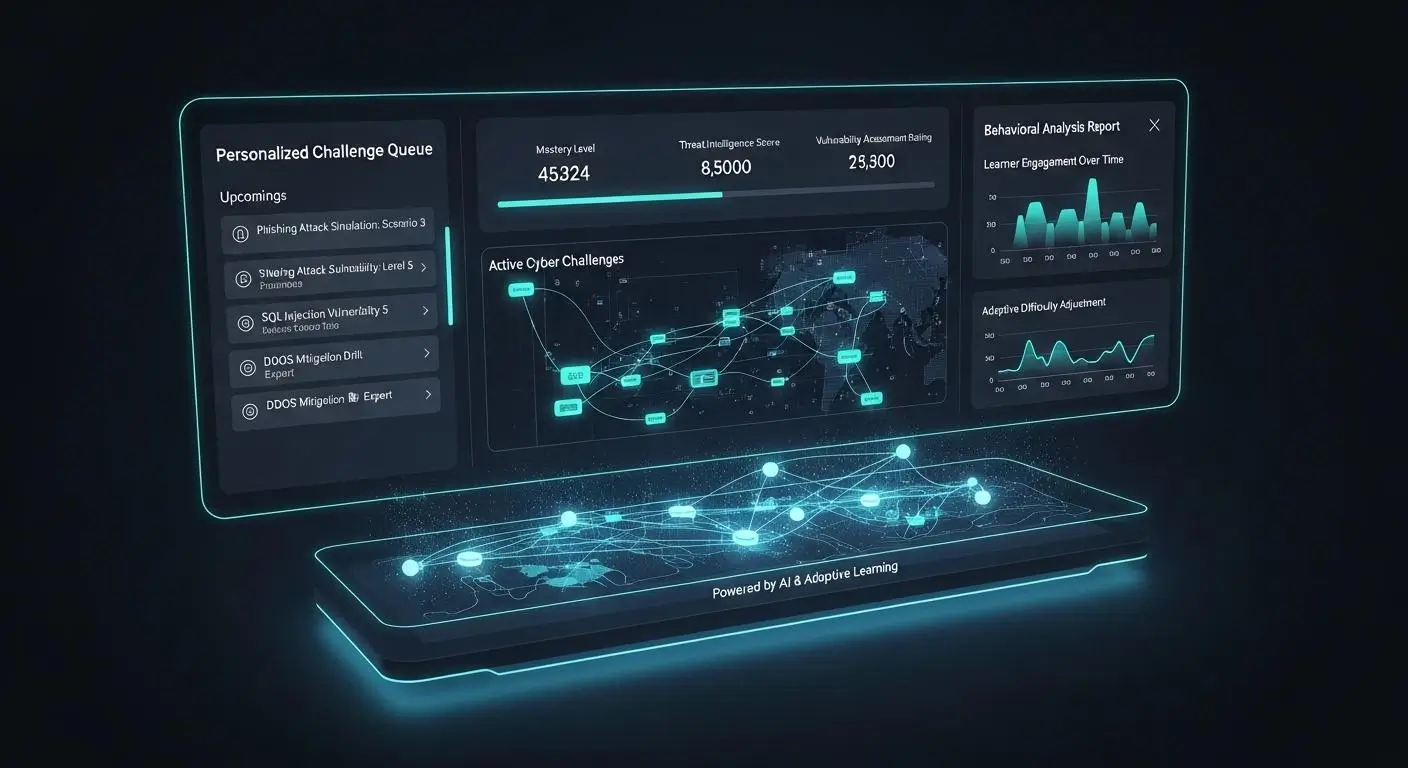
The next generation of virtual cybersecurity labs is expected to become more intelligent, more interactive, and far more responsive to how people actually learn. Instead of relying solely on fixed exercises, future platforms will increasingly generate dynamic challenges that adapt to learner behavior and reflect current threat activity.
What’s interesting is that the goal remains the same. Cybersecurity professionals still need practical experience. The difference is that training environments are becoming better at recreating uncertainty, complexity, and decision-making under pressure, the very conditions security teams face every day.
How Is AI Changing Cybersecurity Training?
Artificial intelligence is beginning to transform how cybersecurity education is delivered. Traditionally, training exercises followed predictable paths. Learners completed predefined tasks, received scores, and moved on to the next lesson.
AI introduces a more adaptive approach.
Instead of presenting the same scenario to every learner, systems can create personalized experiences based on skill level, performance history, and learning objectives. Someone struggling with malware investigations may receive additional practice opportunities, while more advanced learners encounter increasingly complex attack scenarios.
Several developments are already gaining attention:
- Adaptive simulations that respond to user actions
- Dynamic attack scenarios that evolve in real time
- Personalized learning paths based on performance
- Automated coaching and recommendations
- Smarter assessment systems
- Faster content updates aligned with evolving threats
As these emerging technologies mature, cybersecurity labs may become less predictable and more realistic, closely reflecting the uncertainty that exists during actual security incidents.
Will VR and AR Become Part of Cybersecurity Training?
Virtual reality and augmented reality remain early-stage technologies in cybersecurity education, but interest continues growing.
The appeal is fairly straightforward. Complex networks, attack paths, and security architectures can sometimes be difficult to visualize through traditional interfaces. VR and AR environments may help learners better understand relationships between systems, users, and threats.
Future immersive labs could allow participants to explore simulated infrastructures, investigate attacks visually, and collaborate within shared virtual spaces. While widespread adoption may still be some distance away, these technologies have the potential to make advanced cybersecurity concepts easier to understand and more engaging to practice.
Why Are Virtual Labs Becoming the Industry Standard?
The demand for skilled cybersecurity professionals continues to outpace supply, creating pressure on educational institutions and employers to accelerate practical training.
Virtual labs help address that challenge by providing accessible, scalable, and realistic learning environments. They support remote learners, reduce infrastructure costs, and give users opportunities to practice skills repeatedly without risking production systems.
As organizations increasingly prioritize hands-on capabilities over theoretical knowledge alone, virtual cybersecurity platforms are becoming a standard component of modern cybersecurity education. They offer a practical path from learning concepts to applying them, and that combination is likely to remain valuable for years to come.
Why Apporto Cybersecurity Labs Represent a More Modern Training Environment?

Throughout this guide, one theme keeps resurfacing: practical cybersecurity training works best when access barriers are removed. Learners need environments where they can experiment, investigate threats, and build technical skills without spending hours configuring hardware or troubleshooting complex lab setups.
That reality is helping drive interest in browser-native cybersecurity platforms. Instead of requiring specialized infrastructure and extensive local configuration, these solutions deliver training through cloud-hosted environments that are accessible, scalable, and easier to manage. Apporto Cybersecurity Labs are designed around that philosophy, combining hands-on learning with the simplicity of modern cloud delivery.
What Makes Apporto Cybersecurity Labs Different From Traditional Lab Environments?
Many traditional cybersecurity labs were built around physical infrastructure, complex software installations, and tightly managed computer environments. While effective in some situations, they can create friction for both learners and administrators.
Apporto takes a different approach. By delivering cybersecurity training through browser based labs, the platform reduces many of the technical hurdles that have historically complicated hands-on learning.
Instead of configuring local environments or maintaining dedicated hardware, users can access training environments through the cloud and begin working much faster.
Several characteristics help distinguish Apporto from traditional lab models:
- Browser-Native Access: Labs are delivered through the browser, reducing the need for extensive software installation and simplifying access for learners.
- No Complex Local Setup: Students spend less time configuring environments and more time developing cybersecurity skills. This helps accelerate onboarding and improves the overall learning experience.
- Secure Cloud-Hosted Environments: Training occurs inside a secure environment designed to support practical cybersecurity exercises without exposing production systems to risk.
- Faster Lab Provisioning
New environments can be deployed quickly, allowing instructors and administrators to respond more efficiently to changing course requirements. - Access From Personal Devices: Learners can participate using a variety of devices, reducing dependency on dedicated lab hardware and increasing accessibility.
- Consistent Learning Environments: Every participant receives the same configuration, tools, and resources. Consistency reduces troubleshooting challenges and helps improve learning outcomes.
- Simplified Administration: Centralized management reduces operational complexity and minimizes the effort required to maintain cybersecurity training infrastructure.
These advantages become particularly important as institutions expand remote learning initiatives and organizations seek more flexible approaches to workforce development. Browser-based delivery reduces setup complexity, cloud infrastructure improves accessibility, and standardized environments help ensure learners receive consistent experiences across courses and programs.
The result is a virtual cybersecurity lab environment that emphasizes hands-on learning while reducing many of the operational challenges traditionally associated with cybersecurity education.
Why Is Apporto Well-Suited for Academic Institutions and Workforce Development Programs?
Educational organizations face a difficult balancing act. They must provide practical learning opportunities while managing budgets, infrastructure requirements, and growing demand for remote access.
Apporto addresses many of these challenges by simplifying how cybersecurity training environments are delivered and maintained.
For academic institutions, browser-native delivery makes it easier to support students across campuses, remote locations, and hybrid learning environments. Learners can access lab resources without relying on specialized hardware, while instructors maintain greater consistency across classes.
The platform is also well suited for cybersecurity bootcamps and workforce development initiatives focused on career readiness. Because practical skills are increasingly valued by employers, training programs need environments that allow participants to apply concepts rather than simply study them.
Additional benefits include:
- Support for remote learning programs
- Faster deployment of cybersecurity training programs
- Reduced infrastructure costs
- Simplified lab management
- Improved workforce readiness through practical skills development
These advantages help institutions focus more on teaching and less on managing technology.
How Does Apporto Compare to Traditional Cybersecurity Labs?
| Category | Apporto Cybersecurity Labs | Traditional Cybersecurity Labs |
|---|---|---|
| Setup Complexity | Minimal setup required | Often requires extensive configuration |
| Accessibility | Available from virtually anywhere | Frequently location dependent |
| Browser Access | Native browser delivery | Commonly requires software installation |
| Infrastructure Requirements | Cloud-hosted environment | Dedicated hardware often required |
| Scalability | Easily expanded for larger groups | Scaling can require additional equipment |
| Learning Flexibility | Supports remote and hybrid learning | Often tied to physical lab schedules |
As cybersecurity education continues evolving, platforms that combine accessibility, scalability, and hands-on learning are becoming increasingly valuable. Apporto reflects that direction by making practical cybersecurity training easier to deliver, easier to manage, and easier to access.
Final Thoughts
Cybersecurity education is changing for a simple reason: knowledge alone is no longer enough. Organizations want professionals who can investigate threats, respond to incidents, analyze malware, and make informed decisions in realistic situations. That requires experience, not just theory.
The modern virtual cybersecurity lab helps bridge that gap by giving learners access to practical environments where they can develop real-world capabilities safely. From ethical hacking and vulnerability assessments to incident response and threat investigation, virtual labs create opportunities for meaningful hands on practice without exposing live systems to risk.
Cloud-based delivery is another major advantage. Learners can access training from almost anywhere, institutions can scale programs more efficiently, and organizations can support workforce development without investing heavily in physical infrastructure. As cybersecurity threats continue evolving, training environments must evolve alongside them.
What makes virtual labs particularly valuable is their ability to combine accessibility, realism, and flexibility. They provide the space to experiment, make mistakes, and improve, all essential parts of developing strong practical skills.
Looking ahead, technologies such as AI-driven simulations, advanced cyber ranges, and browser-native learning environments will continue expanding what is possible in cybersecurity training. The direction is becoming increasingly clear.
Virtual labs are no longer simply supplemental training tools. For many institutions, organizations, and learners, they are becoming foundational infrastructure for modern cyber security education, helping prepare the next generation of professionals for an increasingly complex threat environment.
Frequently Asked Questions (FAQs)
1. What is a virtual cybersecurity lab?
A virtual cybersecurity lab is a cloud-based training environment where you can practice cybersecurity tasks using simulated networks, systems, and attack scenarios. It provides hands-on learning in a safe, isolated environment without affecting real infrastructure or business operations.
2. How does a virtual cybersecurity lab work?
Virtual cybersecurity labs run on cloud infrastructure and use virtual machines to recreate realistic environments. You log in through a browser or portal, launch lab exercises, access security tools, complete activities, and receive feedback while all computing occurs remotely.
3. Why are virtual cybersecurity labs important?
Virtual labs help bridge the gap between theory and practice. They allow learners to apply cybersecurity concepts in realistic scenarios, develop technical skills, and gain practical experience that employers increasingly expect from modern cybersecurity professionals.
4. What skills can you learn in a virtual cybersecurity lab?
You can develop skills in penetration testing, vulnerability assessment, incident response, malware analysis, threat hunting, network security, digital forensics, and ethical hacking. Many labs also teach tool usage, investigative techniques, and defensive security practices.
5. Can you safely practice malware analysis in a virtual lab?
Yes. Virtual labs provide isolated environments specifically designed for safe experimentation. You can analyze malicious files, observe malware behavior, and investigate infections without exposing production systems, users, or organizational data to unnecessary risk.
6. What is the difference between a cyber range and a virtual cybersecurity lab?
A virtual cybersecurity lab typically focuses on individual skill development and guided exercises. A cyber range is a larger environment that simulates enterprise networks, coordinated attacks, and team-based security operations designed to test readiness under realistic conditions.
7. Are virtual cybersecurity labs suitable for beginners?
Absolutely. Many platforms include structured learning paths that start with foundational concepts before progressing to advanced topics. Beginners can learn core cybersecurity principles while gradually building confidence through guided, hands-on exercises and practical challenges.
8. What cybersecurity tools are commonly included in virtual labs?
Many labs include professional security tools such as Burp Suite, Wireshark, Nmap, SIEM platforms, vulnerability scanners, forensic utilities, and Linux environments. These tools help learners gain experience with technologies commonly used by cybersecurity professionals.
9. Can virtual labs prepare you for cybersecurity certifications?
Yes. Virtual labs often align with certification objectives and provide practical experience that complements exam preparation. They help reinforce concepts through real-world exercises, making it easier to understand and apply certification-related knowledge.
10. Do virtual cybersecurity labs require powerful computers?
Generally, no. Since most processing occurs on remote cloud infrastructure, local hardware requirements are minimal. Many virtual labs work effectively on standard laptops, desktops, Chromebooks, and other devices with a reliable internet connection.
11. Are browser-based cybersecurity labs secure?
Browser-based labs are designed with security in mind. Training environments are isolated from production systems, and reputable providers implement access controls, encryption, and other safeguards to maintain a secure learning environment for participants.
12. How do virtual cybersecurity labs support remote learning?
Virtual labs provide anytime, anywhere access to cybersecurity training through cloud-based environments. Students can complete exercises, access tools, and participate in practical learning activities without needing to be physically present in a classroom or training center.
13. What should you look for in a cybersecurity lab platform?
Look for realistic simulations, professional security tools, browser accessibility, structured learning paths, assessment features, real-time feedback, and regularly updated content. Strong platforms should support practical skill development and mirror real-world cybersecurity workflows.
14. How is AI changing virtual cybersecurity training?
AI is introducing adaptive learning experiences, personalized training paths, and dynamic attack scenarios that evolve based on user actions. These capabilities help create more realistic exercises while improving engagement and tailoring instruction to individual skill levels.
15. Why are organizations investing in virtual cybersecurity labs?
Organizations use virtual labs to develop cybersecurity talent, reduce training costs, improve workforce readiness, and provide practical experience in safe environments. They offer scalable, accessible training that helps teams build skills needed to address modern cyber threats.
