

What Free AI Helps Students With Studying?
Free AI tools that help students study include platforms for explaining concepts, summarizing notes, creating flashcards, generating quizzes, and supporting research. Tools like ChatGPT, Gemini, Quizlet, and CoTutor help students improve understanding, practice active recall, and organize study sessions more effectively.
Study habits are changing. Quietly, but quickly. Across classrooms and campuses, students are beginning to rely on AI tools as everyday academic support. A free AI tool can now summarize notes, explain complex topics in simple terms, and even create study materials within seconds.
Many free AI tools also allow students to create flashcards, offer solutions to study challenges, and help students learn new concepts efficiently. For many students, this technology feels less like software and more like a study buddy that is always available.
The growth of AI in education has made these tools widely accessible. With free access to platforms that organize course content, generate quizzes, and help clarify difficult concepts, you can save time while improving your understanding.
Still, the goal is not to replace teachers or the learning process. AI works best when it supports active learning. In this blog post, you will explore what free AI helps students with studying and how these tools can improve the learning experience.
What Does It Actually Mean to Use AI for Studying?
Students often hear about AI study tools and wonder what it really means to use them while learning. In simple terms, AI should function as academic support that strengthens teaching, not something that replaces it. When used thoughtfully, these tools help you explore concepts, organize notes, and clarify difficult material.
Still, AI answers should never be treated as the final authority. The information it generates is a starting point for investigation. You are responsible for checking sources, comparing ideas with course content, and verifying that the explanation actually makes sense.
Education is not only about completing assignments. Its deeper purpose is building critical thinking, curiosity, and durable academic skills that continue long after a course ends.
Teachers remain first place to turn for guidance. While AI tools can provide valuable assistance, they are most effective when used alongside personalized support from teachers or advisors.
They understand goals behind material and can help you use AI responsibly. Because schools are still developing policies, judgment becomes part the learning process itself today.
What Free AI Tools Actually Help Students Study the Most?
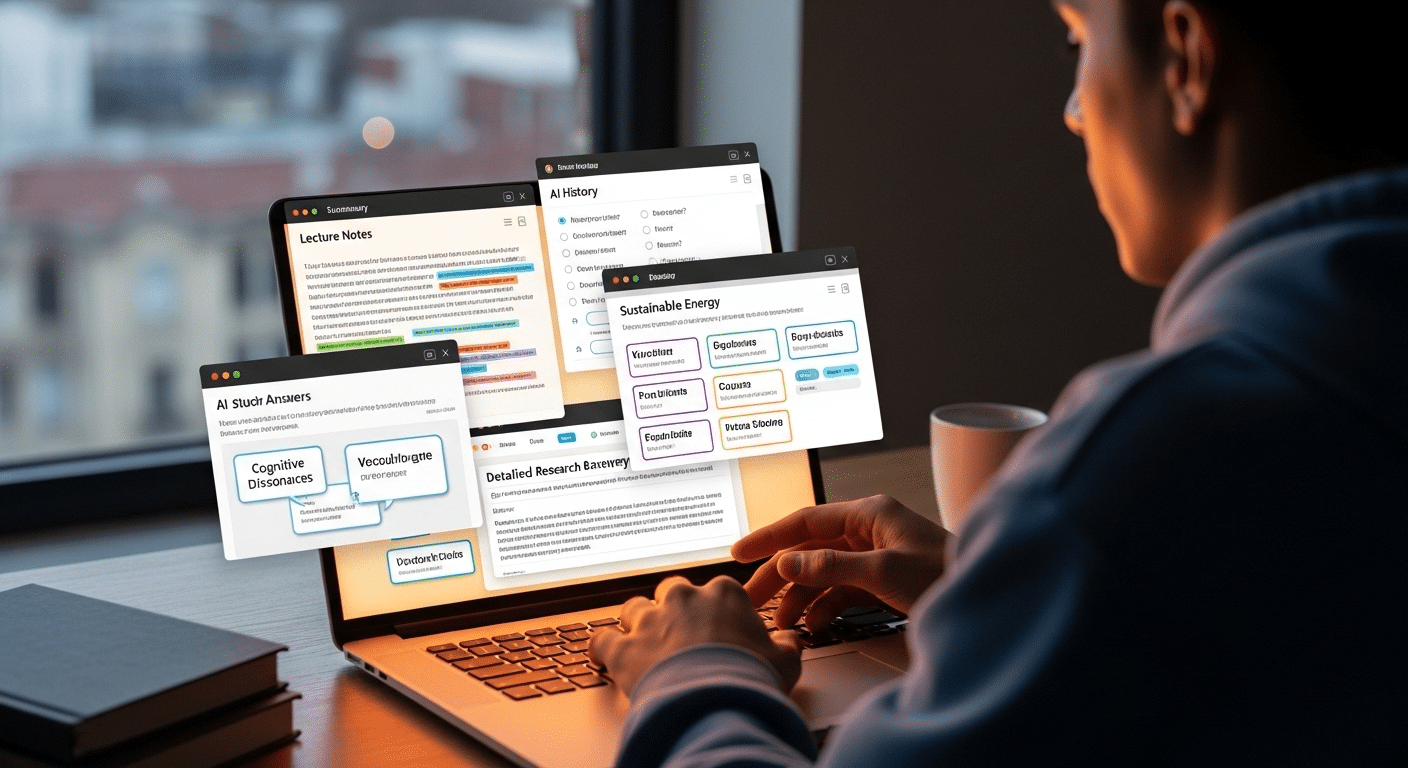
When students ask what free AI helps students with studying, the answer rarely points to just one platform. Most AI tools are built for specific tasks. Some explain complex topics in simple terms. Others summarize notes, organize documents, or generate quizzes for practice. Because of that, many students combine several tools during the same study session.
One platform might help you understand difficult course content, while another turns lecture notes into flashcards or quizzes. Many of these tools also let students create their own study materials, such as personalized notes, flashcards, and quizzes, making the learning process more interactive and tailored to individual needs. Used together, these study tools tailored for different needs can make the learning process far more structured. Several platforms have become especially useful for students looking for reliable academic support.
Some Popular Free AI Study Tools Students Use
- ChatGPT: A versatile AI assistant that helps explain complex topics, summarize course material, and generate outlines for assignments or study guides.
- Google Gemini: Integrated into Google apps like Google Docs and Slides, helping with writing, brainstorming ideas, and research tasks.
- Perplexity AI: A research focused platform that provides answers supported by cited sources, useful for exploring academic questions.
- NotebookLM: Organizes uploaded documents and notes, then summarizes key points for easier review.
- Penseum: Transforms lecture notes, PDFs, and videos into flashcards, quizzes, and structured study materials.
- StudyFetch: Analyzes course content and generates quizzes, flashcards, and tutoring style explanations.
- Fastscribe: Summarizes long YouTube videos, lecture recordings, and PDFs quickly for faster study review.
How Can Free AI Tools Turn Notes and Lectures Into Study Materials?
A stack of lecture notes can feel messy. Slides from class. Pages of reading. A few recorded lectures saved somewhere in Google Drive. It adds up quickly. This is where many AI tools become useful. Instead of manually sorting through everything, you can upload notes, PDFs, or lecture recordings into an AI platform and let the system organize the material into something easier to review.
Tools like Penseum and NotebookLM analyze uploaded documents and extract key concepts from the content. The process is simple. You upload the material, the AI reads it, then it generates summaries, flashcards, or quizzes based on the information it finds.
Fastscribe works a little differently. It focuses on long lecture recordings and YouTube videos, turning them into shorter notes that highlight important ideas. Once the material is processed, several common study features appear.
Some Ways AI Creates Study Materials are:
- Convert notes into flashcards designed for active recall
- Generate practice questions based on course content
- Build structured study guides summarizing key concepts
- Summarize long lecture recordings or YouTube videos
- Extract important ideas from uploaded documents
Which Free AI Tools Help Students Practice and Test Their Knowledge?

Reading notes might feel productive, but memory does not always work that way. Information tends to fade unless it is actively retrieved. Two well known learning strategies help prevent that problem, active recall and spaced repetition.
Active recall pushes you to remember ideas without looking at your notes. Spaced repetition schedules review sessions over time so important concepts stay fresh. Many modern AI tools automate these methods, turning ordinary study materials into practice questions, quizzes, and review exercises that help strengthen recall.
Several platforms focus specifically on helping students practice and test their understanding. Quizlet remains one of the most widely used tools because it creates interactive quizzes and uses spaced repetition to reinforce difficult concepts.
StudyFetch goes a step further by generating quizzes from uploaded notes and tracking learning progress across study sessions. Tutor AI focuses on short lessons followed by quizzes, helping you practice new ideas quickly.
RemNote blends note taking with flashcard repetition so key concepts appear again at the right moment. Socratic by Google explains homework questions visually, helping clarify ideas while you practice and prepare for tests.
Some AI-powered study platforms also include games to make practice sessions more interactive and engaging, helping students retain information more effectively.
Can AI Tools Help You Stay Organized and Manage Study Time?
Managing study time is often harder than understanding the material itself. Assignments, readings, and deadlines accumulate quickly across multiple courses. Without a clear plan, it becomes easy to lose focus or forget important tasks. Many AI tools now help students organize their work, structure study sessions, and track progress more effectively.
Some platforms focus on planning and task management. ClickUp AI helps you organize assignments, deadlines, and study plans in one place. Seeing everything laid out clearly makes it easier to decide what to study first and how to divide your time. Goblin.tools approaches the problem differently by breaking large tasks into smaller steps. This simple feature can make complex projects feel less overwhelming and easier to begin.
Focus during study sessions also matters. Forest encourages concentration by gamifying attention. When you stay off your phone, a virtual tree grows, turning focus into a small reward.
Notion AI brings several features together by combining note organization, task planning, and progress tracking in a single workspace.
How Can AI Help With Research, Writing, and Coursework?

Research and writing form the backbone of many academic assignments. Essays, reports, and research papers require careful reading, organized thinking, and clear writing. AI tools now assist with many parts of this process. They can summarize long documents, highlight key ideas, and help you explore research topics before beginning your own work.
These platforms also support writing clarity. Some review grammar and punctuation, while others paraphrase complex passages or simplify difficult readings. This assistance makes large volumes of material easier to understand and organize. Instead of struggling through dense documents, you can spend more time interpreting ideas and developing stronger arguments.
AI should still function as academic support rather than a replacement for your own thinking. The goal is to deepen understanding while preparing coursework more efficiently.
Can AI Tools Help Students Explore Careers and Future Opportunities?
Education is not only about finishing assignments or passing exams. It also helps you understand interests, strengths, and long term goals. Many AI tools now support this process by helping students explore potential career paths and educational opportunities.
By analyzing skills, preferences, and academic progress, these platforms can provide insights about possible professions and the abilities required to pursue them.
AI can be helpful during this exploration stage because it quickly connects information about jobs, required skills, and educational choices. You gain a clearer view of how certain subjects relate to real careers. Still, these tools should support advising rather than replace it.
Teachers, advisors, and mentors provide context and guidance that technology cannot fully replicate. AI works best when it complements human support.
AI tools that provide career insights are:
• YouScience analyzes student interests and abilities to suggest potential career paths.
• LinkedIn Career Explorer identifies skills required for different jobs.
• DecidED helps students evaluate financial decisions related to college and education.
What Are the Risks of Overusing Free AI Tools for Studying?

Free AI tools can make studying easier, but relying on them too heavily carries real risks. These systems are designed to support learning, not replace it. When AI generates summaries, answers, or explanations too often, you may begin to skip the deeper effort required to understand the material.
AI output also requires careful verification. The information provided can sound convincing, yet it may contain mistakes or incomplete explanations. Treating AI answers as final truth can weaken your ability to question ideas and evaluate evidence.
Overusing AI tools can also reduce direct engagement with course material. Reading, reflecting, and struggling with difficult concepts are important parts of the learning experience. Those moments help build memory and critical thinking.
Teachers and mentors remain essential guides in education. They help you interpret information, ask better questions, and develop real academic skills. Used wisely, AI can assist that process, but curiosity, effort, and independent thinking still matter most.
How CoTutor Helps Students Study Smarter With AI?
Among the many AI tools available today, some are designed specifically for learning rather than general assistance. CoTutor belongs in that category. It functions as a structured AI tutor that helps you engage with course material in a more thoughtful way. Instead of simply delivering quick answers, the platform focuses on guiding you through concepts so understanding develops step by step.
CoTutor is particularly useful because it encourages active learning. You can explore lecture notes, study guides, and course materials while receiving explanations that break down difficult ideas into simpler parts.
The system also generates practice questions and quizzes based on the material you upload, helping reinforce knowledge through repetition and review.
Rather than promoting shortcuts, CoTutor is built to support genuine learning by helping you question ideas, practice concepts, and strengthen understanding across your coursework.
Final Thoughts
Free AI tools are quickly becoming part of everyday studying. They can organize notes, summarize course material, and generate practice questions that help strengthen understanding. When used carefully, these tools can save time and make difficult topics easier to explore.
Still, the best results appear when AI complements teaching rather than replacing it. Teachers provide context, experience, and guidance that technology cannot fully replicate. AI should remain a support system that helps you review ideas, test knowledge, and prepare for deeper learning.
Approach these tools with curiosity and care. Experiment thoughtfully, verify information, and stay engaged with the material so technology strengthens your learning instead of doing it for you.
Frequently Asked Questions (FAQs)
1. Which free AI is better for studying?
The best free AI for studying depends on your needs. ChatGPT helps explain concepts, Quizlet supports active recall, and NotebookLM organizes notes. Many students combine tools for research, flashcards, and quizzes rather than relying on one platform for everything.
2. Which AI is the best for education?
The best AI for education often combines explanation, practice, and organization. Tools like ChatGPT, Google Gemini, Quizlet, and CoTutor support studying in different ways, from tutoring and note summaries to quizzes and active learning, depending on the student’s goals.
3. Can I use ChatGPT to study?
Yes, ChatGPT can support studying by explaining difficult topics, summarizing notes, generating practice questions, and helping brainstorm ideas. It works best as a learning aid rather than a final authority, so students should verify information with course materials and instructors.
4. Which free AI is good for studying?
Several free AI tools are useful for studying, including ChatGPT for explanations, StudyFetch for quizzes, NotebookLM for note summaries, and Quizlet for flashcards. Good study tools help students understand concepts, practice recall, and organize coursework more effectively.
5. Which AI is free and unlimited?
Some AI tools offer free access with generous usage limits, including ChatGPT, Google Gemini, and Perplexity, though features may vary by plan. Students often combine multiple free tools rather than relying on one unlimited platform for all study-related tasks.
6. Can free AI tools create study guides and flashcards?
Many AI platforms analyze lecture notes, uploaded documents, or course materials and automatically create study guides, flashcards, and quizzes. These features support active recall, helping students review key ideas and reinforce understanding during study sessions.
7. Are free AI tools reliable for academic research?
Free AI tools can support research by summarizing documents and suggesting sources, but they are not always perfectly accurate. You should verify AI answers with reliable academic materials, especially when working on research papers or assignments.
8. How can AI help students save study time?
AI tools save study time by summarizing readings, organizing notes, generating practice questions, and highlighting key concepts. Instead of manually reviewing large volumes of material, you can quickly focus on the most important ideas.
9. Can AI track a student’s learning progress?
Some AI platforms analyze study activity and quiz performance to track progress. Tools like StudyFetch can identify strengths and weaknesses, helping you adjust study sessions and focus on areas that need more practice.
10. Is it okay to use AI tools for school assignments?
Policies vary between schools and instructors. Many educators allow AI tools for brainstorming or studying, but not for submitting generated work. You should always check course guidelines and ensure assignments reflect your own understanding.
11. Do free AI tools replace teachers or tutors?
No. AI tools can provide explanations and study support, but teachers and tutors remain essential guides in education. They provide mentorship, context, and feedback that technology alone cannot fully replace.
12. Which AI is free and unlimited?
Some AI tools offer free access with generous usage limits, including ChatGPT, Google Gemini, and Perplexity, though features may vary by plan. Students often combine multiple free tools rather than relying on one unlimited platform for all study-related tasks.
