

How to Use AI to Help Study?
CoTutor helps students study with AI by supporting concept explanations, practice questions, and active learning strategies. More broadly, AI can help students study by summarizing notes, generating quizzes, organizing study sessions, and clarifying difficult topics when used as a learning aid rather than a substitute.
Not long ago, studying followed a predictable rhythm. Read the chapter. Highlight a few lines. Maybe build flashcards the night before the test. Simple routine. Today, something new sits on the desk beside your textbooks, AI tools. Quiet helpers that can summarize lecture notes, organize study materials, and even generate practice questions in seconds.
Generative AI tools are now part of how many students approach learning. Used thoughtfully, they can support active learning and help you grasp difficult ideas more clearly. They can act as a study aid, a research assistant, sometimes even a planning tool when your schedule gets messy.
Still, technology works best when you guide it carefully. Learning does not happen by outsourcing the thinking. In this Blog, you will explore practical ways to use AI effectively, build stronger understanding, and make your study sessions far more productive.
What Does It Mean to Use AI to Help Study?
Using AI for studying means treating technology as a helper, not a substitute for thinking. Generative AI refers to AI systems that can create content such as explanations, summaries, questions, or ideas based on prompts you provide. It can generate text, outline topics, even simplify dense readings. Useful, yes. But it still depends on how you guide it.
The difference is simple. AI assistance supports your learning process, AI doing the work replaces it. One builds understanding, the other quietly weakens it.
Used well, AI behaves almost like a study buddy who never gets tired of questions. It can clarify complex concepts, summarize long textbook chapters into key concepts, and help generate study materials for review sessions.
It can also act as a research assistant when you are exploring unfamiliar topics, or an organization tool that helps align study sessions with learning goals.
Educational psychology has long emphasized active engagement with material. AI simply gives you another way to reach that deeper understanding, provided you stay in control of the thinking.
What Are the Best AI Tools Students Use for Studying Today?

Not all AI tools do the same job. Some are great at organizing notes. Others explain complicated readings. A few focus on quizzes and practice questions. Because of that, students rarely rely on just one platform.
Most combine several AI tools depending on what the task requires, reading summaries, practice tests, research help, or organizing course materials. Think of it as assembling a small toolkit.
One tool might help you unpack dense lecture notes. Another turns those notes into study guides. A third helps you test your knowledge before exams. Used together, these AI platforms can support a more structured learning experience and help you stay focused on key concepts across different classes. Some tools that have quickly become favorites among students are.
- CoTutor: An AI-powered study assistant that helps you understand course concepts, generate practice questions, and reinforce learning through guided explanations designed to encourage active thinking.
- NotebookLM: Analyzes academic texts, summarizes lecture notes, and generates quizzes that help test your understanding.
- Explainpaper: Breaks down complex research papers and explains difficult terminology in simpler language.
- Quizlet Q-Chat: Automatically generates flashcards and quizzes based on your course materials.
- StudyFetch: Creates quizzes and practice questions directly from lecture notes or uploaded PDFs.
- Notion AI: Organizes class notes, study guides, and important course concepts in one workspace.
- Perplexity AI or Consensus: Provides research-backed answers with citations, helping you verify information and build reliable knowledge.
How Can AI Help You Understand Difficult Concepts Faster?
Some topics simply take time to click. Dense textbook chapters, complex readings filled with unfamiliar terms, theories that feel abstract at first glance. This is where AI can quietly become useful. Not as a shortcut, but as a translator of sorts, helping you unpack ideas piece by piece.
Many AI tools can reorganize information so your brain has an easier path through it. Instead of wrestling with pages of material all at once, you can focus on the key points first, then explore the details after your footing feels steadier. The result is often clearer understanding and, over time, deeper learning.
AI can support that process in a few practical ways.
- Summarizing complex readings
- Explaining difficult concepts in simpler language
- Providing alternative explanations
- Connecting theory to practical applications
How Can AI Generate Study Materials and Practice Questions?

Understanding material is one step. Remembering it during a test is another story. This is where practice becomes essential. Educational research often points to active learning methods such as self testing, retrieval practice, and repetition as some of the most reliable ways to strengthen memory. AI tools make these strategies easier to apply during everyday study sessions.
Instead of passively rereading notes, you can ask AI to generate study materials that challenge your understanding. Practice questions, quizzes, and flashcards force you to recall ideas rather than simply recognize them. That small difference matters. The brain works harder, and knowledge sticks longer.
AI can support this process in several useful ways.
- Generate practice questions: You can upload lecture notes, textbook excerpts, or assignments and ask AI to create practice problems based on the material.
- Create flashcards for key terms: Many AI powered flashcard tools rely on spaced repetition, a technique that helps reinforce memory over time.
- Generate quizzes and mock exams: Tools like NotebookLM or StudyFetch can produce quizzes that resemble real test formats.
- Convert notes into study guides: AI can organize scattered class notes into structured study guides for review sessions.
- Create practice problems for self assessment: You can test your knowledge immediately instead of waiting for instructor feedback before exams.
How Can AI Help You Organize Study Sessions and Manage Time?
Understanding the material is only part of the equation. Managing your time well often determines how successful those study efforts become. Deadlines pile up quickly, exams approach faster than expected, and suddenly it feels like every class demands attention at once. AI can help bring some order to that chaos.
Many AI tools now assist with planning study sessions and organizing workloads. Instead of guessing how to divide your time, you can build a study plan based on real priorities such as upcoming exams, assignment deadlines, or topics that still feel unclear. This kind of structured planning improves focus and reduces last minute cramming. AI can help you organize session and support time management in a few ways.
- Automatic study schedules
- Daily and weekly study plans
- Prioritizing difficult topics
- Automating administrative tasks
How Can AI Improve Critical Thinking Instead of Replacing It?

One of the biggest concerns around AI in education is simple. If technology can produce answers instantly, will students stop thinking for themselves? The reality is more nuanced. When used carefully, AI can actually strengthen critical thinking rather than weaken it.
The difference lies in how you interact with it. Instead of asking AI to complete assignments or deliver finished conclusions, you use it as a tool for exploration. Ask questions. Challenge explanations. Test your understanding. That kind of dialogue encourages the same kind of reflection that happens in strong academic discussions.
Many AI tools now follow what educators call a Socratic approach, where the system responds with guiding questions instead of direct solutions. This nudges you to examine assumptions and think through ideas more carefully.
AI also works well with the Feynman Technique, a study method where you explain a concept as if teaching it to someone else. When you explain an idea to an AI system and the explanation feels unclear, the gaps in understanding become obvious.
It can also help generate ideas for essays, projects, or research topics. That early brainstorming stage often sparks better thinking. Even complex subjects, such as economic models or game theory, become easier to explore when you can walk through problems step by step with guided feedback.
What Are the Risks and Ethical Considerations of Using AI for Studying?
AI can be incredibly helpful during study sessions, but it also comes with responsibilities. In academic settings, integrity still matters, perhaps more than ever. Universities expect students to produce original academic work, and using generative AI without proper acknowledgment can violate academic integrity policies. So the tool itself is not the problem. How you use it is.
Another issue involves accuracy. AI output can sometimes include incorrect information, a phenomenon often called hallucination. The explanation might sound convincing, yet the facts may be wrong. That is why critical evaluation remains essential whenever you rely on AI tools for learning or research.
Bias can also appear in responses because AI systems learn from large collections of human produced data. Certain perspectives may be emphasized while others are overlooked. Citation mistakes are another risk. AI occasionally generates references that look real but do not exist.
When questions arise, the safest approach is simple. Ask your instructor about acceptable AI use, and always treat the technology as guidance rather than a substitute for genuine learning.
Best Practices for Using AI Effectively When Studying
AI works best when it supports your thinking rather than replacing it. Think of it as a study aid that helps you organize ideas, test your knowledge, and clarify difficult concepts. The goal is not to automate the entire learning process. Real understanding still comes from reading, questioning, and practicing the material yourself.
A good approach is to use AI in small, focused ways. Let it help you summarize information, create practice questions, or organize notes so your study sessions stay structured. When used carefully, these tools can reinforce active learning while keeping you in control of the work.
Here are a few practical strategies that students often find helpful.
Smart Ways to Use AI as a Study Aid
| Study Strategy | How AI Helps |
|---|---|
| Summarizing lecture notes | Highlights the most important parts so you can review key concepts faster |
| Generating quizzes | Reinforces active recall during study sessions |
| Organizing notes | Structures key concepts and study materials more clearly |
| Brainstorming ideas | Helps generate outlines and possible research directions |
| Self testing | Generates practice questions to help check your understanding |
How CoTutor Helps Students Study Smarter with AI?
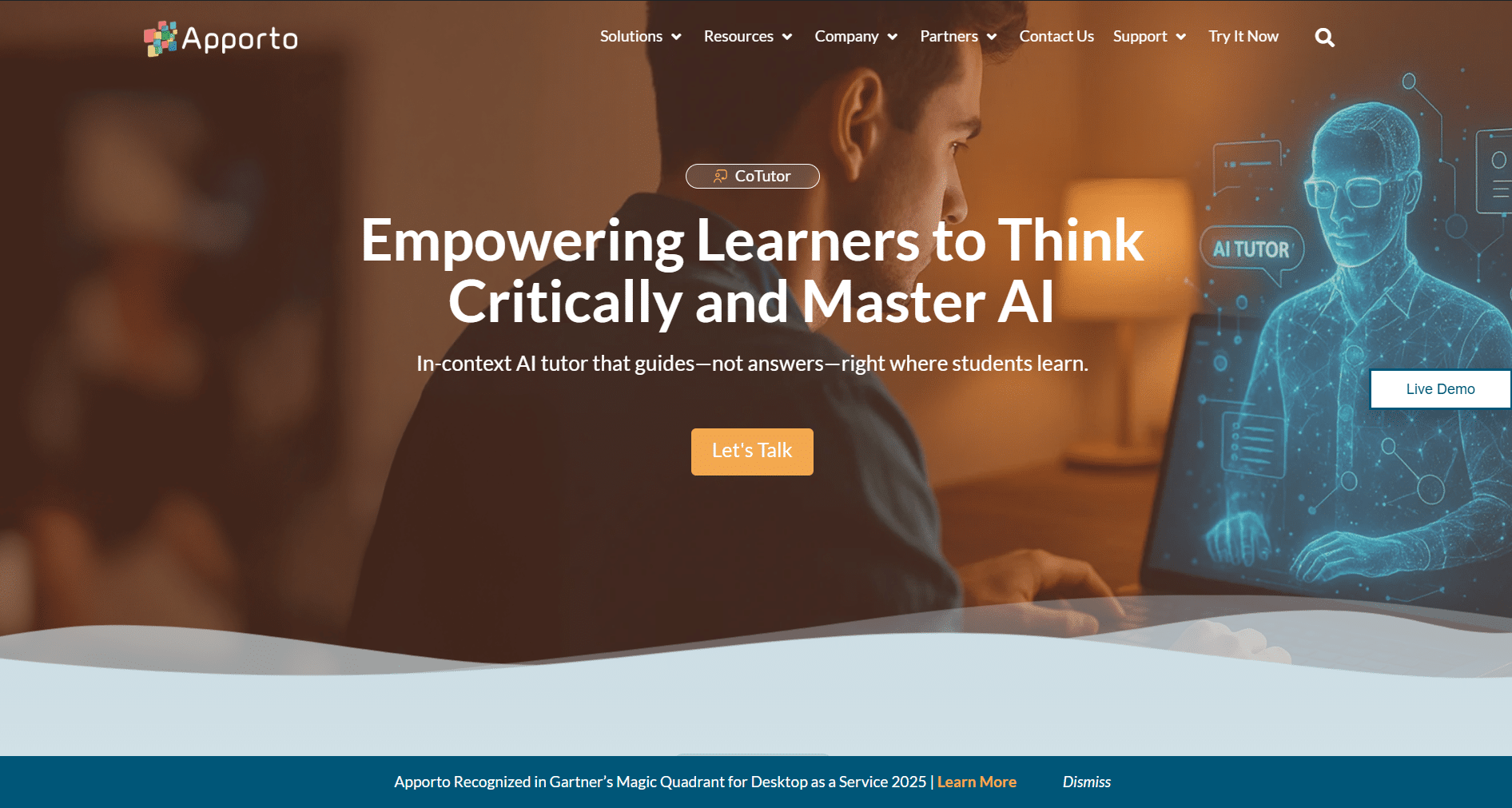
There are many AI tools appearing in classrooms, but some are built specifically for learning rather than general conversation. CoTutor falls into that category. It functions less like a search engine and more like a guided study assistant, helping you work through course material step by step.
The goal is simple, support active learning while keeping the thinking in your hands. Instead of handing out finished answers, CoTutor encourages you to interact with the material, ask questions, and refine your understanding over time. That approach helps transform ordinary study sessions into more focused learning experiences.
What Makes CoTutor Useful for Students?
- AI guided learning support: Helps you break down complex course concepts and understand difficult material more clearly.
- Practice and self assessment tools: You can generate quizzes and practice questions directly from lecture notes or other course materials.
- Active learning design: The system encourages critical thinking rather than copying answers.
- Course specific guidance: Supports deeper understanding of lecture notes, textbook chapters, and key course concepts.
Final Thoughts
AI has quietly become part of the modern learning experience. Used well, it can help you organize study materials, understand complex concepts, and practice ideas before exams. That kind of support makes studying more efficient and often less frustrating.
Still, not every part of learning should be automated. Real understanding grows when you wrestle with ideas, question assumptions, and work through problems yourself. AI works best as a companion to that effort, not a replacement for it.
Use these tools thoughtfully. Maintain academic integrity. Stay curious. When you treat AI as a guide rather than a shortcut, it can become one of the most useful study partners you have.
Frequently Asked Questions (FAQs)
1. Is using AI for studying allowed in college?
In many colleges, using AI tools for study purposes is allowed, but the rules depend on the course and the instructor. Some professors encourage AI for brainstorming or reviewing material, while others limit its use during assignments. Always check course guidelines and ask questions when unsure.
2. What are the best AI tools for studying?
Several AI tools have become popular among students. Platforms like CoTutor, NotebookLM, Quizlet Q-Chat, Notion AI, and Perplexity can help summarize lecture notes, generate practice questions, organize study guides, and explain difficult concepts in ways that support deeper understanding.
3. Can AI replace studying?
No, and it should not. AI works best as a study aid rather than a substitute for effort. You still need to read course materials, think critically, and practice solving problems yourself. Real learning happens when you engage directly with the material.
4. How can AI help prepare for exams?
AI tools can generate quizzes, flashcards, and practice questions based on lecture notes or textbook chapters. These activities encourage active recall, which strengthens memory and helps you identify weak areas before exams arrive.
5. Can AI help explain difficult course concepts?
Yes, AI can be useful when you encounter confusing material. You can ask it to break down complex ideas into simpler explanations, summarize long readings, or provide examples that make abstract concepts easier to understand.
6. How to use AI effectively for studying?
Use AI effectively by treating it as a study aid for explaining concepts, generating practice questions, summarizing notes, and organizing study plans. It works best when combined with active recall, critical thinking, and verification against course materials rather than replacing independent learning.
7. What should students be careful about when using AI?
AI tools sometimes produce incorrect information or biased responses. Because of this, you should always review AI output carefully, verify facts with course materials, and avoid submitting AI generated work as your own.
