
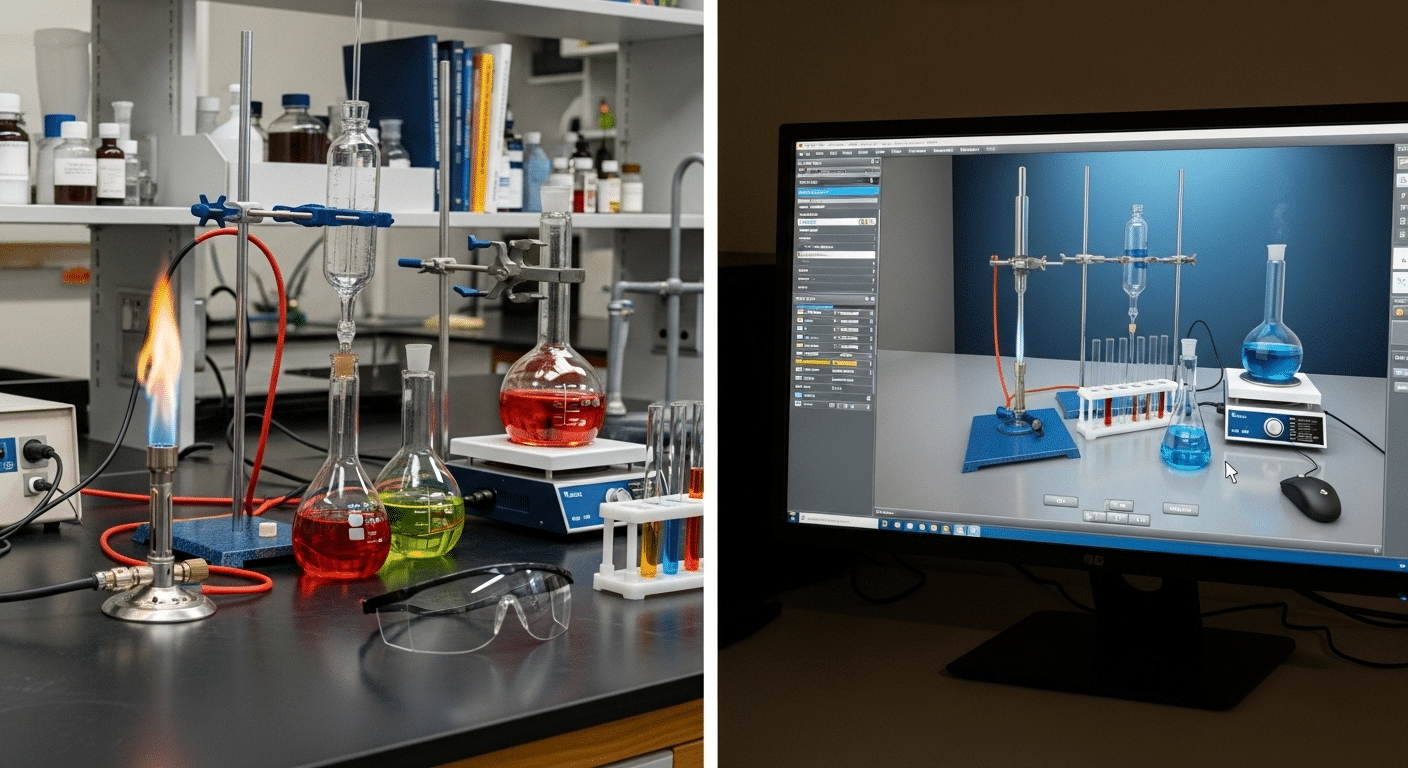
How Do Virtual Labs Work?
Virtual labs work through cloud-based simulations and interactive software that let students perform experiments, manipulate variables, and receive real-time feedback online. They replicate many traditional lab functions digitally, while platforms like Apporto provide scalable browser-based environments for delivering these experiences.
Virtual labs are interactive, computer-based environments that simulate real science lab experiences.
They’re designed to let you perform experiments, manipulate variables, and test concepts digitally, without needing a traditional physical lab.
Unlike hands-on labs, virtual labs don’t require physical space, lab equipment, or heavy infrastructure. All you need is a device and an internet connection. This makes them especially useful in schools where resources are limited or students are learning remotely.
That said, the goals remain the same. Whether physical or virtual, the core of science education is consistent: help students explore concepts, meet learning objectives, and connect theory with real-world understanding.
Both formats emphasize experimentation, observation, and analysis. The main difference lies in how those experiences are delivered—physically with tools in hand, or virtually through screens and simulations.
Next, let’s look at how these virtual labs actually work step by step.
How Do Virtual Labs Actually Work? Step-by-Step Explained
To fully grasp how virtual labs work, it’s helpful to walk through the core process step by step. These labs are designed to simulate the experience of a physical lab, while offering greater flexibility, safety, and accessibility.
Step 1: Logging In and Accessing the Virtual Environment
The process begins by logging into a virtual lab platform using any device with a stable internet connection. These platforms often run on browsers, so there’s no need for special installations or hardware.
Once inside, you’ll see a dashboard that lists available lab simulations across various subjects like biology, chemistry, or physics.
Each module aligns with specific learning objectives, ensuring that the virtual experience supports your academic goals.
Step 2: Selecting the Experiment
From the list of options, you choose a simulation based on your course or interests. These simulations are powered by virtual machines, allowing each student to engage in a personal, isolated lab session without affecting others.
This virtual setup replicates real-world lab procedures using interactive tools.
The lab opens into a fully immersive interactive environment, a digital version of a traditional lab bench. You’ll see equipment, substances, controls, and instructions all presented visually.
Step 3: Running the Experiment and Manipulating Variables
Here’s where it gets hands-on. Within the simulation, you’ll manipulate variables like temperature, timing, or concentrations. You can mix substances, trigger reactions, or measure forces, all by interacting with visual elements on the screen.
The use of digital simulations makes it possible to observe outcomes in real time. Whether it’s a chemical color change or a physics reaction, everything unfolds as it would in a real lab, only safer.
Some platforms also incorporate augmented reality (AR) features, allowing you to interact with overlays on physical materials, or virtual reality (VR) for immersive spatial engagement.
Step 4: Real-Time Feedback and Reflection
Throughout the session, the system provides real-time feedback, through prompts, auto-checks, or visual corrections. This creates a safe space where experimentation is encouraged, and mistakes are treated as learning moments rather than setbacks.
Each of these steps involved brings you closer to mastering scientific concepts without ever needing to step into a physical lab. Next, let’s look at the technologies that make these simulations possible.
What Technologies Make Virtual Labs Possible?
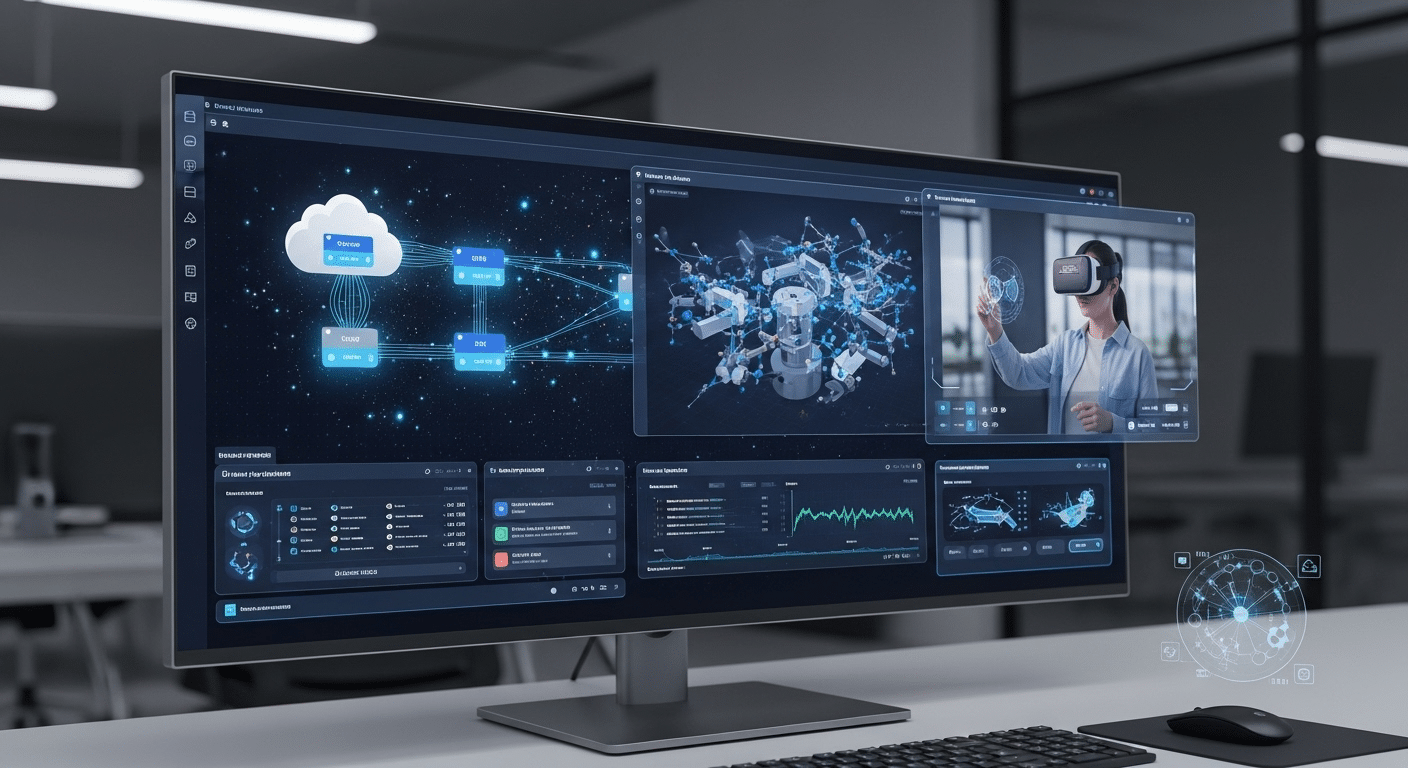
The success of virtual labs rests on a carefully designed stack of technology that transforms complex scientific processes into user-friendly, digital learning experiences. These tools work together to create immersive, flexible, and interactive environments that closely mimic real-world labs.
1. Cloud-Based Platforms and Virtualization
Most modern virtual labs are built on cloud-based platforms. This allows simulations and course content to be delivered directly through a web browser, no need for advanced hardware or local installations.
Behind the scenes, virtualization creates isolated lab environments for each user, powered by virtual machines that replicate the functions of physical lab systems.
This setup also supports scale. Whether you’re one student or part of a large cohort, the lab can run simultaneously for everyone without interruption.
2. Browser-Based Access and Device Compatibility
Virtual labs are intentionally accessible. Since most platforms are browser-based, students can interact with experiments from nearly any device—laptop, tablet, or desktop. This ensures equity in access and creates a safe environment for learning, regardless of location or device type.
3. Simulations, Real-Time Feedback, and Interactivity
The real magic happens inside the interactive environments. Here, you can perform simulated experiments—mixing solutions, adjusting controls, triggering chemical or physical reactions. These simulations are dynamic and responsive, offering real time feedback as you explore and make decisions.
This kind of instant response helps you grasp consequences, refine understanding, and learn through trial and error.
4. Augmented Reality and Virtual Reality Enhancements
Some virtual labs go further by integrating augmented reality (AR) and virtual reality (VR). AR adds digital layers to the physical world (like interactive overlays), while VR creates an entirely immersive lab you can explore in 3D.
Together, these technologies enable virtual labs to deliver meaningful, accessible, and high-impact learning experiences. Now, let’s explore how students actually learn in these environments.
How Do Students Learn Through Virtual Labs?
Virtual labs are built with one central goal: to promote learning that is active, engaging, and adaptable. Unlike passive forms of instruction, these environments encourage students to explore, experiment, and make decisions, creating a deeper connection to the subject matter.
1. Interactive Learning That Encourages Curiosity
The foundation of virtual labs is interactive learning. Students don’t just read instructions—they click, drag, observe, and manipulate. This interaction keeps the brain engaged, reinforcing concepts through participation rather than observation alone.
Every decision made in the lab—mixing a solution, changing a variable, adjusting a setting, leads to a reaction. Seeing those outcomes in real time helps students understand how systems behave and why details matter.
2. Supporting All Learning Styles
Different students learn in different ways. Virtual labs support:
- Visual learners through charts, color changes, and diagrams
- Kinesthetic learners by letting them manipulate virtual tools and variables
- Self-directed learners through flexible modules and exploration
Because students can learn at their own pace, they don’t have to keep up with the group or wait to revisit a topic. This flexibility helps reduce frustration and increases confidence.
3. Step-by-Step Guidance and Repetition
Each experiment is typically guided by step-by-step instructions, helping students stay on track. Whether it’s preparing a sample or running a reaction, every stage is clearly outlined. And because everything is digital, it’s easy to repeat processes as many times as needed.
This repetition supports practice skills development, reinforcing both the theoretical concepts and procedural understanding behind the experiment.
4. Connecting to Real-World Situations
Many virtual labs are designed to simulate real-world situations, such as medical testing, chemical reactions, or energy systems. This connection helps bridge the gap between abstract theory and practical application.
By engaging in these simulations, students gain learning experiences that mirror what they may encounter in academic labs or future careers. The result? A deeper understanding that sticks beyond the test.
Up next, let’s explore what kinds of subjects and courses benefit most from virtual labs.
What Subjects and Courses Use Virtual Labs Today?
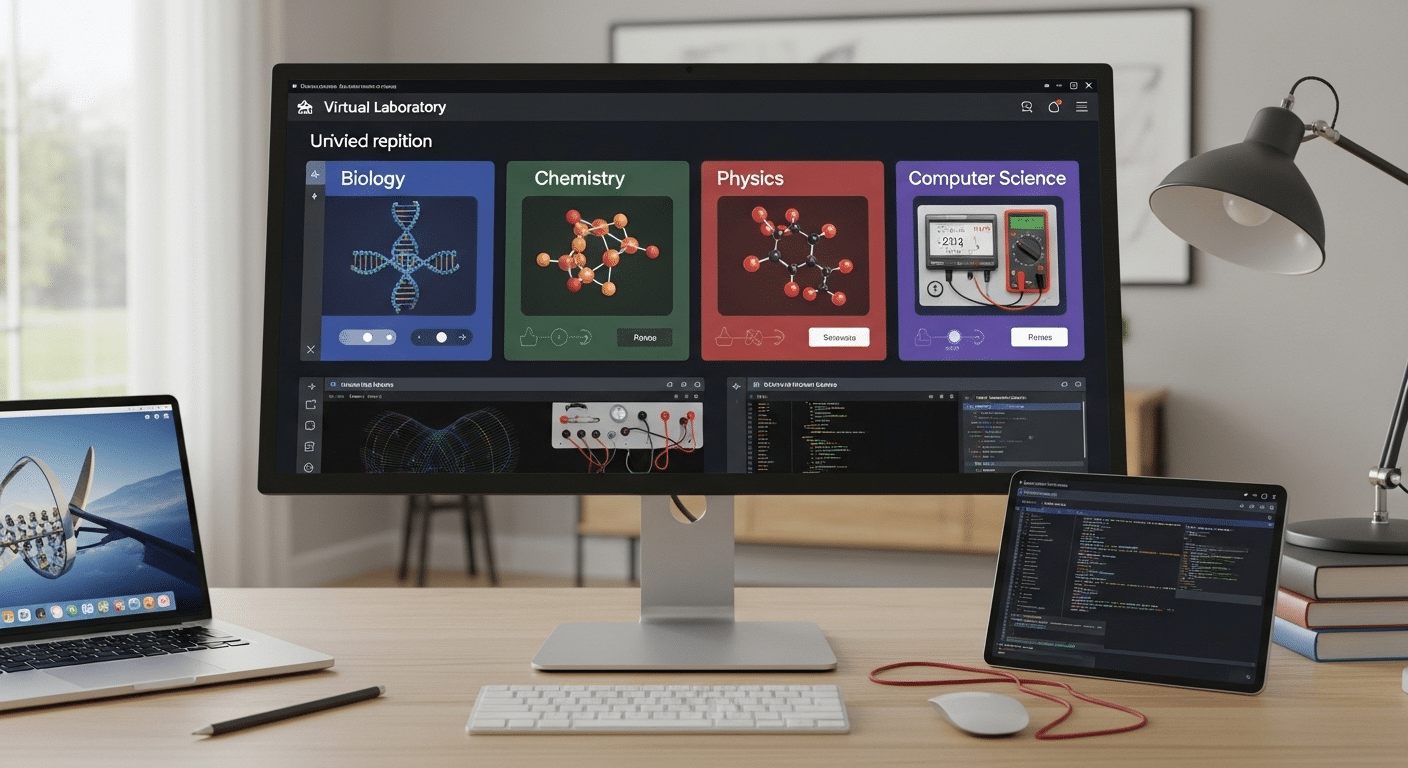
Virtual labs have quickly become an important part of modern science education, particularly in subjects where experimentation and observation are essential to learning.
These platforms are used across a wide range of lab-based courses, both in traditional and online formats, to support core learning objectives and reinforce hands-on skills.
Biology
In biology, virtual labs allow students to explore complex systems like cell structures, genetics, and ecological interactions. Simulations may include dissections, microscope work, or DNA analysis, giving students a chance to interact with models that might be too costly, time-consuming, or unavailable in a traditional setting.
Chemistry
Chemistry courses benefit from virtual labs that simulate chemical reactions, solution mixing, titration processes, and more. These labs provide a safe environment to practice procedures and observe outcomes that, in a real science lab, might involve expensive equipment or safety risks.
Physics
In physics, students use simulations to study motion, energy, electricity, magnetism, and wave behavior. These models allow learners to adjust variables, test hypotheses, and visualize forces in ways that physical setups may not easily demonstrate.
Computer Science and Beyond
Outside the natural sciences, computer science courses use virtual labs to teach programming, networks, cybersecurity, and system architecture. Students can interact with virtual machines, run code, and test environments without needing access to physical servers or specialized labs.
Do Virtual Labs Help Prepare Students for Real-World Science?
One of the most important goals of any science course is to prepare students for real-world applications, whether in further education, lab research, or future careers. Virtual labs are increasingly playing a main role in this preparation by building both practical skills and theoretical knowledge in a flexible, low-risk environment.
Practice in a Safe, Repeatable Space
With virtual labs, students can conduct experiments repeatedly, allowing them to master techniques through hands-on digital interaction. Unlike traditional labs, there’s no risk of injury, broken equipment, or wasted materials.
This safe experimentation encourages curiosity and lets students explore deeper without fear of failure.
They learn how to follow procedures, manipulate variables, record results, and troubleshoot outcomes, all fundamental steps in any scientific process.
From Concepts to Application
Virtual labs are designed to connect theoretical knowledge to real-world scenarios. Instead of memorizing facts, students practice applying what they’ve learned.
For example, a chemistry simulation might walk them through chemical bonding and reaction chains, while a biology lab could simulate genetic testing or cellular behavior.
This kind of real world experience helps solidify understanding and bridges the gap between classroom concepts and applied science.
Readiness for Research and Careers
By engaging with simulations that reflect professional lab workflows, students gain early exposure to tools and protocols they’ll encounter in internships, research labs, or scientific careers.
Many platforms are even aligned with national education standards, making the transition from academic learning to lab environments smoother.
They also build soft skills, like observation, critical thinking, and digital literacy, that support lifelong learning and adaptability in any scientific field.
In short, virtual labs help prepare students not only for exams but for meaningful, hands-on work beyond the classroom. Up next, let’s examine the pros and cons of using virtual labs versus traditional science labs.
How Do Instructors and Institutions Benefit from Virtual Labs?
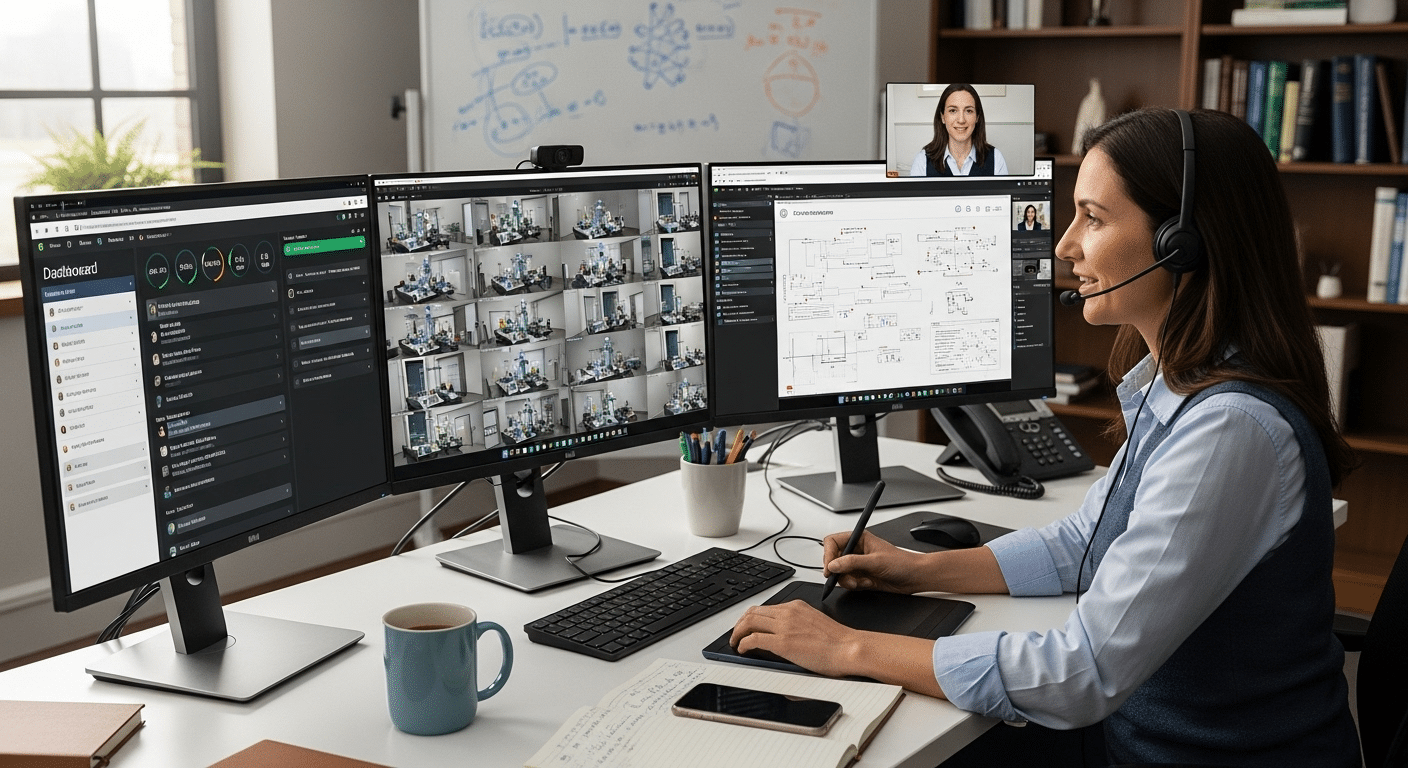
While virtual labs are known for enhancing student learning, they also offer significant advantages to instructors and institutions.
These tools not only improve the teaching process but also support broader institutional efforts to deliver modern, accessible, and cost-effective science education.
Scalability and Flexibility in Teaching
One of the biggest benefits for instructors is scalability. A single virtual lab setup can serve dozens, or even hundreds—of students at once. There’s no need to book lab space, manage physical materials, or worry about scheduling conflicts.
It also allows for flexible delivery across online learning formats, hybrid classes, and traditional settings.
Expanding Access to More and Different Groups
Institutions benefit from the ability to expand access to science education. With no dependency on physical location, virtual labs can reach a broader audience, including remote learners, students with disabilities, or those in under-resourced schools.
This supports equity in education and meets the needs of a diverse student population.
Streamlined Feedback and Consistency
Virtual labs also help instructors provide students with fast, consistent feedback. Automated assessments, built-in quizzes, and interactive prompts make it easier to track progress and adjust instruction.
This streamlines grading, reduces administrative burden, and ensures all students receive the same level of support and evaluation.
Ultimately, virtual labs allow educators to teach more effectively while institutions modernize their delivery of science curriculum, without sacrificing quality or outcomes.
Up next, let’s compare virtual labs with traditional hands-on science labs side by side.
What Are the Limitations of Virtual Labs Compared to Hands-On Labs?
While virtual labs bring many advantages—such as flexibility, accessibility, and scalability, they do have limitations, especially when compared to the hands-on experience offered by traditional labs.
Missing the Physical, Sensory Element
The most obvious limitation is the absence of physical touch. In a hands-on lab, you feel the resistance of turning a knob, measure exact quantities, and observe materials react in real time with all your senses.
That kind of tactile and sensory feedback is difficult, if not impossible—to replicate in a virtual environment.
For some learners, especially those in tactile or kinesthetic learning styles, the inability to physically interact with equipment can impact their understanding and engagement.
Can’t Fully Replace Real Experiments
Despite offering simulations with variable outcomes and visual cues, virtual labs can’t entirely substitute the unpredictability or complexity of real experiments.
Things like equipment malfunctions, material inconsistencies, or accidental outcomes provide valuable learning moments in traditional settings that a digital simulation might not recreate.
Even the best-designed safe environment in a virtual setting lacks the realism and physical problem-solving challenges of an actual hands-on lab.
Best as a Supplement, Not a Replacement
Because of these gaps, virtual labs are often best used as a supplement to physical labs, not a full replacement. They work well for pre-lab preparation, conceptual reinforcement, or offering access when a physical lab isn’t available.
But for courses where physical manipulation is essential, a hands-on approach remains irreplaceable.
Virtual labs can do a lot, but recognizing what they can’t do is just as important.
Next, let’s summarize the essential takeaways and consider where virtual labs fit best in the future of science education.
Are Virtual Labs an Important Element of the Future of Education?
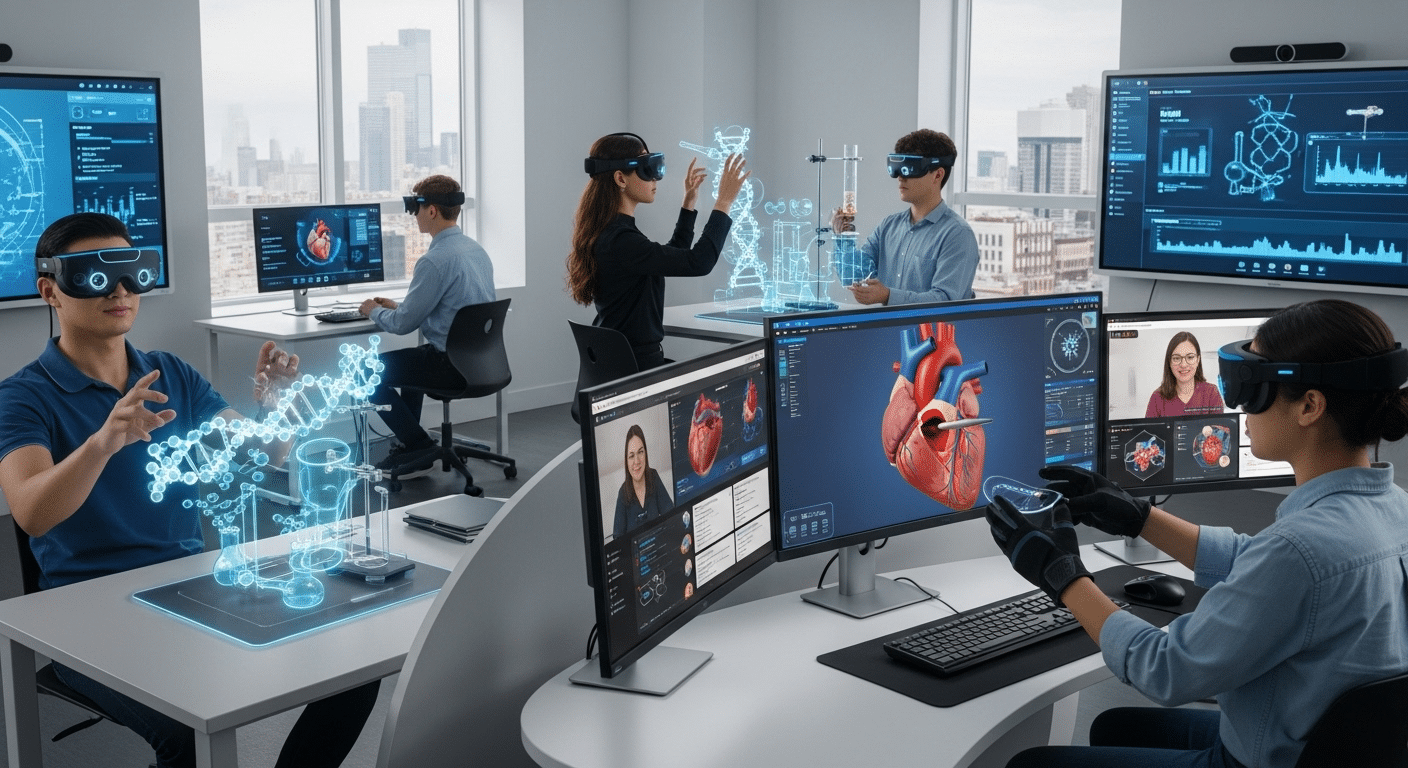
Yes, virtual labs are not just a temporary solution; they’re fast becoming an important element in the evolution of science education.
As schools, colleges, and training institutions continue to modernize, virtual labs are finding a permanent place alongside traditional teaching methods.
They support flexible delivery models like hybrid, blended, and distance learning, offering practical lab experiences even when students and instructors aren’t in the same physical space.
More importantly, these labs are accessible to a wider audience. Students in rural areas, international learners, or those without access to physical facilities can still participate in meaningful lab-based education.
That levels the playing field and makes science learning more equitable across different regions and demographics.
Virtual labs also align with how digital-native students engage with content today, visually, interactively, and at their own pace. They reinforce training by allowing repeated practice and instant feedback, which is essential in mastering scientific concepts.
As education systems adapt to the changing world, virtual labs offer institutions a scalable way to enrich courses, strengthen teaching, and empower learners with real skills.
Before You Go: See How Apporto Makes Virtual Labs Seamless
If you’re looking to implement virtual labs that are scalable, cloud-based, and easy to manage across your institution, Apporto offers a complete platform designed for modern science education.
It enables students to access interactive lab environments without the hassle of setting up physical infrastructure.
Whether you’re teaching chemistry, biology, or computer science, Apporto supports deep learning, safe experimentation, and seamless collaboration, backed by real-time feedback and centralized control.
Conclusion
In a world where education is rapidly shifting toward hybrid and digital models, knowing how virtual labs work isn’t just helpful, it’s essential.
These labs combine real learning outcomes with broad accessibility, giving students the ability to interact with science in ways that weren’t possible before.
For educators and institutional leaders, virtual labs offer a sustainable way to modernize teaching, reduce barriers, and expand reach.
For learners, they open the door to new methods of exploration and practice that match today’s technological world.
If you’re part of a school, university, or organization planning for the future, now is the time to explore trusted platforms like Apporto. Virtual labs aren’t a replacement for great teaching, they’re a tool that enhances it.
And as this shift continues, those who understand and adopt these tools early will be best positioned to shape the next chapter of science education.
Frequently Asked Questions (FAQs)
1. What is a virtual lab?
A virtual lab is a digital environment that uses simulations and interactive software to let students perform experiments online. It supports hands-on learning, variable testing, and real-time feedback, often through browser-based platforms without requiring physical lab equipment.
2. How do virtual labs work in science education?
Virtual labs use interactive environments, digital simulations, and cloud-based tools to let students perform experiments online. You manipulate variables, follow step-by-step instructions, and get real-time feedback, all through a browser or app, no physical lab needed.
3. Do virtual labs replace traditional labs?
Virtual labs do not fully replace traditional labs but often complement them by supporting preparation, concept reinforcement, and remote access to experiments. Physical labs remain important for tactile skills, while virtual labs expand accessibility, safety, and repeated practice.
4. What subjects use virtual labs the most?
Biology, chemistry, physics, and computer science often use virtual labs. They’re built into many science courses, lab-based courses, and online science labs to support specific learning objectives.
5. What tools and technologies power virtual labs?
Most virtual labs run on virtual machines, using digital tools like simulations, virtual reality, or augmented reality. All you need is a digital device and a stable internet connection to participate.
6. Can virtual labs help students gain real-world experience?
Yes. Students can practice skills, manipulate variables, and explore real-world situations in a safe environment. This builds confidence before entering a physical lab or real-world setting.
