
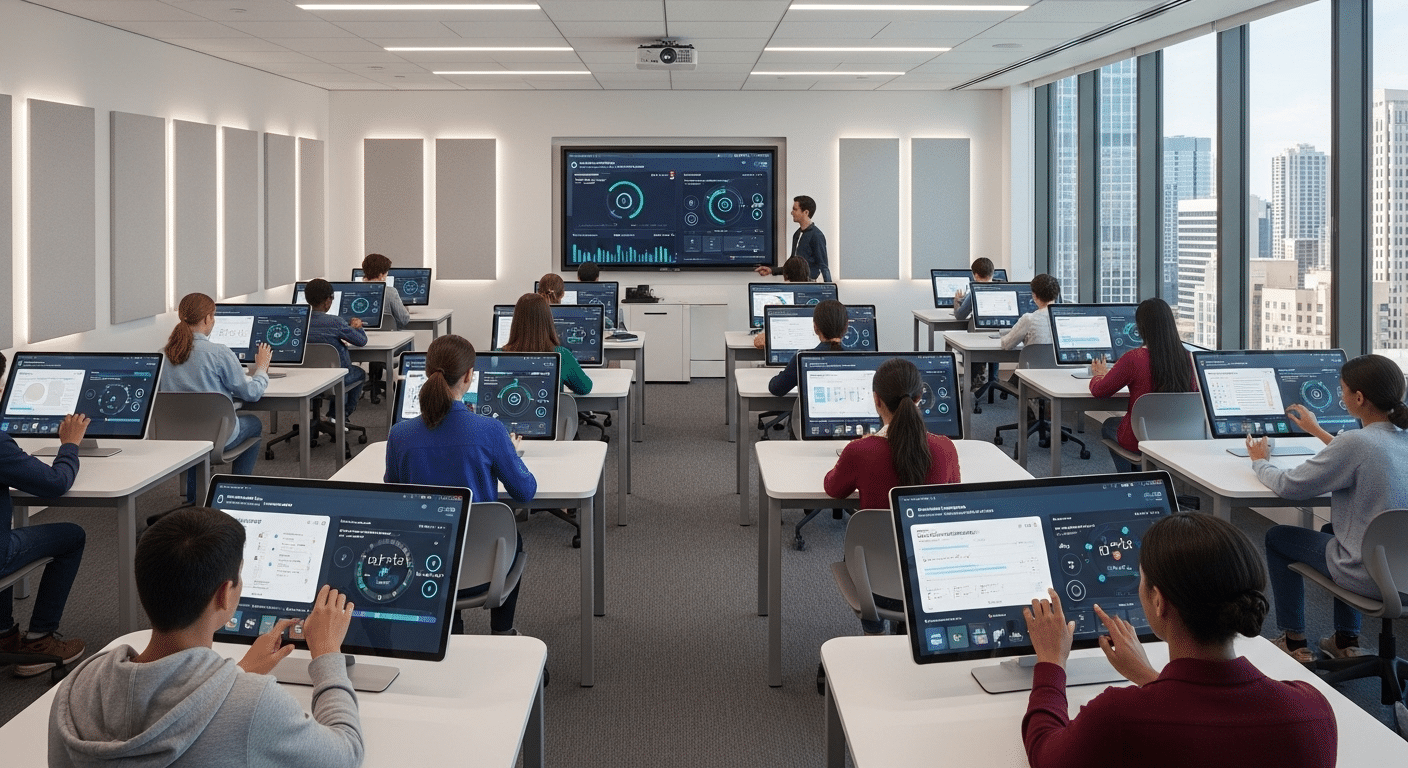
How Artificial Intelligence Enhances Education Using AI-Powered Tutoring?
AI-powered tutoring enhances education by delivering personalized learning experiences, real-time feedback, and adaptive instruction tailored to each student’s progress. Intelligent tutoring systems help improve engagement, retention, and learning outcomes at scale, while platforms like Apporto CoTutor support secure, browser-based AI tutoring designed for higher education environments.
Education has always evolved alongside technology. What feels different now is the speed and precision of that change. When you look at how artificial intelligence enhances education AI powered tutoring, you begin to see something more structured than a trend. You see a shift in the learning process itself.
Traditional teaching methods were built around groups moving at the same pace. AI enhanced tutoring systems operate differently. They adapt. They analyze patterns in student performance. They respond in real time. And increasingly, the data shows measurable improvements in educational outcomes, from faster mastery of introductory material to higher retention and engagement rates.
This is not about replacing classrooms. It is about refining the learning experience. Artificial intelligence and AI tutoring platforms are enabling personalized learning at a scale that was previously impossible. Intelligent tutoring systems can now support individual students simultaneously, offering feedback, guidance, and tailored learning paths without delay.
The conversation is no longer whether AI technology will transform education. It already is. The deeper question is how you choose to integrate it thoughtfully, responsibly, and effectively.
In this blog, you will explore how AI-powered tutoring works, what the research says about its impact, how it supports both students and teachers, and why intelligent learning systems are becoming central to the future of education.
What Are Intelligent Tutoring Systems and How Do They Personalize Learning?
Intelligent tutoring systems sound abstract, almost clinical. In practice, they are surprisingly attentive. An intelligent tutoring system, often shortened to ITS, is an AI system designed to deliver personalized learning through continuous analysis of how individual students think, respond, and progress.
Instead of presenting the same material to everyone, it studies patterns quietly in the background and adjusts instruction accordingly.
1. How Do Intelligent Tutoring Systems Analyze Individual Students?
Intelligent tutoring systems rely on what is called a student model. Think of it as a living profile that tracks knowledge state, strengths, recurring mistakes, and conceptual gaps. Each response you give feeds into that model. Over time, it becomes more precise.
Machine learning, put simply, allows the system to recognize patterns in large amounts of student performance data. It learns which explanations lead to mastery and which ones fall flat. This learning does not stop after one lesson. It continues, constantly recalibrating.
Continuous assessment plays a central role. Rather than waiting for a final exam, the system evaluates understanding after each interaction. If your learning pace accelerates, the material becomes more challenging. If you struggle, the difficulty adjusts in real time. That dynamic adaptation supports individualized learning without public comparison or pressure.
What emerges is personalized instruction shaped moment by moment. Not static. Not generic. Responsive.
2. What Makes AI Powered Tutoring Systems Different From Traditional Teaching Methods?
AI powered tutoring systems diverge from traditional teaching methods in several measurable ways:
- Personalized instruction adapts to individual students instead of delivering uniform content to students simultaneously.
- Immediate feedback allows students to correct misunderstandings during the learning process.
- Adaptive assessments adjust difficulty in real time to measure actual mastery.
- Tailored learning experiences respect each student’s strengths and cognitive load.
- AI systems automate routine tasks so teachers can focus on human interaction and emotional support.
Research shows that intelligent tutoring systems enhance educational outcomes through continuous personalization. They can support an unlimited number of students simultaneously, and in high-quality studies, AI tutoring systems have matched the success of human tutoring. That combination, scale and precision, begins to explain their growing influence.
How Does AI Improve Student Performance, Engagement, and Learning Gains?
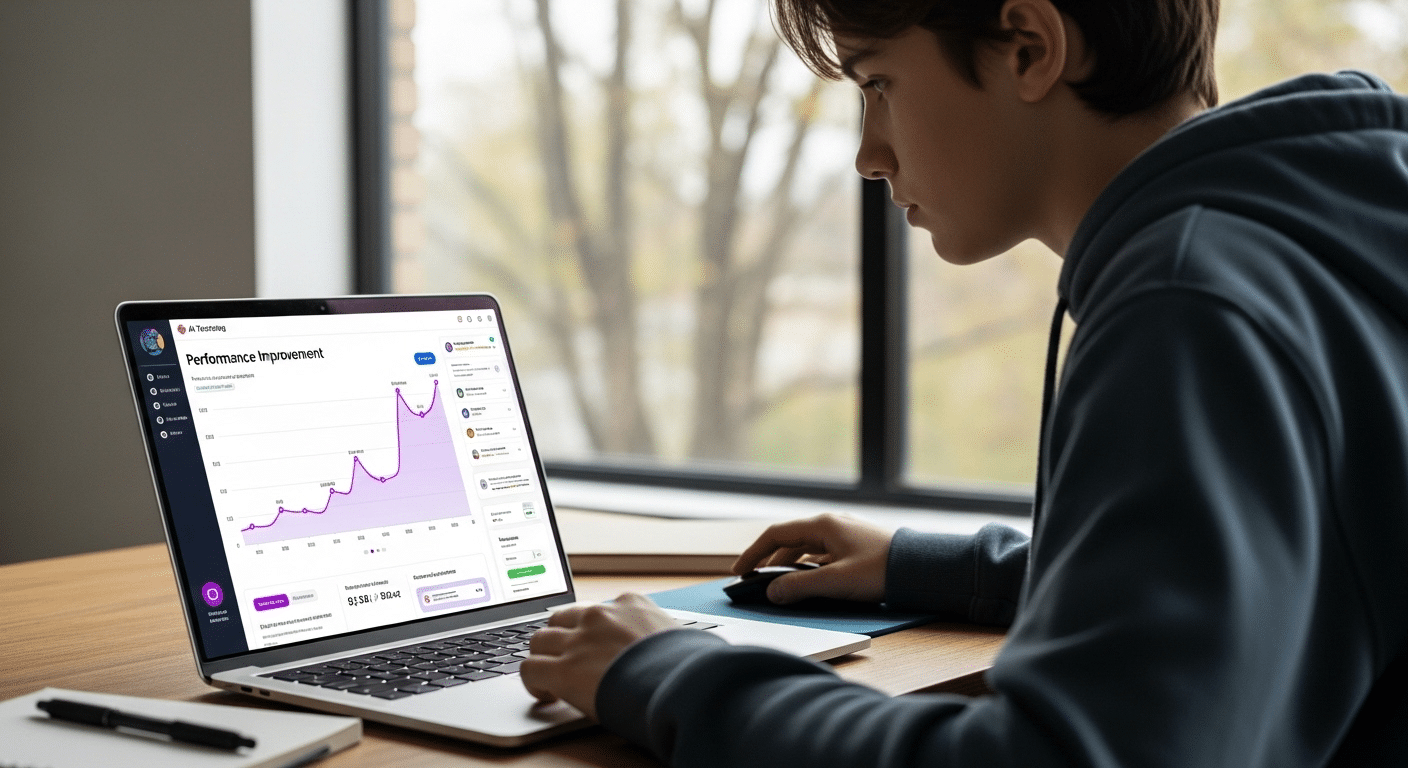
Numbers tend to quiet skepticism. When you look at measurable outcomes, the conversation becomes less theoretical and more practical.
AI-assisted tutoring has been shown to increase topic mastery by 4 to 9 percentage points in controlled studies. That may sound modest at first glance. It isn’t. Across large student populations, even single-digit gains compound quickly. Over time, those gains influence overall student performance, retention, and confidence.
In some widely cited implementations, including platforms similar to Khan Academy, students using AI tutoring systems have progressed 30 to 50 percent faster compared to peers relying solely on traditional teaching methods.
Faster progress does not mean rushing. It means fewer lingering misunderstandings, fewer stalled lessons, fewer gaps that quietly widen over a semester.
Engagement improves as well. Students interacting with AI tutoring platforms report higher levels of motivation and persistence. When explanations adapt to your learning pace, frustration drops. When targeted feedback arrives immediately, you do not carry confusion into the next topic. That immediacy matters.
High dose tutoring, delivered by human tutors, has long been considered one of the most effective academic interventions. The limitation has always been scale. AI systems, however, can support students simultaneously without diminishing quality. You receive individualized instruction without waiting in line.
Continuous real time feedback accelerates mastery in subtle ways. Errors are corrected in the moment. Cognitive overload decreases because the material adjusts before it becomes overwhelming. Over time, those small corrections produce meaningful learning gains.
What Does the Research Say About Learning Outcomes?
| AI Capability | Impact on Students Learning |
|---|---|
| Immediate feedback | Faster correction of errors and reduced accumulation of misconceptions |
| Adaptive difficulty | Better alignment with student performance and current knowledge state |
| Personalized learning paths | Higher motivation, persistence, and sustained engagement |
| Data-driven instruction | Improved curriculum decisions and refined teaching strategies |
Research grounded in educational psychology suggests that AI tutoring enhances learning outcomes primarily through targeted feedback. Real time feedback prevents misunderstandings from hardening into long-term knowledge gaps.
Students learning in adaptive environments also report greater confidence and autonomy compared to traditional models. The pattern is consistent.
When instruction adapts, performance improves. When feedback is timely, learning gains accelerate. And when engagement rises, retention tends to follow.
Can AI Tutoring Foster Advanced Cognitive Skills and Critical Thinking?
The real test of any learning tool is not speed, but depth. Can it foster advanced cognitive skills? Can it strengthen critical thinking rather than shortcut it? That is where AI tutoring becomes interesting.
One of its quieter strengths lies in how it helps manage cognitive load. When material is delivered too quickly or with too much complexity at once, working memory becomes overwhelmed.
Intelligent systems adjust difficulty and pacing in real time, allowing you to focus on understanding instead of scrambling to keep up. That control over learning pace creates space for reflection.
High quality explanations matter as well. AI systems can present multiple explanations for the same concept, shifting examples until clarity clicks. In project based learning environments, AI tutoring can guide students through structured problem solving, offering prompts instead of finished answers. The goal is not to replace reasoning but to sharpen it.
Generative AI adds another layer. Through interactive dialogue, you are encouraged to explain your thinking, question assumptions, and revisit earlier steps. That process supports metacognition, the habit of thinking about how you think.
When designed responsibly, AI systems guide students rather than hand them solutions outright. They support introductory material and complex reasoning alike, helping develop advanced cognitive skills gradually, not abruptly.
How Does AI Enhance Educational Equity and Access to Quality Education?
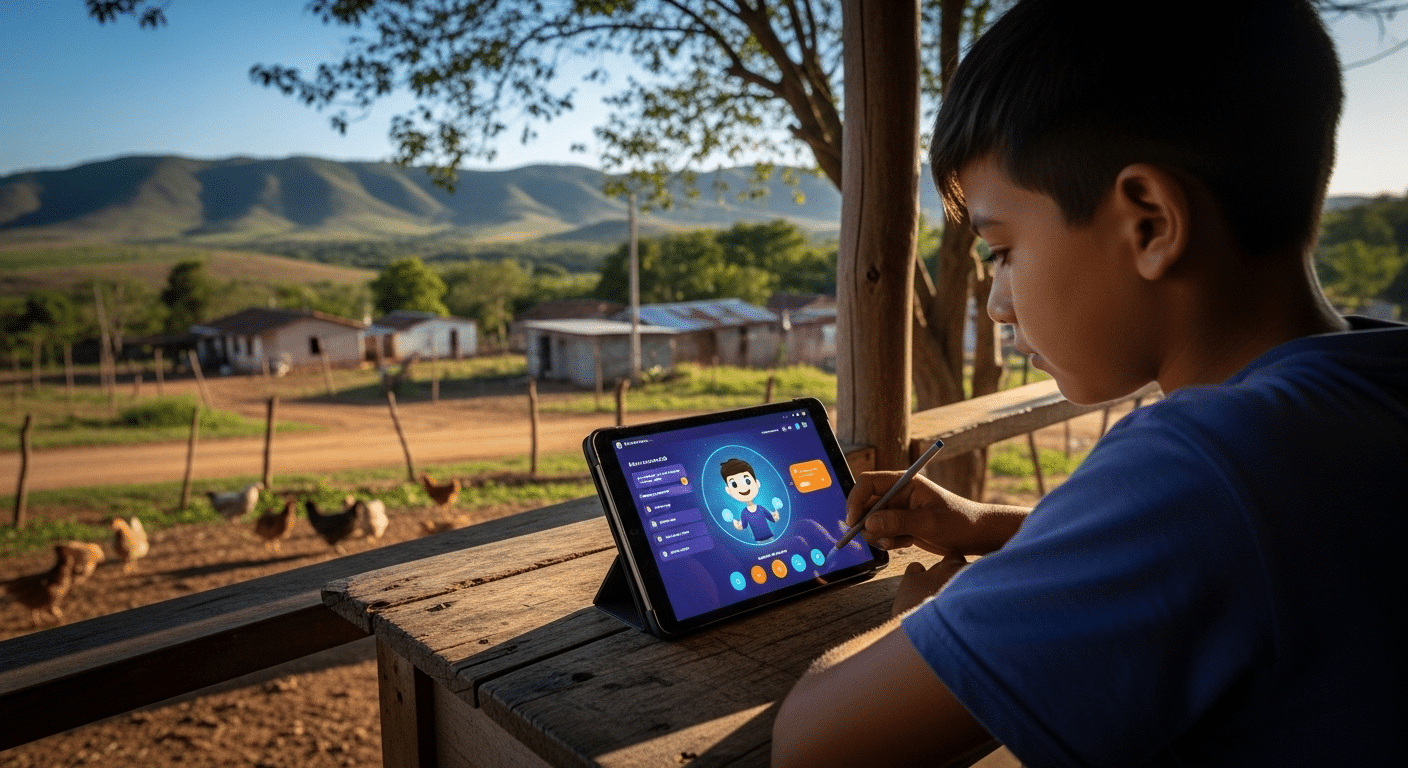
Conversations about artificial intelligence often drift toward efficiency. The more urgent question, though, is access. Who benefits? Who gets left behind? When applied carefully, AI tutoring can narrow gaps that have persisted for decades.
Educational equity has long been constrained by geography, funding, and staffing shortages. In underfunded schools, access to high-quality tutoring or advanced coursework is often limited. AI personal tutors change that equation. By delivering personalized learning experiences through scalable platforms, you gain access to individualized education regardless of location.
The idea of democratizing education at scale is no longer abstract. AI systems can provide one-size-fits-one instruction to thousands, even millions, of students simultaneously. Individualized learning becomes less dependent on zip code and more dependent on thoughtful implementation. That matters.
Generative AI further strengthens this approach by adapting explanations to your needs in real time. If you struggle with foundational material, support deepens. If you advance quickly, the challenge increases. The learning process respects both pace and potential.
Some of the benefits for expanding access include:
- 24/7 personalized support beyond classroom hours, allowing learning to continue when teachers are unavailable.
- Consistent quality instruction regardless of district funding or local resource constraints.
- Immediate feedback without social judgment, reducing fear of asking questions.
- Personalized AI tutors that create non-judgmental environments where students feel safe experimenting and revising answers.
- Scalable support capable of serving large student populations without diminishing tailored support.
AI tutoring does not solve systemic inequality alone. But it can reduce educational inequity by expanding access to quality education in measurable ways.
When educational institutions integrate these tools responsibly, individualized instruction becomes more than an aspiration. It becomes attainable.
How Does AI Support Teachers Instead of Replacing Them?
The fear that AI will replace teachers surfaces quickly in almost every discussion. It is understandable. Yet the research tells a more grounded story. AI tutoring systems are most effective when they operate alongside human teachers, not in place of them.
In practical terms, AI automates grading and other routine tasks that quietly consume hours each week. It tracks student progress continuously, identifying patterns that might otherwise go unnoticed.
You receive clear data on where students struggle, where they excel, and where intervention is needed. That kind of visibility strengthens teacher support rather than diminishing it.
When administrative work decreases, space opens. Teachers can spend more time on mentorship, guiding students through complex reasoning, and offering emotional support that no algorithm can replicate. Human interaction remains essential in moments of confusion, frustration, or breakthrough.
Successful implementation depends on collaborative effort. AI systems provide precision and scale. Human teachers provide context, judgment, and care. The two are not competing forces. They are complementary strengths working in tandem.
AI Systems and Human Teachers: Complementary Strengths
| AI System | Human Teachers |
|---|---|
| Immediate feedback | Emotional support |
| Pattern recognition in data | Contextual judgment |
| Scalable individualized instruction | Social and moral guidance |
| Automates administrative tasks | Builds relationships |
AI does not replace teachers. It enhances teacher support by reducing repetitive work and expanding insight. Human tutors and educators remain central to learning. Technology can assist, but education is still, at its core, relational.
How Can Educational Institutions Successfully Implement AI Tutoring Platforms?

Adoption without strategy rarely ends well. Integrating AI into an existing learning environment requires more than purchasing an AI tutoring platform and switching it on. It demands alignment, oversight, and patience.
You begin by ensuring that AI technology supports curriculum standards rather than drifting away from them. Content must reinforce learning objectives already in place.
The goal is coherence, not novelty. Secure AI system architecture is equally critical. Protecting sensitive student data is not optional, particularly in higher education where regulatory compliance matters.
Data-informed decision-making should guide the process. AI tutoring platforms generate analytics that reveal patterns in student performance, engagement, and mastery. Used responsibly, that data enables continuous improvement in both instruction and system design. Used carelessly, it creates confusion. Governance matters.
Successful implementation also requires coordination across leadership. A senior vice president of academic affairs may oversee strategic alignment. IT leadership ensures secure deployment and technical stability. Human resources may adapt the system for corporate training or workforce development initiatives. Collaboration across these roles strengthens long-term impact.
An effective rollout typically follows a structured approach:
- Define instructional objectives clearly before integrating AI into coursework.
- Train faculty on AI tutoring platforms so they understand both capabilities and limits.
- Monitor student performance data responsibly to guide adjustments.
- Protect sensitive student data through secure access controls and governance policies.
- Phase rollout gradually instead of deploying campus-wide immediately.
- Measure educational outcomes continuously to support ongoing refinement.
Integrating AI is not a one-time event. It is an evolving process shaped by evidence, leadership, and sustained attention.
What Role Does Generative AI Play in Modern AI-Enhanced Tutoring?
Generative AI is often described in technical language, but the core idea is straightforward. It refers to artificial intelligence systems that can produce new content in response to a prompt. In tutoring environments, that means generating explanations, examples, follow-up questions, and even alternative ways of framing a concept, all in real time.
At the center of many of these systems is a large language model. You can think of it as a highly trained prediction engine that has learned patterns in language, reasoning, and subject matter.
Within AI enhanced tutoring systems, that model enables fluid dialogue rather than rigid scripts. The result feels less like navigating a static worksheet and more like engaging in guided conversation.
Generative AI supports individualized learning by adjusting explanations to match your strengths and weaknesses. If you grasp theory but struggle with application, the system pivots. If foundational gaps appear, it circles back without embarrassment or delay. Personalized learning experiences emerge from those micro-adjustments.
The feedback is immediate and context-aware. Instead of waiting for graded results, you receive real time feedback as you work. That responsiveness supports self-directed learning because you can experiment, revise, and progress independently.
Equally important is scalability. Generative AI enhances the scalability of personalized education by allowing AI tutoring systems to support students simultaneously without sacrificing tailored guidance.
The dialogue remains focused on the individual, even as thousands engage with the platform at once. That balance between personalization and reach defines much of modern AI tutoring.
How Is CoTutor Advancing AI-Powered Tutoring in Higher Education?
After examining the mechanics and evidence behind AI tutoring, the natural question becomes practical. How does this translate into higher education settings that require security, scale, and accountability?
Apporto built CoTutor with those realities in mind. It operates as a browser-based AI tutoring platform, removing installation barriers while aligning with secure, Zero Trust infrastructure models common in higher education. That alignment matters. Institutions cannot afford experimental tools that compromise data integrity or governance standards.
CoTutor is designed specifically for academic environments, not generic consumer use. It delivers personalized AI tutoring at institutional scale, supporting individualized learning while respecting curriculum structure and faculty oversight.
The intent is not to replace teachers. Instead, it strengthens teacher support by handling routine guidance, offering immediate contextual feedback, and expanding access to tailored instruction beyond classroom hours.
When aligned with goals such as student success, retention, equity, and scalable teacher support, CoTutor becomes less of an add-on and more of a strategic asset within higher education.
Conclusion
The conversation often frames artificial intelligence as either a revolution or a threat. In practice, it behaves more like an amplifier. AI enhances education, but it works best alongside human teachers who provide judgment, empathy, and context. The evidence points in that direction consistently.
Personalized learning at scale is no longer theoretical. Intelligent systems can adapt to individual students while serving thousands simultaneously. That capability expands access to individualized education in ways that were previously constrained by staffing and funding. Educational equity, when approached deliberately, can be meaningfully advanced through responsible deployment of AI tutoring.
Still, technology alone does not guarantee better outcomes. Thoughtful integration remains essential. Institutions must evaluate AI tutoring platforms carefully, align them with academic standards, and ensure secure implementation.
The real opportunity lies in partnership, not replacement. When AI systems support faculty and empower students, education becomes more responsive, more inclusive, and, perhaps most importantly, more sustainable for the long term.
Frequently Asked Questions (FAQs)
1. What are intelligent tutoring systems and how do they work?
Intelligent tutoring systems are AI-powered learning platforms that analyze student performance, identify knowledge gaps, and adjust instruction in real time. They use student data, adaptive assessments, and personalized feedback to create individualized learning experiences that help students progress at their own pace.
2. Does AI tutoring improve student performance?
Research shows AI tutoring can improve student performance through personalized instruction, adaptive learning paths, and immediate feedback. AI-powered tutoring systems help students correct misunderstandings faster, increase engagement, and strengthen retention, often leading to higher topic mastery and improved learning outcomes over time.
3. Can AI replace human teachers?
AI cannot replace human teachers because education depends on mentorship, emotional support, contextual judgment, and human interaction. AI tutoring systems are most effective when supporting educators by automating routine tasks, delivering personalized feedback, and helping teachers focus more on student guidance and critical thinking development.
4. What role does generative AI play in tutoring systems?
Generative AI helps tutoring systems create real-time explanations, follow-up questions, personalized examples, and adaptive learning support. Powered by large language models, these systems provide interactive, context-aware feedback that helps students learn independently while supporting individualized instruction at scale across diverse learning environments.
5. Is AI tutoring secure for higher education institutions?
AI tutoring platforms can be secure for higher education institutions when they include controlled access, secure cloud infrastructure, and responsible data governance. Platforms like Apporto CoTutor align with institutional security standards while supporting personalized learning, secure browser-based access, and scalable AI tutoring environments.
