

How Do Colleges Integrate Academic and Professional Development?
Colleges integrate academic and professional development by embedding career readiness, experiential learning, and industry-aligned skills directly into coursework and advising. This approach helps students connect classroom learning with workforce expectations. Tools like Apporto’s TrustEd support authentic assessment and protect the credibility of career-ready educational outcomes
In higher education, the degree can no longer stand alone. You see it in employer surveys, in hiring data, and in conversations across universities. Employers report persistent skills gaps, particularly in communication, problem solving, and applied critical thinking. A transcript signals academic achievement, but it does not always clarify professional readiness.
That reality places responsibility on institutions. Integrating career development into the student journey is now essential for modern education. Professional development cannot remain an optional workshop or a final-year activity managed only by career services. It must be woven into the academic experience itself.
Career engagement begins at enrollment. From the first semester, you encounter conversations about skills, purpose, and future pathways. Colleges increasingly embed career preparation directly into coursework, advising, and experiential learning. Academic and professional development become interconnected, not separate tracks.
If education aims to prepare you for meaningful contribution, then career readiness becomes an integral part of the foundation, not an afterthought at graduation.
What Does True Integration Look Like in Practice?
True integration is deliberate. It is designed into curriculum, advising structures, and institutional strategy, not added as a final requirement. In practice, academic affairs and career services do not operate in isolation.
Departments coordinate programs so that courses reflect both disciplinary knowledge and professional development. Teaching evolves to include applied assignments and reflective exercises that connect classroom learning to real roles.
Early counseling plays a central role. You encounter structured career exploration before choosing a major, and that exploration continues through each stage of development. Technology supports this process by tracking academic progress alongside professional milestones.
Industry alignment ensures that what you learn remains relevant to workforce expectations. Integration becomes visible when these elements reinforce one another across the institution.
Key structural pillars include:
- Curriculum alignment that connects course objectives to professional skills and workforce expectations
- Experiential learning integration through internships, co-ops, and applied projects embedded in programs
- Embedded career coaching introduced early and sustained throughout enrollment
- Technology milestone tracking that monitors academic progress and career readiness together
- Cross-department collaboration between faculty, academic affairs, and career services
Embedding Career Readiness Directly Into the Curriculum

Career readiness becomes meaningful when it is visible inside the curriculum itself. You do not develop durable skills by attending a single workshop. You build them through structured repetition across courses, guided by faculty members who intentionally connect academic knowledge with professional application.
Many colleges now use competency mapping aligned with NACE career readiness competencies. In practical terms, that means learning goals are not limited to content mastery. They include communication, critical thinking, problem solving, teamwork, and digital literacy.
Faculty modify coursework to reflect this broader purpose. Assignments that once measured recall now require analysis, collaboration, and presentation.
Skill mapping in syllabi makes expectations explicit. When you review a course outline, you see how each assignment contributes to specific competencies. Career readiness becomes a required component of academic programs, not an optional supplement.
Project-based learning strengthens this connection, asking you to solve real problems that resemble entry level job responsibilities. The classroom becomes a rehearsal space for professional practice.
Examples of how institutions operationalize this integration include:
- Competency mapping in syllabi that links assignments to defined career readiness standards
- Project-based assignments tied directly to job roles or industry challenges
- Explicit skill articulation exercises that help you describe communication and problem solving abilities
- Career competencies embedded within standard coursework rather than added as separate modules
Why Faculty Professional Development Is a Critical Lever?
Curriculum design alone does not guarantee strong outcomes. Faculty members translate strategy into daily teaching practice, and that work requires continuous professional development. When educators remain current with new methodologies and technologies, the quality of instruction improves.
Research consistently shows that faculty who engage in ongoing development tend to have students who perform better academically and persist at higher rates. Retention, engagement, and long term success are closely connected to instructional quality.
Sustained professional development produces stronger results than isolated workshops. One afternoon session rarely changes practice in lasting ways. Faculty learning communities, structured peer conversations, and collaborative inquiry allow educators to reflect, test new approaches, and refine their expertise over time.
Institutions that treat professional development as an integral part of strategic planning, with dedicated resources and accountability, see measurable gains in outcomes. At the same time, many adjunct faculty lack equitable access to these opportunities, which can limit their effectiveness.
Key levers include:
- Sustained faculty learning communities that encourage reflection and peer collaboration
- Technology and methodology updates that keep teaching aligned with evolving student needs
- Strategic institutional investment that embeds professional development in planning processes
- Expanding access for adjunct faculty so all educators receive meaningful support
Experiential Learning as the Bridge Between Classroom and Career

Experiential learning gives professional development a concrete form. You do not fully understand a field by reading about it alone. You test knowledge through practice, reflection, and feedback. Colleges embed internships, co-ops, practicums, and applied projects directly into academic programs so that theory and application reinforce one another.
Internships consistently enhance job prospects after graduation. Employers value internship experience because it signals familiarity with workplace expectations, communication norms, and professional responsibility.
Many institutions now offer credit-bearing work to ensure that applied experience remains academically grounded. Structured co-ops go further, allowing you to alternate between academic semesters and paid, full-time work aligned with learning objectives.
Practicums and clinicals, common in fields such as nursing, psychology, and education, require observation, documentation, and supervised practice. These experiences cultivate professional judgment, not just technical competence.
Experiential learning strengthens outcomes because it demands accountability. You apply knowledge in real settings, reflect on performance, and return to the classroom with deeper understanding.
| Experiential Model | Academic Integration | Professional Outcome |
|---|---|---|
| Internships | Course credit + applied work | Stronger job placement |
| Co-ops | Alternating work/study | Paid experience + structured objectives |
| Practicums/Clinicals | Observation + documentation | Professional performance readiness |
| Industry Projects | Employer-designed assignments | Portfolio-ready skills |
Early Career Coaching and First-Year Integration
Career development now begins at entry, not at the end of a degree. Many colleges introduce first-year success coaches who help you think about goals before you even meet with an academic advisor.
This early career exploration shapes how you choose courses, join programs, and engage in campus life. Instead of asking what you will do after graduation, you begin asking how each semester builds toward long term outcomes.
Early engagement with career centers improves results. Students who connect with career coaching in their first year are more likely to secure internships and jobs later. Career coaching provides structured conversations that define goals, identify skills gaps, and clarify professional identity.
This support matters especially for first generation students, who may not have informal networks to guide career decisions. When integration begins early, the student experience becomes more coherent, intentional, and aligned with success.
Key mechanisms include:
- First-year milestone mapping that connects academic progress with professional development goals
- Personalized career coaching that clarifies direction and identifies skill gaps
- Skills reflection exercises embedded in introductory courses
- Targeted support structures designed for first-generation students to increase access and confidence
Technology as the Infrastructure for Integration

Integration at scale requires more than intention. It requires systems. Technology provides the infrastructure that connects academic progress with professional development in measurable ways.
Through digital tools, institutions can track professional growth alongside coursework, identifying patterns and gaps early. Milestone dashboards allow you to see progress in both degree requirements and career readiness benchmarks, which reinforces accountability.
Virtual simulations extend access to experiential learning. You can experience a day in the life of a role, test decision making, and reflect on performance without leaving campus. These tools make career exploration more concrete, especially when internship access is limited.
Technology also allows colleges to scale support, ensuring that career centers and advising teams reach more students without sacrificing personalization.
Core tools often include:
- Career milestone dashboards that align academic and professional progress
- Skills tracking platforms that document competencies across programs
- Virtual role simulations that expose you to real-world scenarios
- Digital portfolio systems that capture projects and applied learning
- Integrated advising platforms that connect faculty, coaches, and career services
Employer Collaboration and Industry Co-Design
Integration strengthens when employers move from peripheral partners to active contributors. Advisory boards composed of industry leaders help shape curriculum alignment so that programs reflect current workforce needs.
When employers participate in academic boards, they provide insight into tools, expectations, and evolving professional standards. This collaboration ensures that what you study connects directly to what organizations require.
Some institutions take collaboration further by co-designing programs with businesses. Courses incorporate real projects, current software, and applied challenges drawn from industry practice. Direct collaboration builds durable skills because you engage with authentic constraints and expectations.
Alumni networks also play a critical role. Platforms such as Tritons Connect link students with graduates for mentoring and networking, while initiatives like Pay It Forward mobilize alumni to create job opportunities for new graduates. These partnerships reinforce professional identity long before graduation.
Key collaboration mechanisms include:
- Industry advisory boards that review and refine curriculum alignment
- Co-designed curriculum developed in partnership with employers
- Alumni mentorship platforms that connect students with experienced professionals
- Employer-led projects embedded in courses to simulate real workplace challenges
The Emerging Challenge: Trust, Verification, and Credential Integrity
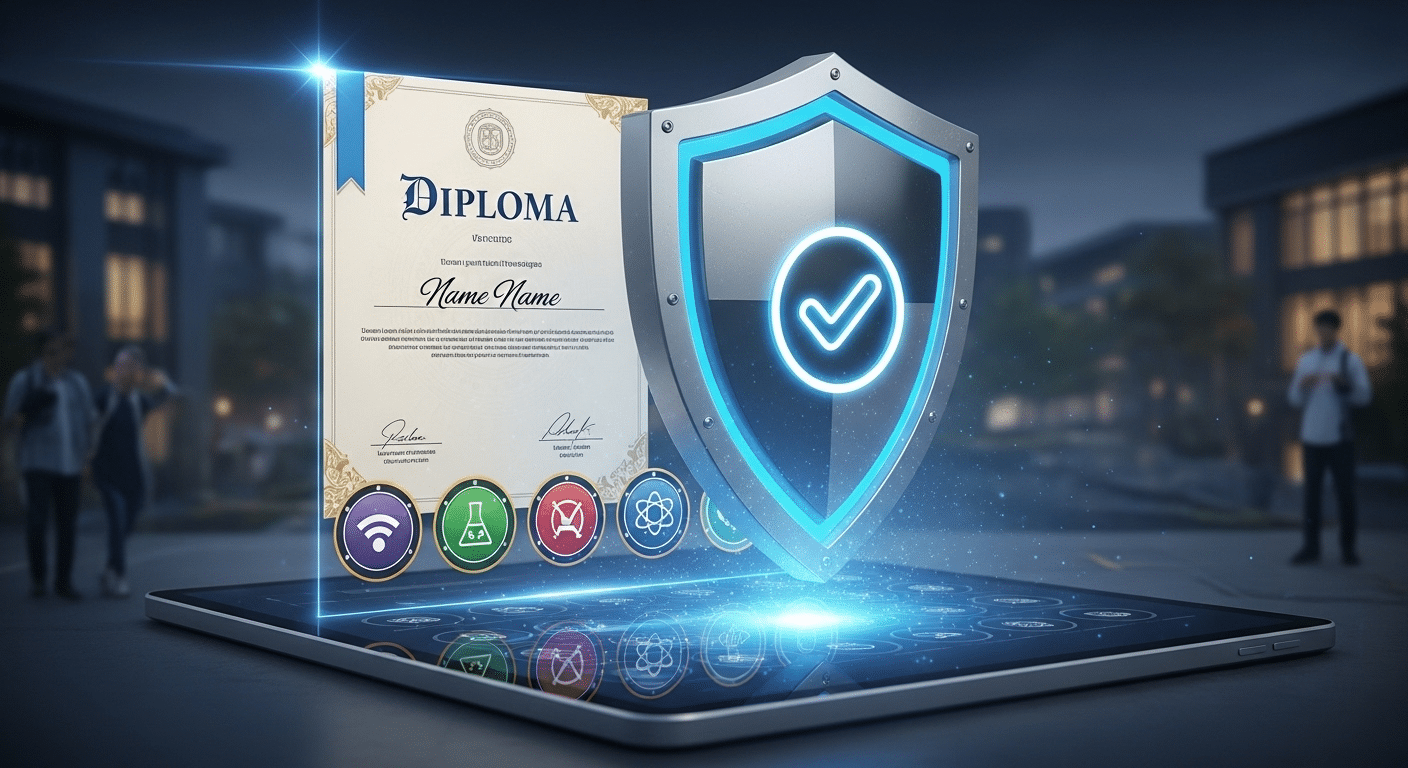
As colleges weave career development into academic programs, a new responsibility emerges. Verification becomes essential. When courses promise durable skills and professional readiness, institutions must ensure that demonstrated competencies are authentic.
Employers depend on that credibility. A degree that signals communication, problem solving, and applied expertise must rest on verified assessment, not assumption.
Authentic student work therefore carries weight beyond the classroom. It shapes professional identity. It influences hiring decisions. When learning occurs across online platforms, collaborative tools, and remote environments, integrity challenges grow more complex.
Assessment in digital spaces can obscure authorship and blur accountability. That reality does not diminish integration, but it raises expectations for oversight.
Employers must trust that projects, portfolios, and experiential outcomes reflect genuine performance. Faculty must feel confident that evaluation methods preserve fairness. Academic integrity becomes inseparable from professional credibility.
As integration deepens, institutions must strengthen systems that protect authenticity while preserving flexibility and access. The next step is not to slow integration, but to secure it.
How Apporto’s TrustEd Protects the Integrity of Career-Ready Education?
When career development becomes integrated into coursework, assessment carries higher stakes. Projects, simulations, internships, and applied assignments now serve as evidence of readiness. For that evidence to retain meaning, authorship must be clear and evaluation must be trustworthy. This is where Apporto TrustEd plays a critical role.
TrustEd provides instructor-controlled authorship verification designed specifically for academic environments. Instead of removing faculty judgment, it strengthens it. You retain oversight of assessment while gaining tools that help verify that submitted work reflects authentic student effort. This protects institutional credibility at a time when employers rely on portfolios, competency mapping, and experiential outcomes to make hiring decisions.
TrustEd follows a human-in-the-loop design. Technology supports review, but faculty remain central. When verification is transparent and embedded into assessment processes, confidence grows across stakeholders, from educators to employers. Career-ready education depends on credibility. TrustEd ensures that credibility remains intact.
Key benefits include:
- Transparent authorship verification that supports academic integrity
- Faculty-controlled review processes that preserve instructional authority
- Protecting credential value by validating demonstrated competencies
- Strengthening employer trust in institutional outcomes
What the Future of Higher Education Demands?
The future of higher education demands coherence. You are no longer preparing for a single job, but for a career that evolves over decades. Lifelong learning becomes a practical necessity, not an abstract ideal.
As industries adapt and knowledge expands, professional identity forms continuously. Education must support that ongoing development rather than conclude at graduation.
Durable skills such as communication, critical thinking, and problem solving anchor this long trajectory. Technical knowledge changes, but these capabilities persist.
Institutions therefore face a responsibility to design integration as a structural baseline, not a temporary initiative. Academic learning and professional development must function as one system.
At the same time, ethical technology governance becomes central. As digital tools support tracking, assessment, and verification, oversight must remain thoughtful and human-centered.
If higher education aims to sustain credibility and relevance, integration must be intentional, accountable, and designed for endurance rather than convenience.
Conclusion
Integrating academic and professional development requires intention across every layer of an institution. Curriculum integration connects classroom learning with real job responsibilities. Faculty development strengthens teaching and improves outcomes.
Experiential learning brings theory into contact with practice. Employer collaboration aligns programs with workforce needs. Technology provides the infrastructure to track progress and scale support. Integrity safeguards protect credibility and ensure that demonstrated competencies remain authentic.
When these elements work together, education becomes coherent. You see how knowledge, skills, and professional identity develop in parallel. That coherence builds trust among students, faculty, and employers.
If you are strengthening career-ready education at your institution, explore how TrustEd can help protect the integrity behind every credential you award.
Frequently Asked Questions (FAQs)
1. How do colleges integrate academic and professional development?
Colleges align curriculum with career readiness competencies, embed experiential learning into programs, and introduce early career coaching. Academic affairs, career services, and employers collaborate so that learning outcomes connect directly to workforce expectations.
2. Why is career readiness embedded into the curriculum?
Embedding career readiness ensures that students develop durable skills such as communication and problem solving alongside academic knowledge. This integration helps you connect coursework to real job responsibilities.
3. Do internships really improve job prospects?
Yes. Employers consistently value internship experience when making hiring decisions. Structured internships and co-ops allow you to apply knowledge in real settings, strengthening employability after graduation.
4. What role do faculty play in professional development?
Faculty members integrate competencies into teaching, revise syllabi to highlight skills, and participate in sustained professional development to improve instruction and student outcomes.
5. How does technology support career integration?
Technology tracks professional milestones alongside academic progress, offers virtual simulations, and scales advising support. These tools make career development measurable and accessible.
6. Why is academic integrity important for career-ready education?
Authentic assessment protects credential credibility. Employers must trust that demonstrated competencies reflect genuine student performance, especially in technology-supported learning environments.
