

What Are the Best DaaS Providers for Education?
DaaS providers for education deliver cloud-based virtual desktops that students and faculty can access from any device or location. These platforms improve flexibility, simplify IT management, and support remote learning environments. Providers like Apporto offer browser-based access, centralized security, and scalable virtual labs designed specifically for education.
Things don’t sit still for long in education anymore. Campuses aren’t just physical spaces, they’re distributed, stretched across homes, devices, time zones. Hybrid learning has quietly become the default in many places, not the exception. And that creates a problem that traditional setups weren’t built to handle.
Physical labs still exist, sure, but they come with limits. Fixed locations, device dependency, restricted access to software. It works, until you need flexibility. Then it starts to feel tight.
That’s where DaaS providers for education come in. Cloud desktops, delivered remotely, accessible from almost anywhere. Secure, scalable, and less tied to physical infrastructure.
In this blog, you’ll explore how DaaS works, why institutions are adopting it, and how to choose the right provider.
What Is Desktop as a Service (DaaS) and How Does It Work in Education?
You can think of Desktop as a Service as a way of separating your desktop from the machine in front of you. The screen you see, the apps you open, the files you use, none of it actually lives on your device anymore. It lives somewhere else, inside cloud data centers managed by a service provider.
That sounds abstract at first. It isn’t, really. You open a browser or a lightweight app, connect through an internet connection, and your desktop appears. Same layout. Same tools. It behaves like a regular computer, just not tied to physical hardware.
Under the hood, virtual machines are doing the work. Each user gets an isolated environment, which means your setup stays separate from other users even though everything runs on shared infrastructure. That’s part of what makes virtual desktop infrastructure scalable.
In education, this becomes especially useful. You can deliver Windows desktops, virtual apps, and specialized software without worrying about what device someone is using. Different operating systems, different devices, it doesn’t matter much anymore.
The control sits centrally, not locally. And once you get used to that idea, it starts to feel oddly straightforward.
Why Are Educational Institutions Moving Toward DaaS Solutions?
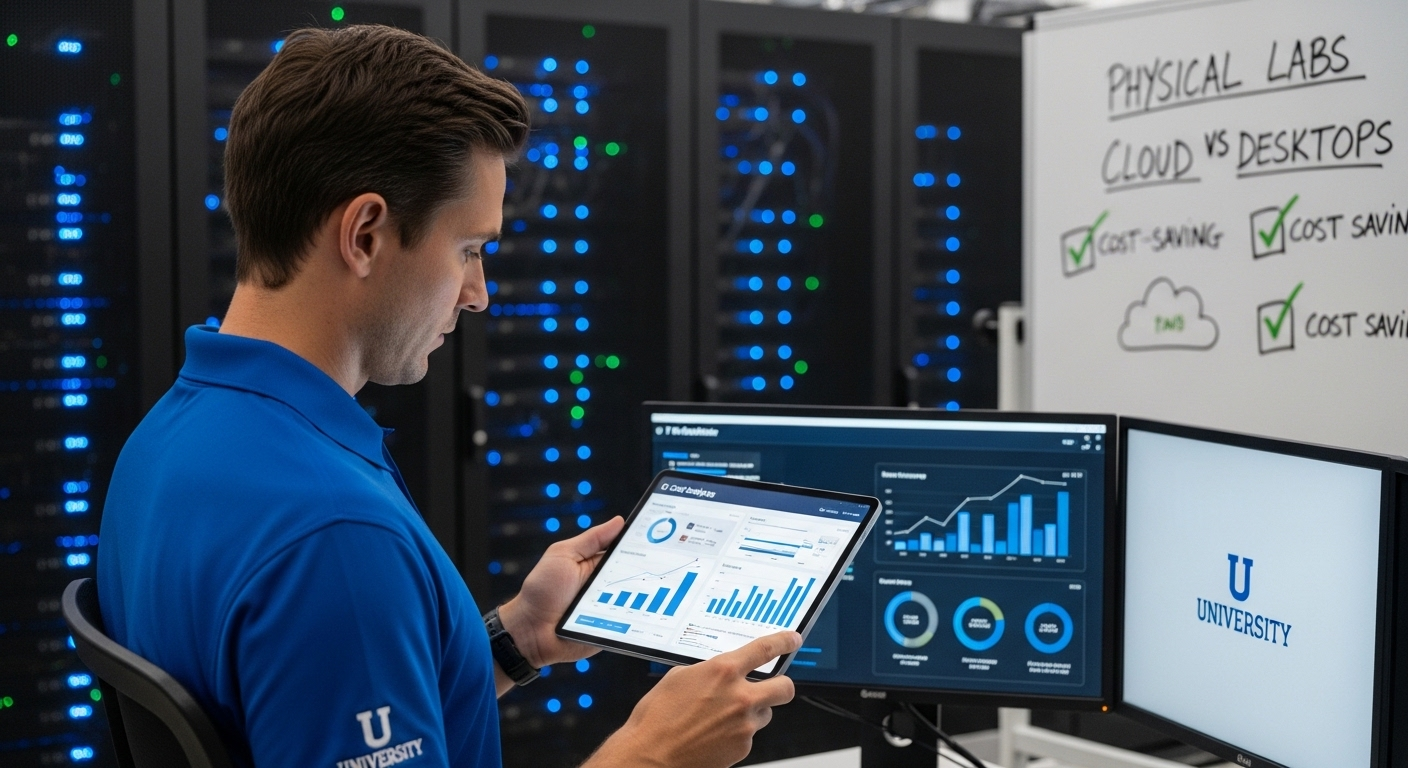
Something has been building quietly. Expectations changed, but the infrastructure didn’t keep up at the same pace. Students want access everywhere. Faculty expect consistency. And budgets, well, they don’t stretch infinitely.
That’s where DaaS starts to make sense. Not as a trend, more as a response to pressure coming from all sides.
- Avoid large upfront investment in physical hardware, since the subscription model replaces traditional CAPEX
- Support hybrid learning and remote access without relying on campus labs
- Expand access to specialized software across courses and disciplines
- Bridge the digital divide by supporting Chromebooks and other low-cost devices
- Enable flexible access across devices, making digital resources more widely available
What Changes After Adopting DaaS?
The difference shows up gradually, then all at once. Systems feel lighter. Access becomes less restricted. Dependency on campus labs starts to fade. Students no longer need to plan around availability. The experience becomes more consistent, regardless of device.
Accessibility improves in ways that aren’t always obvious at first. More students can participate fully. And over time, that tends to change how learning actually happens.
What Are the Benefits of Using DaaS Providers for Education?
The advantages don’t always show up in one big moment. They appear in small improvements, less friction, fewer delays, more access where it used to be limited. Over time, those small changes start to matter more than expected.
Here’s where DaaS providers for education begin to make a measurable difference:
- Provides secure access to virtual desktops from any device, allowing users to connect without storing sensitive data locally
- Centralized management simplifies desktop management, reducing the effort required to maintain multiple systems across campus
- Enables enhanced remote experiences for students and faculty, making access feel consistent even outside traditional environments
- Protects sensitive data through data encryption and access controls, with information stored securely in the cloud instead of individual devices
- Supports cross-device compatibility across multiple operating systems, so students can use laptops, tablets, or lower-cost devices without limitations
- Allows easy scaling during enrollment spikes or exams, adjusting resources without purchasing additional hardware
- Reduces risk from hardware failures and data loss, since systems are no longer dependent on individual machines
- Simplifies IT operations by eliminating physical hardware management, which lowers ongoing maintenance demands
- Improves student experience through consistent environments, where everyone works with the same tools and setup
- Enables delivery of specialized software without lab dependency, making advanced tools more accessible across courses
How Do DaaS Providers Ensure Security and Data Protection?
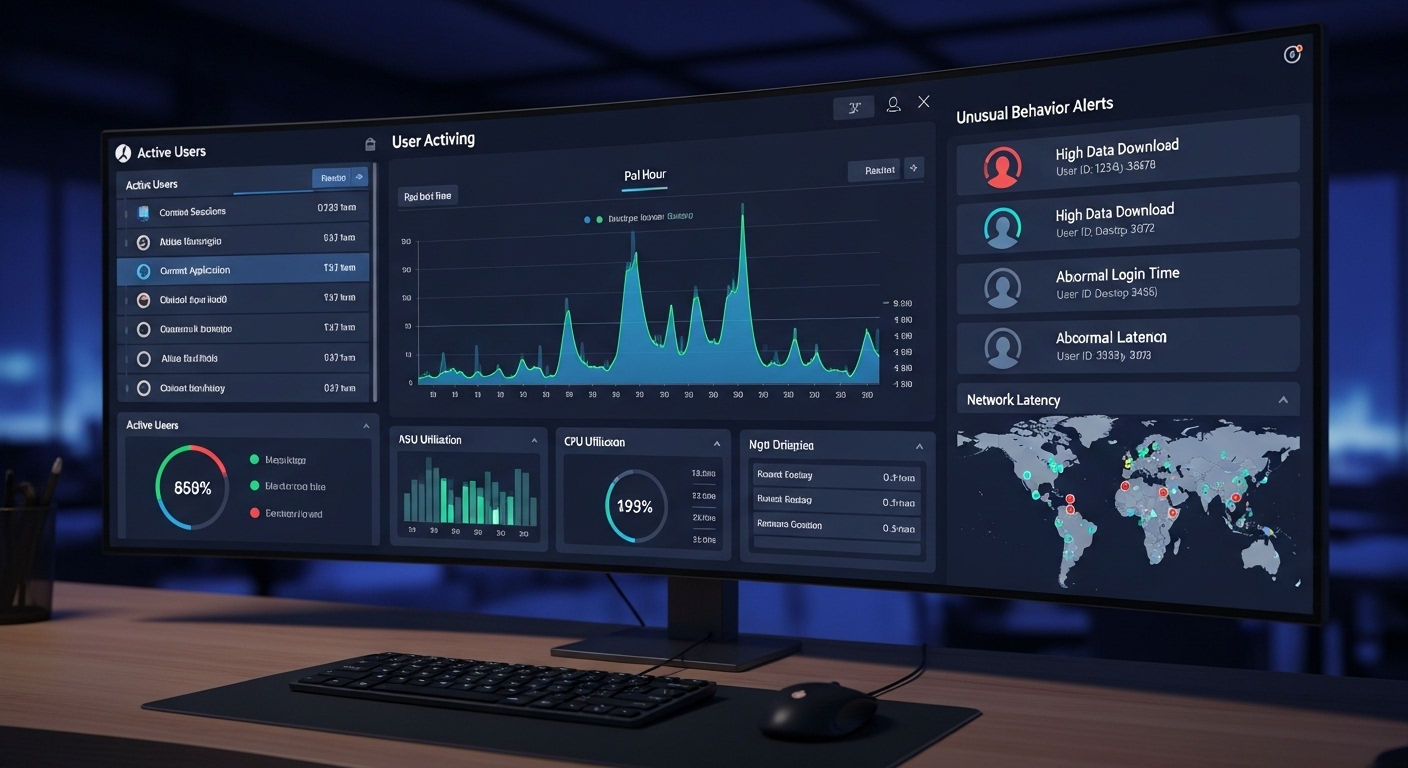
Security tends to become visible only when something goes wrong. In education, that risk is harder to ignore. Student records, research data, internal systems, all of it needs protection, and not just at the surface level.
DaaS providers approach this differently. Instead of spreading data across dozens, sometimes hundreds, of individual devices, everything is pulled into controlled environments. Centralized, monitored, and, in most cases, far more predictable.
Here’s how that protection actually takes shape:
- Multi factor authentication protects access, adding an extra layer beyond passwords so unauthorized users can’t easily get in
- Data encryption secures information in transit, meaning data remains unreadable while moving between the user and the system
- Access controls manage user permissions, ensuring individuals only see what they’re supposed to see, nothing more
- Data stored in secure cloud data centers reduces reliance on local devices, where loss or theft is far more common
- Monitoring of user activity improves compliance, helping institutions track access patterns and detect unusual behavior early
Data isn’t sitting on local machines anymore. That alone reduces a large portion of risk. Cloud-based security measures don’t eliminate every threat, but they do narrow the attack surface in a meaningful way.
What Are the Top DaaS Providers for Education in 2026?
You don’t really choose a DaaS platform in isolation. It tends to reflect everything around it, your existing systems, your budget, the kind of experience you want students to have. Some platforms lean toward control, others toward simplicity. And that difference shows up quickly once you start using them.
Here are some of the leading DaaS providers for education right now, each with its own approach.
Apporto:
Apporto feels different from the start. It runs entirely in the browser, no installs, no setup rituals that eat up time. That alone removes a lot of friction for both students and IT teams.
It’s built with education in mind, especially virtual labs and course-specific environments. You get centralized management, strong security controls, and a setup that scales without much effort. It has also been recognized as a top provider on Gartner Peer Insights, which says something about consistency, not just features.
Microsoft Azure Virtual Desktop:
Azure Virtual Desktop fits naturally if you’re already inside the Microsoft ecosystem. It supports Windows 11 multi-session environments, which helps reduce costs while maintaining performance.
It’s flexible, no doubt. But that flexibility comes with complexity. You’ll need some level of configuration expertise to get the most out of it, otherwise it can feel a bit heavy.
Amazon WorkSpaces:
Amazon WorkSpaces is built for scale. You can provision hundreds, even thousands of desktops in minutes, which becomes useful during enrollment spikes or exam periods.
It supports both Windows and Linux environments and operates as a fully managed DaaS platform. Straightforward in many ways, though performance can vary depending on setup and region.
Citrix DaaS:
Citrix has been around long enough to earn its reputation. It offers enterprise-grade virtualization with strong identity management and deep integration capabilities.
You can access it from almost any device or browser, which helps in mixed-device environments. Still, it leans toward complexity. Powerful, yes, but it often assumes you have the resources to manage it properly.
In the end, the comparison usually comes down to performance, integration, and support. The details matter more than the brand name.
How Do You Choose the Right DaaS Provider for Your Institution?

Choosing a DaaS provider rarely comes down to features alone. On paper, most platforms look capable. The difference shows up later, in how well they fit your institution’s habits, constraints, and expectations. That part is harder to measure, but it matters more than you might expect.
Start with your business needs and academic requirements. What kind of courses are you supporting, how many users, what level of performance is actually required. A solution that works for general access may fall short in engineering or data-heavy programs.
Scalability comes next. You want a scalable solution that can expand during peak periods without friction, then settle back down without wasted cost. Flexibility matters just as much, especially in hybrid environments where access patterns change constantly.
Security deserves careful attention. Review security measures, compliance standards, and how sensitive data is handled. Not all providers approach this with the same depth.
Integration is often overlooked. Your DaaS platform should connect smoothly with existing systems, not force you into unnecessary rebuilds.
And then there’s support. It sounds basic, but it isn’t. When something breaks, response time matters. Clear SLAs help, but real customer support is what keeps things running.
Performance analytics also play a quiet role, helping you understand usage patterns and make adjustments before issues grow.
What Challenges Should Institutions Consider Before Adopting DaaS?
For all its advantages, DaaS isn’t something you just turn on and everything falls into place. There’s a bit of friction at the start. Sometimes more than expected. Most of it comes down to preparation, or the lack of it.
Here are few challenges should institutions consider:
- Internet dependency for performance, since everything relies on a stable connection, weak networks can affect the experience quickly
- Learning curve for users, especially for students and faculty who are used to traditional setups
- Integration complexity with existing systems, which can take time to align properly
- Managing user training, because adoption doesn’t happen automatically, people need guidance
- Ensuring compliance with institutional and regulatory requirements, particularly around sensitive data
Why Apporto Is the Leading DaaS Provider for Education?
Some platforms feel like they were adapted for education. Apporto doesn’t come across that way. It feels like it started there.
Everything runs in the browser. No installs, no client setup, no long configuration cycles that slow things down before you even begin. You open a browser, log in, and the environment is ready. Simple, but not simplistic.
It’s built specifically for education environments, which shows in how it handles virtual labs, course-based access, and scaling across large groups of students without much overhead. Infrastructure complexity is removed from your side, not reduced, removed.
That changes how IT teams operate. Less time spent managing systems, more time supporting users.
And for students, the experience is consistent. Same desktop, same tools, regardless of device. That consistency tends to matter more than people expect.
Final Thoughts
You can see the direction things are moving, even if it’s not uniform everywhere. Access is becoming less tied to place. Software is becoming less tied to devices. And expectations keep rising quietly in the background.
DaaS providers for education respond to that pressure in a practical way. They improve access, simplify management, and reduce dependence on physical infrastructure. At the same time, they introduce new considerations, planning, training, and choosing the right fit.
The real question isn’t whether DaaS will be used. It already is. The question is how thoughtfully it’s adopted. If the focus stays on learning outcomes and not just tools, the results tend to follow. Slowly at first, then more clearly.
Frequently Asked Questions (FAQs)
1. What is DaaS in education?
DaaS in education refers to delivering virtual desktops through the cloud, allowing students and faculty to access full desktop environments remotely. These desktops run on centralized servers rather than local devices, improving accessibility, flexibility, and overall resource availability.
2. How do DaaS providers work?
DaaS providers host virtual desktops in cloud data centers and deliver them over the internet. You log in through a browser or app, and your desktop environment loads instantly, including applications, files, and settings, without relying on local hardware.
3. Are DaaS solutions secure for schools?
Yes, most DaaS solutions include strong security measures like multi factor authentication, data encryption, and access controls. Since data is stored centrally instead of on devices, the risk of data loss or unauthorized access is significantly reduced.
4. What are the best DaaS providers for education?
Some of the top DaaS providers include Apporto, Microsoft Azure Virtual Desktop, Amazon WorkSpaces, and Citrix DaaS. Each offers different strengths in scalability, integration, and performance, so the best choice depends on your institution’s specific needs.
5. Can students access virtual desktops from any device?
In most cases, yes. DaaS platforms are designed for cross-device compatibility, allowing access from laptops, tablets, Chromebooks, and even mobile devices. All that’s required is an internet connection and, sometimes, a supported browser or lightweight client.
6. How much does DaaS cost for education?
Costs vary depending on provider and usage, but most DaaS solutions follow a subscription model. This makes pricing more predictable and removes the need for large upfront investments in hardware and infrastructure.
7. Is DaaS better than traditional computer labs?
DaaS offers more flexibility, remote access, and easier scalability compared to traditional labs. However, the right choice depends on your institution’s needs, existing infrastructure, and readiness to adopt cloud-based systems effectively.
