
Security Issues in Higher Education: Why Legacy VDI Is No Longer Defensible

Ransomware alert locking university systems while research and student services go offline.


Security issues in higher education have moved beyond periodic disruption. They now represent sustained exposure across the higher education sector. Institutions face an average of 1,605 cyberattacks per organization per week, a 75 percent increase since 2020. That frequency alone signals pressure that few campuses were built to withstand.

The effectiveness of these cybersecurity threats is equally alarming. Seventy four percent of attacks against colleges and universities succeed, compared to 68 percent in the broader business sector. Data breaches are not isolated incidents tied to a single weak control. They are recurring operational failures.

Ransomware attacks illustrate the acceleration. Incidents rose from 68 in 2022 to 116 in 2023, a 70 percent increase in one year. The financial damage is severe.

The average ransomware attack costs 2.73 million dollars, while the overall average breach cost in higher education has reached 3.7 million dollars. These figures do not include long term reputational harm or enrollment impact.

Recovery compounds the problem. Forty percent of institutions require more than a month to restore operations after a cyberattack, the slowest recovery time of any industry. Research halts, student services stall, and administrative systems remain offline.

Cybersecurity now ranks as the number one issue on the EDUCAUSE Top 10 list. This is no longer a technical inconvenience. It is a structural crisis affecting institutions at their core.


What Makes Higher Education Institutions Uniquely Vulnerable?

Higher education institutions operate differently from most other industries. Governance is decentralized, departments manage their own systems, and technology decisions are often distributed across schools, labs, and administrative units. That autonomy encourages innovation, but it also fragments network security.

At the same time, college campuses are intentionally open environments. Students, faculty members, visiting researchers, and members of the surrounding community move freely across large campuses every day. Cultural openness supports academic collaboration, yet it creates vulnerable areas that are difficult to monitor consistently.

Several structural factors compound the risk:

  • Decentralized IT environments create thousands of endpoints across departments, making consistent security controls difficult to enforce.
  • Reliance on legacy systems complicates modern cybersecurity defenses, especially when older infrastructure cannot support current protection standards.
  • Budget constraints limit modernization efforts, since higher education institutions often have limited control over which departments receive funding.
  • Open urban campuses increase the risk of unauthorized physical and network access.
  • Heavy dependence on third party vendors introduces supply chain vulnerabilities that can expose confidential information if vendors are compromised.

Institutions are also prime targets because they store high value assets, including:

  • Student data
  • Financial information
  • Academic research
  • Intellectual property tied to federal agencies

Human behavior adds further exposure. Phishing accounts for approximately 90 percent of credential theft incidents in higher education. Weak or reused passwords remain common, and bring your own device policies expand the attack surface across personal laptops, tablets, and mobile devices.

These conditions create an environment where data breaches are not surprising, they are statistically predictable.


Campus Safety Is No Longer Separate From Cybersecurity
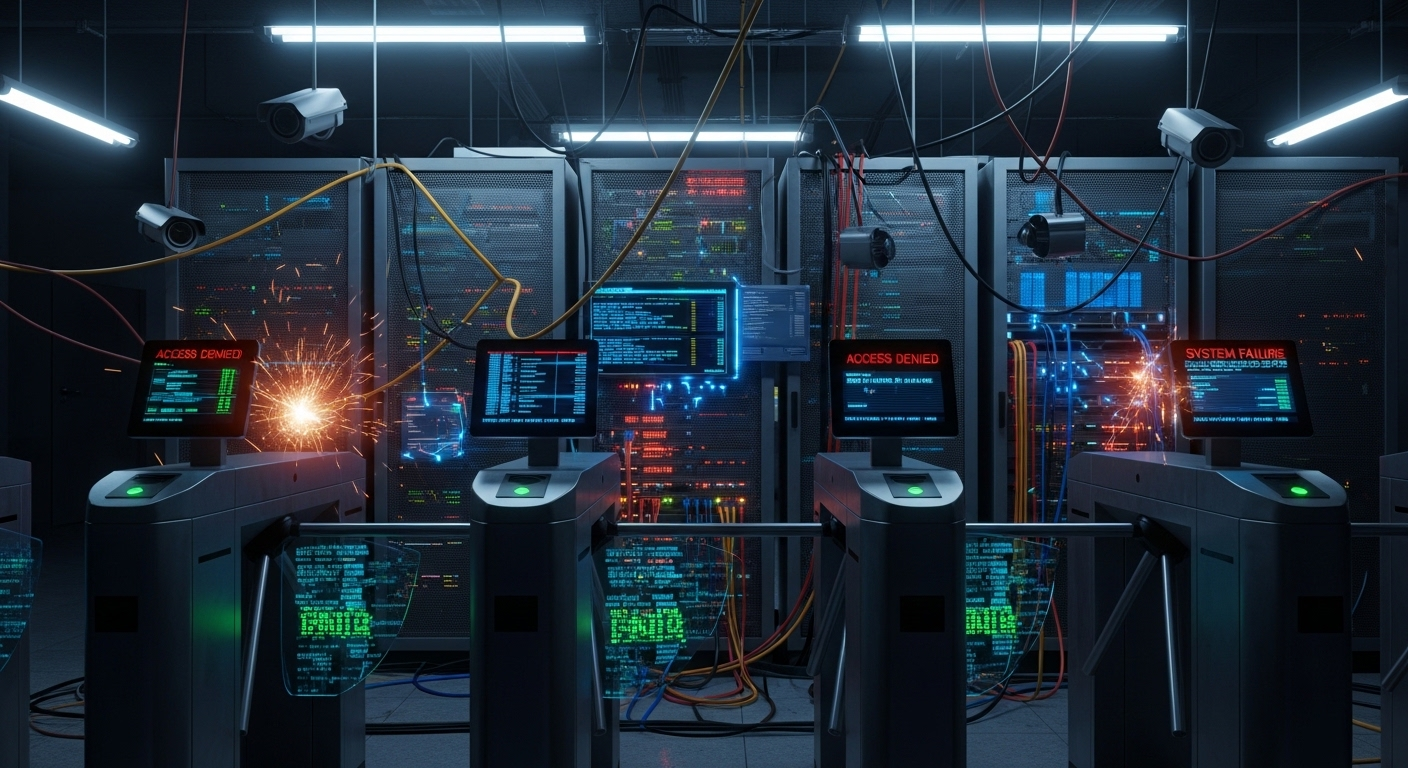
Cyberattack targeting university systems while physical access controls flicker or fail.

Campus safety is often discussed as a physical concern, yet the line between physical protection and cybersecurity has largely disappeared. Colleges and universities manage large campuses with multiple buildings, healthcare facilities, research labs, and residence halls.

These spaces are connected by surveillance systems, networked access controls, and emergency response technology that rely heavily on secure digital infrastructure. When those systems fail, safety and security weaken at the same time.

Student perception reflects this reality. Eighty two percent of students report concern about their personal safety, and 97 percent consider safety when evaluating campus life. In 2022 alone, 86 percent of schools reported violent acts, totaling 9,727 violent crimes across college campuses.

The Clery Act requires institutions to disclose campus crime statistics and outline safety policies, reinforcing federal expectations around transparency and incident response. Other federal laws compel violence prevention protocols and structured response efforts.

Additional pressures intensify risk:

  • Natural disasters threaten campus infrastructure, especially in regions prone to severe weather.
  • Increases in student activism and campus protests introduce safety and reputational considerations.
  • Domestic violence incidents and emergency medical events demand coordinated first responder systems.
  • Large visitor populations during athletic events and conferences complicate security management across large campuses and surrounding communities.

These systems intersect. Surveillance networks depend on data security. Access controls depend on network security. Incident response platforms depend on uninterrupted connectivity.

When cybersecurity threats disrupt digital systems, physical safety mechanisms can degrade quickly, exposing institutions on multiple fronts.


The Financial Reality: Breaches Are Operational Crises

When data breaches occur in higher education, the damage extends far beyond IT repair costs. The average breach now costs institutions 3.7 million dollars. A single ransomware attack averages 2.73 million dollars.

These figures represent direct expenses such as remediation, legal fees, and system restoration. They do not fully capture lost productivity, paused research, or delayed enrollment decisions.

Recovery time compounds the impact. Higher education institutions experience recovery periods that are roughly twice the global average. Nearly three quarters of attacks succeed, meaning disruptions are not rare interruptions.

They are predictable operational crises. Academic calendars stall, payroll systems freeze, and student services pause. Financial data, confidential information, and research records can be exposed or encrypted.

Regulatory oversight adds further pressure. Institutions must comply with GDPR for international data privacy requirements, HIPAA for healthcare facilities on campus, the Privacy Act, and FERPA, the Family Educational Rights and Privacy Act.

Failure to safeguard student data and other sensitive records can result in federal fines, sanctions, and mandatory corrective actions. Legal consequences are often public, and public consequences affect stakeholder trust.

Enrollment rates can decline when prospective students question safety and security practices. Donor confidence weakens when financial issues and compliance failures dominate headlines.

Research funding can be delayed or withdrawn if intellectual property protection appears inadequate. In higher education, a cybersecurity breach is not a technical inconvenience. It is a financial and institutional crisis.


Why Legacy VDI and VPN-Based Security Models Increase Risk?
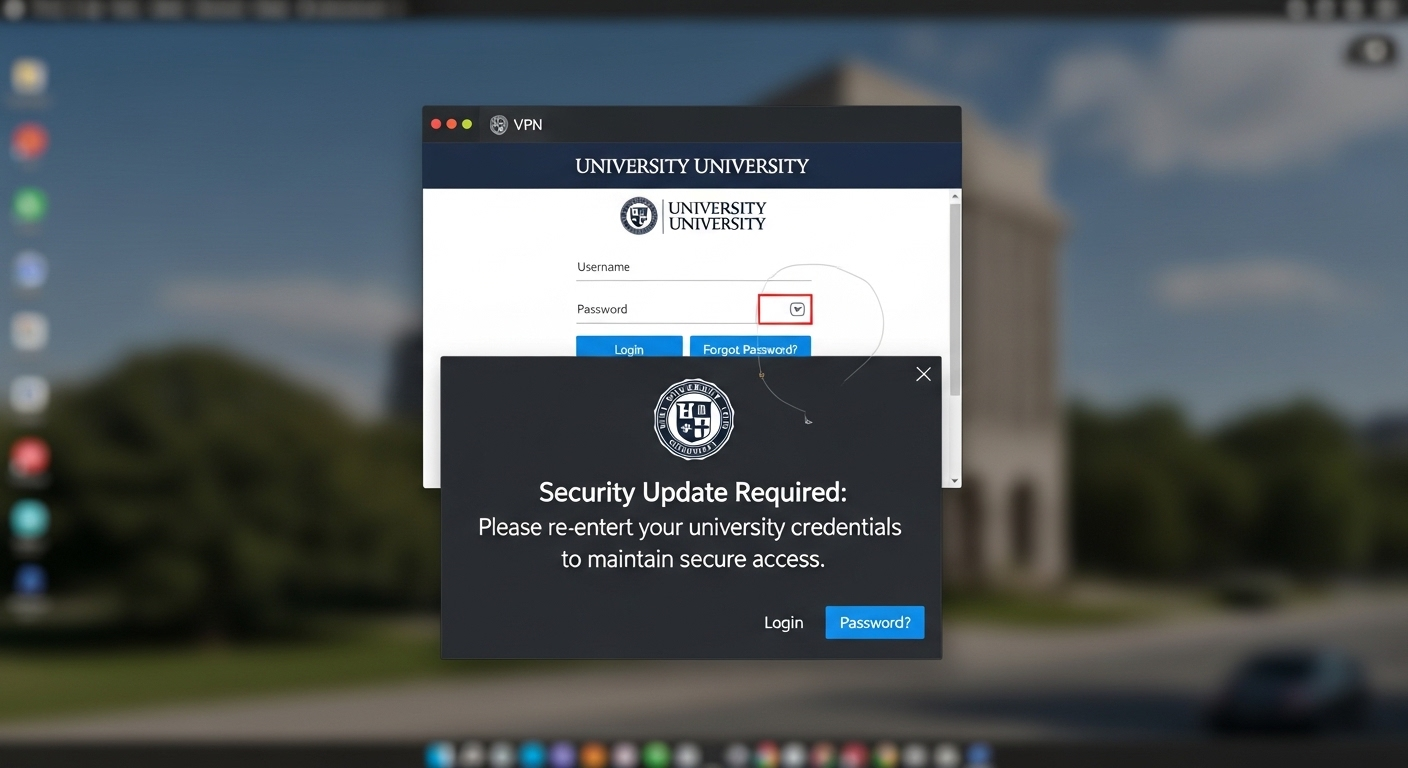
University VPN login portal targeted by phishing email attempting credential theft.

Many higher education institutions continue to rely on VPN based access and legacy VDI deployments as core security controls. These models were built around network level trust. Once authenticated, users are often granted broad access across systems.

That structure assumes credentials remain secure. In practice, credential based authentication is frequently exploited. Phishing attempts account for approximately 90 percent of credential theft incidents in higher education. Password compromise remains one of the most common entry points into institutional networks.

When access depends on static credentials and perimeter defenses, the exposure grows quietly. Client installed VDI software introduces additional patching risk. Updates must be managed across thousands of endpoints. In decentralized environments, enforcement is inconsistent.

Some departments patch quickly, others delay. Over time, legacy systems accumulate vulnerabilities that attackers actively scan for.

Infrastructure complexity further complicates incident response. Traditional VDI often requires layered components, gateways, brokers, and management servers. When a breach occurs, isolating affected systems can take time.

Forty percent of higher education institutions take more than a month to recover after a cyberattack. Slow recovery is often tied to entangled infrastructure and limited visibility across distributed systems.

Budget cuts add another constraint. Modernizing outdated VDI deployments requires capital investment, skilled administrators, and sustained maintenance. Many institutions struggle to fund comprehensive upgrades.

Meanwhile, vendors such as Citrix have increasingly focused on large enterprise accounts, leaving smaller institutions and education segments with fewer tailored options and limited flexibility.

Legacy systems were not designed for zero trust enforcement. They depend on assumptions of internal safety. In today’s higher education industry, where phishing attempts, ransomware attacks, and decentralized IT are common, those assumptions create risk rather than reduce it.


The Zero Trust Imperative in Higher Education

Zero trust architecture operates on a simple principle, never trust, always verify. Instead of assuming users inside the network are safe, every access request must be authenticated, authorized, and continuously validated.

In higher education, where decentralized IT and open access are common, that principle becomes essential rather than optional. Data protection cannot rely on perimeter defenses alone. It must account for compromised credentials, vulnerable endpoints, and complex research environments.

A layered defense model rooted in zero trust includes several practical controls:

  • Mandatory multi factor authentication, which significantly reduces credential based attacks by requiring more than a password.
  • Phishing resistant MFA standards, designed to block token theft and advanced phishing attempts.
  • Network segmentation, which isolates research data and sensitive systems from broader campus networks.
  • Immutable backups that cannot be altered by attackers, protecting institutions from ransomware without paying extortion demands.
  • AI driven anomaly detection that flags unusual behavior in real time and accelerates incident response.
  • Automated security training that helps faculty members and students recognize phishing attempts.
  • Cultural awareness programs that reduce human error, which remains a primary cause of cybersecurity threats.

In decentralized academic environments, no single control is sufficient. Zero trust architecture reinforces network security through overlapping protections.

Each layer compensates for weaknesses in another. This approach allows institutions to preserve collaboration while strengthening defenses against modern cyberattacks.


Why Citrix and Traditional VDI Architectures Are Structurally Misaligned With Modern Campus Security?

University IT team overwhelmed by managing layered VDI infrastructure components.

Traditional VDI platforms such as Citrix were designed for enterprise environments with centralized IT teams and significant infrastructure budgets. Higher education institutions operate differently. Campuses are decentralized, funding cycles are constrained, and lean IT teams are asked to secure thousands of users across departments. Infrastructure heavy architecture increases operational complexity in ways that directly affect security practices.

Traditional VDI often requires multiple servers, gateways, load balancers, and management layers. Each component must be configured, monitored, and patched. That complexity expands the attack surface.

VPN dependent access models further increase risk by extending network level trust beyond campus boundaries. Once authenticated, users may gain broader access than necessary. In environments where phishing attempts remain common, that trust model creates exposure.

Client installed software adds another burden. Version control becomes inconsistent across devices. Patch management demands continuous oversight. When endpoints fall behind, vulnerabilities accumulate.

For institutions already managing budget cuts and staffing shortages, this creates operational strain. Recovery times suffer when infrastructure is entangled. Given that 40 percent of institutions take over a month to recover from a cyberattack, architecture choices matter.

Total cost of ownership also deserves scrutiny. Traditional VDI deployments frequently require professional services, licensing tiers, hardware investments, and ongoing maintenance.

In contrast, modern alternatives can reduce infrastructure and operational costs by 50 to 70 percent while simplifying security enforcement.

The higher education industry requires solutions aligned with its structural realities. Vendors increasingly focused on large enterprise accounts often deprioritize smaller institutions.

When security models demand heavy infrastructure and constant management, they do not match the financial and operational constraints that many institutions face.


What a Modern Security First Virtual Desktop Should Actually Deliver

Security in higher education cannot depend on perimeter defenses alone. A modern virtual desktop must reduce complexity, enforce consistent security measures, and support the academic community without expanding risk.

Institutions need solutions that protect research data, simplify management, and provide students with secure access from any location. When infrastructure becomes lighter and policy enforcement becomes centralized, data security improves naturally.

A security first virtual desktop should include the following capabilities:

  • Browser based access that removes client installation risks, eliminating version conflicts and reducing patch management burdens.
  • No VPN dependency, which limits network level exposure and reduces common entry points exploited through phishing attempts.
  • Built in multi factor authentication enforcement to strengthen credential protection by default.
  • Centralized policy control so security practices remain consistent across departments and user groups.
  • Segmented lab environments that isolate sensitive research data from general student access.
  • Reduced infrastructure complexity that lowers operational overhead and simplifies incident response.
  • Lower total cost of ownership, often 50 to 70 percent less than traditional infrastructure heavy deployments.
  • Faster deployment cycles that minimize exposure windows and allow institutions to modernize without prolonged risk.

When virtual desktops are designed around these principles, they support both access and accountability. Students gain secure, flexible learning environments.

Faculty members retain control over sensitive materials. IT teams manage fewer moving parts. In higher education, security must enable learning, not compete with it.


How Apporto Reduces Security Risk in Higher Education?

Security issues in higher education demand solutions built for the realities institutions face. Decentralized campuses, lean IT teams, budget constraints, and constant cybersecurity threats require more than layered add ons. They require architecture designed with data protection and network security at the core.

Apporto addresses these pressures directly by reducing complexity while strengthening control across higher education institutions.

Key security advantages include:

  • Browser native access with no client software, eliminating version conflicts and reducing endpoint patching risk.
  • Zero trust architecture built into the platform, ensuring access is verified continuously rather than assumed after login.
  • No VPN dependency, which limits exposure created by network level trust models.
  • Centralized administrative control across campuses, departments, and user groups, supporting consistent security practices.
  • Secure virtual labs that isolate sensitive academic research and protect research data tied to federal agencies.
  • Reduced infrastructure complexity, which supports faster incident response and shorter recovery times.
  • Lower total cost of ownership, freeing budget for reinvestment into campus safety initiatives and broader security measures.
  • Designed specifically for higher education and SMB IT teams, rather than retrofitted enterprise platforms.

Compared to traditional VDI platforms such as Citrix, Apporto removes infrastructure heaviness and professional service dependencies. Deployment is simpler, often completed without large scale on premises hardware investments.

Institutions avoid enterprise lock in models that prioritize large corporate accounts. Cost structures remain predictable, which matters in environments facing ongoing budget cuts.

When security architecture aligns with operational realities, risk decreases naturally. By eliminating unnecessary complexity and embedding zero trust controls from the start, Apporto enables institutions to address modern cybersecurity threats without inheriting the structural weaknesses of legacy systems.


Building Resilience: Incident Response, Recovery, and Vendor Risk

Prevention alone is not enough. In higher education, resilience depends on how well institutions respond when something goes wrong. Given that nearly three quarters of attacks against colleges and universities succeed, incident response planning must be deliberate, tested, and continuously improved.

Recovery time affects academic continuity, financial stability, and stakeholder trust. Vendor exposure adds another layer of risk that cannot be ignored.

A resilient security program should include:

  • Formal vendor security assessments before onboarding third party vendors.
  • Contractual data protection clauses that clearly define security and compliance expectations.
  • Ongoing monitoring and periodic reassessments of vendor security practices.
  • Development and regular testing of incident response plans to ensure response efforts are coordinated and efficient.
  • Immutable backups to protect against ransomware encryption and prevent data loss.
  • Mandatory multi factor authentication enforcement across all critical systems.
  • Phishing drills and cultural awareness programs to reduce human error.
  • Updated data governance policies to strengthen data privacy and regulatory compliance.
  • Clear international data sharing procedures that meet U.S. and global regulatory requirements.

In higher education institutions, resilience is built through preparation. Strong incident response processes, combined with disciplined vendor oversight and compliance alignment, reduce the operational shock of cyberattacks and support faster recovery.


Security as a Competitive Advantage for Enrollment and Trust
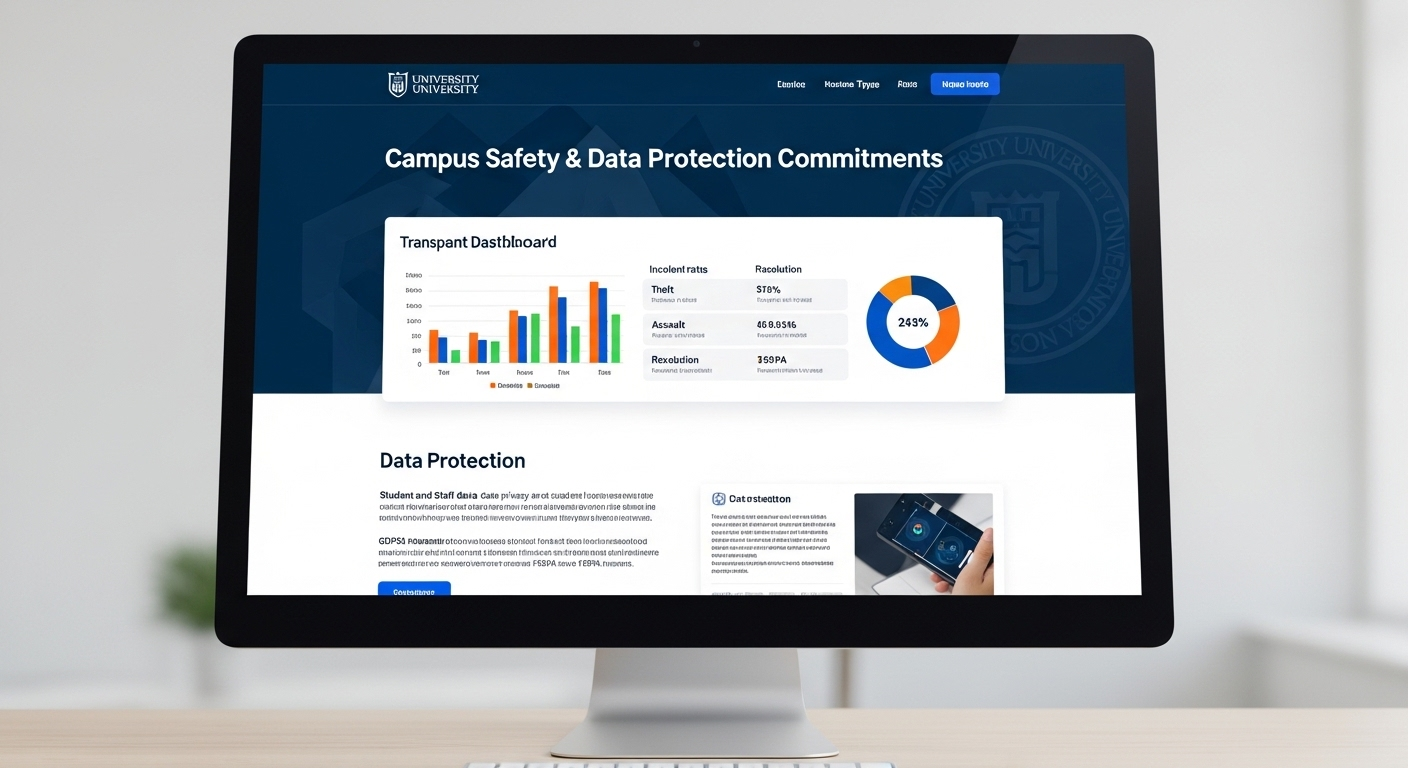
University website displaying transparent campus safety statistics and data protection commitments.

Security now influences how institutions are chosen. Prospective students evaluate campus safety alongside academic reputation, location, and cost.

Data protection and physical security measures shape perceptions of responsibility and stability. When student enrollment decisions are tied to confidence, even small signals matter.

Safety culture also affects faculty recruitment. Researchers and instructors want assurance that their work, their students, and their intellectual property are protected.

Academic research often involves sensitive partnerships and federally funded projects. If intellectual property protection appears weak, research funding can decline and collaborations can stall.

Campus culture plays a quiet but decisive role. Institutions that demonstrate consistent security practices build long term trust with students, families, and donors. A visible commitment to safety and data protection strengthens institutional credibility.

In higher education, resilience is not only operational, it is reputational. Institutions that treat security as foundational rather than reactive position themselves for sustained stability and growth.


Conclusion

Security issues in higher education are no longer abstract projections. The data is clear. Cyberattacks are frequent, recovery times are long, and financial exposure is significant. When legacy VDI environments depend on VPN access, credential based trust, and complex infrastructure, risk compounds quietly over time.

Zero trust architecture is no longer optional. Verification must be continuous. Access must be segmented. Controls must be centralized.

Browser based infrastructure reduces exposure by eliminating client software vulnerabilities and minimizing common entry points. Simpler architecture supports faster incident response and clearer visibility across systems.

Modernization should not be treated as a feature upgrade. It is a structural decision. Institutions that continue to invest in legacy VDI models inherit the limitations that come with them. Institutions that adopt security first architecture reduce complexity, shorten recovery timelines, and strengthen data protection from the start.

Apporto represents that architectural choice. It is not an add on layered over outdated infrastructure. It is designed as a strategic security foundation aligned with how higher education institutions actually operate. The next incident is not a theoretical risk. The time to modernize is before it arrives.


Frequently Asked Questions (FAQs)


1. What are the most common security issues in higher education?

Higher education institutions face frequent cybersecurity threats, including phishing attempts, ransomware attacks, and data breaches. On average, institutions experience 1,605 cyberattacks per week. Phishing accounts for about 90 percent of credential theft incidents.

2. Why are colleges and universities prime targets for cyberattacks?

Institutions store high value data such as student records, financial information, academic research, and intellectual property. Open campus networks and decentralized IT environments create multiple entry points that threat actors actively exploit.

3. How costly are data breaches in higher education?

The average breach cost in higher education is approximately 3.7 million dollars. Ransomware incidents average 2.73 million dollars. Recovery times are also longer than most industries, with 40 percent of institutions taking over a month to recover.

4. What regulations must higher education institutions comply with?

Institutions must comply with FERPA for student data protection, HIPAA for campus healthcare facilities, GDPR for international data privacy, and other federal privacy and compliance mandates. Noncompliance can result in fines and sanctions.

5. How does Zero Trust improve network security on campus?

Zero trust architecture requires continuous verification of users and devices. Combined with multi factor authentication and network segmentation, it limits unauthorized access and reduces the impact of compromised credentials.

6. Why do legacy VDI and VPN models increase risk?

VPN based security expands network level trust after authentication. If credentials are compromised, attackers can move laterally. Legacy systems also increase patching complexity and slow incident response.

7. How can institutions strengthen their overall security posture?

Institutions should implement mandatory MFA, maintain immutable backups, conduct vendor security assessments, develop tested incident response plans, and modernize infrastructure to reduce complexity and improve data protection.


Higher Education Digital Transformation: Opportunities and Risks

Empty lecture hall fading into a fully virtual learning environment with global student connection

The wake-up call did not arrive gently. It arrived in the form of closed campuses, empty lecture halls, and a global scramble during COVID-19 to move entire universities online in a matter of weeks. 

What many higher education institutions once treated as long-term planning suddenly became immediate survival. Digital transformation was no longer a visionary talking point. It became an operational necessity.

Since then, expectations have changed. Learners compare universities to the seamless experiences they encounter elsewhere, streaming platforms, mobile banking, personalized services that anticipate needs. 

Students expect intuitive digital tools, responsive online platforms, and flexible learning experiences that extend beyond classroom walls. Digital adoption is no longer optional for credibility.

Meanwhile, operating models built decades ago strain under new pressures. Administrative tasks remain manual in too many departments.

 Legacy systems fragment data across silos. Leadership teams face growing competition in global education markets where students can enroll across borders with a few clicks.

Higher education digital transformation now represents more than modernization. It is about redefining value, strengthening resilience, and preparing institutions for a digital future shaped by evolving technologies and informed learners. 

Institutions must act deliberately, or risk irrelevance in an increasingly competitive education environment.


What Does Digital Transformation in Higher Education Really Mean?

Here is where confusion usually begins. Many institutions equate digital transformation with buying new software or migrating a few services online. That is digitization. Important, yes. Transformative, not necessarily.

Digitization converts analog processes into digital formats. Paper forms become online submissions. Lectures move to recorded video. Administrative workflows migrate to cloud platforms. Useful steps, certainly. 

But transformation in higher education goes further. It challenges operating models, organizational structures, and even institutional identity.

Digital transformation requires rethinking how value is created and delivered. It involves examining teaching methods, questioning legacy business processes, and asking uncomfortable questions about efficiency, accessibility, and student learning outcomes. Technology becomes an enabler, not the headline.

And then there is culture. A deep and coordinated culture does not evolve automatically because a new platform is installed. Faculty members must embrace new tools. Administrators must adapt workflows. 

Leadership must provide clarity and strategic direction, otherwise efforts fragment across departments and momentum stalls.

Without alignment at the top, transformation in higher education risks becoming a series of disconnected projects rather than a unified strategy.

Digital Transformation Involves:

  • Technology integration across academic and administrative systems
  • Organizational change that reshapes roles, responsibilities, and collaboration
  • Cultural shift and coordinated culture that encourages experimentation and digital literacy
  • Process redesign to eliminate inefficiencies in business processes
  • Strategic direction alignment between institutional mission and digital initiatives 

True digital transformation is holistic. It alters how institutions operate, compete, and serve learners in a rapidly evolving environment.


What Are the Core Drivers Behind Higher Education Digital Transformation?

University leadership analyzing real-time enrollment and retention analytics on a large digital dashboard.

Pressure rarely comes from a single source. In the higher education sector, digital transformation efforts are propelled by a convergence of expectations, competition, and capability gaps that have grown impossible to ignore.

Start with the student experience. Learners today arrive with high expectations shaped by personalized digital services in nearly every aspect of life. 

They expect seamless online platforms, intuitive registration systems, responsive communication, and flexible learning pathways. When universities fail to deliver comparable experiences, frustration grows quickly.

Enrollment pressures add urgency. Demographic shifts in several regions have reduced traditional student pipelines. Global competition has intensified. Institutions must differentiate themselves, communicate value clearly, and operate efficiently to remain viable.

Data driven decision making also plays a critical role. Institutions now generate enormous volumes of information, enrollment trends, course performance, retention metrics. 

Data analytics provides valuable insights into student success patterns, allowing leaders to intervene earlier and allocate resources more strategically.

Workforce readiness compounds the demand. Employers expect graduates to possess digital skills, adaptability, and fluency in emerging technologies. Higher education must evolve to prepare learners for evolving career pathways.

Emerging technologies accelerate everything. Generative artificial intelligence, advanced analytics, and digital tools are reshaping both teaching and administrative operations.

Key Drivers Include:

  • Personalized learning demand to improve student engagement and outcomes
  • Data analytics for student success and institutional performance monitoring
  • Generative artificial intelligence adoption across academic and operational functions
  • Hybrid and online courses expanding access and flexibility
  • Administrative efficiency through automation and streamlined workflows 

These forces together create momentum that few institutions can afford to resist.


How Are Emerging Technologies Reshaping Teaching and Learning?

Step into almost any campus meeting today and the conversation circles back to artificial intelligence. Not in theory, but in practice. Generative AI tools are already influencing how students draft essays, how faculty design assignments, and how institutions automate administrative communication. 

Artificial intelligence is no longer experimental. It is embedded in daily workflows, raising both opportunities and difficult questions.

Machine learning adds another layer. By analyzing patterns in attendance, assignment completion, and assessment performance, institutions can identify early warning signs of disengagement. 

Predictive analytics does not replace human judgment, but it strengthens it. Faculty receive data driven insights that help guide interventions before a student quietly falls behind.

Virtual reality brings an entirely different dimension. Immersive simulations allow medical students to practice procedures, engineering students to explore complex systems, and history classes to experience reconstructed environments.

These learning experiences expand beyond textbooks and static slides. They are participatory. Memorable. Occasionally a bit mind bending.

Cloud computing underpins much of this evolution. Scalable infrastructure supports online platforms, digital tools, and collaborative environments accessible across campuses. Faculty and students log into shared spaces where content, discussion, and assignments converge in real time.

CRM systems and automation tools streamline communication with prospective and current students, creating more personalized journeys through enrollment and advising.

Emerging Technologies Transforming Education:

  • Artificial intelligence and machine learning supporting adaptive learning and predictive insights
  • Virtual reality simulations enabling immersive, hands on experiences
  • Advanced analytics and big data informing institutional strategy
  • Cloud computing infrastructure powering scalable digital platforms
  • CRM systems and automation tools improving engagement and administrative efficiency 

Together, these digital capabilities are redefining what teaching and learning can look like in contemporary higher education.


Why Culture Matters More Than Technology in Digital Transformation?

Organizational change visualized as people walking across a bridge from old processes to digital workflows.

Technology tends to get the spotlight. New platforms launch, dashboards glow with data, announcements celebrate innovation. Yet transformation in higher education rarely fails because the software is inadequate. It falters because people hesitate.

Cultural resistance is subtle at first. Faculty members may question whether new digital tools genuinely enhance learning or simply add workload. 

Staff may worry about automation replacing roles. Longstanding habits, built over decades, do not dissolve because a new system appears. Mindsets shape adoption far more than features.

A deep and coordinated culture is not built through policy memos alone. It develops when leadership communicates clearly, aligns incentives, and models behavior. Change management becomes essential. 

Institutions that underestimate this dimension often encounter stalled initiatives, partially implemented systems, and frustration across departments.

Digital literacy also plays a defining role. When faculty and staff lack adequate digital literacy, hesitation increases. Confidence drops. Adoption slows. 

Professional development must accompany technology integration, otherwise the gap widens between ambition and capability.

Leadership alignment is the connective tissue. Without shared priorities across presidents, provosts, CIOs, and department heads, transformation fragments. Organizational change requires more than funding. It requires visible commitment.

Common Barriers Include:

  • Cultural resistance to new tools and altered workflows
  • Fragmented organizational structures that hinder collaboration
  • Lack of digital literacy programs to build necessary skills
  • Siloed departments operating without shared strategy
  • Leadership misalignment that weakens momentum 

Ultimately, institutions that embrace change at the cultural level move faster and sustain transformation more effectively.


How Can Institutions Build Digital Literacy Across Faculty and Students?

If culture is the foundation, digital literacy is the engine. Without it, higher education digital transformation stalls halfway up the hill. Institutions may invest in sophisticated platforms, yet if faculty and students lack the confidence or skill to use them effectively, momentum fades quickly.

Digital literacy extends beyond basic software familiarity. It includes understanding data ethics, evaluating information credibility, using collaborative tools responsibly, and navigating emerging technologies such as artificial intelligence. 

For students, adequate digital literacy means graduating prepared for a workforce that expects fluency with digital tools and adaptive thinking. For faculty, it means integrating technology into teaching methods without compromising academic rigor.

Professional development must evolve accordingly. One-off training sessions rarely produce lasting change. Continuous learning environments, peer collaboration, and practical experimentation build competence over time.

Institutions that frame digital literacy as part of lifelong learning signal that adaptation is ongoing, not a temporary initiative.

Building these capabilities also reduces anxiety. Confidence encourages adoption. Adoption strengthens transformation.

Digital Literacy Strategies:

  • Faculty training programs focused on integrating digital tools into curriculum design
  • Student digital skills curriculum embedded across disciplines rather than isolated in elective courses
  • Workshops and certifications that validate competencies and encourage participation
  • AI literacy initiatives addressing responsible use of generative technologies
  • Continuous learning frameworks supporting ongoing professional development 

Preparing learners and educators for the digital future requires intention. Institutions that invest in literacy invest in long term resilience.


How Does Data Analytics Drive Better Student Outcomes?

University leadership reviewing a real-time student performance analytics dashboard with retention risk indicators.

Data has always existed within universities. Attendance records, grades, enrollment numbers, graduation rates. For years, much of it sat in separate systems, rarely analyzed in depth. Higher education digital transformation changes that equation by placing data analytics at the center of strategic decision making.

When institutions adopt a data driven mindset, conversations move from assumptions to evidence. Leaders can examine patterns in student performance, identify bottlenecks in academic progression, and understand which support services correlate with student success. 

Advanced analytics allows institutions to analyze trends across cohorts, programs, and demographic groups.

Predictive analytics plays an increasingly important role in retention strategies. By examining variables such as course completion rates, engagement levels, and financial indicators, institutions can flag students who may be at risk of dropping out. 

Early intervention, academic advising, tutoring, financial counseling, becomes proactive rather than reactive.

Visualization tools translate complex data into accessible insights. Dashboards allow faculty and administrators to monitor student learning outcomes in real time. Feedback loops close the gap between data collection and action, ensuring that insights inform continuous improvement rather than sit unused.

Analytics Capabilities Include:

  • Early warning systems that identify retention risks before they escalate
  • Student performance dashboards providing real time visibility into academic progress
  • Enrollment forecasting to guide strategic planning and resource allocation
  • Resource allocation modeling based on program demand and outcomes
  • Learning analytics that analyze engagement and assessment effectiveness 

When used thoughtfully, data analytics strengthens student success initiatives and enhances institutional effectiveness.


What Organizational Changes Are Required for Successful Transformation?

Technology rarely fits neatly into old boxes. Higher education requires structural evolution if digital transformation is to succeed beyond isolated projects. New platforms introduce new responsibilities, and institutions must respond accordingly.

One of the first visible changes involves roles. Data analysts, digital learning designers, AI governance specialists, and cybersecurity leaders become central rather than peripheral.  

Traditional IT departments expand into strategic partners rather than purely technical support units. Faculty members may assume new responsibilities in curriculum redesign or digital content creation.

Cross-department collaboration becomes essential. Academic affairs, enrollment management, finance, student services, and IT cannot operate independently if transformation is to remain coherent. Fragmented organizational structures slow progress. Shared objectives and joint planning sessions accelerate it.

Governance frameworks must also mature. Clear accountability for digital initiatives prevents duplication and confusion. 

Leadership teams need defined oversight for data privacy, technology procurement, and platform integration. Without structured governance, transformation efforts drift.

Operational model redesign often follows. Processes that once depended on paper forms or manual approvals require modernization. Workflows must align with digital capabilities. Strategic initiatives should connect directly to institutional mission and measurable outcomes.


Ultimately, transformation in higher education demands more than tools. It demands intentional redesign of organizational structures, operations, and leadership alignment to sustain long term change.


How Should Institutions Approach a Digital Transformation Strategy?

University leadership team reviewing a digital transformation roadmap on a large interactive planning board.

Ambition alone does not create successful transformation. Higher education digital transformation is not a sprint fueled by a single funding cycle. It is a long term transformation journey that requires structure, discipline, and strategic direction.

Institutions that treat it as a sequence of disconnected upgrades often exhaust budgets without meaningful progress.

The first move is holistic assessment. Leaders must examine current capabilities across academic programs, IT infrastructure, governance, and culture. Where are the strengths? 

Where are the friction points? Honest evaluation prevents overconfidence and exposes gaps that need attention.

Investment prioritization follows. Not every digital initiative delivers equal value. Institutions must weigh potential impact on student learning outcomes, operational efficiency, and competitive positioning. Clear criteria reduce reactive spending and align investment with institutional mission.

Infrastructure modernization also demands attention. Scalable systems, cloud computing capacity, cybersecurity safeguards, and integrated platforms form the backbone of digital adoption. Without robust infrastructure, even the most promising digital tools struggle to perform reliably.

Equally important is a thoughtful change management plan. Faculty and staff need clarity, training, and visible leadership commitment. Transformation succeeds when people understand why it matters and how it benefits their work.

Strategic Steps:

  • Assess digital maturity across academic and administrative functions
  • Define value proposition that clarifies how transformation enhances institutional mission
  • Invest in scalable infrastructure to support long term capabilities
  • Align leadership and departments around shared priorities and accountability
  • Implement measurable milestones to track progress and maintain momentum
  • Establish continuous improvement loops to refine strategy based on feedback and data 

When institutions combine strategic planning with disciplined execution, digital adoption becomes sustainable rather than symbolic.


What Are Real World Examples of Higher Education Digital Transformation?

Theory matters. Practice matters more. Real world examples reveal how digital transformation in higher education unfolds beyond strategic documents and conference presentations.

Consider a university that integrated artificial intelligence into its admissions process. Instead of manually reviewing every application in isolation, the institution deployed AI tools to analyze patterns across historical enrollment data. 

The system helped identify applicants with strong indicators of long term success. Human judgment remained central, but decision making became more informed and efficient. The result was faster response times and improved enrollment forecasting.

In another case, a regional college adopted cloud computing to support scalability across multiple campuses. Legacy servers struggled to handle peak registration periods and exam season traffic. 

By modernizing infrastructure and moving critical systems to cloud based platforms, the institution improved reliability while reducing downtime. Students experienced smoother access to online platforms and academic resources.

Analytics also plays a pivotal role. One institution improved retention by implementing advanced data analytics dashboards that monitored attendance, course engagement, and student performance trends. 

Early warning systems triggered outreach from advisors before minor setbacks became major barriers.

After the pandemic accelerated virtual classes, many universities refined their digital teaching models. Rather than returning fully to pre-pandemic routines, they blended in person instruction with flexible online courses, strengthening resilience and expanding access.

These examples demonstrate that successful transformation is achievable when strategy, technology, and leadership align.


What Risks and Challenges Should Institutions Prepare For?

Campus IT team reviewing risk assessment charts with security alerts and budget forecasts.

Digital transformation promises opportunity, but risk travels alongside innovation. Institutions must acknowledge the challenges honestly if they hope to navigate them successfully.

Data privacy concerns rank near the top. As higher education institutions expand digital tools and analytics capabilities, they collect and process more sensitive data. Student records, research information, financial details, all require careful protection.

Security measures must evolve in parallel with technology adoption, otherwise trust erodes quickly.

Budget constraints also complicate progress. Transformation requires investment in infrastructure, training, and ongoing support. When funding cycles fluctuate, initiatives risk stalling midway. Partial implementation can create more frustration than progress.

Implementation failure is another real threat. Ambitious projects sometimes collapse under unrealistic timelines, inadequate planning, or unclear governance. Technology overinvestment presents a quieter danger.

Institutions may acquire sophisticated systems without fully integrating them into operations, leaving expensive tools underutilized.

Cultural pushback remains persistent. Faculty and staff may question priorities or resist organizational change, especially if communication lacks clarity.

Major Risks Include:

  • Data breaches resulting from insufficient security controls
  • Lack of adoption when users are not engaged early in the process
  • Inadequate training that undermines confidence and digital literacy
  • Budget overruns caused by poor planning or scope expansion
  • Misaligned strategy between leadership vision and operational execution 

By recognizing these risks early, institutions can design safeguards that strengthen rather than derail transformation efforts.


How Does Digital Transformation Improve Institutional Efficiency and Competitiveness?

Efficiency is rarely glamorous, yet it quietly determines institutional strength. Digital transformation streamlines operations by automating administrative tasks, integrating systems, and reducing duplication across departments. 

When workflows become more transparent and data flows seamlessly, decision making accelerates. That operational efficiency frees staff to focus on strategic priorities rather than repetitive processes.

Enrollment management also improves. Data analytics tools provide deeper insight into applicant behavior, marketing effectiveness, and retention patterns. Institutions can tailor outreach, refine messaging, and allocate resources more strategically.

The value proposition becomes clearer to prospective students when processes are smooth and communication is timely.

Competitiveness grows alongside adaptability. Universities that modernize their digital capabilities differentiate themselves in a crowded market. Flexible learning options, responsive support services, and personalized engagement strengthen the student experience. 

These benefits extend beyond recruitment. They influence retention and alumni satisfaction as well.

Enhanced student engagement emerges when digital tools support interactive learning and timely feedback. Over time, improved engagement contributes to better outcomes and measurable growth.

Long term sustainability depends on this combination. Institutions that improve operations, clarify their value proposition, and embrace innovation position themselves to compete effectively in an evolving higher education environment.


Final Thoughts

Digital transformation is not a project with a neat end date. It is an ongoing journey that evolves as technologies mature, student expectations change, and institutions refine their strategies. Advancing digital transformation requires persistence. It also requires patience.

Technology alone will not secure a digital future. Sustainable progress emerges when culture and technology align. Faculty confidence, administrative collaboration, and shared understanding across departments form the foundation. Without that alignment, even well funded initiatives lose momentum.

Leadership commitment remains decisive. Presidents, provosts, CIOs, and deans must communicate clearly why transformation matters and how it connects to institutional mission. 

Long term investment, in infrastructure, digital literacy, governance, and innovation, signals seriousness. Short term experimentation has value, but sustained commitment builds credibility.

Institutions that approach transformation thoughtfully unlock potential that extends beyond efficiency. They create more inclusive access, improve student success, and strengthen competitive position.

The digital future of higher education will not be defined by isolated tools. It will be shaped by institutions willing to evolve deliberately, invest strategically, and view transformation as an integral part of their identity rather than a temporary initiative.


Frequently Asked Questions (FAQs)


1. What is higher education digital transformation?

Higher education digital transformation refers to the strategic integration of digital technologies, cultural change, and redesigned operating models to improve teaching, learning, and institutional effectiveness. It goes beyond digitizing processes and reshapes how institutions create value.

2. Why is digital transformation important in higher education?

Digital transformation is important because student expectations, workforce demands, and competitive pressures continue to evolve. Institutions that modernize their systems and capabilities improve student experience, operational efficiency, and long term sustainability.

3. How long does digital transformation take?

Digital transformation is an ongoing journey rather than a fixed timeline. While specific initiatives may span months or years, meaningful cultural and organizational change often unfolds over several years.

4. What role does AI play in higher education digital transformation?

Artificial intelligence supports predictive analytics, personalized learning, administrative automation, and generative tools for content creation. When governed responsibly, AI enhances decision making and improves student outcomes.

5. What are the biggest challenges institutions face?

Common challenges include cultural resistance, data privacy concerns, limited budgets, fragmented systems, and inadequate digital literacy across faculty and staff.

6. How can leaders ensure successful transformation?

Leaders can ensure success by aligning strategy with mission, investing in infrastructure and training, establishing clear governance, and maintaining long term commitment to continuous improvement.


Emerging Technologies in Education: Shaping the Future of Learning

Modern classroom blending physical and digital learning interactive whiteboard, tablets, laptops, and cloud-based dashboards in use.

The classroom has already transformed more in the last two decades than in the previous century. The traditional chalkboard has given way to interactive whiteboards. Printed textbooks now coexist with ebooks and digital resources that update in real time.

What once required a physical library now lives inside a browser window. Emerging technologies in education are no longer peripheral tools. They shape how student learning unfolds every day.

The scale of adoption is significant. The average school district now uses more than 2,591 digital tools to support teaching and learning. That number alone reveals both opportunity and complexity. Education technology has expanded rapidly, yet expansion does not automatically translate into improvement. When platforms multiply without coordination, fragmentation follows.

The traditional one-size-fits-all approach no longer sustains modern learning environments. Students move at different speeds. They access content through mobile devices.

They expect interactive learning experiences. Global education systems recognize this shift and are prioritizing emerging technologies to remain competitive and accessible.

Yet enthusiasm must be disciplined. The question is not whether new technologies exist. It is whether they genuinely transform education. You must assess educational value, integration feasibility, and long-term outcomes before investing. Innovation without evaluation is noise. Innovation with intention becomes progress.


Artificial Intelligence and Generative AI in the Learning Process

Artificial intelligence is no longer a future concept in education. By 2025 and 2026, artificial intelligence AI systems are embedded across K-12 classrooms and higher education institutions worldwide.

Schools are not experimenting cautiously. They are integrating AI into daily operations, curriculum design, and student support services. The momentum reflects a broader shift toward adaptive, data-informed learning environments.

Core developments include:

  • AI-driven learning systems that personalize instructional content based on individual performance, behavior, and learning styles.
  • Generative AI tools that assist educators with lesson planning, assessment design, and differentiated materials for diverse classrooms.
  • AI tutors that provide 24/7 feedback, enabling students to learn at their own pace outside scheduled class hours.
  • Predictive analytics models that identify students at risk of falling behind and trigger early interventions.
  • Machine learning algorithms that continuously refine learning analytics, producing more accurate insights into engagement and outcomes.
  • Automation of administrative processes such as grading, scheduling, and routine communication, reducing educator workload.
  • Industry partnerships that introduce AI-powered research tools and workforce-aligned programs into institutions.
  • Ongoing challenges, including algorithmic bias, over-reliance on automation, and the need for sustained professional development.

Artificial intelligence can enhance learning significantly. The impact depends on thoughtful implementation, ethical safeguards, and continuous evaluation.


Virtual and Augmented Reality: Expanding Learning Environments

Collaborative VR classroom where students appear as avatars interacting in a shared digital space.

Virtual and augmented reality are no longer experimental technologies reserved for specialized labs. Virtual reality and augmented reality are increasingly integrated into mainstream learning environments across K-12 and higher education.

These tools extend the classroom beyond physical walls, allowing you to design interactive learning experiences that were previously impossible.

Key applications include:

  • Virtual reality recreates inaccessible environments, enabling students to explore ancient civilizations, deep oceans, or distant planets without leaving the classroom.
  • Augmented reality overlays digital content onto physical materials, improving spatial reasoning and concept retention in subjects such as biology, architecture, and engineering.
  • Virtual field trips that provide immersive exposure to historical landmarks and global sites.
  • Hands-on training simulations in medicine, engineering, and technical disciplines, where students practice procedures in controlled virtual settings.
  • Collaborative VR learning environments where learners interact with peers in shared digital spaces, regardless of geographic location.
  • Measurable increases in retention and engagement due to immersive and experiential design.
  • Ongoing hardware cost and access limitations, which can widen disparities if not managed carefully.

Virtual and augmented reality expand how students learn by turning abstract concepts into experiential understanding. The challenge lies not in possibility, but in equitable and sustainable implementation.


Learning Analytics and Predictive Insights

Learning analytics has evolved from simple grade tracking into a complex system of behavioral and performance modeling. Modern platforms collect data from learning management systems, online learning environments, mobile apps, and even gamified platforms.

When analyzed correctly, this data provides valuable insights into student engagement, progress patterns, and instructional effectiveness.

Predictive analytics allows you to identify students at risk of falling behind long before final exams reveal the problem. Attendance trends, assignment submission timing, and interaction frequency can signal early warning signs.

Instead of reacting after outcomes decline, you intervene proactively. This shift from reactive to preventive instruction marks a significant change in how student learning is supported.

Data-driven curriculum decisions also become possible. You can evaluate which teaching methods improve retention and which modules generate disengagement. Gamified platforms contribute additional layers of insight, revealing how students respond to challenges, rewards, and adaptive progression.

George Siemens’ early work on learning analytics emphasized the importance of understanding networks and data flows in education. That theoretical foundation now informs practical implementation across institutions.

However, complexity introduces responsibility. Privacy protections, data governance, and ethical use of analytics must guide implementation. Insight without safeguards risks undermining trust. Properly governed, learning analytics strengthens outcomes while preserving integrity.


Gamification, Microcredentials, and Personalized Pathways

University-level gamified learning interface showing points, levels, and completed challenges in a professional UI design.

Education is no longer confined to static syllabi and fixed timelines. You are seeing a gradual movement toward interactive learning experiences that respond to motivation, mastery, and measurable progress. Gamification and microcredentials sit at the center of that movement.

When applied intentionally, these approaches reshape both curriculum design and student learning expectations.

  • Gamified platforms increase student engagement by incorporating challenges, rewards, and visible progress markers that encourage consistent participation.
  • Game-based assessments evaluate knowledge through applied tasks rather than static testing, offering a more dynamic view of mastery.
  • Students progress at their own pace, reducing frustration for advanced learners and pressure for those who require more time to absorb material.
  • Microcredentials align with job markets, focusing on skill-based certification rather than broad, generalized achievement.
  • Targeted certifications validate specific competencies, helping you demonstrate measurable expertise to employers.
  • Motivation and satisfaction increase when learning feels interactive rather than passive.
  • Learning analytics within gamified environments inform teaching methods, enabling educators to refine projects and adjust instruction based on real performance data.

These systems do not replace traditional education. They extend it. When implemented carefully, they create personalized pathways that reflect both professional development goals and diverse learning styles.


Blockchain and Credential Transparency

Blockchain technology has moved beyond cryptocurrency headlines and into the infrastructure of higher education. At its core, blockchain is a distributed ledger, a secure record-keeping system that cannot easily be altered once data is entered. For institutions, this matters most in credential verification.

When you issue diplomas or digital transcripts through blockchain-based systems, students receive a unique identifier linked to a permanent, tamper-resistant record. Employers and licensing bodies can verify credentials instantly without relying on manual document requests. The process becomes faster, more secure, and far less prone to fraud.

Digital transcript issuance can be expedited dramatically. Instead of waiting days or weeks for verification, records can be shared in minutes. For global education and cross-border employment, that speed carries real value.

Workforce demand for blockchain skills is also rising. Job postings that reference blockchain technology have increased significantly in recent years, prompting institutions to integrate blockchain topics into research programs and computer science curricula. Some universities now teach blockchain architecture, governance, and application design as part of broader innovation strategies.

The result is twofold. You strengthen institutional credibility through secure credentialing, and you prepare students for emerging sectors where blockchain knowledge is no longer optional, but increasingly essential.


Internet of Things, Robotics, and Smart Classrooms

Smart classroom with connected devices, IoT sensors, interactive whiteboard, and students using tablets in sync.

The modern classroom is becoming an interconnected system. The internet no longer functions only as a research gateway. It now connects devices, sensors, platforms, and digital technologies into an integrated learning environment. Smart classrooms rely on this infrastructure to create interactive, responsive spaces where teaching and learning adapt in real time.

Key developments include:

  • IoT smart sensors enhance classrooms by monitoring environmental conditions such as lighting, temperature, and device usage, improving comfort and energy efficiency.
  • Robotics enables hands-on computer science learning, allowing students to design, code, and troubleshoot physical systems rather than studying theory alone.
  • 3D printing is explored for projects in engineering, science, and design, supporting experiential learning and rapid prototyping.
  • Digital creation tools support collaboration, enabling learners to produce multimedia projects and share them instantly.
  • Cloud computing is essential for collaboration, providing shared access to files, applications, and management systems across institutions.
  • Mobile learning expands through mobile devices and mobile apps, giving students continuous access to digital resources beyond the classroom.
  • Smart classrooms require secure network access, as connected devices increase exposure to security vulnerabilities if not properly managed.

Smart infrastructure amplifies learning potential. It also increases responsibility. Connectivity must be matched with governance and security.


Online Learning Platforms and Hybrid Models

Online learning platforms have moved from supplementary tools to central infrastructure. Learning management systems now anchor course delivery, assessment, communication, and analytics across K-12 and higher education.

Students submit assignments, access digital resources, participate in discussions, and track progress within a single environment. These learning management systems shape how the learning process unfolds.

Mobile learning platforms expand access further. Through mobile devices and apps, you can reach students beyond campus boundaries, supporting flexible schedules and remote participation. Hybrid learning has become mainstream rather than experimental. Institutions combine in-person instruction with online modules, synchronous sessions, and recorded lectures to create adaptable learning environments.

Remote and virtual laboratories extend practical education into online formats. Students conduct simulations, analyze datasets, and complete experiments without physical lab constraints. Open content is also gaining traction, promoting collaborative knowledge creation and continuous curriculum updates.

Yet the digital divide remains a structural challenge. Unequal access to devices, bandwidth, and stable internet connections affects participation and outcomes. Flexibility must be balanced with engagement and equity.

Browser-based desktop virtualization platforms such as Apporto support this balance. By delivering specialized apps and full desktop environments through a browser, institutions reduce device dependency and provide secure access to advanced tools. The result is broader participation without sacrificing performance or data security.


Infrastructure Matters: The Hidden Layer of Emerging Technologies

“IT administrator managing centralized dashboard controlling thousands of school devices and applications.

Emerging technologies in education attract attention at the application level. The visible tools, AI platforms, VR simulations, mobile apps. Yet the hidden layer, infrastructure, determines whether those technologies function reliably or collapse under complexity.

The average district now uses more than 2,591 digital tools. Each tool introduces configuration requirements, integrations, and potential security gaps.

IT teams within institutions often operate with limited staffing while managing learning management systems, identity services, cloud environments, and classroom devices. As technologies in education expand, so does the attack surface.

Security risks multiply when access controls vary across platforms. Device fragmentation further complicates matters. Students connect through laptops, tablets, personal devices, and shared computers. Consistency becomes difficult.

Centralized control is no longer optional. It is foundational.

Browser-based virtual desktop platforms such as Apporto provide secure access to specialized applications without requiring complex client installations. By centralizing management systems and delivering full desktop environments through the browser, institutions reduce device dependency and standardize access policies. AI labs, VR simulations, data science tools, and research software become accessible securely from multiple device types.

Infrastructure may be invisible to students, but it determines whether innovation scales safely or stalls under its own weight.


Professional Development and Change Management

Emerging technologies do not transform education on their own. Teachers and administrators determine whether tools enhance learning or become unused software licenses. Professional development is therefore not optional.

It is structural. Without sustained training and institutional support, even the most advanced systems fail to deliver meaningful outcomes.

Successful integration depends on several factors:

  • Educators require professional development that goes beyond one-time workshops and includes continuous skill building.
  • Supportive administration is critical, ensuring teachers have both time and institutional backing to experiment responsibly.
  • Time and training investment are required to align digital tools with curriculum goals.
  • Balancing new technologies with established teaching methods prevents disruption of effective pedagogical practices.
  • User-friendly systems improve adoption, reducing resistance and minimizing technical frustration.
  • Ongoing professional development remains necessary as platforms evolve and new features emerge.
  • Digital divide barriers in disadvantaged schools create additional challenges, limiting equitable access to training and infrastructure.

Change management in schools requires patience and strategic planning. When educators feel prepared and supported, technology enhances learning. When implementation is rushed, even promising innovations can become burdens.


The Challenges of Emerging Technologies in Education

Student struggling with slow internet connection during an online learning session in a rural setting.

Emerging technologies in education promise transformation, yet challenges persist beneath the surface. Economic disparities remain one of the most significant barriers.

Institutions with limited funding struggle to upgrade infrastructure, invest in professional development, or maintain secure digital environments. The digital divide continues to impact education outcomes, particularly in geographically and economically disadvantaged communities.

Infrastructure limitations compound the issue. High-bandwidth applications, cloud platforms, and AI systems require stable networks and modern hardware. Without foundational capacity, advanced tools underperform.

Institutions must also address ethical AI concerns, including algorithmic bias, transparency, and responsible data usage. Artificial intelligence can enhance learning, but poorly governed systems risk reinforcing inequities.

Data privacy issues demand constant vigilance. Learning analytics, student identifiers, and digital platforms collect large volumes of sensitive information. Safeguards must evolve alongside innovation.

Technology fatigue is another subtle challenge. Rapid adoption cycles can overwhelm educators and students alike. Keeping pace with change requires deliberate evaluation rather than reactive implementation. Not every emerging tool delivers meaningful improvement.

You must assess whether technologies genuinely support learning objectives and measurable outcomes. Innovation should serve pedagogy, not distract from it. Without strategic alignment, emerging technologies risk becoming noise instead of progress.


Conclusion

The future of emerging technologies in education depends less on novelty and more on discipline. New tools will continue to appear. Artificial intelligence will advance. Virtual reality will become more immersive. Analytics will grow more precise.

The question is not whether innovation will continue. It is whether you align it with learning goals that produce measurable outcomes.

You must move beyond experimentation for its own sake. Invest in secure infrastructure that supports advanced educational technologies without exposing institutions to unnecessary risk. Build transferable skills in students, including digital literacy, critical thinking, and technical fluency that extend beyond a single platform or curriculum.

Scalability matters. Select platforms that grow with institutional needs rather than fragmenting the environment further. Browser-based virtual desktop environments such as Apporto support this direction by enabling secure access to AI labs, specialized software, and research tools without device dependency or complex installations.

Strategic planning must guide adoption. Evaluate value, assess infrastructure readiness, and prioritize long-term sustainability. When technology aligns with pedagogy and governance, it strengthens education. When it does not, it distracts from it.


Frequently Asked Questions (FAQs)


1. What are emerging technologies in education?

Emerging technologies in education include artificial intelligence, virtual and augmented reality, blockchain technology, learning analytics, cloud platforms, and mobile learning tools. These innovations enhance learning environments, expand access, and modernize teaching methods. Many institutions are integrating these technologies to improve student learning outcomes and operational efficiency.

2. How is AI transforming student learning?

Artificial intelligence personalizes instruction by adapting content to individual performance and learning styles. AI tutors provide real-time feedback, while predictive analytics help identify students who may need additional support. AI also automates administrative tasks, allowing educators to focus more on teaching.

3. Are VR and AR practical for schools?

Virtual and augmented reality are increasingly practical as hardware becomes more affordable. VR enables immersive simulations, while AR enhances physical materials with digital overlays. These tools support interactive learning experiences in science, medicine, engineering, and history.

4.What is learning analytics?

Learning analytics refers to the collection and analysis of student data to improve instruction and outcomes. It helps educators track engagement, identify patterns, and make data-driven curriculum decisions. Predictive models can flag early warning signs of academic difficulty.

5. How does blockchain apply to education?

Blockchain technology secures digital credentials and transcripts through tamper-resistant records. Students can share verified qualifications instantly with employers. Some universities also integrate blockchain into research and curriculum programs.

6. What is the digital divide?

The digital divide describes unequal access to devices, internet connectivity, and digital resources. It affects participation, engagement, and educational equity across schools and regions.

7. How can institutions prepare?

Institutions can prepare by investing in secure infrastructure, ongoing professional development, and scalable platforms. Strategic planning, data governance, and alignment with learning goals ensure emerging technologies enhance education rather than complicate it.