

What Is the Best RangeForce Alternative?
Apporto Cybersecurity Labs is the best RangeForce alternative for organizations seeking scalable, hands-on cybersecurity training. Its browser-based virtual labs provide practical environments for developing technical skills without complex local setups. With flexible cloud delivery, simplified management, and support for individual learners and large teams, Apporto makes cybersecurity training more accessible.
RangeForce is built around hands-on cybersecurity training, helping security professionals and teams develop practical skills through interactive learning environments, skills labs, and realistic threat scenarios. Still, organizations often explore RangeForce alternatives when they need specialized blue team practice, broader learning paths, or greater scalability.
The right platform can strengthen technical skills through live environments, real-world exercises, and hands-on practice instead of theory alone. Some solutions emphasize gamified challenges and self-paced learning, while others focus on cloud-based ranges, enterprise simulations, or corporate training.
In this blog post, you’ll explore 10 RangeForce alternatives and compare their labs, learning paths, team readiness, scalability, and enterprise support for beginners, professionals, and security teams.
How Should We Evaluate RangeForce Alternatives?
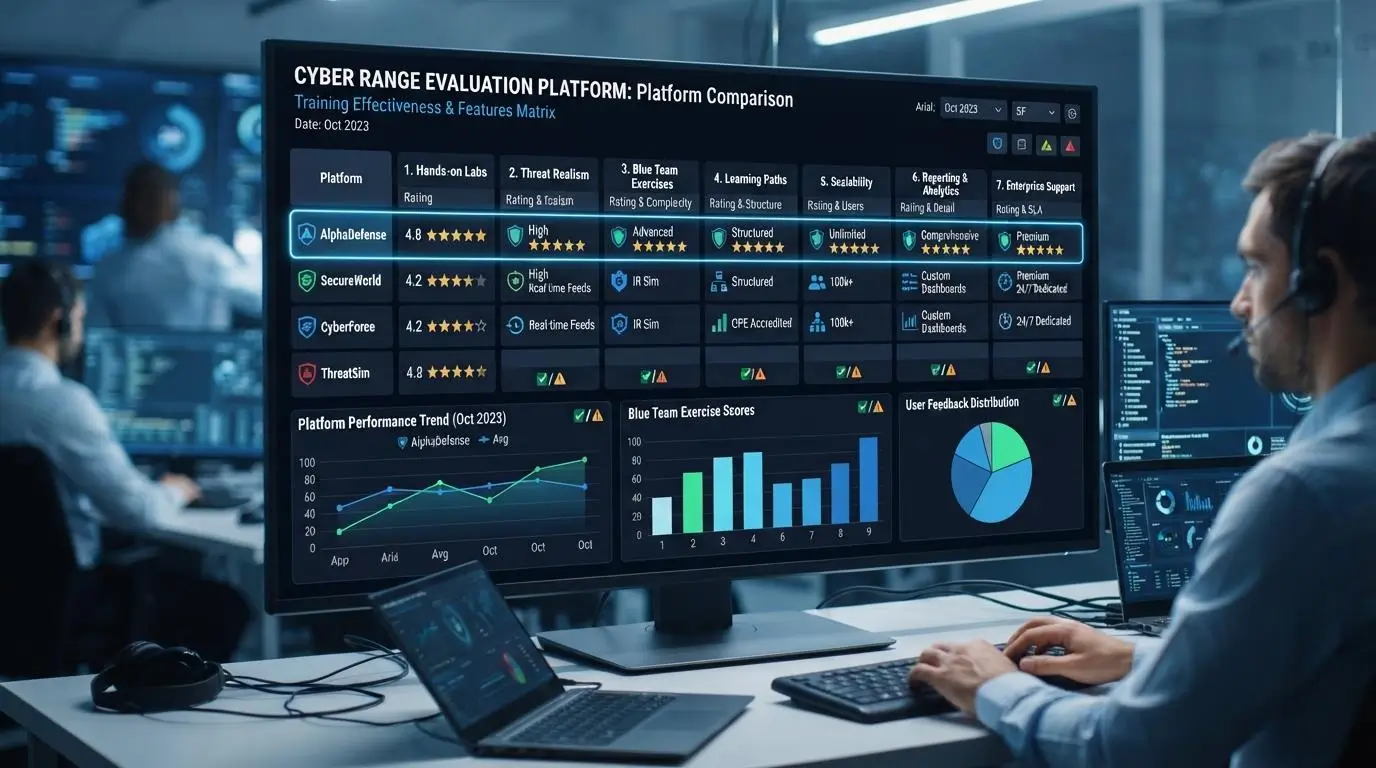
When evaluating RangeForce alternatives, focus on how well each platform turns cybersecurity knowledge into practical ability. Consider the quality of hands-on labs, realism of threat scenarios, blue team and SOC exercises, learning flexibility, scalability, reporting, and enterprise support. The right solution should match your team’s skills, training goals, and risk priorities.
Do the Platforms Provide Real-World Cybersecurity Training?
The strongest RangeForce alternatives give you more than theoretical knowledge. You can work with real tools, investigate real threats, and practice incident response inside live environments. Real-world scenarios make threat scenarios easier to understand because you must apply cybersecurity skills to practical problems, rather than simply recalling information from a course. This approach also exposes skill gaps.
Can Security Teams Practice Blue Team and SOC Skills?
Blue team labs help you build defensive skills through practical investigation. SOC analysts can practice forensics, incident response, lateral movement detection, and attack detection in controlled environments.
This matters when your goal is to strengthen the ability to recognize suspicious activity and respond before threats affect critical assets. Repeated practice also improves response confidence.
Do They Offer Interactive Learning Environments and Skills Labs?
Interactive learning environments should make practice active, not passive. Look for skills labs, hands-on challenges, and gamified challenges that let you learn at your own pace.
Guided learning paths can add structure, while practical exercises give you repeated opportunities to turn cybersecurity knowledge into usable skills. This keeps training focused and engaging.
Can Enterprises Scale Cybersecurity Training Across Teams?
For enterprises, scalability matters as much as content quality. Corporate training should support employees and professionals across teams without creating unnecessary infrastructure demands.
A cloud-based range, automation, reporting, and progress tracking can make it easier to manage exercises, measure team readiness, and expand training as security needs grow. This supports larger training programs.
Do They Support Enterprise Security, Compliance, and Leadership Training?
Enterprise training can extend beyond technical exercises. Strong platforms may support compliance training, security processes, risk improvement, leadership knowledge, and relevant soft skills.
Team exercises can connect these areas, helping organizations develop broader enterprise readiness while giving leaders clearer insight into how employees build and apply cybersecurity skills. This connects improvement with organizational risk.
Which RangeForce Alternatives Are Worth Considering?
The best RangeForce alternatives serve different training goals, from beginner-friendly cybersecurity practice to enterprise-level simulations. The table below gives you a quick view of each platform’s primary audience, training approach, hands-on capabilities, and core strength, making it easier to narrow down the options before exploring each solution in detail.
| Platform | Best For | Training Approach | Hands-On Labs | Key Strength |
|---|---|---|---|---|
| Apporto Cybersecurity Labs | Higher education and organizations | Browser-based practical training | Yes | Scalable cybersecurity labs |
| Immersive Labs | Enterprise cybersecurity teams | Real-time threat simulations | Yes | Skills assessment and workforce optimization |
| Hack The Box | Offensive and defensive security | Gamified challenges | Yes | Practical cybersecurity skills |
| TryHackMe | Beginners and developing professionals | Guided browser-based rooms | Yes | Beginner-friendly learning |
| CyberDefenders | Blue team professionals | Forensics and investigation | Yes | Incident response and digital forensics |
| SimSpace | Enterprise security teams | Large-scale live-fire exercises | Yes | Enterprise environment replication |
| Cloud Range | Cyber range training | Scalable cyber exercises | Yes | Flexible training environments |
| CybExer | Cybersecurity organizations | Cyber range exercises | Yes | Team-based cybersecurity practice |
| SANS | Professionals and certification candidates | Structured courses and labs | Yes | Professional cybersecurity training |
| LetsDefend | SOC analysts and aspiring defenders | SOC-focused exercises | Yes | Practical defensive training |
Best RangeForce Alternatives (A Detailed Overview)
1. Apporto Cybersecurity Labs (Strong RangeForce Alternative for Hands-On Training)
Overview
Apporto Cybersecurity Labs provides a virtual cybersecurity lab environment through the browser, giving you a straightforward way to practice technical skills without complicated local setup. Learners can work through practical exercises using real tools, turning cybersecurity knowledge into hands-on experience.
The platform also supports scalable infrastructure, making it suitable for individual learners, security teams, and larger organizational programs. Its cloud-based approach can support training related to cloud computing and cloud security while keeping access and management simpler for administrators. This makes Apporto a practical choice when you need accessible labs that can serve different groups without creating unnecessary infrastructure demands. For a direct comparison of hands-on training, lab delivery, and scalability, explore Rangeforce Vs Apporto Cybersecurity Labs
Highlights:
- Browser-Based Labs: Access cybersecurity training directly through a browser.
- Hands-On Practice: Build practical skills through interactive exercises and real tools.
- Scalable Environments: Support individual learners and larger teams.
- Flexible Training: Useful for cybersecurity, cloud computing, and cloud security practice.
- Simplified Management: Make lab access easier to manage across organizations.
Best For:
Organizations, education providers, cybersecurity programs, and teams seeking accessible hands-on labs with scalable delivery.
Limitations:
Dedicated cyber ranges may provide deeper attack-and-defense exercises and larger live-fire simulations.
Pricing:
Pricing can vary based on deployment requirements, training scope, and organizational access, with arrangements available for different program needs.
2. Immersive Labs (Support Enterprise Cybersecurity Skills Development)
Overview
Immersive Labs takes an enterprise-focused approach to cybersecurity training, combining real-time threat simulations with skills assessments to help organizations understand and improve workforce capabilities. Its training can place technical defenders in realistic threat scenarios while also supporting executives and leadership teams with structured learning paths suited to their responsibilities.
The platform emphasizes continuous cyber workforce optimization rather than one-time course completion. You can use assessments to identify skills gaps, then direct employees toward relevant training and practical exercises. This creates a clearer connection between individual development, team readiness, and broader enterprise cybersecurity goals.
Highlights:
- Real-Time Threat Simulations: Practice responding to realistic cybersecurity threats.
- Skills Assessments: Identify knowledge and skills gaps across your workforce.
- Enterprise Learning Paths: Provide structured training for different roles and responsibilities.
- Cyber Workforce Optimization: Support continuous improvement across security teams.
- Technical and Leadership Training: Address the needs of technical defenders, executives, and leadership.
Best For:
Enterprises, security teams, and organizations that need measurable cybersecurity skills development, structured training, and workforce assessments.
Limitations:
Immersive Labs is strongly oriented toward enterprise training. Organizations looking for highly gamified challenges or beginner-first learning may find platforms such as Hack The Box or TryHackMe more suitable.
Pricing:
Pricing is generally based on subscription or organizational arrangements, depending on the training requirements, users, and features included.
3. Hack The Box (Popular for Gamified Cybersecurity Training)
Overview
Hack The Box combines gamified cybersecurity training with practical offensive and defensive exercises. Its challenges give you opportunities to develop cybersecurity skills by working through realistic problems rather than simply studying concepts. The platform can be useful for security professionals, penetration testers, and learners who want to strengthen both attack and defense capabilities.
Its hands-on labs cover different aspects of cybersecurity, while real-world scenarios help connect individual challenges with practical security work. Blue team capabilities are also part of the broader training experience, giving defenders opportunities to practice identifying and responding to attacks. Learning paths add structure for users who want a clearer progression, while the community provides another source of knowledge and support.
Highlights:
- Gamified Challenges: Make practical cybersecurity training more interactive and engaging.
- Offensive Security: Build skills through hands-on attack-focused exercises.
- Defensive Security: Develop blue team capabilities through practical defense exercises.
- Hands-On Labs: Apply knowledge in realistic cybersecurity environments.
- Strong Community: Access a broad community and structured learning resources.
Best For:
Cybersecurity professionals, learners, penetration testers, and teams seeking challenging practical exercises.
Limitations:
The platform can require more independent exploration than guided, beginner-first alternatives such as TryHackMe.
Pricing:
Hack The Box offers free and paid options, with access and features varying by the selected offering.
4. TryHackMe (Best For Beginners Use It as a RangeForce Alternative)
Overview
TryHackMe is a beginner-friendly option for building practical cybersecurity knowledge through guided, browser-based rooms. You can learn at your own pace while working through interactive exercises that introduce security fundamentals and gradually build toward more advanced skills. Its structured approach makes the platform accessible if you are still developing confidence with cybersecurity concepts.
Learning paths help organize topics into a logical progression, while hands-on rooms give you opportunities to practice rather than simply read about cybersecurity. Training can cover areas such as networking, cloud computing, and core security skills, making it useful for learners with different starting points. The browser-based format also keeps access straightforward, with no complex environment setup required for many exercises.
Highlights:
- Beginner-Friendly Rooms: Start with guided exercises designed to build foundational knowledge.
- Browser-Based Learning: Access interactive training directly through your browser.
- Guided Paths: Follow structured learning paths toward more advanced skills.
- Interactive Challenges: Reinforce concepts through practical exercises.
- Self-Paced Training: Learn and practice at your own pace.
Best For:
Beginners, students, aspiring SOC analysts, and professionals strengthening their cybersecurity fundamentals.
Limitations:
TryHackMe is less focused on large-scale enterprise cyber range simulations than platforms designed specifically for organizational exercises.
Pricing:
TryHackMe provides free and paid learning options, with access varying by plan.
5. CyberDefenders ( It Helps to Build Blue Team and Forensics Skills)
Overview
CyberDefenders focuses on defensive cybersecurity training, with an emphasis on blue team investigations, digital forensics, and incident response. Instead of keeping security concepts theoretical, the platform gives you hands-on investigation opportunities built around real forensic challenges. This approach helps you develop the practical skills needed to examine suspicious activity, investigate threats, and understand how security incidents unfold.
The platform is particularly relevant to SOC analysts and other defenders who need practice working through investigation challenges. By analyzing evidence and responding to realistic incidents, you can strengthen practical defensive skills while developing a deeper understanding of threat investigation. Its focused approach also makes it useful for learners who want to build specialized knowledge in digital forensics rather than follow a broad cybersecurity course.
Highlights:
- Blue Team Labs: Practice defensive investigations through hands-on exercises.
- Digital Forensics: Build skills for examining evidence and investigating incidents.
- Incident Response: Develop practical approaches to identifying and responding to threats.
- Investigation Challenges: Work through realistic security problems and forensic scenarios.
- Defensive Cybersecurity Training: Strengthen skills relevant to SOC and blue team roles.
Best For:
Blue team professionals, SOC analysts, incident responders, and learners focused on digital forensics.
Limitations:
CyberDefenders is more specialized toward defensive investigations than broad enterprise workforce training.
Pricing:
Free and paid access options are available, depending on the training and features required.
6. SimSpace (Prepares Enterprise Teams for Real Cyber Threats)

Overview
SimSpace focuses on large-scale cybersecurity exercises designed to prepare enterprise teams for real cyber threats. Its live-fire exercises replicate enterprise environments, giving security teams opportunities to practice against realistic attacks in high-fidelity simulations. This environment helps you test both technical capabilities and security processes under conditions that more closely resemble real incidents.
The platform supports red team, blue team, and purple team scenarios, allowing teams to practice different sides of attack and defense. You can use these exercises to evaluate how effectively teams detect threats, respond to incidents, and work together when critical systems are under pressure. Testing tools and security processes in live environments can also reveal gaps that traditional training may not expose.
Highlights:
- Large-Scale Live-Fire Exercises: Prepare enterprise teams through realistic cybersecurity scenarios.
- Enterprise Environment Replication: Recreate environments for practical security testing.
- Red, Blue, and Purple Team Exercises: Practice offensive, defensive, and collaborative security operations.
- Realistic Attack Scenarios: Test responses against real-world attack patterns.
- Team Readiness: Strengthen coordination, response skills, and security processes.
Best For:
Enterprises and security teams that need realistic, large-scale cybersecurity exercises.
Limitations:
Enterprise-focused simulations can be more complex than platforms designed primarily for individual learners.
Pricing:
SimSpace typically follows enterprise or custom pricing based on training requirements and deployment needs.
7. Cloud Range (Useful for Scalable Cyber Range Training)
Overview
Cloud Range focuses on scalable cybersecurity exercises delivered through cloud-based range environments. Instead of limiting training to individual practice, it gives security teams a way to work through live environments, team exercises, and practical threat scenarios. This makes the platform relevant for organizations that want cybersecurity training to reflect the demands of coordinated security operations.
Flexible scalability is useful when training needs grow across departments or larger groups. Cloud-based infrastructure can reduce the need to maintain extensive physical environments, while automation can simplify the delivery and management of exercises. Teams can therefore spend more time practicing responses and less time dealing with training infrastructure.
The platform is particularly suited to corporate training where coordinated exercises and team readiness are priorities. Its cyber range approach can support practical scenarios that help security teams test their ability to recognize and respond to threats in controlled environments.
Highlights:
- Scalable Cyber Ranges: Expand training environments as organizational needs grow.
- Cloud-Based Environments: Deliver practical exercises through cloud infrastructure.
- Team Exercises: Give security teams opportunities to practice together.
- Enterprise Training: Support corporate cybersecurity programs.
- Practical Threat Scenarios: Build skills through realistic cybersecurity exercises.
Best For:
Organizations requiring scalable cybersecurity exercises and team-based training.
Limitations:
Cyber range environments can be more appropriate for organizations than individual beginners seeking guided, self-paced learning.
Pricing:
Pricing is generally custom or enterprise-oriented, based on training requirements and organizational scale.
8. CybExer (Strengthen Cybersecurity Team Readiness)
Overview
CybExer uses cyber range exercises to help security teams develop practical cybersecurity skills through structured, team-based training. Its exercises can place teams in realistic attack scenarios, giving them opportunities to practice threat response and defensive techniques in controlled environments. This makes the platform relevant when training needs to move beyond individual skills and focus on coordinated team performance.
Blue team exercises provide additional practice for defenders who need to recognize attacks, investigate activity, and respond effectively. For enterprises, these practical exercises can support broader training programs designed around team readiness and real-world security challenges.
Highlights:
- Cyber Range Exercises: Practice cybersecurity skills in structured training environments.
- Team Readiness: Strengthen coordination through team-based exercises.
- Attack Scenarios: Train against realistic real-world threats.
- Defensive Training: Develop blue team capabilities and threat response skills.
- Enterprise Use: Support cybersecurity training for organizations and security teams.
Best For:
Cybersecurity organizations, teams, and enterprises looking for structured cyber exercises and practical team training.
Limitations:
CybExer is more specialized toward organizational cyber range training than general-purpose platforms designed for beginner education.
Pricing:
Pricing is generally enterprise or custom based, depending on training requirements and organizational needs.
9. SANS( Best For Traditional Cybersecurity Courses)
Overview
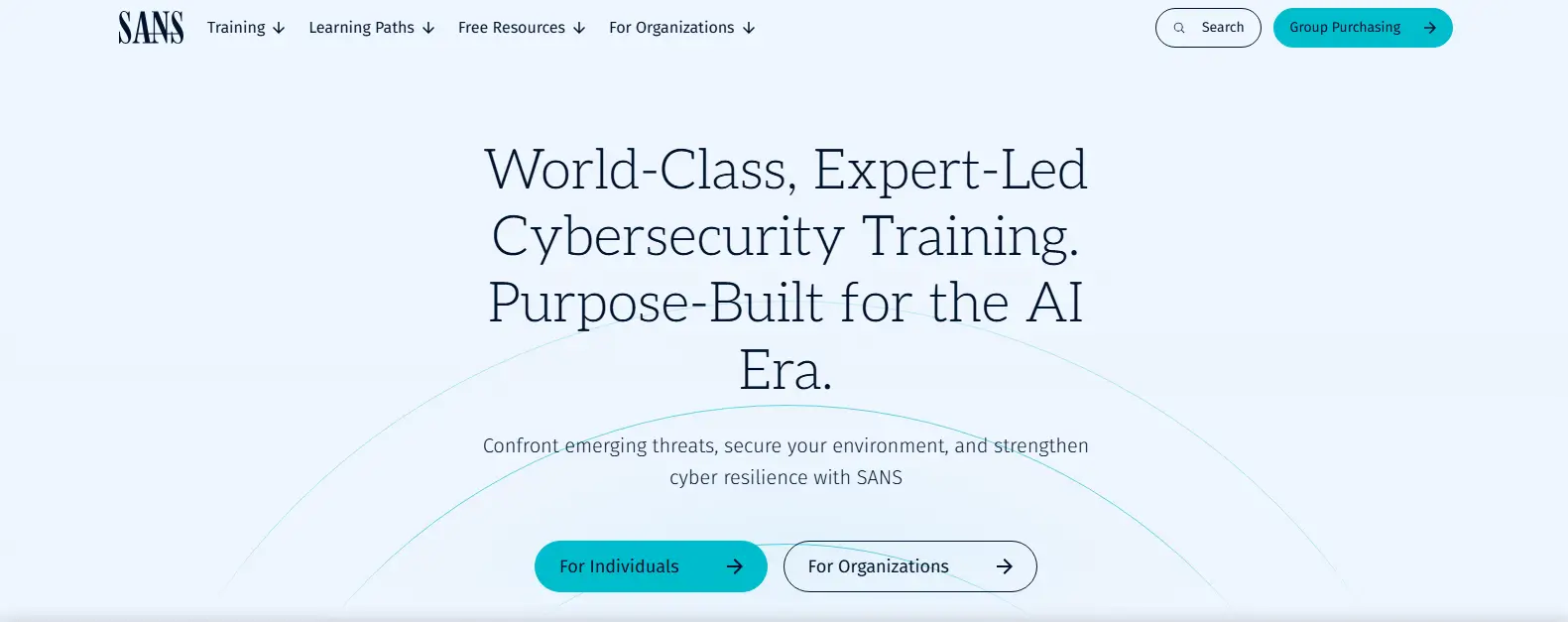
SANS goes beyond conventional course-based learning by combining professional cybersecurity training with certifications, skills labs, and hands-on exercises. Its structured courses are designed to help technical professionals develop specialized cybersecurity knowledge while applying concepts through practical activities and real-world scenarios.
The platform is also relevant to corporate training and security teams that need focused instruction in specific areas of cybersecurity. Certification preparation adds another layer of value for professionals who want to validate their skills, while hands-on labs provide opportunities to reinforce what you learn during structured training. For organizations exploring other immersive cybersecurity training environments, review SANS Cyber Ranges alternatives.
Highlights:
- Professional Training: Build specialized cybersecurity knowledge through structured courses.
- Certification Preparation: Prepare for recognized cybersecurity certifications.
- Hands-On Labs: Apply concepts through practical skills labs and exercises.
- Expert-Led Courses: Learn through structured instruction from experienced professionals.
- Cybersecurity Specialization: Develop focused skills across different areas of security.
Best For:
Cybersecurity professionals, organizations, and learners pursuing advanced skills or certifications.
Limitations:
Course-based training can differ from fully immersive cyber range platforms built around continuous attack-and-defense simulations.
Pricing:
Course-based and organizational pricing varies depending on the selected training, certification program, and access requirements.
10. LetsDefend ( Suitable For Develop SOC Analyst Skills)
Overview
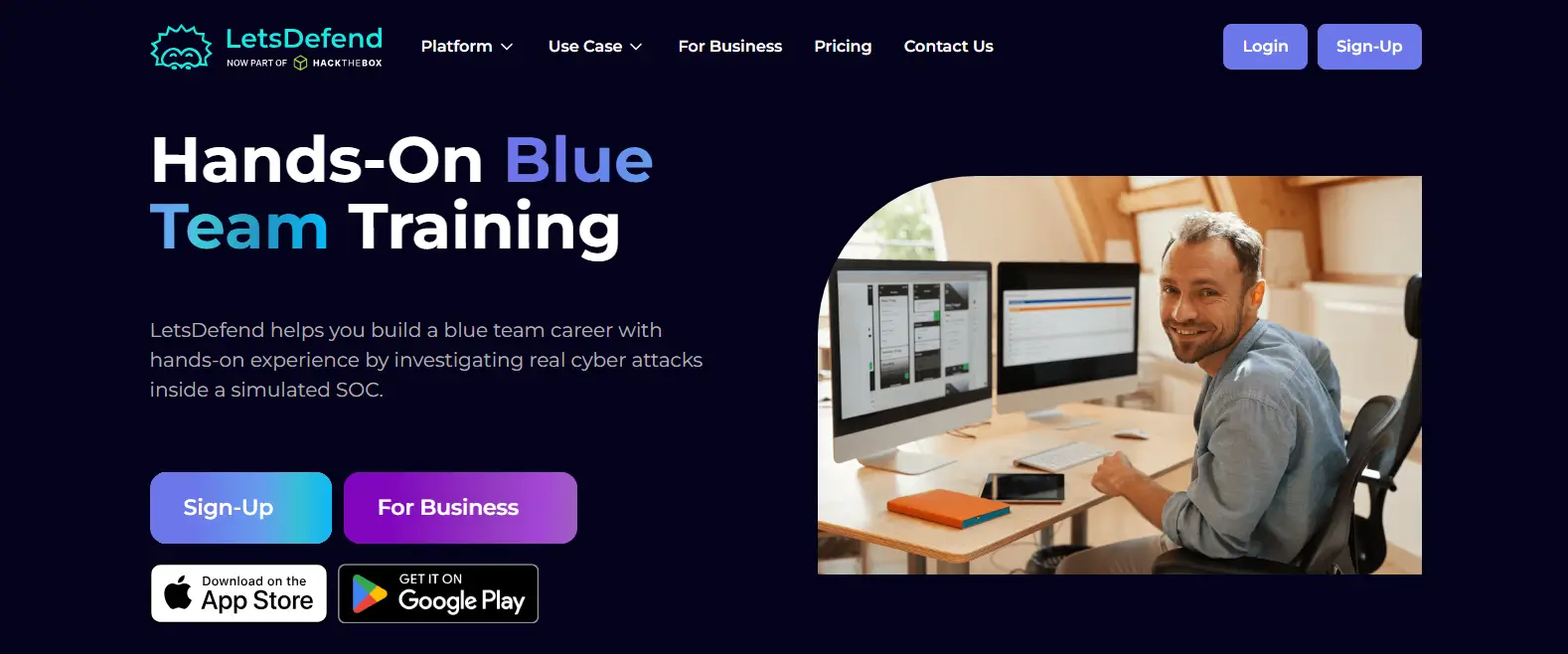
LetsDefend focuses on practical cybersecurity training for SOC teams and analysts, with exercises built around security operations, threat detection, and incident response. Its hands-on approach gives you opportunities to work through real-world scenarios and apply defensive skills instead of relying entirely on theory. The platform also supports own-pace training, making it easier to build analyst skills progressively.
Blue team training is central to the experience, with practical exercises that can help you understand how security teams identify suspicious activity and respond to incidents. This makes LetsDefend particularly useful when your goal is to strengthen day-to-day defensive capabilities and gain more familiarity with SOC operations.
Highlights:
- SOC-Focused Training: Develop skills relevant to security operations and SOC roles.
- Blue Team Exercises: Practice defensive techniques through hands-on activities.
- Incident Response: Build practical experience responding to security incidents.
- Practical Scenarios: Apply knowledge through realistic cybersecurity exercises.
- Analyst Skills: Strengthen threat detection and other core SOC capabilities.
Best For:
Aspiring and current SOC analysts and defensive security teams.
Limitations:
LetsDefend is more focused on SOC and defensive operations than broad enterprise cyber range replication.
Pricing:
Free and paid options are available, depending on the training access and features required.
Which Features Matter Most When Choosing a RangeForce Alternative?

Choosing a RangeForce alternative requires more than comparing the number of labs or courses. You need to consider how effectively a platform develops practical skills, supports team exercises, and fits your training goals. The following features can help you assess the difference between individual learning platforms and enterprise-focused cybersecurity solutions.
Are Real Tools and Live Environments Important for Practical Training?
Real tools and live environments make cybersecurity training more practical. Instead of simply studying how attacks work, you can practice using tools against realistic threats and apply what you learn. Hands-on exercises strengthen practical cybersecurity knowledge because you actively investigate problems, test responses, and build skills that are harder to develop through theory alone.
Should You Prioritize Blue Team Labs and Incident Response?
If defensive security is a priority, blue team labs deserve close attention. Look for exercises involving digital forensics, incident response, and threat detection, particularly if you are training SOC analysts. Practical scenarios can also help teams recognize lateral movement, investigate suspicious activity, and improve their ability to respond to security incidents.
How Valuable Are Threat Scenarios and Time-Based Exercises?
Threat scenarios become more useful when they reflect real-world attacks and introduce realistic time pressures. Teams can practice protecting critical assets, following security processes, and coordinating responses while working toward stronger team readiness. Solo labs offer a different benefit, allowing you to explore incidents and build knowledge without time pressures.
Do Learning Paths and Gamified Challenges Improve Engagement?
Learning paths give beginners and professionals a clearer route through cybersecurity topics, while gamified challenges can make repeated practice more engaging. You can learn at your own pace, revisit difficult concepts, and gradually develop skills. A strong community can add another layer of support, knowledge sharing, and motivation.
How Important Are Reporting, Integration, and Automation?
For corporate training and enterprise programs, reporting, integration, and automation can become important as participation grows. These features help you track progress, measure employee skills, and give leadership better visibility into training outcomes. Automation can also reduce administrative work, while integration helps connect training with existing tools and security processes.
What Are the Pros and Cons of Choosing a RangeForce Alternative?
Choosing a RangeForce alternative can give you access to training that better matches your specific requirements. The tradeoff is that every platform has a different focus, learning curve, and level of enterprise capability. A specialized solution may provide deeper practice in one area while offering less breadth elsewhere.
| Potential Advantages | Potential Limitations |
|---|---|
| More specialized training | Different learning curves |
| Beginner-friendly options | Some platforms target professionals |
| Stronger gamification | May lack enterprise simulation depth |
| Specialized blue team labs | Narrower training focus |
| Large-scale cyber ranges | Higher enterprise complexity |
| Certification-focused options | Less emphasis on live environments |
| Flexible cloud-based training | Pricing varies significantly |
The value of these alternatives depends on what you need to accomplish. A beginner may benefit from guided learning and gamified challenges, while an enterprise security team may need live exercises, advanced simulations, or scalable infrastructure. Alternatives are most useful when a platform
Frequently Asked Questions (FAQs)
1. What are the best RangeForce alternatives in 2026?
The best RangeForce alternatives include Apporto Cybersecurity Labs, Immersive Labs, Hack The Box, TryHackMe, CyberDefenders, SimSpace, Cloud Range, CybExer, SANS, and LetsDefend. Each platform has a different focus, from beginner training and blue team labs to enterprise cyber range exercises.
2. Which RangeForce alternative is best for beginners?
TryHackMe is a strong choice for beginners because it offers guided, browser-based rooms and structured learning paths. You can learn at your own pace while developing foundational cybersecurity knowledge before progressing toward more advanced practical skills.
3. Which RangeForce alternative is best for blue team training?
CyberDefenders is particularly suited to blue team training because it focuses on digital forensics, incident response, threat investigation, and practical defensive challenges. Its hands-on investigations help you develop skills relevant to defensive security roles and SOC operations.
4. Which platform is best for SOC analyst training?
LetsDefend is well suited to SOC analyst training, with exercises focused on security operations, threat detection, incident response, and defensive skills. Its practical scenarios give aspiring and current SOC analysts opportunities to strengthen their hands-on knowledge at their own pace.
5. Which RangeForce alternatives offer gamified cybersecurity training?
Hack The Box is known for gamified cybersecurity training, using interactive challenges to develop offensive and defensive skills. TryHackMe also incorporate
