

What Is the Best SANS Cyber Ranges Alternative?
Apporto Cybersecurity Labs is the best SANS Cyber Ranges alternative for organizations seeking scalable, hands-on cybersecurity training. Its browser-based virtual labs provide isolated environments for practical security exercises without requiring extensive physical infrastructure. With centralized management, cloud-based access, and flexible deployment, Apporto simplifies cybersecurity training for educational institutions and enterprises.
Knowing how a cyberattack works is one thing. Responding to one under pressure is another. That gap is where practical security training matters. SANS Cyber Ranges give cybersecurity professionals a controlled setting to investigate cyber threats, test defensive decisions, and complete cyber range exercises without putting live systems at risk.
Still, SANS may not suit every organization’s budget, training goals, or deployment needs. That is why sans cyber ranges alternatives deserve a closer look. Modern cyber range platforms offer realistic simulations, hands-on learning, and real-world scenarios while helping teams strengthen cybersecurity skills and operational readiness.
In this blog, you’ll explore six SANS Cyber Ranges alternatives and what each platform offers for practical cybersecurity training.
How Were These SANS Cyber Ranges Alternatives Evaluated?

Choosing a cyber range involves more than comparing course libraries or counting available labs. The real question is how effectively a platform helps you build cybersecurity skills, practice cyber defense, and measure team readiness. For this comparison, the six SANS Cyber Ranges alternatives were evaluated across four practical areas: realism, hands-on exercises, skill development, and delivery options.
How Realistic Are the Cyber Range Environments?
Realism matters because training loses value when exercises feel disconnected from actual security work. The evaluation considers realistic simulations, replicated networks, real systems, security tools, and virtual environments.
High-fidelity platforms can recreate complex conditions while isolated environments let you practice without affecting production infrastructure. Platforms using actual hardware or closely replicated systems can provide an even more authentic training experience.
Do They Support Hands-On Cyber Range Exercises?
Practical experience is another key measure. Strong cyber range training should give you opportunities to work through blue team exercises, red team activities, threat hunting, incident response, digital forensics, and broader cyber defense tasks. Labs and realistic challenges help turn cybersecurity knowledge into usable hands-on experience.
How Well Do They Support Skill Development?
A useful platform should support different skill levels and make progress measurable. Personalized assessment, skills gap identification, continuous learning, and team readiness all matter, particularly for cybersecurity professionals who need ongoing development rather than one-time training.
What Training, Management, and Deployment Options Are Available?
Finally, the comparison considers how easily training fits into your existing program. Major factors include:
- Self-paced and instructor-led training
- Labs and CTFs
- Learning management system integration
- Cloud range delivery
- Range as a Service
- Enterprise deployment
- Government and higher education support
- Data sovereignty
- Collaborative team exercises
Together, these criteria provide a practical basis for comparing the platforms that follow.
Which SANS Cyber Ranges Alternatives Compare Best at a Glance?
The six platforms below approach cyber range training from different angles. Some emphasize accessible virtual labs, while others focus on SOC readiness, technical challenges, defensive investigations, high-fidelity simulations, or continuous skills benchmarking.
| Platform | Best For | Cyber Range Type | Hands-On Training | Key Strength | Pricing |
|---|---|---|---|---|---|
| Apporto Cybersecurity Labs | Higher education and scalable cybersecurity training | Cloud/virtual | Yes | Browser-based cyber labs and simplified management | Custom |
| RangeForce | Continuous SOC skill development | Cloud-based | Yes | Skills gap mapping and team training | Custom |
| Hack The Box | Offensive and defensive cybersecurity skills | Virtual labs | Yes | Technical labs and practical challenges | Varies |
| CyberDefenders | Blue team and digital forensics training | Virtual labs | Yes | Threat hunting and DFIR practice | Varies |
| Cyberbit | Enterprise cyber defense training | High-fidelity simulation | Yes | Hyper-realistic team simulations | Custom |
| Immersive | Continuous organizational skills development | Cloud-based | Yes | Gamified training and benchmarking | Custom |
There is no universal winner here. Your priorities make the difference. Apporto may fit organizations seeking scalable virtual labs, while RangeForce emphasizes continuous SOC development. Hack The Box and CyberDefenders are strong choices for practical technical and defensive skills, whereas Cyberbit focuses on high-fidelity enterprise exercises. Immersive takes a continuous, skills-focused approach to cybersecurity development.
Best SANS Cyber Ranges Alternatives
1. Apporto Cybersecurity Labs (A Strong SANS Cyber Ranges Alternative for Scalable Training)
Overview
Apporto Cybersecurity Labs brings cybersecurity training into an accessible virtual cybersecurity lab, giving you browser-based access to hands-on exercises without depending on traditional labs or dedicated physical infrastructure. This approach can make practical training easier to deliver across higher education and enterprise programs, particularly when you need scalable access.
Learners can work through hands-on exercises inside isolated environments, while training teams retain centralized management. The result is a simpler way to provide practical cybersecurity experience without requiring individual machines or complex local setups. For a direct comparison of training environments, scalability, and hands-on cybersecurity capabilities, explore Sans Vs Apporto Cybersecurity Labs
Highlights
- Browser-Based Access: Access cybersecurity labs directly through a web browser.
- Virtual Labs: Provide scalable environments for practical cybersecurity training.
- Hands-On Learning: Help learners develop practical cybersecurity skills through exercises.
- Isolated Environments: Create controlled spaces for training without affecting live systems.
- Scalable Access: Support larger groups across education and enterprise programs.
- Centralized Management: Make lab administration easier from a central platform.
- Higher Education Support: Provide virtual environments for university cybersecurity programs.
- Enterprise Training: Support organizational security training and skill development.
- Simplified Infrastructure: Reduce reliance on traditional labs and physical infrastructure.
Best For:
Higher education institutions, organizations, and training teams seeking scalable virtual cybersecurity labs.
Limitations:
Highly specialized cyber range simulations, complex replicated networks, and advanced operational exercises may be better suited to dedicated high-fidelity platforms.
Pricing:
Pricing is customized according to your organization’s deployment and training requirements.
2. RangeForce (Considered as Leading Alternative)
Overview
RangeForce focuses on continuous technical development, making it a strong option when cybersecurity training needs to continue beyond a single course or certification. Its cloud-based cyber range supports hands-on practice through real-world attack simulations, helping security teams develop practical skills while identifying areas that need improvement.
For SOC teams, this emphasis on continuous learning can be especially useful. Skills gap mapping helps organizations understand where capabilities are strong and where additional training is needed. Instead of treating training as a one-time activity, teams can use practical exercises to build confidence, strengthen cyber defense, and improve operational readiness over time.
Highlights
- Cloud-Based Cyber Range: Deliver hands-on training through accessible cloud environments.
- Continuous Learning: Support ongoing technical development rather than one-time training.
- Skills Gap Mapping: Identify areas where individuals and teams need additional development.
- Team Training: Build practical capabilities across cybersecurity teams.
- Blue Team Exercises: Practice defensive security activities in controlled environments.
- Threat Hunting: Develop skills for identifying and investigating potential threats.
- Incident Response: Practice responding to security incidents through practical exercises.
- Real-World Attack Simulations: Train against simulated attacks that reflect realistic threats.
- Security Tools: Build familiarity with tools used in cybersecurity operations.
- Operational Readiness: Help teams assess and strengthen their preparedness.
- Cyber Defense: Develop practical defensive capabilities through hands-on training.
Best For:
SOC teams, enterprise cybersecurity departments, and organizations focused on continuous technical development.
Limitations:
Its enterprise-focused approach may require suitable organizational resources, training structures, and platform requirements to deliver maximum value.
Pricing:
Custom pricing based on organizational training requirements.
3. Hack The Box (Support Hands-On Cybersecurity Skills)
Overview
Hack The Box places hands-on technical practice at the heart of cybersecurity training. Its labs and challenges give you opportunities to work on offensive security, defensive security, threat hunting, and other practical tasks rather than relying entirely on theoretical instruction. The platform also supports different skill levels, making it suitable for learners developing foundational skills as well as cybersecurity professionals looking for more demanding exercises.
The challenge-based format adds another useful layer. Skill-based challenges and CTF-style exercises encourage active problem-solving, while realistic tasks provide experience that can be applied to real-world scenarios. This immersive learning approach can help you build practical cybersecurity skills through repeated testing, investigation, and decision-making.
Highlights
- Hands-On Technical Labs: Practice cybersecurity concepts through interactive environments.
- Offensive Security: Develop skills around identifying and exploiting security weaknesses.
- Defensive Security: Build practical cyber defense and investigation capabilities.
- Threat Hunting: Practice finding and analyzing potential security threats.
- Real-World Scenarios: Apply skills to challenges designed around practical security problems.
- Skill-Based Challenges: Progress through exercises that test specific technical abilities.
- Immersive Learning: Gain experience by actively working through cybersecurity problems.
- Different Skill Levels: Access training suited to varying levels of technical experience.
- CTF-Style Exercises: Use challenge-based activities to strengthen problem-solving skills.
Best For:
Cybersecurity professionals, technical learners, and teams developing offensive and defensive skills.
Limitations:
Organizations seeking highly structured, enterprise-level cyber range simulations may need a platform specifically designed for coordinated organizational exercises.
Pricing:
Subscription-based options are available with different access levels and features.
4. CyberDefenders (Replace SANS Cyber Ranges for Blue Team and DFIR Training)
Overview
CyberDefenders focuses heavily on the investigative side of cybersecurity, making it a practical option for blue team training, threat hunting, digital forensics, and incident response. Instead of concentrating mainly on broad cyber range exercises, its training gives you practical investigation challenges where evidence must be examined, patterns identified, and key clues uncovered.
This approach helps cybersecurity professionals gain hands-on experience as cyber investigators. Working with real-world evidence can also strengthen decision-making and develop cybersecurity skills that are useful during actual security investigations. The platform is particularly relevant when your training goals center on understanding what happened, finding the evidence, and revealing key facts from an incident.
Highlights
- Blue Team Exercises: Build defensive skills through investigation-focused practical exercises.
- Threat Hunting: Practice identifying suspicious activity and uncovering key clues.
- Digital Forensics: Examine evidence to understand incidents and investigate systems.
- Incident Response: Develop practical skills for analyzing and responding to security events.
- Cyber Investigation: Gain experience following evidence and connecting findings.
- Real-World Evidence: Work with investigation material that reflects practical security analysis.
- Hands-On Experience: Apply cybersecurity knowledge through interactive challenges.
- Investigation Challenges: Test analytical thinking through structured security problems.
- DFIR Training: Develop digital forensics and incident response capabilities.
- Practical Exercises: Reinforce defensive skills through active investigation.
DFIR NetWars Continuous is also relevant for learners seeking ongoing investigation-focused practice, complementing broader cyber range training.
Best For:
Blue team professionals, threat hunters, incident responders, and digital forensics learners.
Limitations:
CyberDefenders is more specialized toward defensive investigation skills than broad enterprise cyber-range simulation.
Pricing:
Pricing varies based on the selected access level and offering.
5. Cyberbit (Better Suited to High-Fidelity Enterprise Cyber Range Exercises)
Overview
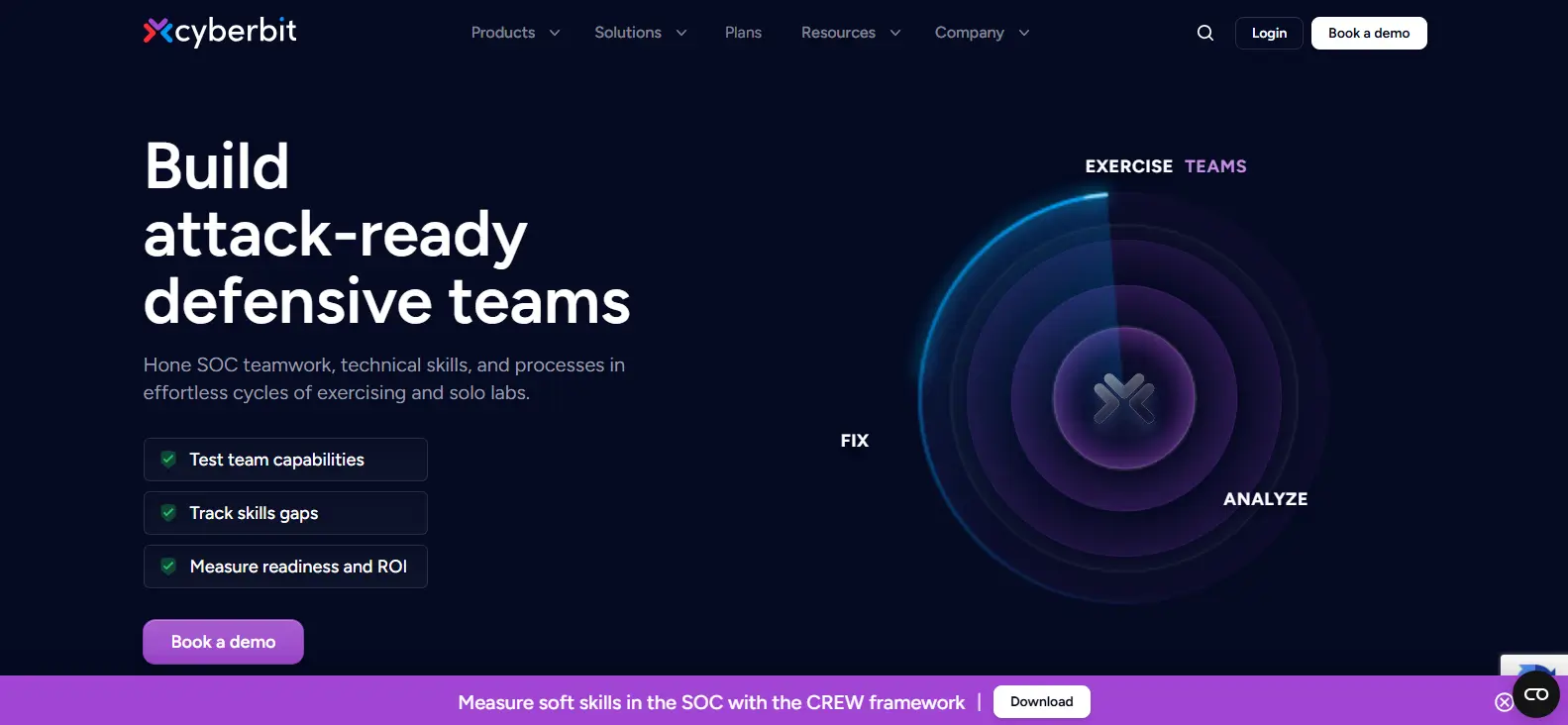
Cyberbit takes cyber range training into a more immersive enterprise setting, using hyper-realistic simulations to recreate the conditions security teams face during complex incidents. Its high-fidelity environments can incorporate replicated networks, real systems, and security tools, giving teams a controlled place to practice cyber defense against simulated real-world cyber threats.
This level of realism matters when multiple participants need to train together rather than complete isolated exercises. Multi-user cyber range exercises can test communication, team decision-making, incident response, and operational readiness at the same time. For enterprise security operations, that broader experience can reveal how well a team performs when several tasks and decisions need to happen together. Organizations evaluating other platforms for realistic cyber defense exercises can also explore Cyberbit alternatives.
Highlights
- Hyper-Realistic Simulations: Recreate complex security incidents in controlled training environments.
- Replicated Networks: Provide realistic network structures for team-based exercises.
- Real Systems: Incorporate system environments that make training more practical.
- Real-World Cyber Threats: Simulate threats that reflect realistic attack conditions.
- Blue Team Exercises: Strengthen defensive capabilities through coordinated practice.
- Incident Response: Develop response skills during simulated security incidents.
- Cyber Defense: Practice identifying, containing, and responding to threats.
- Security Tools: Train teams using tools relevant to security operations.
- Team Decision-Making: Test collaboration and decisions during active exercises.
- Operational Readiness: Help organizations assess preparedness for complex incidents.
- Enterprise Training: Support large-scale cybersecurity team development.
Best For:
Large enterprises, government agencies, and security teams requiring advanced cyber defense simulations.
Limitations:
Its high-fidelity approach may offer more capability than smaller organizations need for basic cybersecurity skill development.
Pricing:
Cyberbit uses enterprise and custom pricing, with costs based on your organization’s specific training requirements.
6. Immersive (Support Continuous Cybersecurity Skills Benchmarking)
Overview
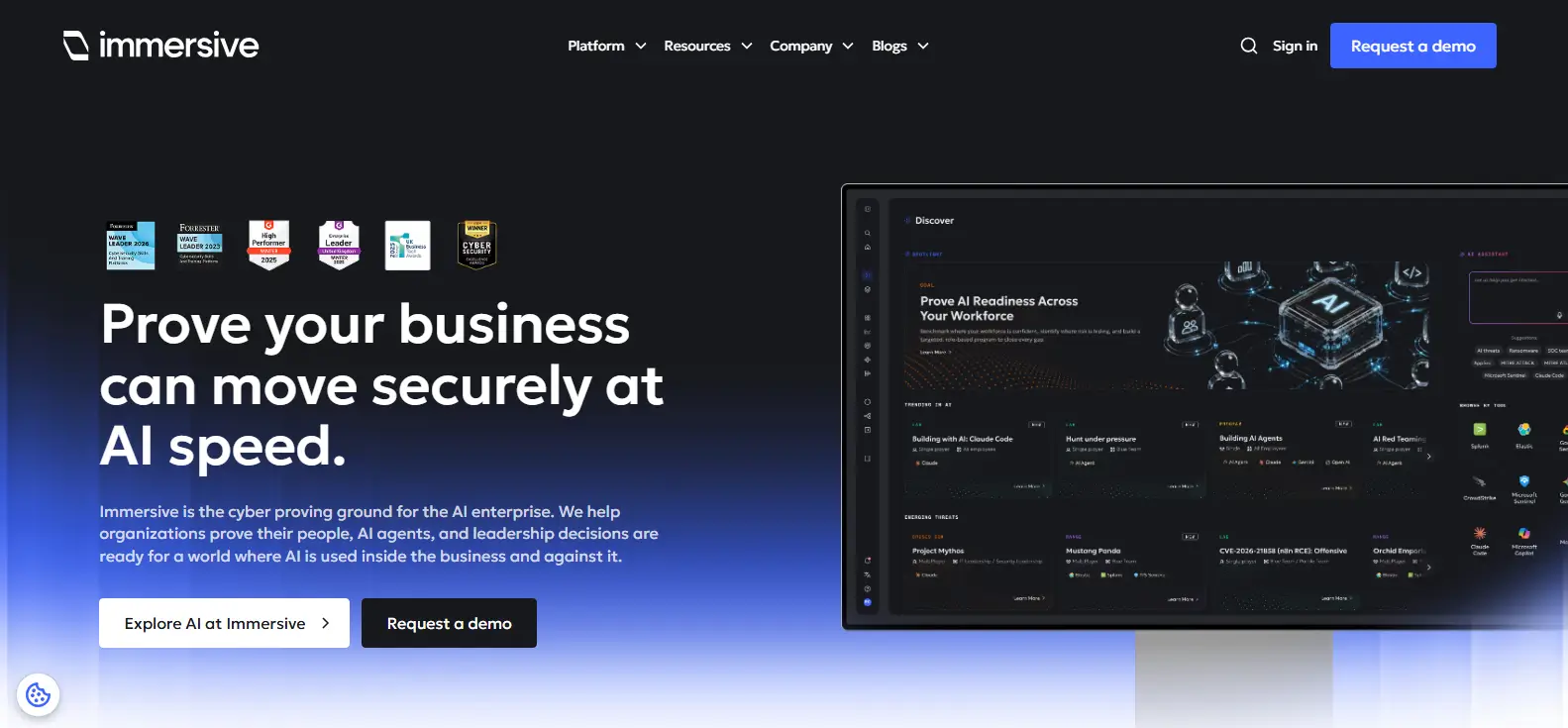
Immersive approaches cybersecurity training as an ongoing process, combining gamified exercises with continuous learning and skills benchmarking. This matters because 92% of organizations report cybersecurity skills gaps, making it difficult to rely on occasional training alone. Regular assessment can help you identify weaknesses, track improvement, and understand where additional development is needed.
The platform focuses on practical skill development while giving organizations ways to assess individual and team capabilities. Its approach can support security readiness across different skill levels, making training more measurable and easier to align with organizational goals.
Highlights
- Gamified Cybersecurity Training: Make practical security exercises more engaging.
- Continuous Skills Benchmarking: Track capabilities and progress over time.
- Personalized Assessment: Identify individual areas that require further development.
- Skill Development: Strengthen practical cybersecurity capabilities through ongoing training.
- Hands-On Exercises: Reinforce knowledge through practical activities.
- Security Readiness: Help teams evaluate their preparedness for security responsibilities.
- Team Assessment: Measure capabilities across cybersecurity teams.
- Continuous Learning: Support regular training instead of one-time development.
- Skills Gap Identification: Highlight areas where additional training may be needed.
- Multiple Skill Levels: Support learners with different levels of cybersecurity experience.
- Organizational Benchmarking: Provide a broader view of skills across the organization.
Best For:
Organizations seeking continuous skills assessment alongside practical cybersecurity training.
Limitations:
Its gamified skills-development model differs from traditional high-fidelity cyber ranges built around replicated networks and complex simulations.
Pricing:
Immersive uses custom enterprise pricing based on organizational training and assessment requirements.
How Should You Choose the Right SANS Cyber Ranges Alternative?

There is no single best cyber range for every organization. Your choice should follow what you need to accomplish, who will use the platform, and how much realism your training requires. A useful starting point is to match the platform to your primary training objective.
Which Platform Is Best for Higher Education?
For higher education, Apporto Cybersecurity Labs stands out when accessible, scalable virtual labs are the priority. Browser-based access can simplify administration while giving students hands-on cybersecurity education without relying heavily on traditional lab infrastructure.
Which Platform Is Best for SOC and Blue Team Training?
RangeForce is well suited to continuous SOC development, with an emphasis on skills gap mapping, threat hunting, team training, and defensive readiness. CyberDefenders takes a more investigation-focused route, making it useful for digital forensics, incident response, and blue team skills.
Which Platform Is Best for Advanced Cyber Defense Simulations?
Cyberbit is the stronger fit when you need high-fidelity environments, replicated networks, realistic threats, and coordinated team exercises. Its approach is designed for organizations assessing operational readiness during complex cyber defense scenarios.
Which Platform Is Best for Technical Cybersecurity Practice?
Hack The Box is a practical choice for hands-on technical exercises spanning offensive and defensive security. Its challenge-based approach supports skill development across different experience levels.
Which Platform Is Best for Continuous Skills Benchmarking?
Immersive is suited to organizations that want ongoing assessment alongside cybersecurity training, using skills benchmarking to identify gaps and measure team capabilities over time.
What Should You Consider Before Making a Final Decision?
- Training objectives
- Team size
- Skill levels
- Budget
- Cloud delivery
- Accessibility
- Realism
- Security requirements
- Data sovereignty
- Reporting
- LMS integration
- Continuous learning
- Operational readiness
Frequently Asked Questions (FAQs)
1. What are the best SANS Cyber Ranges alternatives?
The best alternative depends on your training goals. Apporto suits scalable virtual labs, RangeForce supports continuous SOC development, Hack The Box focuses on technical skills, CyberDefenders on DFIR, Cyberbit on high-fidelity simulations, and Immersive on continuous skills benchmarking.
2. What is a cyber range used for?
A cyber range provides a controlled environment for cybersecurity training, testing, and research. You can use it to practice cyber defense, incident response, threat hunting, and other hands-on exercises without exposing production systems to real cyber threats.
3. How do cyber ranges simulate real-world cyber threats?
Cyber ranges recreate realistic security conditions using virtual environments, replicated networks, real systems, security tools, and simulated attacks. These controlled environments allow teams to practice responding to threats and complete realistic exercises without placing live production infrastructure at risk.
4. Are SANS Cyber Ranges available 24/7?
Yes. SANS Cyber Ranges provide 24/7 access, allowing learners and cybersecurity professionals to complete self-paced, hands-on training when it suits their schedules. This accessibility can support continuous learning without restricting practice to fixed classroom or instructor-led sessions.
5. What is the difference between a cyber range and a traditional lab?
A traditional lab often relies on physical equipment or fixed systems, while a cyber range typically provides simulated or replicated environments designed for cybersecurity exercises. Cyber ranges can offer greater scalability, isolation, realism, and flexibility for team-based training.
6. Which SANS Cyber Ranges alternative is best for blue team training?
RangeForce and CyberDefenders are strong options for blue team training, but they emphasize different capabilities. RangeForce focuses on continuous team development and operational readiness, while CyberDefenders places greater emphasis on threat hunting, digital forensics, and incident response investigations.
7. Which cyber range is best for threat hunting and digital forensics?
CyberDefenders is particularly suited to threat hunting and digital forensics because its training emphasizes investigation-focused exercises. You can analyze evidence, uncover key clues, investigate security incidents, and develop practical defensive skills through hands-on DFIR training.
8. Which platform is best for enterprise cyber defense exercises?
Cyberbit is well suited to enterprise cyber defense exercises that require high-fidelity environments and coordinated team training. Its hyper-realistic simulations, replicated networks, security tools, and realistic threats can help organizations assess incident response, decision-making, and operational readiness.
9. Are cyber ranges suitable for higher education?
Yes. Cyber ranges can provide higher education institutions with scalable environments for hands-on cybersecurity education. Browser-based and virtual platforms can simplify access and administration while allowing students to practice security concepts without requiring extensive physical lab infrastructure.
10. What is Range as a Service?
Range as a Service is a delivery model in which cyber range environments are provided through a managed service rather than requiring an organization to build and maintain the complete infrastructure itself. This approach can simplify deployment, scalability, and ongoing access.
11. Can cyber ranges help identify cybersecurity skills gaps?
Yes. Cyber ranges can reveal gaps by assessing how individuals or teams perform during practical exercises. Platforms with personalized assessment, benchmarking, or skills gap mapping can help organizations identify weaknesses and direct continuous learning toward areas requiring further development.
12. Can cyber ranges be used for testing and research as well as training?
Yes. Cyber ranges can support training, testing, and research within controlled environments. Organizations can evaluate security controls, study cyber threats, test defensive approaches, and conduct experiments without exposing live production systems or critical infrastructure environments to unnecessary risk.
