
What Are the Best Cyberbit Alternatives?
Apporto Cybersecurity Labs is the best Cyberbit alternative for organizations prioritizing scalable, hands-on cybersecurity training. Its browser-based virtual labs provide secure, isolated environments for practical exercises without requiring extensive physical infrastructure. With centralized management, flexible cloud delivery, and remote accessibility, Apporto simplifies cybersecurity training for educational institutions and enterprises.
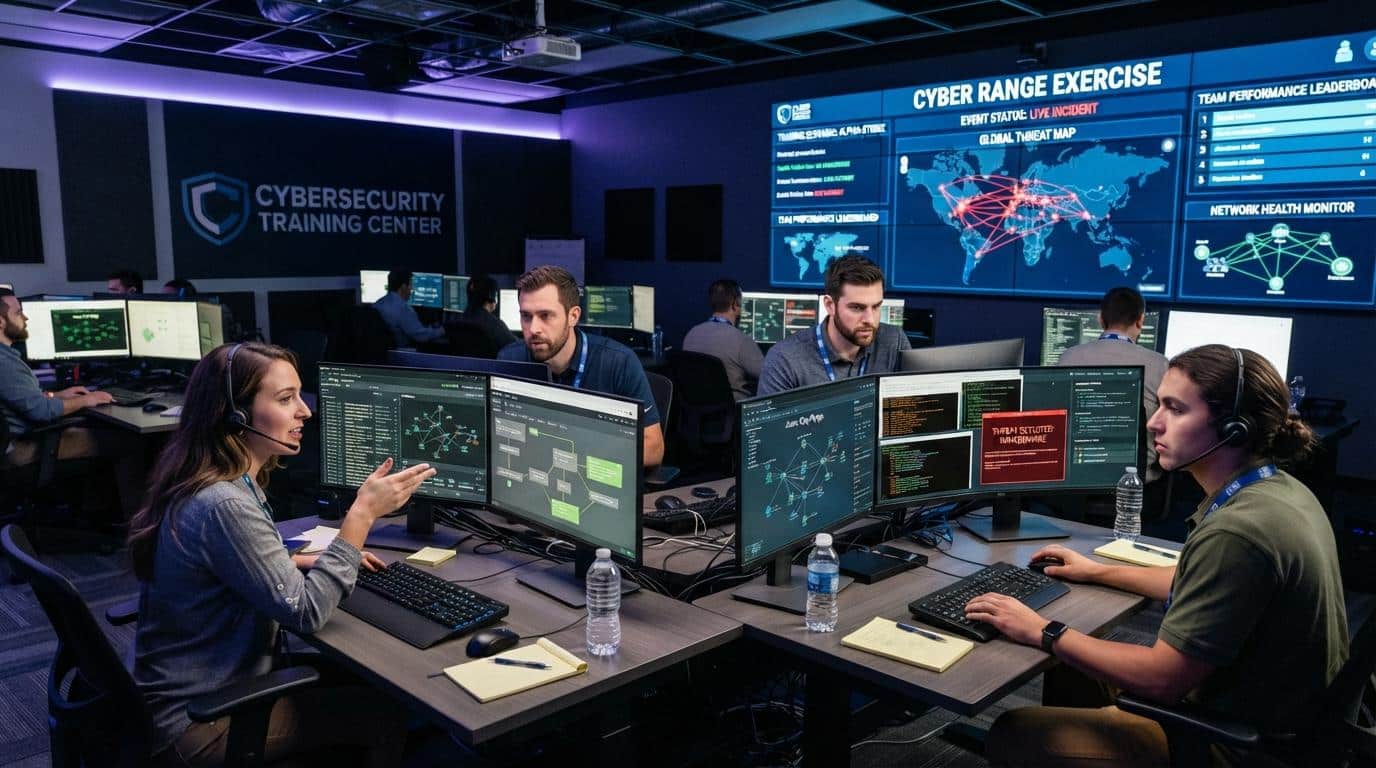
Cybersecurity teams need more than theory when the goal is real operational readiness. Cyberbit addresses that need through a cyber range and skill development platform built around immersive training, SOC team exercises, cyber readiness, and crisis simulation. Its approach gives teams a controlled environment to practice incident response and strengthen practical cybersecurity skills.
Still, Cyberbit may not be the ideal fit for every organization. Your training objectives, required cyber range depth, cloud delivery preferences, scenario customization, skills assessment needs, and budget can all influence the decision. That is why cyberbit alternatives are worth evaluating.
Different platforms solve different training challenges, from realistic cyber drills and team readiness to continuous skills development and hands-on technical practice. In this guide, you’ll compare seven alternatives to Cyberbit and see where each platform fits best.
How Were These Cyberbit Alternatives Evaluated?

The comparison focuses on practical training capabilities rather than simply counting courses or products. A strong cyberbit alternative should help your organization build usable cybersecurity skills, test team response, and identify areas that need improvement.
The evaluation therefore considers the depth of hands-on environments, realism of cyber exercises, SOC preparation, measurement capabilities, and flexibility across different training needs.
How Realistic Are the Cyber Range Simulations?
Realism matters when training needs to prepare teams for conditions that resemble actual security operations. The comparison considers whether a platform provides high-fidelity environments, realistic cyber threats, and deep-scale emulation of enterprise technology stacks.
Platforms that can replicate specific organizational infrastructure can give teams more relevant practice than generic lab environments, particularly when exercises involve complex systems, multiple attack paths, or coordinated defensive activity.
How Well Do Platforms Prepare SOC Teams?
SOC readiness depends on more than completing technical exercises. The platforms are evaluated for their ability to support threat detection, incident response, cyber defense, cyber drills, and crisis simulation. Team exercises are particularly important because security operations require analysts to coordinate under pressure, investigate threats, communicate findings, and respond to incidents as a group.
Can You Measure Cybersecurity Skills and Improvement?
Skills development is easier to manage when performance can be measured over time. The comparison looks at performance measurement, skills tracking, continuous assessment, and gap analysis, along with tools that support personalized development. These capabilities help organizations understand current cybersecurity skills, identify weaknesses, track improvement, and assess broader organizational readiness.
How Flexible Are the Training Environments?
Training requirements vary considerably between individuals, instructors, SOC teams, and large enterprises. Each platform is considered for its ability to support:
- Cloud deployment and accessible training environments
- Scenario customization for different threats and objectives
- Enterprise infrastructure replication
- Team-based exercises and individual training
- Self-paced and instructor-led learning
- Realistic cyber drills and crisis exercises
- Offensive and defensive cybersecurity training
- Continuous skills assessment and performance tracking
- Skills gap analysis for targeted development
Which Cyberbit Alternatives Compare Best at a Glance?
The seven platforms below approach cybersecurity training from different angles. Some emphasize realistic cyber range exercises and enterprise readiness, while others focus more heavily on hands-on technical skills, defensive investigations, or continuous assessment.
This makes the right choice dependent on the type of cybersecurity skills your teams need to develop and how closely the training should mirror your operational environment.
| Platform | Best For | Cyber Range Approach | Training Focus | Key Strength | Pricing |
|---|---|---|---|---|---|
| Apporto Cybersecurity Labs | Scalable virtual cybersecurity training | Cloud/virtual | Hands-on cybersecurity skills | Accessible virtual labs | Custom |
| SimSpace | Enterprise cyber range simulations | High-fidelity | Cyber defense and team readiness | Customizable enterprise scenarios | Custom |
| Hack The Box | Offensive and defensive skills | Gamified labs | Technical cybersecurity training | Large hands-on ecosystem | Varies |
| CyberDefenders | Blue team and DFIR skills | Investigation-focused labs | Threat hunting and incident response | Practical defensive exercises | Varies |
| Immersive Labs | Continuous skills development | Interactive labs | Assessment and benchmarking | Skills measurement | Custom |
| CybExer Technologies | Cyber drills and organizational readiness | Cyber range | Defensive training and exercises | Realistic cyber exercises | Custom |
| INE | Technical cybersecurity learning | Virtual labs | Skills and certification training | Broad technical content | Varies |
For organizations seeking a close substitute for Cyberbit’s immersive approach, SimSpace and CybExer Technologies stand out for cyber range exercises and team readiness. Immersive Labs is better suited to continuous skills measurement, while Hack The Box, CyberDefenders, and INE offer strong options for individual technical development. Apporto Cybersecurity Labs is particularly useful when scalable virtual lab delivery is a priority.
Follow the table with a short explanation that Cyberbit remains strong for SOC team training and crisis simulation, while alternatives may offer better specialization, accessibility, technical depth, or skills benchmarking.
Best Cyberbit Alternatives (A Complete Overview)
1. Apporto Cybersecurity Labs (A Good Cyberbit Alternative for Scalable Cybersecurity Training)
Overview
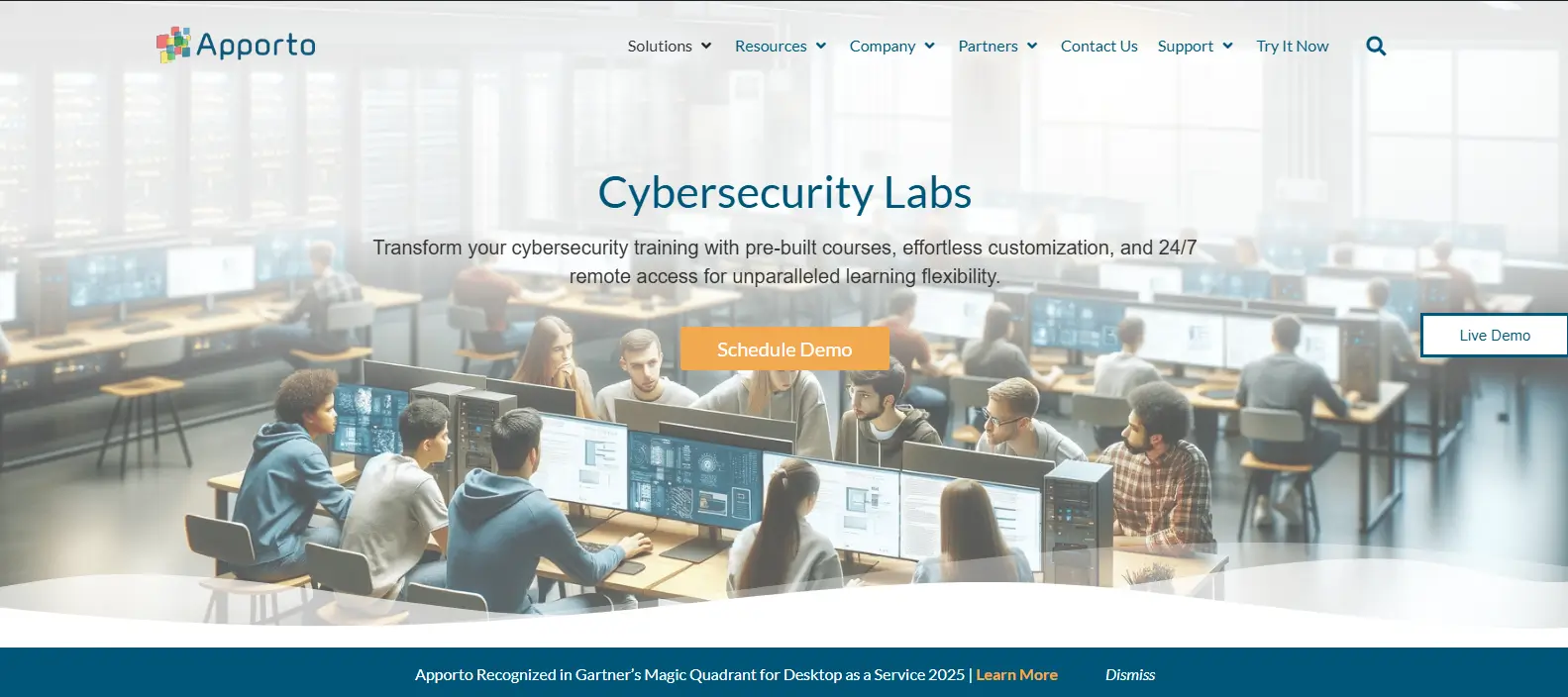
Apporto Cybersecurity Labs is a practical Cyberbit alternative for organizations seeking accessible, hands-on cybersecurity training. Its browser-based virtual cybersecurity lab environments provide dedicated spaces for practical exercises without requiring extensive physical lab infrastructure, making training easier to deliver across locations.
Cloud and virtual delivery can simplify deployment. Organizations can provide isolated environments for learners while managing those environments centrally. This approach can support larger training groups without maintaining a separate physical workstation for every participant.
Apporto can serve both higher education and enterprise training programs. Its focus on accessible virtual environments makes it useful when the goal is to develop cybersecurity skills through practical exercises while keeping infrastructure requirements manageable. For a direct comparison of lab delivery, scalability, and cyber range capabilities, explore Cyberbit Vs Apporto Cybersecurity Labs
Highlights
- Browser-based access: Training environments are accessible through a browser.
- Virtual cybersecurity labs: Provides dedicated environments for practical learning.
- Hands-on training: Learners can practice cybersecurity skills directly.
- Isolated environments: Keeps training activities separated.
- Scalable access: Supports larger groups without equivalent physical lab expansion.
- Centralized management: Helps administrators manage virtual environments.
- Cloud delivery: Reduces dependence on locally maintained infrastructure.
- Higher education: Supports structured cybersecurity education.
- Enterprise training: Accommodates organizational skills development.
- Simplified infrastructure management: Reduces the burden of maintaining physical labs.
Best For:
Organizations seeking scalable virtual cybersecurity training and accessible hands-on labs.
Limitations:
Organizations needing specialized, high-fidelity crisis simulations may require a dedicated cyber range platform.
Pricing:
Custom pricing based on organizational training and deployment requirements.
2. SimSpace (A Strong Cyberbit Alternative for High-Fidelity Enterprise Cyber Ranges)

Overview
SimSpace is one of the closest Cyberbit alternatives for organizations prioritizing realistic, enterprise-scale cyber range simulations. Its high-fidelity environments can emulate complex enterprise technology stacks, giving security teams a controlled setting to practice cyber defense, threat detection, and incident response.
Its enterprise focus is valuable when training should reflect an organization’s infrastructure instead of a simplified lab. Organizational infrastructure replication can make cyber drills more relevant, while realistic team exercises help security operations personnel practice coordinated responses. Customizable scenarios also allow training to address specific threats, objectives, and operational requirements. For organizations comparing other enterprise cyber range platforms, explore SimSpace alternatives.
Highlights
- High-fidelity cyber range simulations: Supports realistic cybersecurity exercises.
- Enterprise environments: Designed for complex organizational training needs.
- Deep-scale emulation: Recreates extensive enterprise technology stacks.
- Customizable scenarios: Adapts exercises to different threats and objectives.
- Cyber defense: Builds practical defensive capabilities.
- Cyber drills: Tests team response under realistic conditions.
- Team exercises: Supports coordinated security training.
- Threat detection: Helps analysts practice identifying simulated threats.
- Incident response: Develops practical response capabilities.
- Organizational infrastructure replication: Reflects relevant enterprise environments.
- Security operations training: Supports SOC readiness and team development.
Best For:
Enterprises and security teams requiring realistic, customizable cyber range exercises.
Limitations:
Its enterprise depth may add complexity for organizations seeking simpler training, and navigation may require consideration.
Pricing:
Custom enterprise pricing based on training requirements and deployment scope.
3. Hack The Box (Best Alternative Of Cyberbit for Hands-On Cybersecurity Training)
Overview
Hack The Box takes a challenge-driven approach to cybersecurity training, making it a strong Cyberbit alternative for hands-on skills development. Its gamified ecosystem combines practical labs, technical challenges, and CTF exercises, giving learners repeated opportunities to apply security concepts.
Cyberbit emphasizes immersive SOC training, cyber readiness, and crisis simulation, while Hack The Box places greater emphasis on technical capability. Its content covers offensive and defensive security, allowing learners and teams to develop practical skills through direct exercises.
The platform supports multiple skill levels, from foundational learning to advanced security techniques. Threat hunting and defensive activities can broaden practical development, while team training supports collaborative learning. The supplied user rating for Hack The Box is 4.5 out of 5.
Highlights
- Gamified cybersecurity training: Makes practical learning engaging.
- Hands-on technical labs: Provides environments for direct practice.
- Offensive security: Strong coverage of attack techniques.
- Defensive security: Supports defensive skills and investigation.
- Cybersecurity skills: Builds practical technical capabilities.
- Practical challenges: Reinforces concepts through problem-solving.
- CTF exercises: Adds competitive, challenge-based learning.
- Threat hunting: Develops defensive investigation skills.
- Skill development: Supports ongoing technical improvement.
- Multiple skill levels: Accommodates different experience levels.
- Team training: Supports collaborative cybersecurity development.
Best For:
Technical cybersecurity professionals, learners, and teams developing offensive and defensive skills.
Limitations:
Organizations prioritizing deep SOC simulation and enterprise crisis exercises may find less depth than Cyberbit.
Pricing:
Pricing varies by product and access level.
4. CyberDefenders (Replace Cyberbit for Blue Team and DFIR Training)
Overview
CyberDefenders is a Cyberbit alternative for defensive cybersecurity, digital forensics, threat hunting, and incident response. It uses investigation-based exercises that require learners to examine evidence, uncover clues, and understand incidents.
This approach builds practical defensive skills through repeated analysis and problem-solving. Learners work with real-world evidence and investigation challenges, developing the judgment needed to identify suspicious activity, investigate incidents, and support response efforts. DFIR training can complement cyber range exercises by strengthening the investigative skills teams need after a threat is detected.
Highlights
- Blue team exercises: Builds practical defensive capabilities.
- Threat hunting: Develops skills for finding suspicious activity.
- Digital forensics: Teaches evidence analysis.
- Incident response: Practices investigating security incidents.
- Cyber investigation: Builds investigative skills.
- Real-world evidence: Supports evidence-based learning.
- Hands-on exercises: Reinforces skills through practice.
- Investigation challenges: Requires learners to analyze clues.
- DFIR training: Develops forensics and response skills.
- Defensive cybersecurity: Focuses on blue team capabilities.
- Practical skill development: Strengthens investigation abilities.
DFIR NetWars Continuous provides investigation-focused practice. It can complement cyber range exercises by giving teams deeper experience with analysis and response after threat detection.
Best For:
Blue team professionals, threat hunters, incident responders, and DFIR learners.
Limitations:
Its defensive investigation specialization makes it less suited to broad enterprise crisis simulation.
Pricing:
Pricing varies by access level and training offering.
5. Immersive Labs (Support Continuous Cybersecurity Skills Development)
Overview
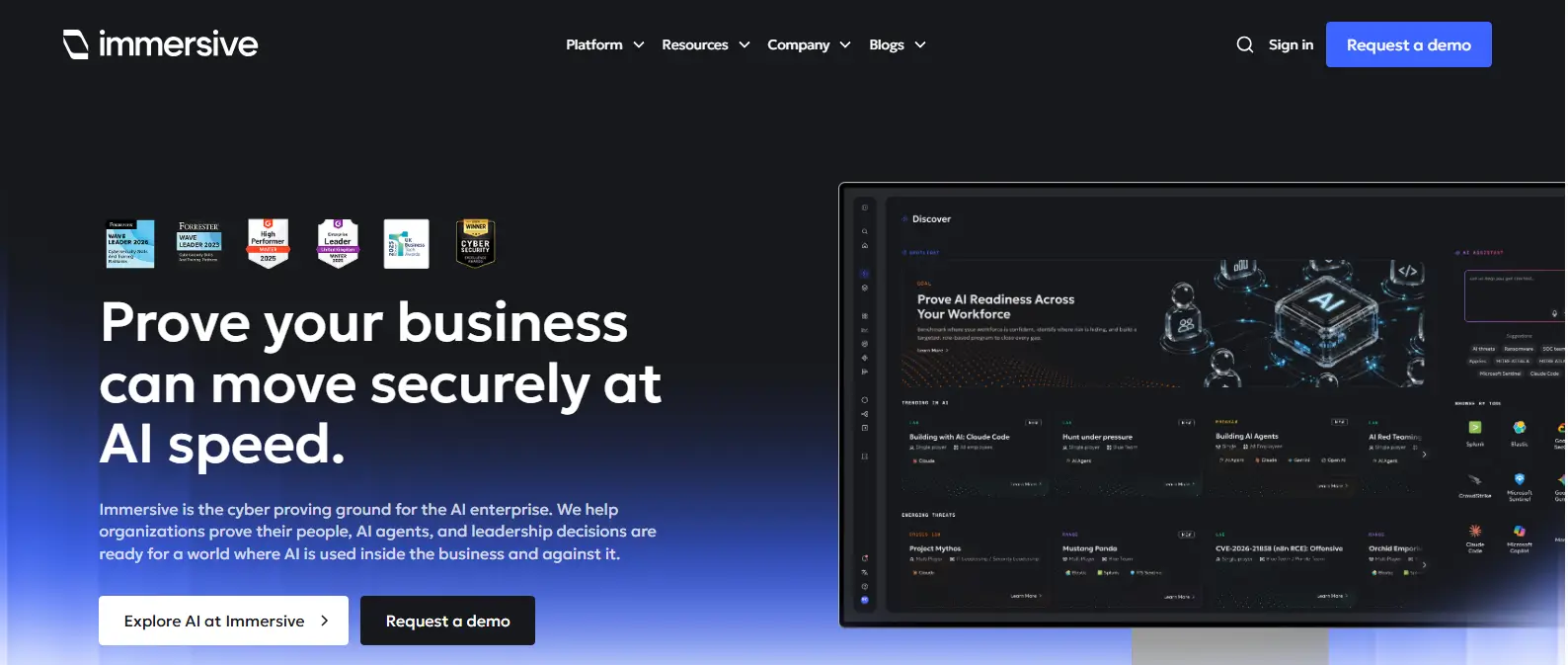
Immersive Labs approaches cybersecurity training as a continuous skills development program rather than a direct replica of a traditional high-fidelity cyber range. Founded in 2017 in England, the platform emphasizes engaging labs, continuous learning, and measurable skills improvement.
Its model helps organizations assess what individuals and teams can do, identify weaknesses, and track progress over time. Skills benchmarking and personalized assessment can give security leaders a clearer view of current capabilities, while skills gap analysis helps identify areas that need targeted development. This makes the platform useful for organizations treating cybersecurity readiness as an ongoing process rather than a one-time training event.
Unlike traditional cyber ranges that may focus on replicating complex enterprise infrastructure, Immersive Labs emphasizes interactive exercises and assessment. That distinction can make it particularly useful for continuous workforce development and organizational benchmarking.
Highlights
- Gamified cybersecurity training: Makes skills development more engaging.
- Continuous skills assessment: Tracks capabilities over time.
- Skills benchmarking: Helps compare performance against defined standards.
- Personalized assessment: Supports individual development needs.
- Skills gap analysis: Identifies areas requiring improvement.
- Hands-on exercises: Reinforces cybersecurity skills through practice.
- Team assessment: Evaluates capabilities across security teams.
- Multiple skill levels: Supports varied experience levels.
- Continuous learning: Encourages ongoing development.
- Organizational benchmarking: Provides broader readiness insights.
- Security readiness: Helps organizations understand workforce capabilities.
Best For:
Organizations focused on continuous skills development and organizational cybersecurity assessment.
Limitations:
It may not provide the same deep enterprise infrastructure replication associated with high-fidelity cyber ranges.
Pricing:
Custom enterprise pricing based on organizational requirements.
6. CybExer Technologies (A Strong Cyberbit Alternative for Cyber Drills and Readiness)
Overview
CybExer Technologies is a strong Cyberbit alternative for organizations that prioritize cyber range exercises, realistic cyber drills, and organizational readiness. Founded in 2016 in Estonia, the company focuses on practical security training that helps teams develop cybersecurity skills through structured exercises and simulated incidents.
Realistic simulations give security teams a controlled environment for practicing cyber defense and incident response without exposing production environments. Teams can work through simulated threats, make decisions under pressure, coordinate responses, and identify areas where their processes or cybersecurity skills need improvement. This makes cyber drills useful for testing both individual capabilities and broader team readiness.
The approach can serve government organizations and enterprises that need repeatable exercises to evaluate preparedness. Rather than limiting training to individual technical tasks, structured exercises can bring multiple security functions together and provide a more complete view of organizational readiness.
Highlights
- Cyber range exercises: Provides controlled environments for practical security training.
- Cyber drills: Tests team response to simulated threats.
- Realistic simulations: Creates practical conditions for readiness exercises.
- Team readiness: Helps teams practice coordinated responses.
- Cyber defense: Develops defensive capabilities through exercises.
- Incident response: Supports practice with simulated incidents.
- Security training: Reinforces practical cybersecurity skills.
- Organizational readiness: Helps evaluate broader preparedness.
- Government training: Supports structured exercises for public-sector teams.
- Enterprise exercises: Accommodates organizational security requirements.
- Skills development: Strengthens capabilities through repeated practice.
Best For:
Government organizations, enterprises, and security teams requiring structured cyber exercises and readiness testing.
Limitations:
Organizations seeking individual technical labs or certification-focused learning may prefer platforms with broader learner ecosystems.
Pricing:
Custom pricing based on exercise requirements and organizational deployment.
7. INE (Worth Considering as a Cyberbit Alternative for Technical Cybersecurity Skills)
Overview
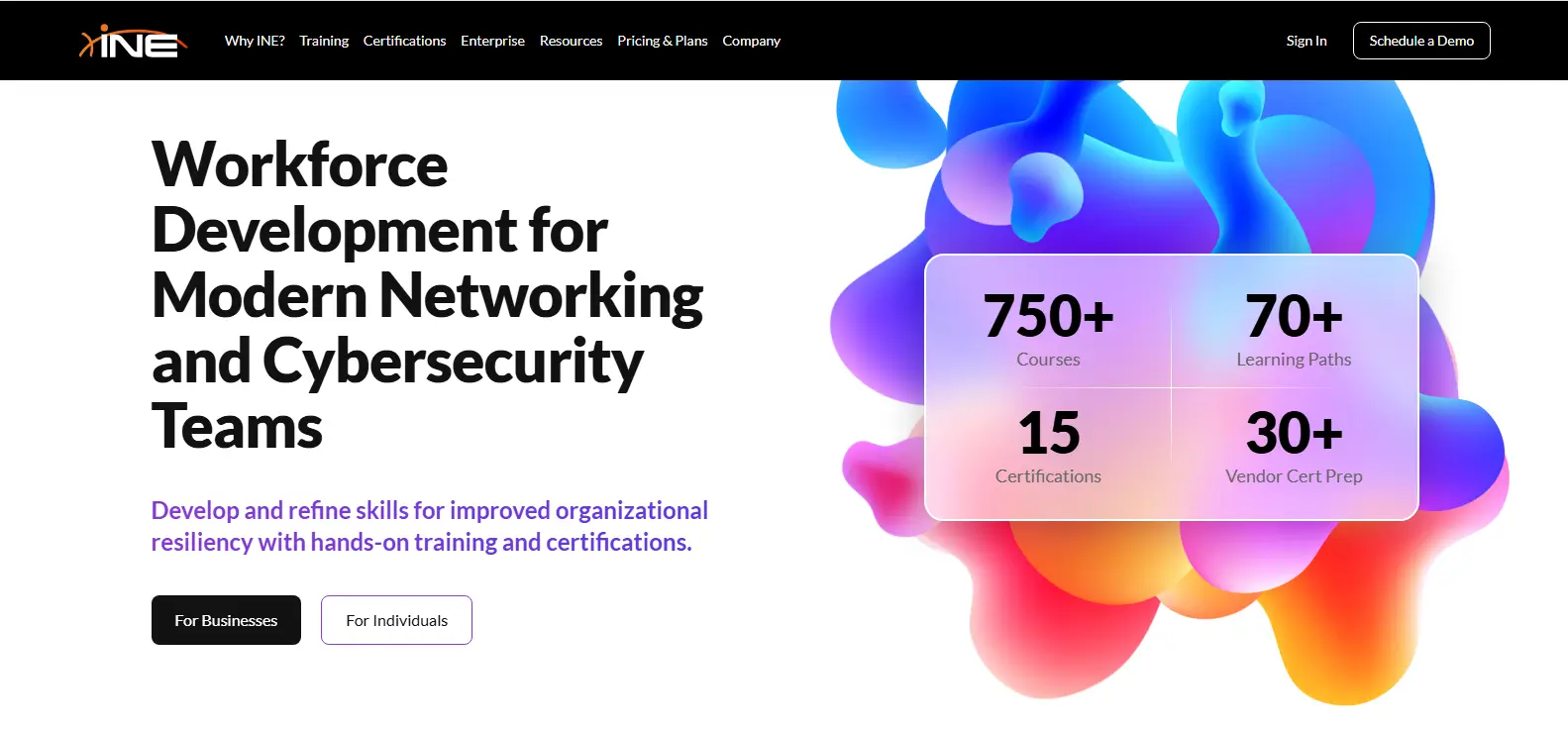
INE is worth considering as a Cyberbit alternative when your priority is technical cybersecurity education and individual skill development. Its training model combines hands-on labs, practical exercises, and virtual labs to help learners build cybersecurity skills through practical, hands-on practice for learners and professionals.
The platform differs from Cyberbit’s SOC-centered cyber range model. Cyberbit emphasizes team readiness, immersive exercises, and crisis simulation, while INE focuses on individual technical capabilities across cybersecurity. This makes it useful for learners and professionals seeking structured training and technical practice.
INE can support certification preparation, linking practical exercises with professional development. Self-paced learning lets users progress according to their experience and skill level.
Highlights
- Technical cybersecurity training: Builds knowledge across security disciplines.
- Hands-on labs: Provides practical training environments.
- Practical exercises: Reinforces concepts through application.
- Cybersecurity skills: Builds technical capabilities.
- Skill development: Supports improvement.
- Certification preparation: Supports certification preparation.
- Security training: Covers practical security concepts.
- Virtual environments: Enables controlled technical practice.
- Technical challenges: Supports security knowledge application.
- Self-paced learning: Lets learners progress independently.
- Different skill levels: Supports varied experience levels.
Best For:
Cybersecurity learners and professionals seeking technical training and practical skill development.
Limitations:
It may not provide the same depth of enterprise cyber range simulation or coordinated SOC crisis exercises as Cyberbit.
Pricing:
Subscription-based options vary according to the selected training package.
How Should You Decide Which Cyberbit Alternative Fits Your Organization?

The best Cyberbit alternative depends on what you need to improve. Start with your training objectives, then consider team size, skill levels, budget, cyber range depth, delivery model, and reporting requirements.
Which Platform Is Best for High-Fidelity Enterprise Simulations?
SimSpace and CybExer Technologies are strong choices when realistic enterprise simulations are the priority. SimSpace emphasizes high-fidelity environments and enterprise technology emulation, while CybExer focuses on realistic cyber drills, team exercises, and organizational readiness.
Which Platform Is Best for SOC Team Training?
For SOC development, consider the capabilities emphasized by Cyberbit, alongside CyberDefenders and Immersive Labs. RangeForce is another market competitor known for continuous SOC skills assessment, but it is not one of the seven platforms reviewed here. CyberDefenders is stronger for investigation and incident response, while Immersive Labs emphasizes assessment and benchmarking.
Which Platform Is Best for Offensive and Defensive Skills?
Hack The Box stands out for its broad technical ecosystem, gamified training, practical challenges, and coverage of both offensive and defensive security.
Which Platform Is Best for Blue Team and DFIR Training?
CyberDefenders is the stronger fit for blue team, threat hunting, digital forensics, and incident response training through investigation-focused exercises.
Which Platform Is Best for Continuous Skills Benchmarking?
Immersive Labs is well suited to continuous skills assessment, benchmarking, gap analysis, and organizational readiness.
Which Platform Is Best for Accessible Virtual Labs?
Apporto Cybersecurity Labs fits organizations seeking browser-based, scalable virtual labs with simplified infrastructure management.
What Should You Check Before Choosing?
Review these factors before committing:
- Training objectives and team size
- Skill levels and budget
- Cyber range depth and realism
- Cloud deployment and accessibility
- Scenario customization and security requirements
- Reporting, skills tracking, and LMS integration
- Continuous learning and team readiness
- Overall operational readiness
Which Cyberbit Alternative Is the Best Overall Choice?
There is no single best Cyberbit alternative for every organization. The right platform depends on what you want your cybersecurity training program to accomplish.
Apporto Cybersecurity Labs fits scalable virtual labs and accessible hands-on training. SimSpace is better suited to high-fidelity enterprise cyber range simulations, while Hack The Box supports offensive and defensive technical training. CyberDefenders focuses on blue team, threat hunting, and DFIR skills. Immersive Labs emphasizes continuous skills assessment and benchmarking, while CybExer Technologies specializes in cyber drills, readiness, and realistic exercises. INE provides technical cybersecurity learning and hands-on skill development.
Your decision should ultimately reflect your required simulation depth, training audience, skills goals, deployment model, and budget. If scalable virtual cybersecurity labs and accessible hands-on training are priorities, explore Apporto Cybersecurity Labs as a practical option for your organization.
Frequently Asked Questions (FAQs)
1. What are the best Cyberbit alternatives?
The strongest alternatives include Apporto Cybersecurity Labs, SimSpace, Hack The Box, CyberDefenders, Immersive Labs, CybExer Technologies, and INE. Each addresses different needs, including virtual labs, enterprise cyber ranges, technical training, DFIR, skills assessment, and cyber readiness.
2. What is the best Cyberbit alternative for SOC training?
Cyberbit remains strongly focused on SOC team readiness and crisis simulation. Among alternatives, SimSpace supports enterprise cyber defense exercises, while Immersive Labs emphasizes skills assessment and CyberDefenders provides focused incident response and defensive investigation training.
3. Which Cyberbit alternative offers the most realistic cyber range?
SimSpace is a leading choice for high-fidelity cyber range training. Its approach emphasizes deep-scale emulation, enterprise technology stacks, customizable scenarios, and replicated organizational infrastructure for realistic cybersecurity exercises.
4. Is SimSpace better than Cyberbit for enterprise cyber range training?
SimSpace can be a strong alternative when enterprise-scale simulation and scenario customization are priorities. Cyberbit has a strong SOC training and crisis simulation focus, so the better option depends on your training objectives and required realism.
5. Is Hack The Box a good Cyberbit alternative?
Hack The Box is well suited to hands-on offensive and defensive cybersecurity training. Its gamified labs, technical challenges, and CTF exercises provide strong individual skill development, although it generally offers less depth for SOC crisis simulation.
6. Which platform is best for blue team training?
CyberDefenders is particularly suited to blue team training. Its investigation-based exercises cover threat hunting, digital forensics, incident response, and defensive cybersecurity, helping learners develop practical investigation and response capabilities.
7. Which Cyberbit alternative is best for threat hunting?
CyberDefenders is a strong choice for threat hunting because its training centers on investigation, evidence analysis, and defensive security. Hack The Box also provides threat-hunting and defensive exercises within its broader technical training ecosystem.
8. Can Cyberbit alternatives support incident response training?
Yes. Platforms such as SimSpace, CyberDefenders, and CybExer Technologies support incident response practice through cyber drills, investigation exercises, realistic simulations, and team-based security activities.
9. What is the difference between Cyberbit and Immersive Labs?
Cyberbit emphasizes immersive SOC training, cyber readiness, and crisis simulation. Immersive Labs focuses more on continuous skills assessment, benchmarking, personalized development, and organizational readiness through interactive exercises.
10. Are cyber range platforms useful for government organizations?
Yes. Cyber ranges can provide controlled environments for government teams to practice cyber defense, incident response, coordinated exercises, and readiness testing without exposing production infrastructure.
11. Can cyber ranges replicate an organization’s infrastructure?
Some cyber range platforms can replicate organizational infrastructure or emulate complex enterprise technology stacks. This allows teams to practice against environments that more closely resemble their operational systems and security requirements.
12. How do cyber range platforms measure cybersecurity skills?
Platforms can use performance measurement, skills tracking, continuous assessment, benchmarking, and gap analysis. These capabilities help organizations understand current abilities, identify weaknesses, and monitor improvement over time.
13. Are Cyberbit alternatives available through the cloud?
Yes. Cloud-based and virtual delivery models can make cybersecurity training more accessible and scalable. Apporto Cybersecurity Labs, for example, emphasizes browser-based virtual labs and centralized management.
14. What should you consider when choosing a cyber range platform?
Consider training objectives, team size, skill levels, budget, simulation depth, cloud deployment, accessibility, scenario customization, realism, reporting, skills tracking, LMS integration, and overall team and operational readiness.
15. Can cyber ranges be used for cyber drills and readiness testing?
Yes. Cyber ranges provide controlled environments where teams can practice cyber drills, threat detection, incident response, and coordinated decision-making. These exercises help organizations evaluate cybersecurity skills and improve readiness without affecting production systems.
