

RangeForce vs Apporto Cybersecurity Labs: Which Is Better for Hands-On Cybersecurity Training?
Apporto Cybersecurity Labs is the better choice for organizations seeking customizable, scalable, and accessible hands-on cybersecurity training. Its browser-based virtual labs support instructor-designed exercises without complex local installations. While RangeForce focuses on structured SOC training and live-fire simulations, Apporto offers greater flexibility, centralized management, and integration with educational workflows.
A cybersecurity course can explain how an attack works, but can learners actually respond when one occurs? That’s where hands-on training matters. Security teams, students, and organizations need practical environments to test tools, respond to threat scenarios, and build cybersecurity skills without putting real infrastructure at risk.
RangeForce and Apporto approach this need differently. RangeForce is a specialized cybersecurity training and simulation platform focused on structured learning, incident response, and live-fire exercises. Apporto provides cloud-based virtual environments where educators and organizations can create custom cybersecurity labs with browser-based access and scalable infrastructure.
In this blog post, you’ll compare RangeForce vs Apporto Cybersecurity Labs across hands-on training, cyber ranges, real-world scenarios, virtual environments, analytics, collaboration, integrations, and cost-effectiveness to find the right fit.
What Is the Difference Between RangeForce and Apporto Cybersecurity Labs?
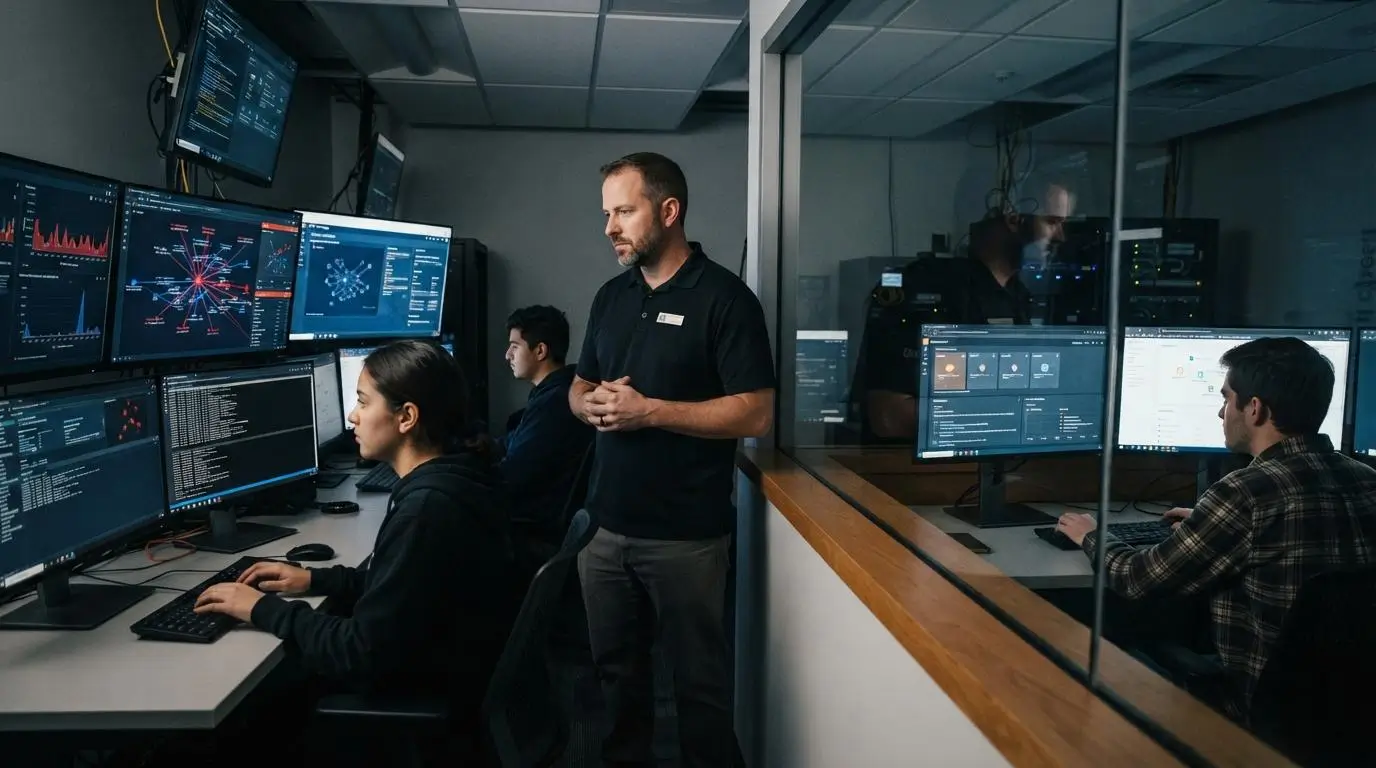
RangeForce and Apporto both help organizations create practical cybersecurity learning experiences, but their core purposes differ. RangeForce is built specifically for cybersecurity skills development, using structured training, simulated threats, and hands-on exercises to prepare security teams for real incidents. Apporto takes a broader infrastructure approach, providing cloud-based virtual desktops that educators and organizations can configure into custom cybersecurity labs. This distinction matters when you’re evaluating the right platform for a particular training program. For additional platforms offering hands-on security training and virtual labs, explore rangeforce cybersecurity labs alternatives
| Platform | Primary Focus | Typical Environment | Main Training Use |
|---|---|---|---|
| RangeForce | Cybersecurity skills development | Cyber range and simulated threat environments | SOC, incident response, security teams |
| Apporto | Cloud virtual desktops and virtual labs | Browser-based virtual environment | Custom cybersecurity labs, education, workforce training |
How does RangeForce approach cybersecurity training?
RangeForce is a specialized cybersecurity training and simulation platform designed to develop practical cybersecurity skills. Its approach centers on structured learning, incident response, live-fire scenarios, and continuous SOC training. Users can practice responding to threat scenarios and attack scenarios in environments designed around real-world cybersecurity challenges, helping security teams strengthen technical skills and improve readiness.
How does Apporto approach cybersecurity labs?
Apporto provides cloud-based virtual desktop infrastructure that can support customized cybersecurity labs and learning environments. Instructors can build a virtual cybersecurity lab without requiring local setups, while users access it through a browser without installation. This model gives universities, educators, enterprises, and training programs a scalable way to provide virtual labs tailored to specific courses, tools, and skills development goals.
How Do RangeForce and Apporto Deliver Hands-On Cybersecurity Training?

The biggest difference becomes clearer when you look at what users actually do inside each environment. Both platforms support hands-on cybersecurity learning, but RangeForce provides a more specialized training experience, while Apporto gives instructors the infrastructure to create and deliver customized labs. That distinction can affect how you develop technical skills, practice response procedures, and prepare learners for real-world challenges.
What kind of hands-on practice does RangeForce provide?
RangeForce focuses its hands-on training on practical cybersecurity operations. Users can work through structured cybersecurity courses, live-fire scenarios, and incident response exercises designed to strengthen SOC analyst skills. These real-world scenarios give security teams opportunities to practice identifying and responding to threats in a controlled environment. Continuous training also helps teams build familiarity with cybersecurity tools and procedures over time, supporting stronger team readiness rather than relying only on occasional exercises.
What kind of hands-on practice can you build with Apporto?
Apporto takes a customizable approach to hands-on practice. Instructors can create cybersecurity labs using virtual machines, applications, and security tools that fit specific learning objectives. Users access these environments through a browser, without requiring local installations, making deployment easier across different groups. This flexibility can support students, educators, and workforce users who need practical experience with particular technologies. Because instructors control the learning environment, labs can be adapted for different courses, technical skills, and training requirements.
Which platform offers more flexibility for hands-on learning?
The better choice depends on what you mean by flexibility:
- Ready-made cybersecurity training: RangeForce offers a specialized training experience, while Apporto provides the environment for building custom exercises.
- Specialized exercises: RangeForce is focused on cybersecurity scenarios and operational skills.
- Instructor-designed labs: Apporto gives educators greater control over lab environments, applications, and tools.
- Individual practice: RangeForce supports structured exercises that users can complete as part of cybersecurity training.
- Collaborative learning: Apporto can support instructor and student collaboration within shared virtual environments.
- Learning environments: RangeForce is purpose-built for cybersecurity training, while Apporto offers broader virtual infrastructure that can be tailored to specific needs.
For specialized cybersecurity practice, RangeForce has the clearer focus. For organizations that need to build their own hands-on labs, Apporto offers greater environmental flexibility.
Which Platform Is Better for Cyber Ranges and Real-World Threat Scenarios?

A hands-on lab becomes far more valuable when it reflects the pressure and complexity of a real security incident. Cyber ranges provide a controlled place to practice against simulated threats, test response skills, and learn from mistakes without exposing production systems.
RangeForce and Apporto can support this type of practical learning, but their approaches remain distinct. RangeForce is designed around cybersecurity simulations and operational training, while Apporto provides the virtual infrastructure needed to build customized cybersecurity labs.
How does RangeForce simulate real-world cyber threats?
RangeForce uses live-fire scenarios and threat-focused exercises to help users practice responding to realistic cybersecurity challenges. Its training can cover areas such as intrusion detection, incident response, and SOC operations, giving learners practical experience with the decisions security teams face during an incident.
Instead of simply reading about attack techniques, users can work through scenarios that test their response skills. This approach makes the cyber range a practical environment for developing cybersecurity capabilities and preparing teams to respond more effectively to real threats.
Can Apporto support cyber range and cybersecurity lab environments?
Apporto can support cyber range-style learning by providing customizable virtual environments where instructors and organizations can build cybersecurity labs. Virtual machines can host selected applications and real security tools, while isolated environments give users a controlled space for testing and hands-on practice.
Because the infrastructure is cloud-based and accessible through a browser, organizations can deploy labs without requiring users to configure local systems. These environments can also scale across students, educators, and workforce users, helping teams practice techniques without placing actual networks at risk.
RangeForce vs Apporto: Which environment is more specialized?
| Capability | RangeForce | Apporto |
|---|---|---|
| Cyber range focus | Specialized | Customizable |
| Threat scenarios | Built for cybersecurity training | Instructor-created |
| Attack scenarios | Core training use | Can be configured |
| Virtual machines | Training environment dependent | Core infrastructure capability |
| Custom labs | More structured | Highly customizable |
| Real-world practice | Strong focus | Depends on lab design |
The distinction is straightforward. RangeForce is more specialized for cybersecurity simulations and threat-based training, while Apporto offers greater control over the underlying virtual environment. If you need ready-made cybersecurity scenarios, RangeForce is the more focused option. For another comparison of specialized cybersecurity training and customizable virtual labs, explore SANS vs Apporto Cybersecurity Labs
If you need to design and deploy your own lab experiences, Apporto provides the broader infrastructure for doing so.
How Do RangeForce and Apporto Support Cybersecurity Skills Development?

Practical exercises are most valuable when they translate into skills that users can apply during real cybersecurity incidents. RangeForce and Apporto support that goal differently. RangeForce focuses on developing security operations capabilities through specialized training, while Apporto gives instructors and organizations a flexible environment for building technical labs around specific skills.
The result is two distinct approaches to skills development, one centered on structured cybersecurity training and the other on customizable practice.
Which cybersecurity skills can teams develop with RangeForce?
RangeForce is designed to strengthen the technical and operational skills security teams need in day-to-day defense. Its training can help users practice incident response, intrusion detection, SOC analyst capabilities, threat response, and security operations within controlled scenarios.
Repeated exercises also support team readiness by giving users opportunities to apply what they learn rather than relying solely on theoretical instruction. With continuous skills development built into the training approach, teams can keep practicing core cybersecurity tasks and become more prepared to respond when threats emerge.
Which skills can users develop through Apporto virtual labs?
Apporto virtual labs can be configured around the specific technical skills an instructor or organization wants users to develop. Custom environments can support application security, cybersecurity tools, network security exercises, technical labs, and incident simulations. Users can experiment with applications and technologies inside controlled virtual environments, making hands-on learning easier to incorporate into courses and workforce programs.
This flexibility also supports security awareness by allowing learners to explore cybersecurity concepts through practical exercises rather than simply studying them. The exact skills developed depend on how each lab is designed.
Why does continuous training matter for cybersecurity teams?
Cybersecurity skills can deteriorate when they aren’t practiced regularly. Continuous training gives teams repeated opportunities to work through challenges, become familiar with security tools, and improve how they communicate and collaborate during incidents.
Key benefits include:
- Stronger team capability: Repeated practice reinforces technical and operational skills.
- Faster response times: Familiarity with procedures can help teams respond more efficiently.
- Better tool familiarity: Regular exercises build confidence using security technologies.
- Greater incident readiness: Teams practice responding before facing real incidents.
- Improved communication and teamwork: Collaborative exercises strengthen coordination.
- Higher confidence: Hands-on experience reduces uncertainty during challenging scenarios.
Continuous training improves team capability more than event-driven training because cybersecurity readiness depends on skills that need regular practice, not occasional exposure.
Which Platform Provides Better Analytics, Reporting, and Team Readiness?

Hands-on training becomes more useful when organizations can understand what learners are actually accomplishing. Progress data can reveal where users perform well, where skills remain weak, and which areas need more practice. RangeForce and Apporto approach this from different angles. RangeForce centers measurement around cybersecurity training and exercises, while Apporto provides the virtual learning environment in which instructors can manage and observe practical lab activities.
What analytics does RangeForce provide for cybersecurity training?
RangeForce can help organizations evaluate training performance through practical cybersecurity exercises and their outcomes. Looking at areas such as skills development, scenario completion, and team readiness can provide a clearer picture of how effectively security teams are progressing. This information can help organizations understand capability across training activities and identify areas that may require additional attention. Rather than treating cybersecurity training as a one-time activity, organizations can use these outcomes to guide ongoing development and strengthen the practical capabilities of their security teams.
How can Apporto support reporting and learning management?
Apporto provides centralized virtual environments that can simplify the administration of practical learning programs. Instructors can manage learning environments while supporting collaboration between students and educators. This can help connect hands-on lab activities with broader educational workflows, making training administration easier across courses and programs. Its virtual infrastructure also gives organizations a consistent environment for delivering practical exercises without requiring every user to configure a local setup.
How can lab data reveal cybersecurity weaknesses?
Practical lab results can provide useful signals about where learners or teams need more development. Organizations can look for:
- Skills gaps: Areas where users struggle with specific technical tasks.
- Weak response areas: Exercises where incident handling needs improvement.
- Technical weaknesses: Problems applying tools or procedures correctly.
- Knowledge gaps: Concepts that require additional instruction.
- Practice needs: Skills that would benefit from repeated hands-on exercises.
Used consistently, this information can turn cybersecurity labs into a feedback loop for stronger team readiness.
How Do RangeForce and Apporto Compare for Collaboration and Integration?

Cybersecurity training rarely happens in isolation. Educators need workable learning environments, students need easy access, and security teams need training that fits existing organizational workflows. RangeForce and Apporto support these needs differently.
RangeForce is centered on specialized cybersecurity training, while Apporto provides a broader virtual environment that can connect practical labs with educational and collaborative workflows.
What integration capabilities does RangeForce offer?
RangeForce can fit into organizational cybersecurity training programs by giving security teams a structured environment for practical exercises and skills development. When evaluating integration capabilities, organizations should consider how the platform fits existing training workflows, cybersecurity programs, and team requirements. Specific integrations should be assessed against the organization’s current technology and deployment needs rather than assumed.
How does Apporto support instructors, students, and collaboration?
Apporto is designed to connect virtual learning environments with existing educational workflows. It supports integration with standard learning management systems and cloud storage providers, while browser-based access simplifies entry into shared environments.
Instructors and students can also collaborate through features such as screen-sharing. This combination can help teachers manage practical labs, communicate with learners, and provide hands-on experiences without requiring individual local setups.
Which platform better suits collaborative learning environments?
| Collaboration Need | RangeForce | Apporto |
|---|---|---|
| Security team training | Strong | Configurable |
| Instructor-led labs | Possible | Strong fit |
| Student collaboration | Training-focused | Supported |
| Screen-sharing | Verify by deployment | Supported |
| LMS integration | Verify specific setup | Supported |
| Custom learning environment | More structured | Strong |
For specialized security team training, RangeForce offers a focused environment. Apporto is particularly useful when teachers, educators, students, and workforce users need customizable labs, collaboration, and integration with broader learning systems.
The better choice depends on how much control an organization needs over its learning environment and existing workflows.
Which Platform Is More Cost-Effective for Organizations, Universities, and Training Programs?

Cost-effectiveness depends on more than the price of a training platform. Infrastructure requirements, deployment effort, administration, scalability, and the amount of customization you need can all influence the overall value.
RangeForce and Apporto serve different purposes, so the better financial fit depends largely on your training model. RangeForce can make sense for organizations seeking specialized cybersecurity training, while Apporto can reduce the infrastructure burden involved in delivering custom virtual labs.
When is RangeForce a cost-effective cybersecurity training solution?
RangeForce can be valuable when an organization needs structured cybersecurity training without designing every exercise from scratch. Its focus on continuous SOC development, incident-response practice, and ready-to-use cybersecurity scenarios can help security teams build practical skills through a dedicated training environment.
For organizations prioritizing specialized exercises and ongoing team readiness, that focused approach can provide meaningful value.
When can Apporto be a cost-effective virtual lab solution?
Apporto can be cost-effective when organizations need scalable virtual labs without maintaining extensive physical lab infrastructure. Browser-based access reduces the need for local setup, while centralized environments make administration easier across groups of users.
Reusable custom environments can support universities, training programs, and enterprises, allowing organizations to deliver practical learning experiences without requiring every learner to configure a separate physical workstation.
What should organizations consider before choosing?
Before choosing between the two, evaluate:
- Number of users: How many learners or security professionals need access?
- Training frequency: Do you need continuous training or occasional exercises?
- Cybersecurity tools: Which applications and tools must the environment support?
- Customization: Do you need ready-made scenarios or instructor-built labs?
- Existing infrastructure: What systems are already in place?
- Educator requirements: How much control do teachers need?
- Integration capabilities: How should the platform fit existing workflows?
- Security requirements: What isolation and access controls are necessary?
- Budget: What are the total infrastructure and administration costs?
- Scalability: How easily must the environment expand as users increase?
Which Platform Is Better for SOC Analysts and Security Teams?

SOC analysts need practical training that builds detection, response, and teamwork skills before real incidents occur. RangeForce and Apporto can support this goal, but their approaches differ. RangeForce focuses specifically on cybersecurity training, while Apporto provides flexible virtual infrastructure for custom SOC labs.
Why might RangeForce suit SOC analyst training?
RangeForce supports structured cybersecurity training, continuous SOC development, and practical security operations. Analysts can work through incident response exercises, live-fire scenarios, and threat scenarios that strengthen technical skills.
Repeated practice helps cybersecurity teams improve team readiness and become more comfortable responding to realistic challenges.
Why might Apporto suit institutional or custom SOC labs?
Apporto gives universities, educators, and organizations the flexibility to create controlled SOC environments. Instructors can configure virtual machines with selected cybersecurity tools and applications, allowing users to complete hands-on exercises based on specific learning objectives without requiring local setups.
RangeForce vs Apporto for SOC training: Which should you choose?
| SOC Training Need | Better Fit |
|---|---|
| Structured SOC training | RangeForce |
| Continuous SOC skills development | RangeForce |
| Custom virtual lab | Apporto |
| Instructor-built environment | Apporto |
| Live-fire cybersecurity scenarios | RangeForce |
| Flexible virtual infrastructure | Apporto |
RangeForce is the stronger fit for specialized SOC training and continuous readiness. Apporto is better suited to organizations that need customizable labs and flexible virtual infrastructure.
Can RangeForce and Apporto Be Used for Different Cybersecurity Training Needs?
The right platform depends on what you want your cybersecurity training program to accomplish. RangeForce is geared toward specialized security skills and operational readiness, while Apporto offers the infrastructure needed to create flexible, customized learning environments.
When should you choose RangeForce?
Choose RangeForce when your organization needs:
- Continuous cybersecurity training for security teams
- SOC analyst development focused on practical skills
- Incident response practice through realistic exercises
- Structured cybersecurity courses with guided learning
- Live-fire scenarios that challenge practical response skills
- Team readiness exercises for stronger operational preparedness
When should you choose Apporto?
Apporto may be a better fit for:
- Universities and educators delivering practical courses
- Training providers building custom learning environments
- Enterprises requiring flexible training infrastructure
- Custom cybersecurity labs designed around specific needs
- Virtual machine environments for technical exercises
- Browser-based learning without local installations
- Scalable virtual labs for growing groups of users
Can organizations use both approaches?
Yes. Specialized cybersecurity training and customizable virtual infrastructure can address different parts of the same skills-development strategy. An organization could use RangeForce for structured security training and practical threat scenarios, while Apporto could support custom labs built around specific tools, technologies, or learning objectives.
Final Thoughts
RangeForce and Apporto can both support practical cybersecurity skills development, but they serve different purposes. RangeForce is the more focused option for structured cybersecurity training, continuous SOC development, incident response, and live-fire exercises.
Apporto, on the other hand, provides flexible virtual infrastructure that educators, training providers, and enterprises can use to create customized cybersecurity labs.
The best choice depends on your users, training objectives, technical requirements, existing technology, and the level of customization you need. If ready-made cybersecurity training is the priority, RangeForce may be the better fit.
If you need scalable, browser-based environments built around your own tools and exercises, Apporto offers greater flexibility. Ready to build flexible, hands-on learning environments? Explore Apporto cybersecurity labs today.
Frequently Asked Questions (FAQs)
1. Is RangeForce a cyber range?
RangeForce is a specialized cybersecurity training and simulation platform that uses practical exercises, threat scenarios, and live-fire training to help security teams develop cybersecurity skills and readiness.
2. Is Apporto a cybersecurity training platform?
Apporto is primarily a cloud virtual desktop infrastructure provider rather than a dedicated cybersecurity training platform. It enables organizations and educators to create customized virtual labs for practical cybersecurity learning.
3. Which platform is better for hands-on cybersecurity training?
RangeForce is better suited to specialized cybersecurity training with structured exercises and live-fire scenarios. Apporto is better for organizations that need customized virtual environments and instructor-designed hands-on labs.
4. Which platform is better for universities and students?
Apporto is particularly well suited to universities and students because educators can create custom virtual labs, provide browser-based access, and deliver practical learning environments without requiring local installations.
5. Which platform is better for SOC analyst training?
RangeForce is the stronger choice for SOC analyst training because it focuses on continuous SOC development, incident response, threat scenarios, and practical security operations that strengthen team readiness.
