

How Much Does Citrix Workspace Cost?
Citrix Workspace pricing does not follow one simple public rate anymore. Your actual cost depends on the Citrix platform subscription, number of users, licensing model, deployment setup, infrastructure consumption, and contract terms. Most organizations need a custom quote. Legacy Workspace Standard, Premium, and Premium Plus packages are older pricing structures, not current standalone plans.
Citrix Workspace pricing can look straightforward at first glance. Then the extra pieces start to appear. The subscription is only one part of what businesses may spend to deliver virtual apps and virtual desktops reliably.
Your total costs can also depend on user count, cloud resources, storage, networking, support, the deployment model, and the internal work required to manage the environment. For some organizations, that means the virtual desktop infrastructure ends up costing far more than the quoted license alone.
This guide breaks the pricing model down piece by piece. You’ll see how current Citrix subscriptions work, which licensing models matter, where infrastructure expenses come in, and how to think about the full cost before you commit.
What Is Citrix Workspace and What Are You Actually Paying For?
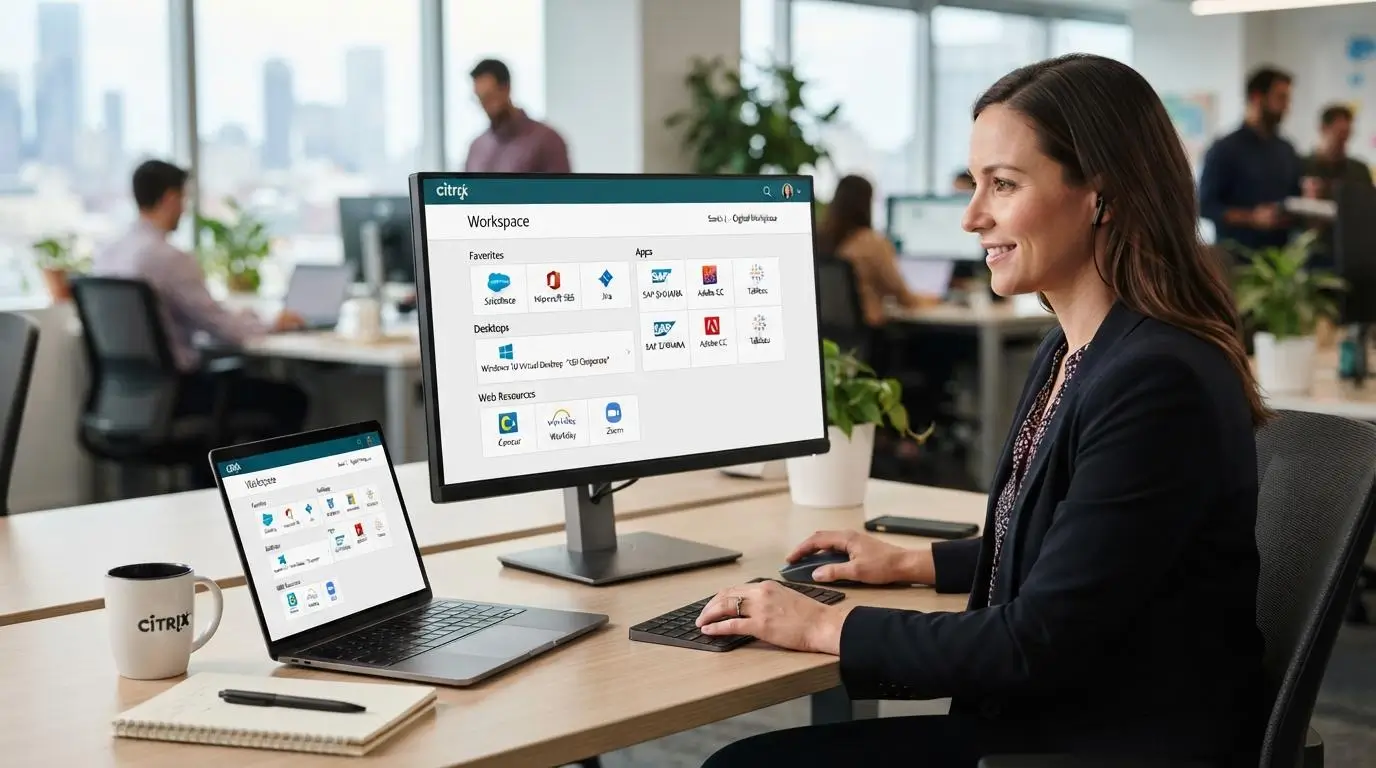
Citrix Workspace is the access layer users see when they connect to company applications, desktops, SaaS tools, web resources, and related services. In practical terms, it brings those resources into one place so users can reach them through a consistent interface.
That does not mean Citrix Workspace is the same thing as Citrix Virtual Apps and Desktops or Citrix DaaS. Those products handle the delivery and management of virtual applications and virtual desktops. Citrix Workspace sits closer to the user experience, while the broader Citrix platform covers the infrastructure, control, security, and management behind it.
How Do Citrix Virtual Apps and Virtual Desktops Fit Into Citrix Workspace?
Citrix Virtual Apps and Citrix virtual desktops let you deliver hosted applications and full desktop environments to users across various devices. Remote access can be managed centrally, which helps IT teams control permissions, policies, and resources from one place.
If you remember Citrix Receiver, Workspace is essentially the more modern access experience that replaced it, with broader capabilities around apps, desktops, and services.
How Does Citrix Workspace Pricing Work Today?

The older Citrix Workspace Standard, Premium, and Premium Plus packages are no longer the right starting point for a new purchase. Citrix announced the end of sale for those Workspace bundles in 2022, and current buying options are organized around newer subscription packages instead.
That matters because Citrix Workspace pricing today is tied more closely to the type of environment you want to run and the features you need across the wider Citrix platform.
What Is Citrix for Private Cloud?
Citrix for Private Cloud is aimed at organizations keeping their Citrix virtual app and desktop workloads in privately managed or on-premises infrastructure. It supports core app and desktop delivery without the public-cloud integrations included in the broader plans.
What Is Citrix Universal Hybrid Multi-Cloud?
Citrix Universal Hybrid Multi-Cloud gives you more flexibility. You can manage workloads across private infrastructure, public cloud platforms, or a mix of both, making it more suitable for hybrid environments.
What Is Citrix Platform License?
Citrix Platform License is the broader package. It combines Citrix app and desktop delivery with additional NetScaler, security, observability, and management capabilities, giving larger organizations more centralized control across complex environments.
Does Citrix Publish a Fixed Per-User Price?
Citrix does not publish one universal per-user price that applies to every customer today. Older figures such as $12 per user per month may still appear in legacy articles, but they should not be treated as current, standard Citrix Workspace pricing.
For most enterprise purchases, you need to request a quote or receive a private commercial offer based on the Citrix platform, service scope, and contract terms. Citrix also supports procurement through channels such as Azure Marketplace, where current Citrix Universal and Platform subscriptions can be offered through private offers rather than a single public list price.
Several factors can move the final number up or down:
- User volume and total licensed users
- Commitment length and contract structure
- Deployment scope and infrastructure needs
- Required features and add-ons
- Negotiated enterprise terms
That is why two organizations with similar user counts can still end up with very different Citrix costs.
What Citrix Licensing Models Can Affect Your Cost?

The licensing model you choose can materially change your Citrix costs. Two organizations may run similar workloads but pay differently simply because their users connect in different ways.
How Does User/Device Licensing Work?
With user/device licensing, Citrix assigns entitlement to either a named user or a shared device. A licensed user can access Citrix virtual desktops and applications from various devices, which can work well for a mobile workforce that moves between laptops, desktops, and other endpoints.
This model tends to make sense when the same users need regular access throughout the day. It also gives businesses a predictable way to plan licenses around a known workforce size.
How Does Concurrent Licensing Work?
Concurrent licensing takes a different approach. A license is consumed while a qualifying connection is active, then returns to the available pool when that session ends.
That can improve cost efficiency when access is intermittent, especially if many users share the same Citrix resources but are rarely connected at the same time.
Which Licensing Model Can Be More Cost-Efficient?
There is no universal winner. The better fit depends on user behavior, session concurrency, device sharing, and how often people actually access Citrix.
Regular, all-day users may fit a user/device model better. Sporadic access can make concurrent licensing more economical.
What Does a Citrix License Actually Cover?
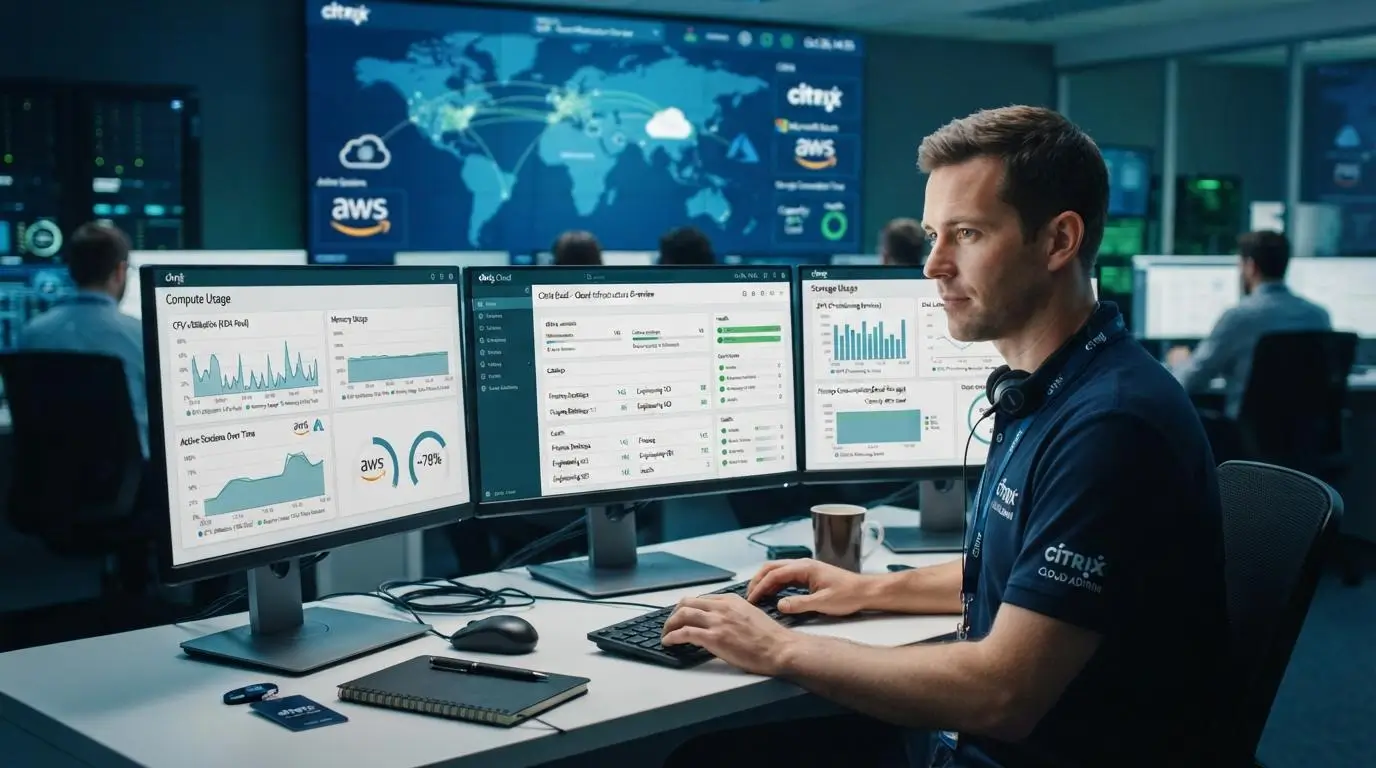
A Citrix license gives you access to the application and desktop delivery, management, and control features included in the subscription you purchase. What it does not necessarily cover is the full cost of running the underlying virtual desktop infrastructure.
You may still need to budget for:
- Compute resources used to run virtual desktops and applications
- Storage for profiles, application data, and desktop images
- Networking and bandwidth
- Windows and Microsoft licensing
- Cloud infrastructure and consumption charges
- Infrastructure management and ongoing administration
That distinction matters most in cloud deployments. Citrix DaaS can manage desktops hosted in environments such as Microsoft Azure, but the resources consumed there may generate separate charges. Citrix documentation specifically notes that customers can incur Azure consumption costs for Citrix-managed Azure resources.
So, the license covers the Citrix layer, not every cost required to deliver the desktop experience.
What Additional Costs Should You Include in a Citrix Deployment?
The license is only the starting point. Once Citrix is running in a real environment, several other costs begin to matter, and some of them can outweigh the subscription itself over time.
| Cost Area | What Can Affect the Cost |
|---|---|
| Citrix subscription | Subscription type, licensing model, number of users, and entitlement level |
| Compute | Number and size of virtual machines, workload demand, and high-performance applications |
| Storage | User profiles, application data, desktop images, backups, and retention requirements |
| Cloud consumption | Runtime hours, region, compute usage, storage, and network traffic |
| Microsoft licensing | Windows licensing, Microsoft infrastructure, and Azure-related requirements |
| Networking | Bandwidth, gateways, secure access, and connectivity between environments |
| Infrastructure management | Deployment, monitoring, updates, optimization, and day-to-day maintenance |
| Support and administration | Internal IT time, help desk demand, troubleshooting, and support issues |
| Add-ons and capabilities | Extra security, analytics, monitoring, or specialized software functionality |
This is where Citrix costs become less predictable. Two companies can have the same number of users and still end up with very different bills. A team running basic productivity apps on modest virtual machines may consume relatively few resources. Another organization supporting design software, analytics tools, or other high-performance workloads will need more compute, memory, and storage. That difference adds up quickly.
Deployment architecture matters too. A more complex environment can require additional monitoring, network configuration, support, and infrastructure management. It may also take more internal IT time to optimize performance and maintain scalability.
So, when comparing Citrix pricing, the useful number is not simply the license fee. You need to look at the full operating cost behind it.
How Do Cloud, On-Premises, and Hybrid Citrix Deployments Affect Pricing?

Where you run Citrix has a direct effect on what you pay. The subscription may stay similar, but the infrastructure behind it changes quite a bit. Citrix supports private cloud, public cloud, and hybrid or multi-cloud deployments, each with a different cost profile.
What Costs Come With an On-Premises Citrix Environment?
An on-premises setup usually requires more upfront infrastructure. You may need physical servers, storage, networking equipment, and a virtualization layer such as Hyper-V or XenServer. Then come the ongoing costs, maintenance, hardware refreshes, power, cooling, monitoring, and staff time.
You get more control, but you also manage more of the environment yourself.
What Costs Come With Cloud-Hosted Citrix Virtual Desktops?
Cloud deployments trade hardware purchases for consumption-based expenses. You pay for virtual machines, compute time, storage, network traffic, and other cloud resources used to host virtual desktops.
Auto scaling can help control spending by reducing unused capacity, though monthly costs may still vary with demand.
Does a Hybrid Citrix Deployment Cost More?
It can. Hybrid deployments offer more flexibility and scalability by combining private infrastructure with Citrix Cloud or public cloud resources.
That flexibility comes with more moving parts. You may need to manage multiple environments, connectivity, security policies, monitoring tools, and support processes, all of which can add operational cost.
Can Auto Scaling Reduce Citrix Virtual Desktop Costs?

Auto scaling can improve cost efficiency in cloud-based Citrix environments by matching resources more closely to actual demand. When fewer users are active, virtual machines can be powered down or reduced. As demand increases, capacity can be brought back online to protect performance.
That helps you avoid paying for compute that sits idle for long periods, especially in environments with predictable peaks and quiet hours.
Still, auto scaling only tackles part of the bill. It does not remove:
- Citrix licensing costs
- Storage charges
- Network usage
- Monitoring tools
- Management and support overhead
So, auto scaling can help optimize cloud resource consumption, but it is not a complete cost-control strategy on its own. The biggest savings usually come when scaling policies are paired with sensible workload sizing, careful monitoring, and regular review of how resources are actually being used.
What Features Are You Paying for With Citrix?
Citrix pricing makes more sense when you connect the cost to the capabilities you actually use. Some organizations need broad control across a large mobile workforce. Others may only need secure access to a smaller set of apps.
- Centralized Management: Manage applications, policies, virtual desktops, and user access from centralized tools, which can simplify administration across larger environments.
- Remote Access: Give users secure access to desktops and applications from supported locations and devices without tying work to a physical office.
- Application Delivery: Deliver virtual applications directly, so users do not always need a complete desktop session for every task.
- Security and Access Control: Apply authentication, encryption, access control, and policy rules to protect data and limit who can reach specific resources.
- Multi-Device Access: Support laptops, desktops, thin clients, and mobile devices while aiming to provide the same experience across endpoints.
- Scalability and Performance Management: Add capacity as demand changes, monitor performance, and manage virtual desktops more efficiently.
The commercial question is simple enough: are these features solving real operational problems for your team? If they are, the cost may be justified. If not, you could be paying for more Citrix capability than you actually need.
Is Citrix Workspace Cost-Effective for Large Enterprises?
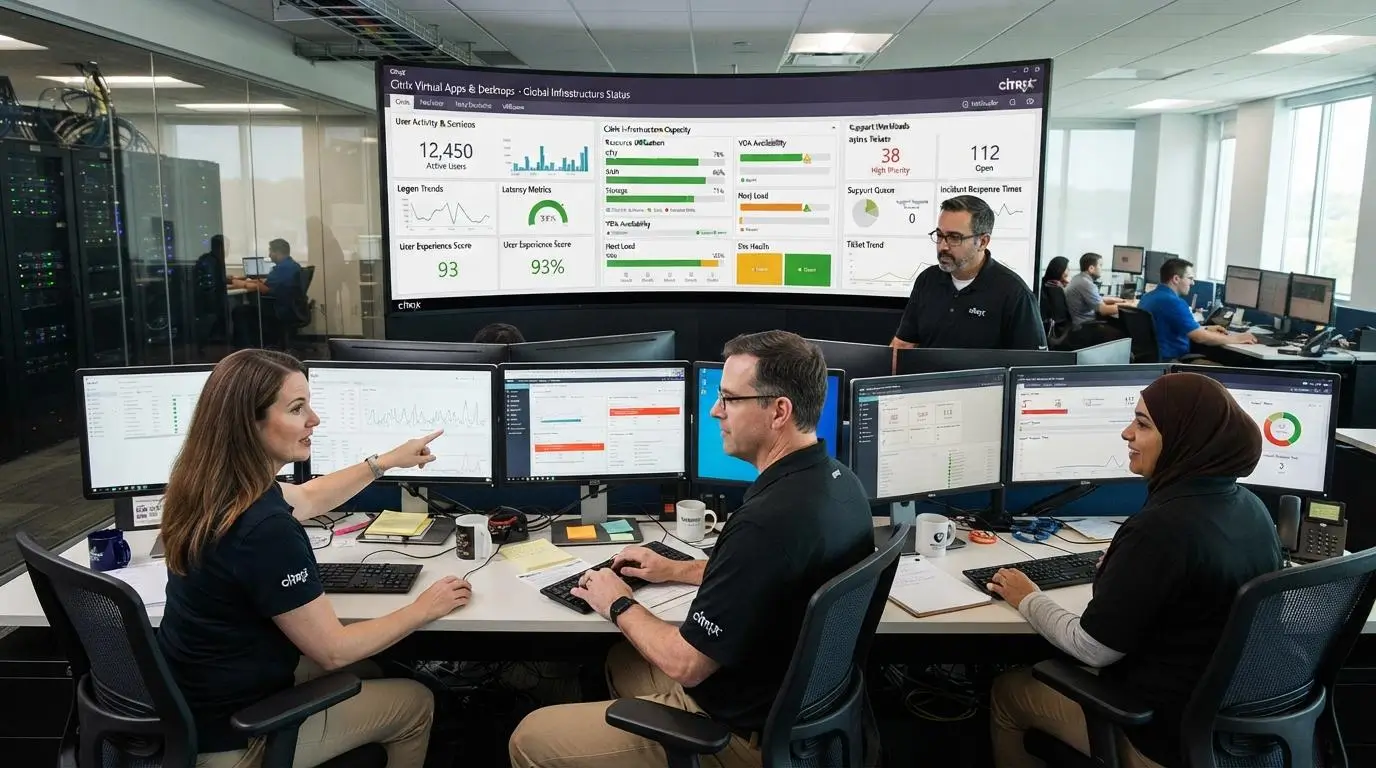
For large enterprises, Citrix can make financial sense when the environment is already complex enough to justify its depth. Broad management controls, application delivery, hybrid deployment options, and support for large user/device or concurrent licensing models can help mature IT teams manage access at scale. Citrix also provides guidance for high-scale licensing deployments, which matters when thousands of users are involved.
The catch is total cost of ownership. Licensing is only one line item.
You also need to account for:
- Infrastructure and cloud consumption
- Internal administration and specialist staff
- Support and help desk workload
- Ongoing optimization and monitoring
- Scalability planning as demand grows
For many organizations, Citrix delivers maximum control, but that control comes with management responsibility. Cost efficiency depends on how well your team can use the platform, how much infrastructure you already operate, and whether the added flexibility actually solves business problems rather than adding more moving parts.
How Does Citrix Pricing Compare With Azure Virtual Desktop?
Citrix and Azure Virtual Desktop can both deliver virtual desktops, but the cost structure is different.
Citrix adds a broader virtualization, management, access, and application-delivery layer. You pay for the Citrix platform itself, then may still carry separate infrastructure, cloud, storage, networking, and support costs depending on how the environment is built.
Azure Virtual Desktop, by comparison, is tied more directly to Microsoft Azure consumption and relevant Microsoft entitlements. Your costs are driven heavily by virtual machines, storage, networking, and how efficiently those resources are managed.
Citrix can also run workloads on Azure, so the two platforms are not always direct substitutes. Citrix currently supports managing Azure Virtual Desktop and Windows 365 environments through its broader platform offerings.
The cheaper option depends on your setup. Existing Microsoft investments, Citrix licensing, workload complexity, internal expertise, and infrastructure requirements can all change the answer.
In short, Azure may reduce the number of management layers, while Citrix can provide more centralized control across mixed environments.
Why Can Citrix’s Total Cost Be Higher Than the Subscription Price?
A Citrix quote can look manageable on paper, but the subscription rarely tells you the whole story. The bigger number is the total cost of ownership, which includes everything required to keep the environment running well.
That can mean:
- Subscription and licensing
- Infrastructure and cloud consumption
- Implementation and deployment work
- Internal administration
- Monitoring and performance management
- Troubleshooting and support issues
- Help desk workload
- Updates and maintenance
- Capacity planning
- Security management
Citrix gives IT teams a lot of control, and for some organizations that is exactly the point. More control, though, usually means more to manage.
A platform can look competitive at the license level and still become expensive once staffing, infrastructure management, support, and cloud resources are added in.
That is why the better comparison is not subscription versus subscription. You need to compare the complete operating model. For teams trying to reduce hands-on management, that naturally opens the door to more fully managed alternatives.
How Does Apporto Simplify Virtual Desktop Pricing and Management?

Apporto takes a different approach to virtual desktop infrastructure by reducing how much of the environment you need to build and manage yourself. That can make both budgeting and day-to-day administration easier.
- Fully Managed Delivery: Apporto handles more of the underlying virtual desktop infrastructure, so your team spends less time maintaining servers, software layers, and supporting components.
- Browser-Based Access: Users can open their virtual desktops through a modern browser, which removes much of the client-side complexity that comes with traditional remote access tools.
- Centralized Administration: IT teams can manage access, users, and virtual desktops from one place without stitching together as many separate infrastructure components.
- Predictable Planning: A managed service model can make costs easier to forecast because there are fewer moving parts to size, maintain, and troubleshoot internally.
- Secure Access: Apporto supports centralized security controls and Zero Trust-oriented practices to help protect access without adding unnecessary friction for users.
For organizations focused on cost efficiency, productivity, and simpler management, that operating model can be appealing.
You still get cloud-based virtual desktops and centralized control, but with less infrastructure overhead sitting on your team. Ready to see how it compares? Schedule a Demo with Apporto.
Final Thoughts
Before you request Citrix Workspace pricing, start with the environment you actually need, not the headline license cost. Work out how many users require access, how often they connect, which Citrix capabilities matter, and whether workloads will run in the cloud, private infrastructure, or both. Then factor in performance demands, storage, networking, support, administration, and the full cost of ownership.
That broader view matters because two organizations can receive similar subscription quotes and still face very different operating costs.
The smarter comparison is between complete solutions, not sticker prices. Look at what each option requires your team to build, manage, support, and optimize over time. That is where real cost efficiency becomes clearer, and where the cheapest-looking option may not remain the cheapest.
Frequently Asked Questions (FAQs)
1. How much does Citrix Workspace cost per user?
There is no single public per-user price that applies across current Citrix subscriptions. Your final cost usually depends on deployment model, licensing structure, user count, required features, and the commercial terms included in your quote.
2. Is Citrix Workspace still available as Standard, Premium, and Premium Plus?
Those names refer to older Citrix Workspace packages. Citrix announced the end of sale for Workspace Standard, Premium, and Premium Plus in 2022, and Workspace Standard later reached end of renewal for existing customers.
3. What is included in Citrix pricing?
A Citrix subscription generally covers the Citrix software capabilities tied to your plan. Compute, storage, networking, Microsoft licensing, cloud infrastructure, implementation, support, and day-to-day administration may still create separate costs.
4. Does Citrix charge per user or concurrent user?
Citrix supports different licensing approaches, including user/device and concurrent licensing. User/device licensing follows assigned users or devices, while concurrent licensing is based on active connections and returns licenses to the pool when sessions end.
5. Are cloud infrastructure costs included with Citrix DaaS?
Not always. Cloud infrastructure consumption can be billed separately from the Citrix subscription. Costs may include virtual machines, storage, networking, and related Azure resources, depending on how your Citrix DaaS environment is configured.
6. Is Citrix cheaper than Azure Virtual Desktop?
There is no universal answer. Citrix and Azure Virtual Desktop have different licensing, infrastructure, management, and feature requirements, so total cost depends on your workloads, existing Microsoft investments, support model, and internal administration.
7. What is a simpler alternative to Citrix for virtual desktops?
Apporto can be a simpler option for organizations that prefer browser-based access and less infrastructure management. Its managed approach reduces the amount of virtual desktop infrastructure your internal team needs to build, monitor, and maintain.
