

What Is the Best Gradescope Alternative for AI-Assisted Grading?
Apporto PowerGrader is the best Gradescope alternative for higher education, combining AI-assisted grading, rubric-based assessment, personalized feedback, and seamless LMS integration. It helps instructors grade more efficiently, maintain consistent evaluations, and deliver meaningful feedback while keeping educators in full control of every grading decision.
The way you grade assignments has a direct impact on both teaching efficiency and the student learning experience. As coursework becomes more diverse, from handwritten exams to programming assignments and essays, many educators are looking beyond a one-size-fits-all solution.
They need platforms that simplify the grading workflow, support AI assisted grading, deliver faster feedback, and adapt to different grading criteria without adding unnecessary complexity. Pricing transparency, LMS compatibility, and specialized assessment needs have also become important considerations when evaluating Gradescope alternatives.
In this blog post, you’ll discover the best Gradescope alternatives, comparing each platform’s grading workflow, AI capabilities, feedback quality, integrations, pricing, and overall value, so you can choose the right solution for your students, instructors, and institution.
How Did We Tested These Gradescope Alternatives?

Choosing the right grading platform isn’t simply about finding software that can calculate grades. The best solution should reduce administrative work, make assessments more consistent, and help you provide meaningful feedback without slowing down your teaching workflow. Some platforms excel at grading handwritten exams, while others use artificial intelligence to automate repetitive tasks or simplify assignment reviews. To identify the strongest Gradescope alternatives, we compared each platform using the criteria that matter most to educators, universities, and academic departments.
How Effective Is the Grading Workflow and Assessment Experience?
A smooth grading workflow was one of the most important factors in our evaluation. We looked at how each platform manages student work, supports different grading criteria, and handles administered assessments across multiple courses. We also assessed support for offline grading, customizable rubrics, question-by-question grading, regrade requests, and the ability to scan or upload handwritten exams and assignments. Platforms that simplified the entire assessment process while maintaining consistency received higher ratings.
How Much Time Can AI and Automation Save?
Modern grading platforms should do more than organize submissions. We evaluated how artificial intelligence improves the grading process through AI assisted grading, AI-assisted sorting, and automated review features. We also considered each platform’s ability to provide detailed feedback, identify opportunities for improvement, and streamline repetitive grading tasks. Advanced features that help instructors deliver faster, more consistent feedback without sacrificing quality were given greater weight.
Which Platform Offers the Best Overall Value?
Finally, we considered long-term value. We compared each platform’s pricing structure, free version availability, ongoing costs, ease of access, customer support, and overall functionality. We also looked at how well each solution serves individual educators, universities, and larger departments. The right Gradescope alternative isn’t always the least expensive, it’s the platform that delivers the best balance of usability, scalability, and value for your teaching needs.
Quick Comparison of the Best Gradescope Alternatives
No grading platform excels in every area. Some focus on AI-assisted grading to reduce manual work, while others specialize in paper-based assessments, LMS integration, or online testing. The right choice depends on how you evaluate student work, the size of your classes, and the workflows your institution already uses.
The comparison below highlights the key differences between the leading Gradescope alternatives. Use it as a starting point before exploring each platform in more detail. While ratings provide a quick snapshot, factors such as integration, scalability, and long-term value should carry just as much weight when making your decision.
| Solution | Best For | AI Grading | LMS Integration | Pricing |
|---|---|---|---|---|
| Apporto PowerGrader | Higher education institutions seeking AI-assisted grading and scalable assessment | AI + Human Review | Canvas, Moodle, Blackboard, LTI | Custom Quote |
| Crowdmark | Paper-based exams and handwritten assignments | Human Review | Canvas, Moodle, Blackboard | Custom Quote |
| CoGrader | AI-powered grading for essays and written assignments | AI-Assisted Grading | Google Classroom, Canvas (Limited) | Subscription |
| Canvas SpeedGrader | Institutions already using Canvas LMS | AI-Assisted Features + Human Review | Native Canvas LMS | Included with Canvas LMS |
| Brilliant Assessments | Online exams and institution-wide assessment management | Rule-Based Automation | Canvas (Limited), LTI Support | Custom Quote |
| Akindi | Bubble sheet grading and multiple choice exams | Automated Answer Recognition | Canvas, Moodle (Limited) | Custom Quote |
Best Gradescope Alternatives (A Complete Breakdown)
1. Apporto PowerGrader
Overview
If you’re looking for a platform that does more than speed up grading, Apporto PowerGrader is one of the strongest Gradescope alternatives available. Built for higher education, it combines AI assisted grading, rubric-based assessments, and LMS integration in a single platform that helps instructors manage student work more efficiently. Instead of juggling multiple tools for grading, feedback, and course management, you can complete the entire assessment process from one centralized workspace.
PowerGrader uses AI to reduce repetitive grading tasks while still keeping instructors in control of the final evaluation. It helps maintain consistent academic grading across large classes, generates detailed feedback for students, and supports customizable rubrics that make expectations clear from the start. Because it integrates seamlessly with learning management systems, instructors can review assignments, grade submissions, and return feedback without disrupting their existing workflow.
Highlights
- AI assisted grading that accelerates the evaluation process while maintaining instructor oversight.
- Delivers detailed feedback to help students understand strengths and areas for improvement.
- LMS-friendly grading workflow that fits naturally into existing teaching environments.
- Supports customizable rubrics for consistent academic grading.
- Designed to manage large volumes of student work efficiently.
- Built specifically for higher education institutions and university courses.
- Functions as an all-in-one grading solution that combines assessment, feedback, and grading in one platform.
Best For:
Colleges and universities looking for an assessment platform that combines AI-assisted grading, structured rubrics, LMS integration, and scalable academic grading.
Limitations:
Pricing is available through a custom quote based on institutional requirements.
Pricing:
Custom pricing. Contact Apporto for a quote tailored to your institution’s size, courses, and assessment needs.
2. Crowdmark

Overview
Crowdmark is a well-established grading platform designed for educators who frequently work with paper-based assessments. It simplifies the process of grading handwritten exams and assignments by allowing you to scan and upload student submissions into a digital workspace. This approach helps instructors keep the familiarity of paper exams while benefiting from the speed and organization of online grading.
One of Crowdmark’s standout capabilities is its question-by-question grading workflow. Instead of reviewing one student’s entire exam at a time, you can grade the same question across all submissions. This promotes greater consistency, especially when using detailed rubrics, and makes it easier to identify common mistakes across a class. The platform also supports collaborative grading, enabling multiple instructors or teaching assistants to work on the same assessment while maintaining consistent feedback standards.
Highlights
- Built specifically for paper-based assessments and handwritten exams.
- Supports question-by-question grading for greater consistency.
- Allows instructors to scan and upload student submissions for digital review.
- Includes customizable rubrics to standardize grading criteria.
- Makes it easy to provide clear, detailed feedback on individual responses.
- Supports collaborative grading for large university courses.
- Organizes exams and assignments in a centralized grading workspace.
Best For:
Universities and educators that regularly assess handwritten exams, quizzes, and other paper-based coursework while wanting a more efficient digital grading workflow.
Limitations:
Crowdmark focuses on assessment management and paper-based grading, offering fewer AI-assisted grading capabilities than newer platforms designed around automation.
Pricing:
Custom pricing based on institutional needs. Contact Crowdmark for a tailored quote.
3. CoGrader
Overview
CoGrader is an AI-powered grading platform built to help teachers evaluate written assignments more efficiently without sacrificing the quality of feedback. Rather than replacing instructor judgment, it uses artificial intelligence to assist with repetitive grading tasks, making it easier to review essays, short responses, and other written work. This allows you to spend less time on administrative tasks and more time supporting student learning.
The platform is designed to fit naturally into the classroom workflow by helping teachers grade assignments consistently while providing personalized feedback for every submission. Its AI-generated suggestions can speed up the evaluation process, but instructors remain in control of final grades and comments. This balance between automation and human oversight makes CoGrader a practical option for schools that want to improve grading efficiency without losing the personal touch that students value.
Highlights
- Uses AI-powered grading to evaluate essays and written assignments more efficiently.
- Leverages artificial intelligence to reduce repetitive grading tasks.
- Generates detailed feedback that helps students understand how to improve.
- Improves grading efficiency while keeping teachers in control of final evaluations.
- Supports a wide range of classroom assignments and written assessments.
- Fits smoothly into existing classroom workflows with minimal setup.
- Helps teachers return grades and feedback more quickly.
Best For:
Teachers and schools looking to streamline essay grading, provide faster feedback, and improve classroom efficiency through AI-assisted evaluation.
Limitations:
CoGrader focuses primarily on written assignments and essays, making it less suitable for institutions that require comprehensive assessment management, handwritten exam grading, or advanced LMS-based workflows.
Pricing:
Subscription-based pricing with plan options based on classroom size and usage requirements.
4. Canvas SpeedGrader
Overview
Canvas SpeedGrader is a natural choice if your institution already uses the Canvas learning management system. Instead of requiring a separate grading platform, it allows instructors to review assignments, assess student submissions, and return grades directly within their existing courses. This integrated approach reduces administrative work and keeps teaching, grading, and communication in one familiar environment.
The platform supports a wide variety of assignment types, making it easy to review documents, annotate submissions, and leave comments without switching between multiple applications. Instructors can apply rubrics for consistent evaluations, provide personalized feedback, and update grades in real time. Because everything is connected to Canvas, students can quickly view instructor comments, rubric scores, and overall performance, creating a smoother learning experience throughout the semester.
Highlights
- Native Canvas LMS integration for a seamless grading experience.
- Simplifies assignment review within existing Canvas courses.
- Supports digital annotation of student submissions.
- Uses customizable rubrics to maintain consistent grading standards.
- Allows instructors to leave detailed comments and personalized feedback.
- Automatically syncs grades with the Canvas gradebook.
- Supports multiple assignment formats, including essays, documents, and media submissions.
Best For:
Schools, colleges, and universities already using Canvas LMS that want an integrated solution for reviewing assignments, grading student work, and providing timely feedback.
Limitations:
Canvas SpeedGrader works best within the Canvas ecosystem and offers fewer AI-assisted grading capabilities than platforms specifically designed around grading automation.
Pricing:
Included with Canvas LMS licenses. Institutions should contact Canvas for pricing based on their subscription and deployment requirements.
5. Brilliant Assessments
Overview
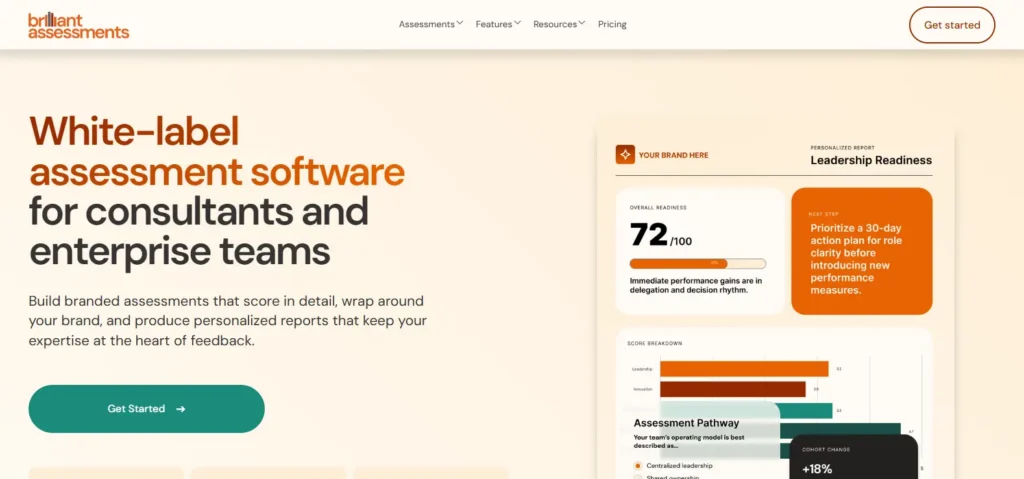
Brilliant Assessments is an assessment platform designed to help educators create, deliver, and evaluate online assessments from a single interface. It supports a variety of exam formats, making it suitable for schools, colleges, and training organizations that want a structured way to manage assessments. By bringing exam creation, delivery, grading, and reporting together, the platform helps reduce administrative effort while keeping the assessment process organized.
The platform supports everything from multiple choice quizzes to more comprehensive online exams, giving educators flexibility to assess different learning outcomes. Secure testing features help protect the integrity of assessments, while built-in reporting tools provide valuable insights into student performance. Instead of manually compiling results, instructors can review assessment data, identify learning gaps, and use those insights to improve future teaching strategies.
Highlights
- Supports online assessments across a wide range of subjects and course formats.
- Allows educators to create multiple choice exams and other assessment types.
- Includes secure testing features to help maintain assessment integrity.
- Provides built-in reporting for tracking student performance and progress.
- Simplifies assessment management through a centralized platform.
- Helps educators evaluate learning outcomes with clear performance data.
- Designed to support schools, universities, and professional training programs.
Best For:
Educators and institutions looking for a comprehensive assessment platform that combines online testing, reporting, and assessment management in one solution.
Limitations:
Brilliant Assessments focuses on online assessment delivery and management, offering fewer AI-assisted grading capabilities than platforms specifically designed to automate grading and provide detailed feedback.
Pricing:
Custom pricing based on institutional requirements and assessment volume. Contact Brilliant Assessments for a personalized quote.
6. Akindi
Overview
Akindi is a grading platform built to simplify the evaluation of multiple choice exams through fast, automated grading. Designed for teachers and schools, it eliminates much of the manual work involved in marking bubble sheets by allowing instructors to scan and upload completed answer sheets for instant processing. This makes it an excellent option for high-volume assessments where speed and accuracy are equally important.
Instead of spending hours grading paper tests by hand, you can process hundreds of bubble sheets in minutes while maintaining consistent scoring across every exam. Akindi also streamlines the overall assessment workflow by organizing results digitally and making it easier to review student performance. Its straightforward interface requires minimal training, allowing teachers to integrate it into existing classroom practices without disrupting their testing process.
Highlights
- Automates bubble sheet grading for faster exam evaluation.
- Supports multiple choice exams across a variety of subjects.
- Allows teachers to scan and upload answer sheets for quick processing.
- Delivers automated grading with consistent scoring and reduced manual effort.
- Processes large batches of assessments in minutes.
- Simplifies the assessment workflow with centralized result management.
- Designed for teachers, schools, and institutions conducting paper-based testing.
Best For:
Schools, colleges, and educators that frequently administer multiple choice exams and want a faster, more efficient way to grade paper assessments.
Limitations:
Akindi is optimized for bubble sheet grading and multiple choice assessments, making it less suitable for evaluating essays, projects, open-ended assignments, or courses that require AI-assisted feedback and rubric-based grading.
Pricing:
Custom pricing based on institutional size and assessment volume. Contact Akindi for a personalized quote.
Which Gradescope Alternative Is Right for You?

The best Gradescope alternative depends on how you teach, the types of assessments you use, and the amount of time you spend grading every week. Some platforms focus on AI assisted grading to automate repetitive tasks, while others specialize in paper-based exams, online assessments, or LMS integration. Before choosing a platform, think about your grading workflow, class sizes, institutional requirements, and long-term goals. The right solution should help you save time while improving consistency, collaboration, and the overall assessment experience.
Do You Need AI-Assisted Grading or Traditional Assessment Tools?
Your first decision is whether you need AI assisted grading or a more traditional assessment platform. If you primarily grade essays, written responses, or large volumes of student work, platforms that use artificial intelligence can significantly reduce repetitive tasks while maintaining instructor oversight. They can also generate detailed feedback, making it easier for students to understand their performance and identify areas for improvement.
Traditional assessment tools remain valuable for courses centered around handwritten exams, multiple choice tests, or structured grading with rubrics. These platforms often excel at organizing assessments and ensuring grading consistency without relying heavily on automation. The right choice depends on your teaching style, assessment methods, and the level of automation you want to introduce into your grading process.
Which Features Should Educators and Universities Prioritize?
When evaluating a grading platform, look beyond basic grading functionality. Consider how students submit assignments, how instructors review student work, and whether the platform supports the grading criteria used across your courses. Features such as customizable rubrics, collaborative grading, annotation tools, and the ability to provide feedback quickly can make a significant difference for both teachers and students.
Universities should also think about scalability. A solution that works for one instructor may not meet the needs of multiple departments or an entire university. Platforms that support large courses, shared grading responsibilities, and consistent assessment standards are often a better investment for long-term academic use.
How Important Are Pricing, Integrations, and Ease of Use?
Cost is another important factor. Gradescope uses an institutional pricing model that often requires custom quotes, which can make budgeting more challenging for smaller schools or individual instructors. Simpler pricing models are often easier for individual teachers and smaller schools to evaluate because they provide greater transparency about ongoing costs.
You should also consider how well a platform fits into your existing technology stack. Canvas SpeedGrader is an excellent choice for institutions already using Canvas LMS because it integrates directly with existing courses and gradebooks. File upload options, LMS integration, responsive support, and intuitive navigation all contribute to a smoother experience for instructors and students. AI-powered platforms can also reduce grading time while improving consistency, helping educators spend more time teaching instead of managing repetitive grading tasks.
Which Gradescope Alternative Offers the Best Long-Term Value?
The right Gradescope alternative is the one that continues to meet your needs as your courses and enrollment grow. Look for a platform that offers similar features to Gradescope while also providing advanced features that improve your grading workflow over time. Scalability, reliable platform support, and the ability to streamline the entire assessment process are just as important as today’s feature list.
If your priority is paper-based exams, a specialized platform may be the right fit. If you want AI-assisted grading, detailed feedback, and seamless LMS integration, an all-in-one solution will likely deliver greater overall value. Choosing a platform that supports long-term adoption ensures your institution can improve efficiency without constantly replacing or expanding its assessment tools.
Final Thoughts
The best Gradescope alternative depends on how you grade and what your institution needs. CoGrader is a strong option for AI-first grading of written assignments, Crowdmark excels at paper-based assessments, Canvas SpeedGrader is ideal for Canvas LMS users, and Brilliant Assessments provides robust online assessment management. Akindi remains a reliable choice for fast multiple choice exam grading.
For higher education institutions, Apporto PowerGrader stands out as the most complete solution. It combines AI-assisted grading, detailed feedback, seamless LMS integration, scalable grading workflows, and consistent assessment in one platform, making it well suited for universities managing large classes and multiple departments. If you’re ready to simplify grading while improving efficiency and student outcomes, explore Apporto PowerGrader to see how it can support your institution.
Frequently Asked Questions (FAQs)
1. What is the best Gradescope alternative in 2026?
The best Gradescope alternative depends on your teaching goals and assessment requirements. If you need an all-in-one platform for higher education, Apporto PowerGrader offers AI-assisted grading, detailed feedback, LMS integration, and scalable grading workflows. Crowdmark is an excellent choice for paper-based assessments, while Canvas SpeedGrader works best for institutions already using Canvas LMS. The right platform should match your grading workflow, course size, and long-term institutional needs.
2. Which Gradescope alternative is best for AI-assisted grading?
If your goal is to reduce grading time without sacrificing quality, AI-assisted grading platforms are the strongest option. Apporto PowerGrader and CoGrader both use artificial intelligence to automate repetitive grading tasks while allowing instructors to review and finalize grades. These platforms can generate detailed feedback, improve grading consistency, and help educators spend more time supporting students instead of manually evaluating assignments.
3. Which grading platform is best for universities?
Universities typically need a platform that supports large enrollments, multiple instructors, and standardized assessment practices across departments. Features such as LMS integration, customizable rubrics, collaborative grading, and scalable workflows become increasingly important. Apporto PowerGrader is particularly well suited for higher education because it combines AI-assisted grading, detailed feedback, and centralized assessment management in a single platform designed for institutional use.
4. Can Gradescope alternatives grade handwritten exams?
Yes. Several Gradescope alternatives support handwritten exams through scanning and digital review. Crowdmark allows instructors to scan and upload paper-based assessments before grading them question by question, helping maintain consistency across large classes. Akindi also supports paper assessments by automating the grading of multiple choice exams using scanned bubble sheets, making it ideal for high-volume testing.
5. Which Gradescope alternative is best for programming assignments?
The best platform depends on how programming courses are assessed. If your focus is grading written explanations, reports, or project documentation, AI-assisted platforms like Apporto PowerGrader can help streamline evaluation and feedback. However, courses that require automated code execution, programming-specific testing, or coding environments may benefit from specialized coding assessment platforms that are designed specifically for computer science education.
6. Are there any free Gradescope alternatives?
Some grading platforms offer free versions or trial plans, although these often include usage limits or restricted features. Individual educators may find these options useful for small classes or short-term projects. Institutions usually require paid plans to access advanced grading tools, LMS integrations, collaborative workflows, and dedicated support. When comparing platforms, consider the long-term value rather than focusing solely on the initial cost.
7. How important are rubrics in digital grading platforms?
Rubrics are one of the most valuable features in a digital grading platform because they promote fairness, consistency, and transparency. They help instructors apply the same grading criteria across all student submissions while making expectations clear before assignments are completed. Rubrics also make it easier to provide structured feedback, reducing grading inconsistencies across multiple instructors or teaching assistants.
8. What should you look for when choosing a Gradescope alternative?
Start by evaluating how well the platform fits your existing teaching workflow. Consider features such as AI-assisted grading, rubric support, LMS integration, feedback quality, assessment types, reporting, pricing, and scalability. You should also think about ease of use, customer support, and whether the platform can grow with your institution. Choosing a solution that aligns with both your current needs and future goals will deliver the greatest long-term value.
