
What Are the Best Formative Alternatives in 2026?
Apporto PowerGrader is a leading alternative to Formative, offering AI-assisted assessment, personalized feedback, customizable rubrics, and seamless LMS integration. Alongside platforms like Kahoot!, Quizizz, Pear Assessment, Gimkit, and Quizlet, it helps educators improve student learning through scalable formative assessment and continuous feedback.
Formative assessment plays an important role throughout the learning process, helping you monitor student progress, identify misconceptions, and adjust instruction before small learning gaps become bigger challenges.
As classrooms become more interactive and data-driven, many educators are exploring formative alternatives that deliver more than simple quizzes.
Today’s platforms combine real-time feedback, collaborative learning, AI-powered assessment, and engaging classroom activities to improve student understanding while reducing administrative effort.
In this blog post, you’ll discover the six best formative alternatives, compare their assessment capabilities, AI features, classroom engagement, LMS compatibility, scalability, pricing, and overall value, so you can choose the platform that best supports your teaching goals and student learning outcomes.
How Did We Evaluate These Formative Alternatives?

No single formative assessment platform works equally well for every classroom. Teaching goals vary across schools, colleges, and universities, so the best choice depends on how you measure student learning and support progress throughout a course.
Some educators prioritize real-time formative assessment to identify learning gaps as they appear, while others need AI-assisted grading, interactive quizzes, personalized feedback, or scalable assessment workflows that reduce administrative effort without compromising instructional quality.
To make this comparison practical, each platform was evaluated using criteria that directly influence teaching and learning. That includes assessment capabilities, ease of use, classroom engagement, quality of feedback, reporting and analytics, LMS compatibility, scalability, and overall value.
Rather than focusing only on feature lists, this guide considers how effectively each solution helps you monitor progress, improve instruction, and create meaningful learning experiences that support long-term student success.
How Well Does the Platform Support Formative Assessment and Student Learning?
The strongest formative assessment tools help you understand how students are progressing throughout a course instead of measuring performance only at the end.
Formative assessments occur during the learning process, giving you timely feedback that supports student learning, strengthens student understanding, and keeps learning objectives on track. Unlike summative evaluation, formative assessment focuses on monitoring progress rather than summative evaluation.
Effective formative assessments also identify student misconceptions early, allowing you to adjust instruction before small misunderstandings become larger learning barriers.
Which Features Help Teachers Create More Engaging Learning Experiences?
Modern assessment tools should do more than deliver quizzes. The best platforms help teachers create interactive activities that encourage discussion, collaborative learning, and active classroom participation.
Multimedia content, live quizzes, and shared learning experiences keep students engaged while making instruction more dynamic. Interactive learning activities improve classroom engagement, and frequent feedback loops strengthen learning outcomes by helping students improve continuously.
At the same time, digital tools provide real-time feedback and actionable insights, enabling teachers to make informed instructional decisions during every lesson.
Which Platform Delivers the Best Long-Term Value?
Long-term value depends on how well a platform supports your teaching environment as needs evolve. For higher education and growing institutions, scalable assessment tools support larger classes without increasing administrative complexity.
Strong LMS integration allows instructors to manage assignments, monitor progress, and provide feedback from one centralized location because LMS integration simplifies classroom management.
Reliable online access, responsive support, and flexible deployment also contribute to a better learning environment. Ultimately, long-term value extends beyond pricing, combining scalability, ease of implementation, and institutional support into a solution that continues delivering results over time.
Quick Comparison of the Best Formative Alternatives
Every formative assessment platform supports learning in a different way. Some focus on AI-assisted grading and personalized feedback, while others use gamification, interactive lessons, or self-paced study to keep students engaged.
The right choice depends on your teaching objectives, classroom environment, and the type of feedback you want to provide. The comparison below highlights the strengths of each platform, making it easier to identify the solution that best fits your instructional needs.
| Platform | Best For | Core Strength | Key Features | Ideal Users | Pricing |
|---|---|---|---|---|---|
| Apporto PowerGrader | AI-assisted formative assessment | Personalized feedback and scalable assessment | AI grading, customizable rubrics, LMS integration | Higher education institutions | Custom pricing based on institutional needs |
| Kahoot! | Live classroom engagement | Game-based quizzes | Live quizzes, polls, reports, classroom competitions | K-12 and higher education | Free plan, paid tiers available |
| Quizizz | Self-paced formative assessment | Live and asynchronous quizzes | Homework, quizzes, analytics, detailed reports | Schools and universities | Free plan, premium features available |
| Pear Assessment | Interactive instruction | Teacher-led formative lessons | Interactive slides, polls, checks for understanding | K-12 and higher education | Free and premium plans |
| Gimkit | Gamified practice | Repetitive learning through gameplay | Live games, assignments, rewards, practice modes | K-12 classrooms | Free plan, Gimkit Pro available |
| Quizlet | Independent study | Flashcards and retrieval practice | Flashcards, Learn mode, Test mode, practice sets | Students and educators | Free plan, Quizlet Plus available |
Best Formative Alternatives (A Detailed Breakdown)
1. Apporto PowerGrader
Overview
Apporto PowerGrader is an AI-assisted formative assessment platform that helps instructors deliver faster, more meaningful feedback throughout the learning process. Instead of relying only on end-of-course evaluations, it supports continuous assessment, making it easier to identify learning gaps and keep students aligned with learning objectives. This approach improves student progress while reducing repetitive grading tasks.
The platform combines AI with instructor oversight to generate personalized feedback using customizable rubrics. Rather than replacing academic judgment, AI streamlines routine evaluation so instructors can spend more time supporting students and refining instruction. This improves grading efficiency while maintaining consistency across assignments.
Apporto PowerGrader also integrates with major learning management systems, allowing educators to incorporate formative assessment into existing course workflows. Its scalable assessment capabilities make it particularly valuable for higher education, where timely, consistent feedback can be difficult to provide across large classes.
Highlights
- AI-assisted formative assessment with customizable rubrics
- Personalized feedback aligned with learning objectives
- Seamless LMS integration with major platforms
- Scalable assessment for higher education
- Improves grading efficiency while maintaining instructor oversight
Best For:
Colleges and universities seeking AI-assisted formative assessment with personalized feedback and scalable grading workflows.
Limitations:
Focuses on instructor-led assessment rather than gamified classroom quizzes or interactive learning games.
Pricing:
Custom pricing based on institutional requirements and deployment size.
2. Kahoot!
Overview
Kahoot! is one of the most recognized formative assessment platforms for creating interactive quizzes that keep students actively involved in classroom learning. Kahoot! is popular for creating quizzes in classrooms, using game-based experiences to make lessons more engaging and encourage participation. Teachers can quickly build activities with multiple choice questions, polls, and challenges that reinforce concepts while checking student understanding in real time.
The platform supports formative assessment by giving teachers immediate insights into student performance during a lesson. Live reports make it easier to identify misconceptions, adjust instruction, and revisit topics that need additional attention. The competitive format also motivates students to participate, making learning more enjoyable without losing sight of educational objectives.
Kahoot! works across K-12 and higher education, offering flexible options for both in-person and remote classrooms. While its greatest strength is live classroom engagement, it also includes self-paced assignments that allow students to review concepts outside scheduled class time.
Highlights
- Game-based quizzes with multiple choice questions
- Live classroom engagement and interactive activities
- Real-time reports for formative assessment
- Self-paced assignments for independent learning
- Easy quiz creation for teachers
Best For:
Educators looking to increase classroom engagement through interactive quizzes and game-based learning.
Limitations:
Offers limited AI-assisted grading and personalized feedback compared to assessment platforms designed for assignment evaluation.
Pricing:
Free plan available, with paid tiers that unlock advanced features and reporting.
3. Quizizz
Overview
Quizizz is a versatile formative assessment platform that combines live instruction with self-paced quizzes, giving educators flexibility in how they measure student learning. Teachers can create classroom activities or assign quizzes as homework, allowing students to complete assessments at their own pace while reinforcing key concepts. This flexibility makes the platform suitable for both in-person and remote learning environments.
The platform supports formative assessment by tracking student progress through detailed reports and performance analytics. Teachers receive immediate feedback on how well students understand each topic, making it easier to identify learning gaps and adjust instruction before moving forward. Quizizz also allows educators to schedule assignments, reuse question banks, and monitor class performance from a single dashboard, simplifying ongoing assessment.
Quizizz balances engagement with practical classroom management. Students benefit from interactive quizzes and instant feedback, while teachers gain insights that help improve learning outcomes without increasing administrative workload. Its mix of live and asynchronous assessment makes it a strong option for educators who need flexibility across different teaching styles.
Highlights
- Self-paced quizzes and live classroom activities
- Flexible assignments for in-class or homework use
- Detailed reports and student progress tracking
- Instant feedback to support formative assessment
- Easy quiz creation and reusable question banks
Best For:
Schools and universities looking for flexible formative assessment through live and self-paced quizzes.
Limitations:
Focuses primarily on quiz-based assessment rather than AI-assisted grading of written assignments.
Pricing:
Free plan available, with premium features offered through paid subscriptions.
4. Pear Assessment
Overview
Pear Assessment is a formative assessment platform that helps teachers deliver interactive lessons while monitoring student understanding in real time. Rather than relying on traditional quizzes alone, it allows educators to embed questions, polls, drawing activities, and checks for understanding directly into classroom instruction. This creates a more engaging learning experience and encourages active participation throughout each lesson.
The platform captures student responses as instruction unfolds, giving teachers immediate insight into comprehension and participation. These real-time responses make it easier to identify misconceptions, adjust instruction, and provide timely support before students fall behind. By integrating formative assessment into everyday teaching, Pear Assessment helps educators make informed decisions without interrupting the flow of the lesson.
Pear Assessment also supports multimedia content, allowing teachers to enrich lessons with videos, images, and interactive slides that appeal to different learning styles. Its combination of engaging activities and continuous feedback makes it a valuable tool for creating collaborative, student-centered classrooms where assessment becomes a natural part of instruction.
Highlights
- Interactive lessons with embedded formative assessment
- Real-time student responses and progress monitoring
- Multimedia content for engaging classroom instruction
- Polls, drawing tools, and checks for understanding
- Supports active participation and classroom engagement
Best For:
K-12 and higher education educators who want to deliver interactive lessons with continuous formative assessment.
Limitations:
Offers fewer gamification features than quiz-focused platforms and limited AI-assisted grading capabilities.
Pricing:
Free plan available, with premium plans that provide additional instructional and assessment features.
5. Gimkit
Overview
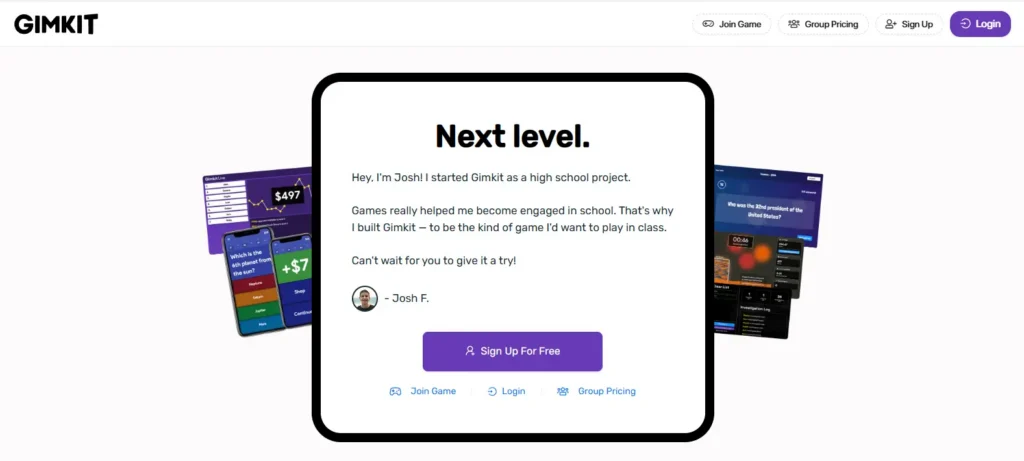
Gimkit is a gamified learning platform designed to reinforce classroom concepts through interactive quizzes and repeated practice. Instead of treating assessment as a one-time event, it encourages students to revisit material in an engaging environment that rewards participation and improvement. The game-based approach helps maintain attention while making classroom activities more enjoyable.
The platform focuses on knowledge retention by allowing students to answer questions repeatedly, earn in-game rewards, and apply what they have learned over multiple sessions. Teachers can create quizzes, assign independent practice, or host live classroom games that encourage friendly competition. This combination of repetition and engagement helps students strengthen their understanding without making practice feel repetitive.
Gimkit also provides educators with performance data that highlights areas where students need additional support. Although its primary strength is gamified learning rather than detailed formative assessment, it still gives teachers useful insights into classroom performance. Its simple setup and interactive activities make it an appealing choice for educators looking to increase participation while reinforcing key concepts.
Highlights
- Gamified learning through interactive quizzes
- Live classroom games and independent practice
- Rewards system that encourages engagement
- Supports knowledge retention through repeated learning
- Performance insights for teachers
Best For:
K-12 classrooms looking to increase student engagement with game-based practice and interactive learning activities.
Limitations:
Emphasizes classroom games over comprehensive formative assessment and AI-assisted feedback.
Pricing:
Free plan available, with additional features offered through Gimkit Pro.
6. Quizlet
Overview
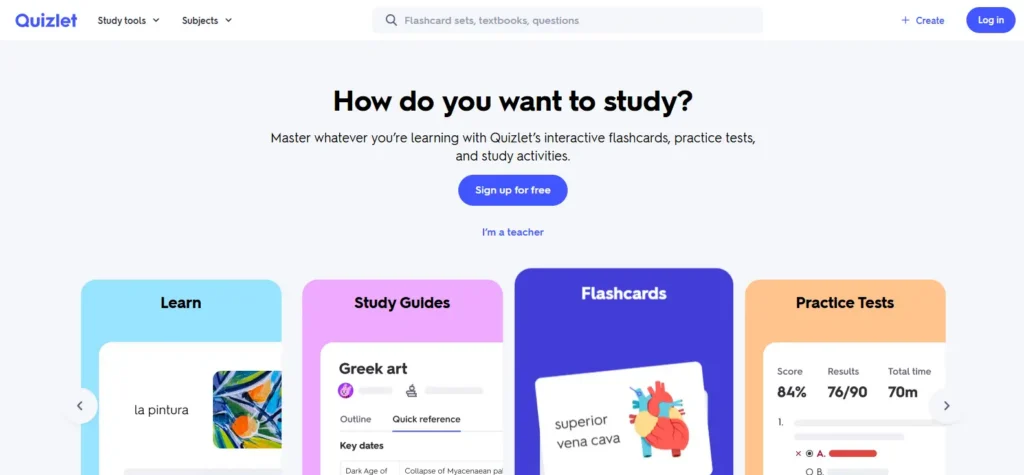
Quizlet is a popular study platform that helps learners reinforce concepts through digital flashcards, self-assessment, and interactive practice. Rather than focusing on instructor-led classroom activities, it supports independent learning by giving students flexible ways to review course content at their own pace. This makes it a useful resource for preparing for quizzes, exams, and ongoing coursework.
The platform offers multiple study modes that encourage active recall and repetition, two proven strategies for improving knowledge retention. Learners can create their own study materials or use existing sets to practice key terms, definitions, and concepts. Features such as Learn mode and Test mode allow students to evaluate their understanding, reflect on areas that need improvement, and stay aligned with their learning objectives. This continuous cycle of practice and self-assessment helps build confidence over time.
Quizlet is easy to access across devices, making it convenient for studying both inside and outside the classroom. While it is not a comprehensive formative assessment platform for instructors, it excels at supporting individual practice and reinforcing learning between lessons.
Highlights
- Digital flashcards for independent study
- Multiple self-assessment and practice modes
- Supports knowledge retention through active recall
- Custom and shared study materials
- Accessible across web and mobile devices
Best For:
Students and educators looking for flexible study tools that support self-assessment and independent practice.
Limitations:
Focuses on individual learning rather than instructor-led formative assessment or AI-assisted grading.
Pricing:
Free plan available, with additional features included in Quizlet Plus.
How Do You Choose the Right Formative Alternative?

Selecting the right formative assessment platform depends on your teaching goals, the learning environment, and the type of feedback you want to provide. Some educators need AI-assisted grading to reduce administrative work, while others prioritize interactive classroom activities, collaborative learning, or independent study.
The best solution is one that fits naturally into your instructional approach while helping students stay engaged and make measurable progress throughout the learning process.
Do You Need AI-Assisted Assessment, Interactive Quizzes, or Better Student Feedback?
Different instructional goals require different assessment tools. If your priority is improving student learning through continuous evaluation, look for a platform that supports formative assessment with timely, meaningful feedback.
Formative assessment supports continuous improvement by helping educators monitor progress, identify misconceptions, and strengthen student understanding throughout the learning process. Interactive quizzes and classroom activities are effective for checking comprehension during lessons, while AI-powered assessment platforms are better suited for evaluating written work and complex assignments.
AI can help educators provide faster feedback while maintaining instructional oversight, allowing teachers to spend more time supporting students instead of managing repetitive grading tasks.
Which Features Should Teachers and Institutions Prioritize?
The most valuable assessment platforms simplify teaching while improving learning outcomes. Teachers and instructors should look for tools that support collaborative learning, align assessments with learning objectives, and make it easy to create and manage assignments.
Flexible workflows adapt to different teaching styles, whether instruction is delivered in person, online, or through a hybrid model. Collaboration features should encourage active participation, helping students engage with course content and one another.
Reporting and analytics are equally important because reporting tools help monitor student progress, enabling educators to adjust instruction and provide targeted support when needed. Accessibility, ease of use, and reliable classroom workflows also contribute to a better learning experience.
How Important Are Ease of Use, LMS Integration, and Pricing?
A feature-rich platform offers little value if it is difficult to implement or manage. Easy implementation increases adoption, allowing teachers and institutions to begin using assessment tools with minimal disruption.
Strong LMS integration streamlines classroom management by connecting assignments, grades, and student data within existing online learning systems. This is particularly important in higher education, where multiple courses and large enrollments require efficient administration.
Free plans are useful for individual educators exploring new tools, while enterprise plans provide broader administrative capabilities such as centralized management, security controls, analytics, and institutional support. Evaluating pricing alongside implementation requirements helps determine overall value.
Which Formative Alternative Offers the Best Long-Term Value?
The best platform depends on how you teach and assess student learning. Apporto PowerGrader stands out for AI-assisted assessment, personalized feedback, and scalable workflows designed for higher education.
Kahoot! is ideal for live classroom quizzes that maximize engagement, while Quizizz offers flexibility through self-paced formative assessment and homework assignments.
Pear Assessment excels at interactive, teacher-led instruction with real-time student responses. Gimkit focuses on gamified learning that reinforces concepts through repeated classroom practice, and Quizlet remains a strong choice for independent study, self-assessment, and retrieval practice. Matching platform strengths to your instructional goals will deliver the greatest long-term value.
Final Thoughts
The right formative assessment platform depends on your instructional priorities. Kahoot! is ideal for live classroom quizzes, Quizizz supports flexible self-paced assessment, Pear Assessment enhances interactive instruction, Gimkit strengthens engagement through gamified learning, and Quizlet is a strong choice for independent study and retrieval practice.
For higher education institutions, however, Apporto PowerGrader delivers the most complete solution by combining AI-assisted formative assessment, personalized feedback, scalable workflows, and seamless LMS integration.
If you’re looking to improve grading efficiency while supporting better student learning, Apporto PowerGrader is the strongest overall choice. Explore the platform to see how it can modernize your assessment process.
Frequently Asked Questions (FAQs)
1. What are the best Formative alternatives in 2026?
Some of the best Formative alternatives in 2026 include Apporto PowerGrader, Kahoot!, Quizizz, Pear Assessment, Gimkit, and Quizlet. Each platform serves different instructional needs, ranging from AI-assisted assessment and personalized feedback to classroom quizzes, gamified learning, and independent study.
2. What is the difference between formative assessment and summative assessment?
Formative assessment takes place during the learning process to monitor student progress, identify misconceptions, and provide ongoing feedback. Summative assessment measures learning at the end of a unit or course, typically through final exams, projects, or standardized tests.
3. Which formative assessment platform is best for higher education?
Apporto PowerGrader is one of the strongest options for higher education because it combines AI-assisted formative assessment, personalized feedback, customizable rubrics, scalable grading workflows, and seamless LMS integration. These features help instructors manage large courses while maintaining consistent assessment quality.
4. Which platform is best for classroom quizzes and engagement?
Kahoot! is a leading choice for classroom quizzes and engagement thanks to its game-based learning experience, live competitions, and interactive activities. It encourages active participation while giving teachers immediate insights into student understanding during lessons.
5. Are there free formative assessment tools?
Yes. Several formative assessment platforms offer free plans, including Kahoot!, Quizizz, Pear Assessment, Gimkit, and Quizlet. These free versions are suitable for many educators, while premium plans provide advanced reporting, administrative controls, and additional instructional features.
6. How do formative assessment tools improve student learning?
Formative assessment tools improve student learning by providing continuous feedback throughout instruction. They help educators monitor progress, identify misconceptions early, adjust teaching strategies, and give students regular opportunities to reflect, practice, and strengthen their understanding before final assessments.
7. Can formative assessment platforms integrate with learning management systems?
Yes. Many modern formative assessment platforms support LMS integration, allowing instructors to manage assignments, grades, and student data within existing learning environments. This simplifies classroom management and creates a more efficient assessment workflow.
8. What should you look for when choosing a formative assessment platform?
Choose a platform that aligns with your instructional goals, supports meaningful feedback, offers useful reporting, integrates with your LMS, and fits your budget. You should also consider ease of use, scalability, classroom engagement features, and long-term value for your institution.
