
What Is the Difference Between Ouriginal and Apporto TrustEd?
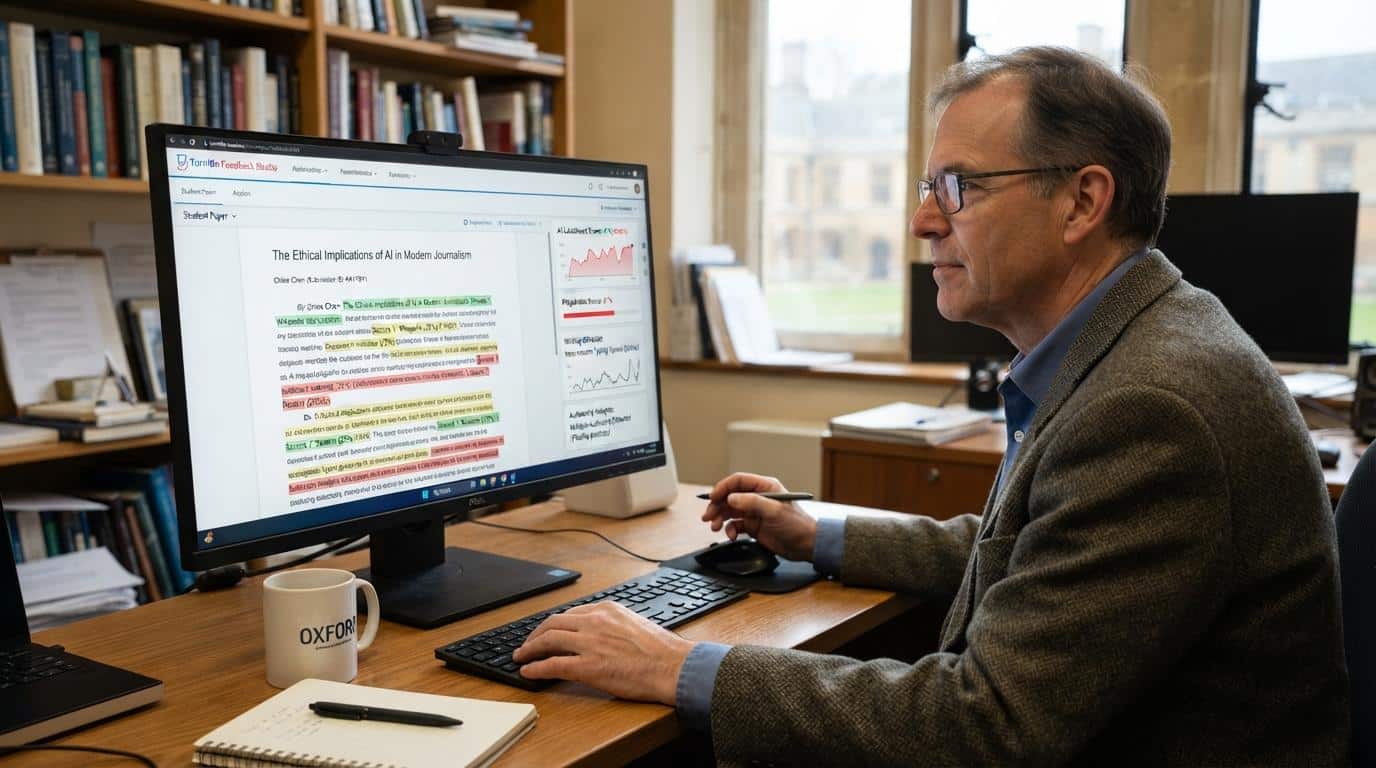
Apporto TrustEd offers a broader approach to academic integrity than traditional plagiarism checkers like Ouriginal. While Ouriginal historically focused on text similarity, TrustEd uses behavioral integrity analytics, authorship verification, writing behavior, revision history, and AI-likelihood scoring to provide deeper context around how student work is produced.
Academic integrity depends on more than checking whether a student’s work resembles something already published. You also need confidence that written work reflects authentic authorship and follows institutional standards.
That is where the Ouriginal vs Apporto TrustEd comparison becomes useful. Ouriginal was historically known as a conventional plagiarism checker, using similarity detection to identify potentially matching text in submitted work.
However, Ouriginal was discontinued on June 30, 2026. Apporto TrustEd takes a different approach, using behavioral integrity analytics and authorship verification to examine how work is produced.
In this comparison, you’ll look at plagiarism detection, writing behavior, AI-likelihood scoring, LMS integration, student assignments, institutional workflows, and authorship verification.
What Was Ouriginal and What Did It Do?
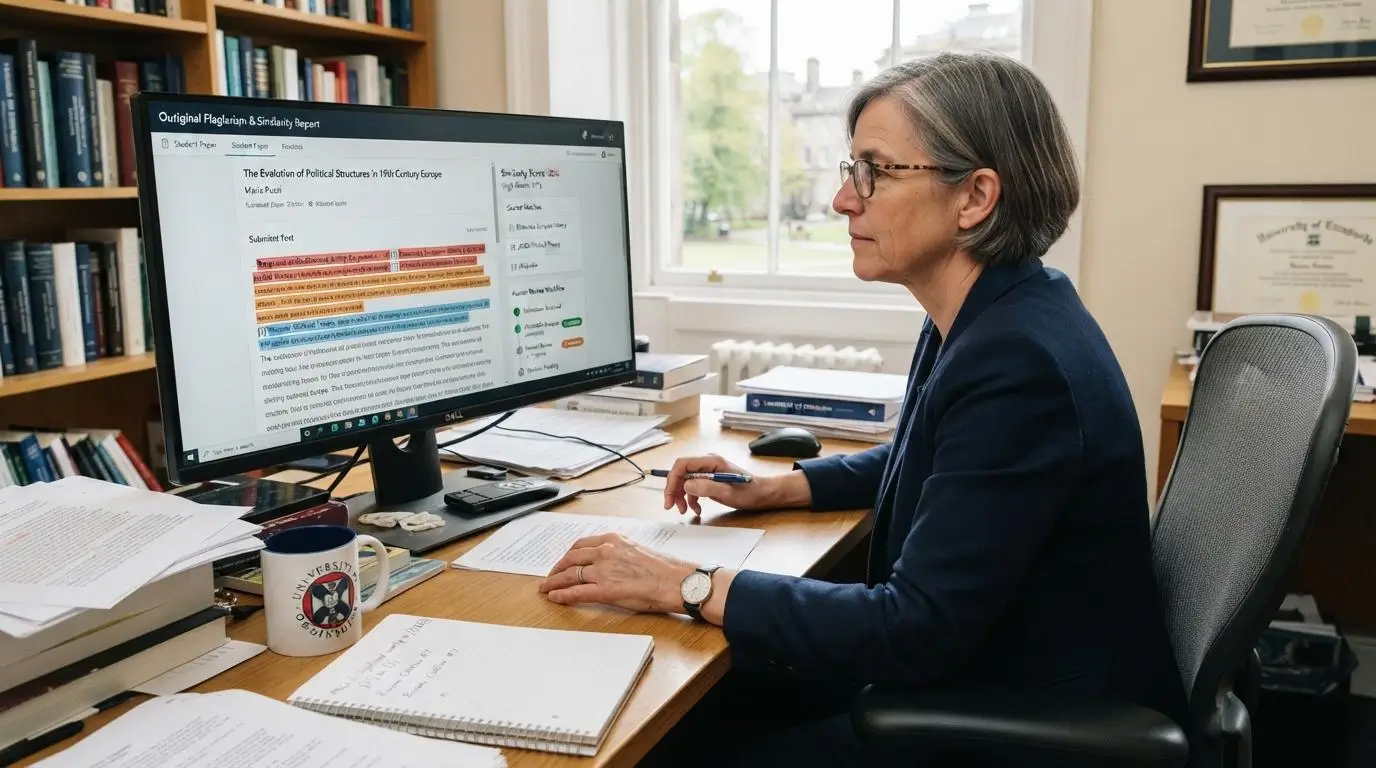
Ouriginal was a plagiarism detection software and academic integrity service designed to identify similarities between submitted work and existing material. Its conventional approach centered on text comparison, giving instructors and institutions a way to flag content that might require closer examination.
The important word is flag. A similarity match did not automatically establish plagiarism. Human review remained essential because legitimate citations, quotations, commonly used language, and other forms of appropriate source use can produce similarities.
Ouriginal was used across different educational and organizational settings, including:
- Students and instructors using it as part of assignment and submission workflows.
- Academic institutions incorporating similarity checking into their integrity processes.
- Educational organizations using the service to review written work.
- Startups, SMEs, and enterprises that needed plagiarism detection capabilities.
- Participating institutions whose submissions could be compared within the service’s available sources.
Historically, this made Ouriginal a trusted name in conventional plagiarism detection. Its role was straightforward in principle: identify potentially matching text, show the relevant information, and give users a basis for further review.
What Were the Main Features of the Ouriginal Plagiarism Checker?
Ouriginal’s core capabilities included several features designed around conventional plagiarism detection:
- Plagiarism detection and similarity identification helped locate text that resembled existing material.
- Translated plagiarism detection allowed Ouriginal to identify plagiarized content even when text had been translated.
- Submission comparison enabled comparisons involving work from participating institutions.
- LMS integration allowed Ouriginal to connect with several learning management systems.
- Platform support extended to Android and other platforms.
- Customer support options gave users access to assistance when working with the service.
- Assignment and submission workflows supported academic use by students and instructors.
- Human review remained an important part of interpreting flagged similarities and determining whether a genuine integrity concern existed.
Why Was Ouriginal Historically Trusted for Plagiarism Detection?
Ouriginal became established around a familiar academic integrity need: identifying potentially copied or closely matching material before it became a larger problem. Similarity checking gave instructors and institutions a practical way to review student submissions, research, and other written work at scale.
Its value, however, was never simply the percentage or number of matches it produced. The real judgment came afterward. Instructors and administrators needed to examine the flagged passages, understand their sources, and consider whether the similarities were legitimate or problematic.
That human element is important because conventional plagiarism detection can identify text similarity, but similarity alone cannot explain authorship. This limitation leads to a broader question: what can you learn when you examine not only the submitted text, but also how the writing was produced?
What Is Apporto TrustEd and How Does It Approach Academic Integrity?
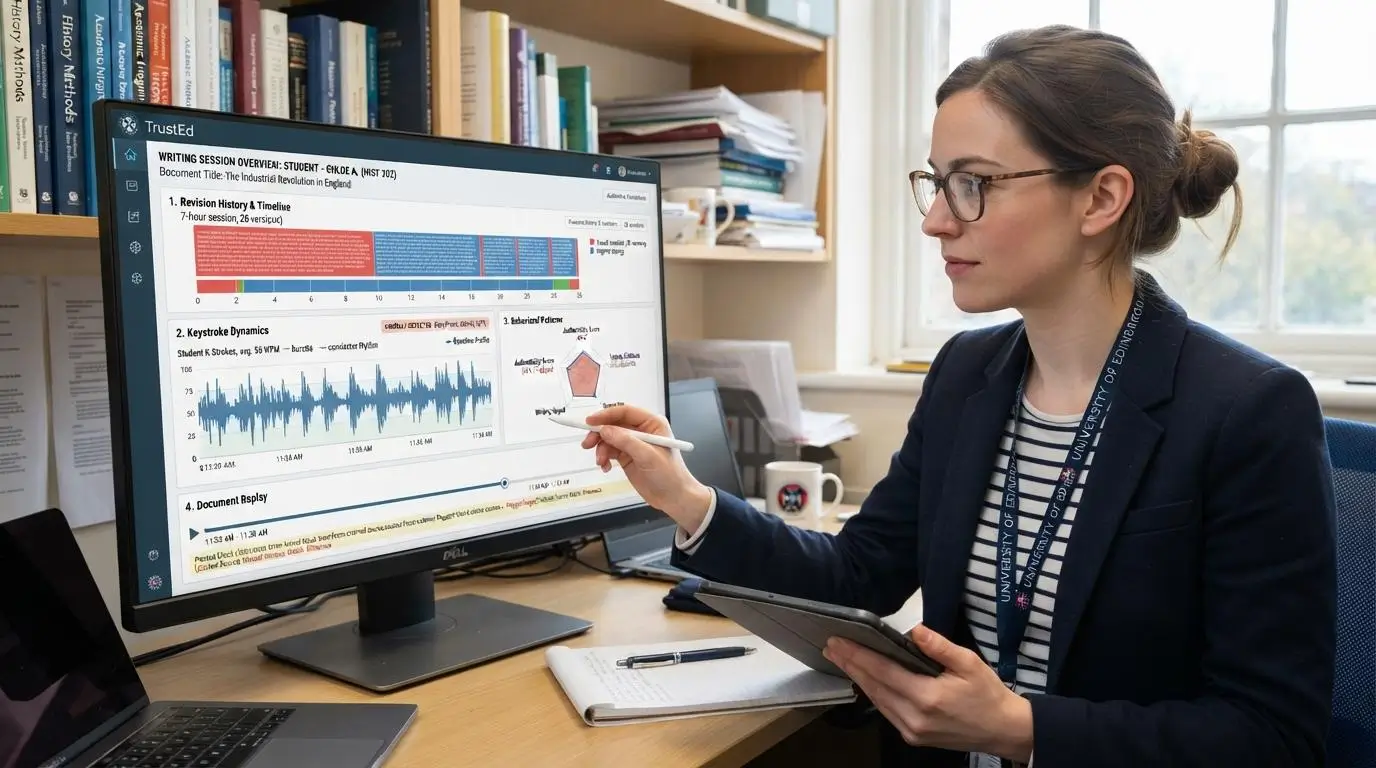
Apporto TrustEd addresses Academic Integrity and AI differently from conventional plagiarism detection software. Instead of focusing primarily on whether submitted text matches material found elsewhere, TrustEd uses behavioral integrity analytics and authorship verification to examine how academic work is produced.
That distinction is important. A plagiarism checker can identify similarities in the finished document, but understanding authorship may require looking at the writing process itself. TrustEd is designed to track authentic authorship through behavior analytics, giving institutions another type of evidence when reviewing student work.
Its approach can include:
- Writing behavior that provides insight into how a student’s work develops.
- Keystroke dynamics that capture patterns associated with the writing process.
- Revision history that shows how a document changes over time.
- Cohort comparisons that provide additional context by examining writing patterns across student groups.
- Behavior analytics that can complement conventional academic integrity review.
TrustEd also sits within Apporto’s broader academic technology environment, including virtual computer labs and secure desktops. This gives institutions a way to consider integrity analysis alongside the controlled computing environments used for academic work.
How Does TrustEd Examine Student Writing Behavior?
TrustEd’s behavioral approach focuses on the process behind a document, not simply the finished words on the screen.
- Keystroke dynamics can provide information about how a student writes and how writing develops over a session.
- Revision history can show how a document evolves rather than presenting only the final submission.
- Writing behavior can help establish patterns associated with authentic authorship over time.
- Cohort comparisons can provide additional context when institutions examine writing patterns across groups of students.
- Behavior analytics can complement similarity reports and other academic integrity evidence when a broader review is appropriate.
The distinction is fairly simple. Traditional plagiarism detection asks, Does this text resemble something that already exists? TrustEd is designed to examine how the work is produced, giving faculty and administrators another perspective when evaluating academic integrity.
How Do Ouriginal and Apporto TrustEd Approach Academic Integrity Differently?
The biggest difference between Ouriginal and Apporto TrustEd is the type of evidence each approach is designed to examine. Ouriginal was built around conventional plagiarism and similarity detection, while TrustEd focuses on behavioral integrity and authorship verification.
| Area | Original | Apporto TrustEd |
|---|---|---|
| Primary focus | Plagiarism and similarity detection | Behavioral integrity and authorship verification |
| Main evidence | Text similarity | Writing behavior |
| Text matching | Core function | Not the primary approach |
| Authorship analysis | Limited compared with behavioral analysis | Core focus |
| Translated plagiarism | Identifies translated plagiarized text | Different analytical approach |
| Revision history | Not the primary focus | Relevant behavioral signal |
| Keystroke dynamics | Not the primary focus | Included in behavioral analytics |
| AI-generated text | Conventional plagiarism focus | AI-likelihood scoring |
| Student integrity | Similarity-based evidence | Behavior-based evidence |
| Institutional workflow | LMS and submission integration | Virtual labs and secure desktops |
Ouriginal’s model centered on finding similarities between submitted work and existing material. This made it useful for identifying passages that instructors or administrators could investigate further, including potentially translated plagiarism. TrustEd asks a different question: does the writing process provide evidence of authentic authorship?
That difference becomes especially relevant as academic integrity concerns extend beyond conventional copying. Text similarity can identify overlap, while revision history and keystroke dynamics can provide information about how a document developed.
Neither approach should be treated as a complete answer by itself. They simply examine different aspects of the same larger problem. Ouriginal focused on the content being submitted. TrustEd focuses more closely on the process behind that content, giving institutions another perspective when evaluating academic integrity.
- Explain that both address academic integrity, but from different technological standpoints.
- Avoid declaring one universally better.
- Establish that the central comparison is similarity detection versus behavioral evidence.
Is Traditional Plagiarism Detection Enough to Verify Academic Integrity?

Traditional plagiarism detection is useful, but it answers a fairly specific question: does the submitted text resemble material found in other sources? It can identify copied or closely matched passages, giving instructors and administrators something concrete to investigate.
What it cannot establish on its own is whether the submitted work represents authentic authorship. A document may contain little or no matching text and still raise questions about how it was produced. AI-generated writing, unauthorized assistance, or other forms of academic misconduct may not appear as conventional text matches.
That distinction is becoming increasingly important for institutions that want both effective detection and fair review. Overreliance on a single score can create problems in either direction. You may miss a genuine concern, or you may interpret legitimate similarities as misconduct.
This is where a behavioral approach such as Apporto TrustEd becomes relevant. Instead of looking only at the finished document, it can provide additional information about the writing process itself.
What Can a Similarity Checker Actually Tell You?
A similarity checker can provide useful evidence about the submitted document, including:
- Whether text resembles material in comparison sources, helping identify potentially overlapping content.
- Where potential matches appear, so you can examine the specific passages rather than relying only on an overall score.
- Which sources may contain similar material, providing context for investigating the match.
- Whether further review may be appropriate, particularly when substantial or unexpected similarities appear.
- Why instructor or administrator interpretation remains necessary, since similarity does not automatically establish plagiarism or academic misconduct.
A similarity report is therefore best understood as a starting point for review, not a final judgment.
How Does AI Writing Detection Change the Academic Integrity Conversation?
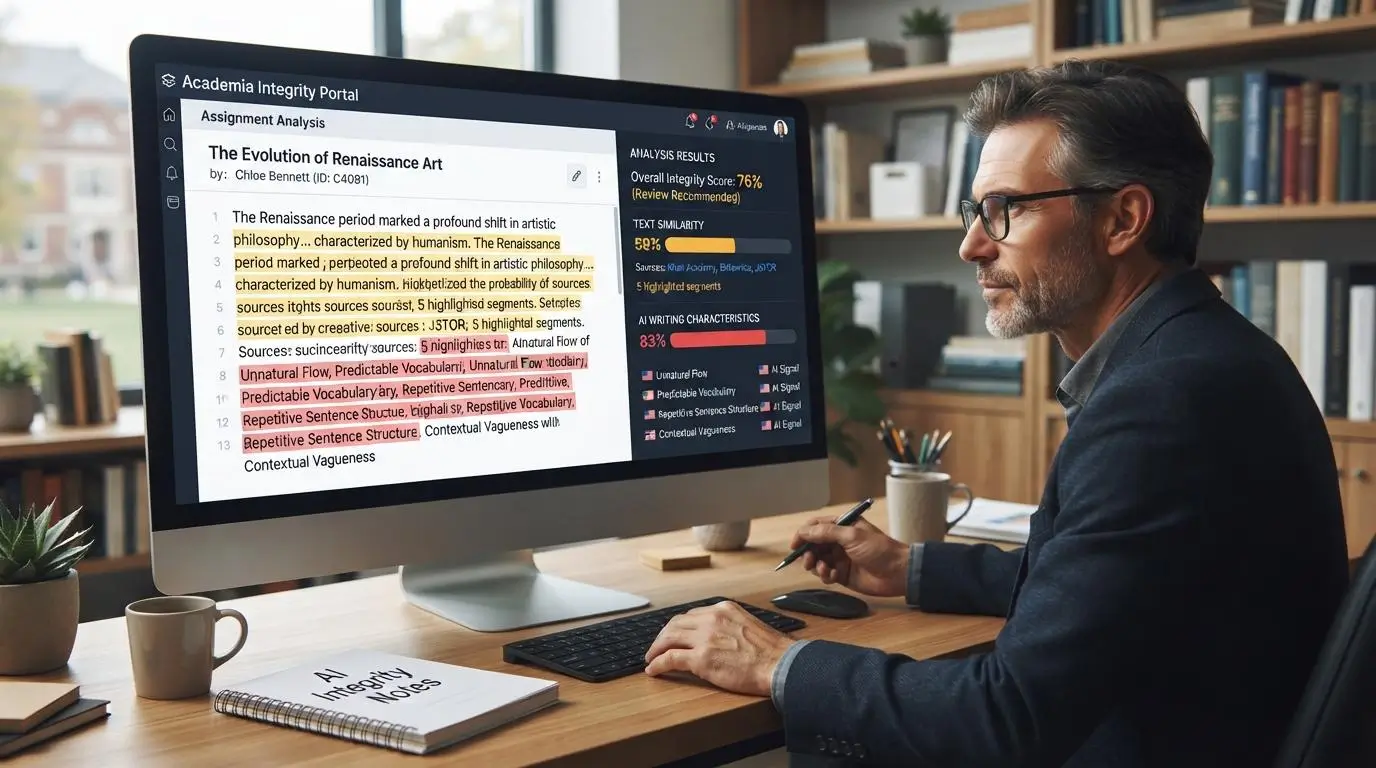
AI writing detection adds another layer to academic integrity because AI-generated writing and plagiarism are not the same issue. A student can submit original-looking text that does not closely match existing sources, yet questions about authorship may still arise. For a related comparison of AI content detection and behavioral authorship analysis, explore Winston AI vs Apporto TrustEd
That is where TrustEd’s AI-likelihood scoring becomes relevant. It provides a different signal from conventional plagiarism detection by helping identify writing that may have characteristics associated with AI-generated content. Still, an AI-likelihood result should be treated as evidence for review, not absolute proof of misconduct.
| Detection Approach | What It Looks For | Main Question |
|---|---|---|
| Plagiarism detection | Matching existing text | Does this work resemble another source? |
| Similarity checking | Text overlap | Where are the similarities? |
| AI-likelihood scoring | AI-associated writing signals | Could AI have contributed to the writing? |
| Authorship verification | Writing behavior | Does the writing process align with authentic authorship? |
For institutions, that distinction has practical consequences. False positives can affect students unfairly and potentially damage institutional reputation if automated results are treated as conclusive. A more careful approach considers the available evidence together, rather than asking one score to carry the entire argument.
Why Should You Be Careful With Automated Integrity Scores?
An automated integrity score can provide confidence, but confidence is not certainty. AI-likelihood detection and other automated systems can produce false positives, meaning legitimate student work may be flagged even when misconduct has not occurred.
That is why instructors and administrators should review results alongside the actual submission, writing history, relevant similarity information, and institutional policies. Clear policies also help ensure that similar cases are handled consistently.
The objective should be fair academic review. Technology can point toward a concern, but it should not make the final judgment on its own.
How Did Ouriginal Handle Student Assignments and Institutional Workflows?

Ouriginal was built to fit into established academic workflows, particularly those involving students, assignments, submissions, and instructor review. Instead of requiring plagiarism checking to operate separately from the teaching process, its integration with learning management systems allowed institutions to incorporate similarity checking into existing submission workflows.
Students could submit written assignments through supported environments, while instructors could review flagged similarities and investigate the underlying sources. That made conventional plagiarism detection a practical part of routine academic review.
Ouriginal’s workflow also extended across different types of users and institutions:
- Students could submit assignments through supported academic systems.
- Instructors could review flagged similarities and determine whether further examination was necessary.
- Institutions could incorporate plagiarism detection into established academic integrity processes.
- Participating institutions could contribute to the comparison environment used for submitted work.
- Users on different platforms could access the service through its support for Android and other platforms.
The overall model was fairly direct: integrate the tool, submit the work, review the similarities, and apply human judgment. That approach helped make similarity checking part of everyday academic administration.
Which Learning Management Systems Could Ouriginal Integrate With?
Ouriginal integrated with several learning management systems, allowing institutions to connect plagiarism detection with their existing assignment and submission processes.
That integration mattered because students and instructors did not necessarily need to move between separate systems simply to complete an originality check. Submissions could flow through established academic workflows, while instructors could access similarity results as part of their review process.
For institutions, LMS integration also reduced administrative friction. Instead of creating an entirely separate process for plagiarism detection, similarity checking could become part of the existing coursework structure. The supplied information does not specify the individual LMS platforms supported, so those should not be assumed or added without verification.
How Does Apporto TrustEd Fit Into Modern Academic Workflows?

Apporto TrustEd fits into academic workflows by combining behavioral integrity analytics with Apporto’s virtual computer lab environment. Instead of treating integrity review as a separate step that begins only after a student submits a document, TrustEd can provide information about the writing process as academic work develops.
Within this broader environment, institutions can provide controlled access to applications through virtual desktops while TrustEd examines relevant writing and authorship signals. That creates a connection between the tools students use to complete their work and the information available for integrity review.
TrustEd can support workflows involving:
- Student submissions where instructors need additional context around authorship.
- Coursework that develops over multiple writing sessions.
- Writing processes captured through behavioral signals.
- Authorship verification based on patterns in how work is produced.
- AI-likelihood scoring as an additional signal when reviewing possible AI-generated writing.
- Cohort comparisons that can provide broader context around student writing behavior.
The important distinction is that TrustEd does not simply reproduce the conventional plagiarism-checking model. It brings behavioral evidence into the academic workflow, giving institutions another way to consider integrity alongside their existing review practices.
How Can Virtual Computer Labs Support Academic Integrity?
Virtual computer labs can provide a consistent academic computing environment where students access the applications and resources required for their coursework. Apporto’s virtual desktop environment can centralize that access while supporting different academic workflows.
This matters because the technology environment itself is part of how institutions manage coursework. Students can access required applications through virtual desktops, while faculty and administrators can work within established institutional processes.
TrustEd can operate alongside this broader environment, connecting behavioral integrity analysis with the academic work taking place through virtual computing. The result is not a replacement for institutional policies or human review. Instead, it gives institutions another layer of technology to incorporate into their existing academic workflows.
What Happened to Ouriginal and Why Does That Matter?
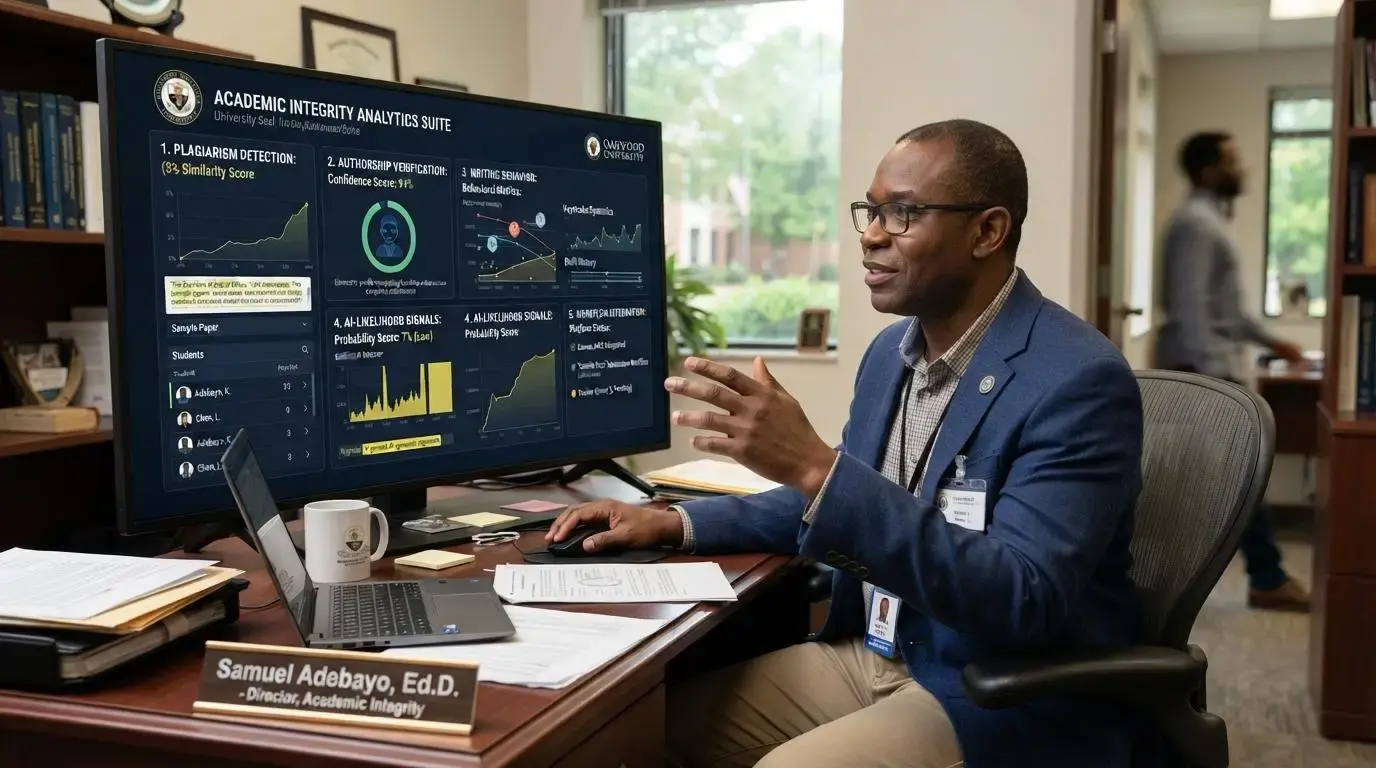
According to the information provided for this article, Ouriginal was discontinued on June 30, 2026. That changes the practical nature of the Ouriginal vs Apporto TrustEd comparison. Ouriginal should be understood as a historical example of conventional plagiarism detection, rather than presented as an actively available solution.
The comparison remains useful because it illustrates how academic integrity technology can approach the same broad problem in different ways. Ouriginal centered on similarity-based plagiarism detection, while TrustEd focuses more on behavioral integrity analytics and authorship verification.
For institutions reviewing their options after Ouriginal’s discontinuation, the more useful question is not simply which product replaces another. You need to consider what type of integrity evidence your institution actually requires. Institutions seeking current plagiarism-checking and academic integrity solutions can also explore ouriginal alternatives. That may include:
- Similarity and plagiarism detection
- Authorship verification
- Writing behavior
- AI-likelihood signals
- Student coursework workflows
- Institutional review processes
That distinction can help you evaluate current solutions according to actual academic integrity needs rather than relying on historical feature comparisons.
Is Ouriginal Still Available to Institutions?
No. Based on the supplied information, Ouriginal was discontinued on June 30, 2026. It should therefore not be presented as a currently available plagiarism detection service. Institutions evaluating academic integrity tools now should focus on the evidence they need, the workflows they support, and how effectively each solution fits their existing academic processes.
How Does Ouriginal Compare With Apporto TrustEd for Students?
Student integrity increasingly involves more than checking whether submitted text resembles something already published. Similarity detection remains useful, but institutions may also want insight into writing behavior, authorship, AI involvement, and how work develops over time. That creates a clear distinction between the historical Ouriginal approach and Apporto TrustEd.
| Student Integrity Need | Original | Apporto TrustEd |
|---|---|---|
| Assignment similarity | Strong historical fit | Different approach |
| Plagiarism detection | Core capability | Not primary focus |
| Writing behavior | Not primary focus | Core capability |
| Authorship verification | Limited compared with behavioral approach | Core focus |
| AI-likelihood scoring | Not the supplied core capability | Included |
| Revision history | Not primary focus | Relevant |
| Cohort comparison | Not primary focus | Included |
| Virtual lab integration | No | Apporto ecosystem |
Ouriginal’s strength was conventional plagiarism and similarity detection. It could identify potentially matching content and give instructors a basis for further investigation. TrustEd approaches student integrity differently, examining behavioral signals that can provide context around how written work is produced.
That broader evidence can be useful when a document contains little obvious text overlap but questions about authorship still remain. Writing behavior, revision history, AI-likelihood scoring, and cohort comparisons can add information that a conventional similarity report does not provide.
Still, behavioral analytics should not be treated as automatic proof of authorship or misconduct. The fairest approach is to consider multiple forms of evidence alongside the actual work, institutional policies, and instructor review.
Which Tool Is Better for Academic Integrity, Ouriginal or Apporto TrustEd?
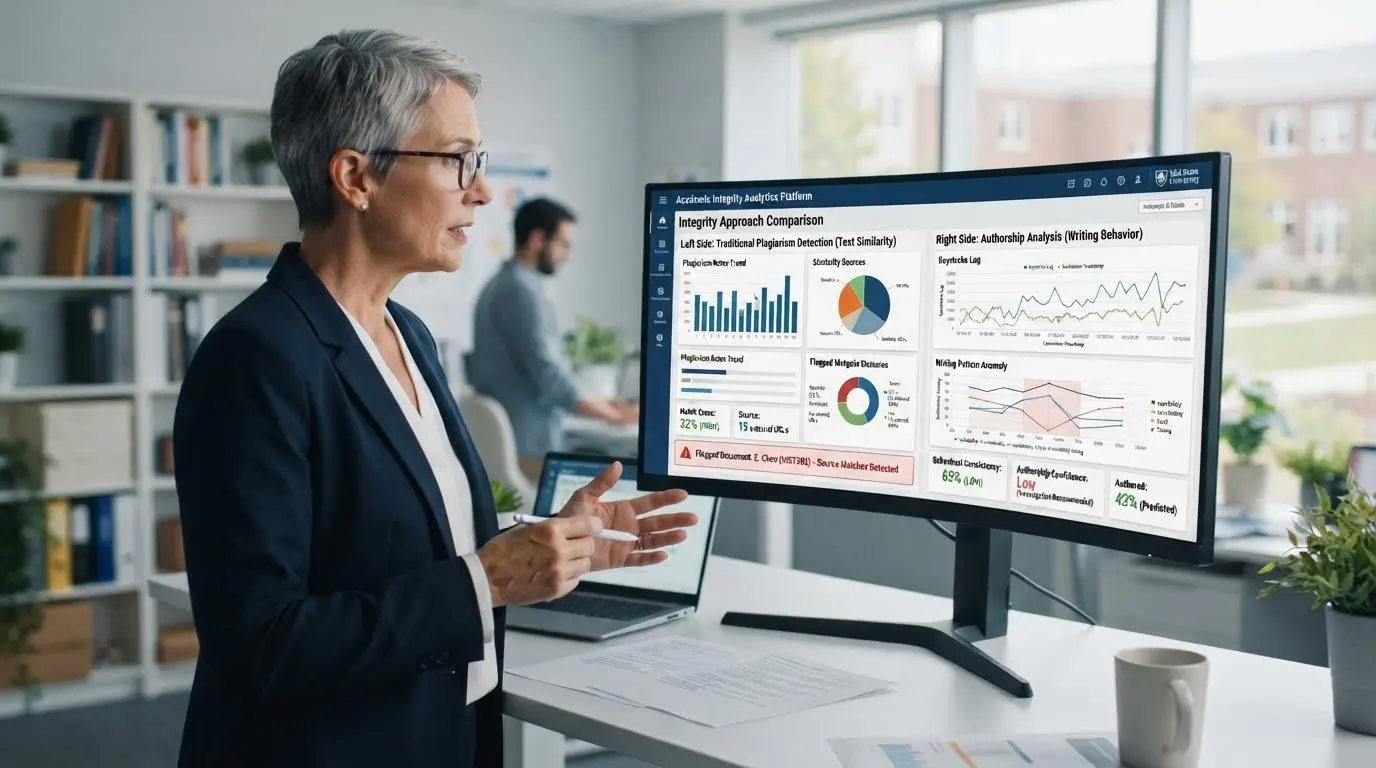
The answer depends on the integrity question you need to answer. Ouriginal was historically well suited to conventional plagiarism and similarity checking, while TrustEd is designed to provide broader behavioral evidence around student writing and authorship. Since Ouriginal was discontinued on June 30, 2026, the comparison is now mainly useful for understanding the difference between these approaches.
| If Your Primary Need Is… | Best-Aligned Approach | Reason |
|---|---|---|
| Conventional plagiarism detection | Original historically | Similarity and plagiarism checking |
| Translated plagiarism detection | Original historically | Identified translated plagiarized text |
| LMS-based assignment checking | Original historically | LMS integration |
| Writing behavior analysis | Apporto TrustEd | Behavioral integrity analytics |
| Authorship verification | Apporto TrustEd | Tracks authentic authorship |
| AI-likelihood scoring | Apporto TrustEd | AI-generated text detection signal |
| Cohort writing comparison | Apporto TrustEd | Behavioral and cohort analysis |
| Virtual academic environments | Apporto | Virtual labs and secure desktops |
If your institution is evaluating current options, TrustEd’s broader set of signals becomes particularly relevant. It can examine writing behavior, revision history, keystroke dynamics, authorship patterns, AI-likelihood signals, and cohort comparisons, rather than relying solely on text similarity.
That does not make behavioral analysis a replacement for every form of plagiarism detection. It addresses a different part of the academic integrity question. The practical choice should therefore be based on the evidence your faculty and administrators need, the type of work being reviewed, and how the tool fits your existing academic workflows.
What Are the Main Advantages and Limitations of Ouriginal?
- Established plagiarism detection made Ouriginal historically relevant to academic integrity, particularly for institutions using conventional similarity checking.
- Translated plagiarism identification expanded its ability to identify potentially plagiarized text even when the original material had been translated.
- LMS integration supported institutional assignment and submission workflows, making similarity checking easier to incorporate into existing academic processes.
- Multi-platform support helped accommodate users working across different devices and environments.
- Human review remained essential because a flagged similarity indicated material for investigation, not automatic proof of plagiarism or academic misconduct.
- Discontinuation is the major limitation today, since Ouriginal was discontinued on June 30, 2026. Institutions can therefore view its capabilities as historical context when evaluating current academic integrity approaches.
What Are the Main Advantages and Limitations of Apporto TrustEd?
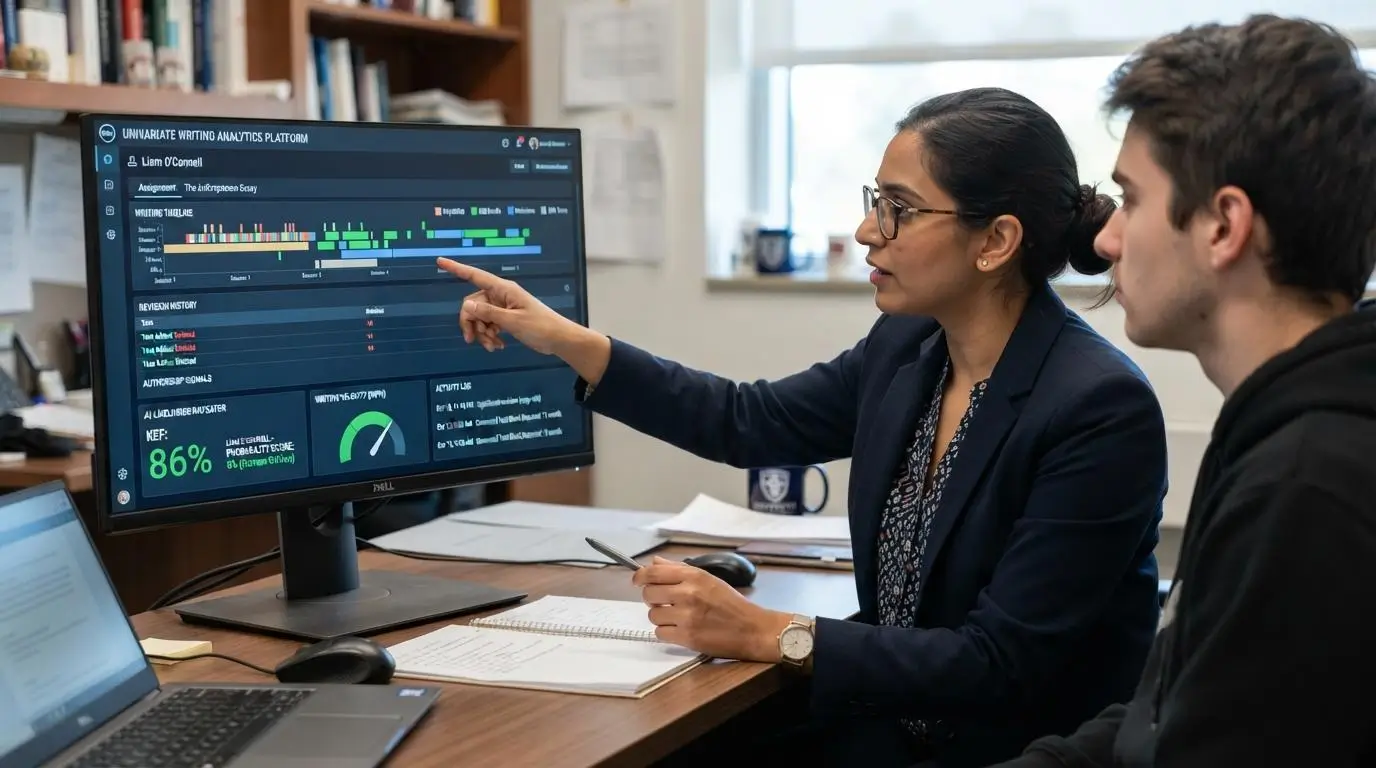
- Behavioral integrity analytics examine writing behavior rather than relying solely on text similarity, giving institutions another perspective on student work.
- Authorship verification provides a different way to assess authentic student writing by looking beyond the final document.
- Keystroke and revision signals provide information about how written work develops over time, rather than showing only the finished submission.
- AI-likelihood scoring adds another signal when reviewing writing that may have been generated with AI.
- Cohort comparisons can provide additional context by examining writing behavior across groups of students.
- Apporto integration connects TrustEd with virtual computer labs and secure desktops, placing integrity analysis within a broader academic technology environment.
- A different evidence model means TrustEd should not be treated as a conventional plagiarism checker or scholarly similarity database. Its value comes from examining different signals.
Can Behavioral Analytics and Plagiarism Detection Work Together?
Behavioral analytics and plagiarism detection can work together because they answer different integrity questions. Similarity detection helps you identify text that resembles existing sources, while behavioral analysis provides information about how the submitted work was produced.
For faculty and administrators, considering both types of evidence can provide more context than relying on either signal alone. A similarity match may deserve investigation, while writing behavior can offer additional information about authorship and how a document developed.
The key is interpretation. No individual automated signal should automatically establish academic misconduct. Similarity results, behavioral analytics, AI-likelihood scores, and other evidence should be considered alongside the actual submission and applicable institutional policies.
Used carefully, multiple signals can support more informed academic integrity decisions. They do not remove the need for human judgment. Instead, they give reviewers a broader set of information to consider when determining whether further review is warranted.
How Should Institutions Evaluate Academic Integrity Tools Today?

Choosing an academic integrity tool should start with the questions your institution needs to answer, not simply the number of features a product offers. Plagiarism, AI-generated writing, and authorship concerns can require different forms of evidence, so the evaluation should reflect your actual academic processes.
Consider these factors:
- Type of integrity concern such as plagiarism, AI-generated writing, or questions about authentic authorship.
- Users including students, instructors, researchers, and administrators, since each group may have different requirements.
- Document types such as assignments, research papers, dissertations, and theses.
- Workflow integration with LMS platforms and existing institutional systems.
- Reporting and review requirements, including how easily faculty can interpret and investigate results.
- Data and privacy considerations when handling student submissions and writing records.
- Support and service available to instructors, administrators, and other users.
- Existing academic technology infrastructure and how the solution fits into it.
- Institutional policies governing automated detection, evidence, review, and academic misconduct decisions.
The most useful tool is ultimately the one that aligns with the integrity questions your institution needs to answer. A similarity checker may be appropriate for one concern, while behavioral analytics or authorship verification may provide valuable evidence for another.
What Does the Ouriginal vs Apporto TrustEd Comparison Mean for Academic Integrity?
The Ouriginal vs Apporto TrustEd comparison highlights a broader point about academic integrity: similarity and authorship are related, but they are not the same thing. Ouriginal’s historical approach focused on identifying matching text, while TrustEd examines behavioral signals that can provide additional context around how student work is produced.
Academic integrity now involves more than conventional plagiarism detection. Originality, authentic authorship, AI-generated writing, proper attribution, and student accountability can all matter when reviewing academic work.
The stakes are significant. A missed integrity concern can affect institutional reputation, while a false accusation can unfairly affect a student and undermine trust in the review process.
That is why technology should support informed human decisions rather than replace them. The useful comparison is not about declaring a universal winner. It is about understanding what each approach actually measures and choosing evidence that fits the integrity question your institution needs to answer.
Final Thoughts
If your priority was conventional plagiarism detection, Ouriginal was historically the stronger fit, particularly for similarity checking, translated plagiarism detection, and academic submission workflows. However, Ouriginal was discontinued on June 30, 2026, so it is no longer an option for institutions evaluating current solutions.
Apporto TrustEd takes a different approach. Its behavioral integrity analytics, authorship verification, AI-likelihood scoring, and cohort analysis are designed to provide broader insight into how student work is produced. It should not be viewed simply as “the new Ouriginal.” The underlying approach is different.
If your institution is looking beyond conventional similarity checking and wants to explore a broader approach to academic integrity, explore Apporto TrustEd and Apporto’s academic technology solutions to see how they can fit into your existing workflows.
Frequently Asked Questions (FAQs)
1. What is the difference between Ouriginal and Apporto TrustEd?
Ouriginal historically focused on plagiarism and similarity detection, identifying potentially matching text in submitted work. Apporto TrustEd takes a different approach, using behavioral integrity analytics, authorship verification, and additional signals around student writing.
2. Is Ouriginal still available?
No. Based on the information provided for this article, Ouriginal was discontinued on June 30, 2026. It should therefore be treated as a historical plagiarism detection service rather than a currently available option for institutions.
3. What was Ouriginal used for?
Ouriginal was used by students, instructors, institutions, and organizations for conventional plagiarism detection and similarity checking. Its capabilities also included identifying potentially plagiarized text that had been translated, supporting broader academic integrity workflows.
4. Does Ouriginal detect translated plagiarism?
Yes. According to the supplied information, Ouriginal could identify plagiarized text even when the original material had been translated. This extended its conventional plagiarism detection capabilities beyond straightforward word-for-word matching in the same language.
5. What is Apporto TrustEd?
Apporto TrustEd is an academic integrity solution focused on behavioral analytics and authorship verification. Rather than relying primarily on text similarity, TrustEd examines how student work is produced, using signals associated with writing behavior and authorship.
6. Can Apporto TrustEd detect AI-generated writing?
TrustEd includes AI-likelihood scoring as a signal for reviewing potential AI-generated writing. However, an automated score should not be treated as conclusive proof. Faculty and administrators still need to consider the wider evidence and applicable institutional policies.
7. Does Apporto TrustEd track writing behavior?
Yes. According to the supplied information, Apporto monitors writing behavior, including keystroke dynamics and revision history. These signals can provide additional context about how written work develops and support broader authorship analysis.
8. Does Ouriginal integrate with LMS platforms?
Yes. Ouriginal integrated with several learning management systems, supporting academic assignment and submission workflows. This allowed institutions to incorporate similarity checking into existing processes rather than requiring students and instructors to manage a completely separate workflow.
9. How is TrustEd different from a plagiarism checker?
A conventional plagiarism checker looks for similarities between submitted work and existing content. TrustEd takes a different approach by analyzing writing behavior and authorship signals, providing information about how the work was produced rather than focusing primarily on matching text.
10. Can TrustEd replace traditional plagiarism detection?
TrustEd should not automatically be considered a one-for-one replacement for conventional similarity checking. The approaches answer different questions. Plagiarism detection identifies potential text overlap, while TrustEd provides behavioral and authorship signals that can add another layer of academic integrity evidence.
