

What’s the Difference Between GPTZero and Apporto TrustEd?
Apporto TrustEd takes a broader approach to academic integrity through trusted computing, integrity analytics, writing behavior, and secure access, while GPTZero focuses on detecting AI-generated writing and analyzing text-level signals. Apporto supports secure academic environments and institutional workflows, while GPTZero suits AI content checks.
A finished paper can tell you what was written, but it may tell you much less about how that work came together. That distinction sits at the heart of the GPTZero vs Apporto TrustEd comparison. AI-generated text has made academic integrity more difficult to evaluate, particularly when institutions must distinguish legitimate AI use from work that misrepresents authorship.
GPTZero approaches the issue at the text level, using AI detection and writing feedback. Apporto TrustEd takes a broader route, combining trusted virtual desktop environments, integrity analytics, writing behavior, and secure access. An AI score can raise a question, but it should not settle one.
In this blog post, you’ll compare accuracy, false positives, writing patterns, plagiarism, writing history, security, and institutional use.
What Is GPTZero and How Does Its AI Detection Tool Work?
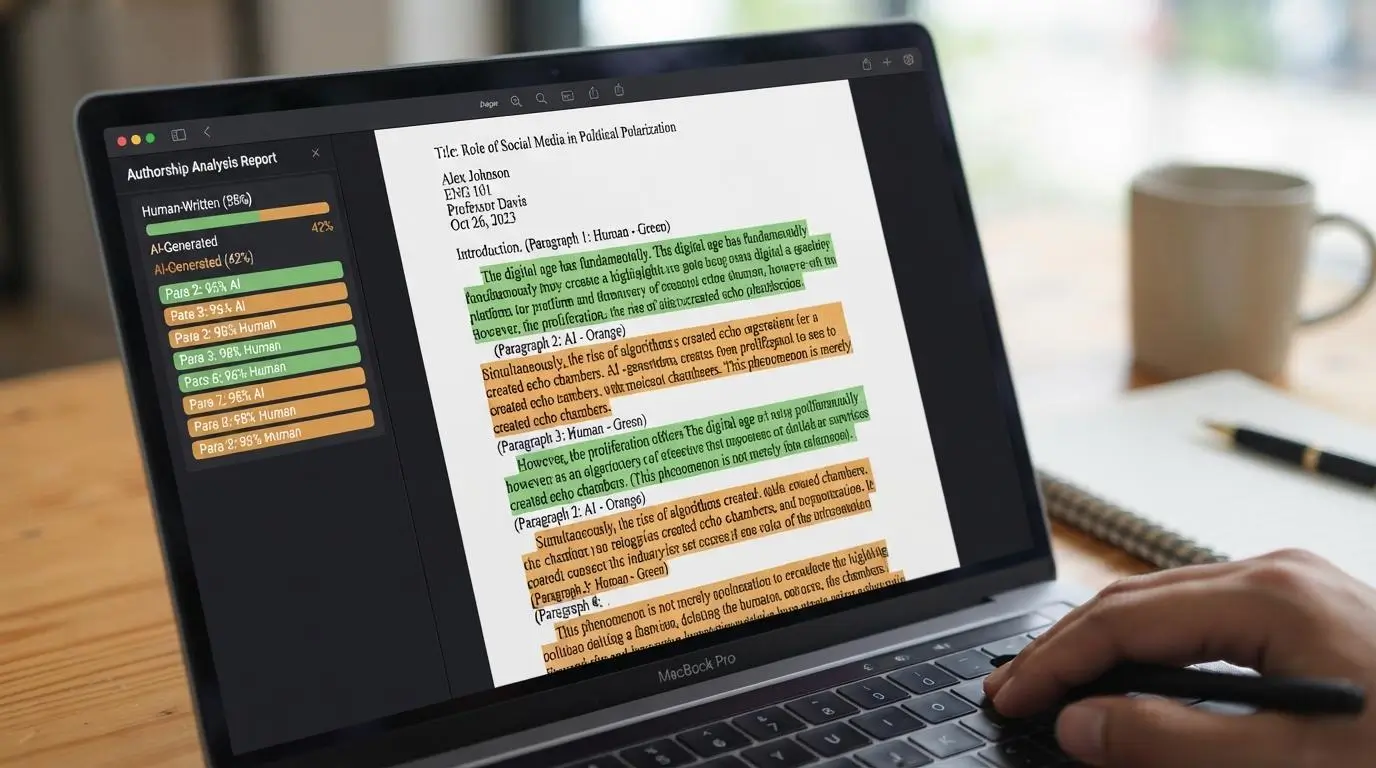
GPTZero is an AI detection tool and writing feedback platform built to assess whether written content shows characteristics associated with AI generation. You can use it to examine AI-generated text at both the document level and the sentence level, giving you a broader result as well as more specific signals within the writing.
That matters because a document can contain a mixture of human and AI writing. AI detection also differs from plagiarism checking. Plagiarism tools look for copied or matching material, while GPTZero estimates whether the writing itself resembles machine-generated text.
How Does GPTZero Analyze Writing for AI Generation?
GPTZero looks at patterns in language rather than simply searching for known copied phrases. Its approach includes perplexity, which broadly describes how predictable the wording is, and burstiness, which considers variation in sentence length and structure. Human writing tends to vary, while machine-generated passages can sometimes display more predictable patterns.
You can also see:
- Sentence-level, color-coded highlighting that identifies potential AI signals.
- Analysis of sentence structure, predictability, and variation.
- An estimated probability that the text was generated by AI.
- Writing replays, which can show how a document developed during the drafting process.
The result is an assessment of probability, not a definitive record of authorship.
How Accurate Does GPTZero Claim to Be?
GPTZero reports 99% accuracy on its internal benchmarks, alongside a reported 95.7% true positive rate at a 1% false positive rate. These figures should be read as stated benchmark results rather than a guarantee that every document will receive an accurate classification.
Independent testing can produce different results, particularly when writing has been paraphrased, humanized, or heavily edited. Mixed human-and-AI content can also complicate detection.
So, when you see a high AI score, the useful question is not simply whether the number looks convincing. You also need to consider what was analyzed and how the result fits the wider evidence.
What Does Apporto TrustEd Focus On?

Apporto TrustEd takes a broader view of academic integrity than a conventional AI detector. Instead of concentrating only on the final text, its approach connects integrity analytics, writing behavior, trusted access, and academic computing.
That distinction matters because the circumstances surrounding academic work can provide useful context. Writing behavior, for example, can help educators understand how work develops, while trusted access helps establish a more controlled environment for completing it.
Together, these elements support a wider academic review process, where technology provides evidence and educators remain responsible for interpreting it.
How Does Apporto Provide a Trusted Computing Environment?
Apporto extends the idea of trust beyond the document itself by providing a controlled environment for accessing applications and academic resources.
Core elements include:
- Secure access to institutional applications and resources.
- Virtual desktops that provide users with managed computing environments.
- Isolated environments that help separate academic workloads and resources.
- Secure exam environments designed to support controlled assessment conditions.
- Centralized management that gives IT teams greater oversight and control.
How Does Apporto’s Virtual Desktop Model Support Education?
Apporto is a cloud-based virtual desktop infrastructure provider, allowing full operating systems and applications to be delivered through a web browser. Students can access software such as MATLAB and CAD from their own devices without requiring every application to be installed locally.
This model also supports virtual labs, giving institutions another way to provide computing resources without relying entirely on physical computer laboratories. The result is a more centralized approach to delivering academic software, desktops, and computing environments across different locations and devices.
How Are GPTZero and Apporto TrustEd Different?
| Factor | GPTZero | Apporto TrustEd |
|---|---|---|
| Primary focus | AI detection and writing analysis | Trusted computing, integrity analytics, and secure access |
| Core use | Analyze written content | Provide managed academic computing environments |
| AI detection | Yes | Different focus |
| Plagiarism analysis | Yes | Not the primary focus |
| Writing analysis | AI-generated writing patterns | Writing behavior and integrity context |
| Writing history | Writing replays and drafting analysis | Broader behavioral context |
| Virtual desktops | No | Yes |
| Browser-based applications | Not its primary function | Yes |
| Secure exam environments | Not its primary function | Yes |
| Best fit | Initial AI content and integrity checks | Trusted access, virtual labs, and broader academic environments |
The important difference is scope. GPTZero and Apporto TrustEd have minimal direct overlap, because one primarily examines written content while the other supports trusted academic computing and broader integrity needs.
Institutions may still evaluate them together because academic integrity involves both what students submit and the environment in which academic work is created, accessed, and reviewed.
How Accurate Is GPTZero, and What Do False Positives Mean?
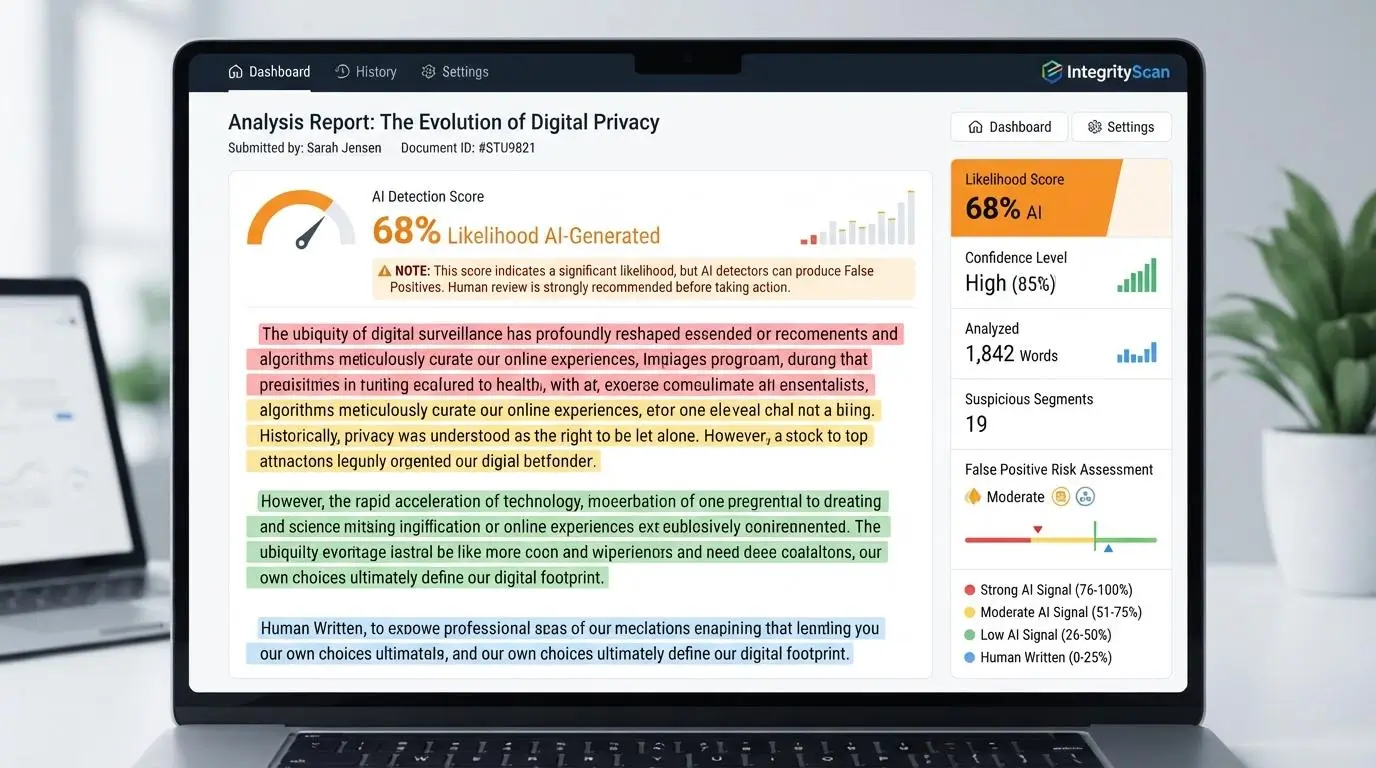
GPTZero accuracy can vary because writing itself varies. Writing style, sentence structure, document length, editing, and the AI model involved can all influence detection results. A document containing both human and AI writing can be harder to classify, particularly when sections have been heavily revised.
Paraphrased content presents another challenge because changing wording and structure can alter the signals an AI detection model evaluates. For that reason, a score should be interpreted alongside the characteristics of the actual writing.
How Common Are AI Detection False Positives?
A false positive occurs when an AI detector identifies human-written content as AI-generated. Reported GPTZero false-positive figures range from 0.24% to 20%, depending on the testing context, with some benchmarks reporting much lower rates.
That spread is important because one number cannot describe every document, writer, or testing condition. In academic settings, a wrongly flagged paper can have real consequences for a student, so detection results need careful review rather than immediate conclusions about authorship.
Why Can ESL Writers Be Important When Evaluating AI Scores?
ESL writers, or students writing in a language they learned later, deserve particular care during AI detection reviews. Formal writing, repeated sentence structures, or limited stylistic variation can sometimes resemble patterns associated with machine-generated text.
Treating those characteristics as proof of AI use can create unfair outcomes. Language background should therefore remain part of the context when educators interpret an AI score and consider academic integrity concerns.
Should GPTZero Be the Sole Basis for an Academic Decision?
An AI detection result should support an investigation, not become the sole basis for punishment. A stronger review can include:
- Review the document itself.
- Examine writing history and drafts.
- Compare previous student work.
- Consider the student’s language background.
- Ask follow-up questions about the work.
- Review plagiarism and citations.
- Apply the institution’s academic integrity policy.
- Use human judgment before reaching a final decision.
Can GPTZero Detect Paraphrased and Humanized AI Content?

Paraphrasing can make AI detection more complicated because rewriting changes the surface features of a passage. Sentence structure may become less predictable, vocabulary can change, and some patterns associated with the original AI-generated text may disappear.
AI humanizers take this further by deliberately altering machine-generated writing to make it resemble human prose. But changing the wording does not change who originally produced the ideas or text. It only changes how the material appears.
That creates a practical limitation for detection tools, particularly when content has been substantially rewritten. Attempts to bypass detection can therefore make classification less straightforward, rather than establishing genuine human authorship.
Why Can Mixed Human and AI Writing Be Difficult to Classify?
Assignments can contain overlapping human and AI-written segments, especially when students use AI for selected sections rather than an entire paper. A document-level score may summarize those differences into one result, potentially hiding meaningful variation between individual sections. Sentence-level analysis can provide additional context.
What Should You Consider When Reviewing Humanized Text?
A broader review you should consider when reviewing humanized Content:
- Detection score
- Sentence-level signals
- Writing history
- Draft development
- Student explanation
- Human judgment
How Does GPTZero Compare With Other AI Detectors?
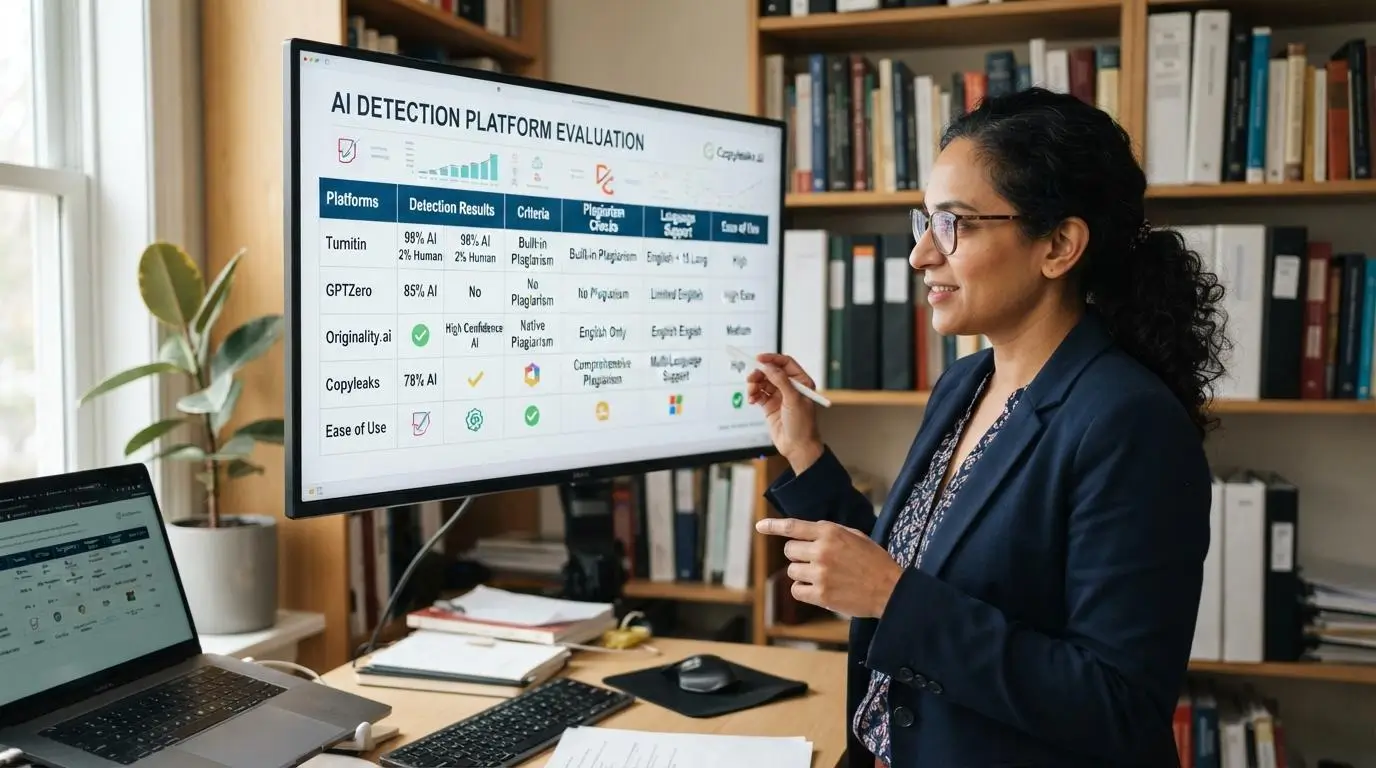
GPTZero is one of several tools used to assess AI-generated writing. Common gptzero alternatives include Turnitin, Winston AI, Copyleaks, Pangram, and ZeroGPT. Their approaches differ in important ways. Some emphasize detection accuracy, while others focus on false positive rates, language coverage, plagiarism detection, integrations, or quick checks. Your choice therefore depends on the type of writing you need to evaluate and the setting in which the tool will be used.
How Do Their Detection Claims Compare?
| AI Detection Tool | Supplied Fact |
|---|---|
| GPTZero | Claims 99% accuracy on internal benchmarks |
| Turnitin | Claims 98% accuracy and reports less than 1% false positives for AI writing |
| Winston AI | Claims 99.98% detection accuracy |
| Pangram | Claims 99% accuracy and a near-zero false positive rate |
| Copyleaks | Supports more than 30 languages |
| ZeroGPT | Preferred for quick checks and casual use |
These figures should be treated as supplied or vendor claims, rather than directly comparable measurements. Different companies may use different datasets, definitions of accuracy, testing conditions, and detection thresholds. A higher percentage therefore does not automatically mean one tool will perform better on your particular document.
Does the Most Accurate AI Detector Always Make the Best Choice?
Not necessarily. Detector accuracy is only one part of the decision. You may also need to consider the false positive rate, supported languages, coverage of different AI models, plagiarism detection, writing-history features, and integrations with your existing workflow. For academic institutions, those details can matter considerably because detection is usually part of a wider review process.
A tool that works well for quick checks may not provide everything needed for institutional assessment. Likewise, a detector with broad language support may be more useful when students submit work in multiple languages. The best AI detector is therefore the one that fits your actual requirement, not simply the one attached to the highest accuracy figure.
How Does GPTZero Use Writing History to Support Academic Integrity?

A finished paper captures the result, but a writing replay can provide a view of how that result developed. GPTZero can track the drafting process in real time, allowing you to review edits, revisions, and changes made as a document takes shape.
This adds another layer of context to AI detection. A student submission that develops through sustained drafting may provide different evidence from a document that appears suddenly as a completed piece. Writing history does not establish authorship by itself, but it can help educators understand the process behind the final work.
How Can Teachers Combine Detection With Writing History?
Teachers can use AI detection signals alongside writing history rather than treating either one as conclusive. The detection result can identify passages that warrant closer attention, while drafting information can show how the student’s submission developed. Comparing the work with previous student submissions can add further context. If questions remain, follow-up questions about the argument, sources, or writing process can help clarify whether the student understands the submitted work.
Why Is Human Judgment Still Necessary?
Human judgment remains important because automated signals cannot fully understand the circumstances surrounding a student’s work.
- Context matters: The assignment and permitted AI use affect interpretation.
- Writing history matters: Draft development can provide useful evidence.
- Student understanding matters: Discussion can clarify authorship and comprehension.
- Language background matters: Writing differences should not automatically indicate AI use.
- Citation quality matters: AI detection and plagiarism are separate concerns.
- Institutional policy matters: The final review should follow the applicable academic integrity rules.
How Does Apporto Support Secure Academic Computing?

Apporto provides access to full operating systems and applications through a web browser, reducing the need to install demanding software on each local device. Users can access Windows, Linux, and Mac environments remotely, along with academic applications such as MATLAB and CAD.
This browser-based model is particularly useful when students need specialized software from different locations or devices. Instead of depending entirely on the specifications of a personal computer, the academic application runs within the virtual environment and is delivered through the browser, making remote access to computing resources more practical.
How Does Apporto’s Virtual Desktop Framework Support Security?
Apporto’s security approach is built around a controlled virtual desktop environment, with several measures supporting trusted access:
- Zero Trust architecture: Users and devices are not automatically treated as trusted.
- Least-privilege access: Access can be limited to the resources a user actually needs.
- Endpoint isolation: Helps separate institutional resources from the user’s local device.
- Secure session handling: Helps protect information during remote sessions.
- Centralized management: Gives IT teams greater oversight of desktops, applications, and access.
- Isolated environments: Provide controlled spaces for specialized academic workloads.
Together, these controls help institutions manage access without placing the entire burden of security on individual devices.
How Can Virtual Labs Support Academic Institutions?
Virtual labs can provide an alternative to relying entirely on physical computer laboratories. Instead of maintaining every specialized application on campus machines, institutions can deliver computing environments remotely through Apporto. This is particularly relevant for high-powered applications, virtual labs, and cybersecurity labs, where students may need access to demanding software or controlled environments.
Apporto can also support secure exam environments, giving institutions another option for managing assessment access. At the same time, performance is not independent of infrastructure. Browser execution, network quality, and application demands can all affect the user experience, so those factors remain important when planning a virtual academic environment.
What Are the Main Problems With AI Detection Tools?
AI detection can be useful, but the result is rarely as simple as a percentage on a screen. Several factors can complicate the interpretation of an AI detection score:
- False positives: Human-written text can sometimes be incorrectly flagged as AI-generated.
- Humanized content: AI-generated writing modified to resemble human prose can be harder to classify.
- Paraphrased content: Rewriting can change the linguistic signals a detection model evaluates.
- ESL writing: Non-native English writing may contain formal structures or patterns that require careful interpretation.
- Mixed authorship: A document containing both human and AI-generated sections can produce an ambiguous overall result.
- New AI models: Detection systems must contend with continually changing forms of AI-generated writing.
- Short documents: Less text means fewer signals are available for analysis.
- Percentage scores: A numerical result can be misunderstood as proof of authorship when it is actually an estimate.
For academic institutions, the more reliable approach is to treat detection as one source of evidence. Writing history can show how a submission developed, while student discussion can provide insight into understanding and authorship.
Institutional policy establishes what forms of AI use are permitted, and human judgment brings those pieces together. The goal is not simply to detect AI, but to make a fair and evidence-based academic integrity decision.
How Does GPTZero vs Apporto TrustEd Fit Into Academic Integrity?
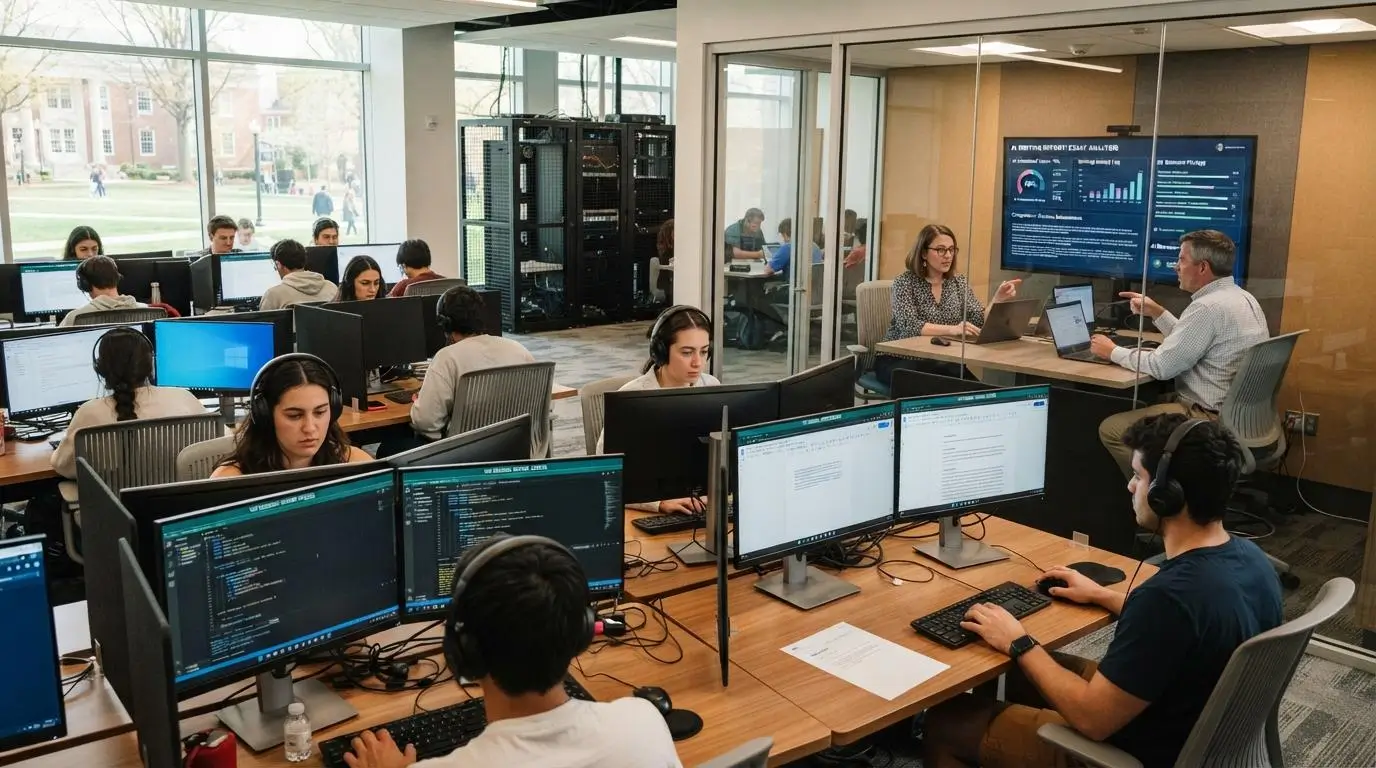
GPTZero and Apporto TrustEd support academic integrity from different angles. GPTZero helps you assess AI-generated writing, while Apporto provides trusted, secure environments for academic work. Used together with writing history, institutional policies, and human judgment, they can provide broader context for reviewing academic integrity. For a wider discussion of responsible AI use in education, explore How Academic Integrity Effects AI.
When Is GPTZero the Better Fit?
GPTZero is more directly aligned with text-level academic integrity checks. You can use it to examine student submissions for signals associated with AI-generated writing, review sentence-level indicators, and assess an AI probability score.
Its writing feedback and replay features can add context by showing how a document developed over time. GPTZero also supports plagiarism analysis, giving educators another signal to consider when reviewing submitted work. This makes it useful for initial checks, provided the results are treated as evidence rather than a final verdict.
When Is Apporto TrustEd the Better Fit?
Apporto TrustEd addresses a broader part of the academic environment. Its focus includes trusted academic computing, secure application access, virtual desktops, and virtual labs. Institutions can also use Apporto environments for secure exams and access to demanding academic software without relying entirely on physical computer labs.
Centralized management, isolated environments, and integrity-focused capabilities add another layer of control. In practical terms, Apporto is concerned with where and how academic work takes place, not simply with classifying the words inside a submitted paper.
Which Solution Addresses Which Problem?
| Your Primary Need | Better-Aligned Solution |
|---|---|
| Detect AI-generated text | GPTZero |
| Analyze AI writing | GPTZero |
| Sentence-level AI signals | GPTZero |
| Writing replays | GPTZero |
| Plagiarism analysis | GPTZero |
| Trusted virtual desktops | Apporto |
| Browser-based application access | Apporto |
| Virtual labs | Apporto |
| Secure exam environments | Apporto |
| Isolated academic computing | Apporto |
The important point is that these solutions address different operational layers of academic integrity. GPTZero helps you examine written work. Apporto helps institutions provide a controlled environment in which academic work and applications can be accessed. That makes the comparison useful, but it does not mean the two platforms are interchangeable.
Can GPTZero and Apporto TrustEd Work Together?

The two platforms can be complementary because they address different layers of academic integrity. GPTZero focuses on the submitted text, using AI detection and writing analysis to identify signals associated with AI-generated content. Apporto TrustEd takes a broader approach, providing secure computing environments and controlled access to academic applications.
Together, these capabilities can give institutions more context when reviewing student work. GPTZero can provide text-level signals, while writing history, revisions, and student explanations can help educators understand how an assignment developed. Apporto can support the environment in which that work is created, accessed, and managed.
The distinction matters. Content authenticity asks questions about the writing itself, while trusted computing focuses on how users access applications, desktops, and institutional resources. Neither approach, by itself, provides a complete answer to every academic integrity concern.
For that reason, institutions should use technology alongside clear AI-use policies, documented procedures, and human review. A detection result can support an investigation, but it should not automatically determine the outcome. Similarly, a secure computing environment strengthens institutional controls without independently establishing authorship.
How Should Institutions Interpret AI Detection Results?
AI detection results are most useful when treated as one piece of evidence, not as a verdict. A score may indicate that a document contains patterns associated with AI-generated writing, but it cannot, on its own, establish who wrote the work or whether a policy was violated.
What Evidence Should Educators Review?
Before reaching a conclusion, you should consider several sources of evidence:
- AI detection score: Use the percentage as an indicator, not proof of authorship.
- Sentence-level signals: Look at which parts of the document were flagged.
- Writing history: Review drafts, revisions, and changes when available.
- Previous assignments: Compare the student’s established writing style.
- Student explanation: Ask the student to explain their approach and understanding of the work.
- Citation quality: Check whether sources are appropriate, accurate, and properly used.
- Assignment requirements: Consider what AI assistance the assignment permitted or prohibited.
- Institutional AI policy: Apply the rules and procedures established by the institution.
Why Is a Review Process Better Than a Single Score?
A flagged document indicates potential AI use, but it does not automatically prove academic misconduct. That distinction is important, particularly when detection tools can produce false positives or struggle with edited and mixed-authorship content.
An evidence-based review gives you a fuller picture. You can compare the detection result with writing history, previous work, citations, assignment requirements, and the student’s explanation. This approach also creates a clearer record of how a decision was reached, which supports consistency and fairness across cases.
Ultimately, human judgment remains essential. AI detection can help identify material that deserves closer attention, but the final academic integrity decision should come from a careful review of the available evidence and the institution’s policy.
How Could AI Detection and Trusted Computing Shape the Future of Academic Integrity?

AI will remain part of academic writing, even as detection methods evolve. As new AI models become more capable, distinguishing AI-generated content from human writing may become harder, especially when work is edited or combines human and AI contributions. Institutions therefore need policies that clearly define acceptable AI use and explain how concerns will be reviewed.
GPTZero can provide content-level detection signals, while Apporto supports trusted computing through secure access and managed academic environments. Used thoughtfully, these technologies can strengthen oversight, but they work best alongside transparency, documented evidence, strong security, and human judgment. Technology can support academic integrity, but institutional processes still provide the framework for fair decisions.
Final Takeaway
The choice between GPTZero and Apporto TrustEd depends on the problem you need to solve. GPTZero is better aligned with AI detection, content analysis, writing signals, and identifying potential AI-generated text. Apporto TrustEd is designed around secure virtual desktops, academic applications, virtual labs, and broader trusted computing needs.
Before choosing, consider detection accuracy, false positives, privacy, writing history, security requirements, and institutional policy. Most importantly, AI detection should support human review rather than replace it.
If your institution needs a secure, managed environment for academic computing, explore Apporto TrustEd to see how it can support trusted educational access.
Frequently Asked Questions (FAQs)
1. What is the difference between GPTZero and Apporto TrustEd?
GPTZero focuses on AI detection and writing analysis, helping you assess text for potential AI-generated content. Apporto TrustEd takes a broader approach, combining integrity analytics, writing behavior, secure access, and trusted computing environments for academic use.
2. Is GPTZero an AI detector?
Yes. GPTZero is an AI text detection and writing feedback platform that analyzes writing for characteristics associated with AI generation. It provides an estimated probability that content was generated by AI, giving you a signal for further review.
3. How accurate is GPTZero?
GPTZero reports 99% accuracy on its internal benchmarks. However, that figure does not guarantee the same result for every document. Accuracy can vary with writing style, editing, paraphrasing, mixed human and AI content, and testing conditions.
4. Can GPTZero detect AI-generated content?
GPTZero is designed to identify potential AI-generated text by analyzing writing patterns, predictability, sentence structure, and related signals. Its results estimate the likelihood of AI generation, so you should interpret the score as evidence for review rather than definitive proof.
5. Can GPTZero detect ChatGPT content?
GPTZero is designed to detect writing associated with AI generation, including content produced by widely used generative AI systems. However, detection results can vary depending on editing, paraphrasing, document length, and whether human and AI writing are combined.
6. Can GPTZero detect paraphrased or humanized AI content?
Paraphrased and humanized AI text can be harder for detection tools to classify because rewriting may change vocabulary, sentence structure, and predictable patterns. A detection result should therefore be considered alongside writing history and other evidence rather than treated as conclusive.
7. Can AI detectors produce false positives?
Yes. Human-written content can be wrongly flagged as AI-generated. False positive rates can vary according to the tool, writing style, language, document characteristics, and testing conditions. This makes careful interpretation particularly important in academic integrity reviews.
8. Does GPTZero detect plagiarism?
The supplied information describes GPTZero as analyzing writing for both AI generation and plagiarism. These functions address different concerns: AI detection examines signals associated with machine-generated writing, while plagiarism analysis focuses on potentially copied material.
9. Is GPTZero free?
GPTZero offers a free tier of 10,000 words per month. Paid plans are available when you need additional usage or features. The appropriate option depends on how frequently you need to analyze documents and the requirements of your workflow.
10. Does GPTZero work with Google Docs?
The supplied information mentions Google Docs among GPTZero-related keywords, but it does not provide enough supporting detail to confirm a specific Google Docs integration. You should verify the current feature set before treating this as a supported capability.
11. Is Apporto TrustEd an AI detector?
No, Apporto TrustEd has a different primary focus. It centers on trusted computing, integrity analytics, writing behavior, and secure access. Its role is broader than that of a conventional AI content detector focused primarily on analyzing submitted text.
12. Why does Apporto use a Zero Trust Virtual Desktop framework?
Apporto uses a Zero Trust Virtual Desktop framework to strengthen control over access to virtual environments. Least-privilege access limits permissions, endpoint isolation helps reduce exposure, and centralized management gives institutions greater control over applications, desktops, and academic resources.
13. Which is better for academic institutions, GPTZero or Apporto TrustEd?
The better choice depends on your objective. GPTZero is more directly aligned with AI content detection and writing analysis. Apporto TrustEd addresses broader needs, including trusted computing, secure access, virtual labs, virtual desktops, and institutional integrity workflows.
14. Should GPTZero be the sole basis for an academic integrity decision?
No. A GPTZero result should not become the sole basis for an academic integrity decision. You should also consider writing history, previous work, student discussion, citations, assignment requirements, institutional AI policy, and other evidence before reaching a conclusion.
