

What Is the Best ChatGPT Alternative for Learning?
Apporto CoTutor is the best ChatGPT alternative for higher education, offering AI-guided tutoring, personalized learning, LMS integration, and learning analytics in one platform. Other tools like Claude, NotebookLM, Elicit, and Khanmigo excel in writing, research, or general AI assistance for specific learning tasks.
AI has changed the way people learn, but expectations have changed too. Getting a quick answer is no longer enough. You want a tool that can explain complex ideas, support academic research, analyze documents, improve writing, and adapt to the way you study or teach.
Although ChatGPT remains one of the most widely used AI platforms for learning, coding, writing, and problem-solving, it isn’t always the best choice for every educational task. Many learners now combine specialized AI tools to achieve better results across different subjects and workflows.
In this blog, you’ll explore the 11 best ChatGPT alternatives for learning, compare their strengths in AI tutoring, research, document analysis, educational features, integrations, pricing, and long-term value, helping you choose the platform that best supports your learning goals.
How Did We Evaluate the Best ChatGPT Alternatives for Learning?

Finding the right AI learning platform is less about choosing the most popular chatbot and more about selecting the one that fits your goals. A student writing a research paper has very different needs from an educator preparing lesson materials or a developer learning to code.
That’s why this comparison goes beyond general AI capabilities. Each platform was evaluated on the quality of its educational features, research support, reasoning ability, writing assistance, classroom applications, integrations, ease of use, pricing, and overall long-term value. The goal was to identify tools that genuinely improve learning, not simply generate faster responses.
Which AI Learning Features Matter Most?
Not all AI tools are built for the same purpose. Some function as an intelligent AI assistant for everyday learning, while others specialize in content generation, coding, or research. Different AI models excel at different learning tasks, so comparing other AI models is just as important as comparing features.
Strong generative AI combines advanced reasoning, high response quality, and the ability to answer questions across a variety of particular tasks. A capable AI writing tool should also encourage critical thinking rather than replacing it, because advanced reasoning improves educational outcomes and leads to deeper understanding.
How Important Are Research, Integrations, and Productivity?
If research is part of your learning process, look beyond basic chatbot capabilities. Specialized platforms designed for academic research can serve as a dedicated research assistant, helping you review research papers, improve academic writing, and conduct deep research more efficiently.
Features like Google Docs, Google Workspace, and Microsoft Office integrations make it easier to generate summaries, analyze data, and support project management without constantly switching between applications. Specialized AI tools improve research efficiency, while seamless integration simplifies academic and professional workflows. Source-backed research also increases reliability when evaluating complex topics.
Which Platform Delivers the Best Long-Term Value?
The best platform isn’t necessarily the one with the longest feature list or the largest subscription price. Some ChatGPT alternatives provide a generous free tier or free version, allowing you to evaluate their capabilities before paying for premium features. Others offer extensive customization options, an active user community, or specialized tools that may be better than ChatGPT for specific learning goals.
Some platforms also have limited access to advanced capabilities unless you upgrade. Long-term value depends on learning goals rather than pricing alone, and free plans help users evaluate AI platforms before upgrading.
Comparing multiple alternatives to ChatGPT and other ChatGPT alternatives ensures you choose a solution that continues supporting your educational needs as they evolve.
Quick Comparison of the Best ChatGPT Alternatives for Learning
No AI platform is the perfect fit for every learning challenge. Some are designed for AI tutoring and personalized education, while others excel at academic research, document analysis, writing assistance, coding, or classroom instruction.
Comparing their strengths side by side makes it easier to identify the platform that best aligns with your learning goals, teaching style, or research needs. The table below highlights the leading ChatGPT alternatives based on their core capabilities, educational focus, and ideal users.
| Platform | Best For | AI Tutoring | Research | Classroom Support | Free Plan | Ideal Users |
|---|---|---|---|---|---|---|
| Apporto CoTutor | Higher education | Advanced | Good | Excellent | Custom | Colleges & universities |
| Claude | Deep reasoning & writing | Advanced | Advanced | Moderate | Yes | Students & professionals |
| NotebookLM | Source-based learning | Moderate | Advanced | Moderate | Yes | Researchers & students |
| Elicit | Academic research | Moderate | Advanced | Limited | Yes | Researchers |
| Khanmigo | Guided AI tutoring | Advanced | Moderate | Good | Yes | Students & families |
| Brisk Teaching | Teacher productivity | Moderate | Moderate | Advanced | Limited | Educators |
| MagicSchool AI | Lesson planning | Moderate | Moderate | Advanced | Limited | Teachers |
| School AI | Classroom AI | Advanced | Moderate | Advanced | Limited | K-12 schools |
| Bloom AI | Personalized learning | Good | Moderate | Good | Contact | Schools |
| Kudu | STEM learning | Good | Limited | Moderate | Contact | STEM learners |
| Tutela | Personalized tutoring | Advanced | Moderate | Moderate | Contact | Students |
ChatGPT Alternatives for Learning (A Detailed Overview)
1. Apporto CoTutor
Overview
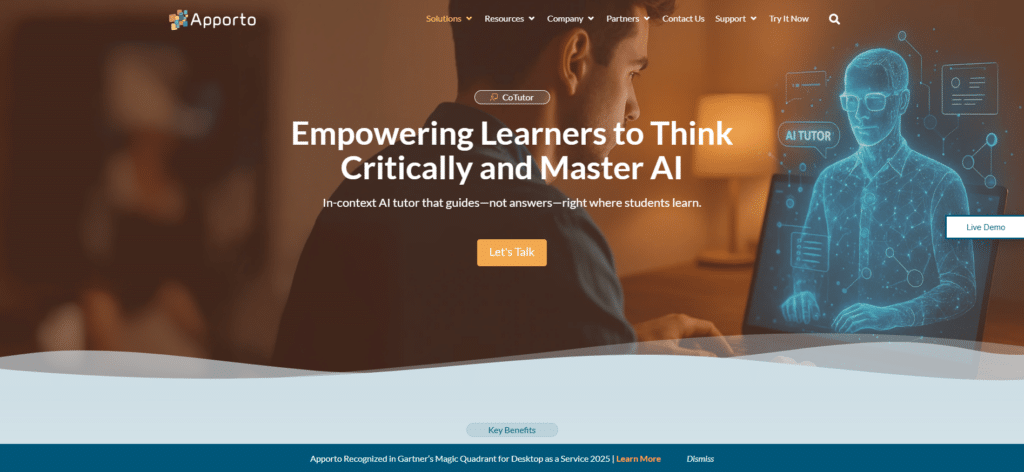
Apporto CoTutor is an AI-powered learning platform designed to help colleges and universities deliver more effective, personalized education. Unlike general-purpose chatbots, it focuses on AI tutoring that supports students throughout their coursework with contextual guidance and meaningful feedback.
By combining personalized learning with adaptive learning, the platform adjusts to individual progress, helping students strengthen weak areas while advancing at a pace that matches their abilities. This targeted approach improves engagement and contributes to better academic outcomes.
Beyond tutoring, Apporto CoTutor equips educators with learning analytics that provide clear visibility into student performance and participation. Instructors can identify learning gaps early, monitor progress, and deliver timely interventions that improve student success.
Its seamless LMS integration allows institutions to embed AI assistance directly into existing courses, creating a consistent learning experience without disrupting established workflows. Strong classroom support also enables educators to use AI as a teaching aid rather than a replacement for instructor expertise.
Highlights
- AI tutoring designed for higher education
- Personalized learning through adaptive learning
- Learning analytics for monitoring student progress
- Seamless LMS integration
- Classroom support that complements instructor-led teaching
Best For:
Colleges and universities seeking scalable AI tutoring with personalized learning and learning analytics.
Limitations:
Primarily focused on higher education rather than K-12 curriculum support.
Pricing:
Custom pricing based on institutional needs and deployment requirements.
2. Claude
Overview
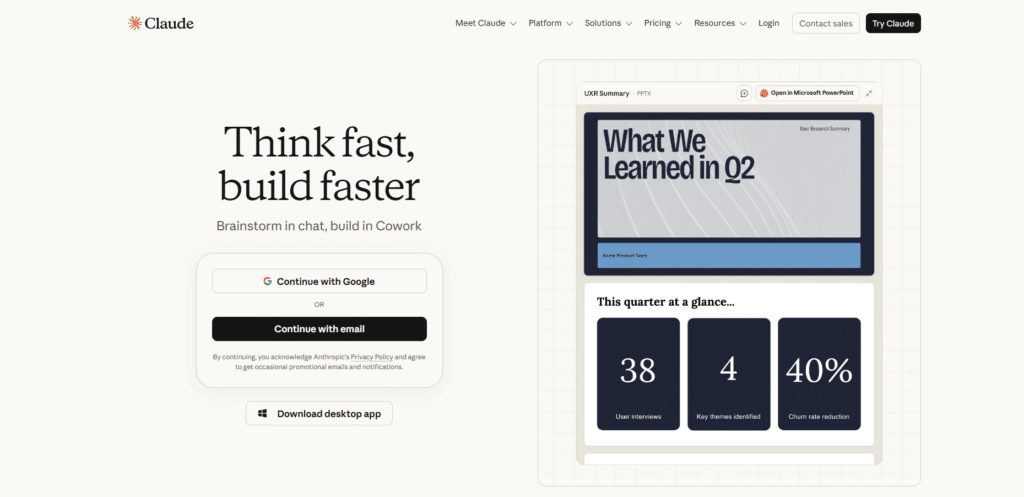
Claude has become a popular AI assistant for learners who need thoughtful explanations instead of quick, surface-level responses. It performs particularly well when tackling complex subjects that require advanced reasoning, making it a strong choice for university coursework, independent study, and professional development.
Claude offers nuanced reasoning for complex topics, helping you understand concepts step by step instead of simply delivering an answer. Its consistently high response quality also makes it useful for brainstorming, reviewing ideas, and exploring different perspectives.
The platform is especially valuable for academic writing and creative writing. Claude excels at analyzing writing samples, providing detailed feedback on structure, clarity, tone, and argument development.
It can also help analyze data, summarize lengthy documents, and assist with coding tasks, making it a versatile learning companion across multiple disciplines. For users with more demanding workflows, Claude Pro expands usage limits and offers faster access during peak periods, making it suitable for research-intensive projects and advanced study sessions.
Highlights
- Advanced reasoning for complex academic topics
- Excellent support for academic and creative writing
- High response quality with detailed explanations
- Strong coding and document analysis capabilities
- Claude Pro for expanded usage and faster performance
Best For:
Students, researchers, and professionals seeking deep reasoning, writing assistance, and coding support.
Limitations:
Does not include education-specific classroom management or LMS features.
Pricing:
A free plan is available, while Claude Pro unlocks higher usage limits and additional capabilities.
3. NotebookLM
Overview
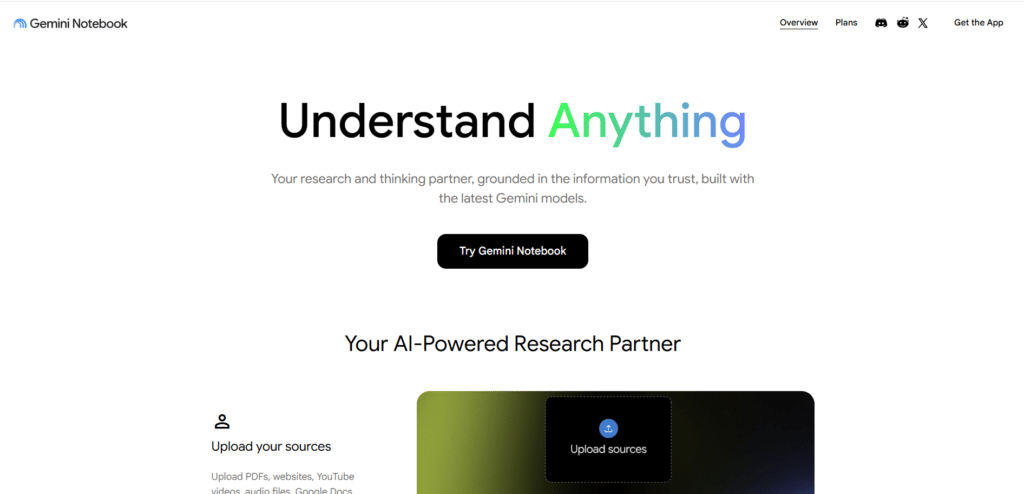
NotebookLM is designed for learners who want their AI responses grounded in their own study resources instead of the open web. Built within Google Workspace, it allows you to upload lecture notes, PDFs, textbooks, and Google Docs, then uses those materials to answer questions, explain concepts, and generate summaries. NotebookLM grounds responses in uploaded materials, reducing the need to verify whether the information matches your course content. This makes it especially useful for exam preparation, revision, and project-based learning.
Unlike general-purpose AI chatbots, NotebookLM functions as a dedicated research assistant that keeps your source material at the center of every conversation. It provides source links and cited sources, allowing you to quickly verify where information comes from before using it in assignments or discussions.
This source-based approach makes studying more organized and dependable, particularly when working with large collections of study materials. NotebookLM improves study workflows through source-based learning, helping you spend less time searching through documents and more time understanding the content.
Highlights
- Academic research based on your uploaded materials
- Seamless integration with Google Workspace and Google Docs
- Generates summaries with source-backed responses
- Includes source links and cited sources for verification
- Organizes study materials for faster revision
Best For:
Students and researchers who want accurate, source-grounded learning and document-based research assistance.
Limitations:
Depends on uploaded materials and is less suited for broad, open-ended research across the web.
Pricing:
A free version is available, with additional capabilities included through eligible Google AI plans.
4. Elicit
Overview
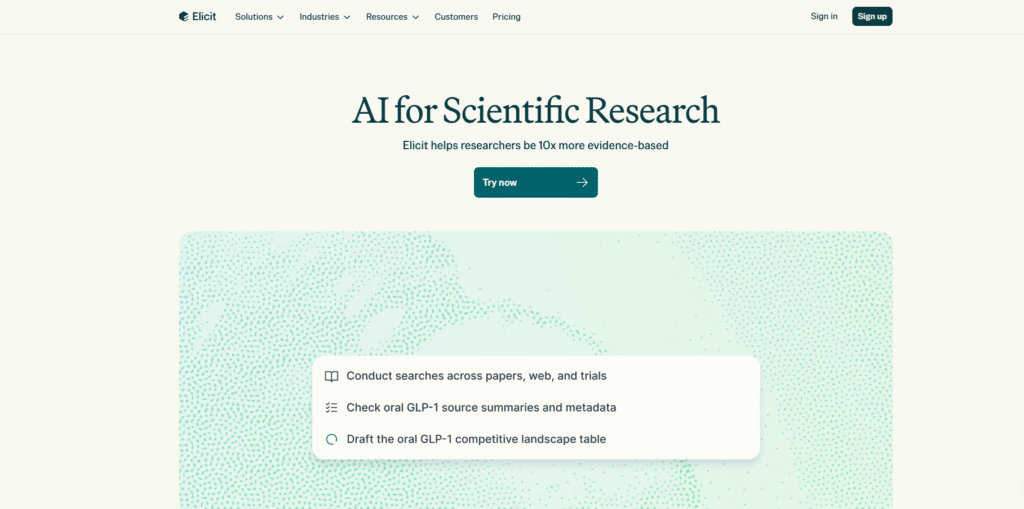
Elicit is an AI-powered research assistant built specifically for academic work. Rather than functioning as a general chatbot, it helps you search, review, and organize information from academic papers and research papers more efficiently. Elicit automates research tasks and synthesizes findings, making it easier to identify relevant studies, compare evidence, and understand complex topics without manually reviewing hundreds of documents. This focused approach saves time while improving the quality of your research process.
One of Elicit’s biggest strengths is its support for AI research and deep research workflows. It can summarize published studies, highlight key findings, extract useful information, and help analyze data from multiple sources. Because the platform emphasizes cited sources, you can quickly verify information before using it in assignments or publications.
These capabilities also make Elicit a valuable companion for academic writing, helping you build evidence-based arguments supported by reliable literature. Instead of replacing your research process, it streamlines the most time-consuming parts so you can focus on critical analysis and interpretation.
Highlights
- AI research assistant designed for academic literature
- Automates research tasks and synthesizes findings
- Summarizes academic papers with cited sources
- Helps analyze data across multiple studies
- Supports evidence-based academic writing
Best For:
Students, researchers, and academics conducting literature reviews, evidence synthesis, and research-intensive projects.
Limitations:
Optimized for academic research rather than general AI tutoring, classroom instruction, or creative writing.
Pricing:
A free plan is available, with paid subscriptions offering higher usage limits and advanced research capabilities.
5. Khanmigo
Overview
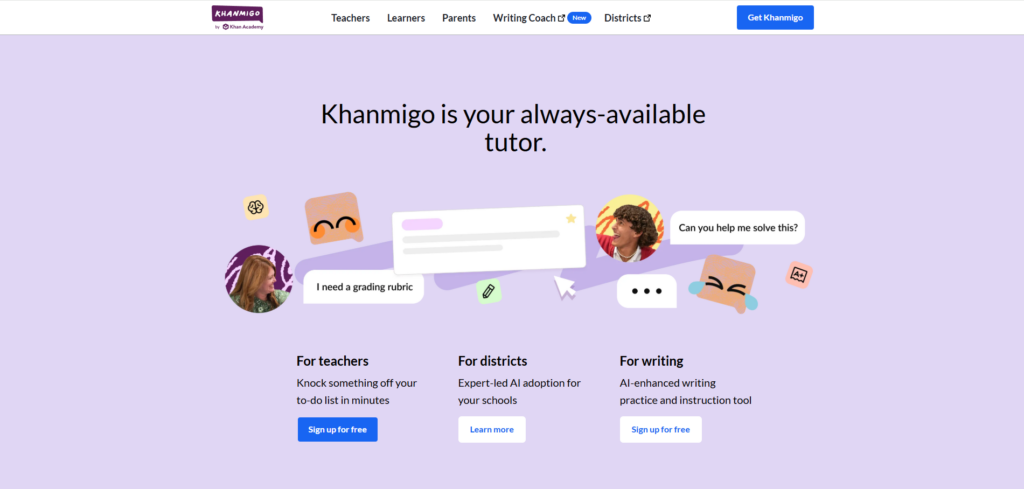
Developed by Khan Academy, Khanmigo is an AI tutor built to help students learn through guided exploration rather than instant answers. Khanmigo uses a Socratic approach for guided tutoring, encouraging learners to think critically by asking follow-up questions, offering hints, and breaking complex topics into manageable steps.
This teaching style helps students build confidence while developing stronger problem-solving skills instead of relying on shortcuts. It is particularly effective for independent study and homework support.
The platform covers a wide range of subjects, including math, science, humanities, and coding, making it a versatile learning companion for students of different ages. Because it is closely integrated with Khan Academy’s educational content, learners can move seamlessly between lessons, practice exercises, and AI-guided conversations.
This combination creates a structured learning experience that reinforces classroom instruction while encouraging critical thinking. Teachers and parents also benefit from having a trusted educational platform that supports meaningful learning rather than simple answer generation.
Highlights
- AI tutor powered by Khan Academy’s curriculum
- Uses a Socratic approach for guided instruction
- Strong support for math, science, and other academic subjects
- Encourages critical thinking and independent learning
- Integrates lessons, practice exercises, and AI guidance
Best For:
Students seeking guided AI tutoring that strengthens understanding through structured learning and critical thinking.
Limitations:
Primarily focused on education and tutoring, with fewer advanced research, productivity, or institutional workflow features than broader AI platforms.
Pricing:
A free plan is available, with premium options offering expanded AI tutoring features and additional educational capabilities.
6. Brisk Teaching
Overview
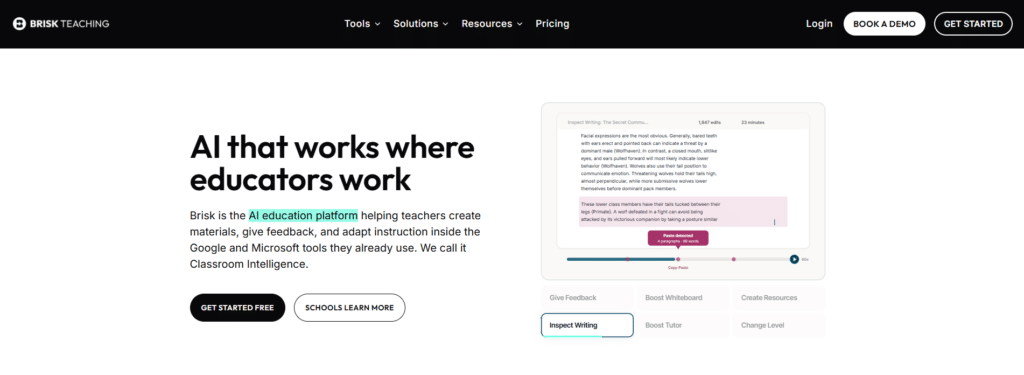
Brisk Teaching is an AI-powered platform built specifically for educators, helping teachers reduce repetitive tasks and spend more time engaging with students. Instead of serving as a general-purpose chatbot, it focuses on improving classroom workflows through practical AI tools that simplify daily instruction. From creating teaching resources to reviewing student work, Brisk Teaching is designed to increase productivity without disrupting established teaching practices.
One of its strongest capabilities is lesson planning. Teachers can quickly create lesson outlines, classroom activities, quizzes, and assessments that align with different learning objectives. The platform also integrates with Google Docs, making it easy to review assignments, provide feedback, and edit instructional materials within familiar workflows.
These time-saving features help educators manage growing workloads while maintaining high-quality instruction. Rather than replacing teacher expertise, Brisk Teaching acts as a practical assistant that streamlines planning, grading, and classroom preparation. This allows instructors to dedicate more attention to student learning and individualized support.
Highlights
- Built specifically for educators and classroom instruction
- AI tools for lesson planning and assessments
- Seamless integration with Google Docs
- Improves teacher productivity and workflow efficiency
- Supports grading, feedback, and instructional planning
Best For:
Teachers looking to automate lesson preparation, assessment creation, and classroom workflows while improving productivity.
Limitations:
Designed primarily for educators, with fewer student-facing AI tutoring and personalized learning features than education-focused tutoring platforms.
Pricing:
Brisk Teaching offers a limited free plan, with premium subscriptions providing additional AI features, classroom tools, and collaboration capabilities.
7. MagicSchool AI
Overview
MagicSchool AI is an AI assistant created to simplify everyday work for educators. Rather than acting as a general chatbot, it focuses on the practical needs of teachers by automating repetitive tasks that consume valuable classroom time.
It helps teachers create instructional resources quickly, allowing educators to spend less time preparing materials and more time supporting student learning. Its education-first approach makes it especially useful for schools looking to improve efficiency without sacrificing instructional quality.
The platform offers a wide range of tools for lesson planning, creating assessments, writing classroom activities, generating discussion prompts, and developing differentiated learning materials. These features help teachers adapt instruction for different learning levels while maintaining consistency across the classroom.
MagicSchool AI also improves productivity by streamlining resource creation and reducing administrative workload. Instead of replacing teacher expertise, it provides practical support that enhances planning, instruction, and communication. This balance between automation and educator control makes the platform a valuable addition to modern teaching environments.
Highlights
- AI assistant designed specifically for educators
- Helps teachers create instructional resources quickly
- Simplifies lesson planning and assessment creation
- Improves classroom productivity through automated workflows
- Supports differentiated instruction and teaching preparation
Best For:
Teachers seeking AI-powered support for lesson planning, classroom activities, assessments, and instructional resource creation.
Limitations:
Primarily focused on educator productivity rather than personalized student tutoring or advanced academic research.
Pricing:
MagicSchool AI offers a limited free plan, with paid plans unlocking additional AI tools, higher usage limits, and advanced classroom features.
8. School AI
Overview
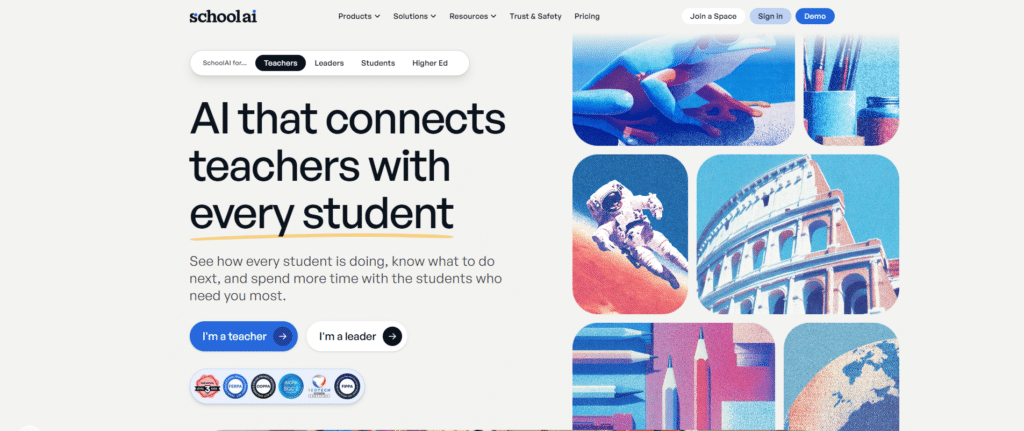
School AI is an education-focused platform that brings AI into the classroom while keeping teachers actively involved in the learning process. Unlike general-purpose chatbots, it is designed to create structured, school-friendly experiences where students can interact with an AI tutor in a safe environment.
SchoolAI provides a monitored AI learning environment, allowing educators to oversee conversations, guide instruction, and ensure AI is used responsibly. This balance between student independence and teacher oversight makes it well suited for K-12 education.
The platform also emphasizes personalized learning by adapting interactions to each student’s needs and encouraging active participation. Built-in monitoring tools help teachers track classroom activity, identify areas where students need additional guidance, and review learning patterns over time.
These insights improve student engagement while giving educators practical data to support instructional decisions. Rather than replacing traditional teaching, School AI strengthens teacher support by making AI a collaborative classroom resource. As students make progress, educators remain in control of how AI is integrated into daily education, creating a learning experience that is both flexible and accountable.
Highlights
- AI tutor designed for classroom learning
- Provides a monitored AI learning environment
- Personalized learning tailored to individual students
- Progress monitoring with teacher oversight
- Improves student engagement and classroom participation
Best For:
K-12 schools looking for a safe AI platform that combines personalized learning with strong teacher support.
Limitations:
Focuses on classroom instruction and monitoring rather than advanced academic research or higher education workflows.
Pricing:
School AI offers a limited free plan, with paid plans providing expanded classroom tools, AI capabilities, and administrative features.
9. Bloom AI
Overview
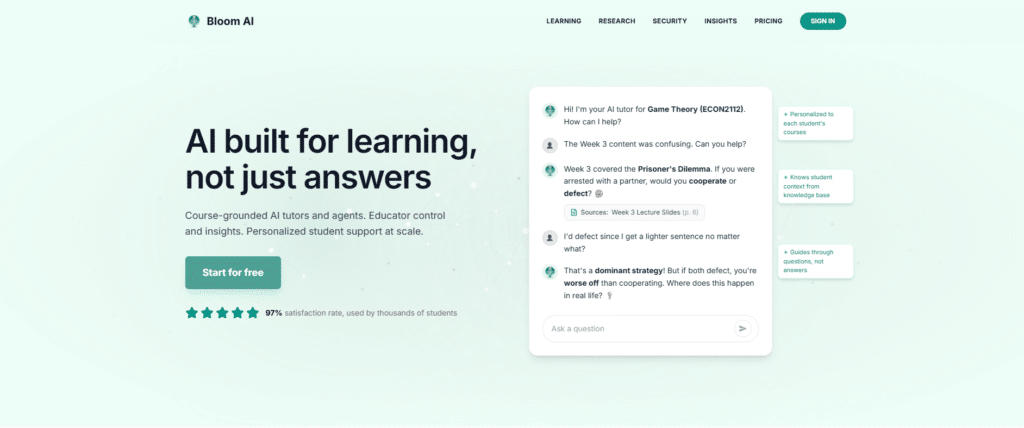
Bloom AI is designed to make learning more individualized by using AI to adapt educational experiences to each learner’s needs. Instead of delivering identical lessons to every student, the platform emphasizes personalized learning, helping students focus on concepts that require additional attention while progressing more confidently through familiar topics. This tailored approach encourages steady improvement and creates a more engaging educational experience across different learning levels.
A key strength of Bloom AI is its use of adaptive learning to respond to student performance over time. As learners complete activities and assessments, the platform adjusts recommendations, helping them strengthen weak areas without repeating content they have already mastered.
This continuous adaptation promotes better engagement and encourages consistent participation throughout the learning journey. Bloom AI also provides meaningful support for educators by offering insights into student performance, making it easier to identify learners who may need additional guidance.
By combining AI-driven personalization with practical classroom insights, the platform helps schools create a more effective and student-centered approach to education.
Highlights
- Personalized learning tailored to individual student needs
- Adaptive learning that responds to performance
- AI-powered recommendations for continuous improvement
- Improves student engagement and learning outcomes
- Supports educators with actionable learning insights
Best For:
Schools seeking an AI-powered platform that delivers personalized learning while improving student engagement and academic progress.
Limitations:
Offers fewer advanced research, document analysis, and higher education workflow features than broader AI learning platforms.
Pricing:
Pricing is available upon request, with plans customized according to institutional requirements and implementation needs.
10. Kudu
Overview
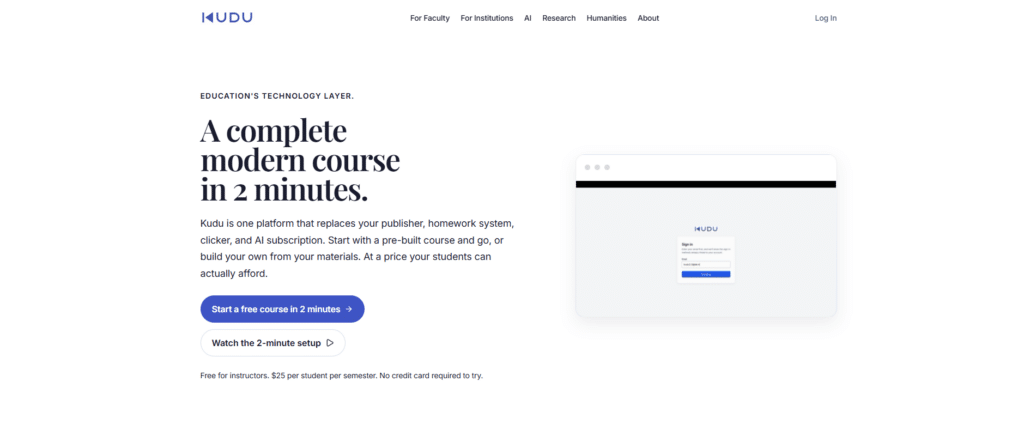
Kudu is an AI-powered learning platform built for learners who want to strengthen their skills in STEM subjects through interactive instruction and hands-on practice. Rather than presenting concepts through static lessons alone, it encourages students to apply what they learn by solving real problems.
This practical approach makes Kudu particularly useful for coding, mathematics, and other technical disciplines where understanding develops through consistent application rather than memorization.
The platform combines AI learning with structured exercises that adapt to each learner’s progress. As students complete activities, Kudu provides targeted feedback and additional practice to reinforce important concepts.
Its emphasis on problem solving helps learners develop logical thinking while preparing for increasingly complex technical challenges. The platform also supports technical education by giving students opportunities to strengthen foundational skills before advancing to more difficult topics.
Instead of focusing on broad academic subjects, Kudu concentrates on building practical competencies that are valuable in science, technology, engineering, and mathematics.
Highlights
- AI-powered learning for STEM education
- Strong support for coding and mathematics
- Interactive problem-solving activities
- Personalized practice based on learner progress
- Helps build technical skills through guided instruction
Best For:
Students seeking an AI-powered platform for STEM learning, coding, mathematics, and technical education.
Limitations:
Primarily focused on STEM subjects, with fewer features for academic research, writing assistance, or classroom management.
Pricing:
Pricing is available upon request and varies depending on the institution, program, or learning package selected.
11. Tutela
Overview
Tutela is an AI-powered learning platform focused on delivering personalized tutoring that adapts to the needs of individual learners. Rather than offering generic responses, its AI tutor provides guidance based on each student’s learning pace, helping them strengthen concepts before moving on to more advanced topics.
This individualized approach creates a supportive learning environment where students can build confidence through consistent practice and meaningful feedback instead of relying solely on one-time explanations.
A key advantage of Tutela is its emphasis on adaptive learning, allowing the platform to adjust recommendations as students make progress. This helps learners spend more time on challenging topics while advancing efficiently through areas they already understand.
The platform also encourages greater engagement by delivering interactive learning experiences that keep students actively involved throughout their educational journey. Alongside personalized instruction, Tutela provides ongoing learning support that helps learners stay motivated and develop stronger study habits. By combining AI-driven tutoring with adaptive learning pathways, the platform offers a practical solution for schools and individuals looking to improve learning outcomes through personalized education.
Highlights
- Personalized tutoring tailored to individual learning needs
- AI tutor with adaptive learning capabilities
- Continuous learning support and progress tracking
- Interactive experiences that improve student engagement
- Personalized recommendations for better educational outcomes
Best For:
Students looking for AI-powered personalized tutoring that adapts to their progress and learning style.
Limitations:
Focuses primarily on tutoring and personalized learning, with fewer advanced research, productivity, or institutional workflow features than broader AI platforms.
Pricing:
Pricing is available upon request, with plans varying based on educational programs, institutions, and learner requirements.
How Do You Choose the Right ChatGPT Alternative for Learning?

Choosing the right ChatGPT alternative starts with understanding how you plan to use AI. Some platforms are designed to explain concepts and guide learning, while others specialize in academic research, writing, coding, or classroom instruction.
Rather than searching for a single tool that does everything, look for one that aligns with your learning goals and integrates naturally into your workflow. Evaluating factors such as research quality, educational features, integrations, ease of use, and long-term value will help you invest in a platform that continues supporting your academic and professional growth.
Do You Need AI Tutoring, Research, or Writing Support?
The first question to ask is what type of learning support you need. Some AI tools act as an intelligent AI assistant for everyday studying, while others are built for academic research, coding, or document analysis. Different AI tools solve different educational problems, so choosing a platform based on your primary objective often leads to better results. Educators seeking more specialized tools for personalized instruction and adaptive learning can also explore Carnegie Learning alternatives
If you’re working on essays or reports, an AI writing tool with strong academic writing capabilities can improve structure, clarity, and editing. Students conducting research may benefit more from a dedicated research assistant that summarizes literature and provides reliable references.
Platforms with advanced reasoning are also better equipped to explain complex concepts, answer questions, and encourage critical thinking instead of simply generating responses. While content generation remains useful, the best educational AI helps you understand ideas rather than memorize them. In many cases, combining specialized AI assistants often produces better learning outcomes than relying on a single platform for every task.
Which Features Should Students and Educators Prioritize?
Beyond intelligence, the best AI platform should fit naturally into the tools you already use. Integration with Google Docs, Google Workspace, and Microsoft Office reduces unnecessary switching between applications and keeps your learning process organized. Seamless integration becomes even more valuable when you’re managing assignments, collaborating on projects, or preparing teaching materials.
Features that generate summaries, analyze data, and support multimodal input save valuable time while making information easier to understand. Some platforms also include image generation, allowing learners to visualize concepts or create supporting materials for presentations.
For research-focused work, source links and cited sources are especially important because source-backed responses improve research quality and make it easier to verify information before using it in assignments. These productivity features help both students and educators work more efficiently without sacrificing accuracy.
How Important Are Pricing, Accessibility, and Ease of Use?
Price is important, but it should never be the only factor when comparing ChatGPT alternatives. Many platforms provide a free tier or free version, allowing you to explore core features before committing to a subscription. Free plans help users evaluate platforms, making it easier to determine whether the tool genuinely supports your learning goals.
As your needs grow, compare premium features carefully. They should provide meaningful improvements rather than simply increasing usage limits. Consider whether the platform offers useful customization options, an active user community, reliable documentation, and strong customer support.
Some free ChatGPT alternatives are surprisingly capable, while others reserve their most valuable tools behind paid plans or provide limited access to advanced capabilities. Comparing the best ChatGPT alternatives with your specific educational requirements will help you choose a platform that delivers lasting value instead of unnecessary features.
Which ChatGPT Alternative Offers the Best Long-Term Value?
Each platform in this guide excels in a different area of learning. Apporto CoTutor is the strongest choice for higher education, combining AI tutoring, personalized learning, classroom support, learning analytics, and LMS integration in a scalable environment. Claude stands out for advanced reasoning, academic writing, document analysis, and coding, while NotebookLM is ideal for source-grounded studying using your own materials. Elicit simplifies academic research by synthesizing evidence from scholarly literature.
For guided tutoring, Khanmigo encourages deeper understanding through structured conversations instead of direct answers. Brisk Teaching improves teacher productivity, while MagicSchool AI streamlines lesson planning and instructional resource creation.
School AI provides classroom instruction with teacher oversight, Bloom AI focuses on personalized learning, Kudu supports STEM education, and Tutela delivers adaptive tutoring for individual learners.
The best long-term solution depends on your goals, but selecting a platform designed for your specific learning needs will consistently produce better educational outcomes than relying on a single general-purpose AI assistant.
Final Thoughts
The best ChatGPT alternative depends on what you want to achieve. Apporto CoTutor is the strongest overall choice for higher education, combining AI tutoring, personalized learning, LMS integration, classroom support, learning analytics, and scalable educational workflows.
Claude excels in writing, reasoning, and coding, while Elicit stands out for academic research. NotebookLM is ideal for source-based studying, Khanmigo delivers guided AI tutoring, School AI strengthens classroom instruction, Bloom AI supports personalized learning, and Brisk Teaching improves teacher productivity.
If you’re looking for an AI platform built to enhance learning at scale, explore Apporto CoTutor and discover how it can support both educators and students with a smarter, more personalized learning experience.
Frequently Asked Questions (FAQs)
1. What are the best ChatGPT alternatives for learning?
Some of the best ChatGPT alternatives for learning include Apporto CoTutor, Claude, NotebookLM, Elicit, Khanmigo, Brisk Teaching, MagicSchool AI, School AI, Bloom AI, Kudu, and Tutela. Each platform specializes in different areas, including AI tutoring, academic research, classroom instruction, writing, and personalized learning.
2. Which ChatGPT alternative is best for higher education?
Apporto CoTutor is one of the strongest options for higher education. It combines AI tutoring, personalized learning, LMS integration, classroom support, and learning analytics to help institutions improve student engagement while giving educators better visibility into academic progress.
3. Which AI tool is best for academic research?
Elicit and NotebookLM are excellent choices for academic research. Elicit automates literature reviews and synthesizes findings from scholarly papers, while NotebookLM helps you study using your own documents by providing source-grounded answers and cited references.
4. Are there free ChatGPT alternatives for learning?
Yes. Several platforms offer free plans or free versions, including Claude, NotebookLM, Elicit, and Khanmigo. These options allow you to explore AI-assisted learning, research, and writing before deciding whether premium features are necessary for your educational goals.
5. Which AI assistant is best for teachers?
Brisk Teaching and MagicSchool AI are among the best AI assistants for teachers. Both platforms simplify lesson planning, assessment creation, instructional resource development, and classroom preparation, helping educators save time while maintaining high-quality teaching materials.
6. Which platform provides the best AI tutoring?
Apporto CoTutor and Khanmigo are excellent choices for AI tutoring. Apporto CoTutor focuses on higher education with personalized learning and learning analytics, while Khanmigo uses guided questioning to help students understand concepts instead of simply receiving answers.
7. Can AI tools improve academic writing and research?
Yes. AI platforms such as Claude, Elicit, and NotebookLM can improve academic writing and research by organizing information, analyzing documents, summarizing literature, refining drafts, and providing source-backed insights. They work best as learning assistants that support your thinking rather than replace it.
8. What should you look for when choosing a ChatGPT alternative for learning?
Choose a platform that aligns with your goals. Compare AI tutoring, research capabilities, writing support, classroom features, integrations, ease of use, pricing, source reliability, and scalability to ensure the platform continues supporting your learning needs as they grow.
