

What Are the Best Carnegie Learning Alternatives?
Apporto CoTutor is one of the best alternatives to Carnegie Learning for higher education, combining AI-guided tutoring, personalized learning, LMS integration, and learning analytics. Other alternatives, including Khan Academy, DreamBox, ALEKS, and IXL Learning, serve different educational needs across K–12, STEM, and independent learning.
Good math instruction does more than improve test scores. It builds confidence, strengthens reasoning, and helps students solve problems they haven’t seen before. That’s one reason Carnegie Learning has remained a popular choice, combining blended instruction, adaptive technology, and learning science to support mathematics education.
Even so, no single platform meets every classroom’s needs. Schools, educators, and families often look beyond Carnegie Learning for stronger AI tutoring, more personalized learning experiences, flexible curriculum options, better support for higher education, or pricing that fits their budget.
In this guide, you’ll discover the best Carnegie Learning alternatives, compare their adaptive learning capabilities, classroom features, pricing, and long-term value, and find the platform that best matches your educational goals.
How Did We Evaluate These Carnegie Learning Alternatives?

Choosing the right math learning platform isn’t simply a matter of comparing feature lists. Every school, educator, and learner approaches mathematics differently, and those differences influence what makes a platform worthwhile.
Some institutions prioritize adaptive instruction that responds to student performance, while others place greater emphasis on personalized learning, classroom support, analytics, or tools that extend into higher education.
To create this comparison, each platform was evaluated for instructional quality, ease of implementation, teacher support, student engagement, curriculum flexibility, pricing, and long-term educational value. The goal was to identify solutions that strengthen learning outcomes while fitting naturally into different teaching environments.
Which Learning Features Matter Most?
The best alternatives build on the strengths that made Carnegie Learning popular while expanding what modern classrooms can achieve. Strong learning science, a well-designed curriculum, and thoughtful use of artificial intelligence create more meaningful personalized learning experiences across every grade level and subject.
Effective mathematics and math platforms also encourage consistent practice, helping students develop lasting skills instead of memorizing procedures. Effective math programs promote conceptual understanding and independent practice, while adaptive learning personalizes instruction for different grade levels, enabling learners to progress with confidence.
How Important Are Classroom Support and Professional Learning?
A successful learning platform should support educators as much as students. Resources for teachers, ongoing professional learning, and structured professional development help schools implement new technology with confidence.
Strong support encourages collaboration across classrooms, districts, and teaching teams, making it easier to deliver consistent instruction. While mathematics may be the primary focus, many schools also value resources for literacy, science, and world languages to strengthen overall education.
Professional development improves classroom implementation, and broad curriculum support increases long-term educational value, while collaboration strengthens teaching outcomes.
Which Platform Delivers the Best Long-Term Value?
Long-term success depends on more than attractive features. The right software should combine reliable technology, strong security, practical services, and responsible handling of data while remaining flexible enough for future growth. Some solutions are designed primarily for K-12 classrooms, whereas others extend into higher education and higher ed environments with more powerful capabilities.
Platforms built for scalability often continue delivering value as instructional needs evolve. Long-term value depends on educational goals rather than features alone, and the best platform should grow alongside institutional needs instead of limiting future opportunities.
Quick Comparison of the Best Carnegie Learning Alternatives
Every learning platform takes a different approach to mathematics instruction. Some prioritize adaptive learning that adjusts to student performance, while others emphasize AI tutoring, conceptual understanding, skill mastery, or structured classroom instruction.
Comparing these strengths side by side helps you identify the platform that best fits your teaching goals, student needs, and budget. The table below provides a quick overview of the leading Carnegie Learning alternatives and where each one performs best.
| Platform | Best For | Adaptive Learning | AI Tutoring | Free Plan | Ideal Users |
|---|---|---|---|---|---|
| Apporto CoTutor | Higher education | Advanced | Advanced | Custom | Colleges & universities |
| Khan Academy | Free learning | Good | Moderate | Yes | Students & families |
| DreamBox | K-8 adaptive math | Advanced | Moderate | No | Elementary schools |
| IXL Learning | Skill mastery | Advanced | Moderate | Limited | K-12 schools |
| Zearn | Elementary math | Good | Limited | Yes | Elementary classrooms |
| Brilliant | STEM problem solving | Moderate | Moderate | Limited | STEM learners |
| ALEKS | Higher education STEM | Advanced | Moderate | Trial | Schools & colleges |
| Imagine Learning | Literacy & personalized learning | Good | Limited | Contact | K-12 schools |
Carnegie Learning Alternatives (A Complete Breakdown)
1. Apporto CoTutor
Overview
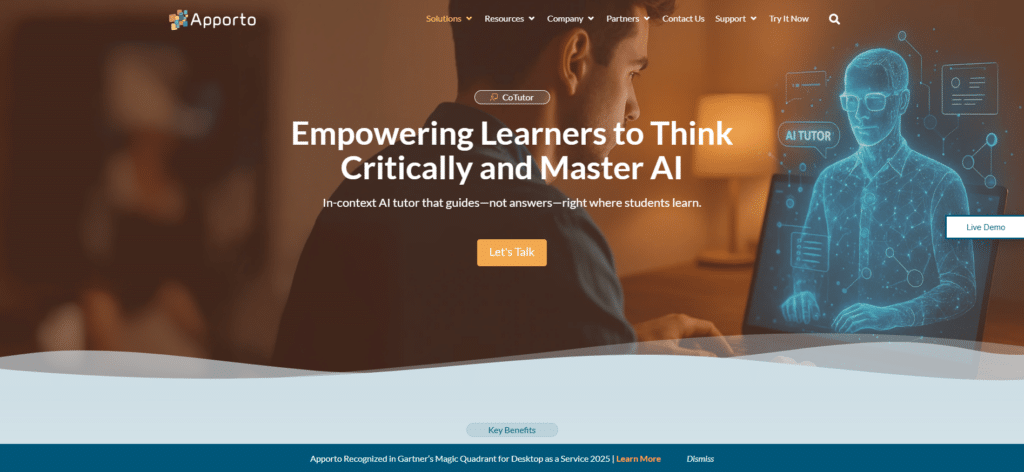
Apporto CoTutor is built for institutions that want AI to strengthen teaching instead of simply generating answers. Designed for higher education, it combines an AI tutor with personalized learning to help students receive guidance that reflects their progress, course objectives, and individual needs.
Its adaptive learning capabilities encourage learners to master concepts at their own pace, creating a more engaging experience while supporting stronger academic outcomes. Instead of offering one-size-fits-all responses, the platform keeps learning focused, relevant, and aligned with course goals.
Beyond tutoring, Apporto CoTutor gives educators the tools to improve student success at scale. Built-in learning analytics provide valuable insights into participation, progress, and performance, making it easier to identify students who may need additional support.
Seamless LMS integration allows AI features to fit naturally into existing courses, while comprehensive classroom support helps instructors incorporate AI without disrupting established teaching practices. The result is a connected learning environment that benefits both students and educators. For a direct comparison of their instructional approaches and AI tutoring capabilities, explore Carnegie Learning Vs Apporto Cotutor.
Highlights
- AI tutoring designed for higher education
- Personalized learning powered by adaptive learning
- Learning analytics that track student progress
- Seamless LMS integration
- Classroom support for instructors
Best For:
Colleges and universities seeking AI tutoring with personalized learning and scalable student support.
Limitations:
Primarily designed for higher education rather than K-12 curriculum-specific instruction.
Pricing:
Custom pricing based on institutional requirements and deployment needs.
2. Khan Academy
Overview
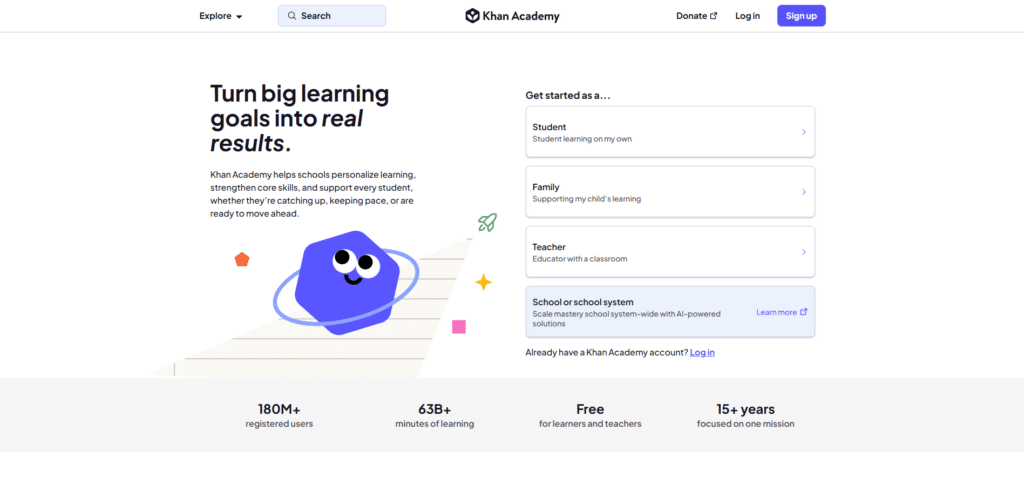
Khan Academy has earned a strong reputation by making high-quality education accessible to everyone. Its extensive library covers math and many other subjects through structured lessons that help students build knowledge one concept at a time.
Khan Academy provides free video lessons and practice exercises across grade levels, making it a practical choice for independent learners, classrooms, and families. The platform follows a carefully organized curriculum, allowing learners to progress steadily while reinforcing previously learned concepts through regular practice.
One of Khan Academy’s biggest strengths is its flexibility. Students can revisit lessons whenever they need additional support, while teachers can assign activities, monitor progress, and identify areas where learners need extra attention.
This combination of guided instruction and self-paced learning encourages students to strengthen foundational skills before moving to more advanced topics. The platform is particularly effective for reinforcing classroom instruction and preparing for assessments without adding unnecessary complexity.
Highlights
- Free video lessons and practice exercises across grade levels
- Comprehensive curriculum covering math and other core subjects
- Self-paced learning with progress tracking
- Teacher tools for assigning work and monitoring student performance
- Accessible for classrooms, schools, and families
Best For:
Students, teachers, and families seeking free, curriculum-aligned learning with strong mathematics instruction.
Limitations:
Offers fewer AI-powered tutoring, adaptive learning, and institutional analytics features than some newer education platforms.
Pricing:
Free to use, with optional paid features available through Khanmigo for AI-assisted tutoring. Readers interested in comparing other guided AI tutoring tools can also explore Khanmigo alternatives
3. DreamBox
Overview
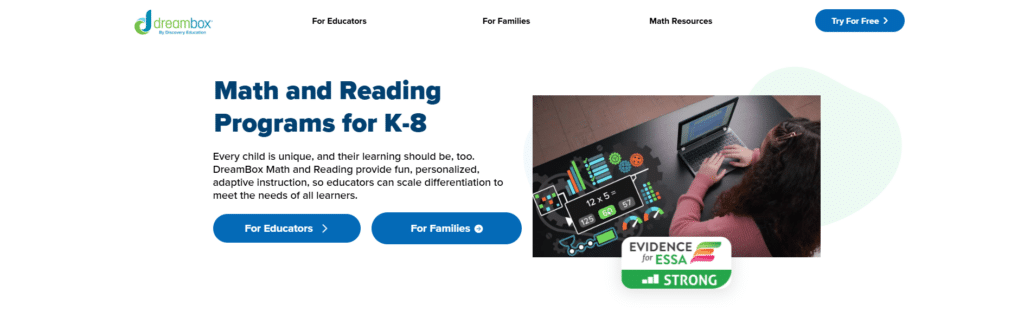
DreamBox is a mathematics platform designed to make learning more interactive and responsive for younger learners. DreamBox Learning provides gamified, adaptive learning for K-8 students, using engaging activities that adjust to each learner’s understanding in real time.
Instead of following a fixed sequence, the platform uses adaptive learning to personalize instruction, helping students spend more time on concepts they find challenging while progressing naturally through topics they have already mastered. This individualized approach encourages deeper understanding without making learning feel repetitive.
The platform emphasizes conceptual understanding alongside regular practice, allowing learners to strengthen essential skills through interactive lessons rather than memorization. Its game-like environment keeps engagement high, making mathematics more approachable for elementary and middle school students.
Teachers also benefit from progress reports that highlight student performance, making it easier to provide targeted support and reinforce classroom instruction. By combining personalized learning with continuous feedback, DreamBox creates an environment where students remain motivated while building lasting mathematical confidence.
Highlights
- Gamified, adaptive learning for K-8 students
- Personalized mathematics instruction based on student progress
- Interactive practice that builds conceptual understanding
- Progress monitoring for teachers
- High student engagement through interactive lessons
Best For:
Elementary and middle schools seeking adaptive math instruction with personalized learning and engaging classroom activities.
Limitations:
Focuses primarily on K-8 mathematics and offers fewer higher education or AI tutoring capabilities than broader learning platforms.
Pricing:
Pricing is available through custom school and district plans.
4. IXL Learning
Overview
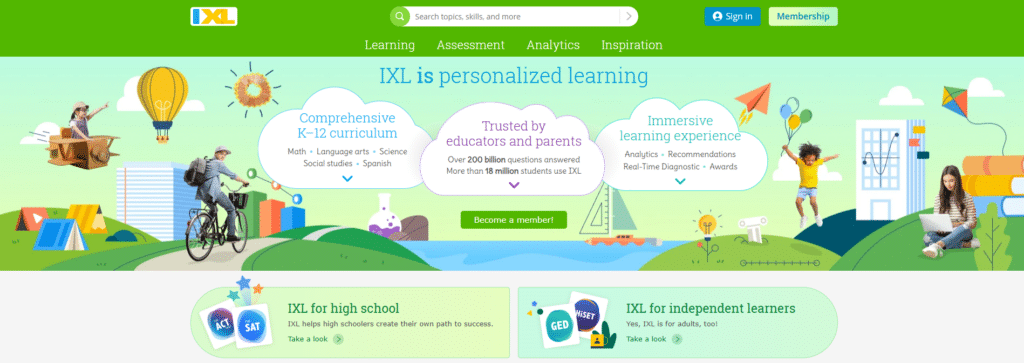
IXL Learning is designed to help students strengthen individual skills through consistent, targeted practice. The platform covers mathematics along with several other core subjects, making it a versatile option for schools looking to support learners across multiple grade levels.
IXL Learning offers skill practice aligned with state standards, helping educators ensure instruction matches classroom expectations while giving students opportunities to reinforce concepts at their own pace. This standards-based approach makes it useful for daily instruction, homework, and assessment preparation.
A key strength of IXL Learning is its detailed analytics, which provide clear insights into student performance and learning patterns. Teachers can monitor progress, identify knowledge gaps, and assign personalized activities based on individual needs.
Students receive immediate feedback as they work, encouraging steady improvement through repeated skill practice rather than memorization alone. The platform also complements existing curriculum by allowing educators to focus on specific learning objectives without redesigning their lesson plans. This combination of actionable data and personalized instruction helps create a more effective learning experience for both students and teachers.
Highlights
- Skill practice aligned with state standards
- Comprehensive mathematics curriculum with personalized activities
- Detailed analytics and progress tracking
- Immediate feedback that supports continuous improvement
- Teacher tools for monitoring student performance
Best For:
K-12 schools seeking standards-aligned skill practice with strong analytics and progress monitoring.
Limitations:
Focuses primarily on skill mastery and offers fewer AI tutoring and higher education features than some alternatives.
Pricing:
Limited free access is available, with paid plans providing full curriculum coverage and advanced reporting features.
5. Zearn
Overview
Zearn is a digital learning platform focused on elementary math, helping students develop strong foundational skills through structured lessons and independent practice. Zearn Math offers digital lessons aligned with Eureka Math frameworks, making it an appealing option for schools already using that instructional approach.
The platform blends teacher-led instruction with digital activities, allowing students to reinforce classroom concepts at their own pace while building confidence through consistent practice. This balance between guided instruction and independent work supports a more connected learning experience.
One of Zearn’s biggest strengths is how naturally it fits into the classroom. Teachers can assign lessons, monitor student performance, and identify learning gaps without disrupting their existing curriculum. The platform provides immediate feedback during activities, helping learners correct mistakes as they work instead of waiting for graded assignments.
This continuous reinforcement encourages deeper learning and helps students develop a stronger understanding of mathematical concepts over time. By combining structured instruction with engaging digital content, Zearn supports both classroom teaching and independent study.
Highlights
- Digital elementary math lessons aligned with Eureka Math
- Blends classroom instruction with independent practice
- Supports curriculum-aligned learning
- Immediate feedback to reinforce understanding
- Teacher dashboards for monitoring student progress
Best For:
Elementary schools seeking a structured math platform that complements classroom teaching and strengthens foundational skills.
Limitations:
Primarily focused on elementary mathematics, with fewer adaptive learning and AI tutoring capabilities than some alternatives.
Pricing:
A free version is available for core instructional resources, while expanded school and district features require a paid subscription.
6. Brilliant
Overview
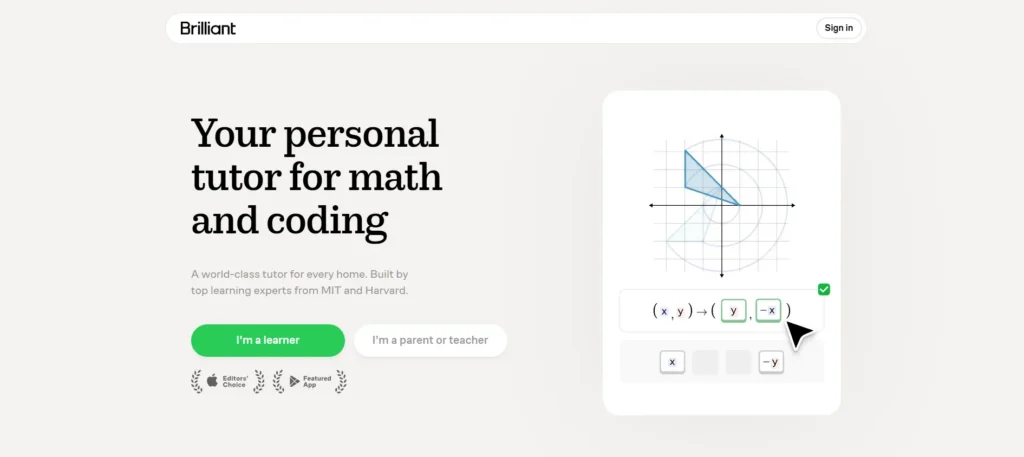
Brilliant takes a different approach to learning by emphasizing understanding over memorization. Rather than relying on long lectures, the platform teaches STEM concepts through interactive lessons that encourage active participation. It covers mathematics, science, computer science, and related subjects using short challenges that gradually increase in difficulty.
Problem-based learning encourages critical thinking through real-world scenarios, helping students understand why concepts work instead of simply remembering formulas or procedures. This makes Brilliant especially valuable for learners who enjoy discovering solutions through exploration.
The platform is built around hands-on learning, where regular practice reinforces new ideas and strengthens long-term retention. Each lesson encourages learners to solve problems independently before receiving guidance, promoting stronger problem solving skills and a deeper understanding of technical subjects.
Brilliant’s interactive format keeps learners engaged while making complex topics more approachable. Although it is not designed as a traditional classroom curriculum, it works well as a supplement for students who want to expand their STEM knowledge beyond textbooks and standard coursework.
Highlights
- Interactive STEM learning through hands-on lessons
- Strong focus on mathematics and science
- Develops critical thinking and problem-solving skills
- Practice-based activities that reinforce understanding
- Engaging learning experience with progressive challenges
Best For:
Students seeking interactive STEM education that strengthens mathematical reasoning and problem-solving abilities.
Limitations:
Functions primarily as a supplemental learning platform and offers fewer classroom management, adaptive learning, or curriculum alignment features than school-focused alternatives.
Pricing:
A limited free version is available, with premium plans unlocking the complete course library and advanced learning paths.
7. ALEKS
Overview
ALEKS is a well-established learning platform that specializes in adaptive learning for mathematics and other STEM subjects. Widely used in schools and higher education, it begins with an initial assessment to identify what each learner already knows before creating a personalized learning path.
ALEKS is driven by adaptive knowledge-space technology, allowing the platform to focus on concepts students are ready to learn next instead of following a fixed sequence. This targeted approach helps learners strengthen foundational knowledge while progressing at a pace that matches their abilities.
A major strength of ALEKS is its emphasis on personalized learning through continuous assessment and feedback. As students complete topics, the platform updates their learning path to reflect new understanding and identify remaining knowledge gaps.
This creates a more efficient learning experience while helping instructors monitor progress and provide targeted support when needed. Its strong focus on conceptual understanding makes ALEKS particularly effective for college mathematics, placement courses, and STEM programs that require a solid academic foundation.
Highlights
- Adaptive learning powered by knowledge-space technology
- Personalized mathematics instruction through continuous assessment
- Strong support for higher education and STEM courses
- Identifies knowledge gaps and adjusts learning paths automatically
- Detailed progress monitoring for educators
Best For:
Schools, colleges, and universities seeking adaptive mathematics instruction with personalized learning and data-driven assessment.
Limitations:
Focuses primarily on mathematics and STEM, with fewer classroom collaboration and AI tutoring features than broader learning platforms.
Pricing:
A free trial is available, with paid subscriptions varying by course, institution, and implementation requirements.
8. Imagine Learning
Overview
Imagine Learning is a comprehensive education platform that focuses on personalized learning across literacy, language, and core academic subjects. Designed primarily for K-12 schools, it helps students learn at their own pace while giving educators the resources needed to support different learning abilities. Its flexible approach makes it especially valuable for classrooms with diverse learning needs, where personalized instruction can have a meaningful impact on student achievement.
One of the platform’s greatest strengths is its emphasis on literacy and language development. Interactive lessons, targeted activities, and continuous feedback help students strengthen reading, vocabulary, and communication skills while staying engaged throughout the learning process.
At the same time, teachers receive detailed insights into student performance, allowing them to identify learning gaps and provide timely support. These reporting tools make it easier to adapt instruction without creating additional administrative work.
By combining personalized instruction with practical classroom resources, Imagine Learning helps schools create a more effective and inclusive education experience that supports long-term learning success.
Highlights
- Personalized learning tailored to individual student needs
- Strong literacy and language development programs
- Progress tracking and reporting for teachers
- Classroom support through targeted instructional resources
- Designed for diverse K-12 learning environments
Best For:
Schools seeking a personalized learning platform with strong literacy programs and classroom support for teachers and students.
Limitations:
Focuses primarily on K-12 education and offers fewer AI tutoring and higher education features than some alternatives.
Pricing:
Pricing is available upon request and is customized according to school, district, and implementation requirements.
How Do You Choose the Right Carnegie Learning Alternative?

The right learning platform depends on more than a feature checklist. Some schools prioritize adaptive instruction that adjusts to student performance, while others value AI tutoring, curriculum flexibility, classroom management, or detailed progress tracking.
Before making a decision, consider how the platform fits your instructional goals, the age of your learners, and the level of support your educators need. A solution that aligns with your teaching approach and grows alongside your institution will provide far greater value than one that simply offers the most features.
Do You Need Adaptive Learning, AI Tutoring, or Skill Practice?
Every learner approaches math differently, which is why different learners require different instructional approaches. Some students thrive with structured practice, while others benefit from adaptive learning that adjusts lessons based on performance.
Platforms built around learning science use artificial intelligence to personalize instruction, helping learners focus on concepts they have not yet mastered. This creates more meaningful personalized learning experiences and supports stronger long-term understanding.
If your priority is building confidence in mathematics, look for a platform that balances guided instruction with independent practice. Effective programs strengthen foundational skills while keeping students engaged through a well-organized curriculum.
Adaptive learning strengthens conceptual understanding through personalized instruction, allowing students to progress at a pace that matches their abilities instead of following a one-size-fits-all sequence. Choosing the right instructional model can make a lasting difference in both engagement and achievement.
Which Features Should Schools and Educators Prioritize?
The best platform should support educators as effectively as it supports students. Resources for teachers, ongoing professional development, and continuous professional learning make it easier to introduce new instructional methods without disrupting existing classroom routines. These resources also help schools maintain consistent teaching practices as programs expand across districts.
Strong collaboration tools improve communication between educators, administrators, and instructional teams, making it easier to share resources and monitor student progress. Schools should also look for platforms that provide support across multiple subjects, including science, literacy, and even world languages, instead of focusing on a single discipline.
Professional learning improves teaching effectiveness, while broad curriculum support increases long-term value, allowing educators to meet a wider range of instructional needs with one platform.
How Important Are Pricing, Scalability, and Ease of Use?
Cost matters, but long-term success depends on far more than the subscription price. The best software combines reliable technology, practical solutions, and dependable services with intuitive design that educators can adopt quickly. Ease of use encourages long-term adoption, reducing training time and making it easier for teachers and students to use the platform consistently.
Schools should also evaluate security, data protection, and the platform’s ability to grow alongside changing educational needs. A platform that works well in both K-12 and higher education environments can provide greater flexibility as programs expand.
The most powerful systems are built to support increasing numbers of learners without sacrificing performance or usability. Scalable platforms provide better institutional value, helping schools avoid costly migrations as instructional requirements evolve.
Which Carnegie Learning Alternative Offers the Best Long-Term Value?
Each platform in this guide serves a different educational purpose. Apporto CoTutor stands out for higher education, combining AI tutoring, personalized learning, adaptive instruction, learning analytics, classroom support, and LMS integration to improve student success at scale.
Khan Academy remains an excellent free option for mathematics instruction, while DreamBox specializes in adaptive K-8 mathematics learning. IXL Learning is ideal for standards-aligned skill mastery, and Zearn supports elementary classroom instruction through structured lessons.
If your goal is strengthening STEM reasoning, Brilliant provides engaging problem-solving experiences that encourage deeper understanding. ALEKS is a strong choice for adaptive mathematics in colleges and universities, using knowledge-space technology to personalize instruction.
Imagine Learning excels in literacy and individualized learning support for K-12 students. The best long-term investment is the one that aligns with your instructional goals, supports your educators, and continues delivering value as your educational programs grow.
Final Verdict
The right Carnegie Learning alternative depends on your educational priorities. Apporto CoTutor is the strongest overall choice for higher education, combining AI tutoring, personalized learning, LMS integration, classroom instruction, learning analytics, and scalable educational workflows.
DreamBox stands out for adaptive elementary mathematics, while ALEKS excels in adaptive learning for STEM and college-level math. IXL Learning is ideal for standards-aligned skill mastery, Khan Academy offers outstanding free mathematics resources, and Zearn strengthens elementary classroom instruction.
If you’re looking for a future-ready platform that supports both educators and students through AI-powered learning, explore Apporto CoTutor to see how it can elevate teaching, improve student success, and create a more personalized learning experience.
Frequently Asked Questions (FAQs)
1. What are the best Carnegie Learning alternatives?
Some of the best Carnegie Learning alternatives include Apporto CoTutor, Khan Academy, DreamBox, IXL Learning, Zearn, Brilliant, ALEKS, and Imagine Learning. Each platform offers different strengths, ranging from AI tutoring and adaptive learning to skill mastery, elementary mathematics, and higher education support.
2. Which Carnegie Learning alternative is best for higher education?
Apporto CoTutor is one of the strongest options for higher education because it combines AI tutoring, personalized learning, LMS integration, learning analytics, and classroom support. ALEKS is another excellent choice for adaptive mathematics, particularly in STEM-focused college courses.
3. Which platform provides the best adaptive math learning?
DreamBox and ALEKS are among the leading platforms for adaptive math learning. DreamBox specializes in personalized mathematics instruction for K-8 students, while ALEKS uses adaptive knowledge-space technology to create individualized learning paths for secondary and higher education learners.
4. Are there free Carnegie Learning alternatives?
Yes. Khan Academy and Zearn provide free learning resources that support mathematics instruction across multiple grade levels. Both platforms include structured lessons and practice activities, making them excellent choices for schools, teachers, students, and families seeking affordable educational support.
5. Which platform is best for elementary mathematics?
DreamBox and Zearn are excellent options for elementary mathematics. DreamBox delivers adaptive, gamified instruction that responds to student performance, while Zearn aligns closely with Eureka Math, helping students strengthen foundational skills through guided lessons and independent practice.
6. How do adaptive learning platforms improve student success?
Adaptive learning platforms analyze student performance and adjust instruction to match individual learning needs. This personalized approach helps learners master concepts before advancing, improves engagement, strengthens conceptual understanding, and allows educators to identify learning gaps earlier for targeted intervention.
7. Can AI-powered learning platforms support classroom instruction?
Yes. AI-powered learning platforms can enhance classroom instruction by providing personalized tutoring, progress tracking, learning analytics, and instructional support. Solutions such as Apporto CoTutor also integrate with learning management systems, helping educators deliver more personalized and scalable learning experiences.
8. What should you look for when choosing a Carnegie Learning alternative?
Choose a platform that aligns with your educational goals, curriculum requirements, and student needs. Compare adaptive learning capabilities, AI tutoring, classroom support, analytics, ease of use, pricing, scalability, and integration options to ensure the platform continues delivering value as your instructional programs grow.
