

What Are the Best Knewton Alternatives for Adaptive Learning?
Apporto CoTutor is a leading alternative to Knewton, alongside platforms like ALEKS, Khan Academy, MyLab and Mastering, IXL Learning, DreamBox Learning, and Moodle. These solutions offer adaptive learning, AI tutoring, and course management features to support different educational goals and institutional needs.
Learning rarely follows a straight line. Some students grasp new concepts quickly, while others need additional practice before moving forward. That is exactly the challenge Knewton Alta was built to address. Its adaptive learning technology adjusts lessons in real time, provides immediate feedback, and supports mastery-based instruction, particularly in STEM subjects.
However, many educators now look beyond a single platform to find solutions with stronger AI tutoring, more flexible LMS integrations, richer classroom features, or pricing that better aligns with institutional goals.
In this blog post, you’ll discover seven of the best Knewton alternatives, compare their adaptive learning capabilities, educational features, integrations, pricing, and long-term value, helping you choose the platform that best supports your teaching objectives and student success.
How Did We Tested These Knewton Alternatives?

Selecting the right Knewton alternative involves more than comparing feature lists. Every institution has different instructional goals, teaching methods, and learner needs. Some prioritize adaptive learning that adjusts to each student’s progress, while others need stronger AI tutoring, personalized instruction, classroom management, or detailed learning analytics.
To create this comparison, each platform was evaluated on the factors that have the greatest impact on teaching and learning, including personalization, assessment quality, integrations, ease of use, scalability, and overall educational value.
The goal is to help you identify a platform that supports both educators and students today while remaining effective as your programs continue to grow.
Which Adaptive Learning Features Matter Most?
The strongest adaptive learning platforms personalize instruction based on student performance instead of following a fixed course sequence. Adaptive learning platforms personalize instruction based on student performance, helping students master concepts at their own pace.
Like Knewton Alta, effective platforms provide immediate feedback after each assignment or set of questions, improving mastery of learning objectives. This approach is especially valuable in science and chemistry, where each concept builds on previous knowledge.
It also gives teachers greater visibility into classroom progress. Immediate feedback improves mastery of learning objectives, while personalized learning supports long-term student success.
How Important Are Analytics, Integrations, and Classroom Support?
The best education software combines adaptive instruction with practical classroom tools. Analytics help instructors identify struggling students early, making it easier to provide targeted support before learning gaps become larger challenges.
Strong program design, flexible modules, centralized content, and reliable data reporting improve both classroom management and instructional quality. For every school or college, seamless access and integrations simplify daily teaching while reducing administrative work for users.
Classroom integrations simplify teaching workflows, and flexible software supports different instructional models across a wide range of educational settings.
Which Platform Delivers the Best Long-Term Value?
Choosing the right alternative requires looking beyond feature lists. A user friendly platform should make it easy to understand progress, simplify remediation, and offer practical tools that help both educators and learners succeed.
Reading a balanced review can also reveal how well a platform performs in real classrooms. The most helpful solutions maximize instructional efficiency while keeping essential features easy to access.
Long-term value depends on usability, instructional support, and scalability. The best platform should continue supporting learners as educational needs evolve, helping institutions maximize learning outcomes without adding unnecessary complexity.
Quick Comparison of the Best Knewton Alternatives
Adaptive learning is no longer limited to adjusting question difficulty. Today’s platforms personalize instruction in different ways, combining AI tutoring, assessments, learning analytics, and course management to create more effective learning experiences.
Some are built for higher education, while others specialize in K-12 instruction, STEM mastery, or flexible learning management. The comparison below provides a quick overview of the leading Knewton alternatives, making it easier to identify the platform that best aligns with your educational goals before exploring each option in greater detail.
| Platform | Best For | Adaptive Learning | AI Tutoring | LMS Support | Free Plan | Ideal Users |
|---|---|---|---|---|---|---|
| Apporto CoTutor | Higher education | Advanced | Advanced | Excellent | Custom | Colleges and universities |
| ALEKS | STEM mastery | Advanced | Moderate | Good | Limited trial | Schools and colleges |
| Khan Academy | Self-paced learning | Good | Moderate | Limited | Yes | Students and educators |
| MyLab and Mastering (Pearson) | Higher education courses | Good | Moderate | Excellent | No | Colleges and universities |
| IXL Learning | Skill mastery | Advanced | Moderate | Good | Limited | K-12 schools |
| DreamBox Learning | Adaptive math | Advanced | Moderate | Good | No | K-8 schools |
| Moodle | Open-source LMS | Moderate | Available through plugins | Excellent | Yes | Schools and universities |
Best Knewton Alternatives (A Complete Breakdown)
1. Apporto CoTutor
Overview
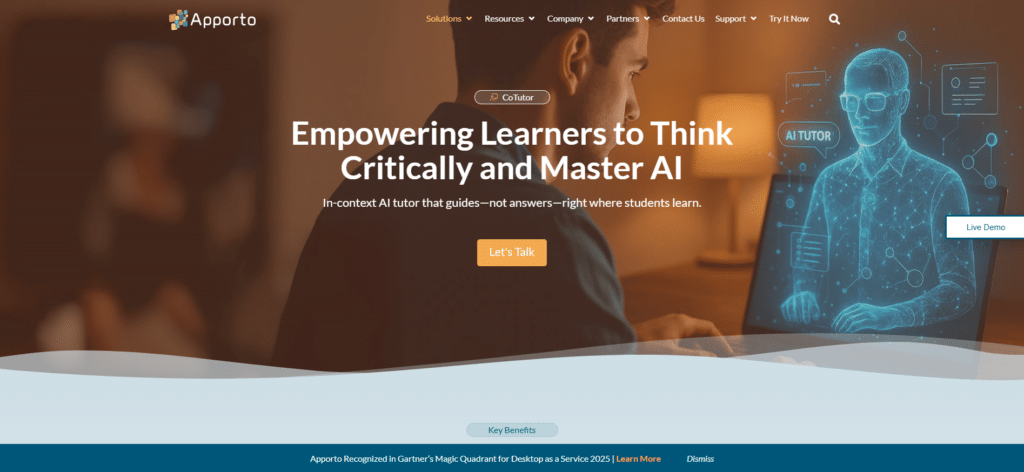
Apporto CoTutor is an AI-powered learning platform built to make adaptive learning more effective across higher education. Instead of offering the same instruction to every learner, it combines AI tutoring with personalized learning to guide students according to their progress and academic needs.
This approach helps learners strengthen weak areas while giving instructors greater visibility into classroom performance. The platform integrates with existing learning management systems, making it easier for institutions to introduce AI without disrupting established teaching workflows.
Another strength is its support for assessment and learning analytics. Educators can monitor student performance, identify learning gaps, and provide timely interventions before small challenges become larger obstacles.
AI-generated insights also reduce repetitive administrative work, allowing instructors to spend more time engaging with students. By supporting both classroom instruction and independent learning, Apporto Co Tutor creates a more personalized educational experience while improving overall student support.
Highlights
- AI tutoring with adaptive learning pathways
- Personalized learning tailored to student progress
- Learning analytics for performance tracking
- AI-assisted assessment and timely feedback
- LMS integration for higher education
Best For:
Colleges and universities seeking AI-powered tutoring, adaptive learning, and scalable student support.
Limitations:
Primarily designed for higher education rather than curriculum-specific K-12 instruction.
Pricing:
Custom pricing is available based on institutional size, deployment requirements, and selected features.
2. ALEKS
Overview
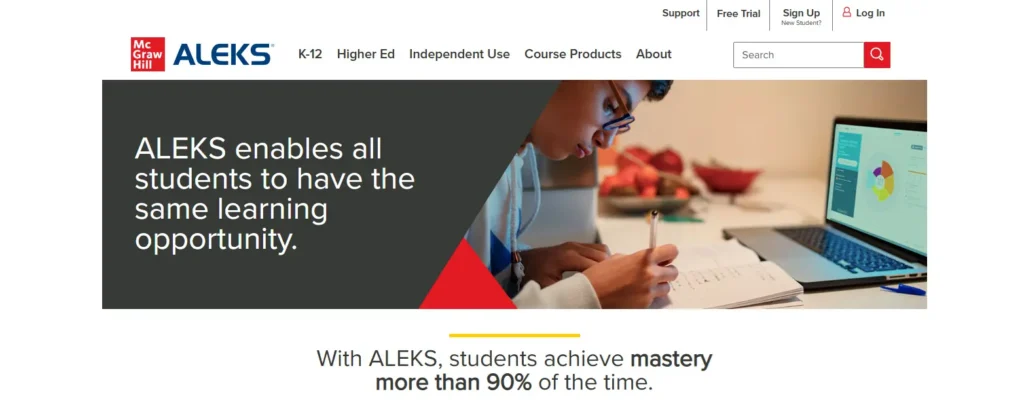
ALEKS is a web-based learning and assessment platform designed to help students build mastery through individualized instruction. Often compared with Knewton Alta, it focuses on adapting lessons to each learner’s current level rather than following a fixed sequence.
ALEKS personalizes learning paths using Knowledge Space Theory, identifying what students already know and what they are ready to learn next. This targeted approach reduces unnecessary repetition and helps learners make steady progress toward specific learning objectives.
The platform is especially effective in science, chemistry, mathematics, and other STEM disciplines where concepts build on one another. By continuously assessing student understanding, ALEKS adjusts practice activities in real time and provides instructors with clear insights into student performance.
This helps educators identify learning gaps early while allowing students to focus on the topics that need the most attention. Particularly strong for STEM education, ALEKS supports mastery-based learning that encourages long-term understanding instead of memorization.
Highlights
- Adaptive learning powered by Knowledge Space Theory
- Personalized learning paths based on student mastery
- Strong assessment tools for measuring progress
- Excellent support for science, chemistry, and STEM courses
- Helps students achieve learning objectives efficiently
Best For:
Schools and colleges seeking adaptive STEM instruction with mastery-based assessments.
Limitations:
Best suited for STEM subjects and offers fewer AI tutoring and classroom collaboration features than broader learning platforms.
Pricing:
ALEKS offers limited trial access, with paid plans available through institutional or individual subscriptions depending on the course and learning requirements.
3. Khan Academy
Overview
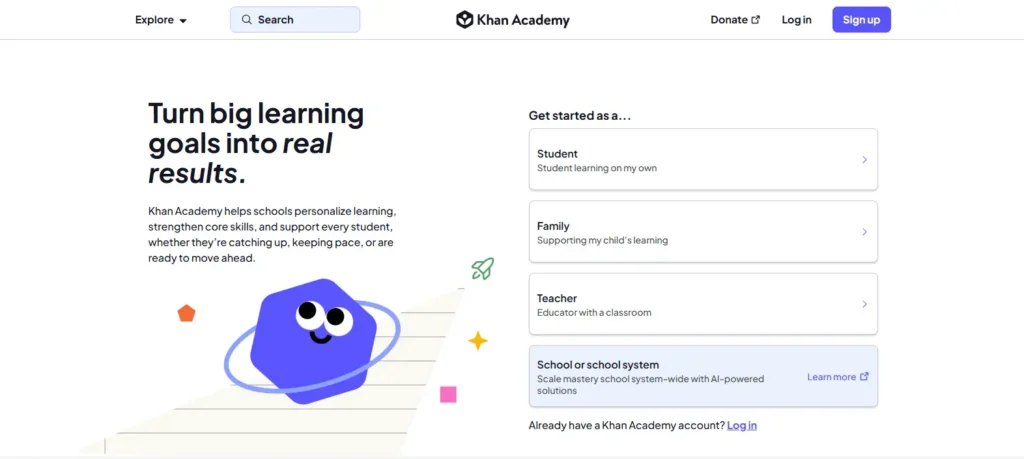
Khan Academy is one of the most widely used learning platforms for students seeking flexible, self-paced education. As a popular Knewton alternative, it offers comprehensive lessons across mathematics, science, economics, computing, and other subjects at no cost.
Khan Academy provides personalized learning pathways, allowing learners to progress according to their understanding rather than following a rigid schedule. This approach helps students strengthen foundational concepts before moving on to more advanced topics.
A major advantage of the platform is its strong library of instructional videos, which explains complex ideas in a clear and approachable way. Interactive practice exercises, quizzes, and instant feedback reinforce learning after each lesson, helping students identify areas that need additional attention.
Educators can also assign a course, monitor classroom progress, and review student performance through teacher dashboards. These features make Khan Academy valuable for independent learners as well as teachers who want to supplement classroom instruction with engaging digital resources. Best of all, the platform remains completely free, making high-quality educational content accessible to a broad audience.
Highlights
- Personalized learning pathways for self-paced study
- Extensive library of instructional videos
- Instant feedback through interactive practice and questions
- Classroom tools for assigning courses and tracking progress
- Free access across multiple academic subjects
Best For:
Students and educators looking for a free platform that combines personalized learning with high-quality instructional content.
Limitations:
Offers less advanced AI tutoring and adaptive assessment than platforms designed specifically for higher education.
Pricing:
Khan Academy is free to use, providing unrestricted access to courses, videos, practice exercises, and classroom resources.
4. MyLab and Mastering (Pearson)
Overview
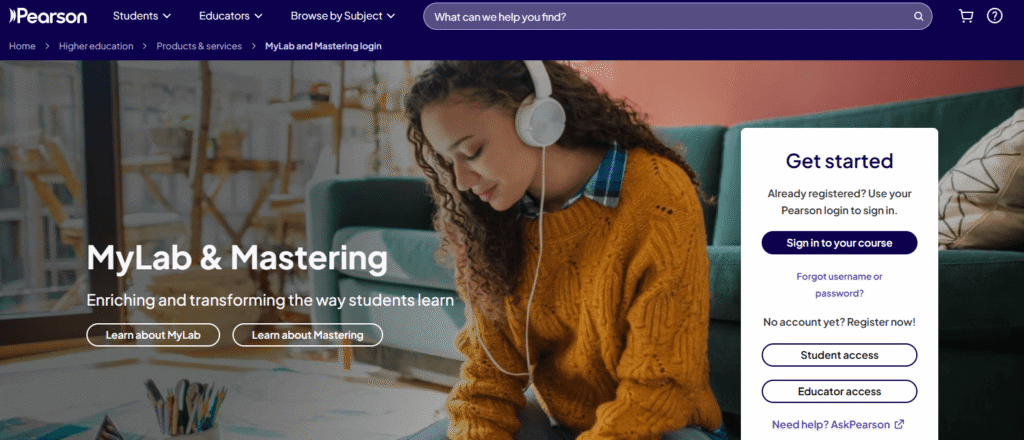
MyLab and Mastering is Pearson’s digital learning platform designed primarily for college and university courses. It combines interactive course materials, homework, quizzes, and assessments into a single environment that supports both instructors and students.
The platform is widely used across disciplines, allowing educators to deliver structured learning experiences while tracking student progress throughout the semester. Its curriculum-aligned content makes it especially valuable for institutions already using Pearson textbooks and instructional resources.
The platform streamlines teaching by automating routine tasks such as grading homework and managing assignments. Instructors can create customized assignment sets, monitor student performance, and provide timely feedback to reinforce learning.
Built-in assessment tools help identify areas where students need additional support, enabling more targeted instruction before exams. Integration with learning management systems also simplifies course administration and keeps all learning activities organized in one place.
For institutions seeking reliable educational software that combines course delivery with assessment, MyLab and Mastering offers a comprehensive solution.
Highlights
- Comprehensive course management and assessment tools
- Customizable assignments and automated grading
- Personalized feedback to improve student learning
- Curriculum-aligned content across multiple subjects
- LMS integration for streamlined teaching workflows
Best For:
Colleges and universities using Pearson course materials and seeking an integrated platform for teaching, assignments, and assessment.
Limitations:
Works best within the Pearson ecosystem and offers less adaptive AI tutoring than platforms built specifically for personalized learning.
Pricing:
Pricing varies by course and institution, with access typically included through course materials or purchased separately by students.
5. IXL Learning
Overview
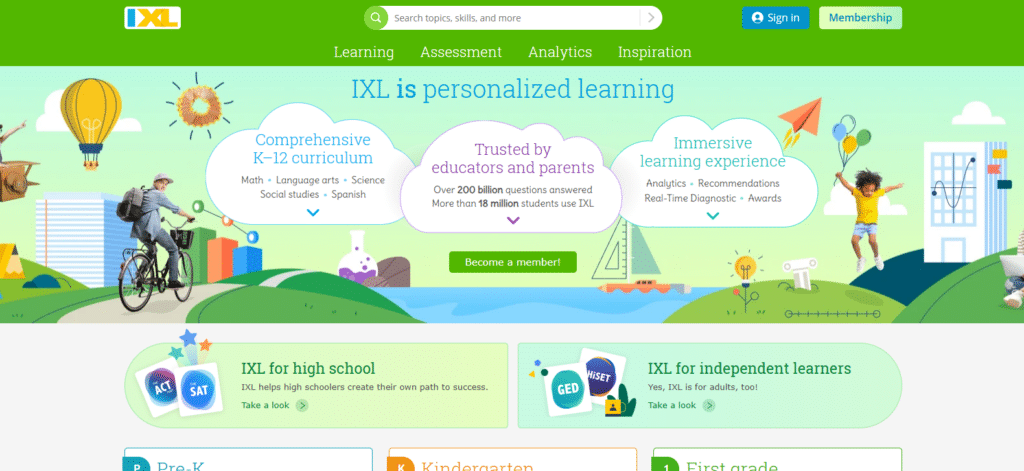
IXL Learning is an adaptive learning platform that helps students strengthen skills through continuous practice and personalized instruction. Rather than moving every learner through the same sequence, it adjusts questions based on individual performance, helping students master concepts before progressing to more advanced topics.
This personalized approach supports learning across mathematics, language arts, science, and other core subjects, making IXL a popular choice for K-12 schools seeking to improve academic outcomes.
The platform provides detailed analytics that give teachers a clear view of student performance, helping them monitor progress toward specific learning objectives. These insights make it easier to identify students who need additional remediation and deliver targeted instruction before learning gaps widen.
IXL also supports the classroom with customizable skill plans, real-time reporting, and practice recommendations tailored to each learner’s needs. By combining adaptive learning with actionable data, the platform helps educators make informed teaching decisions while encouraging students to build confidence through consistent practice.
Highlights
- Adaptive learning tailored to individual student performance
- Detailed analytics for monitoring progress and mastery
- Personalized remediation for struggling learners
- Classroom reports that support instructional planning
- Coverage across multiple K-12 subject areas
Best For:
K-12 schools and educators looking for adaptive learning, detailed progress tracking, and personalized skill development.
Limitations:
Focuses primarily on structured practice and mastery rather than advanced AI tutoring or higher education course support.
Pricing:
IXL Learning offers limited access for new users, while full features are available through paid individual, family, school, and district subscription plans.
6. DreamBox Learning
Overview
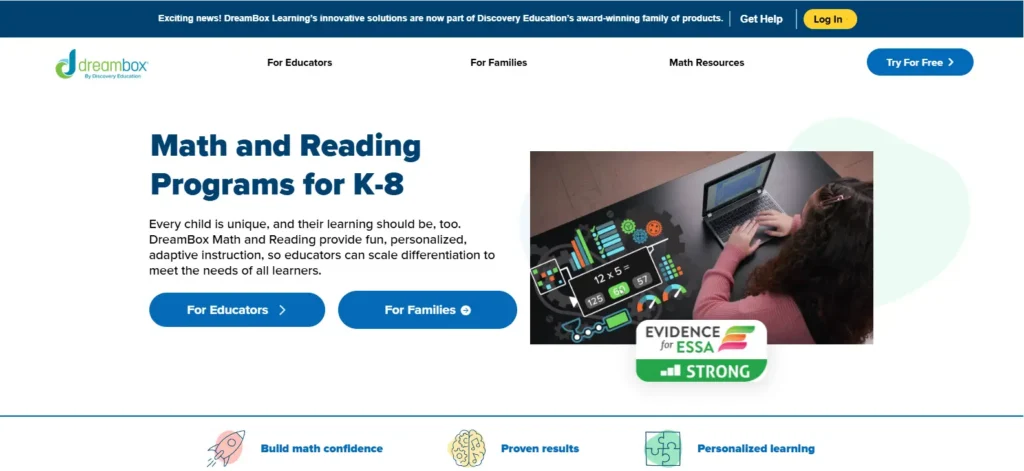
DreamBox Learning is an adaptive learning platform designed to strengthen math skills through personalized instruction and continuous assessment. DreamBox Learning specializes in adaptive math education, using intelligent technology to adjust lessons in real time based on how each student responds.
Instead of following a fixed learning sequence, the platform adapts activities to individual performance, helping learners develop a deeper understanding of mathematical concepts while progressing at a pace that matches their abilities. This makes it particularly effective for elementary education, where building strong foundational skills is essential.
The platform combines adaptive learning with meaningful feedback to help students recognize mistakes and improve their understanding as they work. Ongoing assessment identifies learning gaps early, allowing teachers to provide additional support when needed.
DreamBox also promotes mastery by ensuring students fully understand one concept before advancing to the next. Interactive lessons and engaging activities keep learners motivated, improving overall engagement while encouraging independent problem-solving. These features make DreamBox a strong option for schools seeking personalized math instruction that adapts to every learner.
Highlights
- Adaptive learning tailored to individual math skills
- Personalized learning with real-time lesson adjustments
- Continuous assessment and immediate feedback
- Promotes concept mastery through guided practice
- Interactive activities that increase student engagement
Best For:
Elementary and K-8 schools looking for adaptive math instruction that supports personalized learning and long-term mastery.
Limitations:
Primarily focused on math education, with fewer tools for broader subject coverage or AI-assisted tutoring across multiple disciplines.
Pricing:
DreamBox Learning offers customized pricing for schools and districts, with subscription plans based on the number of students and implementation requirements.
7. Moodle
Overview
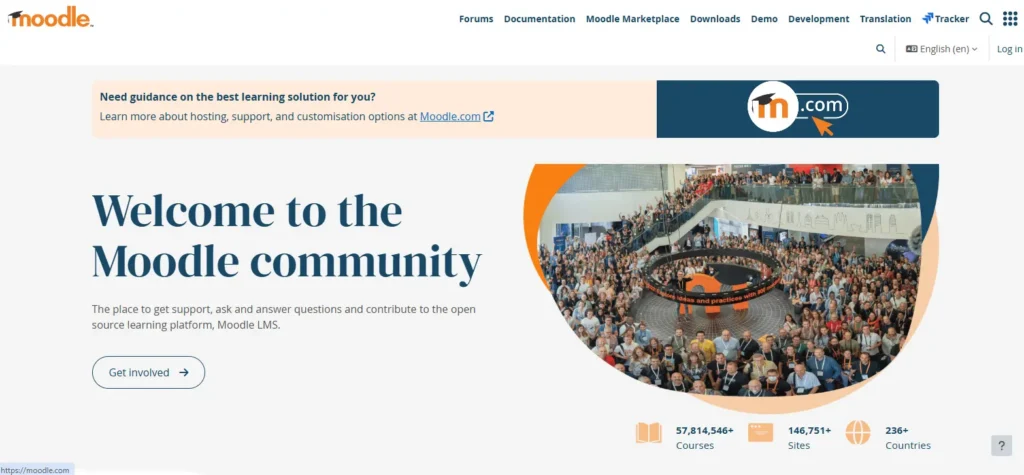
Moodle is an open-source LMS that enables schools, colleges, and universities to create flexible online learning environments. Unlike platforms focused solely on adaptive instruction, Moodle provides the tools needed to build, organize, and deliver complete course experiences.
Instructors can create structured modules, upload educational content, manage assignments, and communicate with students from a single platform. Its flexibility makes it suitable for institutions that want greater control over how courses are designed and delivered.
One of Moodle’s biggest strengths is its customization. Moodle supports customizable learning paths and analytics, allowing educators to tailor instruction while monitoring learner participation and performance.
Built-in reporting features help instructors evaluate progress, identify students who need additional support, and make informed teaching decisions. The platform also provides secure access across devices, making it easier for students to participate both inside and outside the classroom.
As an open-source platform with extensive integrations, Moodle connects with a wide range of educational tools, plugins, and learning management systems, making it adaptable to different institutional requirements and teaching models.
Highlights
- Flexible LMS for creating and managing online courses
- Customizable learning paths with built-in analytics
- Extensive integrations through its open-source ecosystem
- Secure access for students and educators across devices
- Comprehensive tools for teaching, assignments, and course management
Best For:
Schools and universities seeking a customizable learning management system with flexible course delivery and strong integration capabilities.
Limitations:
Focuses on course management rather than offering built-in AI tutoring or advanced adaptive learning features.
Pricing:
Moodle is available as a free open-source platform, while MoodleCloud and managed hosting services offer paid plans with additional support, hosting, and enterprise features.
How Do You Choose the Right Knewton Alternative?

Choosing the right Knewton alternative starts with identifying your educational priorities. Some platforms are designed to personalize learning through adaptive technology, while others focus on AI tutoring, course delivery, or classroom management.
The ideal solution should fit your teaching model, support your students’ learning needs, and remain valuable as your institution grows. Looking beyond individual features and considering how a platform improves instruction, assessment, and learner engagement will help you make a more informed decision.
Do You Need Adaptive Learning, AI Tutoring, or Course Management?
Every learning platform solves a different challenge. Different institutions require different adaptive learning capabilities, so it is important to determine what you need before comparing solutions. If your priority is adaptive learning, look for platforms that adjust instruction based on student performance and provide personalized guidance throughout a course. These systems help students progress at an appropriate pace while keeping learning objectives clear and measurable.
If you want stronger AI assistance, choose a platform that offers intelligent tutoring, timely feedback, and guided explanations instead of simply providing answers.
For instructors managing multiple classes, robust course management tools can simplify assignment creation, organize classroom resources, and streamline communication with teachers and learners. Interactive questions, progress monitoring, and assessment features also contribute to a more engaging classroom experience.
Most importantly, personalized learning improves mastery and engagement, allowing students to build confidence while achieving better academic outcomes.
Which Features Should Schools and Colleges Prioritize?
Beyond adaptive instruction, schools should evaluate how well a platform supports everyday teaching. Detailed analytics provide instructors with meaningful insights into student performance, helping identify learning gaps before they become larger challenges. Analytics identify learning gaps early, enabling timely interventions that improve outcomes for both individual learners and entire classes.
Reliable software should also simplify teaching by organizing content, assignments, and learning modules in one location. Whether you’re managing a single college course or supporting an entire school, integrated tools reduce administrative effort while improving collaboration among users.
Access to clear performance data helps instructors refine lessons, monitor participation, and make evidence-based instructional decisions. Integrated learning platforms improve instructional efficiency, allowing educators to spend less time managing technology and more time supporting student success.
How Important Are Ease of Use, Accessibility, and Long-Term Value?

Powerful features are valuable only if educators and students actually use them. A user friendly interface makes it easier to navigate courses, review progress, and access learning materials without unnecessary complexity. Ease of use encourages platform adoption, particularly when instructors are introducing new technology across multiple courses.
You should also consider how easily students can gain access to learning resources and whether the platform provides helpful documentation, training, and technical support. Reading an independent review can highlight practical strengths that may not appear on product pages.
The best alternative should offer flexible features that support both everyday instruction and targeted remediation when learners need additional guidance. It should also help educators understand performance trends and maximize instructional effectiveness over time. Flexible platforms continue delivering value as programs grow, making scalability just as important as current functionality.
Which Knewton Alternative Offers the Best Long-Term Value?
Each platform in this guide serves a different educational purpose. Apporto Co Tutor is the strongest option for higher education, combining AI tutoring, adaptive learning, personalized learning, assessment, and learning analytics with seamless LMS integration.
ALEKS is an excellent choice for adaptive STEM instruction, helping students master concepts through personalized learning pathways. Khan Academy remains one of the best free platforms for self-paced education and foundational skill development.
For structured university coursework, MyLab and Mastering provides comprehensive course management, assessments, and curriculum-aligned resources. IXL Learning excels at skill mastery through adaptive practice and detailed progress tracking, while DreamBox Learning specializes in adaptive elementary math instruction.
Moodle stands out for organizations that need flexible learning management, customizable courses, and extensive integrations. The right Knewton alternative is the one that aligns with your instructional goals while continuing to support educators and students as learning needs evolve.
Final Thoughts
The best Knewton alternative depends on your educational priorities. Apporto Co Tutor stands out as the strongest choice for higher education, combining AI tutoring, adaptive learning, personalized student support, seamless LMS integration, and a scalable learning environment.
ALEKS excels in STEM education with mastery-based instruction, Khan Academy is ideal for free self-paced learning, MyLab and Mastering delivers comprehensive course management, IXL Learning is a strong option for skill mastery, DreamBox Learning specializes in adaptive elementary math, and Moodle provides flexible learning management with extensive integrations.
If you’re looking for a platform that balances intelligent tutoring, personalized instruction, and long-term scalability, explore Apporto CoTutor to see how it can transform learning outcomes for students and educators alike.
Frequently Asked Questions (FAQs)
1. What are the best Knewton alternatives in 2026?
Some of the best Knewton alternatives in 2026 include Apporto CoTutor, ALEKS, Khan Academy, MyLab and Mastering, IXL Learning, DreamBox Learning, and Moodle. Each platform supports different learning needs, from AI tutoring and adaptive learning to course management and skill development.
2. Which Knewton alternative is best for higher education?
Apporto Co Tutor is the strongest choice for higher education. It combines AI tutoring, adaptive learning, personalized student support, learning analytics, and LMS integration, helping institutions improve student outcomes while reducing administrative workload for instructors.
3. Which platform offers the best adaptive learning?
ALEKS and DreamBox Learning are among the strongest adaptive learning platforms. ALEKS excels in STEM subjects using Knowledge Space Theory, while DreamBox Learning personalizes elementary math instruction through real-time adjustments based on each student’s performance.
4. Are there free Knewton alternatives?
Yes. Khan Academy provides completely free access to courses, practice exercises, and instructional videos. Moodle is also available as a free open-source learning management system, although institutions may choose paid hosting or support services for easier deployment and management.
5. Which platform is best for STEM education?
ALEKS is one of the best platforms for STEM education. Its adaptive learning technology personalizes instruction in mathematics, chemistry, and other science subjects, helping students master concepts before progressing to more advanced material.
6. How do adaptive learning platforms improve student outcomes?
Adaptive learning platforms analyze student performance and adjust instruction accordingly. They provide personalized practice, immediate feedback, and targeted remediation, helping learners master concepts at their own pace while giving educators valuable insights into academic progress.
7. Can adaptive learning platforms integrate with learning management systems?
Yes. Many adaptive learning platforms support integration with learning management systems to simplify course administration, assignment delivery, grading, and progress tracking. These integrations create a more connected learning experience for both educators and students.
8. What should you look for when choosing a Knewton alternative?
Choose a platform that aligns with your instructional goals. Compare adaptive learning capabilities, AI tutoring, assessment tools, analytics, LMS integration, ease of use, pricing, scalability, and long-term support to ensure the solution meets the needs of your institution and learners.
