

How Can Teachers Give Effective Feedback to Students?
Teachers can give effective feedback to students by setting clear learning goals, acknowledging strengths, identifying specific areas for improvement, and offering actionable suggestions. Feedback should be timely, constructive, and focused on student work rather than personal traits, with opportunities for reflection, revision, and continuous improvement.
A student gets a B on an essay, another scores 75% on a presentation, and someone else receives an assignment with “Needs improvement” written at the bottom. The grades are clear enough. What’s missing is an explanation of what could have been done better.
That’s where effective feedback matters. When you point out what worked, explain where the student struggled, and suggest what to try next, your comments become useful guidance rather than another part of the grade.
Doing this consistently isn’t easy, particularly when you’re managing a large class and dozens of assignments. Learning how to give effective feedback to students helps you make every comment count. This guide covers practical strategies for giving constructive feedback that students can understand, reflect on, and use to improve their work.
What Is Effective Feedback for Students, and Why Is It Important?

Effective feedback helps students understand where they stand, what they’ve done well, and what needs more attention. A grade alone rarely tells the whole story. Students need to know why an answer worked, where their reasoning went wrong, and how they can improve.
When your comments connect to clear learning outcomes, students have something concrete to work toward. They can compare their work with assignment expectations instead of guessing what you wanted.
Good feedback also encourages reflection. Students begin to notice patterns in their mistakes, recognize their progress, and make better decisions on future assignments.
How Does Constructive Feedback Help Students Improve?
Constructive feedback points out what students have done well while offering practical advice on what to improve. For example, you might recognize a strong argument but suggest adding evidence to support it.
Keep the focus on their work, reasoning, and learning strategies. This gives students something they can actually change, without making the criticism feel personal.
What Makes Feedback Effective for Student Learning?
A grade or a quick “Good job” might tell students how they performed, but it doesn’t give them much to work with. They still need to understand what went right, what needs attention, and how to make their next attempt better. Meaningful feedback fills those gaps. Research points to several qualities that make feedback genuinely useful:
- Specific: Refers to a particular sentence, calculation, or part of the assignment.
- Actionable: Explains what students can change or try differently.
- Timely: Arrives when students still have a chance to use the advice.
- Relevant: Connects comments to learning objectives and assessment criteria.
- Balanced: Acknowledges strengths without overlooking areas that need work.
- Understandable: Uses clear language rather than confusing academic terms.
What Questions Should Effective Student Feedback Answer?
Educational researchers John Hattie and Helen Timperley identified three questions that help make feedback more purposeful:
- Where am I going? What should students know or be able to do?
- How am I going? How does their current work compare with those expectations?
- Where to next? What changes would help them make progress?
Together, these questions give your feedback a clear direction. Rather than simply marking mistakes, you help students see the connection between their current performance, the learning goal, and their next steps.
How Do You Give Constructive Feedback to Students?

Knowing how to give effective feedback to students comes down to making your comments clear, relevant, and useful. Students shouldn’t have to guess what you meant or figure out the next steps on their own.
A good approach is to connect what they’ve already done with what they can improve. Here’s how you can do that:
- Start With the Learning Goal: Review the assignment requirements and identify the skills students are expected to demonstrate.
- Recognize What Worked: Point out a strong argument, clear explanation, or problem-solving method that deserves recognition.
- Identify a Specific Gap: Show students exactly where their work falls short and explain why it needs attention.
- Suggest a Practical Improvement: Recommend a clear action, such as adding supporting evidence or reorganizing a paragraph.
- Focus on Key Priorities: Choose one or two important improvements instead of marking every minor mistake.
- Encourage a Response: Let students revise their work, discuss your comments, or ask questions when something isn’t clear.
How Can You Balance Positive Feedback With Areas for Improvement?
Constructive feedback should help students recognize their strengths without overlooking what needs work. Instead of writing “Great job,” explain what made the assignment successful. Perhaps their argument was supported by strong evidence, or their reasoning was particularly clear.
Then, identify an area for improvement and offer a practical suggestion. There’s no need to match every criticism with a compliment. Forced praise can feel just as unhelpful as vague criticism. What matters is being genuine, keeping comments focused on the work, and giving students a clear way forward.
What Are Some Constructive Feedback Examples for Students?

The difference between vague and constructive feedback is often in the details. A comment like “Needs improvement” tells students something isn’t quite right, but where should they start?
Useful feedback takes the guesswork out of it. You point to something specific in their work, explain what went well or what needs attention, and give them a practical way forward.
How Can You Turn Vague Comments Into Helpful Student Feedback?
Here are some constructive feedback examples you can adapt for assignments, presentations, and everyday classroom activities.
| Vague Feedback | More Effective Feedback |
|---|---|
| “Good work.” | “Your main argument is clear, and the examples you’ve chosen support your central point.” |
| “Needs improvement.” | “Add evidence to your second paragraph to support the claim you’re making.” |
| “Be more organized.” | “Start each paragraph with a topic sentence so readers can follow your ideas more easily.” |
| “Try harder.” | “Go through your calculation again and check where the method starts to go wrong.” |
| “Excellent presentation.” | “Your explanation was easy to follow, and the visual examples helped make the main ideas clearer.” |
See the difference? Each revised comment gives students something concrete to understand or work on.
You don’t need to write lengthy explanations for every assignment. A few well-chosen words that address the actual work can be far more helpful than a page of general comments. Students need feedback they can use, not another judgment about how well they performed.
When Should You Give Feedback to Students?

Timing can make a real difference in how useful your feedback becomes. Even a thoughtful comment may have less impact if students receive it weeks after finishing an assignment, especially when they’ve already moved on to something else.
Ideally, students should receive feedback while the task is still fresh enough to remember and there’s a chance to put your suggestions into practice.
Still, immediate feedback isn’t always the answer. A quick correction can help during practice, while more complex assignments may benefit from a little time for independent thinking and reflection.
Is Immediate Feedback Better Than Delayed Feedback?
Both immediate and delayed feedback have their place in teaching. What works best depends on the task and what students need to learn.
| Feedback Type | When It May Be Useful |
|---|---|
| Immediate Feedback | Correcting misunderstandings during practice or helping students revise work before moving forward |
| Delayed Feedback | Reviewing complex reasoning or giving students time to reflect and evaluate their own work |
The Education Endowment Foundation (EEF) recommends using professional judgment rather than following strict timing rules. What matters is choosing a moment when students can understand your comments, think about them, and actually do something with the advice.
How Can You Make Student Feedback More Specific and Actionable?

“Needs more detail” might seem like a clear instruction, but it leaves students with another question: detail about what?
Good feedback takes away that uncertainty. Rather than pointing out a problem and leaving it there, you explain what needs attention and how students can address it. Here are a few ways to make your comments more useful:
- Point to Specific Work: Identify the paragraph, calculation, or argument that needs attention.
- Explain What’s Missing: Show why a particular answer doesn’t fully meet the assignment requirements.
- Focus on Priorities: Choose one or two important improvements instead of listing every mistake.
- Give an Example: Demonstrate how a stronger explanation or better-supported argument might look.
- Allow Time for Revision: Let students use your suggestions to improve their work.
How Can Learning Outcomes and Success Criteria Improve Feedback?
Success criteria describe what students need to demonstrate to complete an assignment successfully. They make expectations clearer before students begin working. When you refer to learning objectives, assignment instructions, and rubrics, your feedback becomes more consistent and easier to understand.
Students can compare their work against those expectations, identify what’s missing, and see exactly where to focus their efforts. That makes improvement feel more achievable, rather than a guessing game.
How Can Feedback Encourage Student Confidence and Motivation?

The way you give feedback can influence how students see their abilities and approach their next assignment. A comment that focuses only on mistakes may leave them discouraged. But when you show how their work has improved, they have a clearer reason to keep going.
Recognizing good problem-solving, thoughtful reasoning, or persistence helps students understand which strategies are working. And that’s worth pointing out.
Of course, praise needs substance. Telling a student “You’re doing great” might feel encouraging, but it doesn’t explain what they should keep doing. Useful feedback combines genuine recognition with practical guidance, helping students build confidence while understanding where they can improve.
Why Should Feedback Focus on Student Work Rather Than Personal Traits?
“You’re naturally talented” sounds encouraging, but what does it actually teach a student?
Compare that with “Your argument is convincing because you’ve supported it with relevant evidence.” Now the student knows what worked and can use that approach again.
Focus your comments on reasoning, effort, and learning strategies rather than personal traits. Harsh criticism or labels like “careless” can distract students from the task itself. The aim is to help them improve their work, not judge who they are.
What Are the Best Ways to Deliver Feedback in the Classroom?

There’s no single way to give feedback that works for every student or assignment. Sometimes a quick conversation clears up a misunderstanding. Other times, students need written comments they can revisit while improving their work.
You can use written feedback, classroom discussions, assessment rubrics, or digital tools, depending on what you’re teaching. Before choosing a method, think about the assignment’s complexity, your class size, and how much explanation students need. A combination of methods can work well, too.
Should You Use Written, Verbal, or Rubric-Based Feedback?
Each feedback method serves a different purpose. Here’s where they tend to be most useful:
| Feedback Method | Best Use |
|---|---|
| Written Feedback | Giving detailed comments on essays, assignments, and projects |
| Verbal Feedback | Clearing up confusion, answering questions, and discussing ideas during class |
| Rubric-Based Feedback | Showing how student work measures against specific assessment criteria |
| Digital Feedback | Organizing comments, monitoring progress, and sharing feedback through learning platforms |
The format matters, but the advice matters more. Students should understand what you’re telling them and have a chance to put it into practice. Otherwise, even detailed feedback may accomplish very little.
How Can Peer Feedback and Self-Assessment Improve Student Learning?

Students can learn quite a bit from reviewing work, including their own. Peer feedback and self-assessment give them a chance to look beyond the teacher’s comments and think more carefully about what makes an assignment successful.
When done well, these practices encourage collaboration, critical thinking, and reflection. Students also become more familiar with assessment expectations, which can help them improve their own work.
How Can Teachers Make Peer Feedback More Useful?
Peer feedback works better when students know what to look for. Give them a clear rubric and explain what each assessment criterion means.
Encourage specific, respectful comments that acknowledge strengths and suggest improvements. Instead of saying “Your essay is confusing,” a student might point out where an explanation needs more detail. A little teacher guidance goes a long way here.
How Does Self-Assessment Help Students Understand Their Progress?
With self-assessment, students review their work against learning objectives and success criteria before handing it in. They can spot missing information, recognize what they’ve handled well, and decide what needs another look.
This develops metacognition, a term for understanding and reflecting on your own thinking. It’s a useful skill that can help students become more independent and make thoughtful decisions about their learning.
What Common Mistakes Should Teachers Avoid When Giving Feedback?

Even with good intentions, feedback can miss the mark. Sometimes it’s too vague, too detailed, or arrives when students have already moved on. A few common habits are worth watching out for:
- Being Too Vague: “Needs improvement” doesn’t tell students what’s wrong or how to fix it.
- Correcting Every Error: Marking every little mistake can overwhelm students and bury the most important advice.
- Focusing Only on Weaknesses: Students also need to know which approaches worked and why.
- Making Feedback Personal: Calling someone “careless” or “lazy” doesn’t help them understand their mistakes.
- Giving Feedback Too Late: Comments become less useful when students no longer have a chance to act on them.
- Not Allowing Revision: Without time to revisit their work, students may never put your suggestions to use.
More comments don’t necessarily mean better feedback. What students really need is clear direction they can act on.
How Can Apporto PowerGrader Help Teachers Provide Better Feedback?
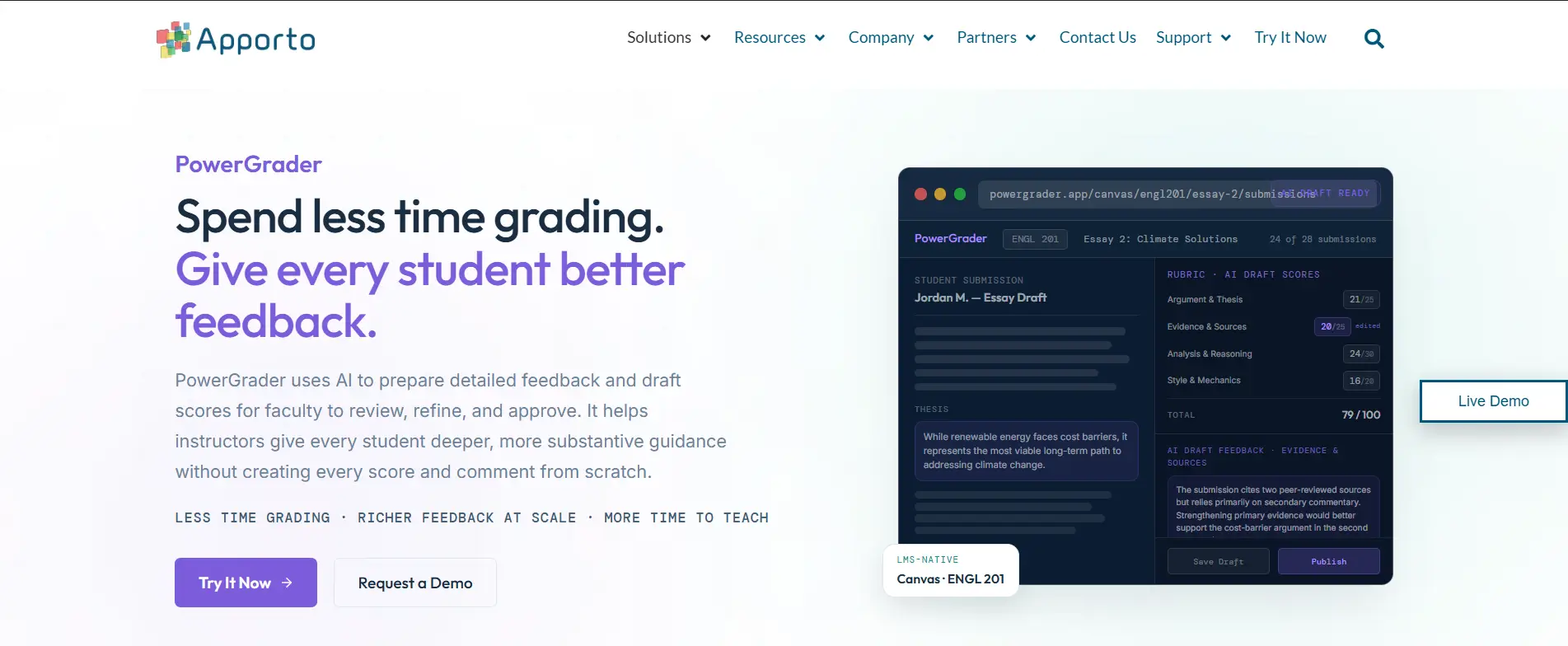
Grading dozens, sometimes hundreds, of assignments takes time. Writing detailed comments for every student? That’s another challenge altogether. Apporto PowerGrader helps lighten that workload with AI-assisted grading. It uses instructor-defined rubrics to suggest scores and feedback based on assignment expectations.
You still have the final say. Teachers can review, edit, and approve the suggested feedback before sharing it with students, keeping the process consistent without losing the personal touch.
How Can AI-Assisted Feedback Reduce Repetitive Grading Work?
Writing similar comments across multiple assignments can become repetitive. PowerGrader gives you a starting point with rubric-based feedback, so you aren’t beginning from scratch every time. That leaves more room for personalized guidance, thoughtful comments, and addressing individual learning needs. Try Apporto PowerGrader
Final Thoughts
Good feedback gives students something useful to take away, a better understanding of their progress and what to work on next. Clear expectations, specific suggestions, and opportunities to revise can make a real difference. Start small. Make one comment more actionable or give students time to reflect before their next assignment.
Want to make grading more manageable? Explore Apporto PowerGrader for additional grading and feedback support.
Frequently Asked Questions (FAQs)
1. What Is the Best Way to Give Effective Feedback to Students?
Effective feedback should be specific, constructive, and connected to learning goals. Point out what students did well, explain where their work needs attention, and suggest practical improvements. The clearer your guidance, the easier it becomes for students to act on it.
2. Are Examples of Constructive Feedback for Students?
Constructive feedback recognizes strengths while pointing out what could be better. For example, “Your essay makes a strong argument, and you’ve chosen relevant evidence. Try connecting that evidence more clearly to your conclusion so readers can follow your reasoning.”
3. Why Is Timely Feedback Important for Students?
Timely feedback gives students a chance to understand their mistakes while the assignment is still fresh in their minds. When your comments arrive at a useful point in the learning process, students can reflect, make corrections, and apply what they’ve learned.
4. How Can Teachers Give Feedback Without Discouraging Students?
You can give constructive feedback without discouraging students by keeping your language respectful and focusing on their work rather than personal abilities. Acknowledge genuine strengths, explain what needs improvement, and offer realistic next steps instead of simply pointing out mistakes.
5. How Can Students Use Feedback to Improve Their Performance?
Students can improve their performance by reading feedback carefully, comparing their work with assignment criteria, and identifying what needs another look. Revising assignments, asking for clarification, and applying previous suggestions to new tasks can help them make steady progress.
