
What Is the Difference Between Analytic and Holistic Rubrics?
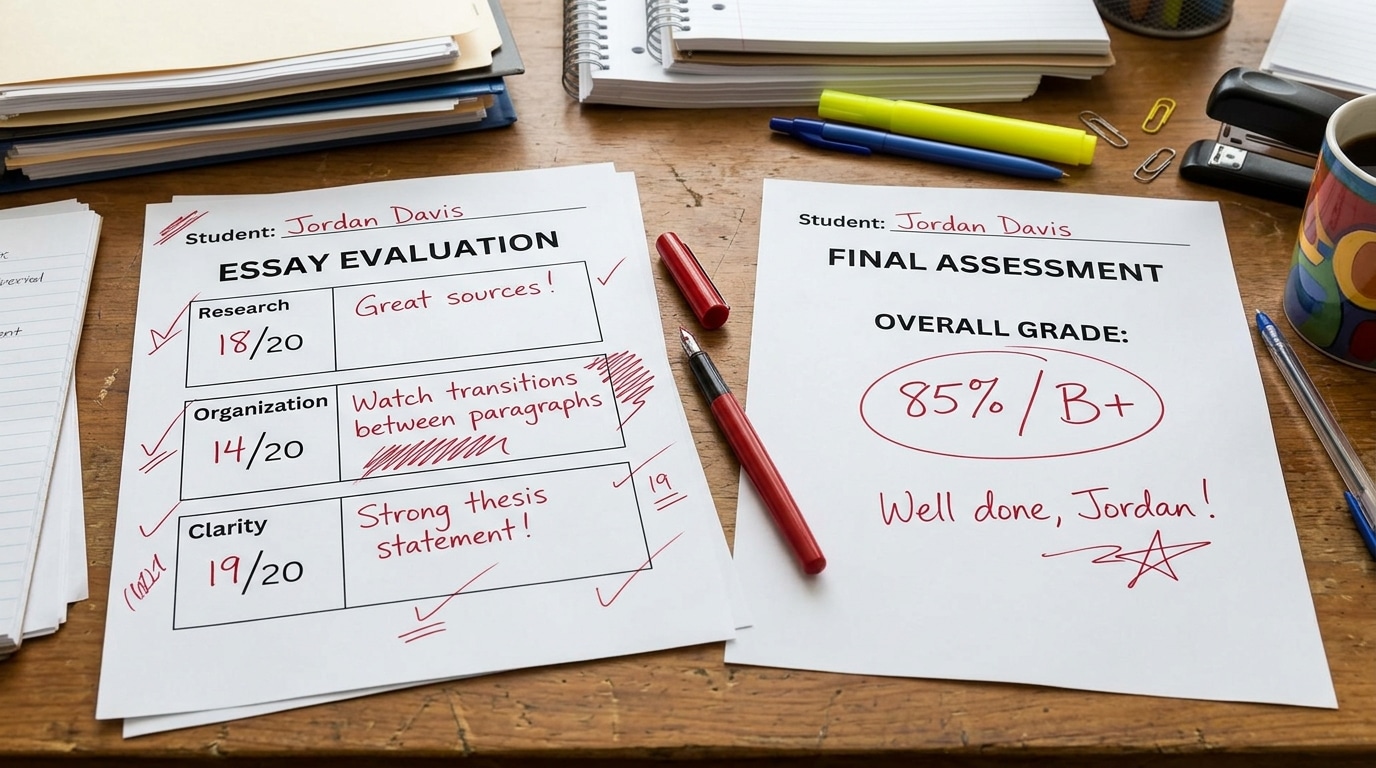
An analytic rubric scores individual criteria, such as research, organization, and clarity, providing detailed feedback on strengths and weaknesses. A holistic rubric assigns one overall score based on the complete assignment. Analytic rubrics suit complex work and revisions, while holistic rubrics support faster, broader evaluation of student performance.
A grade tells students how well they’ve performed. But does it tell them what they did well or where they went wrong? Not always.
Some assignments need a closer look at individual skills, like research, organization, and writing clarity. Others are better judged by how well everything comes together. That’s where analytic vs holistic rubrics become useful.
An analytic rubric scores each criterion separately, making it easier to spot strengths and weaknesses. A holistic rubric takes a broader view, evaluating the overall quality of the work through a single score.
Both approaches have their uses. The right one depends on your learning objectives and the feedback students need. In this blog, you’ll see how each works and when to use it.
What Is the Difference Between an Analytic and Holistic Rubric?

The biggest difference between analytic and holistic rubrics comes down to how you grade student work. An analytic rubric scores different skills separately, while a holistic rubric looks at the assignment as a whole and gives one overall score.
Both help teachers measure learning outcomes, set clear expectations, and make grading more consistent. The difference lies in how closely each one examines student performance.
How Does an Analytic Rubric Evaluate Student Performance?
With an analytic rubric, you break an assignment into individual criteria, such as research, argument, organization, and grammar.
Each criterion comes with its own performance levels, descriptions, and points. So, rather than judging everything at once, you look at how well the student handles each skill.
You then add those scores together to calculate the final grade. This also helps students see where they’ve done well and what needs more attention.
How Does a Holistic Rubric Evaluate Overall Quality?
A holistic rubric takes a broader approach. You read the complete assignment and consider how well its different elements work together.
Instead of giving separate marks for research, organization, or grammar, you choose one score from a defined rating scale. It’s a simpler way to grade, but clear performance descriptions are still important for keeping evaluations fair and consistent.
What Is an Analytic Rubric, and How Does It Work?

An analytic rubric lets you assess different parts of an assignment individually instead of giving everything one overall rating.
This comes in handy for complex assignments like research papers or final projects, where students need to know how they performed in specific areas.
What Are the Main Components of an Analytic Rubric?
Most analytic rubrics are organized into a table with four key elements:
- Assessment Criteria: The individual skills or qualities you want to assess.
- Performance Levels: Ratings such as Beginning, Developing, Proficient, and Exemplary.
- Performance Descriptions: Details explaining what student work should demonstrate at each level.
- Point Values: Marks assigned to each level of performance.
Usually, you’ll find the assessment criteria in the leftmost column, with performance levels listed across the top.
How Does an Analytic Rubric Help Students Improve Their Work?
One of the most useful things about analytic rubrics is how clearly they point out areas for improvement.
A student might do a great job gathering research but struggle to organize their ideas. Instead of receiving one grade with little explanation, they can see where those missing points came from.
That makes self-assessment more practical, too. Students know what to work on and can make focused changes before submitting their next draft.
What Is a Holistic Rubric, and How Does It Work?

A holistic rubric looks at the overall quality of an assignment and gives it one score, rather than grading every skill separately.
It’s a practical option when you care more about how well the different parts of an assignment come together. The focus stays on the complete work and how effectively it meets the learning objectives.
How Is a Single Score Assigned With a Holistic Rubric?
With holistic grading, you review the entire assignment and compare it against a set of performance descriptions. You might use a four-point or six-point scale, although there’s no rule about how many levels a rubric must have.
Each level describes a different standard of achievement. You simply choose the one that best reflects the student’s work. This keeps the scoring process fairly straightforward while giving teachers a consistent set of expectations to follow.
Why Do Holistic Rubrics Focus on the Complete Assignment?
Some assignments make more sense when judged as a whole. Think about essays, creative writing, or presentations. Organization, reasoning, and communication all work together to influence the final result.
A holistic rubric considers that combined effect. So, a student can still earn a strong overall rating despite a few minor weaknesses, provided the work meets the rubric’s expectations.
How Do Analytic and Holistic Rubrics Compare Side by Side?

By now, you’ve seen how both rubric types work. But when it comes to choosing one for your class, a few practical differences are worth looking at more closely.
The way you assign scores, explain grades, and assess student progress can vary quite a bit depending on which approach you use.
What Are the Key Differences Between Analytic and Holistic Rubrics?
Here’s how analytic and holistic rubrics compare across the areas that matter most in grading:
| Feature | Analytic Rubric | Holistic Rubric |
|---|---|---|
| Scoring Approach | Scores each criterion separately | Gives one overall score |
| Main Focus | Individual skills and qualities | Overall quality of the work |
| Assessment Criteria | Several specific criteria | Combined performance expectations |
| Feedback | Detailed feedback for each criterion | General feedback on overall performance |
| Final Score | Combines individual scores when needed | One score for the entire assignment |
| Preparation | Requires more detailed planning | Often simpler to prepare |
| Grading Speed | Involves several scoring decisions | Can be quicker to grade |
| Student Improvement | Highlights specific strengths and weaknesses | Shows general achievement |
| Common Uses | Research papers, projects, and revisions | Essays, presentations, and integrated tasks |
| Best Fit | Complex work needing specific feedback | Work judged mainly on overall effectiveness |
The real difference comes down to how much detail you need. With an analytic rubric, students can see where they’ve earned or lost points. A holistic rubric gives them a broader picture of their performance.
Of course, neither approach will be particularly helpful if the scoring descriptions are vague. Clear expectations still matter.
Which Rubric Is Faster to Create and Use?
Holistic rubrics often take less time to prepare because you’re describing overall performance rather than writing separate descriptions for every criterion. Grading can be quicker, too. You make one scoring decision instead of several.
Analytic rubrics require more setup, but that extra detail can save you time when explaining grades or giving feedback. Still, speed depends on the assignment. A complex task, lengthy written comments, or unfamiliar scoring guidelines can make either approach more time-consuming than expected.
What Does an Analytic vs Holistic Rubric Example Look Like?
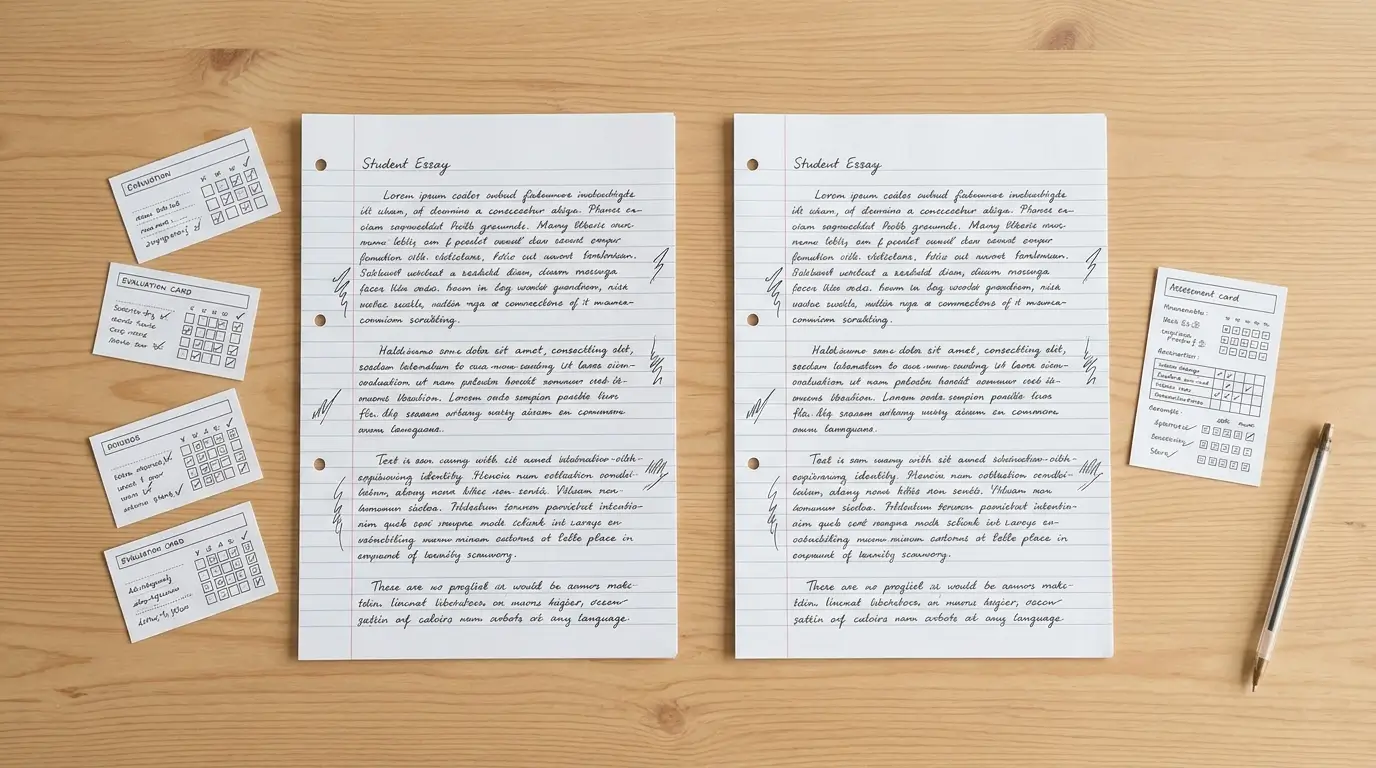
Seeing both rubrics applied to the same assignment makes their differences much clearer. Take a student essay. You can assess it using either approach, but the way you assign points and explain the grade will look quite different.
What Does an Analytic Rubric Example Look Like?
With an analytic rubric, you assess four parts of the essay separately: argument, research, organization, and language.
Each criterion has four performance levels, with points ranging from 1 to 4. Here’s a simple example:
| Criterion | Beginning (1) | Developing (2) | Proficient (3) | Exemplary (4) |
|---|---|---|---|---|
| Argument | Unclear claim | Partially developed claim | Clear argument | Strong, persuasive argument |
| Research | Little evidence | Some relevant evidence | Good supporting evidence | Strong, credible evidence |
| Organization | Difficult to follow | Uneven structure | Logical sequence | Clear, effective flow |
| Language | Frequent errors | Some unclear sentences | Generally clear | Precise and polished |
Once you’ve read the essay, you choose the description that best matches the student’s performance in each area. The scores might look like this:
- Argument: 4/4
- Research: 3/4
- Organization: 3/4
- Language: 4/4
Final Score: 14/16 or 87.5%.
Now the student knows where those points came from. Their argument and language are strong, while research and organization could use some attention.
What Does a Holistic Rubric Example Look Like?
For the same essay, a holistic rubric works a little differently. You read the complete assignment and choose one performance level that best captures its overall quality. Here’s how that might look:
| Score | Performance Level | Overall Description |
|---|---|---|
| 4 | Exemplary | Persuasive, well-supported essay with effective organization and clear language |
| 3 | Proficient | Clear, effective essay with relevant evidence and some weaknesses |
| 2 | Developing | Partially effective essay with uneven reasoning, evidence, or organization |
| 1 | Beginning | Limited argument, unclear ideas, or major weaknesses affecting quality |
Say the essay is clear and reasonably well-supported, but a few areas could be stronger. You might give it 3/4 (Proficient).
That’s the complete rating. There aren’t separate marks for argument, research, or grammar. Keep in mind that these are illustrative scores, not equivalent grades. The examples simply show how each rubric evaluates the same kind of work.
What Are the Main Advantages and Disadvantages of Analytic Rubrics?

Analytic rubrics give you a closer look at how students perform across different skills. They’re helpful when you need to explain a grade or show students exactly where they can improve. That extra detail is valuable, though it does come with some added work.
What Are the Biggest Advantages of Analytic Rubrics?
One reason teachers prefer analytic rubrics is that students don’t have to guess why they received a particular grade. The scoring criteria make those decisions easier to understand.
A few other benefits stand out:
- Detailed Feedback: Shows students which skills they’ve mastered and where they’re struggling.
- Clear Expectations: Helps students understand what’s required before starting an assignment.
- Support for Revision: Gives students specific areas to work on when improving drafts.
- Grading Consistency: Makes it easier for teachers to follow the same scoring standards.
- Flexible Scoring: Lets you assign more weight to the skills that matter most.
- Learning Progress: Helps you spot weaknesses that keep appearing across assignments.
What Are the Main Limitations of Analytic Rubrics?
The main downside? Time. Writing useful descriptions for every criterion takes effort, and grading each skill separately can slow things down.
An overly detailed rubric can also become difficult to follow, both for you and your students. There’s another concern worth keeping in mind. When you’re focused on checking individual criteria, it’s possible to miss the creativity or overall strength of an assignment.
Sticking to a few relevant, clearly defined criteria helps keep the rubric practical.
What Are the Main Advantages and Disadvantages of Holistic Rubrics?

Holistic rubrics can make grading more manageable, particularly when you’re dealing with a large number of assignments. Since you’re judging the work as a whole, there’s less need to score every little detail. But that simplicity has its drawbacks, too.
What Are the Biggest Advantages of Holistic Rubrics?
The biggest advantage is straightforward: fewer scoring decisions, with more attention given to the overall quality of student work. Here’s where holistic rubrics can be helpful:
- One Overall Score: Gives students a clear rating of their overall performance.
- Faster Evaluation: Saves time by reducing the number of individual scoring decisions.
- Focus on Overall Quality: Looks at how different skills work together to produce the final result.
- Flexibility: Allows strong assignments to earn high ratings even with a few minor errors.
- Large-Scale Assessment: Makes grading many submissions more manageable when teachers have clear scoring guidelines.
What Are the Main Limitations of Holistic Rubrics?
The catch is that one score can hide quite a lot. A student might have excellent ideas but struggle with organization. With a holistic rubric, those differences aren’t always obvious from the grade alone.
Feedback can also be less helpful when students need to know exactly what went wrong. And consistency takes effort. Two teachers might interpret the same performance level differently. Using sample assignments, discussing scoring standards, and adding a few written comments can help make holistic grading clearer and fairer.
When Should You Use an Analytic Rubric Instead of a Holistic Rubric?

An analytic rubric makes more sense when you need to assess several skills within the same assignment. It’s also a good fit when students are expected to use your feedback to improve their work. A single grade won’t always give them enough direction.
Here are some common situations where analytic rubrics work well:
- Research Papers: Score research quality, arguments, organization, and writing clarity separately.
- Final Projects: Assess individual project components and how well they meet the learning objectives.
- Formative Assessment: Give students specific feedback while they’re still learning, before final grades are assigned.
- Draft Writing: Point out problems with evidence, structure, or clarity that students can fix during revision.
- Complex Assignments: Evaluate multiple skills without letting one strong area overshadow weaker ones.
- Self-Assessment: Help students check their own work against clear criteria before handing it in.
You can also use analytic rubrics for summative assessments, where the goal is to measure what students have learned by the end of a course or assignment.
If you need to explain exactly where points were earned or lost, an analytic rubric is usually the more useful choice.
When Should You Use a Holistic Rubric Instead of an Analytic Rubric?

A holistic rubric works well when you’re more interested in the overall quality of an assignment than how students perform on each individual skill. It’s particularly useful when different parts of the work are closely connected, making it difficult to judge them separately.
Here are some assignments where holistic rubrics make sense:
- Short Essays: Look at how well the argument, organization, and writing come together.
- Timed Writing: Assess general writing ability without breaking the response into separate scores.
- Creative Writing: Consider originality, coherence, and the overall impact of the piece.
- Oral Presentations: Judge how effectively students communicate their ideas from start to finish.
- Integrated Performance Tasks: Assess work where several skills contribute to one overall result.
- Summative Assessment: Evaluate overall achievement at the end of a course or learning activity.
Holistic scoring has also been used in standardized writing assessments, including older SAT essay formats. Those practices, however, shouldn’t be confused with how the current SAT is scored.
One thing to remember: if students need detailed feedback to improve specific skills, a holistic rubric may not give them enough information.
How Can Teachers Make Analytic and Holistic Rubric Scoring More Consistent?

Even with a well-designed rubric, two teachers might give the same assignment different scores. It happens. What matters is having clear expectations and making sure everyone understands how to apply them.
Here are five practical ways to keep grading more consistent:
- Define Clear Criteria: Decide which skills or overall qualities you’re assessing, and connect them to the assignment’s learning objectives.
- Write Specific Performance Descriptions: Explain what students need to demonstrate at each level. Avoid vague labels like “good” or “excellent” without further explanation.
- Use Sample Assignments: Show examples of student work that represent different scoring levels.
- Compare Scoring Decisions: Have teachers grade the same samples, discuss differences, and agree on how to interpret the rubric.
- Review Your Rubric: After grading, look for descriptions that caused confusion and improve them for future assignments.
Analytic rubrics offer consistency through separate criteria, while holistic rubrics depend on clear overall descriptions. Neither guarantees identical grades, though. Regular review and discussion still matter.
Can Analytic and Holistic Rubrics Be Used Together?

Yes, analytic and holistic rubrics can work together, especially when different assignments or stages of a course call for different kinds of feedback.
You don’t have to stick with one approach throughout the course. What matters is choosing the rubric that fits your learning objectives.
How Can Teachers Combine Detailed Feedback With Overall Assessment?
During draft reviews, an analytic rubric can help you point out specific areas students need to work on. For the final assignment, you might use a holistic rubric to judge how well everything comes together. Just be clear about how each rubric works and how grades are calculated. You can also use both approaches for different assignments within the same course.
Where Do Single-Point Rubrics Fit Into the Comparison?
A single-point rubric describes the expected standard for each criterion, without listing several performance levels. It gives you room to write personalized feedback about what students did well and where they need improvement. It’s worth considering when you want clear expectations without a complicated scoring system.
How Can Apporto PowerGrader Support Rubric-Based Grading?

Rubrics make grading more structured, but applying detailed criteria to hundreds of assignments? That can take up a good chunk of your time.
Apporto PowerGrader helps lighten that workload. It’s an AI-assisted grading platform that prepares suggested scores and feedback based on instructor-defined rubrics. You still have the final say on every grade.
How Does PowerGrader Use Rubrics to Prepare Scores and Feedback?
The process follows four steps:
- Import Assignments: Pulls instructions, rubrics, and submissions from supported learning management systems.
- Generate Suggestions: Prepares draft scores and feedback using your grading criteria.
- Review Results: Lets you check, adjust, or override the suggestions.
- Publish Grades: Sends approved results back to the learning management system.
This helps cut down repetitive grading work while keeping final decisions in educators’ hands.
Final Thoughts
The right rubric depends on what you’re trying to measure and what students should take away from their grades. If you need to assess individual skills and offer detailed feedback, analytic rubrics are a good fit. When the overall quality of an assignment matters more, holistic rubrics may be the simpler option.
There’s no need to choose one approach for everything. Both can work well within the same course, as long as they support your learning objectives. Looking for a way to spend less time on repetitive grading?
Explore Apporto PowerGrader to see how AI-assisted scoring and faculty-reviewed feedback can make your grading process more manageable.
Frequently Asked Questions (FAQs)
1. What Is the Main Difference Between an Analytic and a Holistic Rubric?
An analytic rubric scores different skills separately, while a holistic rubric gives one overall score for the entire assignment. With analytic grading, students see how they performed in specific areas. Holistic grading focuses more on the quality of the finished work.
2. What Is an Example of an Analytic Rubric?
A research paper rubric is a good example. You might score research quality, argument, organization, and writing clarity individually. Each area gets its own rating, so students can see what they’ve done well and where they need to improve.
3. What Is an Example of a Holistic Rubric?
A four-point essay rubric is a common example of holistic grading. You read the complete essay and assign one rating based on its overall quality. An essay with clear arguments and relevant evidence might earn 3 out of 4, despite minor weaknesses.
4. Which Rubric Is Better for Providing Detailed Feedback?
Analytic rubrics are generally better for detailed feedback because they assess individual skills separately. Instead of leaving students with one overall grade, they show which areas need attention. That’s particularly helpful when students are expected to revise their work.
5. Are Holistic Rubrics Faster to Grade Than Analytic Rubrics?
Holistic rubrics can be quicker to grade because you’re making one scoring decision rather than evaluating several criteria. Still, the time saved depends on the assignment’s complexity, how much written feedback you provide, and how familiar you are with the scoring guidelines.
6. Can Teachers Use Both Analytic and Holistic Rubrics?
Yes, you can use both approaches within the same course. An analytic rubric might help students improve their drafts, while a holistic rubric can assess the overall quality of their final work. It depends on what you want each assessment to achieve.
